

Locum tenens is not a refuge for burned‑out, washed‑up physicians. The data say it’s increasingly a deliberate career choice for high‑performing, fully employable docs who want leverage, not a life raft.
If you trained in the last 15–20 years, you’ve heard some version of this: “Locums is what people do when they can’t hold a real job,” or “It’s for the older docs who are slowing down,” or my personal favorite, “You’ll destroy your CV.”
That’s mythology. Outdated, threatened‑by‑change mythology.
Let’s walk through what’s actually true, using numbers where we have them and experience where the data are thin.
The Core Myth: Locums = Burnout & Desperation
Here’s the caricature most residents and early‑career attendings get spoon‑fed:
- Burned‑out hospitalist quits W‑2 job
- Signs up with a locums agency in a panic
- Bounces between understaffed rural hospitals
- Makes some money but is constantly exhausted, isolated, and “ruining their reputation”
There are definitely people in that bucket. But they’re not the majority anymore.
Surveys from multiple staffing companies (yes, they have a sales agenda, but you can still read the trends) plus physician workforce data show something else:
- The average locum tenens physician is mid‑career, board‑certified, and fully employable.
- A large proportion have left stable FTE jobs intentionally.
- Many maintain part‑time permanent roles and use locums to fill the rest.
AMN Healthcare’s reports, for example, consistently show that hospitals are increasingly relying on locums for strategic coverage: starting services, handling seasonal surges, bridging while recruiting. You don’t deploy unqualified, marginal physicians for that. You deploy people who can walk in cold and not crash the place.
What I’ve seen on the ground:
- A pulmonary/critical care doc who works 7–10 locums ICU shifts per month, spends the rest on tele‑ICU and teaching, and out‑earns almost every FTE colleague while being home more.
- A general surgeon who left a toxic small‑town hospital job, built a rotation of 3 regional locums sites, and then negotiated a premium permanent offer because they knew exactly what the market would pay.
Burned out and desperate? No. Strategic and done with hospital politics.
What the Data Actually Show About Who’s Doing Locums
No, there isn’t a randomized trial of “locums vs staff job.” Medicine loves RCTs; career decisions do not cooperate. But there are useful data points.
Staffing surveys, MGMA compensation data, and state workforce reports tell a coherent story: the locums market is growing, and the profile of locums doctors is nothing like the stigma.
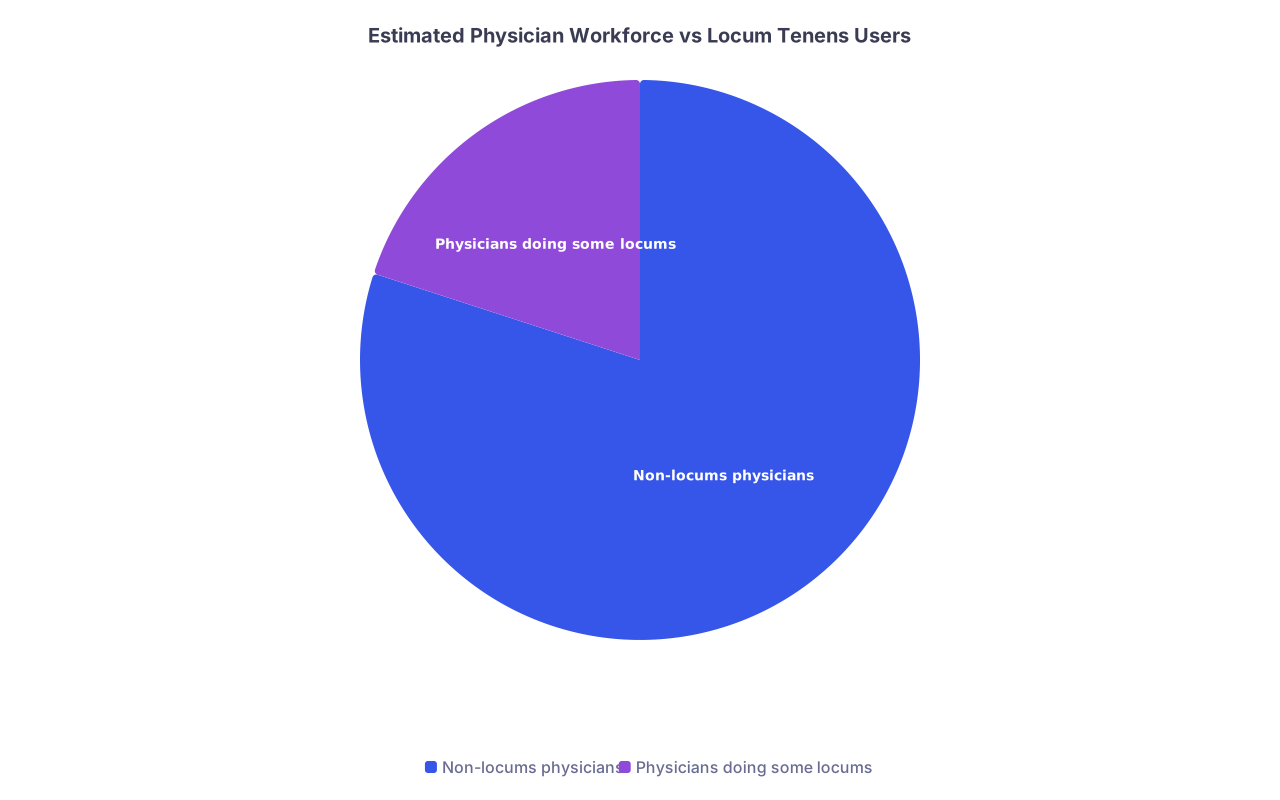
| Category | Value |
|---|---|
| Non-locums physicians | 80 |
| Physicians doing some locums | 20 |
Rough ballpark from multiple industry reports: roughly 10–20% of physicians do some locums work in a given year. Not all full‑time, but enough to matter.
The typical locums physician today:
- Is board‑certified in their specialty
- Has 5–15 years of post‑residency experience
- Often has a prior track record as a partner, medical director, or employed leader
- Is working locums for:
- Schedule control
- Geographic flexibility
- Higher effective hourly compensation (when they’re smart about contracts)
This is a far cry from the narrative of “couldn’t keep a job.”
Why the disconnect? Three reasons:
- Old attendings are remembering locums circa 1998. Back when it was mostly rural ED coverage and last‑ditch hospitalist help. The sector matured. They stopped paying attention.
- Hospital administrators don’t want you to know your leverage. An attending who knows they can walk away and make the same or better money via locums is a negotiation problem.
- Residents only see the outliers. The burned‑out guy who vanishes into locums and never comes back. You don’t see the cardiologist quietly doing 1 week a month at a high‑pay rural site and 3 weeks at an academic center.
Income, Hours, and Control: The Numbers Behind the Narrative
Let’s talk money and time, because that’s what people actually care about but pretend is “crass” to discuss.
Most specialty societies and MGMA report median W‑2 incomes. Locums income is messier by design—different sites, different rates, different volumes. But we can still outline the tradeoffs.
| Factor | Full-Time Hospitalist W-2 | Full-Time Locums Hospitalist |
|---|---|---|
| Annual shifts | ~180 | 140–160 |
| Effective hourly rate | $100–130 | $150–220 |
| Annual gross pay | $260k–320k | $320k–450k |
| Vacation control | Limited | High |
| Admin/committee time | Moderate–High | Low |
These aren’t fantasy numbers. They’re consistent with what aggressive but sane locums hospitalists, anesthesiologists, and EM docs report in closed physician groups and surveys.
A few blunt realities:
- Locums usually pay more per hour. You’re the flexible, short‑notice, no‑benefits solution. That should cost more. When it does not, you walk.
- You can trade time for money cleanly. Want 6 months off? Schedule 6 intense months and no one cares as long as the contract’s fulfilled.
- You don’t eat meetings. No mandatory wellness committee. No unpaid QI projects. No “voluntary” leadership academy.
So why doesn’t everyone do it? Because you give up some things too:
- No guaranteed income floor
- No employer‑subsidized benefits
- Less control over team stability and staffing
- Travel, credentialing headaches, and constant onboarding
Here’s where the “burned‑out doc” myth breaks. Locums is less comfortable in many ways. The physicians who thrive in it are usually more organized, more confident clinically, and more willing to manage their own finances and logistics.
The cling‑to‑stability personality type tends to stay W‑2. The people willing to own their risk move into locums or independent practice.
Career Impact: Does Locums “Damage Your CV”?
Short answer: not if you aren’t doing chaotic, low‑quality work and you present it intelligently.
I’ve sat in rooms where older partners look at a CV with 4 hospitals in 5 years and mutter, “Locums… must be a problem.” Sometimes they’re right—red flag. Often they’re lazy.
Here’s what you need to understand:
- Volume and scope matter more than employment category. If you can say, “At Site X, I performed ~500 colonoscopies per year” or “I covered 6–8 ICU patients per night with full procedures,” that tells more than whether your paycheck came via an agency.
- References override stereotypes. Two strong letters from respected chiefs or medical directors at locums sites crush hand‑waving about “stability.”
- Academic? You need a plan. If you want a traditional academic track with promotions, pure nomadic locums forever will absolutely hurt you. You need continuity, QI projects, teaching roles, publications. That means either:
- A home institution plus locums on the side, or
- A defined “locums chapter” followed by a landing spot with academic infrastructure.
Where locums will hurt you:
- You bounce between low‑reputation facilities and cannot clearly explain why.
- You accept unsafe staffing and get tied to bad patient outcomes or malpractice.
- You stay so fragmented that you never build any longitudinal story.
That’s not about locums. That’s about poor judgment. Permanent jobs can look equally bad if you hop every 6 months for drama.
Work–Life Reality: It’s Not All Freedom and Beach Photos
Some locums evangelists will tell you it’s the antidote to burnout. You pick when and where you work, you travel, you take months off. Sounds like an Instagram account.
It can be good. But let’s be honest about the tradeoffs.
The Good
- Schedule sovereignty. If you want to work 7–10 intense days and then vanish for 3 weeks, most locums setups will not care. FTE jobs will absolutely care.
- Toxicity exit button. Bad group? Dysfunctional CMO? You finish the contract and don’t renew. No multi‑year non‑compete mess.
- Geographic experimentation. Instead of committing to a state and uprooting your family, you “test drive” cities and systems.
I’ve seen young attendings who thought they wanted Big Urban Academic, do 3 locums stints in midsize cities, and realize they prefer lower cost of living, less politics, and easier commutes. Without locums, they would’ve locked into a bad fit for years.
The Hard
- Always the new person. Every hospital thinks it’s special. Different EMR builds, undocumented workflows, tribal practices. You’re constantly re‑learning. That’s cognitively expensive.
- Variable support. One site has rockstar nurses and responsive consultants. Next site you’re fighting for basic labs. If you’re conflict‑averse, that gets old.
- On‑call by proxy. Even when you’re “off” between assignments, you’re often fighting with credentialing, licensing, and agencies.
Does this sound like a natural refuge for someone already crispy, depressed, and barely functional? No. It’s a better fit for someone who’s burned by systems, not burned out as a human. There’s a difference.
Who Should Seriously Consider Locums (And Who Probably Shouldn’t)
Let me be blunt.
Locums is a good fit if:
- You’re clinically solid and can handle uncertainty
- You don’t need hand‑holding on finances, taxes, and benefits (or you’re willing to hire help)
- You value autonomy over titles
- You’re not desperate for immediate social/collegial belonging in one place
Locums is a bad primary strategy if:
- You’re still shaky clinically and need intensive mentorship
- You want a traditional academic ladder career
- Your primary need is long‑term local community and consistency for your family
- You hate paperwork and logistics
That does not mean “only losers do locums.” It means, like any career structure, it fits some personalities and life stages better than others.
One smart way I see early‑career docs use locums: as a bridge and a benchmark.
- PGY‑3/4 finishes, does 6–18 months of locums while:
- Paying down high‑interest debt
- Sampling different practice settings
- Collecting hard data on what their time is really worth
- Then, when a “permanent” job offer appears, they know if $260k with mandatory meetings and night call every 3rd week is an insult or not.
That’s rational. Not desperate.
Concrete Evidence Locums Isn’t Just a Last Resort
If you want a single graph that breaks the “last resort” myth, look at the trajectory of locums usage across hospital types.

| Category | Rural hospitals | Urban community | Academic centers |
|---|---|---|---|
| 2010 | 10 | 5 | 2 |
| 2014 | 25 | 15 | 8 |
| 2018 | 40 | 30 | 20 |
| 2022 | 55 | 45 | 35 |
| 2024 | 60 | 50 | 40 |
Again, these are approximate trend lines assembled from multiple workforce and staffing reports, but the direction is real: academic centers and large urban systems now routinely use locums.
Why does that matter? Because these systems are risk‑averse and brand‑protective. They aren’t hiring locums because they enjoy paying premiums. They do it because:
- Demand exceeds supply in key specialties
- They’d rather plug gaps with flexible labor than shut down services
- They can’t recruit quickly enough with traditional methods
You don’t solve these problems with marginal clinicians.
One more angle: some systems now create internal locums pools—premium‑paid float teams that roam between sites. That’s literally locums without the agency middleman. If locums were “only for burned‑out docs,” these systems would not be institutionalizing the model.
How to Use Locums Without Torching Your Future
If you’re even partly tempted, do it like an adult, not like a runaway.
A simple, evidence‑based framework:

| Step | Description |
|---|---|
| Step 1 | Define goals |
| Step 2 | Keep home institution |
| Step 3 | Pure market approach |
| Step 4 | Add selective locums |
| Step 5 | Full or majority locums |
| Step 6 | Track volume and outcomes |
| Step 7 | Collect strong references |
| Step 8 | Reassess every 12 months |
| Step 9 | Need long term academic track |
A few non‑negotiables if you want this to help, not harm:
- Be picky early. Say no to unsafe ratios, chaotic sites, and absurdly low pay. Your first few assignments shape your reference base and your risk.
- Track your work. Procedures, case mix, volumes. Future employers love people who can say, “Here’s exactly what I did the last 2 years.”
- Think tax and retirement from day one. You’re now effectively running a small business. Solo 401(k), SEP‑IRA, liability coverage, disability insurance—all solvable, none automatic.
This is why the “burned‑out doc hiding in locums” stereotype is backward. To do this well, you need more intentionality than the average W‑2 job, not less.
The Bottom Line
Let’s strip it down.
- Locum tenens is no longer a marginal, last‑resort path. It’s a mainstream tool used by fully employable, often high‑performing physicians to buy back autonomy, time, and leverage.
- The risks (fragmentation, logistics, lack of guaranteed income) are real, but they select for organized, clinically solid docs—not for the weak. Burned‑out physicians may land in locums, but locums itself is not the cause or the cure.
- Used strategically—as a bridge, a side‑gig, or a primary model—locums can strengthen your career narrative, not damage it, if you choose your assignments carefully and collect real references and data.
The myth says locums is for people who can’t hack “real” jobs. The evidence says it’s increasingly for people who refuse to tolerate bad ones.


