

The contract is more dangerous than your first night on call—and nobody trained you for it.
You’re not crazy for being scared of the fine print. Honestly, I get more nervous about a non-compete clause than a code blue at this point. You can resuscitate a patient. You cannot easily resuscitate a career that got locked into a bad contract.
Let me be blunt: hospitals, private groups, even “non-profit” systems? They all have lawyers. They have playbooks. They write these contracts all day. You’re the tired PGY-3/4/5 who just wants a normal paycheck and maybe a weekend off. That power imbalance is real, and pretending it’s not is how people get trapped.
But there are ways to protect yourself—without needing a JD or becoming that paranoid person who thinks every job is a scam.
The Scariest Contract Myths (That Keep You Up at Night)
You’re probably cycling through some version of these:
- “If I push back on the contract, they’ll just pull the offer.”
- “Everyone signs these, so it must be standard.”
- “If I don’t understand a clause, it probably doesn’t matter.”
- “I’ll just sign now and fix it later if it’s bad.”
All of that is how intelligent, capable physicians end up:
- Owing $60–100k in ‘repayment’ after leaving early.
- Stuck in a 30–50 mile non-compete they thought “wouldn’t be enforced.”
- Doing way more RVUs than they were told, with no realistic way to hit “bonus” targets.
- Working 1.2–1.5 FTE worth of call for 1.0 FTE salary because “everyone does it.”
Here’s the uncomfortable truth: the fine print is where your life gets decided. Not on the tour. Not in the “we’re like family here” talk in the conference room.
So yeah, your anxiety about this? Rational.
The 7 Clauses That Should Make Every New Attending Nervous
Let’s walk through the big landmines. If a contract is bad, it’s usually bad in one (or more) of these spots.
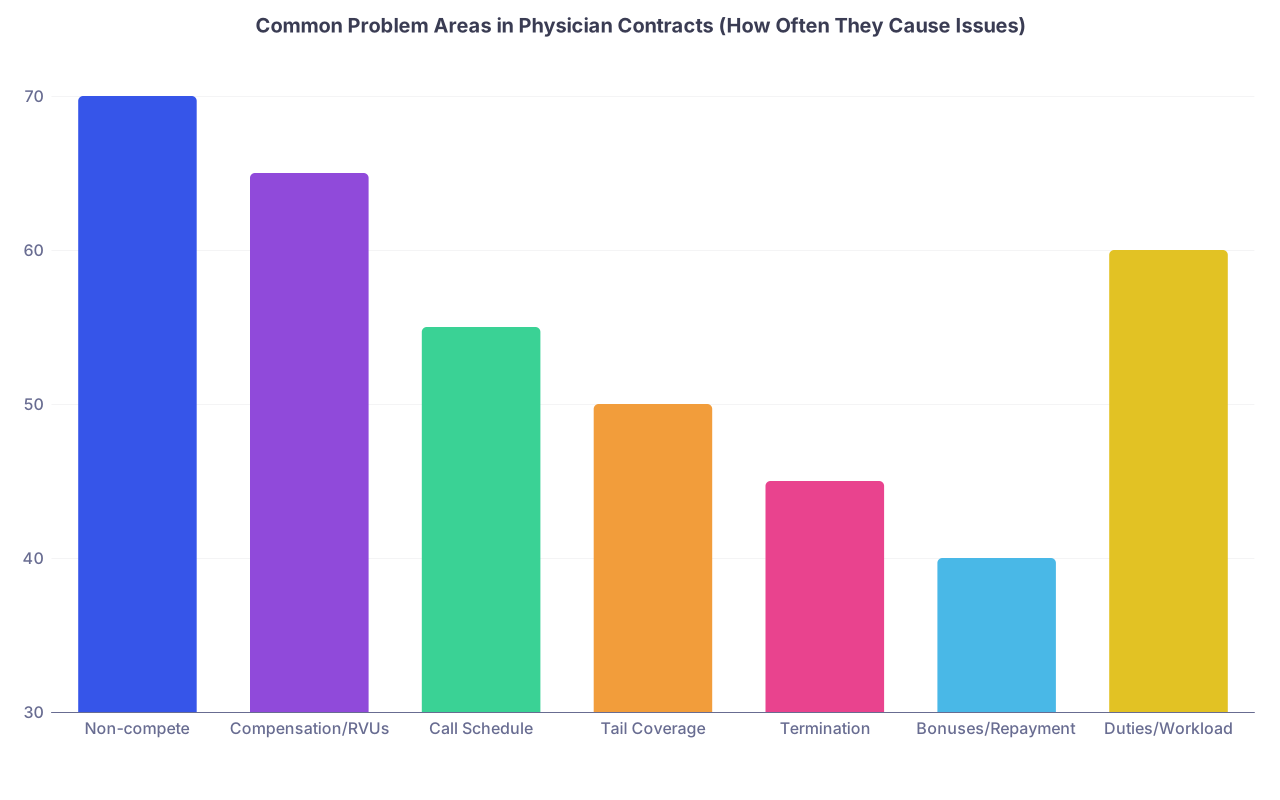
| Category | Value |
|---|---|
| Non-compete | 70 |
| Compensation/RVUs | 65 |
| Call Schedule | 55 |
| Tail Coverage | 50 |
| Termination | 45 |
| Bonuses/Repayment | 40 |
| Duties/Workload | 60 |
1. Non-Compete / Restrictive Covenant
This is the “you can’t work within X miles for Y years if you leave” clause. People hand-wave it all the time.
Red flags:
- More than 10–15 miles in urban/suburban areas
- More than 20–25 miles in rural (some states allow more, but that doesn’t mean it’s fair)
- Applies to any practice, not just your specialty
- Applies to locations you never even worked at
Nightmare example I’ve actually seen: A hospitalist signs a contract that bans them from working within 50 miles of any hospital in the system, for 2 years. The system owns almost everything in a 2-hour radius. They leave after 18 months. Their spouse’s job is local. Kids in school. And they literally can’t practice hospital medicine anywhere close.
If you only remember one thing from this entire piece: non-competes are not a formality. They’re a leash.
2. Compensation & RVU Targets
All the glossy talk is about “competitive salary” and “bonus potential.” The contract is about math.
Sneaky things you’ll see:
- Below-MGMA base plus “achievable” RVU bonuses that are absolutely not achievable for a new attending
- Conversion factors (dollars per RVU) that are meh, but painted as “great for this region”
- Guaranteed salary for 1–2 years that then drops dramatically unless you hit insane production
You need numbers in writing:
- Base salary (years 1, 2, 3 separately, not just “subject to review”)
- RVU target for bonus
- What the average doc there actually produces (ask them directly, not just admin)
- Call stipends, extra shift pay, weekend pay
If they’re vague about the math, it’s never because they’re overpaying you.
3. Call Schedule & Clinical Duties
This one wrecks work–life balance more than anything.
Watch for:
- “Reasonable call” with no definition
- “Shared equally” in a group that’s about to add more call-heavy services
- Obligations to cover multiple sites
- Language like “other duties as assigned” with no limit
Ask them specifically:
- Number of calls per month, weekends, nights
- In-house vs home call
- Average number of pages/consults overnight
- Expectations about clinic add-ons, hospital rotations, outreach clinics
If the contract says almost nothing about call, your future life is a black box.
4. Tail Coverage (Malpractice)
This one turns into a five-figure surprise bill if you’re not careful.
Basic idea:
- If malpractice is claims-made, someone has to pay for “tail” coverage when you leave so old cases are still covered.
- Tail often costs 1–2x your annual premium.
Bad scenario:
- Group pays for malpractice while you’re there, but you pay for tail when you leave
- You leave after 18 months because it’s toxic
- Tail quote: $35,000
- You either pay it or go uninsured for past work
What you want: contract says employer pays tail if they terminate you without cause or you leave for “good reason” (to be defined clearly). At bare minimum, you want clarity: who pays, how much, what if.
5. Termination Clauses
Two flavors: “with cause” and “without cause.”
“With cause” is usually for big stuff: license issues, loss of privileges, crime, etc. Whatever. That’s standard.
The real problem is “without cause”:
- They can usually fire you with 60–90 days’ notice.
- You can usually leave with 60–90 days’ notice.
- Sounds symmetric. It’s not.
Why you care:
- If they can “without cause” you quickly, and you still owe moving bonus, sign-on, or tail, you’re screwed unless the contract protects you.
- If you’re stuck with 180+ days’ notice but they only need 60, that’s a trap.
You want:
- Reasonable notice both ways (60–90 days is standard)
- Clear language about what happens to bonuses/relocation if they terminate you without cause
6. Bonuses, Relocation, and Repayment
That “$25k sign-on bonus” is not free money. It’s a loan wearing makeup.
Common structure:
- You get $X “bonus” or relocation.
- If you leave before 2–3 years, you owe it back, sometimes with interest.
- If they fire you “with cause,” you definitely owe.
- If they fire you “without cause,” it’s murkier—sometimes you still owe unless contract says otherwise.
I’ve seen people have to write $40k checks because they left 6 months before the “service period” ended.
You want it spelled out:
- Length of required service
- Repayment amount (prorated vs all-or-nothing)
- What happens if they break up with you
7. Job Description & “Other Duties”
“I thought I was signing up for 60% clinic and 40% procedures. Now I’m doing 90% clinic and pre-charting at 10pm.”
Sound familiar?
If all it says is “full-time clinical services plus duties as assigned,” they can move the goalposts:
- Add a satellite clinic 1.5 hours away
- Give you admin roles that aren’t really compensated
- Load you with teaching or non-RVU work
You want, in writing:
- Rough clinic/procedure/OR/inpatient mix
- FTE expectations (1.0, 0.8, etc.)
- Any formal admin/teaching time and how it’s paid
How to Protect Yourself (Without Blowing Up the Offer)
Here’s where the anxiety spikes: “If I ask for too much, they’ll rescind the offer and blacklist me forever.”
I’ve actually watched this play out. People stay silent, sign, then six months later are miserable and stuck. The very thing they were scared of—rocking the boat—turns into a much uglier problem.
You don’t need to become a contract ninja. You just need a process.
Step 1: Stop Reading It Alone at Midnight
You need a physician contract attorney. Not your cousin who does real estate. Not “my friend who’s a lawyer.” Someone who reviews physician contracts all day.
What a good attorney actually does:
- Translates legalese into “here’s how your life will look”
- Tells you what’s “standard” for your specialty/region right now
- Flags what’s dangerous vs mildly annoying
- Suggests specific language to fix problems
| Reviewer Type | Good Idea? | Why |
|---|---|---|
| Physician contract attorney | Yes | Knows norms, spots traps |
| Generic lawyer friend | Usually no | Misses specialty issues |
| Co-resident or co-fellow | Not enough | Same blind spots as you |
| Mentor who signs quickly | Risky | May normalize bad terms |
You’re not hiring them to fight. You’re hiring them to make sure you understand the risk.
Step 2: Make a “Non-Negotiables” List
If you go into negotiation trying to fix everything, you’ll freak yourself out.
Pick 3–5 items that are truly critical for you. Example:
- Non-compete radius and length
- Who pays tail
- Clear call schedule and limits
- Repayment terms for bonus/relocation
- Reasonable base for your specialty/region
If they won’t budge on any of your core items, that’s data. Not necessarily a deal-breaker—but a big yellow flag.
Step 3: Use Normal, Non-Confrontational Language
You’re not barging in demanding “change this or I walk.”
You’re saying things like:
- “I reviewed the contract with a physician contract attorney, and I had a few questions I wanted to clarify.”
- “Can we discuss narrowing the non-compete to the primary hospital where I’ll be working, and a 10-mile radius instead of 25?”
- “Would you be open to covering malpractice tail if the organization terminates my employment without cause?”
- “Could we specify call expectations in the contract? For example, no more than X weekday calls and Y weekend calls per month.”
If a group reacts angrily to calm, reasonable questions? Imagine how they’ll react once you’re an employee.
Step 4: Assume “Verbal Promises” Don’t Exist
“If it’s not in the contract, it doesn’t exist.”
They can tell you:
- “Oh, we never enforce that non-compete.”
- “We don’t really expect you to hit that RVU target.”
- “We always pay for tail.”
- “We never ask people to repay the bonus if they have to move.”
Unless it’s in writing, it’s just noise.
If they truly mean it, they can put it in a paragraph. If they won’t? Then they like having the option to go back on it.
Step 5: Always Compare Offers Side by Side
Your brain wants to fixate on the top-line salary and ignore the rest.
Lay them out. Literally.
| Feature | Job A (Hospital) | Job B (Private Group) | Job C (Academic) |
|---|---|---|---|
| Base Salary | $310k | $290k + RVU bonus | $240k |
| Non-compete | 25 miles, 2 years | 10 miles, 1 year | None |
| Tail Coverage | You pay | Group pays | Paid by institution |
| Call | q3 weekends | q5 weekends | q6 weekends |
| Bonus Repayment | Full if <3 years | Prorated | None |
Job A might look “best” on salary—but when you factor in non-compete, tail, and call, suddenly that academic job or private group looks a lot less scary long-term.
Red Flags That Should Make You Seriously Consider Walking Away
You’re not being dramatic for wanting to walk if you see some of these:
- They refuse to let you take the contract to an attorney.
- They act offended that you’re asking questions about terms.
- They say, “No one else has ever asked about that.” (Huge lie or huge issue.)
- Non-compete is broad, long, and “non-negotiable.”
- Tail is 100% on you, with lots of ways they can push you out “without cause.”
- Everything important is “trust us, that’s not how we do things.”
Here’s the thing that’s really hard to accept when you’re terrified about finding a job: the scariest thing is not losing this offer. It’s signing a bad one and being stuck.
Non-compete plus tail plus repayment can literally chain you to a toxic job.
How to Quiet the “What If I’m Being Too Picky?” Voice
Your anxiety brain is probably yelling:
- “Everyone else is signing this, maybe I’m overreacting.”
- “What if they think I’m difficult?”
- “What if I say no and then don’t get another offer?”
- “What if this is as good as it gets?”
Here’s the unsatisfying truth: you will miss some opportunities by having standards.
But long-term career damage usually comes from:
- Staying too long in a bad first job
- Burning out early from insane call/workload
- Being blocked from working locally because of a contract you barely read
Protecting yourself doesn’t mean demanding perfection. It means:
- Knowing what you’re signing
- Making a conscious, eyes-open choice about risk
- Walking away from truly predatory setups
You’re not “difficult” for wanting that. You’re just not volunteering to be the cheapest, most compliant cog in the system.

| Step | Description |
|---|---|
| Step 1 | Receive Contract |
| Step 2 | Skim for Red Flags |
| Step 3 | Send to Physician Contract Attorney |
| Step 4 | Identify Top 3 to 5 Priorities |
| Step 5 | Discuss Changes with Recruiter |
| Step 6 | Negotiate Final Terms |
| Step 7 | Consider Walking Away |
| Step 8 | Sign With Eyes Open |
| Step 9 | Reasonable Response? |

Quick Reality Check: You’re Allowed to Protect Yourself
You’ve survived med school, residency, maybe fellowship. You’ve done codes at 3am, dealt with nightmare patients and even worse EMRs. And now the thing keeping you up is… fonts and paragraphs and subclauses.
You’re not weak for being anxious about this. The stakes are high. The system is opaque on purpose. And everyone tells you “it’s standard” because it benefits them for you to just sign.
Here’s what actually matters:
- If it’s not written, it doesn’t exist.
- You’re allowed to negotiate—and good employers expect it.
- Non-competes, tail coverage, and repayment clauses are not small details. They decide how trapped you are.
Protecting your future doesn’t make you ungrateful. It makes you smart.

FAQ (Exactly 4 Questions)
1. Will they pull my offer if I ask for contract changes?
Most legitimate employers won’t. They may say no to some requests, but rescinding an offer just because you asked reasonable questions is rare—and a huge red flag if it happens. In practice, what usually happens is: they budge on a few items, refuse others, and you decide whether the final package is tolerable.
2. Is it ever okay to sign a contract with a non-compete?
Yes—if it’s reasonable and you understand the risk. For example, 10 miles around the primary hospital for 1 year is way less scary than 50 miles for 2 years around every site the system owns. In some markets, avoiding non-competes entirely is hard. The key is making sure it doesn’t destroy your life if you need to leave.
3. How much does a physician contract lawyer cost, and is it really worth it?
Rough ballpark: $300–$700 for a review, sometimes more if it’s super complex or you want multiple calls. That sounds like a lot when you’re still on resident pay, but it’s tiny compared to:
- A $30k tail bill
- A $40k bonus repayment
- Being underpaid by $20k/year for several years
One bad clause can cost more than you’ve ever had in your bank account at once. So yes, it’s worth it.
4. What if I already signed a bad contract—am I doomed?
No, but you have to be careful. Options include:
- Talking to a physician employment lawyer about what’s actually enforceable
- Negotiating a clean exit (sometimes they’ll waive certain things if you give longer notice or help recruit)
- Planning your next step around the non-compete radius/time
What you don’t do is just ignore the contract and hope it goes away. Get actual legal advice before making moves, so you don’t turn a bad situation into a catastrophic one.
Key points:
- The dangerous parts of a contract are non-compete, tail, repayment, and vague duties—not the salary line.
- Get a real physician contract attorney and pick a few non-negotiables to focus on.
- You’re not overreacting: protecting yourself now is way easier than escaping a bad contract later.


