
It’s 11:47 p.m. You’re on your third cup of coffee, reading Reddit threads about “malignant” residencies. Every program now sounds terrible. Someone said they cried in the stairwell for three months straight at Program X. Another person said Program Y is a “hidden gem” but has a 90% attrition rate (how is that even possible?). You look at your rank list draft and think: am I literally about to sign up for three to seven years of abuse?
Let’s just say it out loud: you’re not afraid of working hard. You’re afraid of being trapped. In a toxic, gaslighting, unsafe environment with no exit.
You’re not wrong to worry about that.
First: What “Malignant” Really Looks Like (Not Just “Hard”)
People throw “malignant” around way too loosely. A tough but fair program is not malignant. A busy trauma month where everyone’s tired and cranky is not malignant.
Here’s what actually sets off my alarm bells:
- Systematic disrespect and humiliation as the culture, not the exception
- Unsafe workloads with no meaningful backup
- Chronic dishonesty about duty hours, coverage, evaluations, or outcomes
- Retaliation for speaking up
- A pattern of residents leaving, failing boards, or needing mental health leaves with zero support
A malignant program erodes you. Not in a “rough month” way. In a “I don’t recognize myself anymore and I dread being alone with my thoughts” way.
Your job now is not to eliminate all risk (you can’t). It’s to reduce the chances you end up somewhere truly toxic by learning how to read the signs.
The Biggest Red Flags: Things That Should Make You Pause Hard
I’m going to be blunt. If I saw a combo of these, I’d seriously reconsider ranking a program.
1. Residents Look Dead Behind the Eyes
I’m not talking about end-of-night-float tired. I’m talking about:
- They answer your questions with, “It’s fine. It’s fine. It’s…fine,” and then stare at the floor.
- They joke about “surviving, not thriving” but no one laughs.
- On the tour, they don’t really talk to each other. Everyone peels off quickly. No casual banter, no warmth.
On interview day, residents are on their best behavior. If they’re still leaking misery around the edges, that’s meaningful.
2. They Dodge Specific Questions
Watch how they answer, not just what they say. Ask something concrete like:
- “How often do you actually go over duty hours?”
- “What happens when someone is too sick to work?”
- “What kind of backup exists when the ED is slammed?”
Red flag answers:
- “We’re a hardworking program.” (That’s not an answer.)
- “Let’s just say ACGME wouldn’t be thrilled.”
- “We log honestly…ish.”
- “We figure it out. We get it done.” (Translation: there’s no plan.)
If they can’t give a straight, specific answer, assume the worst version until proven otherwise.
3. PD or Faculty Trash Talk Residents (Even Subtly)
I’ve seen this in person and it made my skin crawl.
Examples:
- “This generation just isn’t as resilient.”
- “We have a couple residents who just don’t want to work.”
- “If residents can’t handle our standard, they’re probably not cut out for this specialty.”
If they’re comfortable blaming residents to an applicant, imagine how they talk about you when you’re there. Blame flows downhill in malignant places.
4. Attrition: They Hand-Wave It Away
Every program might lose a resident once in a while. Life happens. But patterns matter.
Ask: “In the last 5 years, how many residents have left the program, and why?”
Watch for:
- “I don’t know the exact number.” (They definitely do.)
- “People just realized they didn’t like the city.”
- “We had a few who weren’t a good fit.” If they say “fit” 5 times in 2 minutes, be cautious.
- They give a weirdly emotional, bitter answer about a former resident.
| Pattern | How Worried To Be |
|---|---|
| 0–1 in 5 years | Low |
| 1 every 1–2 years | Medium (ask why) |
| 1+ almost every year | High |
| Multiple in one class | Very high |
High attrition might mean malignant culture, terrible support, or wildly unrealistic expectations.
5. Board Pass Rates or Fellowship Matches Are “Complicated”
For specialties with boards, ask: “What’s your first-time board pass rate over the last 5 years?”
Sketchy answers:
- “We’re improving.”
- “Historically it’s been inconsistent.”
- “We don’t have that data offhand.”
If they can’t rattle off a decent range, they either don’t track it (bad) or don’t want to say it (worse).
Same idea for fellowships in competitive specialties. Low match into fellowships from a supposedly “intense” program = something’s wrong with teaching, advocacy, or both.
6. The Schedule Looks Like a War Crime
You can get a lot from how they talk about call and backup.
Red flags:
- No clear jeopardy or backup system. “We just cover for each other.”
- Repeated 28-hour calls with minimal post-call protection.
- “We always hit 80 hours…ish.”
- A culture of bragging about who’s “toughest” or “never calls out.”
You’re choosing a training environment, not a macho contest.
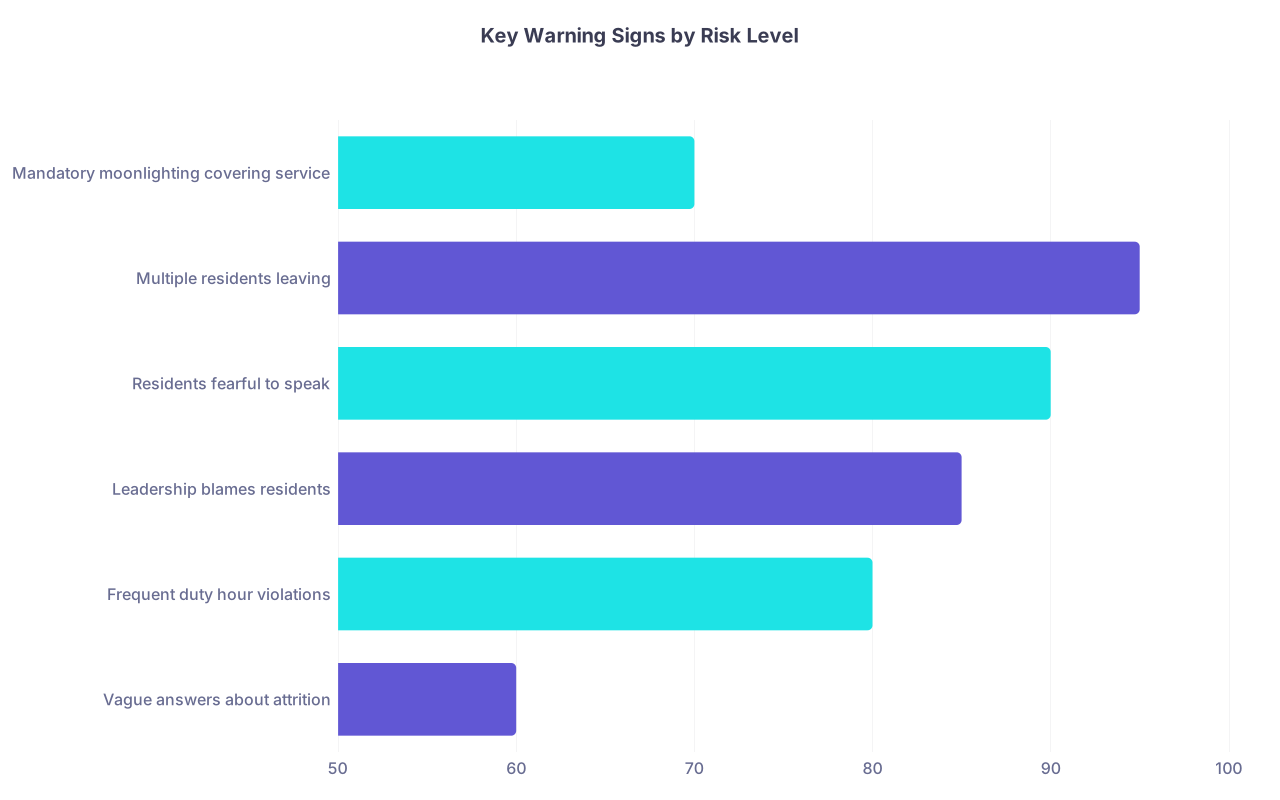
| Category | Value |
|---|---|
| Vague answers about attrition | 60 |
| Frequent duty hour violations | 80 |
| Leadership blames residents | 85 |
| Residents fearful to speak | 90 |
| Multiple residents leaving | 95 |
| Mandatory moonlighting covering service | 70 |
(Values = approximate “worry level” out of 100 from experience and stories. Not science. But you get the point.)
Concrete Ways To Spot Toxic Programs Before You Rank
You’re not powerless here. You just need to be deliberate and slightly nosy.
1. How To Use Interview Day Without Getting Snowed
Interview day is theater. Your job is to look for what leaks through the script.
Things to watch:
- Body language when you ask hard questions
- Whether residents feel comfortable disagreeing with faculty in front of you
- Whether anyone mentions wellness without being prompted (and if it sounds fake)
Smart questions to ask residents (privately if you can):
- “What’s something you wish you’d known before ranking here?”
- “When someone struggles, what actually happens?”
- “Have you ever seen someone punished or treated differently for speaking up?”
- “When’s the last time you felt really supported by leadership?”
And then: don’t just listen to the words. Listen to the pause before they answer.
2. Off-the-Record Intel: Where the Real Truth Lives
The best data is never on program websites.
Places to look:
- Upperclassmen from your school who trained or rotated there
- Alumni from your med school now in that program (or in the same city)
- Fellows who came from that residency – they’ll often be more honest than current residents
- Nurses who’ve been there forever (if you do an away)
Ask directly: “Would you send your kid here for residency?” People answer that one differently.
You’ll also see whispers online (SDN, Reddit, etc.), and yes, you’ll want to fall into that black hole. Take consistent patterns seriously, but not one dramatic horror story with no corroboration.
3. Actually Emailing Residents (You’re Not Annoying Them)
You’re scared you’ll bother them. The normal, non-malignant ones won’t mind. And the malignant ones? If multiple people never reply, that’s its own answer.
When you email:
- Keep it short and specific.
- Ask 2–3 pointed questions. Something like:
“I’m very interested in [Program], but I care a lot about culture and support.
- How comfortable do residents feel bringing concerns to leadership?
- What happens when someone has a serious life event (illness, family emergency)?
- Is there anything you wish you’d known about the program before ranking it?”
If every answer is “it’s great!” with zero detail, I’m skeptical. Real people mention flaws and tradeoffs.

| Step | Description |
|---|---|
| Step 1 | Interview Day Impressions |
| Step 2 | Low Rank or Do Not Rank |
| Step 3 | Contact Residents Privately |
| Step 4 | Check Attrition and Boards |
| Step 5 | Rank According to Fit |
| Step 6 | Major Red Flags? |
| Step 7 | Consistent Concerns? |
| Step 8 | Data Reasonable? |
Subtle Signs The Culture Might Be Off
Some programs won’t scream “RUN.” They’ll just…feel wrong. Trust that.
Watch for:
- Residents constantly self-deprecating or apologizing
- Jokes that punch down (on patients, nurses, juniors)
- Faculty who interrupt residents mid-sentence or talk over them routinely
- Overemphasis on “family” language but no specific examples of actually supporting people
Also: if every single resident story about “struggle” ends with “…and then I just pushed harder and now I’m great,” that’s not resilience. That’s denial.
The Data You Can Actually Use (Not Just Vibes)
There is some hard-ish data you can track down or ask about.
| Metric | What You Want to Hear |
|---|---|
| 5-year attrition | Rare, with clear reasons |
| Board pass rate | High, tracked, and discussed openly |
| Duty hour violations | Tracked, addressed with real changes |
| Backup/jeopardy | Clear, used without shaming |
| Parental/medical leave | Multiple residents used it successfully |
You’re not going to get perfect transparency, but a non-toxic program won’t act weird or defensive when you ask about these.
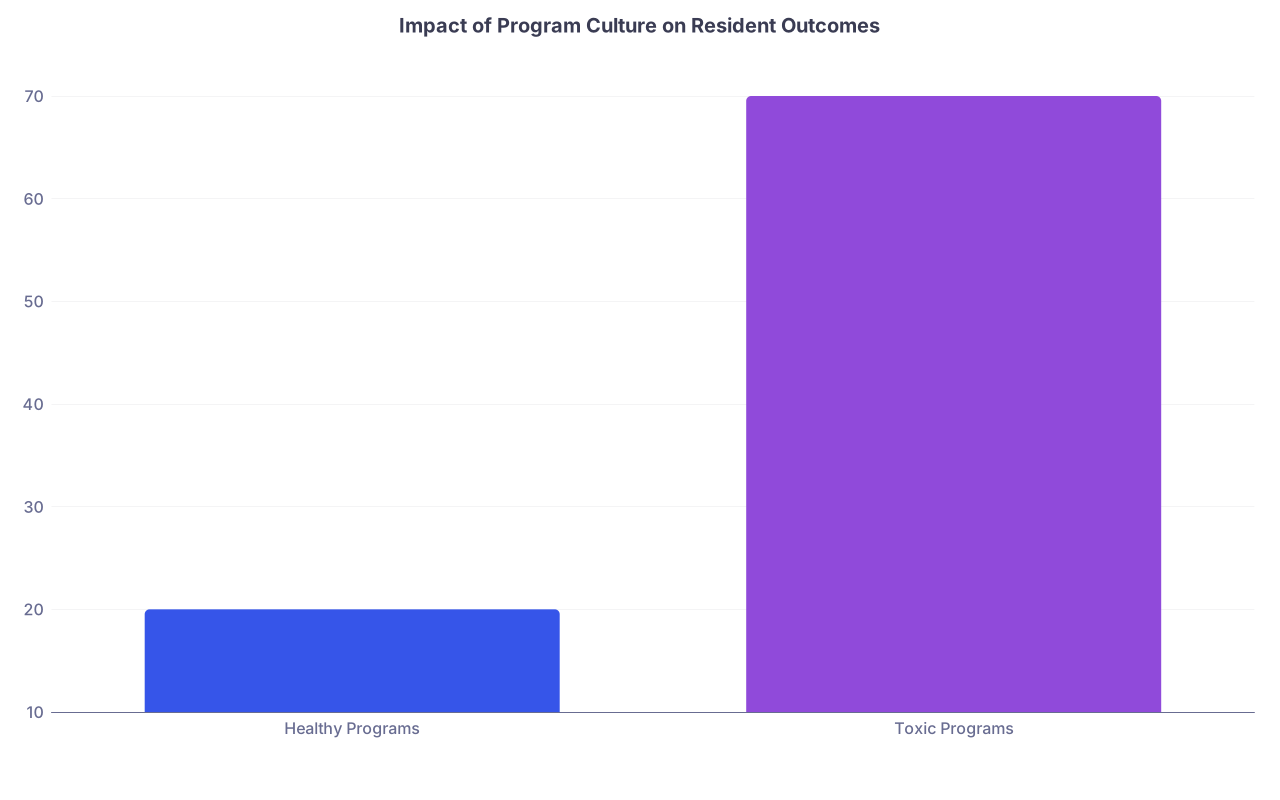
| Category | Value |
|---|---|
| Healthy Programs | 20 |
| Toxic Programs | 70 |
(Approximate percentage of residents reporting burnout or serious distress, based on surveys and countless anecdotes. Not exact numbers, but directionally accurate: bad culture multiplies risk.)
Worst-Case Scenario: What If You Accidentally Rank a Malignant Program High?
This is the part that’s keeping you awake, right? “What if I still get it wrong?”
Here’s the ugly truth and the actual safety net.
Yes, sometimes people land in malignant programs. I’ve seen it. I’ve watched interns lose weight, lose sleep, lose themselves. But:
- People do transfer. Not always easy, but it happens every year in almost every specialty.
- You are not obligated to sacrifice your mental health for a program’s staffing needs.
- The ACGME, GME office, and occasionally state boards exist for a reason. They’re not perfect. But they’re not fake either.
If you ever find yourself in an actually toxic place:
- Document. Dates, shifts, incidents, who was present.
- Build a “quiet support” network early – one attending, a chief you trust, a therapist outside the hospital.
- Start looking sideways (other programs, prelim to categorical, different institutions) way earlier than you think you “should.”
Does this sound dramatic? Maybe. But thinking through the worst case often makes it less paralyzing. You’re not signing a blood oath. You’re entering a training contract that can be changed if it becomes unsafe.
How To Balance Fear With Reality
You’re wired right now to see danger everywhere. A slightly tired resident? Malignant. One bad story online? Malignant. PD who seems intense? Malignant.
Let me calibrate it a bit.
Things that do NOT automatically mean “toxic”:
- High volume, high acuity, busy call schedules
- Tired seniors on ICU month
- A PD who’s direct or slightly awkward
- Mixed online reviews (especially if they’re old)
You’re looking for patterns of:
- Fear
- Blame
- Silence
- Disrespect
- Dishonesty
If you see one of those once, make a note. If you see three of them consistently, rethink.
You’re not trying to find the magical unicorn program with no flaws. You’re trying to avoid the handful of places that chew people up and call it “training.”
FAQ (Exactly 6 Questions)
1. What if residents say, “We work a lot, but it’s worth it”? Is that a red flag?
Not automatically. That’s actually what good, intense programs often sound like. What you want to know is: worth it how? If they can tell you about strong teaching, autonomy with support, great fellowship or job placement, and a sense of camaraderie, that’s fine. If “worth it” is vague and they can’t give specifics beyond “it’s prestigious,” I’d worry more.
2. How seriously should I take anonymous online reviews about malignant programs?
Take patterns seriously, not single posts. If you see 8 different people across 5 years, on different platforms, all saying the same very specific things (abusive PD, constant duty hour lying, multiple residents leaving), that’s meaningful. If you see one novel-length rant and no one else mentions similar issues, assume some distortion. Use online stuff as a starting point, then try to verify with real humans.
3. Is it rude or risky to ask about attrition and board pass rates on interview day?
No. And if they act offended or uncomfortable, that’s actually helpful data for you. Phrase it calmly and clearly: “Could you share your board pass rates and how many residents have left the program in the last five years?” A confident, healthy program has an answer ready. A defensive program spins or dodges.
4. What if I really like a program but heard one bad “malignant” story from a single person?
Do not blow up your entire rank list over a single anecdote. Instead: ask at least 3–4 more people with independent connections to that program – current residents, alumni, fellows. If nobody else co-signs the horror story, it might’ve been a bad fit or a personality clash. If everyone subtly alludes to “issues,” take it more seriously.
5. I’m worried I’ll miss the red flags because I’m too anxious. How do I trust my judgment?
Write things down right after your interview. Don’t rely on your future anxious brain. After each program, jot: 1) What felt good? 2) What felt off? 3) Anything I wouldn’t want to tolerate for 3–7 years? When you make your rank list, read your own notes first, before Reddit, friends, or advisors. Your initial gut plus concrete notes is usually more accurate than the spiraling that comes later.
6. Could I be over-focusing on “malignant” and under-focusing on positive fit?
Yes, and almost everyone in your shoes does that. Fear grabs more attention than opportunity. You still need to ask: Where did I feel like myself? Where did residents seem like people I’d actually text on a random Tuesday? Which programs made me think, “I could grow here,” not just “I might survive here”? Avoiding toxicity is step one; choosing a place that actually fits you is step two. Don’t let the fear of the worst-case drown out the places that actually feel right.
At some point, the research stops and you’re just staring at your rank list, imagining every possible disaster. But your future self doesn’t need you to predict perfectly. They need you to choose thoughtfully, ask hard questions now, and trust that if something truly isn’t safe, you’ll have the clarity and courage to change course.
Years from now, you won’t remember every late-night forum thread or every malignant rumor. You’ll remember the people you trained with, the kind of physician you became, and the fact that—even while scared—you still chose for yourself.