
The biggest lie people tell anxious applicants is: “You’ll be too busy in residency to miss your family.”
You won’t. You’re going to miss them. A lot. The real question is whether the program you choose makes that separation survivable or soul‑crushing.
This is where talking to current residents matters more than any glossy brochure or “supportive culture” line on the website. If you’re already spiraling about being far from your family, you cannot afford vague answers. You need receipts. Specifics. Concrete examples.
Let’s walk through what to actually ask residents—especially when your brain is screaming, “What if I’m miserable and stuck 2,000 miles away?”
First, be honest about what you’re actually afraid of
You’re not just “anxious about being far.” You’re probably worried about at least some of this:
- Your parents getting sick and you not being there
- Missing siblings’ weddings, births, funerals, holidays
- Breaking up with a partner because of distance
- Being alone in a new city with no friends and no car
- Crying in your call room at 2 a.m. because you haven’t hugged your mom in 6 months
You have to name the fear before you can ask the right questions.
If your worst nightmare is, “My dad has a stroke and I can’t get home,” that leads to very different questions than, “I’m scared I’ll never have time to call my family.”
Let’s break the questions down by theme, so you’re not just hopping onto Zoom with residents and blanking out while smiling and nodding.
1. Questions about time off and actually getting home
This is the big one: Will you realistically be able to go home when it matters, or is it going to be a bureaucratic nightmare every time you try?
Ask residents, directly, not faculty. Residents live the schedule; faculty sell the schedule.
Questions to ask current residents:
“If your family has an emergency, how hard is it really to get time off?”
Don’t accept “They’re very understanding.” That’s meaningless. Push for specifics:- “Have you had to do that or seen a co‑resident do it?”
- “Was it days or weeks of begging and swapping?”
- “Did anyone get pushback or guilted for it?”
“How flexible are they with switching calls or shifts?”
You want a real story here. Something like:- “Last year one of us had to fly home and we all swapped around pretty easily,” versus
- “Technically you can switch, but it’s a giant hassle, and chiefs hate it.”
“How far in advance do you know your schedule?”
If schedules come out super late, that kills your ability to book flights home before prices explode. Ask:- “Do you usually know weekends off far enough ahead to plan trips home?”
“How hard is it to get time off around major holidays?”
Ask:- “Do interns ever get to be home for Thanksgiving or Christmas?”
- “Do they try to accommodate people who live far versus people who grew up nearby?”
“Do people who are from out of state actually go home during residency, or do they just stay here?”
This one’s sneaky but powerful. You’re basically asking, “Is going home normal or rare?” Residents will usually tell you the truth:- “Yeah, we fly home 2–3 times a year,” versus
- “Honestly, most of us are too tired or the schedule is too tight.”
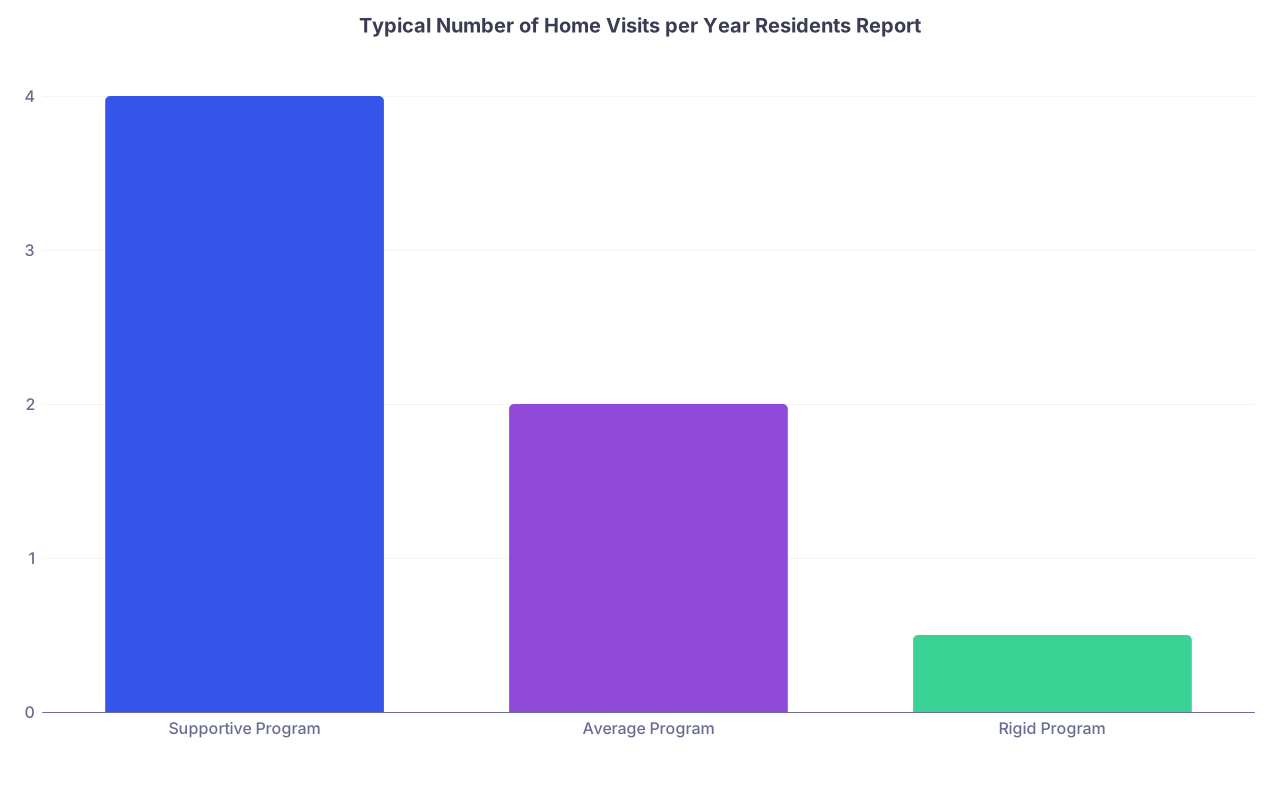
| Category | Value |
|---|---|
| Supportive Program | 4 |
| Average Program | 2 |
| Rigid Program | 0.5 |
If they dodge the question or give vibes like “we don’t…really go home much,” believe them. That’s your reality if you match there.
2. Questions about the culture around family and being human
Some programs act like you’re just a warm body that moves through the hospital. Others actually understand that you are a real person whose mom might end up in the ICU at some point.
You’re trying to figure out which one you’re dealing with.
Ask residents things like:
“How does the program respond when people have big life events—births, deaths, serious illness in the family?”
Watch their face when you ask this. You’re not just listening to the words. You’re looking for that micro‑eye roll that says, “They say they’re supportive, but…”“Has anyone had a major family crisis during training? What happened?”
You’re looking for specifics:- “My co‑resident’s dad died; they got a week off, everyone covered, PD was patient when they came back”
vs - “We covered as much as we could but they still had to use all their vacation and there was drama with coverage.”
- “My co‑resident’s dad died; they got a week off, everyone covered, PD was patient when they came back”
“Do attendings ever acknowledge that residents have lives outside the hospital?”
Sounds small, but it isn’t. If an attending has literally never asked about a resident’s family or life outside of notes and labs, that’s a vibe.“Do residents here feel guilty asking for time off for family stuff?”
If there’s a culture of guilt or subtle shaming, you’ll hear it:- “Yeah, you can ask, but people feel bad”
- “Honestly we all cover for each other, no one makes you feel crappy about it.”
“Does the program leadership know which residents are far from home and check in on them?”
Some PDs remember. Some do not care even 1%. You want to know which you’re signing up for.
3. Questions about loneliness, support, and mental health
Being far from family isn’t just about plane tickets. It’s about being emotionally stranded in a new city with no safety net when you’re sleep‑deprived, overworked, and barely functioning.
You need to know if the resident culture fills some of that gap or makes it worse.
Ask residents directly:
“Did you move here without knowing anyone? How was that, honestly?”
And then shut up and let them answer. Look for:- “It was rough at first, but my co‑residents really became my main support system.”
vs - “Yeah, I basically just go home and crash. People mostly keep to themselves.”
- “It was rough at first, but my co‑residents really became my main support system.”
“How often do you see your co‑residents outside of work?”
Not the official wellness retreats. The random Tuesday dinners. If nobody ever hangs out, that’s telling.“Do you feel like you can be vulnerable with anyone here if you’re having a rough time or missing home?”
Residents know whether it’s safe to say, “I’m not okay.”“Have you ever felt completely alone here? What helped you get through that?”
Anyone who says they’ve never felt lonely is either lying or hasn’t been there long enough.“Are there actually accessible mental health resources for residents that people use, or is it just a slide on orientation?”
Ask:- “Do people really go to therapy here?”
- “Is it during work hours or only on your own time?”

If you hear some version of: “We’re all suffering individually but nobody talks about it,” that’s a red flag for someone already terrified of being far from family.
4. Questions about logistics: distance, flights, driving, and cost
We love to pretend this is a purely emotional issue, but it’s not. It’s physics and money.
You need to know: Is going home actually possible more than once a year without destroying your bank account and your body?
Ask residents, especially the ones who are from out of state or out of region.
Very practical questions to ask:
“How easy is it to get from here to your home city?”
- “Are there direct flights?”
- “How long is total travel time door‑to‑door?”
“Roughly how much does a roundtrip flight home cost for you, and how often can you realistically afford that?”
Residents will tell you:- “I can usually get home for $200–300,” vs
- “It’s $700 minimum, so I only go once a year.”
“Do people actually get out on post‑call days to go home for long weekends, or are you too destroyed?”
There’s a difference between theoretical and real.“Do most residents have cars? Is this a place where you’re stuck if you don’t have one?”
Because adding ‘trapped in an apartment’ on top of ‘far from family’ is a fast track to feeling worse.“Which rotations are the worst for trying to travel home, and which ones are actually doable?”
Get really granular here. For example:
| Rotation | Travel Home Feasibility |
|---|---|
| Inpatient Wards | Very hard |
| ICU | Nearly impossible |
| Clinic Block | Easier |
| Elective | Best option |
| Night Float | Depends on schedule |
You’re trying to picture: In a typical year here, when could I realistically go home, and how much will it cost me physically and financially?
5. Questions to ask specifically as an anxious or very family‑attached person
You don’t have to announce, “Hi, I’m emotionally dependent on my family,” but you can safely signal that this is a big deal for you.
Try questions like:
“If someone is really close to their family and moves far away, do you think this program works for them?”
Watch whether they say:- “Yeah, we have several people like that and they’re doing okay,”
or - “Honestly, the ones who really struggled with that had a harder time here.”
- “Yeah, we have several people like that and they’re doing okay,”
“Do you know anyone who actually regretted moving so far from home for residency?”
And then: “What made it hard for them?”
This is your worst‑case scenario preview.“When interns are struggling emotionally, especially being far from home, how does the program respond in practice—not just on paper?”
Force them out of the brochure language. “In practice” is a key phrase.“If you could go back, would you choose to be closer to your family or are you glad you came this far?”
That answer is pure gold.“Do you feel like you’ve built a ‘second family’ here or does it still feel like just coworkers?”
You need to know whether you can build something to replace some of that proximity to home.

| Step | Description |
|---|---|
| Step 1 | Rank List Time |
| Step 2 | Ask residents about support |
| Step 3 | Family nearby reduces stress |
| Step 4 | May accept distance |
| Step 5 | High risk of regret |
| Step 6 | Far from Family Program |
| Step 7 | Strong support culture? |
6. How to actually ask these questions without sounding weird
You might be thinking, “If I hammer them with all this, I’ll look unstable.” You won’t. Residents have seen everything. They know half of us are barely holding it together.
You can frame it like this:
- “I’m really close to my family, and I’m trying to be realistic about what it’s like to be far from them during residency.”
- “Can I ask you some honest questions about how people here handle being away from home?”
Then stack a few of the questions above. You don’t need them all. But hit each major theme: time off, culture, support, logistics.
You can also laser‑target specific residents:
- On interview day or socials, ask: “Who here moved from farthest away?” Then talk to that person.
- If you see someone with an out‑of‑state school on their Zoom name, DM them and ask: “Hey, do you have a minute to talk about how it’s been being far from family?”

7. Red flags and green flags from resident answers
If your anxiety brain needs a checklist, here you go.
Red flag resident answers:
- “We’re too busy to think about that stuff.”
- “Technically you can request time off for emergencies, but…”
- “We’re like a family!” (said with zero specifics and forced smiles)
- “Honestly, I haven’t been home in two years.”
- “People mostly handle their own stuff; everyone’s kind of on their own.”
Green flag resident answers:
- “When my co‑resident’s mom got sick, we rearranged the whole schedule so they could be with her. PD was totally on board.”
- “We hang out a lot outside work; most of my support system is here now.”
- “The chiefs are super understanding about schedule changes for major family events.”
- “People fly home a few times a year. It’s normal and doable.”
- “The program knows who’s far from home and checks in. They actually care.”
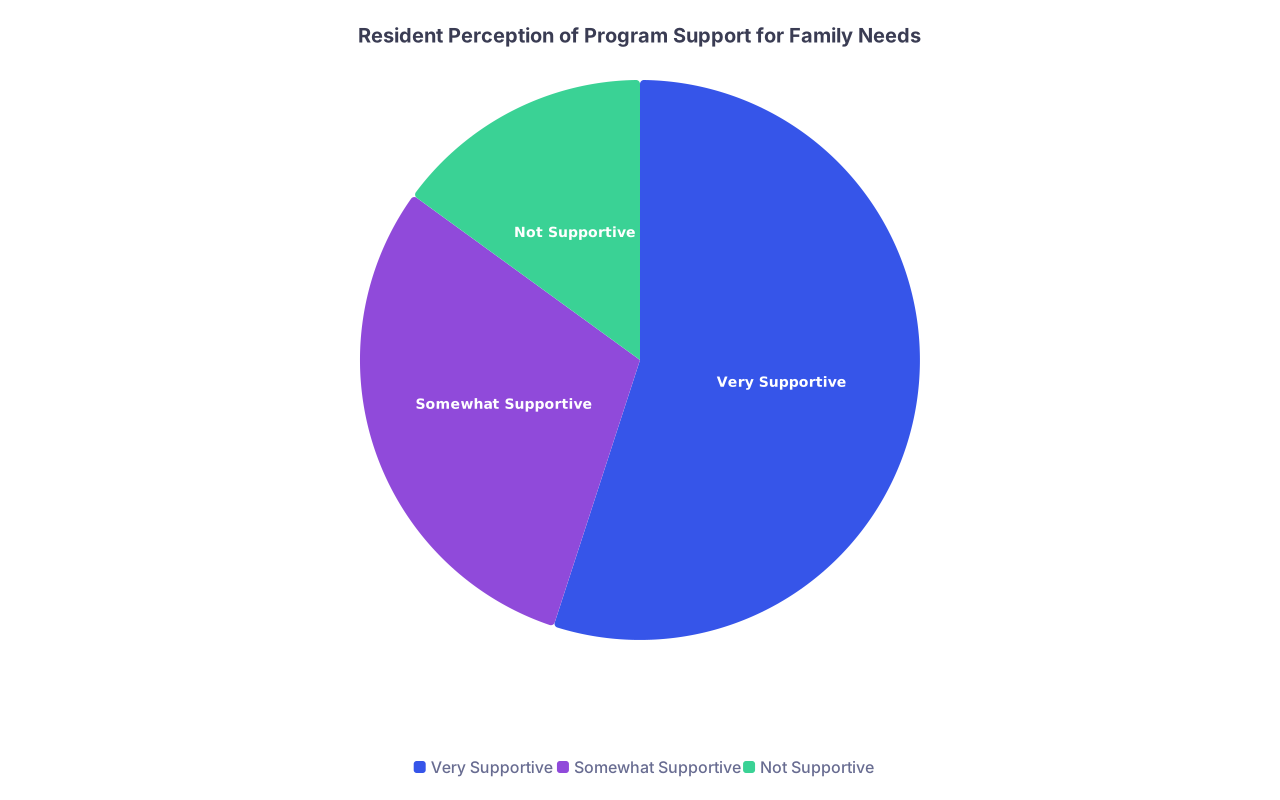
| Category | Value |
|---|---|
| Very Supportive | 55 |
| Somewhat Supportive | 30 |
| Not Supportive | 15 |
You are not being “dramatic” for wanting these green flags. You are trying to keep yourself functional for 3–7 years in a job that already pushes people to their breaking point.
FAQ: Anxious About Being Far from Family
1. Will being far from my family automatically make residency unbearable?
No, not automatically. I’ve seen people from across the country do fine because the program had strong peer support, reasonable schedules, and leadership that actually treated them like humans. But if you’re already anxious and you end up in a rigid, unsupportive program far away, the distance can absolutely magnify everything. That’s why you’re interrogating this now—not after Match Day.
2. Can I ask about family and time off without hurting my chances at a program?
Yes—if you ask the residents, not the PD in a formal interview. Save the blunt emotional questions for socials, breakout rooms, or follow‑up emails to current residents. Programs expect you to care about support and wellness. The key is to ask how things work in practice, not to say, “I’ll need to fly home every month; is that okay?”
3. Should I rank programs closer to home higher just because I’m scared of being far away?
If proximity to family is a major part of your emotional stability, then yes, that should matter. But don’t blindly pick a toxic program near home over a genuinely supportive one far away. If the far program has concrete evidence of strong support, flexible scheduling, and residents who are doing okay emotionally, that might actually be the safer choice than a malignant place 30 minutes from your parents.
4. Is it realistic to fly home during residency more than once or twice a year?
It can be. I’ve seen residents fly home 3–4 times a year if: flights weren’t insane, schedules were released reasonably early, and the program didn’t treat every day off like a precious relic. But some programs make it nearly impossible—either because the cost of living is brutal, call schedules are rigid, or there’s a culture of guilt around being away. That’s why you ask residents: “Realistically, how many times per year do you get home?”
5. What if I move far and then a family member gets seriously ill? Did I ruin everything?
You didn’t ruin anything. You made the best choice you could with the info you had. If something big happens, what matters is how your program responds: Do they help you rearrange rotations? Give you leave? Support your mental health? This is exactly why you ask, before ranking, “Has anyone had a family crisis here, and what happened?” The answer tells you whether future‑you will be trapped or supported.
6. I’m embarrassed to admit how dependent I feel on my family. Should I just “toughen up”?
You don’t need to perform fake independence to be a good doctor. Some people truly function better with family nearby. Others can adapt with the right support system elsewhere. The worst move is pretending you’re fine being far away, matching somewhere isolating, and then white‑knuckling your way through three miserable years. Be honest with yourself now. Ask the hard questions. Then rank in a way that respects how you’re actually wired—not how you wish you were.
Open a document right now and write down the top 5 questions from this article that hit your deepest fears. Then, for your next interview or resident social, commit to asking at least 2 of them out loud. Not in your head. Not “if it feels right.” Actually ask—and pay close attention to how the residents answer.