
The loudest residents are not always the happiest ones—and they’re definitely not the only ones who belong there.
If you’re an introvert staring down residency applications, the fear is very specific: What if I match into one of those programs that’s all “we’re a family,” constant group hangs, game nights, weekend retreats, endless WhatsApp chats… and I just want to go home, shut the door, and not talk to anyone?
And under that is the darker fear: If I don’t fit that culture, will they think I’m unfriendly? Will it hurt my evals? Will I be miserable for three to seven years?
Let’s walk through this like someone who is actually anxious, not some generic “you’ll be fine” pep talk.
The Real Fear: “Big Social Culture” = “Mandatory Extroversion”
Programs love to market themselves as “tight-knit,” “very social,” “we do everything together.” On paper it sounds nice. In your brain it sounds like: nonstop forced bonding with people you barely know while you’re already exhausted.
Here’s the thing nobody says out loud enough:
“Big social culture” rarely means everyone goes to everything all the time and if you don’t, you’re weird. It usually means:
- There’s a big group that likes hanging out
- A smaller group that shows up sometimes
- And a quiet chunk of residents that show up rarely, or never, and still do fine
I’ve watched interns who:
- Never went to Friday bar nights
- Skipped every “optional” brunch
- Showed up only for the mandatory retreats and occasional free food
They still got good evals, strong letters, and fellowship spots. Were they the “program social chairs”? No. But they weren’t punished for it.
What does hurt you isn’t being introverted. It’s being:
- Unreliable
- Disrespectful
- A bad teammate on the actual job
You can be quiet and still be a great, well-liked resident. You just can’t be checked out or dismissive.
How to Decode “We’re Very Social” During Interview Season
You need to stop taking those words at face value and start translating them.
When a program says “we’re super social,” it can mean wildly different things. Your job is to figure out which version they are.
| Phrase You Hear | What It Often Means |
|---|---|
| Very social | People hang out, but not mandatory |
| Close-knit, family | People are friendly, know each other |
| We do a lot outside work | There are group options, not obligations |
| Everyone hangs out together | Core group is very visible socially |
| Big retreat culture | 1–2 big events, rest is optional |
Questions to Ask (Without Sounding Weird)
You don’t need to ask, “Will I be punished if I go home and don’t talk to anyone?” (even if that’s what you mean). You can ask:
- “How many residents usually go to the social events?”
- “Are there residents who don’t really do the social stuff? How do they fit in?”
- “What does support look like for someone who recharges alone after work?”
- “Is there pressure to attend things outside of work?”
Watch their faces when you ask. The awkward pause or laugh tells you a lot.
Red flag answers:
- “Oh, pretty much everyone goes to everything.”
- “We really expect people to be involved in all aspects of the program.” (Said with a kind of tight smile.)
- “If you don’t like hanging out, this probably isn’t the best fit.” (Honestly, that’s actually helpful honesty.)
Green-ish flag answers:
- “Some people are very social, others go home to their families or just rest. It’s fine.”
- “We have a lot of optional stuff; you can engage as much or as little as you like.”
- “People show up when they can. Nobody keeps score.”
You’re not looking for a monastery. You’re just making sure you won’t be shamed for having limits.
What Actually Matters for Your Survival (More Than “Social Vibes”)
This is where anxiety loves to lie to you. It tells you the vibe will make or break your whole life. But there are other things that impact your day-to-day sanity way more than whether there’s a group chat brunch every Sunday.
Here’s what quietly matters more:
- Schedule: Are you constantly on q4 call or night float? If you’re drained 24/7, no amount of friendly residents will save you.
- Support on bad days: Do seniors and attendings help when your service explodes? Or do they throw you to the wolves?
- Respect for boundaries: If your program leadership rolls their eyes at time off, they’re not going to respect your social limits either.
- Psychological safety: Can you say “I don’t know” without being humiliated? That’s much more important than being the life of the party.
If you’re trying to figure out fit, keep glancing back at those things. Otherwise you’ll over-focus on “social culture” and underweight everything else.
Being an Introvert Doesn’t Equal Being a Bad Teammate
Here’s the ugly thought most introverts won’t say out loud:
“I’m scared they’ll think I’m cold. Or lazy. Or not a team player.”
You don’t fix that by pretending to be extroverted. You fix it by being a visibly good colleague in very specific ways that don’t require you to be loud.
Things that actually show you’re a team player:
- You answer pages and messages quickly.
- You check in with your co-interns on rough days: “Do you need help with notes?”
- You pre-round thoroughly so no one else gets blindsided.
- You show up on time. You hand off cleanly. You don’t dump work.
- You thank nurses, techs, and staff. Not performatively—just consistently.
None of that requires you to be the funny one at bar night or the main character on the group text.
Where introverts sometimes get misread is when:
- You look like you’re avoiding everyone (head down, always leave immediately).
- You never engage even in small, low-stakes moments (lunch table, quick chat before rounds).
- You rarely acknowledge people’s humanity (no “good morning,” no eye contact).
You don’t have to be chatty. You do need to occasionally show you see the people you work with.
Concrete Survival Strategies in a “Big Social” Program
Let’s say worst case scenario happens—you end up somewhere much more extroverted than you’d hoped. Not a theoretical fear, an actual thing.
Can you still survive? Yes. Uncomfortably at times, but yes.
Here’s what it can look like in practice:
1. Decide Your Baseline Participation
Literally set a rule for yourself before July 1.
For example:
- “I’ll go to 1–2 social things a month. Max.”
- “I’ll show up to most big official events, but leave early.”
- “I’ll almost always go to free food events in the hospital, but not late-night bars.”
If you don’t pre-decide this, you’ll spiral every time: Should I go? Will they think I’m rude? Am I wasting a networking opportunity?
Make the rule, then just follow it mechanically.
2. Use “Arrive Early, Leave Early”
This is the least talked about but most effective introvert hack.
Show up close to the start of an event. Stay for 45–60 minutes. Talk to a few people. Then leave. Nobody tracks your exit time. They just remember you were there.
You get:
- Face time with co-residents
- Some social credit
- Less exhaustion because you’re not stuck for three hours
And you still get home before your brain hits total shutdown.
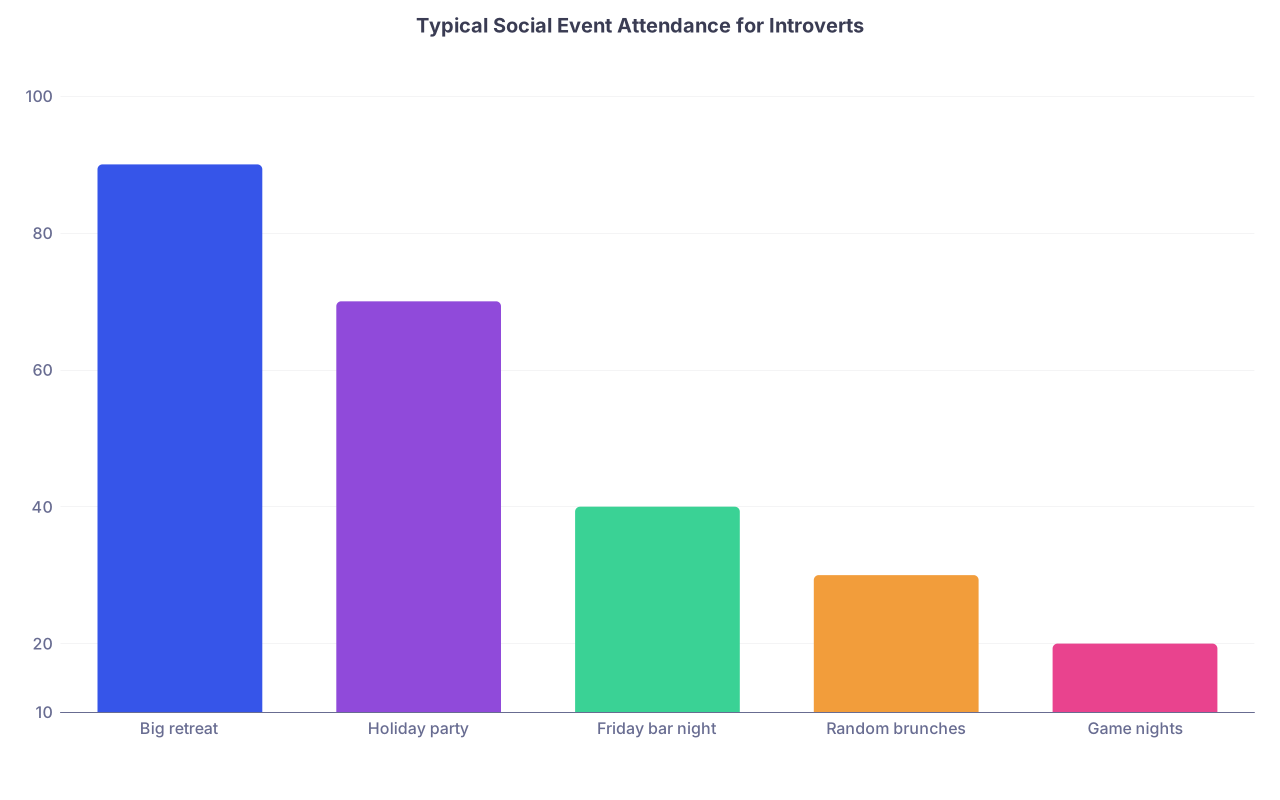
| Category | Value |
|---|---|
| Big retreat | 90 |
| Holiday party | 70 |
| Friday bar night | 40 |
| Random brunches | 30 |
| Game nights | 20 |
3. Create “Micro Social” Instead of Group Social
Big groups are draining. Small, focused interactions are way easier.
Options:
- Join one co-resident for coffee after sign-out once every couple weeks.
- Eat lunch with 1–2 people instead of the huge resident table.
- Ask a senior, “Hey, I’m applying cards. Can we chat for 15 minutes sometime?”
You end up building real relationships without constantly swimming in a 15-person crowd.
4. Have Stock Phrases Ready
You don’t want to be inventing polite exits while your brain is fried. Script them now:
To decline:
- “I’m wiped. I’m going to head home and sleep, but thank you for inviting me.”
- “I’m bad at late nights on call weeks. Rain check for another time?”
To leave early:
- “I’ve got an early start tomorrow, I’m going to head out. It was good seeing you.”
- “I’m hitting my wall, but I’m glad I came by for a bit.”
To avoid over-explaining:
- “I’m more of a low-key person, but I really like working with you guys.” (This frames it as temperament, not rejection.)
People understand “I’m tired.” They are tired. You don’t owe them a personality justification.
Red Flags: When a Social Culture Might Actually Be Toxic
There are programs where the “we’re all a big family” line is code for something less cute:
- They police who “fits” and who doesn’t.
- People who don’t drink or socialize get subtly sidelined.
- Social events blur boundaries with leadership in sketchy ways.
You can’t always see this from the outside, but you can catch hints.
Watch for:
- Residents teasing each other in a way that feels mean, not warm.
- Everyone talking about the same 3–4 “popular” residents.
- Jokes about “you won’t survive here if you’re not fun.”
- Residents apologizing way too much for normal boundaries (“Sorry, I left early, I know I’m lame”).
One big warning sign: when every resident you meet mirrors the same personality—loud, high-energy, center-of-attention—and there’s no visible quieter type anywhere. That’s not because quieter people don’t exist. It’s usually because they don’t stay. Or don’t match there in the first place.
If you see that, don’t gaslight yourself. Put that program lower on your rank list.
How to Assess Culture When You’re Socially Drained on Interview Day
Nobody talks about the fact that interview season itself is social nightmare mode for introverts. You’re trying to judge programs while your social battery is in the red.
Here’s a simple framework so you’re not just going off vibes of “they seemed nice”:

| Step | Description |
|---|---|
| Step 1 | Interview Day |
| Step 2 | Look for Quiet Types |
| Step 3 | Possible Culture Clone |
| Step 4 | Social Culture Probably Flexible |
| Step 5 | Social Pressure Risk |
| Step 6 | Program May Be Safe for Introverts |
| Step 7 | Consider Lower on Rank List |
| Step 8 | Residents Seem Varied? |
| Step 9 | Quiet Residents Happy? |
Pay attention to:
- Is there at least one resident at the dinner who’s quieter, more low-key, and people aren’t steamrolling them?
- Does anyone talk openly about personal time, hobbies, partners, or kids without getting mocked?
- When you say “I recharge alone,” do they nod like “same,” or look mildly confused?
You’re exhausted, yes. But those little reactions tell you a lot more than the polished slide deck.
The Worst-Case Scenario (And Why It Still Isn’t Fatal)
Let’s run your absolute nightmare:
You match into a program that’s loud, social, “we’re a family,” bar nights every week, WhatsApp chaos, and you feel like a ghost. You try to show up occasionally, but you’re never really “in” with the main circle. You’re afraid they think you’re weird or standoffish.
What happens?
- You learn your job. You take care of patients.
- You find 1–3 people you can actually breathe around.
- You become “the quiet one who is really solid on rounds.”
- You have awkward stretches. You feel left out sometimes. It sucks.
- You still graduate. You still get board-certified. You still match into fellowship if you want it.
Would that be fun? No. Would it be unbearable every second? Also no. Human brains adapt. And a lot of the social noise fades as everyone gets busier, has kids, or moves on to their own subspecialty tracks.
If you’re unlucky and end up in a culture that really doesn’t fit, you:
- Protect your energy where you can.
- Anchor yourself in being reliable, kind, and competent.
- Build a life outside the program—friends, therapy, hobbies, partner, family.
- Maybe explore transferring if it’s truly toxic, not just awkward.
You’re not trapped in some high-school-cafeteria dynamic forever.
Quick Reality Check: What You Actually Control
You cannot control:
- Who’s the loudest in your class
- Whether your program has 800 social events
- Who gets tagged on Instagram the most
You can control:
- Showing up as a decent, respectful human at work
- Setting a sane baseline for what you’ll attend
- Building a couple of real relationships instead of chasing the group
- Protecting your off-time like the limited resource it is
And here’s the bottom line you probably need to hear most:
Being introverted is not a professional flaw. It’s a temperament. Medicine needs people who think before they talk, who listen more than they perform, who can sit with patients quietly and not fill every silence with noise.
You’re not broken. You’re just not the person yelling “shots!” at the holiday party. And that’s fine.
FAQ (4 Questions)
1. Should I avoid any program that calls itself “very social”?
Not automatically. Tons of programs say “we’re really social” but have a mix of personalities and low pressure to attend everything. You’re looking for flexibility, not zero social life. If residents describe options, not obligations—and you see quieter people who seem comfortable—you don’t need to run.
2. Will being introverted hurt my evaluations or chances for fellowship?
No, not if you’re a good teammate and solid clinically. People write glowing letters for quiet residents all the time. What hurts you isn’t being low-key; it’s being unreliable, unprepared, or rude. You can be soft-spoken and still be described as “an invaluable member of the team” in your letters.
3. How honest should I be about being introverted on interviews?
You don’t need to lead with “I hate parties,” but you can be real. Saying “I’m more low-key socially, but I really value strong working relationships” is completely fine. If a program reacts badly to that, that’s useful data—you probably wouldn’t be happy there anyway.
4. What if my co-residents think I don’t like them because I don’t go out much?
You can offset that by being warm in small ways: saying good morning, asking about their weekend once in a while, offering help with tasks, showing up briefly to the occasional event. If you’re kind and dependable at work, most people quickly read you as “quiet but nice,” not “cold and standoffish.”
Key Takeaways
- “Big social culture” does not automatically mean “you must be extroverted or you’ll fail.”
- Your survival depends far more on schedule, support, and basic respect than on constant socializing.
- You can be a quiet, competent, kind resident—set your boundaries, show up selectively, and you’ll be okay.