
The worst residency decisions are made in October; the smartest ones are made in December and January.
By this point in the cycle, you’re not trying to impress programs anymore. You’re trying to protect your future self from five years of “I should’ve looked harder.” December and January are where second looks and targeted follow-up either sharpen your rank list—or quietly poison it with noise and flattery.
Here’s how to run these two months like a disciplined project, not a vibes-based tour.
Big-Picture Timeline: December–January
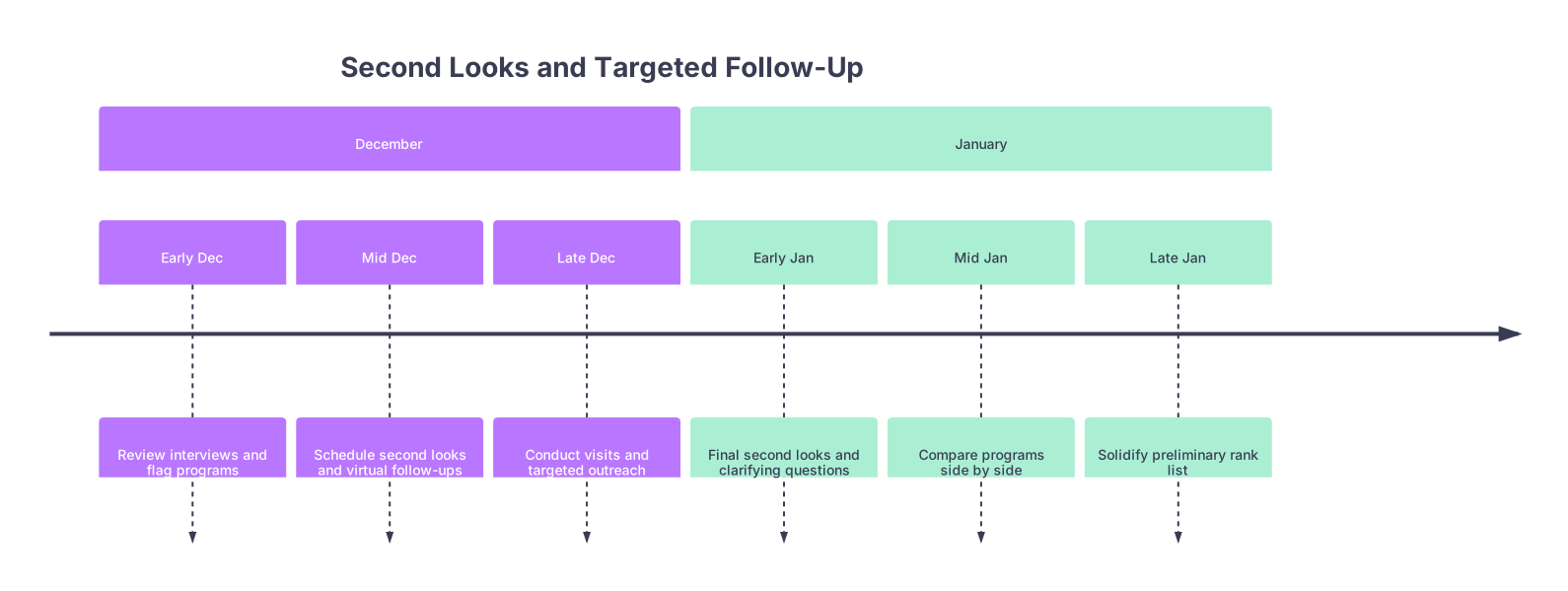
| Period | Event |
|---|---|
| December - Early Dec | Review interviews and flag programs |
| December - Mid Dec | Schedule second looks and virtual follow-ups |
| December - Late Dec | Conduct visits and targeted outreach |
| January - Early Jan | Final second looks and clarifying questions |
| January - Mid Jan | Compare programs side by side |
| January - Late Jan | Solidify preliminary rank list |
At this stage, you should be:
- Past the bulk of interviews (or finishing the tail end).
- Holding a messy list of programs you “liked” with fuzzy reasons.
- Hearing hallway rumors about second looks, “love letters,” and gamesmanship.
You’re not going to out-maneuver the match algorithm with cute strategies. But you can make better decisions with structured second looks and smart communication.
Early December: Sort, Flag, and Decide Who Gets Your Time
At this point you should stop reacting and start triaging.
Step 1: Build your December dashboard (1–2 days)
Open a simple spreadsheet or note and list every program you interviewed at. For each, fill in:
- Overall gut feeling (1–10)
- Training quality (1–10)
- Location/life fit (1–10)
- Red flags (brief notes)
- Unanswered questions
- Whether second look is:
- Not needed
- Helpful if easy
- High priority
You’re giving yourself a quick, emotional x-ray before the memories blur.
Now, add one more column: “Second Look Type” with three options:
- In-person: Only if it could realistically change your ranking.
- Virtual follow-up: Zoom, phone, or email to residents/faculty.
- No follow-up: You already know enough—or it clearly falls down your list.
Step 2: Identify true contenders (first week of December)
At this point you should know:
- Roughly your top 5–8 realistic programs
- A middle group that’s “fine but fuzzy”
- A bottom group that you’d only rank to avoid going unmatched
Focus second looks and targeted follow-up on:
Programs in your probable top 5–8, where:
- You’re torn between similar places
- You had a weird/atypical interview day
- You never got to see the clinical spaces or residents off-script
One or two “dark horse” programs:
- You liked the vibe but don’t have enough data
- Or you barely remember the day, but on paper they’re excellent
If you’re trying to see ten programs in person in January, you’re not clarifying—you’re procrastinating.
Mid December: Decide If and How to Do Second Looks
Second looks are not magic. Done wrong, they’re a time sink that mostly benefit airlines and your anxiety. Done right, they answer very specific questions.
When a second look is worth it
At this point you should strongly consider an in-person second look if:
- You’re choosing between 2–3 programs that feel very similar on paper.
- You never saw the hospital/clinics and that environment really matters to you.
- You want to verify resident culture beyond the polished interview script.
- You’re seriously considering moving a mid-tier program way up your list.
Second looks are least useful for:
- Programs clearly in your bottom half.
- Places where your main concern is location (no visit will fix hating the city).
- Highly structured, large programs that already gave you a clear sense of operations.
How programs actually view second looks
Let me be direct: most PDs will tell you “second looks don’t affect our rank list.” Often true. Not always.
What second looks definitely do:
- Put your name in front of residents and chiefs again.
- Show whether you’re normal to work with at 6 pm on a random day.
- Clarify your fit for them as much as for you.
What they don’t do reliably:
- Turn you from marginal to must-have.
- Override weak interview performance.
- Fix board score or fit concerns.
Treat second looks as information-gathering for you, not as a performance.
Late December: Plan Your Second Looks and Follow-Up, Step-by-Step
At this point you should be locking in any travel-dependent visits and scheduling virtual follow-ups around holiday schedules. Programs get weird this month—clinics slow, conferences move, people vanish.
Step 1: Prioritize by impact and logistics (1–2 days)
Make a short list:
- 1–3 programs: Possible in-person second looks
- 3–5 programs: Virtual follow-up (Zoom/phone/email with residents or faculty)
Then reality-check with distance, cost, and calendar. If holidays and money make in-person impossible, fine. Don’t bankrupt yourself to see a hallway.
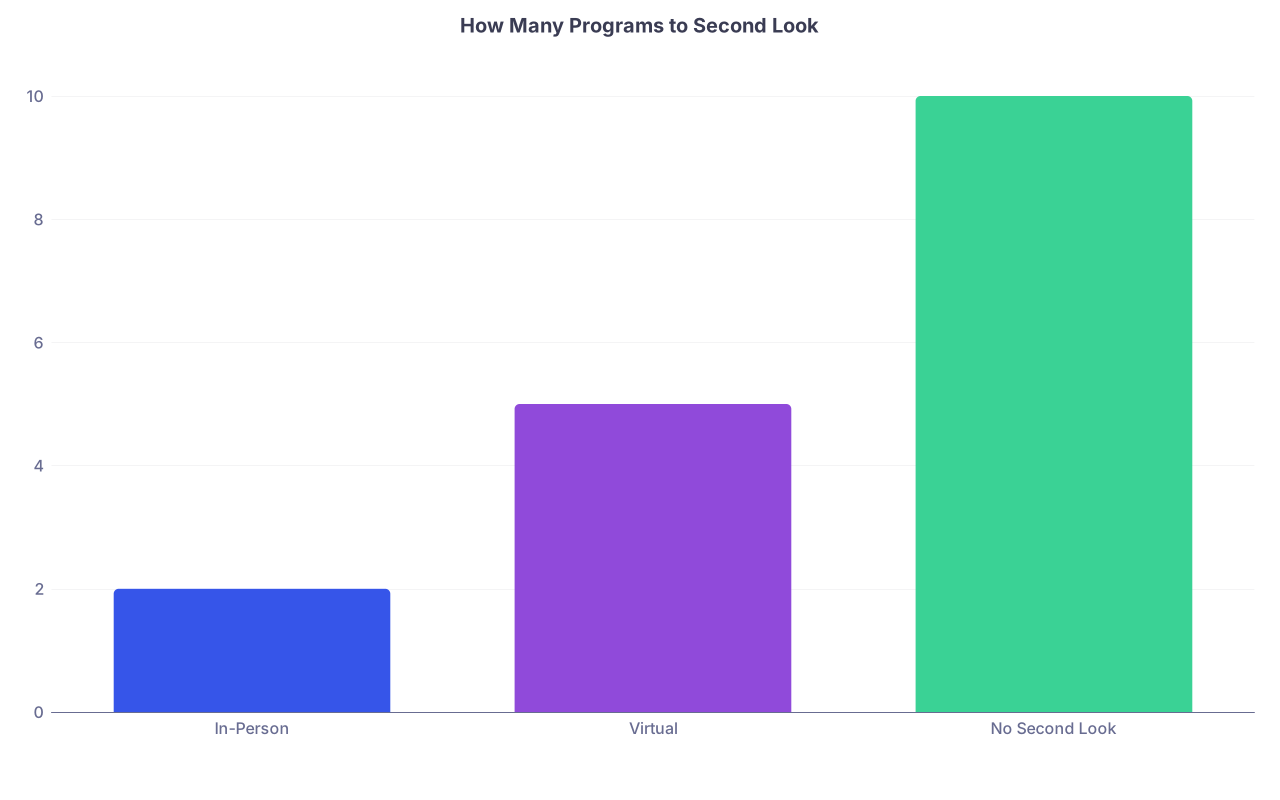
| Category | Value |
|---|---|
| In-Person | 2 |
| Virtual | 5 |
| No Second Look | 10 |
Step 2: Requesting a second look (mid–late December)
You don’t need a dramatic email. Keep it short and specific. Aim this at the program coordinator, cc the contact given in your interview info if relevant.
Template you can adapt:
Subject: Second look visit – [Your Name], [Specialty] applicant
Dear [Program Coordinator Name],
I interviewed with [Program Name] on [date] and remain very interested in the program. I’m hoping to arrange a brief second look in [late December / early January] to better understand the day-to-day resident experience and clinical environment.
I’d be grateful for the opportunity to:
– See the inpatient units and primary clinic
– Speak informally with a few residents, if possibleI’m available on [2–3 specific dates]. Please let me know if any of these might work within your policies for second look visits.
Best regards,
[Your Name]
AAMC ID: [ID if applicable]
[Email] | [Phone]
If a program has an explicit “no second looks” policy, do not push. That’s not a test.
Step 3: Set sharp goals for each visit (the day before)
At this point you should write down 3–5 concrete things you want to answer at each program. Example categories:
- Resident morale: Are people actually happy at 3 pm?
- Workload: How many patients on a typical call? How often are people staying late?
- Faculty support: Do attendings teach or just staff?
- Off-service quality: Are outside rotations trash or well-integrated?
- Location/life: Reasonable neighborhoods, commute, partner/job considerations.
Carry these with you. Force yourself to leave with answers.
How to Run the Actual Second Look Day
This is not an audition rotation. It’s also not a social hangout. Think “structured curiosity.”
During the visit
At this point you should:
- Dress business casual unless told otherwise (no full suit, no scrubs unless it’s a shadowing day).
- Spend more time with residents than with PDs or APDs.
- See actual clinical spaces: wards, call rooms, clinic, resident workroom.
- Eat in the cafeteria or break room if possible—watch how people interact.
Questions that actually reveal things:
- “If you could change one thing about this program, what would it be?”
- “What’s the worst rotation here, and how bad is ‘bad’?”
- “How responsive is leadership when residents give feedback?”
- “What do graduates usually do—fellowship vs hospitalist vs private?”
- “What does a rough call night look like in terms of patient volume?”
And watch for what people say without saying it:
- Residents pausing before answering.
- Eye contact between juniors and seniors when you ask about culture.
- How often people mention “we’re short-staffed” or “we’re surviving.”
Red flags to take seriously
During the visit, at this point you should mentally highlight if you see:
- Residents talk openly about burnout, but leadership brushes it off.
- No clear backup system when people are sick.
- Residents dodge your questions about how complaints are handled.
- Nobody can describe where recent grads matched for fellowship.
One afternoon doesn’t define a program. But consistent discomfort across several people usually means something real.
Virtual Second Looks and Follow-Up (for When Travel Is Dumb)
Travel isn’t always worth it. Many applicants get everything they need from targeted virtual follow-up.
Resident-level follow-up
Reach out to a resident you clicked with on interview day. Short, direct message:
Hi [Name],
Thanks again for speaking with us on the interview day for [Program]. I’m strongly considering ranking [Program] highly and had a few specific questions about…
[2–3 bullet questions]
If you’re open to a quick 15–20 minute call in the next couple of weeks, I’d really appreciate it. Totally fine if your schedule is packed—email answers are also great.
Thanks again,
[Your Name]
You’re looking for the same content as in-person, just compressed.
Faculty/program leadership follow-up
At this point you should use leadership follow-up sparingly and with purpose:
- Clarify specific training features (schedule, electives, scholarly support).
- Ask about dual-career or family logistics when that’s a major factor.
- Understand nuanced policy issues (moonlighting, research time, call structure).
Avoid anything that sounds like you’re fishing for special treatment or guarantees.
Targeted Program Follow-Up: Smart vs Desperate
Let me be blunt: a lot of January follow-up is noise. You don’t want to contribute to the pile of identical “you’re my top choice” emails that PDs roll their eyes at.
What good follow-up looks like
At this point you should send targeted messages when:
- You have substance to add:
- New publication accepted.
- Significant award, leadership role, or rotation feedback relevant to their program.
- You want to reaffirm genuine interest with specifics.
Example of a reasonable, non-cringey email:
Subject: Update and continued interest – [Your Name], [Specialty] applicant
Dear Dr [PD Last Name],
I wanted to thank you again for the opportunity to interview at [Program] on [date]. My visit confirmed that I’m particularly excited about [specific features – e.g., the X track, the strong critical care exposure, and the supportive resident culture].
Since we last spoke, I [brief update: had a manuscript accepted in X / completed my sub-I in Y with strong exposure to Z]. This experience reinforced my interest in training in a program with [connect to their strengths].
I remain very interested in [Program Name] and would be thrilled to train there.
Best regards,
[Your Name]
Note the absence of manipulative language or promises the Match algorithm does not care about.
What bad follow-up looks like
At this point you should not:
- Email weekly “just checking in” notes.
- Ask if they plan to rank you highly.
- Promise them you’ll rank them #1 and then send the same email elsewhere.
- Send long, emotional letters with no new information.
Programs remember the obviously insincere stuff.
January: Turn Observations Into a Real Rank List
By early–mid January, you should shift from collecting data to deciding.
Week-by-week breakdown
First week of January
At this point you should:
- Finish any planned second looks.
- Close remaining loops with residents/faculty you emailed.
- Do a rapid re-scan of your notes from every program.
Second week of January
Now you start building a preliminary rank list. Not final, but close.
Divide programs into tiers:
- Tier 1: Places you’d be thrilled to match.
- Tier 2: Solid, acceptable fits.
- Tier 3: Backup options only.
Rank within each tier using:
- Training quality
- Fit with your life goals (geography, family, future plans)
- Resident culture
- Your second look/follow-up impressions
Check your list against reality:
- Are you over-emphasizing brand name over your actual happiness?
- Are you ranking one program high just because they “liked you”?
Third week of January
At this point you should:
- Do side-by-side comparisons for close calls. Literally table them.
| Factor | Program A | Program B | Program C |
|---|---|---|---|
| Training intensity | High | Moderate | High |
| Location fit | Strong | Weak | Moderate |
| Resident culture | Excellent | Good | Unclear |
| Fellowship outcomes | Strong | Moderate | Strong |
| Second look impact | Positive | Neutral | Negative |
- Re-read your spontaneous post-interview notes. Those first reactions are often more honest than your current overthinking.
- Adjust for any major new information (program losing accreditation, leadership changing, etc.).
Fourth week of January
You’re not discovering new data now. You’re just wobbling.
At this point you should:
- Lock a working final ranking.
- Put it away for 3–5 days.
- Come back and see if anything feels obviously wrong.
Then stop tinkering.
What Second Looks Should Change—And What They Should Not
Second looks and targeted follow-up should reasonably change:
Your understanding of:
- Resident workload.
- Actual support systems.
- How you and your family would live there.
The order of closely matched programs.
They should not:
- Yank a previously ignored program suddenly to #1 because one resident was charismatic.
- Make you ignore glaring red flags because leadership said nice things.
- Convince you to rank a clearly poor fit high just because it’s prestigious.
One more thing: if a second look leaves you feeling unsettled and you can’t fully articulate why—listen to that. Not every concern has to be quantifiable.
Quick Visual: What You’re Actually Doing in These Two Months
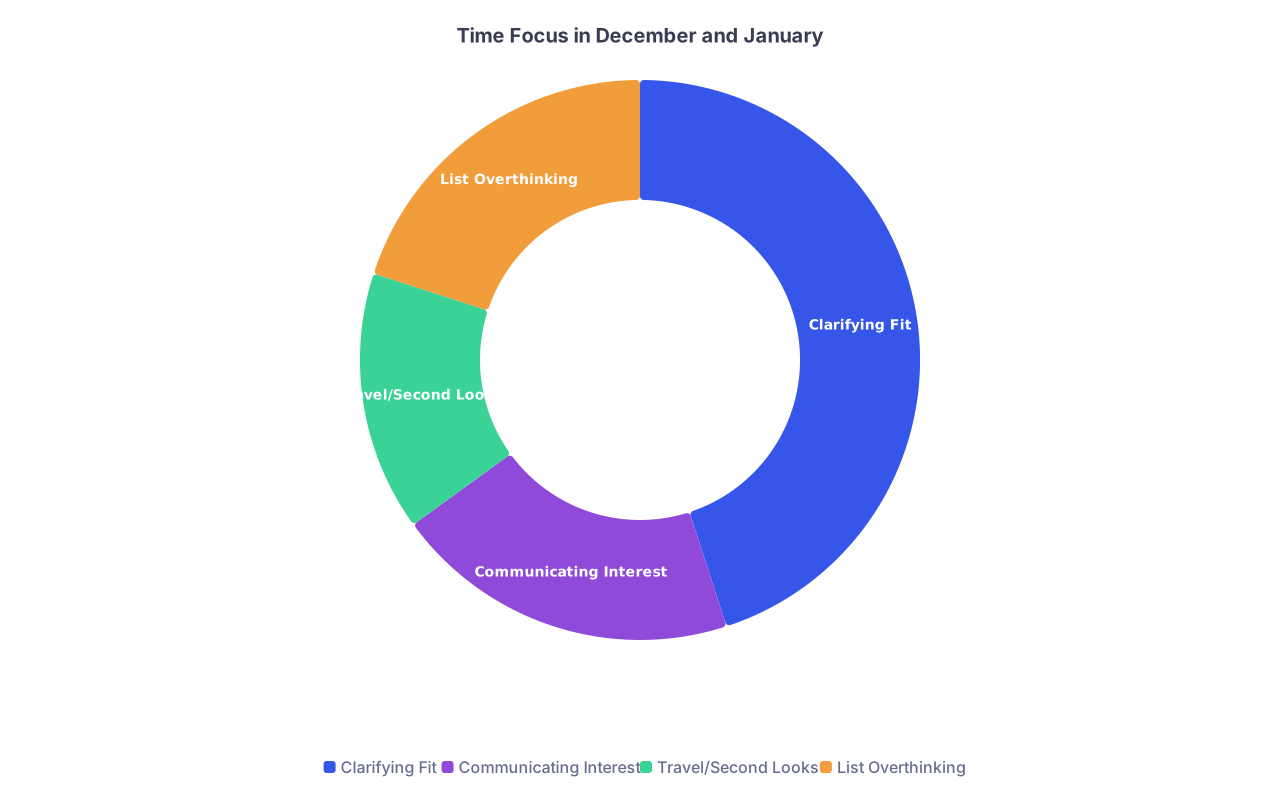
| Category | Value |
|---|---|
| Clarifying Fit | 45 |
| Communicating Interest | 20 |
| Travel/Second Looks | 15 |
| List Overthinking | 20 |

Final Week of January: Lock It In
By the last week of January, you should be done with second looks and follow-up.
Your checklist:
- All second looks completed (or consciously skipped).
- Key questions about top 5–8 programs answered.
- No programs on your list feel like total black boxes.
- You have a clear, honest ordering based on your priorities, not flattery or pressure.
- You’ve stopped emailing programs unless something truly major changes.
Then your job is to sit with the list. Not obsessively rearrange it daily.

The Short Version: What Actually Matters
By the time February hits, your December and January work should have given you three things:
- Clarity over illusion – Second looks and targeted follow-up used to answer specific questions, not to impress programs.
- A brutally honest rank list – Ordered by how well each place fits the life and physician you actually want, not the logo you want on your badge.
- A sense of peace – Not because you found a perfect program, but because you did the legwork now so you won’t be asking “what if?” five years from now.