
If you wait until ERAS season to figure out what you want from residency, you are already behind.
MS3 winter is not “too early.” It is exactly when smart people start collecting the right data so that MS4 you is not making huge decisions based on vague vibes and random Reddit threads.
You are in the thick of clerkships. You are finally seeing real teams, real call schedules, real residents. At this point, you should stop passively observing and start systematically collecting information for future residency choices.
Below is a concrete, time-based guide: month-by-month through MS3 winter, then week-by-week actions, and finally what to track on a per-shift basis.
Big-Picture Timeline: MS3 Winter to Early MS4
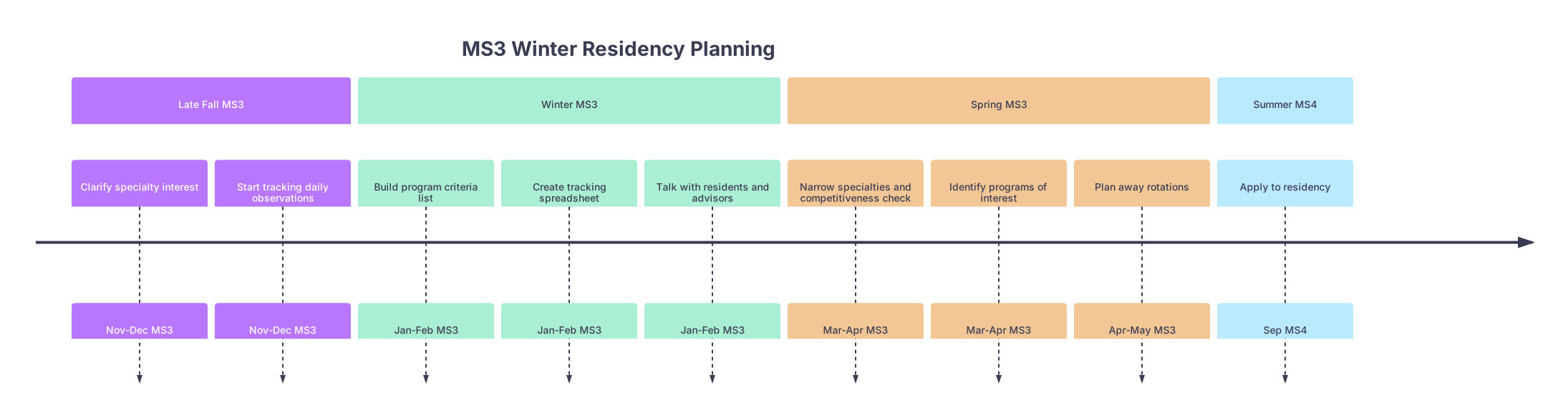
| Period | Event |
|---|---|
| Late Fall MS3 - Clarify specialty interest | Nov-Dec MS3 |
| Late Fall MS3 - Start tracking daily observations | Nov-Dec MS3 |
| Winter MS3 - Build program criteria list | Jan-Feb MS3 |
| Winter MS3 - Create tracking spreadsheet | Jan-Feb MS3 |
| Winter MS3 - Talk with residents and advisors | Jan-Feb MS3 |
| Spring MS3 - Narrow specialties and competitiveness check | Mar-Apr MS3 |
| Spring MS3 - Identify programs of interest | Mar-Apr MS3 |
| Spring MS3 - Plan away rotations | Apr-May MS3 |
| Summer MS4 - Apply to residency | Sep MS4 |
At this point (MS3 winter), your goal is not to pick a specific residency program. Your goal is to start gathering structured data so that when application season hits, you are making clear, aligned choices instead of guessing.
Step 1 (Late Fall – Early Winter MS3): Define What Actually Matters To You
Most students say “good training, good people, good location.” That is useless. Every program claims that. You need operationalized criteria.
At this point you should:
Block off 60–90 minutes on a day off.
No pager. No group chat. Just you, your brain, and a document.Build three lists: non‑negotiables, preferences, and bonuses.
Use this as a starting point and edit ruthlessly:
A. Non‑negotiables (things you would not compromise on)
Examples by category:
Location / Life
- Must be within X hours of partner/family.
- Cannot be in a city with very high cost of living on resident salary.
- Must be in a city with public transport because you do not drive.
Program Structure
- 3-year vs 4-year (for EM, IM prelim + advanced, etc.).
- No 24+ hour call (or you are fine with it).
- Must have strong categorical positions (not mostly prelim).
Training Outcomes
- Graduates match into competitive fellowships in your likely interest.
- Strong board pass rates consistently over several years.
B. Strong preferences (you can bend on these, but they matter)
Education
- Protected didactics actually protected (pages held).
- Simulation lab use more than once a year, not just for show.
- Resident feedback that faculty genuinely teach on rounds, not just pimp.
Culture / Support
- Program director (PD) knows residents by name and career plans.
- Real wellness support: easy access mental health, no retaliation for seeking help.
- Reasonable approach to remediation rather than “sink or swim.”
Clinical Experience
- High volume vs moderate volume (depends on your style).
- Breadth of pathology (county vs private, VA exposure, etc.).
- Level 1 trauma center vs community hospital (for relevant fields).
C. Bonus factors (nice, not essential)
- Paid resident parking or easy commute.
- Meal stipends that actually cover a meal.
- Good moonlighting opportunities mid‑residency.
- City with decent dating pool / social scene aligned with your life.
Write them down. Rank them. You are creating the filter that all residency data will flow through.
Step 2 (Mid-Winter MS3): Build Your Information Capture System
If you try to “remember” which programs sounded good, you will be lying to yourself. You need a tracking system now.
At this point you should:
Week 1: Create a Residency Info Spreadsheet
Use Google Sheets or Notion. The tool does not matter. Consistency does.
Core columns I recommend for every specialty:
| Column Group | Example Columns |
|---|---|
| Program Basics | Program name, City/State, Type (University/Community/Hybrid) |
| Workload | Call schedule, Average hours/week, Night float vs 24h call |
| Training | Board pass rate, Fellowship match strength, ICU/trauma exposure |
| Culture | Resident happiness, Faculty mentorship, Diversity & inclusion efforts |
| Logistics | Cost of living, Salary, Benefits, Visa friendliness (if relevant) |
Then add specialty-specific columns (examples):
- Internal Medicine: ICU months, cardiology strength, pulm/CCM presence, hospitalist pipeline.
- Surgery: Case numbers, independent vs integrated subspecialties, early operative exposure.
- EM: ED volume, trauma level, off-service rotations, ultrasound training.
- Peds / OB / Psych / etc.: Adjust for what actually defines a strong program in that field.
Color-code:
- Green = appealing.
- Yellow = neutral/unknown.
- Red = concerning.
You are building a live database. Not a final rank list.
Week 2: Set Up a Quick Capture Note System
During rotations you will not have time to open a spreadsheet mid‑rounds. You need a fast capture method:
- A single dedicated Apple Note / Google Keep note titled “Residency – Daily Observations”.
- Or a small physical notebook that lives in your white coat.
Template you can paste and reuse each day (takes 1–2 minutes):
- Date:
- Rotation / Service:
- Residents: (names optional; focus on PGY levels, vibe)
- Culture: (1–2 sentences – how do they treat each other, nurses, students?)
- Workload snapshot: (rough hours, call status, pace)
- Learning: (1 example of good or bad teaching)
- Program-specific notes: (if these residents are from X program, what stands out?)
At the end of each week, you spend 15–20 minutes transferring the key bits into your spreadsheet.
Step 3 (Ongoing in Winter): What To Observe and Ask On Each Rotation
Right now you are surrounded by free data: residents, fellows, attendings, coordinators. Most students just let it wash past them.
At this point you should:
On Each Inpatient Week
Ask yourself:
Would I want to live this team’s life for 3–7 years?
Pay close attention on:- Post-call mornings.
- Busy admission nights.
- Weekend shifts.
What is the hidden schedule?
Residents will say “we usually leave by 5.” Watch what actually happens.
Information to collect (not all at once; spread over days):
- Typical start and end times on wards vs ICU vs clinic.
- Number of patients per intern on a standard day vs cap.
- Frequency of “staying late to catch up on notes.”
- How often seniors or attendings stay to help crushed interns.
Concrete questions you can ask without sounding annoying:
- “How many patients do you usually carry on this service?”
- “What time do you honestly get home on a typical weekday?”
- “What is the hardest month in this program? What makes it rough?”
- “If you had to choose your program again, would you?”
On Each Clinic/Outpatient Week
This is where you see if the program actually values ambulatory medicine:
- How many clinic days per week/year?
- Are residents seen as cheap labor or as learners?
- Is there real continuity clinic where you build a panel?
Ask:
- “How well do you feel this program prepares you for outpatient vs inpatient?”
- “Do graduates feel comfortable working purely outpatient right after residency?”
Step 4 (Mid‑Winter: January–February): Talk to the Right People, the Right Way
At this point, you should start intentional conversations. Not vague “tell me about residency” chatter.
Your Action Plan for a 2–3 Week Window
Identify 3–5 residents in your maybe‑specialty.
Aim for:
- One PGY‑1: fresh perspective on starting residency.
- One PGY‑2/3+: perspective on progression and leadership.
- Ideally one chief or near‑chief.
Ask for short, focused chats (15–20 minutes).
Phrases that work:
- “I am an MS3 thinking about [specialty]. This winter I am trying to understand what to look for in residency programs. Would you be open to a 15–20 minute chat about how you chose your program and what you would prioritize if you were applying again?”
Use a fixed question set and record answers consistently.
Example question set (pick ~6–8 per person):
- “When you were applying, what 2–3 things mattered most? Would you change that now?”
- “What do you wish you had asked programs about that you did not?”
- “How honest were programs about workload and call? Any red flags in hindsight?”
- “What do you think your program does exceptionally well compared to others?”
- “Where do you see your co-residents getting jobs or fellowships afterward?”
- “If someone is a bit more [academic / lifestyle-oriented / procedural], what should they look for or avoid?”
Log key points from each conversation in a separate sheet tab: “Resident Advice.”
Over time, patterns will appear. Pay serious attention when three different people from different programs all tell you the same thing.
Step 5 (Late Winter: February–March): Reality-Check Your Competitiveness
Fantasy lists cause a lot of Match disasters. You want ambition, not delusion.
At this point you should:
Week 1: Establish Baseline Competitiveness
You need a rough idea of your position by late winter:
- Step 1: Pass vs fail (and any remediation history).
- Step 2 (if taken): score bands.
- Clerkship grades: especially core rotations in your intended field.
- Research: quantity and quality (poster vs first‑author, etc.).
Then compare against realistic ranges for your specialty. This is where data helps:
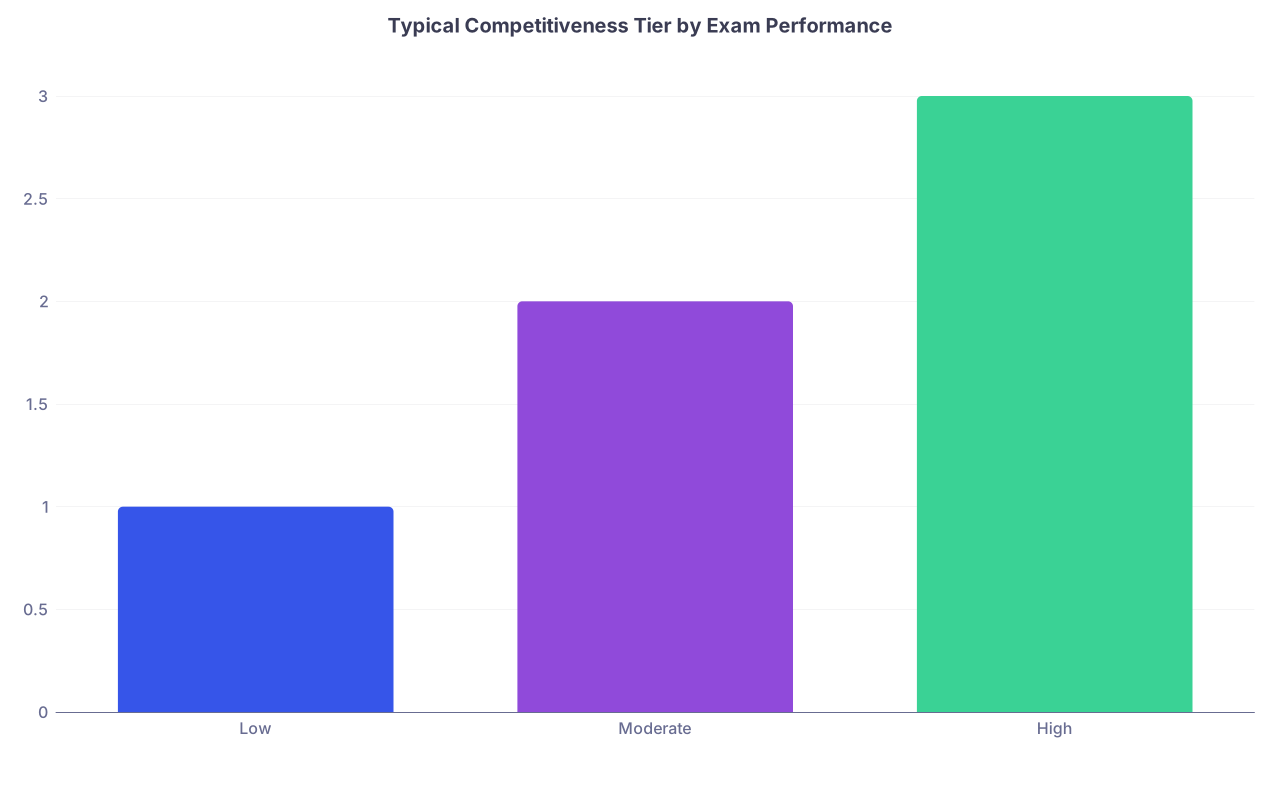
| Category | Value |
|---|---|
| Low | 1 |
| Moderate | 2 |
| High | 3 |
Interpretation is simple:
- Low: Below-average exams/grades for that specialty; need more safety programs and strong letters.
- Moderate: Solidly in the middle; broad list including mid/high tier with some reaches.
- High: Strong scores/grades; can target more competitive programs but still need a distribution.
Then talk honestly with:
- An advisor in your specialty.
- At least one faculty member who has written letters for successful applicants.
Questions to ask:
- “Based on my performance so far, what tiers of programs should be in my realistic target zone?”
- “How many programs do your students usually apply to with a similar profile?”
- “Are there specific programs you would caution me about given my goals?”
Document their answers in your spreadsheet (new tab: “Advisors”).
Step 6 (End of Winter: March): Build a First-Pass Program Interest List
This is not your final ERAS list. Think of it as an imperfect draft.
At this point you should:
Week 1–2: Identify 15–25 “Example Programs”
Use:
- Your home program(s).
- Places where your school’s grads commonly match.
- Programs mentioned repeatedly by residents/faculty.
- A few aspirational “reach” programs and a few obvious “safeties.”
For each, fill out just the basics:
- Location, program type, size.
- Known strengths/weaknesses.
- Any comments on culture you have heard.
You are building anchors. When you later hear, “Program X is more malignant than Program Y but better fellowship placement,” you will know what that actually means to you.
Week 3–4: Start Connecting the Dots
Now combine:
- Your criteria lists (non‑negotiables, preferences).
- Your growing observations and resident interviews.
- Competitiveness assessment.
Patterns to look for:
- Do academic powerhouses align with your life priorities or not really?
- Are community programs actually stronger in the niche you care about (e.g., procedures, autonomy)?
- Are you consistently drawn to certain geographic regions for more than just “I like that city”?
Update your spreadsheet to flag:
- Programs strongly matching your non‑negotiables.
- Programs that are clearly “no” already (do not be afraid to mark them).
Daily / Weekly Checklists for MS3 Winter
To keep this practical, here is how you run this in real time.
Weekly (15–30 minutes, same day each week)
At this point each week, you should:
- Review your “Residency – Daily Observations” notes.
- Transfer 3–5 concrete data points to your spreadsheet:
- Workload pattern.
- Culture anecdote.
- Training strength/weakness example.
- Add 1–2 programs to your “Example Programs” list if you heard about any.
- Write two sentences about how this week changed (or did not change) your specialty thoughts.
Daily (2–5 minutes, end of shift)
End of day, before you leave:
- Rate your day on a 1–5 scale for: “Would I be okay living this life?”
- Jot 1 thing that made the resident job look better.
- Jot 1 thing that made it look worse.
You are training your brain to think like future‑you, not just exhausted MS3‑you.
Example: How This Data Helps Future You
Picture yourself in early MS4, choosing between:
- University Program A – prestigious, heavy call, strong research.
- Community Program B – less known, better hours, more autonomy.
Without winter data, you say: “Prestige is good. Let’s do A.”
With winter data, you look at your spreadsheet and see:
- Every week you rated “24‑hour call culture” as a major negative.
- You consistently wrote that you value hands-on autonomy and earlier responsibility.
- Residents you talked to warned that at big-name places, juniors can be more service than learner.
Now the decision is different. You are not relying on vague impressions. You are matching actual patterns in your preferences with real program features.
That is the entire point of MS3 winter data collection.
FAQ (Exactly 4 Questions)
1. Is MS3 winter too early to start thinking about specific programs?
No. It is too early to finalize a rank list, but it is the perfect time to start building your criteria and data systems. You are close enough to real residency life to observe it honestly, but far enough from ERAS deadlines that you can think without panic. The students who wait until summer MS4 end up frantically googling programs they have never really thought about.
2. What if I am still completely undecided on specialty during MS3 winter?
Then your job is to collect cross‑specialty data: lifestyle, culture, teaching quality, resident satisfaction. Use the same daily note system, but tag each entry with the specialty exposure you had that day. Over a few months, you will see which environments consistently get higher “would I want this life?” scores from you. That pattern is more reliable than whatever sounds cool on paper.
3. How detailed should my residency spreadsheet be right now?
Not extremely. In winter, you want a lean framework: core columns for training quality, workload, culture, and logistics. Aim for 15–25 “example programs” with high-level info, not 80 programs with half-empty rows. You will expand and refine this in late MS3 and early MS4 as your specialty choice and competitiveness become clearer.
4. How honest are residents about their own programs when I ask questions?
Mixed. Some are brutally honest; some are protective or worried about badmouthing their program. That is why you focus on specifics instead of “Is your program good?” Ask about actual schedules, how often they stay late, how easy it is to get help on rough nights, what percentage of grads get the fellowships or jobs they want. Concrete answers are harder to spin and easier for you to compare across programs.
Key points:
- Use MS3 winter to define your non‑negotiables and build a simple, consistent system for capturing residency data.
- Turn daily observations and resident conversations into structured information in your spreadsheet.
- Let patterns over time, not panic in MS4, guide your specialty and program choices.