
What if you match… finally exhale… and then realize halfway through intern year that your program is quietly known for producing residents who can’t operate independently, can’t run a code, and everyone whispers, “Yeah, they’re kind of weak”?
That’s the fear, right? Not just “Will I match?” but “Will I be safe and competent at the end of this, or will I be that attending who still feels like an intern?”
You’re not crazy for worrying about this. I’ve heard versions of this at every level: MS4s whispering on interview trails, interns in stairwells saying, “I feel so behind,” seniors worried they’ve never done a certain procedure alone. The terror of being undertrained is real. And yes, some programs absolutely do a better job at building confident, ready-for-real-life graduates than others.
Let’s talk about how to spot them before you sign away the next 3–7 years of your life.
First: What “Confident Graduate” Actually Means (Not the Sugar-Coated Version)
I don’t mean fake bravado. I mean: could you show up to a community hospital, be the only person in-house at 2am, and not completely fall apart when three bad things happen at once?
Programs that produce that kind of graduate usually have a few things in common:
- You actually do the work. Not just shadow.
- You’re pushed, but not abandoned.
- Faculty are present enough to teach, but not so controlling that you never get autonomy.
- The culture doesn’t punish you for asking for help.
You can’t see any of that in a glossy brochure. But there are clues.
Hard Data Clues: Where Undertraining Shows Up on Paper
Let me start with the semi-objective stuff, because your brain probably wants numbers to cling to when anxiety is spiraling at 2am.
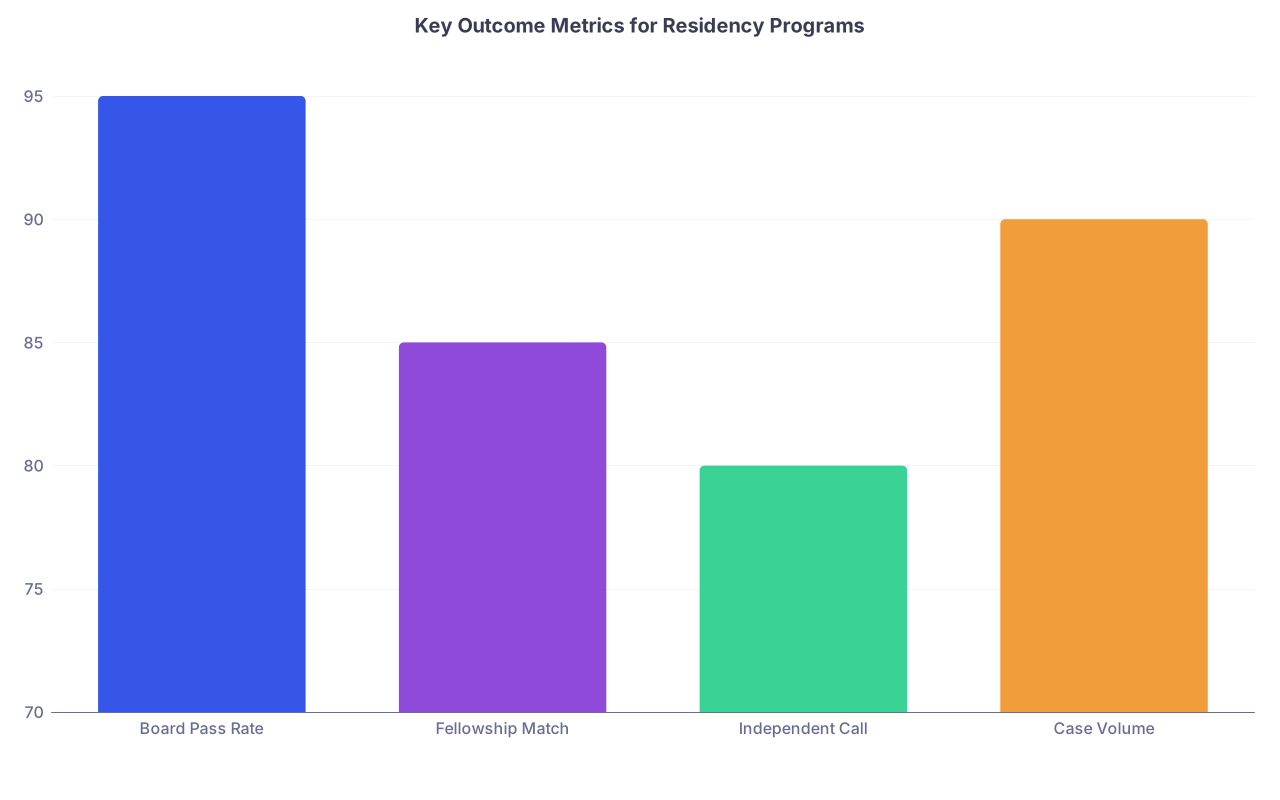
| Category | Value |
|---|---|
| Board Pass Rate | 95 |
| Fellowship Match | 85 |
| Independent Call | 80 |
| Case Volume | 90 |
These are the numbers and facts I’d quietly hunt for on every program:
1. Board pass rates that are consistently high (and not mysteriously missing)
If a program is proud of its board pass rate, it’s on their website. Usually front and center. If it’s not there, or it says something vague like “Our residents are successful on their board exams,” and provides no actual numbers? That’s suspicious.
You want to see:
- Multi-year pass rates, not just a cherry-picked year.
- At least roughly in line with or above the national average for that specialty.
- No obvious “bad” years that everyone pretends didn’t happen.
If they dodge the question when you ask, or they say something like, “Well, our residents are clinically strong; sometimes exams don’t reflect that”… that’s spin. Confident programs don’t get defensive about their numbers.
2. Fellowship or job placement that makes sense for your goals
Even if you’re not sure about fellowship yet, you want a program that keeps doors open. Look at:
- Where people go for fellowship.
- How many actually match into competitive spots if they try.
- For non-fellowship types (e.g., EM, FM, psych): what kinds of jobs do graduates get? Are they trusted as the only doc in small hospitals? Are they hired by strong groups?
If everyone who wants a competitive fellowship has to do a research year and beg for letters from outside institutions, that’s a red flag for training reputation.
3. Procedural and case volume that isn’t just “technically meets minimums”
“Meets ACGME minimums” is a low bar. Programs hide behind that line all the time.
Ask residents directly:
- “Do you feel like you have to fight for cases?”
- “Is there competition with fellows for procedures?”
- “Do seniors ever hand cases down to juniors, or do attendings/fellows keep everything complex?”
Watch their faces more than their words. If they pause, laugh nervously, or say, “Well… you’ll get your numbers,” that’s code for: you’ll graduate with enough to sign the log, but maybe not enough to feel comfortable.
Autonomy vs. Abandonment: How To Tell If You’ll Actually Learn To Fly
This is the part that keeps a lot of us awake: “Will they trust me with real responsibility, or will I be an overpaid scribe for three years and then suddenly be thrown to the wolves?”
Programs love to throw around the word “autonomy.” It sounds good in brochures. But real autonomy has a specific shape.

| Step | Description |
|---|---|
| Step 1 | Intern Year - Heavy Supervision |
| Step 2 | Junior - Guided Independence |
| Step 3 | Senior - Runs the Show With Backup |
| Step 4 | Graduate - Independent Practice |
1. Ask about supervision structure, not just “Do you get autonomy?”
Bad question: “Do you feel like you have enough autonomy?”
Every resident will say yes. They’re trying to sell you the program, and they also don’t know what they don’t know.
Better questions:
- “Who actually talks to consultants? Intern? Senior? Attending?”
- “Who runs the codes? Interns? Seniors? Attendings? Fellows?”
- “On night float, who’s in-house? Is there someone above you physically present, or at home?”
- “As a rising senior, what new responsibilities do you formally take over?”
Confident-grad programs usually have a clear progression: your responsibilities step up each year, and the expectations are written, not just “vibes.”
2. Look for “attending micromanagement” warning signs
Some programs are great on paper but paralyze their residents:
- Attendings constantly step in and “rescue” cases.
- Seniors aren’t allowed to make decisions without three layers of approval.
- Notes and plans are rewritten daily, but nobody actually teaches.
If you hear residents say things like, “Our attendings are very hands-on; they never let anything slip,” listen closely. That can be code for “We don’t really get to manage things independently, and we’re kind of scared to.”
On the flip side, if residents say, “We run the show, but I never feel alone. My attendings are there when I need them,” that’s what you want.
Resident Behavior: The Most Honest Indicator (If You Watch Closely Enough)
You can ignore literally everything a PD says on interview day if it doesn’t match what residents actually look and sound like.
When you’re on the virtual or in-person visit, pay more attention to vibes than you think you “should.” Vibes are data.
1. Do seniors sound like adults or extra interns?
Listen to how seniors talk about:
- Running the team.
- Making final calls on plans.
- Teaching juniors.
In solid programs, seniors say stuff like, “You grow into it. At first it’s terrifying, but you really do get used to leading the team by the end.” Or, “You’ll notice a huge jump from PGY-1 to PGY-2; they really push you to think like an attending.”
In weak-autonomy programs, seniors say things like:
- “We always run everything by the attending.”
- “Our attendings prefer to do XYZ themselves.”
- “We don’t call it ‘our’ service; it’s really the attending’s.”
One of those produces confident grads. The other produces people who panic the first time there’s no supervising safety net.
2. Do interns look completely dead inside?
Look. Residency is hard. Tired is normal. Dead-eyed and terrified all the time is not.
If everyone you talk to seems:
- Burned out beyond belief.
- Hyper-defensive.
- Weirdly cagey about answering straightforward questions.
That might be a culture of fear. And fear-based programs usually don’t produce confident grads; they produce traumatized ones.
Ask, “Do you feel comfortable calling your attending at 3am if something feels off, even if you’re not sure?” The answer to that tells you more about training quality than any slide deck.
3. Do they actually complain a little?
Weirdly, some honest complaining is a good sign. If they say things like, “The ICU rotation is brutal but I came out of it knowing how to manage sick patients,” or, “Yeah, our trauma nights are rough, but you learn a ton,” that’s real.
If everything is unnaturally positive, polished, and brand-friendly? They’ve been too coached. Someone told them what they’re “allowed” to say. That’s not where confidence grows.
Call, Night Float, and “Being The Doctor” Moments
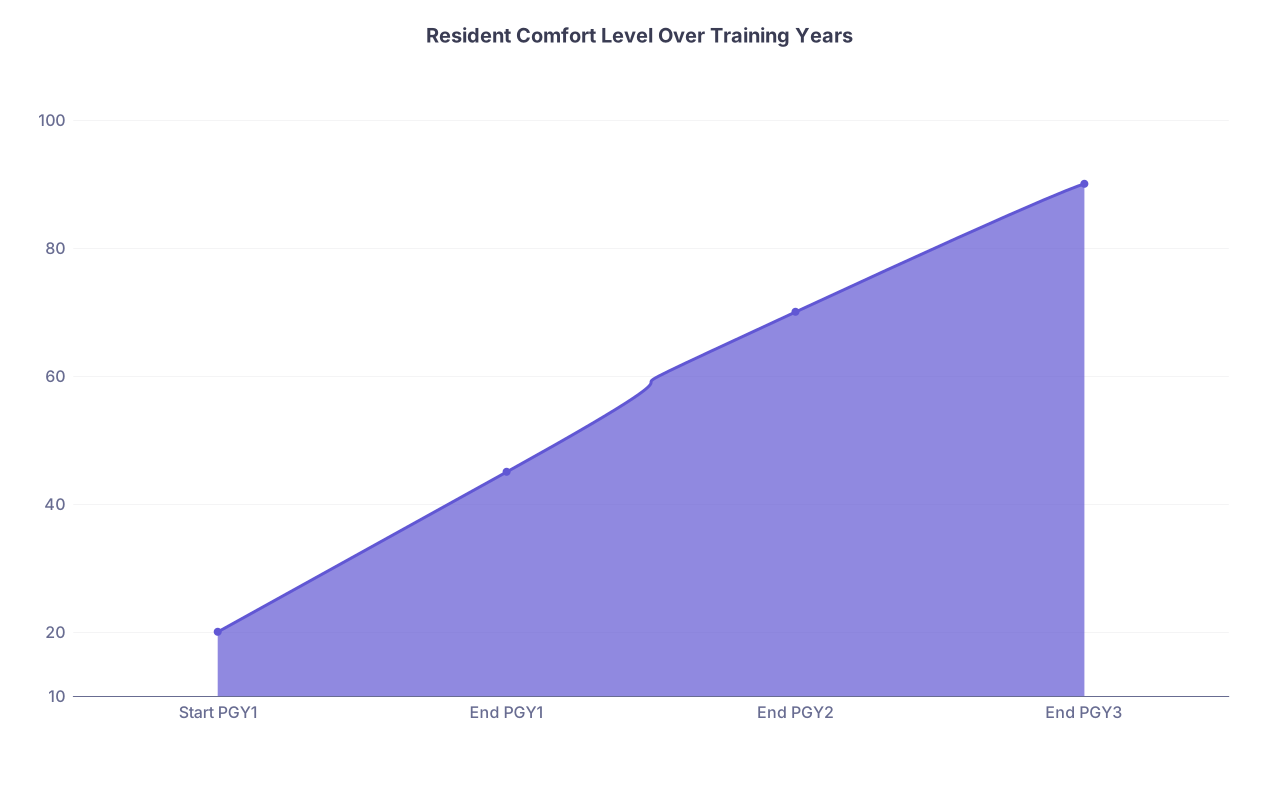
This is the part nobody wants to admit they’re scared of: actually being the doctor. Alone-ish. At 2am. With a crashing patient. Or a bad fetal strip. Or a psych patient escalating.
| Category | Value |
|---|---|
| Start PGY1 | 20 |
| End PGY1 | 45 |
| End PGY2 | 70 |
| End PGY3 | 90 |
Programs that produce confident grads give you structured exposure to those terrifying moments before you’re thrown into them in the real world.
1. Call structure that lets you grow into real responsibility
Ask:
- “As an intern, what does call actually look like for you?”
- “When are you the first call for something serious?”
- “By PGY-3 (or senior year), what are you actually responsible for independently on call?”
If interns are mostly just cross-covering stable patients and seniors do everything high-stakes, you might feel safe as an intern… and then get slammed as a new attending.
The best programs will say things like, “Interns are the first called, but we always encourage running plans by the senior. By senior year, you’re the one triaging and making initial management decisions, with attendings readily available.”
2. Codes and emergencies
Ask very bluntly:
- “Who runs codes here?”
- “Does that change year to year?”
- “Have you actually run ACLS/PALS/etc yourself, or are you always in the background?”
If a PGY-3 says, “I’ve never actually led a code, but I’ve watched a lot,” that’s horrifying. You need to screw this stuff up a little under supervision, not for the first time when you’re out.
The Hidden Curriculum: Culture That Builds (or Destroys) Confidence
Here’s the part people underestimate: you don’t just learn skills. You learn how to think about yourself as a physician. That’s the hidden curriculum.

Programs either build you up or slowly convince you you’re incompetent.
1. How do attendings respond to mistakes?
You will screw things up. If anyone pretends you won’t, they’re lying.
Ask residents:
- “Can you tell me about a time someone made a mistake and how the program handled it?”
- “Do M&M conferences feel like learning or public shaming?”
If you hear, “We definitely have some malignant attendings, but you’ll learn who to avoid,” that’s not cute. That’s a place where people will hide their uncertainty and pretend they’re fine. Which is exactly how undertrained people graduate.
You want to hear things like, “We talk openly about errors, but it’s framed as a system and learning issue, not just ‘who screwed up.’”
2. Feedback culture: do you actually get specific guidance?
Vague feedback = chronic self-doubt.
Ask:
- “How often do you get formal feedback?”
- “Is it specific or just ‘you’re doing fine’?”
- “Have you ever gotten actionable suggestions that actually helped you grow?”
Confident graduates almost always talk about that one attending or rotation where they got high expectations and real guidance. If you hear nothing but “We mostly get feedback at the end of the year,” that’s a problem.
What To Look For On Websites vs. What You Only Learn By Asking
Let’s be real: you have limited time and a ton of programs. So you need to triage.
| Aspect | Green Flag Example | Red Flag Example |
|---|---|---|
| Board Pass Rates | Multi-year, >90%, clearly posted | Vague language, missing or “around average” |
| Autonomy | Clear progression by PGY year | “Attendings are very hands-on” no details |
| Case Volume | Above minimums, residents feel satisfied | “You’ll get your numbers” and nervous laughter |
| Culture | Open discussion of mistakes, supportive | Fear of calling attendings, shaming at M&M |
| Graduate Outcomes | Strong jobs/fellowships in your interests | Little info, mostly “many go into private practice” |
Stuff you can screen from a website or brochure:
- Board pass rates (if missing, make a note).
- Fellowship/job placement highlights.
- Case volume claims.
- Rotations and call schedules.
Stuff you only trust by talking to humans:
- Whether those case numbers are real or inflated.
- How autonomy actually feels.
- How residents feel on nights, ICU, ED.
- How attendings respond when things go sideways.
How To Ask The “Undertraining” Question Without Sounding Like A Jerk
You and I both know what you want to ask: “Will I leave here actually knowing what I’m doing, or will I be a danger to my patients?”
You can’t say that directly. But you can get close.

Try phrases like:
- “Can you think of a time as a senior when you realized, ‘Wow, I can actually handle this now’?”
- “Do you feel ready to practice independently, and what makes you feel that way?”
- “Have any recent graduates told you how prepared (or unprepared) they felt in their first job?”
Those questions force people to give you real examples instead of marketing lines.
If several residents pause, look at each other, and then give some canned “We feel very prepared” with no story, no specifics? That’s your answer.
The Part Where I Tell You Something Your Anxiety Probably Hates
You can absolutely end up undertrained. That’s real. I’ve seen PGY-3s in name only, who still defer everything, terrified of basic procedures. That doesn’t happen in a vacuum; that’s a program problem.
But here’s the piece your brain keeps ignoring while it spins worst-case scenarios: most residents overestimate how unprepared they are and underestimate how much they grow once they’re actually forced into that senior role. Some imposter syndrome is baked into this whole process.
Your job right now isn’t to find the mythical “perfect” program where you’ll feel 100% confident every second. That doesn’t exist. Your job is to avoid obvious training disasters and pick a place where:
- Residents are stretched but not broken.
- Autonomy is real but backed by support.
- Graduates actually sound like they can stand on their own two feet.

Quick Reality-Check Summary
If you’re terrified of being undertrained, focus on these:
- Outcomes don’t lie: board pass rates, fellowship/job placements, and real case volume are your first filter.
- Autonomy with backup is the magic combo: you should clearly grow from closely supervised to running the show, never abandoned, never permanently sidelined.
- Resident behavior is the truth: seniors who actually lead, open discussion of mistakes, and a culture where calling for help is normal all point toward a program that produces genuinely confident graduates.
You’re supposed to be scared. This is a high-stakes choice. But if you walk into interview season listening hard, asking directly, and trusting what residents show you more than what the brochure says, you’re already miles ahead of the people who just ranked by name brand and vibes.