
Handling a Visa-Dependent Job Search: Strategies for International MD/DOs
What do you do when you realize your “dream job” offer does not sponsor your visa, and your current status expires in six months?
If you’re an international MD/DO finishing residency or fellowship in the US, this is not hypothetical. I’ve watched people hit month 4 of their last year, suddenly read their contract carefully, and realize: “Wait. They expect me to have a green card already.”
If your ability to work depends on a visa, your job search is not the same as your US classmates’. You do not have the luxury of “seeing what’s out there” for a year. You’re running a timed, high‑stakes project with immigration law strapped to its back.
Let’s walk through how to handle it like a professional, not a panicked last‑minute scramble.
Step 1: Get brutally clear on your timeline and options
You cannot plan what you do not measure. First thing: map your legal timeline.
1. Know exactly what status you’re on now
Common situations I see:
- J‑1 clinical (ECFMG-sponsored)
- H‑1B sponsored by your institution
- O‑1 (less common, but exists)
- Pending green card, working on EAD
- Some weird institutional arrangement nobody fully explained to you
Do not guess. Email GME or your institution’s international office and ask for:
- Your current status type
- Your current I‑94 expiration date
- Whether your current employer will extend/transfer your visa post‑residency
Then write those dates down. On paper. On your phone. Somewhere physical.
2. If you’re J‑1, accept the two‑year home requirement exists
Most people try to pretend this away until April of PGY‑3. Bad idea.
You have basically three real paths if you’re J‑1:
- Secure a J‑1 waiver job (Conrad 30 state program, VA, ARC/HHS, etc.)
- Go home for 2 years and come back later
- Very rare, complicated exceptions (hardship, persecution waiver) that take time and strong legal support
Assume you need a J‑1 waiver job unless a competent immigration attorney tells you otherwise. Not your co‑resident. Not your cousin who “heard from a friend.”
3. If you’re H‑1B, understand the cap and portability
Key questions:
- Are you cap‑exempt right now? (Most university hospitals are)
- How many years of H‑1B have you already used (including any time before residency)?
- Will your new job be cap‑exempt or cap‑subject?
This is where people get burned: moving from a cap‑exempt H‑1B (university) to a cap‑subject private group, and suddenly they can only start on October 1 when the H‑1B cap opens—if they get picked.
You want clarity on:
- Whether you can transfer your H‑1B directly
- Whether you’d need to enter the lottery
- What happens if your petition is denied or not selected

| Step | Description |
|---|---|
| Step 1 | Final Year of Residency |
| Step 2 | Need Waiver Job |
| Step 3 | Check Cap and Years Left |
| Step 4 | Consult Immigration Lawyer |
| Step 5 | Target Waiver States and Sites |
| Step 6 | Apply to Visa Friendly Jobs Early |
| Step 7 | Sign Contract with Clear Visa Terms |
| Step 8 | Employer Files Petition |
| Step 9 | Status Type |
Step 2: Build a visa‑friendly job search strategy (not just “who pays the most”)
If your job requires visa sponsorship, your top priorities are not the same as your citizen co‑residents.
Yes, compensation matters. But you know what matters more than $30k extra? Not having to leave the country and restart everything.
Create two short lists: “non‑negotiables” and “would‑like”
Non‑negotiables for visa‑dependent physicians usually look like:
- Employer must sponsor [H‑1B / O‑1 / J‑1 waiver]
- Start date that lines up with your current status expiration + filing timeline
- A written commitment to start the green card process within a defined time frame (if that’s your long‑term plan)
- Geography that satisfies waiver rules (if J‑1)
“Would‑like” can be:
- Salary level
- Specific city vs just region
- Academic vs community
- Level of call
- Teaching responsibilities
Why separate these? Because when crunch time hits, you’d rather take a slightly less shiny job that actually files your petition on time, than your dream coastal academic position that “is still thinking about whether they can sponsor.”
Step 3: Target the right employers (this is where most people screw up)
If you hunt like a US citizen—mass‑apply to any job that looks nice—you’re going to waste months.
You need to filter hard for visa‑literacy employers.
1. Understand who tends to sponsor regularly
Patterns I see repeatedly:
- Large hospital systems (HCA, Tenet, big regional systems)
- FQHCs (federally qualified health centers) – especially for J‑1 waiver
- Rural hospitals and clinics in physician‑shortage areas
- VAs (for J‑1 waivers, but they don’t do H‑1B everywhere)
- Big academic centers with dedicated international offices
Who often does NOT want to deal with visas:
- Small private groups with no HR infrastructure
- “Lifestyle” concierge practices
- Boutique sub‑specialty groups that can pick from a local pool of US grads
Exception: some small groups near the Canadian or Mexican border, or in rural areas, become extremely visa‑savvy out of necessity.
2. Use J‑1 waiver and visa filters aggressively
Do not just rely on recruiter chatter. Use data.
| Employer Type | Waiver Friendly? | Notes |
|---|---|---|
| FQHC | Very High | Often Conrad 30 regular users |
| Rural Hospital | High | May be new to process |
| VA Hospital | High | Separate federal route |
| Private Group in City | Low | Occasionally, but unpredictable |
| Large System (HCA etc.) | Medium-High | Depends on site and specialty |
Search specifically for phrases like:
- “J‑1 waiver eligible”
- “H‑1B sponsorship available”
- “Visa candidates welcome”
- “Conrad 30”
- “Immigration support provided”
And then verify. Because sometimes “visa candidates welcome” really means “we once sponsored someone 10 years ago, and we think we might again.”
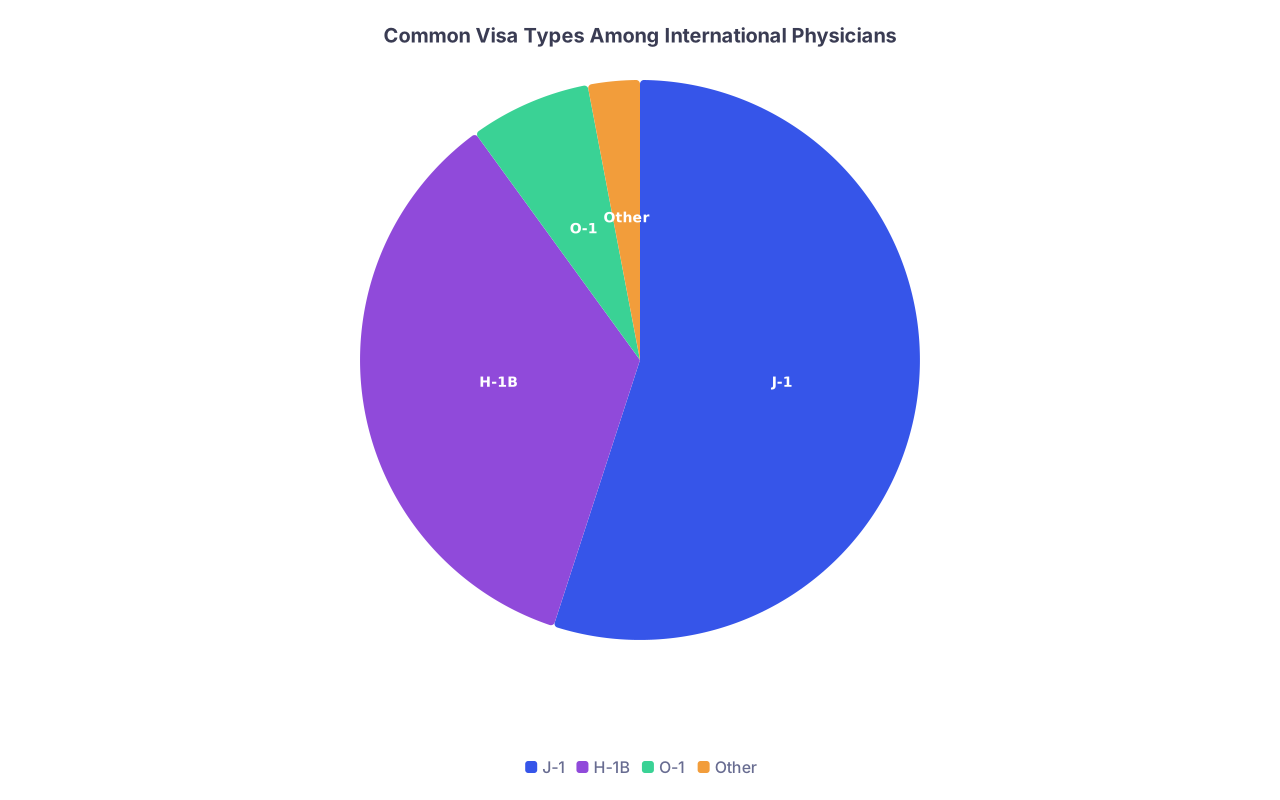
| Category | Value |
|---|---|
| J-1 | 55 |
| H-1B | 35 |
| O-1 | 7 |
| Other | 3 |
Step 4: Timing: When to start, and how fast to move
Your timeline needs to be earlier and tighter than your peers’.
For J‑1 waiver candidates
Conrad 30 timing is vicious if you ignore it.
Most states:
- Start accepting applications sometime between July–October
- Have 30 slots per year, some specialties and sites fill fast
- Require you to already have a signed employment contract to apply
Meaning: if you start “seriously looking” in January of your final year, you may already have missed that cycle in some states.
Reasonable target:
- Start exploring seriously: 18–24 months before graduation
- Actively apply for jobs: 12–18 months before graduation
- Aim to sign a waiver job contract: 9–12 months before graduation
Can it be done later? Yes. I’ve seen people secure waivers in March of their final year. They also lost a year of their life to pure stress and got stuck in places they didn’t love because they had no leverage.
For H‑1B (cap‑exempt to cap‑exempt)
You have more breathing room, but still:
- Start serious search: 12–18 months before graduation
- Target contract signed: 6–9 months before graduation
- Petition filing ideally ≥ 3–4 months before your start date
If you’re moving into a cap‑subject role and need the lottery, your whole life revolves around that April filing / October start reality. Get an attorney involved early.
Step 5: How to talk about your visa without scaring employers off
This is where a lot of international grads either overshare or stay weirdly vague. Both backfire.
You want to sound:
- Clear about your needs
- Educated about typical processes
- Low‑maintenance, not a walking immigration problem
Script for initial recruiter/employer contact
Once you’ve had a few minutes of normal conversation about the job:
“I should mention up front that I’m an international graduate. I’m currently on a J‑1 visa sponsored through ECFMG and I’ll be needing a J‑1 waiver position starting July 202X. I’m specifically looking for employers experienced with Conrad 30 or federal waiver programs. Does your group or institution typically sponsor J‑1 waivers or H‑1B visas for incoming physicians?”
If H‑1B:
“I’m currently on an H‑1B through my residency program and will need H‑1B transfer sponsorship for my attending position. Does your organization currently sponsor H‑1B for physicians, and do you have in‑house or external immigration counsel who handles that process?”
Then stay quiet and listen very closely to how they answer.
- “We’ve never done that but I’m sure we can figure it out.”
- “Our HR says it shouldn’t be a big deal.”
- “We prefer candidates who don’t need sponsorship, but let’s see.”
Green-ish flags:
- “We have several J‑1 waiver docs currently.”
- “Yes, we sponsor H‑1B regularly, and our legal team handles the process.”
- “We participate in Conrad 30; we usually use [state] slots each year.”
If their answer is fluffy, push once:
“To be transparent, my ability to work depends on this going smoothly, so I need to be sure. Would you be able to check with HR/your immigration attorney and confirm whether they can support my specific situation?”
If they still can’t give you a solid answer in writing after a week or two, move them down your list. You don’t have time for wishful thinking.
Step 6: Contract details that must be nailed down for visa‑dependent docs
Most residents glance at salary and sign. You do not have that luxury.
Here’s what I always look for in contracts when a visa is involved:
- The exact visa type the employer will sponsor
- Who pays for what (filing fees, attorney fees, premium processing)
- Timeline commitments (e.g., “employer will file H‑1B petition within X days of contract execution”)
- Green card language (if applicable):
- When they’ll start the process (e.g., “within first year of employment”)
- Who pays
- What happens if it’s denied or delayed
- Termination clauses:
- Notice period either side
- What happens with immigration status if you’re terminated without cause
Do not assume “we always take care of our docs” is enough. Jobs change leadership. HR changes. Policy changes. Your life should not depend on a verbal aside during a Zoom call.

Step 7: Work with an immigration attorney—strategically
If your strategy is “trust whatever HR’s lawyer tells me,” you’re giving up control.
You want your own immigration counsel, especially if:
- You’re switching visa categories (J‑1 to H‑1B, H‑1B to O‑1, etc.)
- You’re close to maxing out H‑1B time
- You’re doing anything complex with dependents
- You want to push for an O‑1 or fast‑track green card
No, you don’t need them on every routine email, but you absolutely want:
- A paid consult early in your final year to map your options and risks
- A review of your first contract that involves sponsorship
- Strategy advice: which job structures and locations best support your long‑term immigration plan
You’re not just getting a job. You’re building a multi‑year immigration strategy. Those are not the same project.
Step 8: Parallel plans and “if things go sideways” scenarios
Smart international physicians don’t just plan for best‑case. They quietly build a backup, too.
Common backups I’ve seen:
- A second job offer in a more rural/underserved area that is very visa‑friendly
- A research/academic role that could extend current status another year (if truly needed)
- Serious exploration of O‑1 if your CV is strong enough (publications, national awards, etc.)
- For some: honest preparation for returning home for a year or two with a plan to re‑enter later on a stronger footing
You don’t have to love your backup. It just has to exist. Knowing you have a floor prevents panic‑driven choices like signing something toxic because you’re terrified of running out of status.
](https://cdn.residencyadvisor.com/images/articles_svg/chart-job-offer-outcomes-for-visa-dependent-physicians-9561.svg "Job Offer Outcomes for Visa-Dependent Physicians")
| Category | Value |
|---|---|
| Visa-Friendly Offer | 40 |
| Offer Without Sponsorship | 35 |
| [Offer Withdrawn After Visa Discussion](https://residencyadvisor.com/resources/job-market-post-residency/if-your-job-offer-is-pulled-late-in-pgy-3-emergency-options-for-new-docs) | 25 |
Step 9: Using recruiters without letting them use you
Recruiters can be extremely helpful for visa‑dependent candidates. Or a total waste of time.
The good ones:
- Know which employers sponsor consistently
- Understand Conrad 30 timelines
- Have placed J‑1/H‑1B docs before
- Are honest about where you don’t have a shot due to visa issues
The useless ones:
- Say “we can figure it out” to everything
- Push you to apply widely without filtering for sponsorship
- Disappear when HR says no to visa candidates
When a recruiter reaches out, your first questions should be:
- “How many international/visa‑dependent physicians have you placed in the last 2 years?”
- “Do you know which of your current clients sponsor J‑1 waivers or H‑1Bs?”
- “Have you worked with any candidates from my visa status specifically?”
If the answers are vague, thank them and mentally tag them as secondary. You’re not their ideal client, and that will show when things get complicated.

Step 10: Emotional reality: you’re not behind, you’re playing a different game
Let me say this plainly: it can feel brutally unfair watching your US co‑residents casually choose between three coastal jobs while you’re fighting with state waiver policies and worrying about I‑94 dates.
You’re not weaker. You’re not less desirable. You’re just running a harder version of the same race.
- Anchor your decisions to facts and timelines, not envy
- Share your situation with at least one trusted attending who has seen visa‑dependent grads before—they often know which jobs are solid
- Do not isolate. Talk to older international grads who successfully did what you’re trying to do. They’ve already stepped on the landmines.
And remember: the first job is not your entire career. It’s a launch pad that gets you stable, employed, and on a solid immigration track. You can optimize for money, prestige, or lifestyle a bit more on job #2 once your legal foundation is safer.
FAQs
1. Should I ever take a “great” job that will not sponsor my needed visa if I think I can “figure it out later”?
No. That’s magical thinking.
If an employer will not sponsor the visa you actually need, that job is not real for you. At least not now. I have seen people sign these anyway, hoping for a last‑minute legal miracle, then spend months stressed out, only to end up scrambling for a true visa‑friendly job with less leverage and worse terms.
If the job won’t commit in writing to sponsoring your required status, you treat it as non‑existent.
2. My program director says, “Everyone finds something, don’t worry.” Can I relax?
Not unless that director is actively connecting you with visa‑friendly employers and understands J‑1/H‑1B complexities. Many PDs are great clinicians and terrible immigration strategists.
You can appreciate their reassurance emotionally while ignoring it practically. Your peace of mind should come from: clear status dates, real conversations with prospective employers, and, ideally, feedback from an immigration attorney—not vague optimism from people who won’t be deported if things go wrong.
3. When should I loop an immigration attorney into a specific job opportunity?
At two key points:
- As soon as you have a realistic offer from a visa‑willing employer you’re seriously considering, but before you sign the contract. Have the attorney review both the contract and the proposed immigration pathway.
- If anything about your situation is non‑standard: previous status issues, gaps in stay, time already spent in H‑1B, or if the employer proposes something unusual (like putting you on a different entity than your worksite).
Do not wait until after signatures and start dates are set to discover the plan is legally shaky. By then your leverage is gone, and so is half your timeline.
Open your calendar right now and block 60 minutes this week labeled “Visa Strategy + Job List.” In that hour, write down your exact status dates, your must‑have visa requirements, and a short list of employers or regions that are known to be visa‑friendly. That’s your starting map. From there, every email, call, and application should move you along that map—toward a job that actually keeps you in the country and builds your future, not just looks nice on paper.