
The worst-kept secret in medicine is this: finishing residency or fellowship without a signed job contract is no longer rare. It is common. And it is fixable.
If you are 0–3 months from graduation and still jobless, you do not need more vague encouragement. You need a battle plan. A 90‑day, step‑by‑step, do‑this‑today plan that gets you from “no job” to “paid, employed, and not living off credit cards.”
This is that plan.
Step 0: Accept the Situation, Kill the Shame
You are not a failure because you do not have a job at graduation. You are a doctor in a broken hiring ecosystem.
What actually happened:
- Hiring timelines are all over the place.
- Many systems freeze hiring, then panic‑hire 60 days before someone retires or leaves.
- Recruiters ghost candidates constantly.
- Some residents are “protected” by strong departments; others are thrown into the wild.
I have watched excellent residents in internal medicine, EM, and even ortho sit jobless in April. They ended up fine. But only because they got aggressive and systematic.
The goal for the next 90 days is simple:
- Get a paying role (clinical or near-clinical) as fast as possible.
- Preserve future options (do not box yourself into something you will hate in 18 months).
- Stabilize your finances and sanity.
We will divide this into three 30‑day blocks: Triage, Aggressive Push, and Consolidation.
Days 1–30: Triage and Rebuild Your Job Search from the Ground Up
You cannot fix what you have not mapped. The first 10 days are diagnostic.
1. Hard Reality Check: Where Are You Stuck?
Sit down with a blank page and answer, in writing:
- How many jobs have you actually applied to? (Exact number)
- How many live conversations have you had with:
- Recruiters (in-house and agency)?
- Actual department chairs/medical directors?
- Where are you licensed or license‑eligible?
- What do you actually need:
- Minimum salary
- Geography (must vs nice‑to‑have)
- Visa requirements (if applicable)
- Full‑time vs part‑time vs per diem
Then categorize your status:
- No interviews at all → your search is too narrow or your materials are weak.
- Interviews but no offers → you have a pitch, fit, or reference problem.
- Verbal interest but no contract → deal stuck in admin, or you have not pushed hard enough.
This classification matters. You attack each problem differently.
2. Fix Your Core Assets in 3–5 Days
Your CV, short bio, and email template must be “send‑ready” every day for 90 days.
Your CV (not a novel, not a research dossier)
One clean, 2–3 page CV. Not 7 pages of conference posters.
Non‑negotiables:
- Contact at top: name, cell, professional email, LinkedIn (yes, you need one).
- Training: med school, residency/fellowship, dates, major roles (chief, QI lead).
- Licensure and board status (or eligibility) very clear.
- Clinical skills section tailored to specialty:
- Example IM: inpatient/ICU experience, procedures (if any), EMR systems.
- Example EM: annual visit volume you tolerate, trauma exposure, procedures. - Work history (moonlighting, telehealth, prior careers) with concrete metrics:
- “Average 18–22 patients per day”
- “Level 1 trauma center, 65k visits/year”
Strip out fluff that does not help hire you quickly.
Short “call‑ready” bio (3–4 sentences)
You will use this everywhere: emails, texts, LinkedIn, recruiter forms.
Template:
I am a [PGY‑3 Internal Medicine resident] finishing at [Hospital/Program] in [Month, Year]. I am [board‑eligible in X] with strong experience in [specific settings, e.g., high‑acuity inpatient, community primary care, telehealth]. I am interested in [hospitalist/nocturnist/clinic/urgent care roles] in [target regions, flexible wording]. I can start as early as [date] and hold/expect licensure in [states].
Get this locked in. You will send it 100+ times.
One master email template
You should not be re‑inventing outreach messages every night. Modify from this:
Subject: [Specialty] – Available [Month/Year] – Quick Start
Dear Dr. [Last Name] / [Hiring Manager],
I am a [specialty] resident completing training at [program] in [month/year], actively seeking [type of role] in [region or “your system”].
Briefly:
• Board [eligible/certified] in [specialty]
• Experience: [2–3 concrete bullets: setting, volume, procedures, EMR]
• Start: Available [date], open to [full-time/part-time/per diem/locums]I would appreciate a brief call this week to see if there is a current or upcoming need. I have attached my CV and can provide references immediately.
Best regards,
[Name, MD]
[Cell]
[LinkedIn URL]
Save three versions: hospitalist/clinic, urgent care/ED, telehealth/“other” if it fits your skill set.
3. Expand Your Target List Aggressively
If you have applied to under 30 positions total, you are not “struggling in the job market.” You just have not played the game at scale.
Target buckets:
- Local/regional systems within 2–3 hours of your current city.
- Rural / community hospitals in your state or neighboring states.
- Large multispecialty groups (Optum, Kaiser in some regions, Privia, etc.).
- Locums agencies (multiple, not just one).
- Telehealth / urgent care chains (for bridge income or flexible roles).
Create a simple spreadsheet. Track:
- Organization, location
- Contact person
- Date of contact
- Method (email, portal, LinkedIn, cold call)
- Status (no response, screening, interview, offer, dead)
| Category | Minimum Targets | Priority Level |
|---|---|---|
| Local health systems | 10–15 | High |
| Regional/rural sites | 15–25 | High |
| Large groups (MSOs) | 5–10 | Medium |
| Locums agencies | 3–5 | High |
| Telehealth/urgent care | 3–5 | Medium |
Your first 30 days goal: 60–80 unique organizations contacted. Not 8. Not 12. Eighty.
4. Make Peace with Geography (Temporarily)
You may want coastal academic medicine with a 7‑on/7‑off schedule and no nights. Fine. Long‑term.
In the first 90 days post‑residency, the priority is:
- Income
- Experience
- Avoiding toxic, exploitative contracts
Be willing to:
- Work 6–24 months in a less popular location (Midwest, rural South, etc.).
- Accept a “bridge role” (locums, telehealth, urgent care) while you keep hunting your ideal job.
- Move twice in 3 years if it sets up the career you actually want.
Doctors who refuse any geographic flexibility often sit unemployed the longest. Then panic‑sign something worse.
5. Fix the Bureaucracy Bottlenecks Early
Nothing kills offers like: “I will apply for that license once you hire me.”
In your first 30 days, you should:
- Start at least one additional state license where demand is high and jobs are plentiful (think: TX, FL, NC, GA, AZ, CO, depending on your specialty).
- Verify your CAQH, NPI, and DEA status. Make sure your addresses are updated.
- Get your references pre‑warned and pre‑organized. Have 3–4 attendings/supervisors ready to respond quickly.
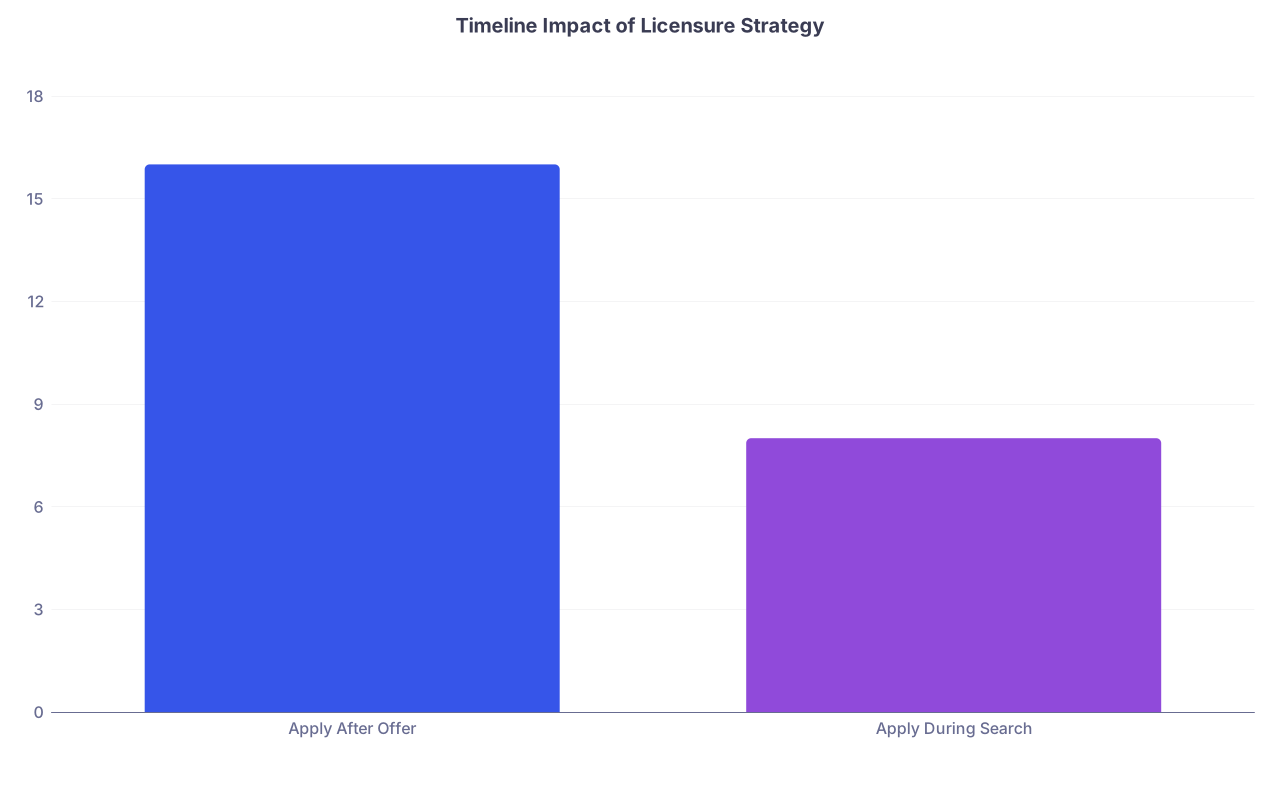
| Category | Value |
|---|---|
| Apply After Offer | 16 |
| Apply During Search | 8 |
(Values above = typical weeks to start date. Yes, applying during your search frequently cuts start delays in half.)
These things are boring. They are also job speed multipliers.
Days 31–60: Aggressive Outreach, Locums, and Offers
You now have a clean CV, a short bio, an outreach template, and a wider geographic net. The next block is about volume and direct contact.
6. Treat Locums as Your Emergency Valve, Not a Failure
Locums is not a mark of shame. It is a tool.
For many new attendings, it does three things:
- Provides immediate income within 4–8 weeks.
- Gives you leverage so you are not negotiating from desperation.
- Shows you different practice environments quickly.
The right mindset: “I can do locums for 6–12 months while I hunt for a strong permanent role.”
Practical steps in the next 7–10 days:
- Sign with 3–4 locums agencies, not just 1.
- Have your CV, references, procedure log, and licenses ready to send same day.
- Be honest about your comfort zone (volume, ICU, nights) but do not undersell yourself.
Ask each recruiter one direct question:
“What locations could realistically credential me and start me in 6–8 weeks?”
Focus there first. You can be picky later.
7. Use a Structured Weekly Attack Pattern
You are going to be sending a lot of messages. Without structure, you will burn out and start doom‑scrolling instead.
Here is a weekly pattern that works:
Mondays–Wednesdays: New outreach
- 10–15 new organizations per day.
- Mix: health systems, community hospitals, groups, telehealth.
- For each:
- Apply on website and
- Email a real person (recruiter, department admin, chair) and
- Connect / message on LinkedIn if they are there.
Thursdays: Follow‑up and calls
- Follow up on everything older than 7–10 days with no response.
- Schedule/attend screening calls and first‑round interviews.
- Nudge any “pending offer” situations firmly but politely.
Fridays: Admin and tuning
- Update your spreadsheet.
- Reflect: where are you getting traction? Adjust focus.
- Work on one optimization: interview answers, negotiation prep, licensing paperwork.

| Step | Description |
|---|---|
| Step 1 | Start of Week |
| Step 2 | Mon-Wed New Outreach |
| Step 3 | Thu Follow-ups and Calls |
| Step 4 | Fri Admin and Optimization |
| Step 5 | Weekend Optional Extras |
On weekends, you are optional but strategic: prep for upcoming interviews and knock out any forms that will slow you down.
8. Fix Your Interview and “Story” Problem
If you are getting interviews but no offers, stop blaming the market. There is a mismatch somewhere between who you are and what you are signaling.
Common problems I see:
- Long rambling answers with no clear “why this job, why here.”
- Giving off “I really want academics but I will tolerate you” energy.
- Being weirdly passive about compensation and schedule, then resenting the offers.
You need a tight narrative.
Answer these clearly:
Why this type of role right now?
- “After strong tertiary-center training, I want to practice in a community setting where I can see full-spectrum internal medicine and have continuity with patients.”
Why this location / system?
- Not generic fluff.
- “I grew up in smaller towns, and I know I thrive in environments where I am known and needed. Your volumes and staffing model fit how I like to work.”
What do you need from a job to say yes?
- Something like: “Safe staffing ratios, a reasonable schedule, and a culture where physicians have a real say in clinical operations. Compensation needs to be competitive with the region, but my priority is a stable, sustainable practice.”
Practice out loud. Record yourself on your phone. If it sounds like a residency interview answer, rewrite.
9. Negotiate Without Being Delusional
You are a new attending in a softening market in many specialties. This is not 2014 EM or 2020 hospitalist anymore.
Your negotiation goals:
- Do not get exploited.
- Do not blow a decent offer trying to squeeze out fantasy terms.
Key numbers and terms to focus on:
- Base salary and bonus structure (make sure you understand wRVUs, thresholds).
- Schedule: nights, weekends, holidays; true FTE expectations.
- Call: frequency, in-house vs at-home, pay for extra call.
- Noncompete: geography and duration; fight overly broad ones, especially if you plan to stay in the area long term.
- Length of initial term: 1–2 years is normally safer than 3–5 year lock-ins.
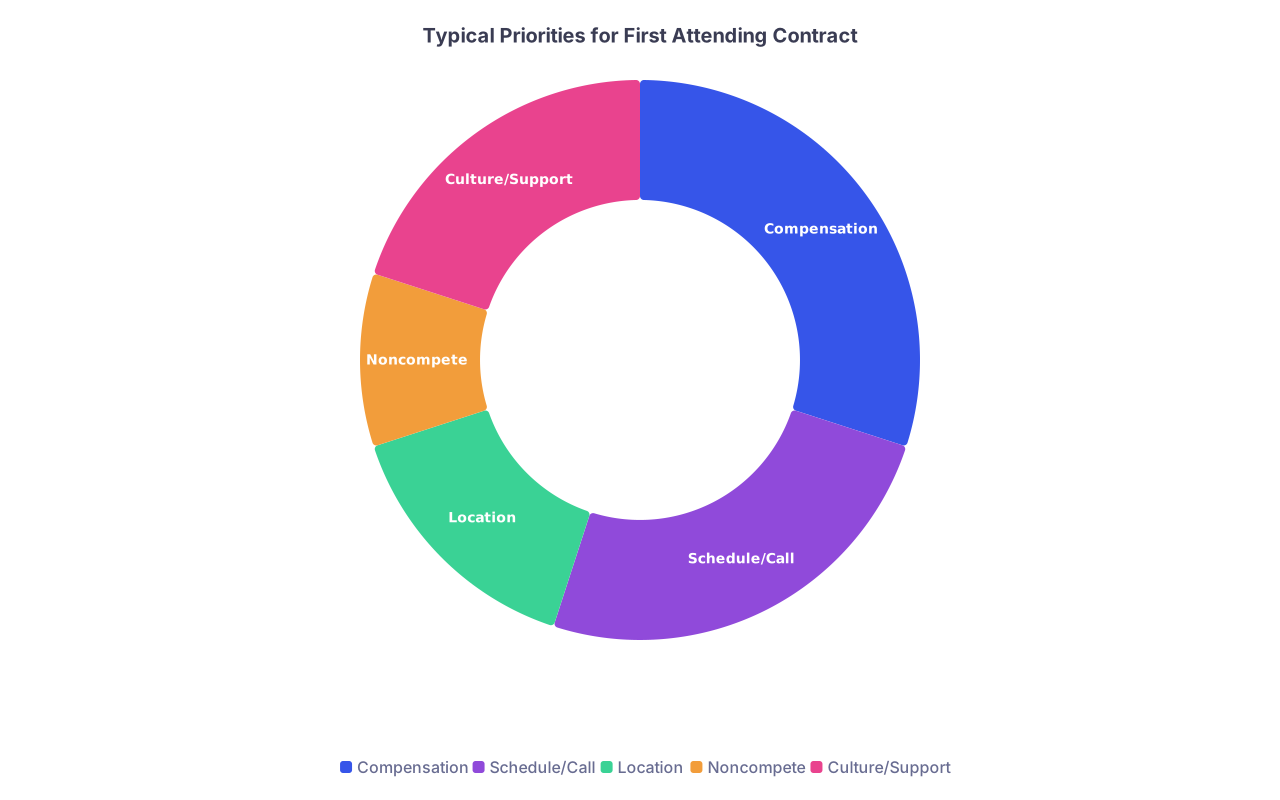
| Category | Value |
|---|---|
| Compensation | 30 |
| Schedule/Call | 25 |
| Location | 15 |
| Noncompete | 10 |
| Culture/Support | 20 |
Rule of thumb: push firmly on 2–3 key points, not 10. You are showing reasonableness and business sense, not desperation or arrogance.
If you truly have zero offers and one reasonable contract appears? It may be smarter to accept, work there 1–2 years, and plan your exit properly than to gamble with unemployment.
Days 61–90: Secure Income, Build Optionality, Avoid Traps
By now, one of three things should be true:
- You have at least one formal offer.
- You have locums or telehealth work lined up with concrete start dates.
- You have multiple late‑stage conversations in motion.
If none of that is true, your volume and direct outreach were not high enough. Double it. Yes, really.
Assuming you have some traction, here is what to do.
10. Lock in a “Floor” Job within 90 Days
You need a floor: guaranteed income and clinical relevance. Even if it is not your dream job.
Options that count as a floor:
- A full‑time or 0.7+ FTE employed role at decent pay, even in a less ideal location.
- A consistent locums arrangement (e.g., recurring 7‑on/7‑off every month) that meets your financial needs.
- A mix of part‑time clinic + urgent care + telehealth that totals to a stable monthly income.
Do not wait for a perfect multi‑year academic job before you agree to any work. You can search for that while employed.
I have watched people reject solid bridge options in May and then accept far worse jobs in October after months of anxiety and debt. Do not copy that.
11. Parallel Track: Optionality and Future Moves
Once your floor is in place or about to start, the game shifts to option building.
You ask: “How do I avoid being stuck in one bad job forever?”
Concrete moves in this 30‑day window:
- Continue lighter outreach to your ideal systems and cities. Now you negotiate from strength.
- Start or continue a second strategic license in a high‑demand state.
- Join relevant professional societies and interest groups; many have jobs hidden from public boards.
- Keep your skills sharp: procedures, EMR proficiency, current CME in your area of interest.

You are building exit ramps. So that if this first job is wrong, you have somewhere better to go in 12–24 months.
12. Avoid the Three Big Traps
I have seen new attendings walk straight into three predictable disasters.
Trap 1: The Golden-Shackles Contract
Huge signing bonus. Ugly fine print.
- Massive repayment obligations if you leave before 3–5 years.
- Noncompete that covers an entire metro area or multi‑county region.
- Unrealistic productivity expectations to hit “promised” earnings.
If they are overpaying you for the region and experience level, ask yourself why.
Trap 2: The Toxic Undersupported Job
Common in rural or understaffed settings.
Signs:
- You are the only specialist on call with no backup.
- Nonstop volume with no APP or colleague support.
- High turnover in the last 2–3 years among physicians.
You might still take it short‑term if desperate. But then you plan hard to leave after the minimum commitment.
Trap 3: Paralyzed Perfectionism
You reject everything that is not ideal. You obsess over tiny contract details. You allow months to pass while you hunt for the unicorn role.
The cure: set a personal deadline. By Day 90–120 post‑graduation, you must have some form of stable income and a job, even if it is explicitly “temporary while I find my long-term fit.”
Financial Triage: Staying Solvent While You Search
This part nobody talks about, but everyone feels.
You cannot make good decisions if you are drowning in short‑term bills and anxiety.
Basic financial triage for the next 3–6 months:
- Cut nonessential fixed costs now, not later. Move, downsize, delay major purchases, pause aggressive loan payments (IDR or forbearance if you truly must).
- Communicate early with lenders/landlord if there will be short gaps. Silence is what triggers the harshest responses.
- Use bridge income: moonlighting, telehealth, PRN shifts, even well‑paid nonclinical consulting gigs if you have access (chart review, utilization review, expert calls).
- Build a bare-bones budget: food, housing, insurance, minimum loan commitments. That is your target monthly income floor.
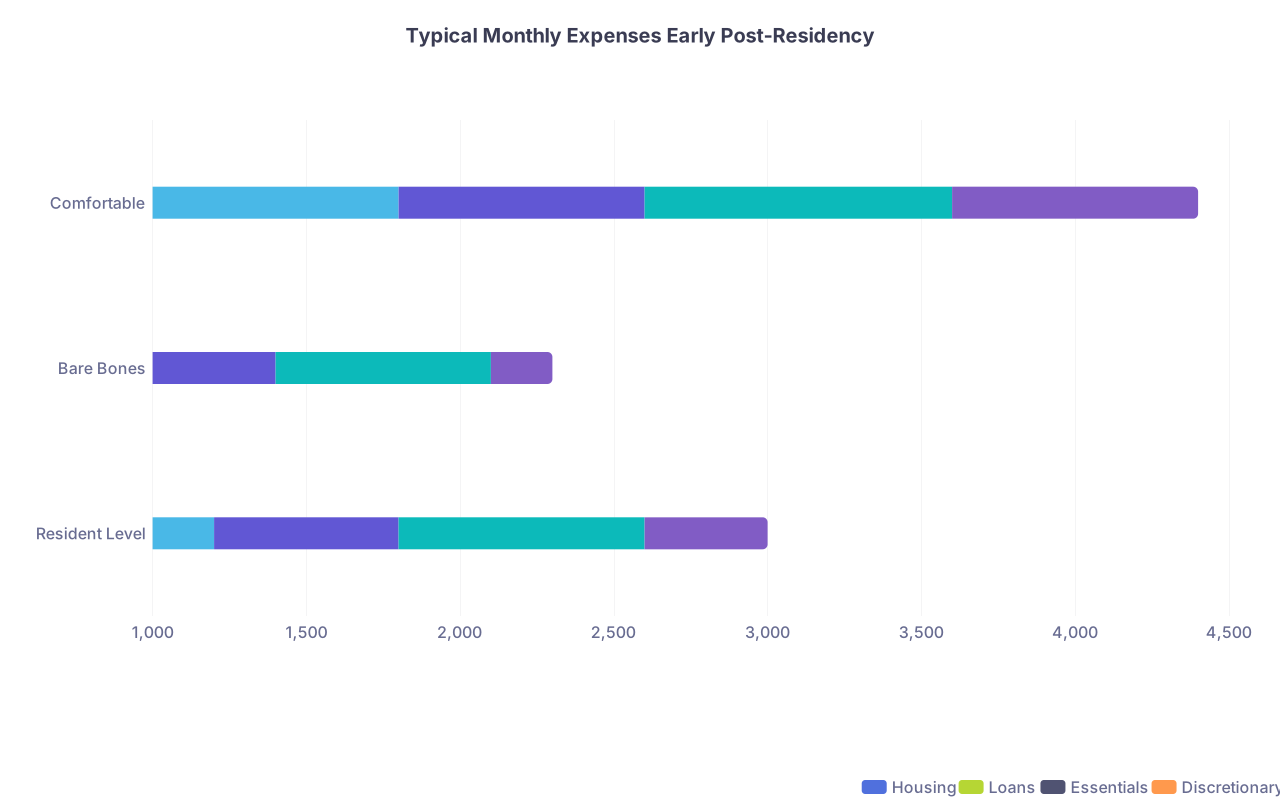
| Category | Housing | Loans | Essentials | Discretionary |
|---|---|---|---|---|
| Resident Level | 1200 | 600 | 800 | 400 |
| Bare Bones | 1000 | 400 | 700 | 200 |
| Comfortable | 1800 | 800 | 1000 | 800 |
Once you know your bare minimum, you can evaluate offers and locums opportunities with a clearer head.
Mental Health and Identity: You Are Still a Physician
Finishing residency without a job punches your professional identity in the throat. You spent a decade on one path. Suddenly you are the one without a landing spot.
You must separate “no job yet” from “bad doctor.”
What I have actually seen:
- Brilliant residents delayed their search because they were chief, managing QI projects, or just burnt out.
- International grads with visa issues got squeezed, then landed in excellent roles through persistence.
- People who thought they had nothing to offer outside academics found satisfying community jobs with teaching affiliations.
Take basic protective steps:
- Talk plainly with at least one mentor who has hiring authority. Ask, “What am I doing wrong?” Do not look for comfort; look for diagnosis.
- Set a daily ceiling on job search time (4–6 hours of high-quality effort is enough). After that, go live your life and rest.
- Move your body daily. I do not care if it is walking laps in your apartment parking lot. Physical motion will stop your brain from spiraling.

You are not behind. You are just in a phase the brochures never described honestly.
Putting It All Together: A Concrete 90-Day Outline
Here is what a focused 90 days can look like.
Days 1–10
- Rewrite CV, short bio, and email templates.
- Map your current status honestly.
- Start an additional state license application.
- Build your job/outreach spreadsheet (aim for 30 organizations contacted by Day 10).
Days 11–30
- Hit 60–80 organizations contacted total.
- Talk to at least 3–4 locums agencies and submit full packets.
- Begin regular interview practice and refine your story.
- Clean up your LinkedIn and make 30–50 connections (alumni, former attendings, department admins).
Days 31–60
- Continue 30–40 new outreach contacts over the month plus systematic follow‑ups.
- Aim for 3–6 interviews (phone or video) in this window.
- Negotiate any offers with focus on 2–3 key points.
- Lock in at least one locums or telehealth arrangement with a tentative start date.
Days 61–90
- Choose and sign a “floor” job: permanent, locums, or hybrid.
- Confirm credentialing and start date; push paperwork aggressively.
- Keep light ongoing outreach to higher‑priority targets.
- Do basic financial triage and schedule your first few months to avoid overload.
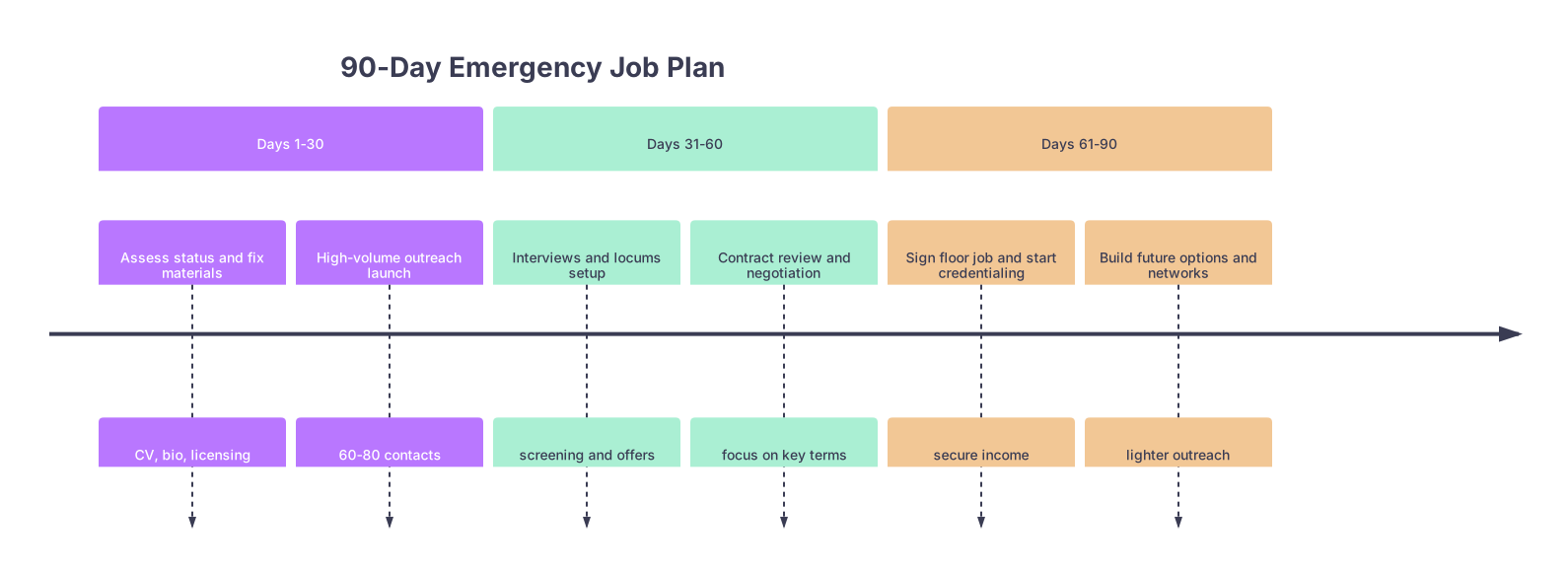
| Period | Event |
|---|---|
| Days 1-30 - Assess status and fix materials | CV, bio, licensing |
| Days 1-30 - High-volume outreach launch | 60-80 contacts |
| Days 31-60 - Interviews and locums setup | screening and offers |
| Days 31-60 - Contract review and negotiation | focus on key terms |
| Days 61-90 - Sign floor job and start credentialing | secure income |
| Days 61-90 - Build future options and networks | lighter outreach |
You will not control how fast any single system moves. You do control how many doors you knock on, how clear your story is, and whether you let shame paralyze you.