The fastest way to ruin your first attending job is to negotiate call like an amateur.
You are not a victim of the schedule. You are a professional with leverage. But if you push blindly—wrong timing, wrong arguments, wrong tone—you will burn bridges you actually need for the next 2–3 years.
Here is how to negotiate your call schedule as a new doctor without being labeled “difficult,” “not a team player,” or “we made a mistake hiring this person.”
Step 1: Understand Exactly What You’re Negotiating
Most new attendings do not actually understand their call deal. They see “Q4” or “1:5” and assume it is normal. Sometimes it is not even close.
Before you negotiate, you need a clear map.
Break the call schedule into specific components
Write these down. On paper. Do not keep it in your head.
- Frequency
- Home call vs in-house
- Weeknights vs weekends
- Holiday distribution
- Intensity
- Average number of calls/pages per shift
- Average admissions/consults per night
- Post-call expectations (clinic? OR? full day?)
- Type of call
- Primary vs backup
- Specialty-specific (e.g., OB, ICU, trauma, STEMI)
- Cross-coverage for other services
- Compensation
- Included in base salary vs separately paid
- Stipend per shift? Per weekend? Per holiday?
- RVU credit for call-based work?
- Coverage rules
- Who covers when someone is sick
- What happens during vacation, CME, maternity/paternity leave
- Expectations around swapping
If you do not have all of this in writing, you are not ready to negotiate. You are guessing.
Ask explicitly:
- “Can you send me a sample monthly schedule for the past 3–6 months?”
- “How many calls do your new hires typically take per month their first year?”
- “Are call expectations different for new grads vs senior partners?”
You want real data, not vibes.
Step 2: Benchmark Your Deal Against Reality
You will sound weak if you argue “this feels like a lot.” Feelings do not move administrators. Benchmarks do.
Use objective comparison points
Talk to:
- Recent grads in your specialty (from your residency, fellowship, and beyond)
- People in the same region with similar practice type (academic vs private vs hospital-employed)
- Senior residents who just signed contracts
Ask specific questions:
- “How many calls a month are you doing as a new attending?”
- “Is it home or in-house?”
- “Do you get paid extra for call?”
- “Do you have protected post-call time?”
Then synthesize. A simple way to visualize where you stand:
| Practice Type | Weeknight Call | Weekend Call | Call Pay |
|---|---|---|---|
| Academic Hospital | Q6–Q8 | 1:6–1:8 | Usually none |
| Private Group | Q3–Q5 | 1:3–1:5 | Often stipend |
| Hospital-Employed | Q4–Q6 | 1:4–1:6 | Variable/negotiable |
| Rural Solo Coverage | Q2–Q3 | 1:2–1:3 | Higher compensation |
If the offer is dramatically out of line—say, Q3 in-house ICU call with no post-call relief and no extra pay—that is a negotiating flag.
Know what is normal in your specialty
Trauma surgery ≠ outpatient psych. OB ≠ dermatology.
If your peers are doing Q6 home call with post-call clinic starting at noon, and you are being offered Q3 with full clinic the next day, you now have a rational basis for negotiation.
Step 3: Time Your Negotiation Correctly
You have three windows of leverage. Use the right one.
- Before you sign the contract (maximum leverage)
- Immediately after signing but before start date (moderate leverage, limited)
- After you have proved value (6–18 months in) (performance-based leverage)
The worst path is waiting until you have already joined, taken call a few months, and then exploding in frustration without a plan.
If you are still in negotiation phase, call scheduling is absolutely fair game. It belongs in:
- The written contract
- An attached call schedule addendum
- Or at minimum, in a specific email chain that can be referenced later
If you have already signed, your strategy changes. You are negotiating reality on the ground, not the initial offer. You will do better structuring it as:
- A pilot modification
- A wellness/safety adjustment
- A fair distribution argument
Not: “I refuse to do this.”
Step 4: Decide Your Non-Negotiables vs Flex Points
You cannot go into this asking for everything. You will sound entitled and out of touch.
You need a ranked list:
Red lines (dealbreakers)
Examples:- In-house Q3 ICU call with no post-call protection
- Covering two hospitals at night with no resident/APP support
- Being the only person covering a high-risk service
High priorities (strong preferences)
Examples:- No more than 1–2 Sunday calls a month
- Clear holiday rotation and fair seniority rules
- Protected post-call half-day
Negotiables (chips you can trade)
Examples:- Extra call in exchange for RVU credit or stipend
- Taking more weekday call in exchange for fewer weekends
- Agreeing to heavier call year 1 for formal review at 12 months
Write these 3 tiers down before any serious conversation. You will not think clearly in the room if you try to do this on the fly.
Step 5: Frame Your Ask the Right Way
You can ask for almost anything if you frame it correctly. You will get nowhere if you make it about what you “deserve” or what you “feel.”
You must anchor on:
- Patient safety
- Sustainability
- Fairness within the group
- Retention/recruitment reality
Let me give you practical language you can actually use.
Example framing statements
Use statements like these in email or in person:
- “I want to make sure I can sustain this schedule long term without compromising patient care.”
- “Looking at the overnight volume and the lack of post-call relief, I am concerned about fatigue and safety.”
- “Compared to similar positions my co-fellows accepted, this call ratio is significantly heavier, especially as a new grad.”
- “I am committed to being a team player, but I want to make sure the call structure is realistic so I can stay here for the long term.”
Then pair those with a specific proposal:
- “Would you consider limiting my first-year call to no more than X nights per month, with a plan to reassess at 12 months?”
- “Could we change post-call clinic to a half-day, at least for in-house calls?”
- “If the call volume needs to stay at this level, can we attach a call stipend of $X per call or adjust the RVU target accordingly?”
Step 6: Separate Call Structure from Call Compensation
You have two levers:
- How much and what type of call you do
- How you are compensated for it
Sometimes they will not budge on structure (e.g., small group, fixed coverage needs). In that case, push more on compensation. Other times, the opposite.
Common structural changes you can reasonably request
- Cap on number of calls per month (e.g., no more than 7 total)
- Guaranteed maximum number of weekend calls per quarter
- Reduced call burden for the first 6–12 months
- Clear post-call expectation (half-day or no clinic)
- Exclusion of certain call types (e.g., no cross-covering unrelated services)
Common compensation levers
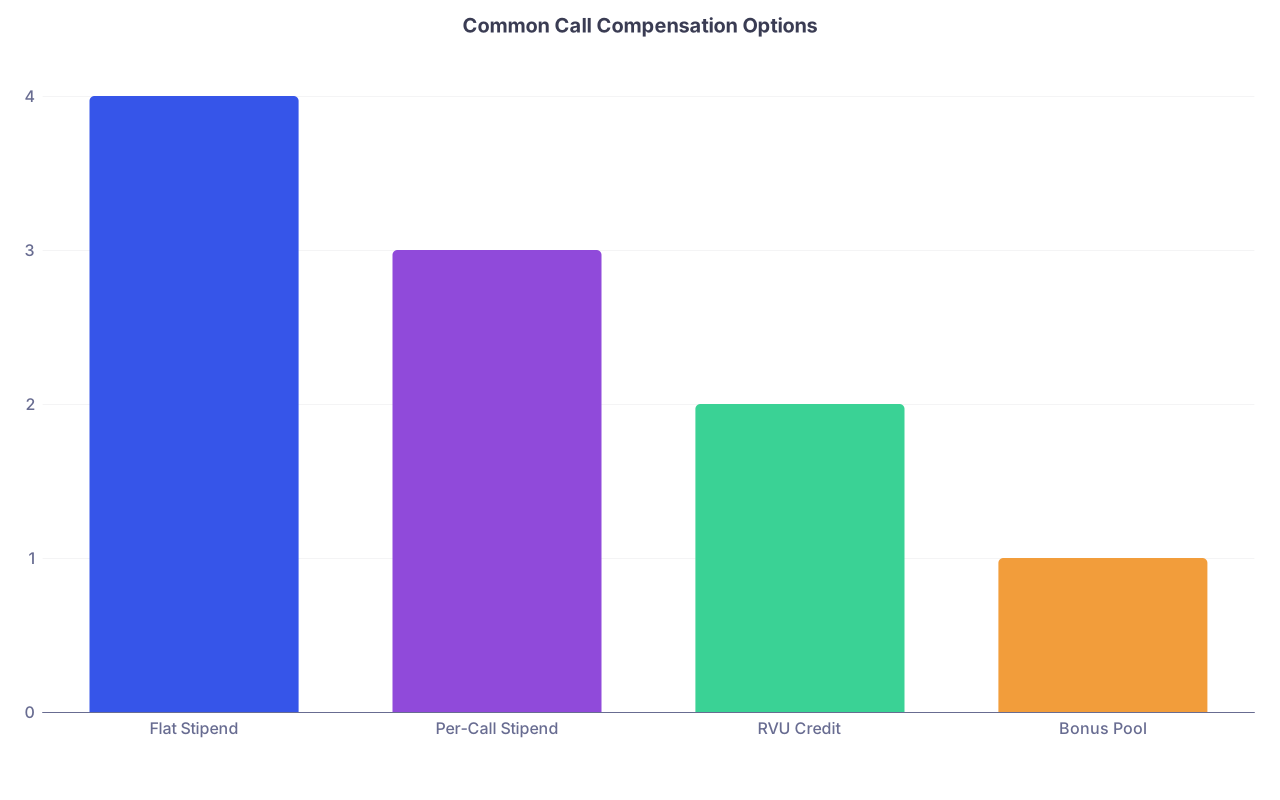
| Category | Value |
|---|---|
| Flat Stipend | 4 |
| Per-Call Stipend | 3 |
| RVU Credit | 2 |
| Bonus Pool | 1 |
- Flat call stipend per month
- Example: $2,000/month for call, independent of shifts
- Per-call stipends
- Example: $300–$700 per weekday call, $600–$1,500 per weekend
- RVU credit for call work
- Example: credit for phone consults/admissions originating from call
- Productivity bonus adjustments
- Lower RVU targets when call burden is heavier
You do not need all of these. One or two solid wins can make the schedule tolerable and fair.
Step 7: Use the Right People, in the Right Order
New doctors underestimate how political call is. It affects:
- Money
- Lifestyle
- Seniority
- Group cohesion
So you cannot just fire off an angry email to the medical director.
Here is a safer sequence:

| Step | Description |
|---|---|
| Step 1 | Self Assessment |
| Step 2 | Mentor or Trusted Senior |
| Step 3 | Department/Section Chief |
| Step 4 | Group/Practice Leader |
| Step 5 | HR or Contracting |
- Mentor or trusted senior physician
- “Here is what they offered. Is this normal for this group?”
- “How does the group handle call complaints?”
- Department or section chief
- Often knows the politics and can signal what is flexible
- Group/practice leader or managing partner
- Where real changes are usually made
- HR or contracting
- To document and formalize any changes
Never blindside your immediate clinical leadership by going straight to HR. That is how you get the “not a team player” label before you even start.
Step 8: Negotiate Like a Professional, Not a Resident
This is where many new attendings fail. They negotiate like they are asking for a schedule switch on inpatient wards.
You are not trading a random call with your co-resident. You are shaping a long-term professional agreement.
Do this:
- Prepare talking points ahead of the meeting
- Bring data: benchmark information, average call volumes if you have them
- Use calm, neutral language
- Acknowledge group needs openly
Sample opening:
“I appreciate the offer and I am excited about the position. I wanted to spend some time talking specifically about the call structure, because that is the one area that looks a bit heavier than what my peers are seeing elsewhere. I want to make sure I can do this safely and sustainably.”
Then present:
- What they proposed
- What you have seen as comparable
- What you are asking to change
Avoid this:
- Emotional outbursts (“This is insane; I’ll burn out in six months.”)
- Personal comparisons (“Dr. Smith never has to work Sundays; why should I?”)
- Threats (“If you don’t change this, I’ll walk.”) unless you are literally about to walk
- Vague complaints without a clear alternative
You want to sound like a colleague solving a problem, not like a trainee begging for mercy.
Step 9: Use Trial Periods and Review Clauses
If you get stuck, this is your escape hatch.
Administrators and senior partners hate permanent changes. They like pilots.
Propose a “trial year” or structured review
Examples:
- “Could we agree to cap my call at X nights per month for the first year, with a formal review at 12 months based on volume and group needs?”
- “If I take the proposed call burden now, can we put in writing that we will reevaluate the distribution once we recruit the additional physician you are planning for next year?”
- “Can we agree to revisit post-call clinic expectations after 6 months once we have actual data on overnight volume?”
This framing:
- Signals flexibility
- Moves the conversation out of “never” vs “always”
- Gives you a documented point to come back to
Make sure this review clause is:
- In the contract
- Or at least in a signed memo/email attached to your contract
Not just a verbal “We’ll take care of you later.” That line has burned a lot of new doctors.
Step 10: Watch for Red Flags That You Should Walk Away
Some call situations are not fixable. You are not obligated to martyr yourself.
Watch for these patterns:
- Complete opacity
- They refuse to give sample schedules or historical call data
- Blame-shifting
- “Everybody works hard here, if you are concerned maybe you are not a good fit.”
- Disrespectful tone
- “You are just out of training; you should be grateful.”
- No willingness to put anything in writing
- Everything is “handshake” or “trust us”
- “No one else complains” line
- Yet none of the other physicians are your age/stage, or several have recently left
If you see 2–3 of these, strongly consider walking, especially if you have other offers.
Your first job sets patterns. Working Q2 in-house call in a toxic group will not make you a hero. It will make you resentful and tired.
Step 11: After You Start – Protect Your Reputation While Fixing Problems
Sometimes you do not realize how bad call is until you are in it.
You signed. You started. And now you see the reality:
- Call volume is worse than advertised
- Post-call expectations are harsher
- Distribution is not actually fair
You are not stuck. But you must be methodical.
Stepwise approach once you’re on the job
- Track the reality
- Number of calls/pages per night
- Admissions/consults
- Hours slept (roughly)
- Start/stop times
- Gather quiet allies
- Talk to 1–2 trusted colleagues
- Confirm your experience is not unique
- Document specific safety concerns
- Near-misses, errors tied to exhaustion
- Times you were forced to work full clinic post brutal call
Then request a meeting:
“I have been here three months and I want to share some concrete data about the call schedule and discuss some options to make it safer and more sustainable.”
Bring:
- Your log
- Comparison data from similar systems if possible
- 2–3 specific fixes:
- Decrease number of in-house nights
- Add an APP or resident overnight
- Adjust post-call clinics
- Consider a nocturnist or call pool
You will get more respect if you show up with data and solutions instead of just venting.
Step 12: Protect Long-Term Relationships While Still Advocating for Yourself
You do not need to choose between “easy to work with” and “not a doormat.” You can be both.
Key principles:
- Say yes when you reasonably can
Cover a colleague’s call in a true emergency. People remember that. - Set boundaries explicitly, not emotionally
“I can cover one extra weekend this quarter; beyond that I will need to say no.” - Be consistent
If you say call is a problem, do not volunteer for random extra shifts to look like a hero. - Avoid gossip
Do not trash the call schedule in the lounge. It will travel to the people you need to negotiate with.
Your goal is a reputation like: “They work hard, but they are clear about their limits, and they are fair.”
Not: “They complain about everything.” Or, equally bad: “They never say no, just dump more on them.”
Step 13: Put Every Agreement in Writing
Verbal promises vanish.
Any change you negotiate needs to appear in one of three places:
- Contract amendment
- Written addendum
- Email from leadership explicitly confirming the terms
Examples of what that might look like:
“To summarize our discussion, Dr. X will take no more than 6 in-house calls per month during the first year, with a plan to review call distribution at the 12-month performance review.”
Or:
“Effective July 1, Dr. X’s schedule will be modified such that post-call clinic is canceled on days following in-house night call.”
Forward that email to your personal account (if allowed) and store it with your contract. Future-you will thank you.
A Quick Visual: What a Reasonable First-Year Call Deal Looks Like
Not perfect. Reasonable. That is the goal.
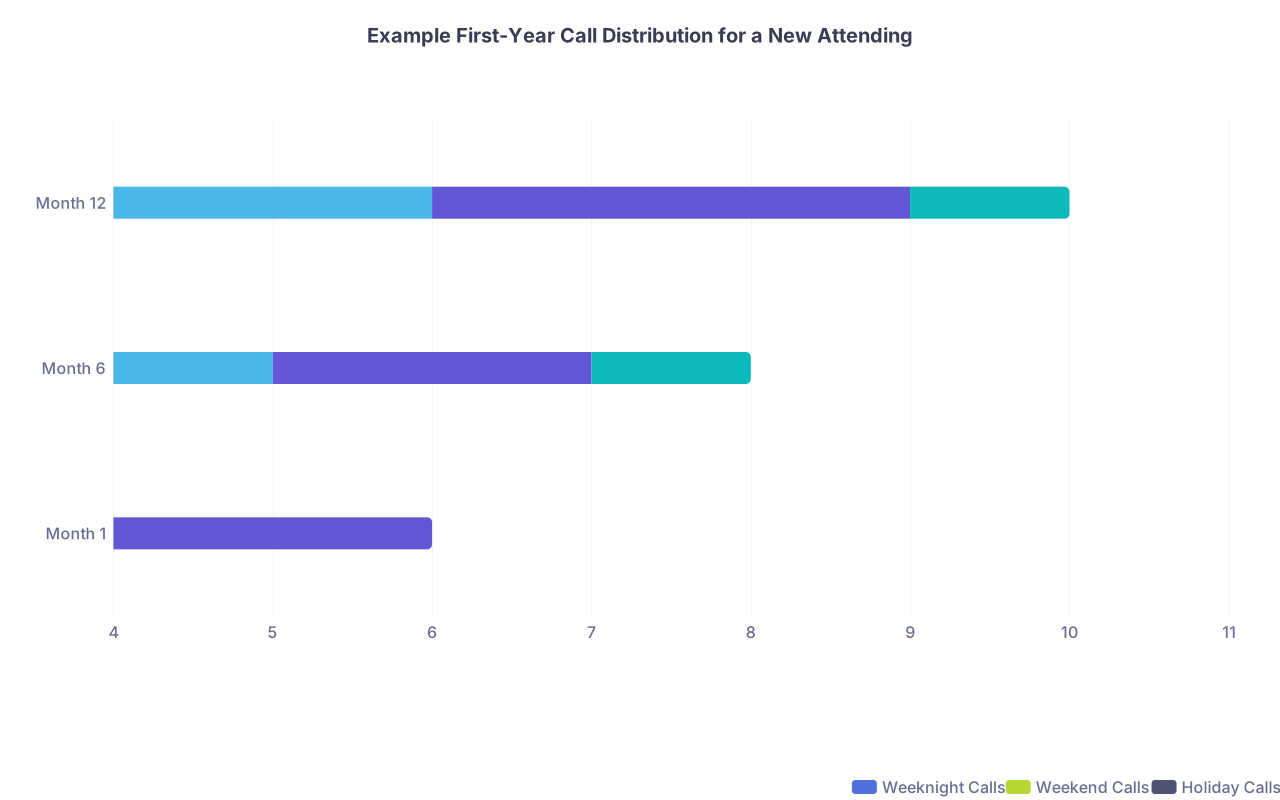
| Category | Weeknight Calls | Weekend Calls | Holiday Calls |
|---|---|---|---|
| Month 1 | 4 | 2 | 0 |
| Month 6 | 5 | 2 | 1 |
| Month 12 | 6 | 3 | 1 |
Usually this is what a sustainable compromise looks like:
- Slightly lighter call your first 6–12 months
- Gradual increase as you integrate
- Clear limits on maximum calls/month
- Thoughtful holiday distribution
- Some form of compensation or RVU adjustment
Common Mistakes New Doctors Make (And What To Do Instead)
I have watched this play out dozens of times. Same mistakes, different names.
Mistake 1: Ignoring call during contract talks
- Problem: “I was just happy to have a job, I did not think to ask.”
- Fix: If you have not signed yet, go back now and say:
“I would like to review the call expectations in more detail and see a sample schedule before finalizing.”
Mistake 2: Arguing fairness based on training
- Problem: “I did hellish call as a resident, I should not have to now.”
- Fix: Anchor the argument in sustainability, benchmarks, and patient safety instead of personal suffering.
Mistake 3: Going in with ultimatums too early
- Problem: Threatening to walk before you know your actual leverage.
- Fix: Start collaborative. Use ultimatums only if you have real alternate options and are prepared to leave.
Mistake 4: Complaining to the wrong audience
- Problem: Venting to nurses, other departments, or social media.
- Fix: Talk to your direct leader, then the group/practice leadership, with a clear ask and supporting data.
A Simple, Repeatable Script You Can Use
You can adapt this to email or live conversation.
- Acknowledge and align
- “I am excited about this role and want to be here long term.”
- Name the issue clearly
- “My only concern is the current call structure. Based on what my peers are seeing and the volume you described, it looks heavier than average for a new attending.”
- Offer data/benchmarks
- “For example, similar positions at [type of institution] are typically X–Y calls/month with Z post-call expectations.”
- Propose something specific
- “Would you be open to limiting my first-year call to no more than X calls/month with a plan to reassess at 12 months?”
- “Alternatively, if we need to keep this call level, I would like to discuss adding a call stipend or adjusting my RVU expectation.”
- Invite collaboration
- “I want to find a structure that is fair to the group and safe and sustainable for me. What flexibility do you see on your end?”
Then stop talking. Let them respond.
Do This Today
Do not wait until you are post-call, exhausted, and angry to deal with this.
Today, take one concrete step:
Open your offer letter or existing contract and write down, in one place, your actual call expectations: frequency, type, compensation, and post-call duties. If you cannot clearly describe them, schedule a meeting this week with your department chief or recruiter and say: “I want to make sure I fully understand the call expectations before I commit to or continue in this role.”