

You’re PGY-3 (or a fellow). Board exams are looming, clinic is insane, and your email is a graveyard of messages from “Senior Physician Recruiter – Exciting Opportunity!!!”
Half your co-residents are ignoring them. One just signed a huge offer she says “my recruiter found.” Your program director shrugs and says, “Don’t sign anything without letting me look at it.” No one gives you a straight answer on whether you should actually use a recruiter.
Here’s the straight answer.
You can absolutely use a physician recruiter for your first job. It can help. It can also lock you into mediocre offers if you don’t understand how the game works.
Let’s walk through how to decide, step-by-step.
First: Understand Who Recruiters Actually Work For
This is the part most residents miss.
Ninety percent of physician recruiters you’ll encounter are paid by the employer, not by you. Their client is the hospital, health system, or group. Not you.
There are two main buckets:
In-house recruiters
They’re employed directly by a hospital or health system. HR with a nicer title. They fill positions only for their own organization.External / agency recruiters (search firms)
They contract with multiple employers. They get paid a fee (often a big one) when you sign and stay past a guarantee period.
Very rare: true “candidate-side” career agents who charge you (or take a retainer) to help negotiate. That’s more like a sports agent. New grads almost never start there.
So when you say “Should I use a recruiter?” you’re usually talking about agency recruiters who get paid by the job you accept.
That doesn’t make them evil. But you need to know the incentives.
Pros of Using a Physician Recruiter for Your First Job
Let’s be fair. There are real upsides.
1. They widen your net quickly
You don’t have time to dig through every hospital website in a 5-state area. A recruiter already has:
- A list of open positions
- A sense of which groups are actually hiring versus “always posting”
- Basic comp ranges for each region
If you tell them, “I want community outpatient IM within an hour of Chicago,” they can dump 5–10 options in your inbox within a week. Fast.
2. They know which jobs are serious vs. vaporware
I’ve seen this a lot:
Job boards full of positions that are:
- Already filled but not taken down
- “Pipeline” postings just to see who’s out there
- Outdated comp models no one is actually offering anymore
Good recruiters tend to know who’s:
- Really urgent
- Just fishing
- Quietly toxic
They’ve sent several candidates there already. They hear who leaves, who stays, and why.
3. They can surface “hidden” opportunities
Not every group posts on Indeed or PracticeLink. Some:
- Only work with one or two agencies
- Are in smaller towns that don’t market aggressively
- Prefer a recruiter to pre-screen candidates
In tight geographic searches (e.g., “my spouse must be within 30 minutes of X city”), a recruiter can be surprisingly useful at finding non-obvious fits.
4. They handle a lot of logistics
A semi-competent recruiter will:
- Coordinate interview schedules
- Arrange travel, hotel, and meals
- Make sure you get an agenda instead of wandering around lost
- Push the employer for updates (instead of you nagging)
During fellowship or chief year, outsourcing that headache is not trivial.
5. They can sometimes push for more money (within limits)
They know roughly what the employer’s ceiling is. If they’re motivated and like you, they may:
- Nudge base salary up a bit
- Get a sign-on bonus improved
- Add relocation or loan repayment
They won’t double your offer. But they can sometimes squeeze out a reasonable improvement while still making the employer happy.
Cons and Risks of Using a Recruiter (Especially for Your First Job)
There’s a reason many attendings say “Be careful” about recruiters. Here’s why.
1. Their incentive is speed, not optimal fit
Most agency recruiters get paid a big fee when you sign and start. That means:
- They want you to sign something
- They don’t get more money for getting you an extra $20K
- They may push the job that’s easiest to fill, not the best one for you
If you ever feel like you’re being “sold” on a job, you probably are.
2. They can “tag” you to an employer
This one is sneaky and matters a lot.
If a recruiter sends your CV to Hospital X, they can sometimes claim you as “their candidate” with that employer for 6–12 months. That means:
- If you later contact that hospital directly, the employer may still owe the recruiter a fee
- Some hospitals will then refuse to talk to you outside that relationship
- You’ve effectively lost leverage and optionality
This is the main reason to be very clear about where your CV goes and to keep your own records.
3. You may never see the better jobs in a market
Big systems often:
- Hire directly through in-house recruiters
- Rely on word-of-mouth or internal referrals
- Avoid agencies to skip the fees
So if you rely only on agency recruiters, your menu is limited to positions that are willing to pay those fees. That’s not “the market.” That’s a sub-sector of it.
Some of the most stable, physician-run groups I’ve seen barely use recruiters at all.
4. They’re not contract experts (and won’t fix bad terms)
Recruiters will happily tell you “This is a great offer.”
They will not:
- Rewrite your non-compete
- Fix call compensation holes
- Spot RVU thresholds that are absurd for a new grad
You’ll hear, “All our physicians sign this,” which tells you absolutely nothing about whether it’s good.
Many new physicians treat recruiter enthusiasm as contract validation. That’s a mistake.
5. Some are just flat-out bad
You’ll encounter:
- People who ghost you once you hesitate
- Recruiters who mass-email your CV without consent
- Folks who lie about compensation or schedule to get you in the door
You don’t need to be cynical about everyone. But you should be skeptical until behavior proves otherwise.
How to Decide: Should YOU Use a Recruiter for Your First Job?
Use this like a decision framework, not a moral question.
| Situation | Using a Recruiter Is… |
|---|---|
| Very tight geography (spouse job, kids school) | Often helpful |
| You want max salary in rural/suburban areas | Very helpful |
| You’re targeting a single prestige system | Mostly not useful |
| Highly competitive urban market (NYC, SF, Boston) | Mildly helpful at best |
| You hate logistics and cold outreach | Helpful if used carefully |
Strong reasons TO use a recruiter
You should at least talk to a couple recruiters if:
- Your geography is constrained but you’re flexible on setting (hospital vs clinic vs system)
- You want bread-and-butter work with strong compensation in non-metro areas
- You’re overwhelmed and need someone to generate leads quickly
Just don’t outsource your brain.
Strong reasons to LIMIT or AVOID recruiter use
You should be careful or go mostly direct if:
- You’re targeting one or two specific health systems or academic centers
- Your specialty is highly competitive and you care more about niche fit than money
- You already have multiple leads through networking, faculty, or prior rotations
One red flag situation: you let a recruiter blast your CV early, then later realize they’ve “tagged” you at multiple places you actually care about. Now you either deal through them or risk drama.
If You Do Use a Recruiter: Rules of Engagement
This is how to get the benefits without getting boxed in.
1. Treat recruiters like vendors, not saviors
You’re not their project. You’re their product.
Use them to:
- Surface options
- Gather rough comp intel
- Arrange some interviews
But keep your own independent search going: direct hospital websites, alumni contacts, faculty introductions, prior locums, LinkedIn, etc.
2. Control where your CV goes
Say this out loud, early, every time:
“I do not authorize you to send my CV anywhere without my explicit permission. Please tell me the specific organizations and locations first, and I’ll approve case by case.”
If they push back, that’s a no for me. They know exactly why you’re asking.
Then keep a simple spreadsheet:
- Date
- Recruiter name / company
- Employer
- Location
- Status (CV sent, interview, offer, etc.)
It takes 5 minutes and saves you a year of headaches.
3. Work with at most 1–3 recruiters
If you spam your CV to 10 agencies:
- Multiple will send you to the same employer
- Employers get annoyed and confused
- No one feels ownership, so no one works very hard for you
Pick a small number you trust, with clear territories or focuses (e.g., “You handle upper Midwest outpatient jobs; you focus on Southeast hospitalist roles.”)
4. Use them for intel—but verify
Ask them:
- “What’s the typical RVU target for new grads in that system?”
- “How long have they been trying to fill this role?”
- “What happened to the last person in this position?”
- “Do they have midlevels? Who takes first call?”
Then, on the interview, ask physicians there the same questions. You’ll quickly learn who exaggerates.
5. Separate “finding the job” from “judging the contract”
Recruiters find jobs. That’s it.
For the contract, you want:
- An actual physician contract attorney who reads these all day
- Ideally, feedback from an attending in your specialty who lives in that region
Let the recruiter know up front: “I’ll have all offers reviewed legally, so I won’t be signing on-the-spot.”
If that annoys them, you’ve learned something useful.
Key Signals: Good vs Bad Recruiters
You don’t need to become a recruiter expert. Just know what to watch for.
Signs of a good physician recruiter
- They ask detailed questions about your priorities (family, call, procedures, visa, timeline)
- They give realistic salary ranges, not just the highest number they’ve ever heard
- They’re transparent about who pays them and approximately how
- They respect your “no” and don’t guilt-trip you
- They follow through on what they say and send details in writing
Signs you should back away
- They won’t name the employer before sending your CV
- They talk about sign-on bonuses nonstop and gloss over call / volume / non-compete
- They try to rush you: “This will be gone if you don’t move fast”
- They refuse to send the full contract before you visit or insist you sign an LOI that boxes you in
- They disappear for long stretches, then suddenly push you when something opens
You’re allowed to walk away from a recruiter mid-process. You don’t owe loyalty to someone who isn’t straightforward with you.
Direct Applications vs Recruiters: Which is Better Overall?
You shouldn’t be choosing “only recruiters” or “never recruiters.”
Best approach for most new grads: hybrid strategy.
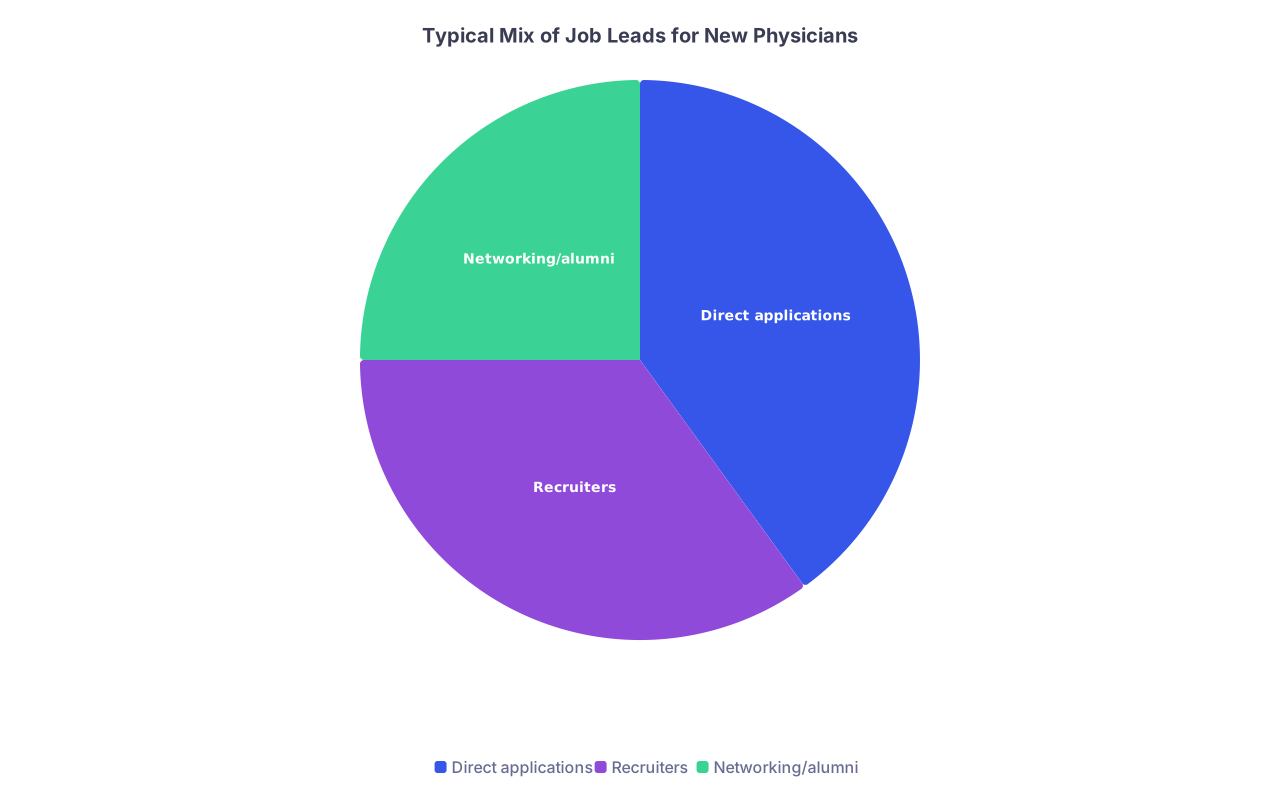
| Category | Value |
|---|---|
| Direct applications | 40 |
| Recruiters | 35 |
| Networking/alumni | 25 |
Here’s what that looks like in practice:
- You reach out directly to systems you already know you like from training or word-of-mouth
- You talk to 1–3 vetted recruiters to see what else is out there
- You mention to attendings you trust: “I’m looking in X region for Y type of job” and see who they know
Recruiters are one stream of deal flow. Not the only one, and not automatically the best one.
Step-by-Step Plan for Residents/Fellows Right Now
Use this as a rough timeline.
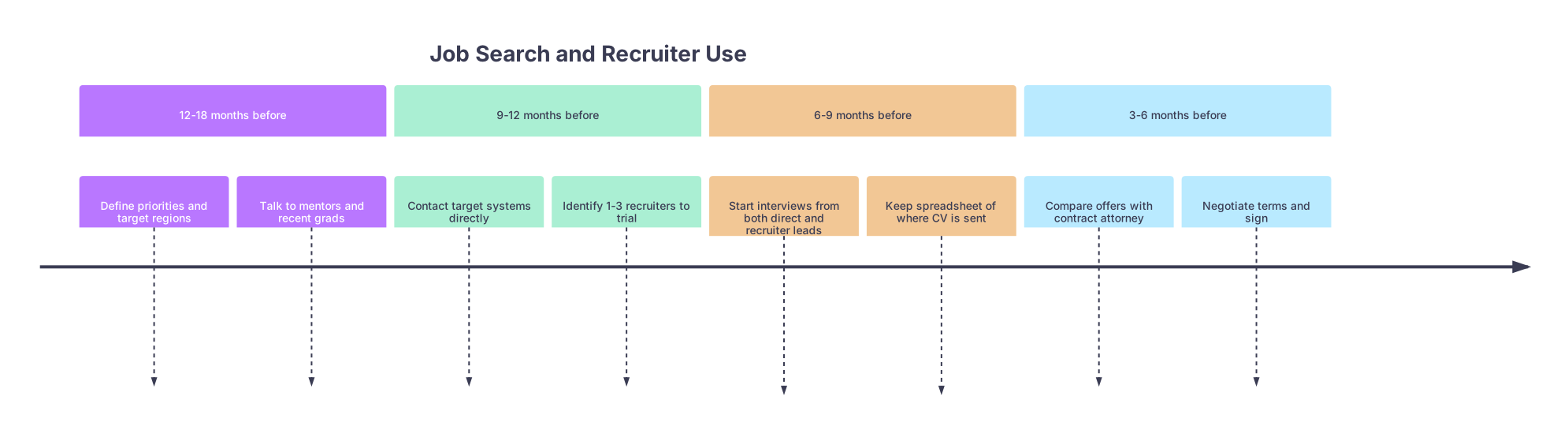
Month 12–18 before finishing:
- Decide rough geography and practice style
- Talk to senior residents/fellows who just took jobs in your specialty
Month 9–12:
- Start reaching out directly to systems and groups you know you like
- Select 1–3 recruiters, set rules about CV submission, and test the waters
Month 6–9:
- Interview through both channels
- Keep strict records of CV submissions
- Start looping in a contract attorney as offers appear
Month 3–6:
- Narrow to 1–2 serious offers
- Push back on key terms (non-compete radius, call schedule, RVU thresholds, termination clauses)
- Don’t let recruiter urgency override your due diligence
FAQ (Exactly 6 Questions)
1. Do I have to pay a physician recruiter to help me find my first job?
No. The standard model is that the employer pays the recruiter, not you. If someone wants you to pay a large fee as a new grad, I’d walk away. That “candidate-side agent” model is rare and makes more sense for senior physicians with complex negotiations, not someone looking for their first hospitalist or outpatient job.
2. Will using a recruiter hurt my chances at academic positions?
Most academic centers don’t rely heavily on external recruiters for junior faculty jobs. They’ll use in-house HR or faculty networks. Using an agency recruiter doesn’t hurt you per se, but it also doesn’t help much for academic tracks. If you’re aiming for academic medicine, your time is better spent emailing division chiefs, program directors, and faculty you’ve worked with than talking to agencies.
3. Can I negotiate my contract if it came through a recruiter, or is the offer fixed?
You can absolutely negotiate. The presence of a recruiter doesn’t freeze the terms. You still push on base salary, bonus structure, call pay, non-compete, and schedule just like any other offer. The recruiter may help or may gently discourage too much friction, but they don’t control your contract. Get your own attorney and negotiate directly with the employer when it matters.
4. What if two recruiters send my CV to the same hospital? Am I in trouble?
You’re not in trouble, but it creates a mess. The hospital may refuse to proceed until the recruiters sort out who “owns” the candidate, or they may back away completely to avoid paying two fees. This is why you keep a tight list of where your CV has gone and tell new recruiters up front: “My CV has already been sent to X, Y, and Z, so do not send there.” If a recruiter sends it anyway, that’s on them, not you.
5. Is it a red flag if a job only comes through recruiters and I never see it posted directly?
Not automatically. Some small groups or rural hospitals just don’t have internal recruitment infrastructure and rely entirely on agencies. That’s common and not inherently bad. The red flag is when details are vague, turnover is high, and no one will clearly explain why the position is open and how long they’ve been recruiting. The channel (recruiter-only) matters less than transparency and stability.
6. Bottom line: as a new grad, should I ignore recruiters or talk to them?
Talk to them—don’t worship them. Take a few calls, be up front about your preferences, and be strict about CV control. Use them as one tool to see what’s out there, especially if your geography is flexible or you’re open to community jobs. But run your own direct search in parallel, get independent contract review, and never let a recruiter’s urgency override what you know is right for your career and your life.
Key takeaways:
You can use physician recruiters for your first job, but on your terms: control where your CV goes, limit how many you work with, and treat them as one channel, not your entire strategy. And no matter who brings you the job, always separate “finding” from “judging”: a recruiter can find you an offer, but only you (with a contract attorney and smart mentors) can decide if it’s actually a good one.


