

The worst time to get sick is right before a new job. But you can still protect your reputation, your paycheck, and your sanity—if you handle it correctly.
You’re post-residency. You finally signed that first attending contract. Maybe you’ve moved states. Maybe you’ve already sent in your credentialing paperwork. And then your body betrays you: a new diagnosis, a surgery you did not plan, a pregnancy complication, a flare of a chronic condition you thought was under control.
Now you’re staring at a start date that no longer looks realistic. And you’re scared: of losing the job, of burning bridges, of being labeled “difficult” before you even start.
Let’s walk through exactly what to do.
Step 1: Get Honest Medical Clarity (Not Optimistic Guessing)
Before you email anyone at the job, you need real data about your health situation. Not vibes. Not “I think I can push through.”
Have this conversation with your treating physician:
- “Given my job is a full-time clinical physician role that starts on [date], what is your realistic best estimate of when I can safely work full time?”
- “What restrictions should I expect for the first month or two? (standing, call, night shifts, procedures, lifting, travel)”
- “If there are complications, what’s the longer end of the recovery range?”
Push them for ranges, not vague words like “soon” or “after you recover.” You need dates you can quote.
If it’s pregnancy-related (high-risk, bed rest, preeclampsia history, etc.), you should also ask:
- “What are the realistic risks that I may need to go out earlier than planned?”
- “Would you recommend modifying my clinical load, call, or nights?”
Do not sugarcoat your symptoms to your doctor. They’re trying to help you, not your employer.
You’re trying to avoid the worst-case scenario I’ve seen: someone who says nothing, starts on time, collapses under the load, and then has to go out on leave in week 3. That’s a reputation hit that’s much harder to clean up.
Step 2: Re-Read Your Contract Like a Lawyer (Even If You’re Not One)
You probably skimmed some parts when you signed. Now you don’t have that luxury.
Pull out your employment contract and specifically look for:
- Start date and any language about “on or about” that date
- Probationary period or conditions precedent to employment
- Policies on medical leave, FMLA, short-term disability
- Any mention of “fitness for duty” or medical certification
- Termination clauses (for cause, without cause, prior to start date)
- Credentialing/privileging timelines tied to your start
You’re looking for two things:
- How much formal leverage do you have?
- Where are the landmines? (For example, they can withdraw the offer if you’re not credentialed by X date, or if you’re “unable to perform essential functions.”)
If the contract references an employee handbook or policy manual for leave, request or download that too. HR will live and die by whatever is in those policies.
If the language feels murky and the stakes are high (big system job, relocation, noncompete involved), it may be worth one paid hour with a physician employment lawyer. They can tell you in 20 minutes what would take you days to figure out.
Step 3: Timing the Conversation – Sooner Than You Want
Physicians often wait too long to say anything. That’s one of the biggest mistakes.
Here’s the general rule:
- If you already know you cannot work full-time safely by the start date → you notify them as soon as that’s reasonably clear.
- If there’s a significant chance (>30–40%) you’ll need restrictions or delay → you still notify them, but frame it as “in progress, here’s what we’re watching.”
They’re planning schedules, panel transfers, OR blocks, call schedules, clinic opening dates. If you blindside them a week before start—or worse, after you were supposed to start—you look unreliable, no matter how legitimate the health issue.
Do not wait until everything is 100% sorted. You’ll rarely have that luxury.
Step 4: Who to Tell, and In What Order
This part trips people up. You want clarity and privacy at the same time.
The usual chain:
- Your primary administrative contact – often the physician recruiter, practice administrator, or department chair (depending on how the offer came through).
- HR – usually brought in once you flag there’s a potential health/leave/timing issue.
- Malpractice/credentialing office – typically not your job to contact directly first; admin/HR loop them in when needed.
Start with the same person who handled your offer letter or contract.
Your first contact should not be a massive info dump email. It should be short and request a time to talk.
Example email:
Subject: Brief call regarding start date and medical update
Hi [Name],
I wanted to update you on a new health issue that may affect my ability to start full-time on [start date]. I’m under active care and getting clearer timelines from my physician.
Could we schedule a brief call in the next few days to discuss options around my start date and schedule so I can plan appropriately?
Best,
[Your Name]
Save the details for the call.
Step 5: How to Talk About Your Health Without Oversharing
You owe them enough detail to justify the request and help them plan. You do not owe your entire medical chart.
When you talk:
Name the general category, not the intimate specifics.
“I’m dealing with a postoperative complication” is often enough; you don’t need to describe every surgical finding.Emphasize functional impact: “My surgeon anticipates I won’t be cleared for full-time work or call until mid-October, with restrictions on lifting and prolonged standing the first month.”
Use physician language, but not jargon: “High-risk pregnancy with potential for bed rest in the third trimester, so we’re being conservative about my initial clinical load and call.”
Avoid statements like:
- “I’ll power through it.”
- “I don’t want this to be a big deal.” That makes them think you’re minimizing, not planning.
Better:
- “I want to be transparent early so we can set a realistic plan that doesn’t put patients or the team in a bad spot.”
Step 6: Know Your Realistic Options Before You Get on the Call
Walking into that conversation with zero proposals? Weak position. They’ll decide for you.
Here are the main levers you can negotiate:
Delayed Start Date
Push the official start by weeks or months so that day 1 = you’re ready to work.
This is clean but may affect:- Sign-on bonus timing
- Relocation stipend
- Credentialing windows
Soft Start / Phased Ramp-Up
You technically start as planned, but:- Fewer clinic sessions at first (e.g., half-days for 2–4 weeks)
- No call initially
- Delay procedures until cleared
This can work well for musculoskeletal surgeries, postpartum recovery, etc.
Start Administrative, Delay Clinical
You start on payroll doing:- Orientation
- EMR training
- Quality projects, curriculum building, research, onboarding tasks
Clinical sessions ramp later when you’re cleared.
Early Leave After a Short Start
For pregnancy or timed surgeries where start date is fixed but leave is imminent. Example:- Start work 3–4 months before due date
- Then transition to maternity leave
This needs very careful clarity about leave policies and benefits.
Contract Modification
Sometimes you need a formal written amendment:- New start date
- Adjusted expectation of FTE for first X months
- Temporary removal from call
Never rely on “we’ll just remember.” Get it in writing.
Step 7: The Actual Ask – How to Phrase It
You want three elements in your pitch:
- Acknowledgment of impact on them
- A clear, reasonable proposal
- Flexibility to discuss alternatives
Sample script for a delay:
“I’ve been diagnosed with [brief description] and my treating physician expects I won’t be medically cleared for full-time work and call until around [date].
I want to be respectful of the department and patient care, so I’d like to propose officially moving my start date to [new date], which should allow full clearance and reliability on my end. I’m committed to the position and want to arrive ready to work at full capacity.
I’m very open to talking through what works best on your side—whether that’s a new start date, a phased ramp-up, or another option you’d recommend.”
Sample script for phased start:
“Given the current guidance from my physician, I expect to be able to start on [original start date], but with limitations on call and long clinical days for the first [timeframe].
One option would be starting as scheduled but doing [X] half-days per week without call for [number] weeks, with a plan to reassess and fully ramp up by [date]. I’d also be happy to focus on orientation, EMR training, and any admin or QI work initially.
How does that align with what the group can accommodate?”
Tone matters. Calm, practical, solutions-oriented. Not apologetic and not demanding.
Step 8: Protecting Your Pay and Benefits
Here’s where things get messy if you’re not careful.
You need direct answers to:
- “If my start date shifts to [date], will my sign-on bonus or relocation repayment terms change?”
- “How would starting part-time for the first [X] weeks affect my base salary and benefits eligibility?”
- “When would my health insurance coverage begin under these scenarios?”
- “If I need to take leave shortly after starting, what are the requirements to qualify for employer-paid disability benefits or FMLA?”
Many physicians get burned because they:
- Start technically on time but can’t work much → then get minimal income and no disability coverage because they weren’t eligible yet.
- Delay their start but forget their insurance doesn’t kick in until 30 days after hire → gap in coverage during a high-risk period.
Ask HR to spell this out in writing. If they’re vague, keep asking until you see:
- Dates
- Percentages (salary/FTE changes)
- Benefit start triggers
| Option | Pros | Cons |
|---|---|---|
| Full delay | Clean, no partial work | Gap in income/benefits |
| Phased clinical start | Maintains employment/benefits | Lower initial earning |
| Admin-only start | Easier physically | Slower ramp to full practice |
| Start then leave | May qualify for benefits | Disrupts team, reputational risk |
Step 9: Document Everything (Nicely)
Verbal conversations are necessary, but memory is unreliable and people change jobs.
After any important call, send a short confirmation email:
Hi [Name],
Thank you for taking the time to discuss my start in light of my new health situation. As we discussed:
- My revised expected start date is [date], pending medical clearance.
- The plan is to begin with [X] clinic sessions per week and no call for the first [timeframe], with a target to reassess by [date].
- HR will confirm in writing how this affects salary and benefits onset.
I appreciate your flexibility and remain very committed to joining the group.
Best,
[Your Name]
This is polite, non-legalistic, but crucial. If leadership changes or someone misremembers, you’ve got a thread.
Step 10: When You Should Consider Walking Away
Sometimes the reaction from the employer tells you everything.
Red flags:
- They immediately threaten to cancel your contract without even exploring options.
- They pressure you to start full-time against medical advice.
- HR refuses to discuss leave or accommodations transparently.
- They imply your health issue is an “inconvenience” or a “bad sign about your reliability.”
I’ve seen people ignore those signals because they’re terrified they won’t find another job. Six months in, those same people are miserable.
If an employer cannot show basic flexibility around an unexpected, legitimate health issue before you even start, imagine how they’ll treat you when you’re burned out or need to care for family later.
You may decide to hang on anyway. But do that with your eyes open.
Step 11: Planning Your Interim Life: Money, Licensure, and Sanity
If your start date is moving, you need a temporary survival plan.
Money:
- Rebuild or adjust your budget as if you were still a resident: lower rent, pause aggressive loan payoff, delay big purchases.
- Ask about temporary PRN/locums work you can do safely a bit later (telehealth, light clinic once cleared).
- Confirm any moving expenses or sign-on bonuses you’ve already received are not clawed back because of a delayed start.
Licensure and credentialing:
- Ask credentialing: “Does shifting my start date affect my credentialing timeline or require re-submission?”
- Keep up with CME or board certification requirements if this delay crosses any deadlines.
Sanity:
- You just came out of residency. You’re wired to grind. Being forced to stop feels wrong.
Use this forced pause wisely:- Complete any lingering board prep if relevant
- Do low-load academic work if you enjoy it
- Actually recover so you’re not limping into your first attending job
A Simple Flow of Decisions
This is the decision tree you’re really dealing with:

| Step | Description |
|---|---|
| Step 1 | New health issue before start |
| Step 2 | Can you safely work full-time by start date? |
| Step 3 | Consider phased duties or minor adjustments |
| Step 4 | Need start delay or major modification |
| Step 5 | Discuss restrictions with employer |
| Step 6 | Review pay and benefits impact |
| Step 7 | Document new plan in writing |
| Step 8 | Consider legal advice or alternative jobs |
| Step 9 | Prepare for revised start |
| Step 10 | Employer cooperative? |
Special Situations
High-Risk Pregnancy or Complications
Common reality post-residency. You’re not the first.
Key moves:
- Get written estimates from your OB/MFM about return-to-work timing and restrictions.
- Align your requested timeline with maternity leave policy. Don't guess.
- If you’re due very close to your original start date, a later official start after maternity leave is often cleaner than trying to start for 4 weeks then vanish.
Surgery With Uncertain Recovery (Spine, Major Ortho, Abdominal)
These freak employers out because they worry about chronic limitations.
Your leverage:
- A clear letter from your surgeon about expected functional ability.
- A time-bound, specific plan: “No call for 6 weeks, then standard duties if cleared.”
Do not promise you’ll be “back to normal” exactly by a date. Always phrase it as “based on current expectations.”
Mental Health or Burnout-Level Issues
Harder to talk about. Still real.
You do not need to give diagnoses. You can say:
- “I’m receiving treatment for a condition that temporarily limits my ability to handle full-time clinical work and call, but is expected to be well-controlled by [timeframe].”
Your main priority: start this new job in a sustainable state, not already in the red.
Visual: Rough Timeline Tradeoff
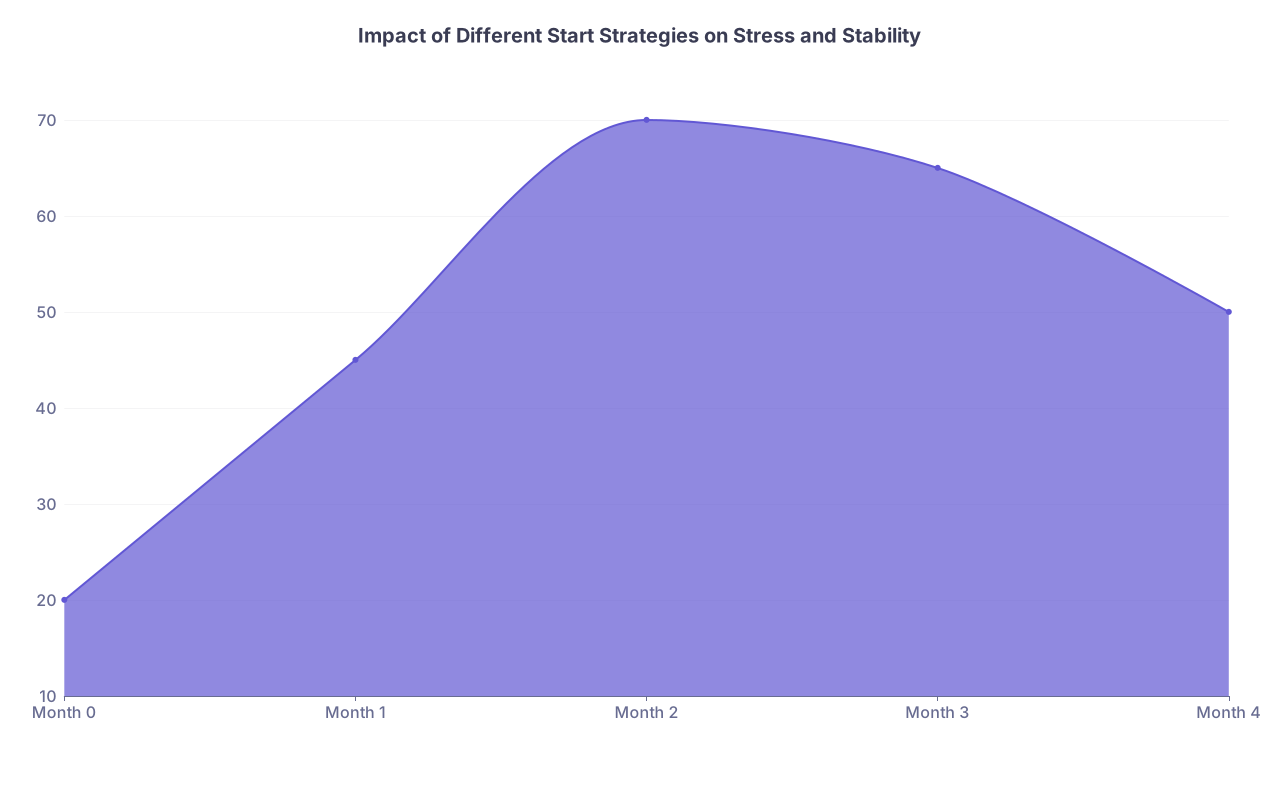
| Category | Value |
|---|---|
| Month 0 | 20 |
| Month 1 | 45 |
| Month 2 | 70 |
| Month 3 | 65 |
| Month 4 | 50 |
(Interpretation: front-loading health and planning up front spikes stress early, but leads to more stability after a few months, compared to pretending everything is fine until you crash.)
How to Keep the Relationship Positive
Even though you’re renegotiating, you want them to feel:
- You’re committed long term.
- You care about not abandoning patients or colleagues.
- You’re not trying to game the system; you got unlucky and are handling it like an adult.
Say things like:
- “I really value this role and want to be here for the long run. That’s exactly why I want to get the start right instead of starting half-functional.”
- “I’m happy to help problem-solve with schedule or role adjustments so we find something workable for the team.”
You’re showing maturity, not weakness.
Don’t Forget: You’re Allowed to Protect Your Health
One more blunt truth: too many new attendings treat their body as infinitely expendable. Residency trained you for that. Your career cannot survive it.
Short-term, it might feel “easier” to just suck it up and start on time, even if your surgeon, OB, or psychiatrist would raise an eyebrow. Long-term, that’s how people flame out by 35.
If you’re dealing with an unexpected health issue before starting your job, this is not a personal failure. It is a stress test—for you and for the employer. And it’s better to see the real results of that test now than three years into a toxic situation.
With a clear medical plan, a careful read of your contract, and a direct, solutions-oriented conversation, you can usually land in a workable spot: a start date and workload that don’t destroy you before you even begin.
Now you get to focus on the next hard part: stepping into your first attending role with boundaries, clarity, and a body that can keep up. But that’s a story for another day.


