The biggest post‑residency trap is simple: the highest salary offer is often the worst deal in the room.
Not always. But often enough that if you grab the top number without digging deeper, you are volunteering to be exploited. I have watched new attendings do this and regret it within months. Some spend years trying to claw their way out of a “great salary” that quietly wrecked their quality of life, their career trajectory, and sometimes their sanity.
You are stepping into the most leveraged negotiation of your early career. Do not blow it by staring at one number on the first PDF you receive.
Let me walk you through the mistakes I see over and over, and how you avoid becoming another cautionary story whispered in the residents’ lounge.
Mistake #1: Confusing “Highest Salary” With “Best Compensation”
The first error is brutally common: equating the base salary (or the first year guarantee) with total compensation and total value.
Here is how the trap gets set.
Recruiter calls a PGY‑3 or chief resident:
“We’re offering $420,000 starting salary. Top 10% in the region.”
Resident hears: jackpot. Compares it to another offer at $320,000. Thinks, “Why would I leave $100k on the table?”
Because that $100k is not free money. It is usually payment for something you have not looked at yet: workload, call, RVU expectations, lack of support, toxic culture, or a compensation formula that collapses in year two.
At minimum, you should be comparing:
- Base salary / guarantee
- Bonus structure and how realistic it is
- RVU rate and RVU expectations
- Call pay (or lack of it)
- Benefits and retirement contributions
- Partnership track and eventual buy‑in/buy‑out terms
- Non‑compete and tail coverage obligations
If you skip that and only look at the “huge” base, you are doing what inexperienced residents do. You are evaluating a complex financial instrument like it is a single price tag.
To make this painfully clear, look at a very simplified comparison:
| Component | Offer A (Highest Salary) | Offer B (Lower Salary) |
|---|---|---|
| Base Salary (Year 1) | $420,000 | $320,000 |
| Expected Shifts / Year | 220 | 168 |
| Call Responsibility | Frequent in-house | Minimal |
| 401(k) Match (Annual) | $0 | $15,000 |
| RVU Bonus Realistically Paid | Rare | Common |
On paper, Offer A “wins”. In real life, you are being paid a premium to work significantly more, with less support, and potentially burn out faster. That is not a win. That is selling your future for a big first‑year number.
Mistake #2: Ignoring Productivity Expectations Behind the Big Number
The second classic rookie error: not asking, “What do I have to do to earn this?”
I once saw an outpatient IM offer that guaranteed $275,000. Sounds modest compared to $350,000 elsewhere. Then we dug into the details:
- 14–16 patients per day
- Full MA and front desk support
- Call pool of 12 physicians
- Time carved out for admin
The “better” $350,000 offer?
- 28–30 patients per day from the start
- Limited MA coverage
- Solo after‑hours call 1:3
- Aggressive RVU ramp‑up after year one
When we reverse‑engineered the RVU targets, that $350k job required basically sprinting a marathon every day to “earn” the privilege of a higher income.
If you do not explicitly ask for:
- Expected RVUs per year (and how many current docs actually hit that)
- Average patient volume per day
- How many weeks of call, nights, and weekends
- How much admin and charting is done at home, off the clock
…you are walking into a productivity trap with your eyes closed.
Here is where most new attendings mess up: they hear “guarantee” and assume it is a gift. Often that guarantee is:
- A draw against future RVUs (which you will have to “pay back” in lower future earnings), or
- A first‑year honey trap to pull you into a brutally high‑volume situation that becomes the “new normal” expectation.
Mistake #3: Underestimating Lifestyle Cost of the High Salary
Residents are used to suffering. So when someone offers $450k, your brain says, “I can put up with anything for that.”
Be careful. That is exactly what some groups are betting on.
Typical high‑salary, high‑cost patterns:
- Hospitalist gig: 26+ weeks of nights or 7‑on/7‑off with relentless cross‑cover, understaffed, constant admissions.
- Surgical job: q2 home call “for now,” which magically becomes q1 in practice. OR days that routinely run into the evening, clinic overbooked “to help meet demand.”
- Outpatient primary care: double‑booked slots from day one, chronic understaffing, no protected time for inbox, “working lunches” 5 days a week.
That “salary” is not just compensating you for work. It is compensating you for giving up:
- Sleep
- Time with family or any relationships you value
- The ability to exercise or take care of your own health
- The mental bandwidth to study, grow clinically, or develop side interests
Here is the part people avoid saying out loud: if you burn out in 2–3 years and leave medicine, your lifetime earnings will be far lower than if you took a “lower” but sustainable job and stayed in the field for decades.
You are not choosing between $320k and $420k. You are choosing between a stable, 20‑year career or a rapid cash‑grab followed by crisis.
Mistake #4: Missing the “Year Two Cliff” Hidden in High Offers
The next nasty surprise: the salary that looks great in year one quietly collapses later.
I have seen contracts like this more times than I like:
- Year 1: $400,000 guaranteed
- Year 2: Base $240,000 + RVU bonus
- Year 3: Fully productivity based at below‑market RVU rates
What is really happening? The first‑year number is a bribe to lock you in. After you move, uproot your family, sign a non‑compete, and integrate into the system, they cut you down to something far less attractive. And because of the non‑compete, you cannot easily go across town.
Your job, before you say yes to the biggest number, is to map out a three‑ to five‑year financial picture for each offer.
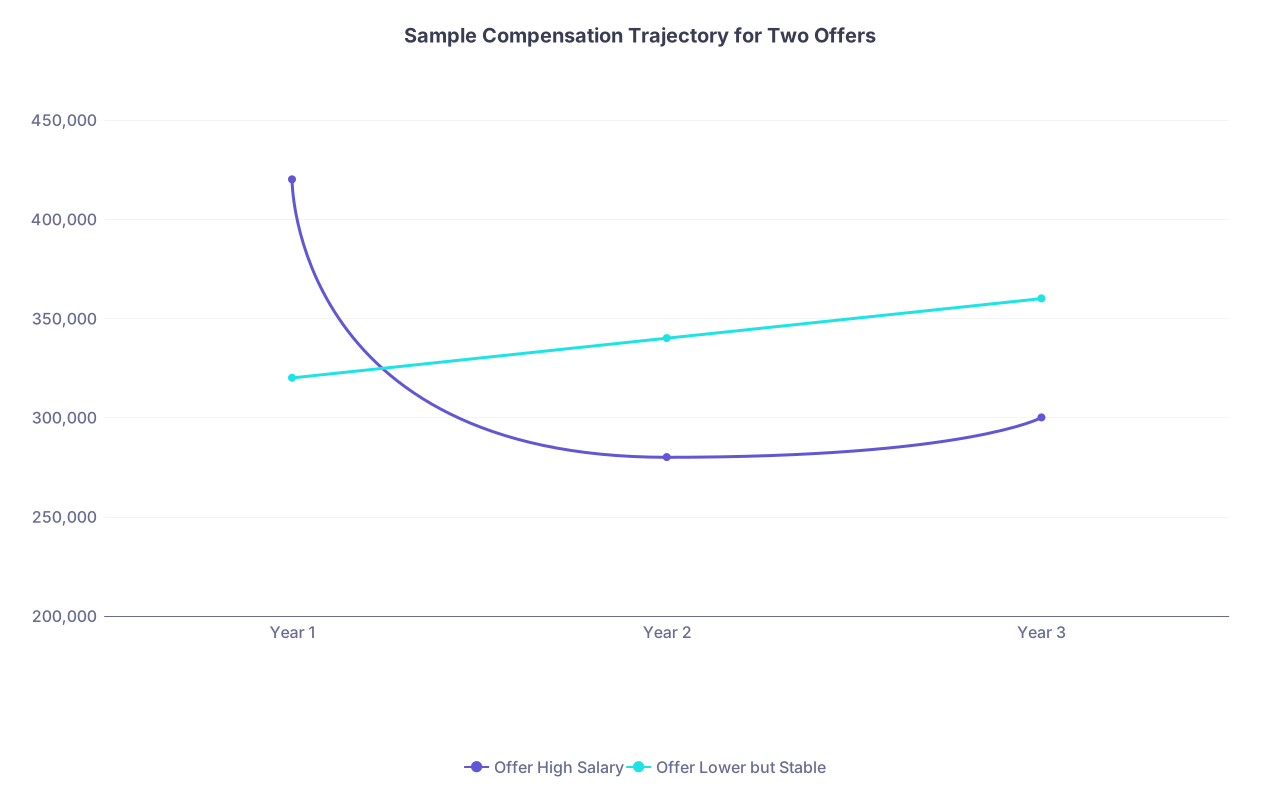
| Category | Offer High Salary | Offer Lower but Stable |
|---|---|---|
| Year 1 | 420000 | 320000 |
| Year 2 | 280000 | 340000 |
| Year 3 | 300000 | 360000 |
The rookie mistake is looking only at the left side of that chart. You must look at the trajectory, not the starting point.
Questions you must ask explicitly:
- What is the exact compensation formula in years 2–3?
- How many current physicians are making more than my offer in year 3?
- What were the last three physicians in this role actually paid each year?
If they dodge, deflect, or say “We cannot share that,” that is your red flag. A group proud of its compensation structure does not hide the numbers.
Mistake #5: Ignoring Non‑Financial Terms That Can Wreck You
The highest salary often comes bundled with some of the worst contract clauses. That is not an accident.
You will see things like:
- Aggressive non‑compete (wide radius, long duration)
- No tail coverage for malpractice if you leave “early”
- Broad “for cause” termination definitions that give them leverage
- One‑sided amendment clauses that let them change compensation structures unilaterally
If you focus only on salary, you will miss the part that can cost you six figures when you try to leave.
Concrete example I have seen:
A new cardiologist takes a high‑pay academic‑adjacent job with a $475k initial salary. Buried in the contract:
- 25‑mile non‑compete
- Two‑year duration
- No tail coverage if leaving before three full years
He burned out in 18 months. Options:
- Pay $80–100k out of pocket for tail coverage and move states, or
- Sit out the non‑compete radius, commuting insane distances to work somewhere that will take him, or
- Stay in a miserable job to “earn” the ability to leave.
That $475k looked great. In reality, the cost of escaping that job erased a big chunk of the “extra” money.
You avoid this mistake by treating salary as one component of the total deal, not the king metric. If one offer has slightly lower salary but:
- Employer‑paid tail coverage
- Narrow or no non‑compete
- Reasonable termination and amendment language
…it may be the much safer and ultimately richer path.
Mistake #6: Forgetting That Time Is Also Compensation
Residents tend to think only in money. You have had no control over your time for so long that you undervalue it when you finally get a say.
Here is the blunt truth: a job that pays $350k for 45–50 hours a week with occasional call is better than $425k for 70+ hours and constant disruption. The hourly rate, the mental cost, and the career sustainability are all superior in the “lower” offer.
Look at it this way:
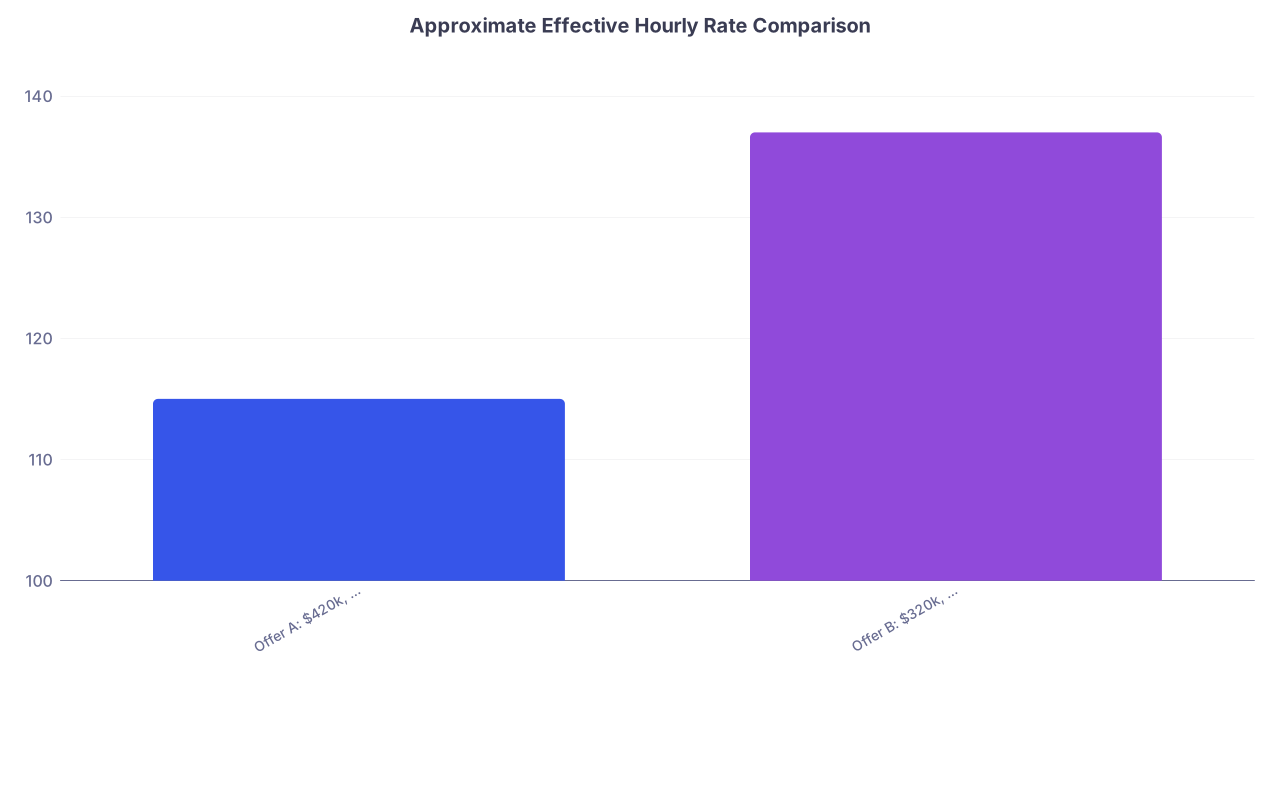
| Category | Value |
|---|---|
| Offer A: $420k, 70 hrs/wk | 115 |
| Offer B: $320k, 45 hrs/wk | 137 |
These are back‑of‑the‑envelope numbers (assuming ~48 working weeks). The person taking the lower salary may actually be making more per hour of their life. And has enough energy left to read, learn, see family, or build other income streams.
When you stare only at the top‑line salary, you miss:
- Vacation time (and whether it is truly protected)
- CME time and funds
- How often physicians are charting from home at 11 p.m.
- Requirements for committee work, hospital admin, or unpaid leadership roles
I have heard “It is a $450k job” from recruiters for positions where, in reality, it functioned more like a $250k job once you factored in unpaid hours and after‑hours burdens.
You must ask attending physicians already in the group: “How many hours do you truly work in a typical week, including charting at home and call?”
If nobody will answer clearly, that is your answer.
Mistake #7: Trusting Recruiter Hype and Not Verifying with Current Physicians
The highest salary offers often come packaged with the most aggressive selling.
- “We are paying at the 90th percentile!”
- “Everyone hits the bonus.”
- “It is busy but very manageable.”
I have yet to see a recruiter say, “Honestly, half our new hires are gone in two years because they cannot tolerate the workload.”
Your defense is simple: never rely solely on the people paid to sell you the job.
Call existing physicians. Not the hand‑picked “reference” the group gives you. Others.
Ask pointed questions:
- “What is turnover like? How many left in the last five years?”
- “Is the volume/expectation now what you were told when you joined?”
- “What would you change about this job if you could?”
- “Knowing what you know now, would you still sign this contract?”
If you hear hesitation, vague answers, or “Well… it is complicated,” pay attention. Especially in jobs flashing very high salaries. Those places seldom overpay for no reason. The reason is usually workload, culture, or instability.
Mistake #8: Failing to Model Long‑Term Career Impact
Residents think in one‑year blocks. PGY‑2. PGY‑3. Chief. Fellowship. That mindset does not work in the job market.
Your first attending job sets a trajectory.
If you chase the highest salary in a poorly supported environment:
- You may stagnate clinically because you are just surviving volume. Little time for CME, reflection, or skill development.
- You may burn bridges or exit early, creating a messy CV with short stints.
- You may get pigeonholed into a type of work (ex: pure shift‑work hospitalist in a toxic shop) that makes it harder to pivot later.
On the other hand, a “less impressive” salary in a strong mentoring culture, with reasonable expectations and time for professional growth, can set you up for:
- Subspecialization
- Academic or leadership roles
- Side ventures (consulting, writing, telemedicine, etc.)
These paths can easily out‑earn your “max salary” job over 5–10 years.
Think beyond year one. Ask:
- Will this job make me better or just busier?
- Are there mentors here who are living the kind of career I want in 10 years?
- Does this environment allow room for growth, or will it consume everything I have?
Shortsighted physicians compute only the salary. Seasoned attendings compute trajectory.
Mistake #9: Not Getting Independent Legal and Financial Review
The people who most aggressively dangle high starting salaries often count on one thing: you will be flattered and rushed into signing.
Rookie mistake: signing a contract with a headline number you love and zero external review.
At minimum, you should have:
- A physician‑savvy contract attorney review the document.
- A basic financial projection done (even a spreadsheet) comparing 3–5 years across offers.
Yes, that costs money. Maybe $800–$2,000 for legal review and some time for financial modeling. That is trivial compared to the six‑figure mistakes you can lock yourself into.
You will hear attendings say, “I wish I had not been so eager to sign. I just saw the $400k and went for it.” Listen to them. They are not exaggerating.
Mistake #10: Assuming Negotiation Is Only About Raising Salary
Final trap: treating negotiation as “Can I squeeze them for another $20k?”
If the highest salary offer comes with ugly terms—crushing call, bad tail coverage, toxic culture—you do not fix that with another $20,000. You fix that by either:
- Negotiating structure (reducing call, clarifying RVU expectations, softening non‑compete), or
- Walking away.
Sometimes the smartest negotiating move is declining the “best” salary and choosing the job that respects your time and your future.
If you must negotiate, focus less on squeezing every last dollar out of year one and more on:
- Reasonable workload expectations in writing.
- Clear, fair compensation formulas in years 2 and 3.
- Contract terms that do not trap you or punish you for leaving a bad situation.
You can earn more later. You cannot easily undo a burned‑out first job, a huge non‑compete, or a reputation for bailing after 10 months.
A Simple Mindset Shift That Will Save You
You will see big shiny numbers. Some will be legitimately good offers. Many will be bait.
Use this framework instead of “highest salary wins”:

| Step | Description |
|---|---|
| Step 1 | Receive Offer |
| Step 2 | Review Salary and Bonus |
| Step 3 | High Burnout Risk - Deprioritize |
| Step 4 | Check Contract Terms |
| Step 5 | High Risk - Renegotiate or Decline |
| Step 6 | Talk to Current Physicians |
| Step 7 | Red Flag - Reassess |
| Step 8 | Compare 3 to 5 Year Trajectory |
| Step 9 | Choose Sustainable Offer |
| Step 10 | Workload Reasonable? |
| Step 11 | Noncompete and Tail Fair? |
| Step 12 | Reality Matches Pitch? |
You are not a resident anymore. You do not have to take the only schedule they hand you. You are a revenue generator in a market that needs you.
Act like it.


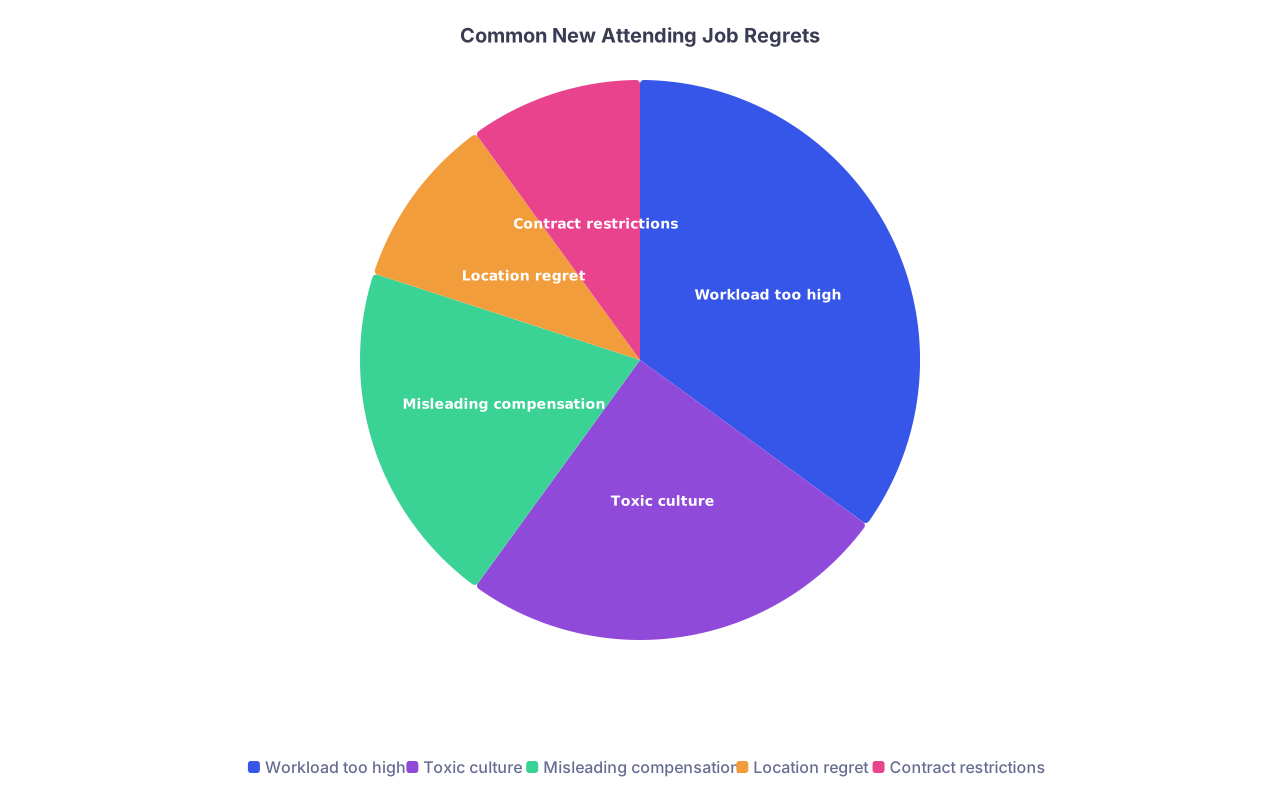
| Category | Value |
|---|---|
| Workload too high | 35 |
| Toxic culture | 25 |
| Misleading compensation | 20 |
| Location regret | 10 |
| Contract restrictions | 10 |

The Bottom Line
Three things I want you to remember:
- The highest starting salary is often compensation for hidden costs: unbearable workload, bad terms, or short‑term bait. Assume there is a reason they are overpaying and find it.
- You are choosing a trajectory, not a number. Model years 2–5, factor in time, burnout risk, and contract traps, and talk to current physicians before you believe the pitch.
- Protect yourself with independent review and the courage to walk away. A slightly lower, sustainable job you can stay in and grow from will beat the flashy “top dollar” trap almost every single time.