Most residents completely sabotage their attending relationships without realizing it.
Not because they are lazy. Not because they are rude. Because nobody ever taught them how to network with attendings when the job market actually matters.
If you’re a resident heading toward fellowship or your first attending job, let me be direct: how you interact with attendings in your last 18–24 months of training will either quietly open doors… or quietly blacklist you.
Networking with attendings is not “being nice and working hard.” That’s the floor, not the ceiling. There are specific mistakes that make attendings uncomfortable, suspicious, or simply uninterested in helping you. And they talk. To each other. Across institutions.
Let’s walk through the errors I see over and over again—and how to avoid being that resident everyone politely avoids sponsoring.
1. Treating Attendings Like Gatekeepers, Not Future Colleagues
The mindset error kills you before you even start.
Too many residents look at attendings as:
- People who “hold the keys” to jobs/fellowships
- Graders of performance
- Unapproachable academic celebrities
Wrong frame. That turns you into an anxious supplicant instead of a future colleague.
When you behave like a beggar:
- You over-apologize for every question
- You only show up when you “need something”
- You accept bad behavior because “they’re powerful”
- You undersell your skills and judgment
I’ve watched sharp PGY-3s shrink into timid medical students again the moment they start asking about jobs. Attendings notice that. It doesn’t inspire confidence.
Better frame: “I am a junior colleague learning the business and practice of medicine from a more experienced clinician.”
You’re not equal in experience, but you are both physicians. When you internalize that:
- You ask higher‑quality questions (not “what should I do with my life?” but “in your practice, how do you balance X and Y?”)
- You have opinions—and you’re willing to share them respectfully
- You start talking about your future like it’s real, not hypothetical
Do not make the mistake of approaching networking from a place of inferiority. It leads directly to the next error.
2. Waiting Until PGY-3/PGY-4 to Start Networking
The “I’ll focus on networking later” mindset is how people end up scrambling for jobs in January of their final year.
I’ve seen this pattern dozens of times:
- PGY-1/2: “I’m just trying to survive; I’ll think about jobs later.”
- Early PGY-3: “I should probably start looking.”
- Late PGY-3: Panic-messaging every attending they’ve barely talked to in 2 years.
Attendings are not stupid. They can tell when you only show up because the clock is running out.
You need a much longer runway.
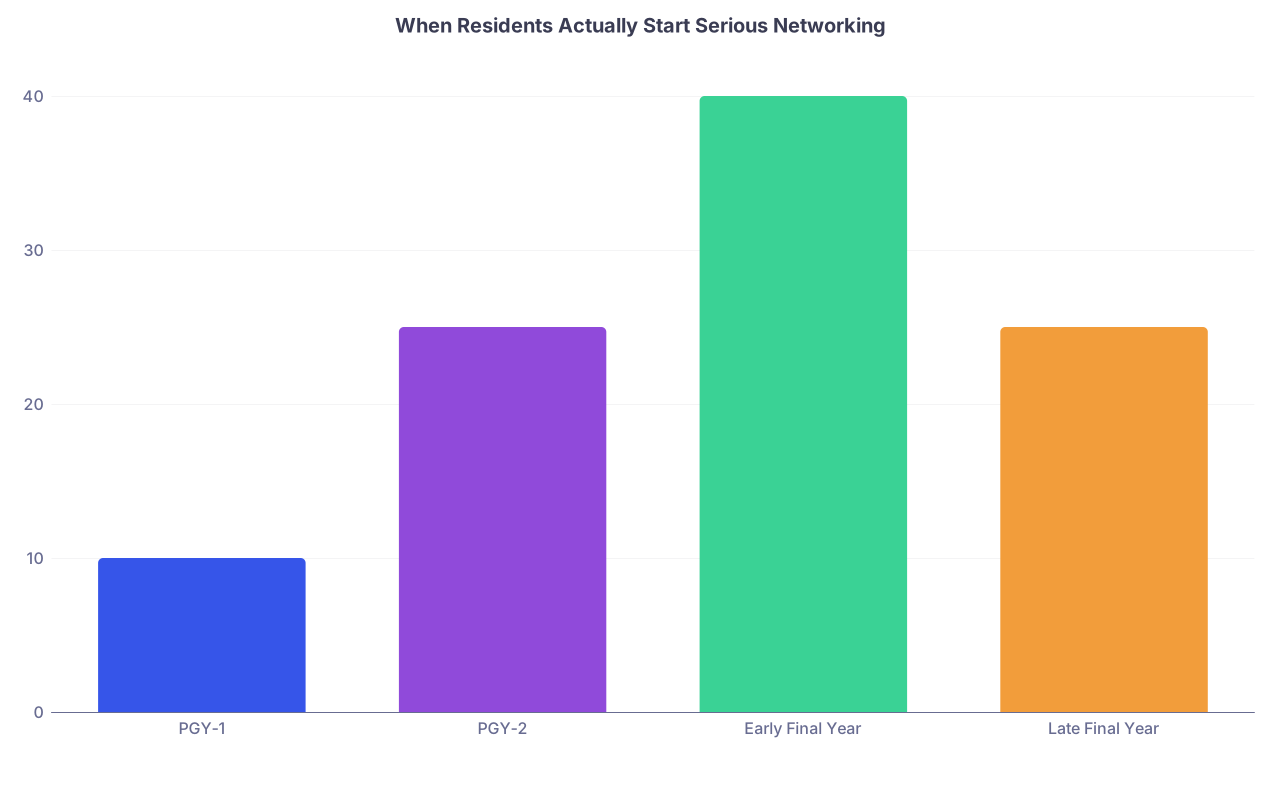
| Category | Value |
|---|---|
| PGY-1 | 10 |
| PGY-2 | 25 |
| Early Final Year | 40 |
| Late Final Year | 25 |
That “Late Final Year” group? They’re usually the most stressed and the least well‑connected—through no one’s fault but their own.
Avoid this mistake by:
- PGY-1: Just observe. Learn personalities. See who actually enjoys teaching.
- PGY-2: Start having brief, targeted conversations: “Dr. X, I noticed you split your time between clinic and research—how did you structure that?”
- Early final year: Already have at least 3–5 attendings who know you well enough to vouch for you. This is when you start specific “I’m thinking about jobs in X” conversations.
If you wait until you “have time” to network, you will never have time. You carve it out like you carve out time to study for boards.
3. Making Every Conversation About “Do You Know of Any Jobs?”
This one is brutal.
A resident corners an attending between cases or after sign‑out and says some version of:
“I’m going into hospitalist / cards / outpatient IM—do you know of any jobs?”
It puts the attending in an awkward spot:
- They have to think on the spot (they probably won’t think of the best options).
- It feels transactional and rushed.
- They don’t really know what you want, what you’re strong at, or your constraints.
Result: vague answer, “I’ll keep an eye out,” and nothing happens.
Job networking with attendings needs to be progressive and layered, not a one‑shot ask.
What to do instead:
Start with exploration, not requests.
“You’ve been at this community group for 10 years—what do you like and dislike about it?”
“If you were finishing residency now, what job types would you avoid?”Then move to targeted questions.
“I’m pretty sure I want a community job with IP/OP mix and no nights. What should I be asking recruiters that they won’t volunteer?”Finally, make a specific, easy‑to‑answer ask.
“Do you know 1–2 people in [city/region] doing something similar who might be open to a quick conversation?”
Notice: you’re not begging for a job. You’re asking for introductions and wisdom. Much easier lift, much more likely to happen.
4. Being Vague About Your Goals and Priorities
Another common self‑inflicted wound: residents approaching attendings with zero clarity.
I hear this all the time:
- “I’m open to anything.”
- “I just want a good job.”
- “I could see myself in academics or private practice or industry.”
That’s not flexible. That’s fuzzy. And it makes it extremely hard for attendings to help you.
Attendings need concrete hooks to remember you:
- “She wants academic GI in a mid‑sized city, heavy on procedures.”
- “He wants high‑acuity hospitalist work with some admin track.”
- “They want outpatient peds with 4‑day weeks in the Northeast, no call.”
If you have not done the thinking to define your non‑negotiables, you’re asking someone else to do the heavy lifting of your own life planning. They won’t.
At minimum, be clear on:
- Geography: Must-have vs nice-to-have
- Type of practice: Academic vs community vs hybrid
- Lifestyle: Nights? Weekends? Procedures? Teaching?
- Time horizon: Are you looking for a “first job” stepping stone or long‑term home?
Then when you talk to attendings, you can say something like:
“I’m looking for a community job within 1–2 hours of [city], mostly outpatient with some in‑patient consults, no more than 1 in 4 weekends. I care more about sane workflow and mentorship than maximum salary.”
That level of clarity is rare. It makes you memorable and much easier to help.
5. Ignoring Non‑Clinical Attendings and “Quiet Power”
Residents fixate on the same visible people:
- Department chair
- Program director
- Big‑name researchers
- The charismatic, beloved attending everyone quotes on rounds
Sure, those people have influence. But the job market runs heavily on something quieter: the mid‑career attending who quietly knows everyone in the region, or the less‑flashy clinician who sits on the board of the big private group.
Residents routinely underestimate:
- Division administrators who know hiring timelines months before they’re public
- Older attendings with “friends from fellowship” in half the hospitals in your state
- The associate PD who manages letters and whispers into the PD’s ear
| Role | Why They Matter |
|---|---|
| Senior non-academic doc | Knows local groups and politics |
| Associate program director | Handles many behind-scenes decisions |
| Longtime clinic preceptor | Sees residents over years, trusts patterns |
| Department administrator | Knows upcoming positions and budgets |
| Hospitalist lead | First to hear about expansion hires |
Do not make the rookie mistake of only chasing the stars. A strong endorsement from the “quiet” attending who everyone respects clinically can carry more weight than a form letter from the chair who barely knows you.
Test yourself: If I asked you right now, could you name:
- 2 attendings known for clinical excellence
- 2 known for being brutally honest about jobs
- 2 who’ve worked in more than one system/market
If not, you haven’t explored your ecosystem enough.
6. Trying to Network Only During Clinical Chaos
Residents try to wedge career conversations into the worst possible moments:
- Right after a code
- While the attending is behind on notes and rushing to pick up kids
- In the OR with everyone stressed and turnover running late
You might get a polite sentence or two, but you will not get thoughtful help.
You need to separate “clinical you” from “career you.” That means asking for real time.
What works far better:
- “Dr. S, I’ve really appreciated working with you this month. Could I steal 20–30 minutes sometime in the next few weeks to pick your brain about jobs and early career decisions? Happy to work around your schedule—coffee, Zoom, whatever’s easiest for you.”
This does three things:
- Signals respect for their time and cognitive load
- Makes the ask specific (20–30 minutes, about careers, not everything)
- Creates space for them to think about it rather than react in the hallway
Then actually treat it like a meeting:
- Come with 3–5 specific questions
- Offer a very brief summary of who you are and what you’re considering
- End with a clear, light ask: “If anyone comes to mind you think I should talk to, I’d be grateful for an intro—but no pressure at all.”
Yes, it takes a bit more planning. The quality of advice and connections you get in exchange is night and day.
7. Being Weirdly Passive About Letters and References
Another common self‑sabotage: residents assume attendings will “just write whatever they want” and don’t guide the process at all.
You know what happens then?
- Generic letters: “Hardworking, pleasant, team player.”
- No detail about your career direction
- No alignment with the job or fellowship you’re targeting
Attendings are busy. Many write dozens of letters per year. If you want a strong, specific letter that actually positions you for the jobs you’re chasing, you need to make it easy for them.
Avoid these mistakes:
- Asking last minute (“Can you write a letter by Friday?”)
- Not sending your CV and a short goal summary
- Not reminding them of specific rotations/cases you worked on together
Instead, try:
“Dr. K, I’m applying for outpatient‑focused general IM positions in [region]. I’ve loved working with you on the wards and in clinic, and I was wondering if you’d feel comfortable writing a strong letter on my behalf. To make it easier, I can send my CV, a short paragraph on my goals, and a few bullet points of things I learned or did on service with you.”
You’re not scripting their letter. You’re giving them raw material.

| Step | Description |
|---|---|
| Step 1 | Identify strong attending |
| Step 2 | Ask if comfortable writing strong letter |
| Step 3 | Send CV and goal summary |
| Step 4 | Include bullet points of shared work |
| Step 5 | Send polite reminder before deadline |
That’s how you avoid weak, copy‑paste letters that quietly sink your application.
8. Confusing “Being Liked” With “Being Trusted”
You can be the funniest, most charming resident on the team and still not be someone attendings will recommend for their group.
Why? Because for job referrals, attendings don’t just ask:
- “Do I like this person?”
They ask:
- “Would I be comfortable sharing call with them?”
- “Will they show up at 3 a.m. when things are on fire?”
- “If I put my name on them, will I regret it in six months?”
Residents make a critical error here: over‑indexing on social likability and under‑indexing on reliability and judgment.
The residents who get unsolicited offers and invites tend to:
- Handle bad nights without melodrama
- Own their mistakes, clearly and calmly
- Protect nurses, med students, and ancillary staff instead of throwing them under the bus
- Communicate clearly, especially when they’re out of their depth
Attendings watch all of this more than they listen to your career goals.
If you’re sarcastic, constantly complaining about the system, or known for disappearing when work gets heavy—no amount of coffee chats will fix that. People might like you socially and still never forward your name.
You want the reputation of: “If I’m stuck in a disaster shift, that’s who I want on with me.” That’s the person attendings fight to hire.
9. Ignoring Institutional Politics and Burnt Bridges
Residents love to say, “I’ll never work here after training.” Then they act like that gives them permission to ignore internal politics.
Bad idea.
Attending networks are not siloed within one hospital. They bleed across:
- Multi‑hospital systems
- Regional specialist groups
- Academic–community partnerships
You might be done with your current hospital. Your potential future partners are not.
Typical missteps:
- Publicly trashing your program or institution on social media
- Openly mocking specific departments or services in mixed company
- Leaving rotations with unresolved, festering conflicts
Then, a year later, that same attending you bad‑mouthed knows the hiring committee chair at your dream job. Guess what they remember?
You do not have to love your program. You do have to be smart about your paper trail and your reputation.
If you’ve had serious conflict with an attending, deal with it like someone who plans to practice in the same city for 20 years:
- Calm, direct conversation when the dust settles
- “I realize we clashed on X. I want you to know I respect your clinical judgment and I’ve reflected on how I could have handled Y better.”
- No gossiping downward to students and nurses
You’re not fixing everything. You’re signaling maturity. That matters when people later ask, “What was it like to work with them?”
10. Failing to Follow Up Like a Professional
Residents underestimate how much follow‑through matters.
Here’s a pattern I’ve seen repeatedly:
- Attending spends 30 minutes giving thoughtful job advice.
- They mention two colleagues at other hospitals and offer to connect you.
- You nod enthusiastically.
- You never send a follow‑up email.
- Connection never happens. Relationship flatlines.
Attendings interpret this as flakiness. Not because they’re offended, but because it signals you’re not serious.
Do not make that mistake.
Basic professional follow‑up (which almost nobody does well):
Same day or next day:
Short thank‑you email with 1–2 specific insights you got from the conversation.When they offer introductions:
- “Yes, I’d really appreciate that.”
- Include a 2–3 sentence blurb they can forward about who you are and what you’re looking for.
When you get the job/position:
Email them. Thank them. Tell them where you’re going. One paragraph. That’s it.
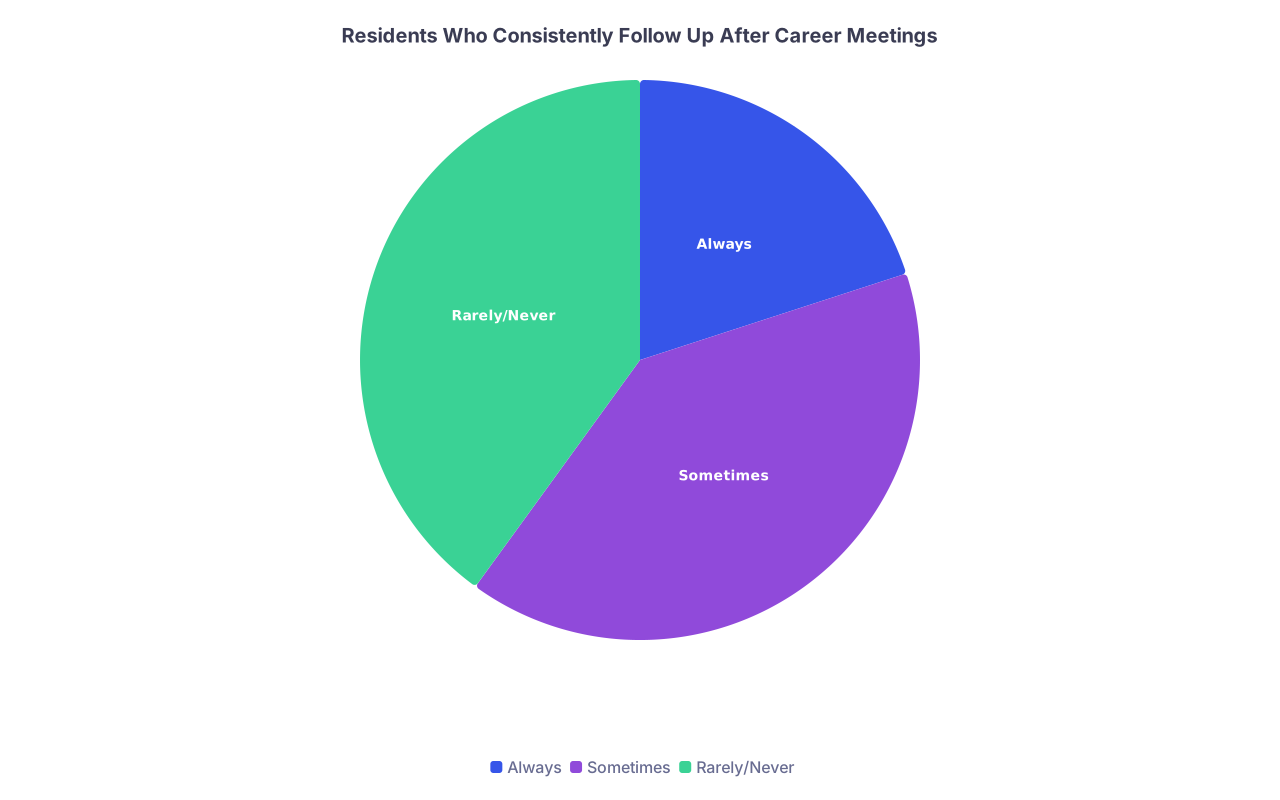
| Category | Value |
|---|---|
| Always | 20 |
| Sometimes | 40 |
| Rarely/Never | 40 |
That small 20% is where most of the long‑term career opportunities keep cycling.
11. Acting Like Networking Is One‑Way
The worst residents treat networking like extraction:
- “Give me advice.”
- “Introduce me to people.”
- “Write me letters.”
They forget that even as a resident, you have value to offer.
No, you’re not getting your attending a new job. But you can:
- Share recent evidence or guidelines you’re reading (succinctly).
- Offer to help with a small data task or chart review for their project.
- Give honest feedback about rotations in a constructive way.
- Connect them with a co‑resident who’s a great fit for something they’re seeking.
Even simple stuff counts:
“Dr. P, I remember you mentioned you were curious about virtual scribe services. Our outpatient site just started one; if you ever want, I can send you a quick summary of how it’s working out from the resident perspective.”
The point isn’t to become their unpaid assistant. It’s to demonstrate that you see the relationship as two‑sided. That you’re not just taking.
People are much more willing to open doors for someone who occasionally pushes value back in their direction, even in small ways.
FAQ (Exactly 4 Questions)
1. When is “too early” to start talking to attendings about jobs?
It’s too early if you’re asking for specific job leads before you even know your specialty or rough career direction. It’s not too early to start building real relationships in PGY‑1: asking about their career path, what they like/dislike in their current role, what they wish they’d known sooner. By mid‑PGY‑2, you should be having occasional, low‑pressure conversations about types of jobs, not specific offers. Specific job talks belong in the final 12–18 months, but the relationships that make them work need to start years earlier.
2. How many attendings should I be “close” with by the end of residency?
You’re not collecting Pokémon cards. Depth beats breadth. Aim for 3–5 attendings who: (a) have seen you work in challenging situations, (b) understand your strengths and limits, and (c) would recognize your name instantly and say, “Yes, I’d work with them.” Beyond that, having another 5–10 attendings who know you reasonably well is great, but don’t sacrifice genuine connection for a long, shallow list.
3. What if my program culture is toxic and I don’t trust my attendings?
Then your networking strategy has to be broader and a bit more surgical. Focus on: off‑service rotations at other hospitals, electives at potential future workplaces, regional conferences, and alumni from your program who escaped to better environments. You can still be civil and minimally engaged with attendings you don’t respect without pretending they’re your mentors. But do not torch the place publicly. Survive it professionally, build your real network through electives and external rotations, and let your work speak for you in healthier settings.
4. Should I be honest with attendings if I’m planning to leave the region or switch paths?
Yes—with judgment. If an attending is actively helping you find a local job, and you’ve decided you’re leaving the region, you owe them a straightforward update: “I realized I need to be closer to family, so I’m going to focus my search in [region]. I really appreciate everything you’ve already shared with me.” For sensitive changes (like switching from fellowship‑bound to going straight into practice), pick 1–2 attendings you trust and walk them through your thinking first. What kills trust isn’t your choice; it’s the sense that you wasted their time or hid the ball.
Key points to keep in your head:
- Do not wait until your final year to start building real relationships with attendings.
- Do not approach them as gatekeepers with vague goals and desperate last‑minute asks.
- Do not forget that your reputation—reliability, judgment, and follow‑through—matters more than any single coffee chat.