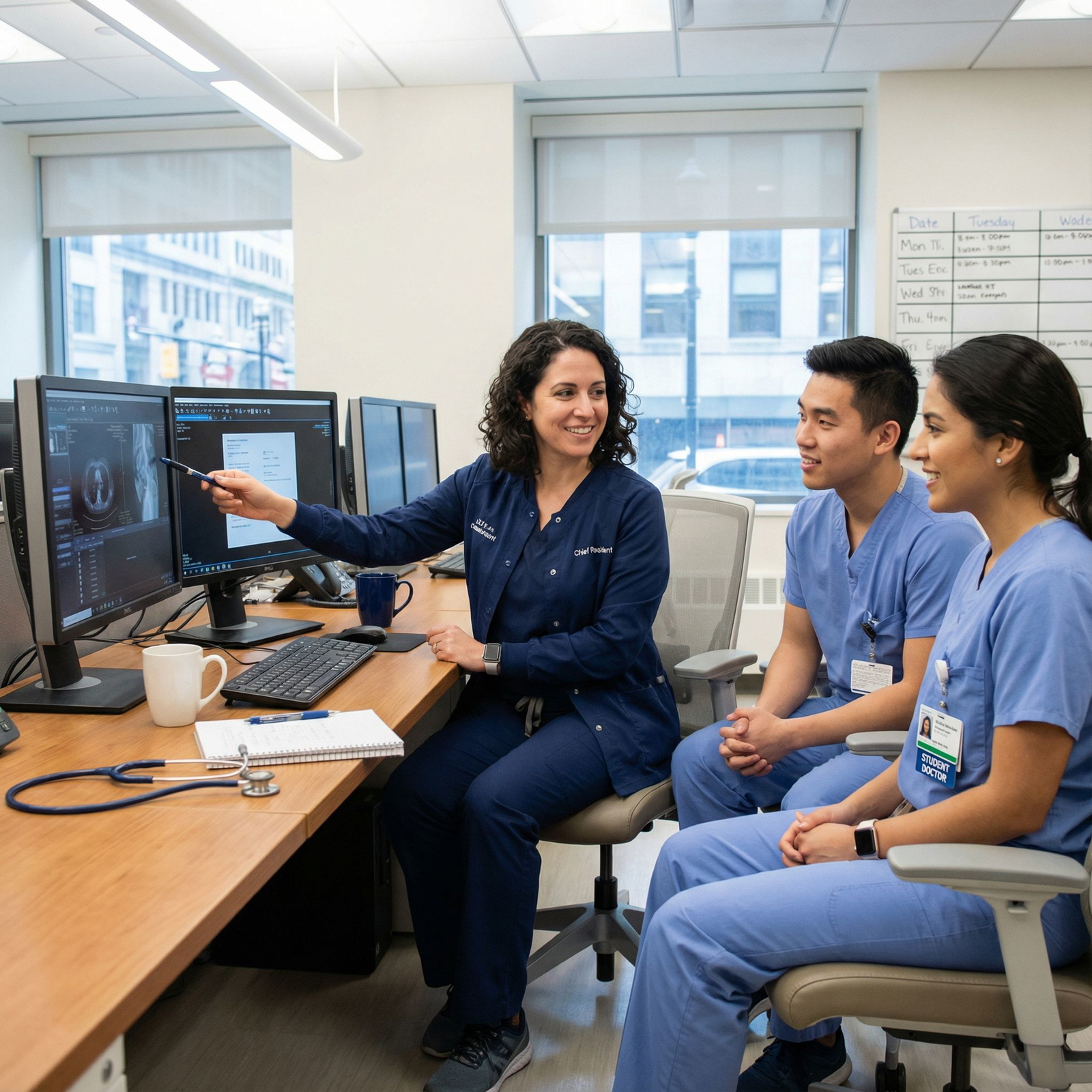
Understanding the Chief Resident Role as a US Citizen IMG
For a US citizen IMG (American studying abroad), the idea of becoming a chief resident can feel both exciting and intimidating. You may wonder whether your IMG background will hold you back, how programs view US citizen IMGs for leadership roles, and what concrete steps you can take—starting now—to position yourself for a chief year.
The good news: many US citizen IMGs do become chief residents, even at highly respected programs. Your pathway is absolutely realistic if you understand:
- What chief residents actually do
- How programs choose chiefs
- How to build a visible leadership profile during residency
- How to strategically communicate your value as an IMG
This article will walk you through a structured, stepwise strategy on how to become chief resident as a US citizen IMG, from pre‑residency planning through your chief resident application and beyond.
What Does a Chief Resident Really Do?
Before you aim for it, you need a clear sense of the role. “Chief resident” is not just a title—it’s a hybrid position that combines:
- Leadership and management
- Clinical excellence
- Education and teaching
- Program operations
While specifics vary by specialty and institution, chief residents typically:
Core Responsibilities
Schedule and Operations Management
- Build and adjust call and rotation schedules
- Manage last‑minute coverage gaps (sick calls, emergencies)
- Coordinate with program leadership around service needs and duty-hour compliance
Resident Advocacy and Support
- Serve as first-line contact when residents have concerns or conflicts
- Help troubleshoot interpersonal issues within teams
- Provide informal mentorship and guidance on exams, career planning, and wellness
Education and Teaching
- Organize morning reports, didactics, journal clubs, and simulation sessions
- Lead or co-lead teaching rounds
- Provide bedside teaching and feedback to junior residents and students
Clinical and Professional Role Modeling
- Set standards for professionalism, communication, and patient care
- Often take on particularly complex or high‑acuity patients
- Demonstrate how to interact with nursing staff, consultants, and families
Program Improvement and Administration
- Participate in Program Evaluation Committee (PEC) or similar committees
- Help implement new curricula, policies, or quality improvement projects
- Provide structured feedback to the program director (PD) about resident needs and system issues
For many specialties, chief year benefits include:
- Additional teaching and leadership exposure
- Protected administrative time
- Involvement in hiring decisions (resident recruitment, interview days)
- Stronger letters of recommendation for fellowships or jobs
- Deeper understanding of systems-based practice and hospital operations
For a US citizen IMG, this role is especially powerful: it can help neutralize lingering bias and clearly demonstrate you are indistinguishable from—or even more capable than—your US‑trained peers in terms of leadership and professionalism.
How Programs Choose Chief Residents (and Where IMG Status Fits In)
Understanding how selection works will help you align your strategy.
Most programs select chiefs based on a combination of:
- Clinical performance and reliability
- Leadership and communication skills
- Teaching ability and interest in education
- Professionalism and emotional maturity
- Fit with program culture and needs
The Typical Selection Timeline
- Early PGY‑2 (3-year programs like IM, Peds) or
- Early PGY‑3 (4+ year programs like Surgery, some combined specialties)
The program director and core faculty usually:
- Review resident performance evaluations and 360° feedback
- Discuss residents’ leadership contributions and future plans
- Sometimes solicit input from peers and nursing staff
- Identify a shortlist and then invite residents to accept or apply formally
Where Being a US Citizen IMG Matters (and Where It Doesn’t)
Key points for an American studying abroad:
- Once you are in residency, the label “US citizen IMG” matters far less than:
- Your work ethic
- Clinical competence
- How people feel working with you
- Some faculty may still carry unconscious bias about IMGs—assuming weaker communication skills, less familiarity with US healthcare culture, or less leadership potential.
- Becoming a chief resident is one of the most powerful ways to counteract that narrative and showcase:
- Excellence in communication
- Deep systems understanding
- High-level professionalism
Your job is to make it easy for your program to see you as an obvious choice by:
- Performing consistently well
- Taking ownership of tasks and teams
- Demonstrating visible leadership and teaching interest
- Building genuine trust with faculty, residents, and staff

Stepwise Strategy: From Match Day to Chief Resident
This section lays out a practical roadmap you can follow during residency. Even if you’re just thinking about the future, start building these habits early.
Step 1: Build a Reputation for Reliability (PGY‑1 and Early PGY‑2)
Reliability is non‑negotiable. Programs rarely choose chiefs who:
- Frequently sign out incomplete work
- Need constant reminders to finish notes
- Show up late or leave early
- Have recurring professionalism concerns
As a US citizen IMG, you may feel pressure to “prove you belong.” Channel that into:
Concrete actions:
Own your list
- Know every detail about your patients without being prompted.
- Anticipate next steps before your seniors ask (labs, imaging, consults, disposition plans).
Master the basics quickly
- Learn EMR shortcuts, order sets, and common workflows.
- Ask early how your program prefers notes, sign‑outs, and handoffs formatted.
Be ultra-reliable about communication
- Answer pages and messages promptly.
- Update seniors and attendings in real time about any concerning changes.
- Be honest about what you know and don’t know; ask for help early.
Meet deadlines and expectations
- Finish notes on time.
- Show up early for rounds.
- Complete mandatory modules (HIPAA, infection control, etc.) well before deadlines.
Faculty often remember who made their lives easier. Chiefs are usually residents who reduce friction for everyone else.
Step 2: Cultivate Strong Relationships with Peers and Staff
Programs rarely select someone as chief if the resident body doesn’t respect or trust them. As a US citizen IMG, your classmates may initially know little about your training background abroad. First impressions matter.
Actions:
Be a team amplifier, not a solo star
- Offer to help colleagues with admissions or complex discharges when you finish your tasks.
- Share good resources (guidelines, templates, patient education materials) openly.
Treat nurses and ancillary staff as true partners
- Learn their names and preferences.
- Take nursing concerns seriously and respond respectfully—even when the system is stressful.
- Avoid blaming or venting about staff in front of others.
Be a calm, constructive presence
- In crises (codes, rapid responses, difficult families), keep your voice steady and your communication clear.
- In conflicts, focus on solutions, not blame.
Word spreads very quickly about which residents are “easy to work with.” That reputation feeds directly into chief selection.
Step 3: Develop a Visible Teaching Identity
One of the biggest chief year benefits is expanded teaching experience—but you should be building a teaching profile long before you’re a chief.
Practical ways to show you’re an educator:
At the intern level:
- Offer to walk medical students through common admissions (chest pain, sepsis, DKA).
- Explain your clinical reasoning out loud during rounds or presentations.
- Volunteer to give a short, focused “chalk talk” during downtime on the wards.
At the senior resident level:
- Take ownership of morning report or case conferences when given the chance.
- Create short, high-yield teaching handouts or slide decks and email them to your team.
- Give structured feedback to students (specific, kind, actionable).
Ask faculty who care about education to observe your teaching and give feedback. They are often the same people who heavily influence the chief resident application discussions.
Step 4: Lean into Leadership and Systems Thinking
Chief residents are not just the best clinicians—they are the people program leadership trusts to help run the system.
Start by:
Joining committees or initiatives
- Program’s wellness committee, quality improvement committee, diversity/equity taskforce, or education committee.
- Volunteer for at least one role that gives you cross‑departmental exposure.
Leading or contributing to QI projects
- Examples: improving discharge summary quality, reducing unnecessary labs, standardizing sepsis order sets.
- Aim for projects that intersect with your own pain points on service.
Developing problem-solving habits
- When you identify a system issue (e.g., miscommunication during cross‑cover), propose practical changes instead of just complaining.
- Bring ideas to your chief residents, APDs, or PD in a diplomatic, solutions-focused way.
This demonstrates systems-based practice and makes it easier for leadership to see you as part of the program’s long‑term strategy.
Step 5: Communicate Your Interest Early and Clearly
Many residents never become chief because they:
- Assume they’re being considered automatically, or
- Wait too long to express interest.
As a US citizen IMG, don’t assume your PD will just “know” you’re interested.
Around mid‑PGY‑2 (or one year before selection):
Set up a meeting with your PD or APD
- Express clearly: “I’m very interested in a leadership path and would like to be considered for a future chief resident role.”
- Ask: “What specific skills or experiences would strengthen my candidacy in this program?”
Ask for targeted opportunities
- Leading a morning report series.
- Representing residents on a committee.
- Mentoring incoming interns or visiting medical students.
This not only puts you on their radar for the chief resident application but also gets you feedback that is tailored to your program culture.

Preparing a Strong Chief Resident Application and Case for Selection
Some programs have a formal chief resident application process (CV, letter of intent, interview). Others are informal but still consider the same elements. Either way, prepare as if there is an application.
Crafting Your Narrative as a US Citizen IMG
Your background as a US citizen IMG is not a disadvantage if you frame it strategically.
Key themes to highlight:
Adaptability and resilience
- You successfully navigated medical education in another country and then transitioned into the US system.
- You’ve already demonstrated the ability to learn new environments quickly and function effectively.
Cross-cultural communication
- Exposure to different patient populations and health systems can enrich your approach to care and teaching.
Alignment with program values
- Emphasize how you’ve contributed to the program’s culture of inclusion, teamwork, or innovation.
In your letter of intent or conversations:
- Briefly acknowledge your path as an American studying abroad, but don’t over‑focus on it.
- Center your concrete contributions and your vision for how you’d serve as a chief (for residents, students, and the program).
Strengthening Your CV for Chief Selection
Your CV for chief resident selection should clearly show:
Clinical Excellence
- Honors or recognition within the program (awards, positive eval highlights).
- Peer‑nominated recognitions (e.g., “most supportive senior,” “best educator”).
Teaching Activities
- Led morning report, case conferences, journal clubs.
- Created teaching materials or small-group curricula.
- Mentored junior residents or students.
Leadership and Committee Work
- Resident representative roles.
- Service on QI or wellness committees.
- Involvement in DEI or recruitment efforts (especially relevant for IMGs).
Scholarly or QI Output (where applicable)
- Posters, presentations, or papers related to education or quality improvement.
Anticipating the Interview or Selection Conversation
If your program holds formal interviews for chief candidates, you can expect questions like:
- “Why do you want to be a chief resident?”
- “What do you see as the biggest challenge facing our residents?”
- “Tell me about a conflict you helped resolve on a team.”
- “How would you handle a resident with recurrent professionalism issues?”
Prepare structured, specific stories that demonstrate:
- Conflict resolution skills
- Advocacy for peers
- Comfort giving and receiving feedback
- Openness to learning from mistakes
Where appropriate, you can subtly integrate your IMG experiences:
- “During medical school abroad, I saw how different systems approach…”
- “Transitioning into US residency from an international school taught me to quickly build trust in a new environment…”
These perspectives can be framed as assets that inform your leadership style.
Balancing Chief Year Benefits with Career Plans (Fellowship vs. Hospitalist, etc.)
For many residents—especially US citizen IMGs—there’s a strategic question: Is a chief year worth it for my career path?
Benefits of a Chief Year
Residency Program Leadership Experience
- Looks strong on fellowship and job applications.
- Signals that your PD and faculty trust you deeply.
Deeper Mentorship and Networking
- You work closely with PDs, APDs, and department leadership.
- You gain visibility with faculty, often leading to more tailored letters of recommendation.
Teaching and Academic Skill Development
- Helpful if you are considering an academic career or clinician‑educator track.
Time to Clarify Long-Term Goals
- Chief year can serve as an “academic gap year” before fellowship, allowing more time for research, QI, or career exploration.
Compelling Signal as a US Citizen IMG
- Being chosen as chief can offset residual bias against IMGs in fellowship or faculty hiring decisions.
- It clearly demonstrates your leadership potential in a US training setting.
Potential Trade‑Offs
- Delayed Fellowship Entry or Attending Salary
- You effectively add a year of residency-level pay.
- Increased Administrative Burden
- Chiefs often juggle scheduling, resident advocacy, and their own clinical duties.
- Risk of Burnout if Boundaries Are Weak
- You may feel caught between residents and faculty, especially in programs with high stress or limited support.
When a Chief Year Makes Strong Sense
- You want an academic/teaching-focused career.
- You’re applying to competitive fellowships where leadership roles are valued.
- You want to firmly establish yourself in the US system as a leader, particularly if you feel your IMG status has been a subtle barrier.
- You enjoy mentoring, conflict resolution, and system-level thinking.
When It Might Be Less Critical
- You’re pursuing a community-based job where local references and clinical productivity matter more than formal leadership titles.
- You’re already heavily involved in research or leadership and don’t need more time to build your CV.
In many cases for a US citizen IMG, the signal value of a chief year—especially in competitive specialties or fellowships—is high. Consider discussing this explicitly with mentors who understand your long-term goals.
Action Plan: What to Start Doing Now (by Stage)
To summarize, here’s a concrete checklist based on where you are.
Before Residency (Med Student / Applicant Stage)
If you haven’t matched yet but are planning ahead:
- Seek leadership roles in student organizations, near‑peer teaching, or QI projects.
- Be ready to discuss these experiences on interviews; they set the stage for future leadership.
- During interviews, ask residents:
- “How are chief residents selected here?”
- “Do IMGs commonly become chiefs?”
This gives you early insight into program culture.
Early Residency (PGY‑1)
- Focus on excellence in clinical basics and reliability.
- Be the intern everyone trusts to get things done.
- Start building positive relationships with residents, nurses, and staff.
- Volunteer for small teaching moments with students whenever possible.
Mid‑Residency (PGY‑2 or Equivalent)
- Take on more visible teaching and committee work.
- Ask for feedback from faculty known for education or leadership.
- Express explicit interest in leadership paths and how to become chief resident at your specific program.
- Start conceptualizing a small QI or education project with real impact.
Late Residency (PGY‑3+ / Selection Year)
- Refine your narrative and CV to highlight leadership and teaching.
- Request strong, detailed letters from faculty who have seen you in leadership roles.
- Prepare thoughtfully for any chief resident application process or interviews.
- Continue to support peers and juniors—you are being watched for how you handle stress and conflict until the very end.
FAQs: Chief Resident Path for US Citizen IMGs
1. Does being a US citizen IMG make it harder to become a chief resident?
It can in some environments, primarily due to unconscious bias or assumptions about IMGs. However, once you’re in residency, performance and reputation dominate the decision process. Many US citizen IMGs become chiefs every year. Your strategy should be to:
- Excel clinically
- Become visibly involved in teaching and committees
- Demonstrate reliability, maturity, and systems thinking
- Communicate your interest in leadership early
When faculty see you as indispensable, your IMG background matters far less.
2. When should I tell my program director I want to be a chief resident?
Aim to have a focused conversation about 12–18 months before selection, often early in PGY‑2 for 3‑year programs. This timing:
- Gives you a chance to receive actionable feedback.
- Allows you to take on targeted roles that strengthen your candidacy.
- Signals to leadership that you’re serious, not just casually interested.
You can always mention an interest earlier in an informal way but schedule a dedicated, explicit discussion around mid-residency.
3. Will a chief year really help my fellowship chances as a US citizen IMG?
In many specialties, yes—especially if:
- Your program or specialty is competitive.
- You’re aiming for academic or teaching-centered fellowships.
- You want to counteract any residual skepticism about your non-US medical school.
Being chief resident signals that US faculty trusted your leadership, professionalism, and teaching. Fellowship committees often view this very positively, particularly for IMGs.
4. What if my program rarely chooses IMGs as chiefs?
First, quietly confirm whether this is truly the pattern: ask trusted senior residents or faculty. If historical patterns show that IMGs seldom or never become chiefs, consider:
- Discussing your leadership interests with your PD and asking frankly what would make you competitive.
- Seeking leadership and teaching roles that are not dependent on the chief title (committees, QI, education projects) so your growth doesn’t hinge on one decision.
- If you’re still early in your training pathway (med student) and chief opportunities matter a lot to you, factor this pattern into how you build your rank list.
Even without the title, you can still build a strong leadership profile—but it’s important to be realistic about local culture and to advocate for yourself thoughtfully.
By approaching residency with a clear strategy—prioritizing reliability, relationships, teaching, leadership, and transparent communication—you can make yourself a compelling, obvious choice for chief resident, even as a US citizen IMG. Your path as an American studying abroad is not a limitation; with intention, it becomes a distinctive foundation for a powerful leadership story in US graduate medical education.