

It’s late PGY-2. You’re post-call, half-eating a stale muffin in the workroom, and someone casually drops, “So… who do you think they’ll pick for chief next year?”
People immediately start naming the Step 1 monsters. The ones with 260s, the “gunner” who quotes UpToDate during rounds, the resident who’s already first author on three papers.
You say nothing, but you’re doing the math on yourself. Your scores were good, not legendary. You’ve got solid evals, no major disasters. You show up. You work hard. You’re… fine.
And you’re wondering: Is chief even on the table for me? Or is that door already closed because of numbers and CV glitter?
Let me tell you what really happens behind that closed-door PD meeting.
Those Step scores? They might get brought up once. Briefly. Usually as an aside: “Yeah, she had a 252, but…”
What comes after the “but” is what actually decides chief.
I’ve sat in those rooms. I’ve watched PDs, APDs, and core faculty argue over names. I’ve heard people with 99th percentile scores get passed over in five seconds because of things that never show up in ERAS.
Let’s go through the traits that secretly carry more weight than your board scores when it comes to chief selection.
The First Filter: Are You Safe To Put In Front?
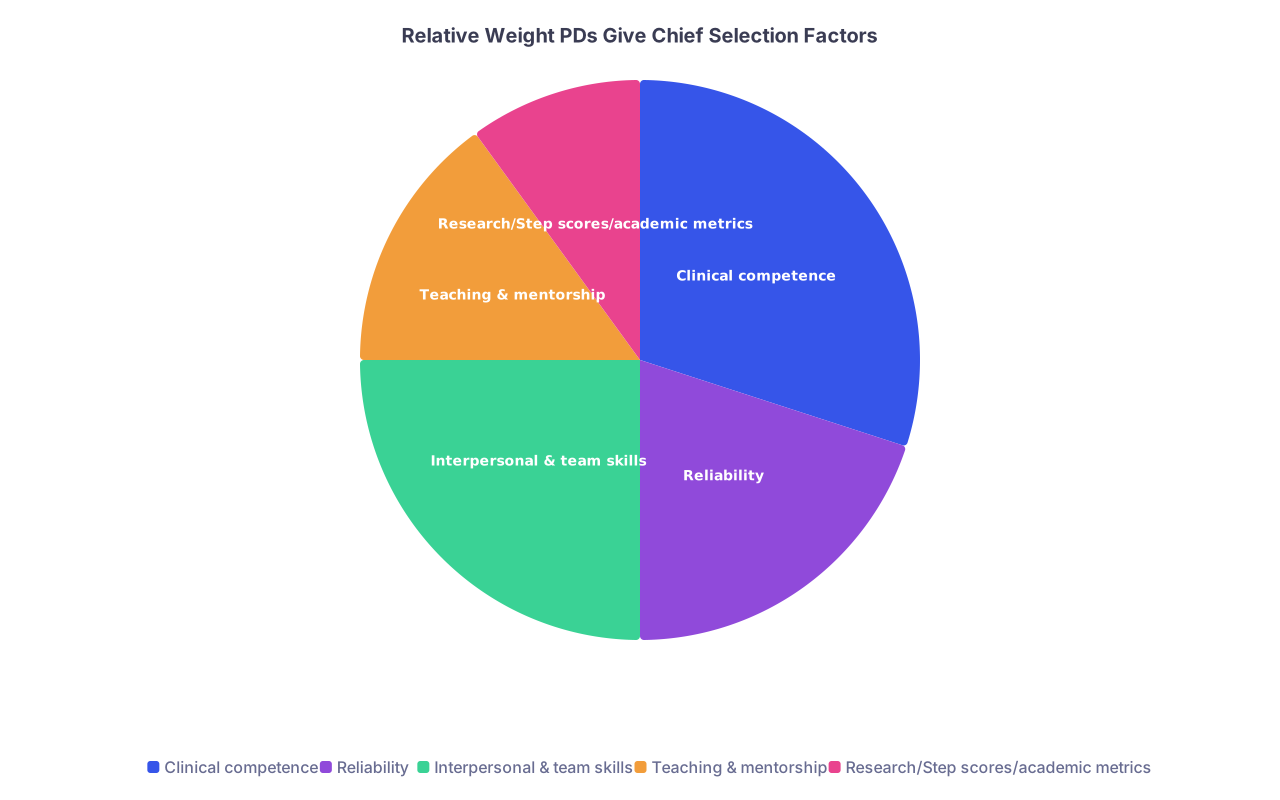
| Category | Value |
|---|---|
| Clinical competence | 30 |
| Reliability | 20 |
| Interpersonal & team skills | 25 |
| Teaching & mentorship | 15 |
| Research/Step scores/academic metrics | 10 |
Here’s the unspoken rule: chiefs represent the program’s brand. They’re the ones talking to applicants, smoothing over hospital politics, sometimes even presenting at GMEC or to the C-suite.
So the first question PDs ask is not “Who’s the smartest?”
It’s: “Who am I comfortable putting in front of my chair, the dean, and 50 nervous applicants on interview day?”
That translates into three quiet checks:
- Would this person embarrass us in a meeting?
- Will they say something impulsive or unprofessional?
- Can they read the room?
This is why the brilliant-but-socially-awkward resident rarely becomes chief. Not because they’re not good. Because they’re risky.
The resident who can be firm but professional with a rude consultant, who knows when to push and when to shut up, who doesn’t get flustered when the CMO walks onto the floor and asks, “So how’s it really going?”—that’s the one PDs trust.
I’ve seen a PD literally say: “Look, he’s probably our best pure clinician, but I’m not putting him in front of the Dean. He has no filter.” Discussion ended. That resident never had a chance.
You want to be chief? Start acting like someone your PD could safely send to any room in the hospital without worrying you’ll blow it.
Reliability: The Trait Residents Underestimate Most
Residents love to overestimate how much leadership is about charisma. PDs don’t.
Behind closed doors, there’s a brutal, simple question: “If I give this person responsibility over the schedule, the curriculum, the day-to-day function of this place… will anything fall apart?”
That’s reliability. And it’s judged off small, boring, unsexy data points you probably think no one notices.
Things like:
- Do you answer emails from the chief or PD within a reasonable timeframe, or do they have to chase you?
- When you say you’ll take on a QI project, do you actually finish it—or does it evaporate?
- When you’re on jeopardy, do you actually pick up when the program calls?
- Do rotation chiefs quietly say, “If I assign something to her, it gets done”?

There’s always that one resident: brilliant, great on rounds, loved by patients—who constantly drops admin balls. Late on duty hour logs. Late on evaluations. Perpetually “forgot” the mandatory module.
You know what faculty say about that person in chief discussions?
“Absolutely not. I can’t be chasing a chief for basic admin stuff.”
The irony is painful: the same residents who think these little things “don’t matter” are the ones cut from consideration before the real conversation even starts.
You want to be taken seriously for chief? Do the boring things consistently, without drama. Chiefs are trusted with the program’s plumbing. If you leak on small stuff, no one will hand you the main line.
Emotional Regulation: The Hidden Superpower
No one writes “manages own emotional reactivity under stress” on a chief job description. But behind the scenes, that’s one of the most important traits.
Here’s what PDs really ask: “Whose emotions do I want influencing the culture of every other resident for a year?”
Because chiefs set the tone. If the chief panics, the juniors panic. If the chief is chronically bitter, the whole program goes sour.
Faculty watch you when things go badly:
- The night you get three admits in 30 minutes and your senior is useless.
- When a nurse escalates something unfairly.
- When an attending corrects you sharply in front of the team.
- When a patient outcome is bad and everyone’s on edge.
Do you:
- Start venting loudly in the workroom about how “this system is trash” every other day?
- Fire off long, dramatic, late-night emails about all the ways the program is failing you?
- Sulk and disappear when you don’t get what you want?
I’ve sat in meetings where a resident’s name came up and the PD said, “Look, I like her. She’s a good clinician. But every minor issue becomes a five-alarm emotional fire with her. I can’t have her in charge of 40 people.”
And that was that.
You don’t have to be a robot. Chiefs can and do get frustrated and advocate hard. But they regulate first, speak second. They vent sideways (to a trusted friend, spouse, therapist), not downward into the resident body in a way that poisons the culture.
If you want to be chief, start practicing this now: feel what you feel, then choose your response. Do not let your raw emotion become everybody else’s weather.
Peer Trust: The Factor PDs Secretly Ask About
Programs vary, but here’s a pattern I’ve seen over and over: at some point, the PD quietly gathers informal intel from current chiefs and influential residents.
Not a formal vote. Not a popularity contest. More like: “Who do people actually want to follow?”
Because if your peers don’t trust you, you’re already dead in the water.

| Step | Description |
|---|---|
| Step 1 | Program director |
| Step 2 | Core faculty input |
| Step 3 | Rotation chiefs feedback |
| Step 4 | Resident sentiment |
| Step 5 | Shortlist for chief |
The questions behind the scenes are blunt:
- “When something hits the fan at 2 am, who do people call for help?”
- “Who do the interns seek out for honest advice—not just someone to complain with?”
- “Who has credibility with both the residents and the attendings?”
This isn’t about whether you’re the most liked socially or the center of every hangout. I’ve watched extremely social residents (life of the party, always organizing events) not even be mentioned for chief, because no one went to them for real help.
Peer trust is built from things like:
- You don’t throw co-residents under the bus to save face in front of attendings.
- You share credit. When something goes well, you say “we,” not “I.”
- You step in quietly when someone’s drowning—take a couple of their tasks, help them think through the plan—without turning it into a performance.
- You can be honest with a struggling co-resident without humiliating them.
When residents feel like, “If they’re chief, they’ll have our backs,” that word spreads. PDs hear it. Current chiefs tell them. Faculty notice the way interns orbit around certain seniors. It all counts.
If your peers don’t fundamentally trust you, no Step score in the world will fix that.
Teachability and Teaching: Two Sides of the Same Coin
Most residents think “good teacher” means “gives great chalk talks.” That’s part of it. But PDs are looking at something deeper: are you both teachable and able to teach?
The teachable part is key. Chiefs work closely with PDs. There will be times you’re wrong, political landmines you don’t see, decisions above your pay grade. If you can’t be corrected, you’re a problem.
Faculty watch for:
- How you respond when corrected on rounds in front of others.
- Whether you update your practice after feedback—or defend yourself endlessly.
- Whether you can say, “You’re right, I missed that. Let’s fix it,” without melting down or getting passive-aggressive.
Then there’s how you teach. Not just the scheduled noon conference where you had a month to prepare. I mean in the trenches:
- Do you bring the intern along when you’re managing a crashing patient, or do you push them aside and do it all yourself?
- Do you explain your thinking on cross-cover calls, or just bark orders?
- Do students leave your team saying, “I actually learned how to present / write notes / think through a workup”?

I sat in one chief selection meeting where an APD said, “He’s not the flashiest, but you realize every time I have a medical student tell me ‘I actually learned medicine this month,’ it’s from his team?” That carried more weight than his Step scores, guaranteed.
If you’re aiming for chief, stop thinking of “teaching” as a box to check. It’s your daily behavior. Share your reasoning. Ask questions that make juniors think. Let them try and gently correct.
And just as critical: show up as teachable yourself. Chiefs who can’t take feedback become PD headaches.
Discretion and Political Sense
There’s a quiet category no one names out loud but absolutely decides chief picks: discretion.
Quietly put—can you keep your mouth shut when it matters?
Program leadership has to talk to chiefs about real stuff. Underperforming residents. Remediations. Faculty conflict. Hospital politics. Union issues. Not for gossip, but because it affects scheduling, coverage, wellness, morale.
If you’re known as Someone Who Always Knows The Tea, you are not getting chief. Full stop.
The internal questions PDs ask:
- “If I tell this person something in confidence, will it be in three group chats by tonight?”
- “Do they understand which problems to bring to me vs which ones to handle quietly?”
- “Do they know when not to put things in writing?”
I watched one resident submarine their chief chances in a single month by forwarding a frustrated email chain to a group chat with commentary. Someone took a screenshot. It got back to leadership. That resident’s name was never spoken in a serious way again for chief.
Discretion also means you don’t make your entire persona “I hate this program” in public. Chiefs criticize. They push leadership. But they don’t burn down their own house for clout.
If you’re the resident who rants on social media about every minor issue with your name and program visible? Leadership notices. They will not hand you the microphone for a whole year.
Quiet Initiative: Leading Without a Title
By the time chief applications roll around, PDs already know who their top 4–6 are. Not because of essays. Because of patterns of behavior they’ve watched for years.
What stands out?
Not the one big flashy initiative. The small, repeated acts of ownership.
- You saw that signout was chaos, so you proposed and piloted a cleaner handoff template on your team. It worked. Others adopted it.
- You noticed that interns were confused about cross-cover, so you created a one-page “Survival Guide” and shared it with the chiefs. No drama. No need for recognition.
- You volunteered to help with interview day logistics—not for the photo op, but because you wanted it to run well.
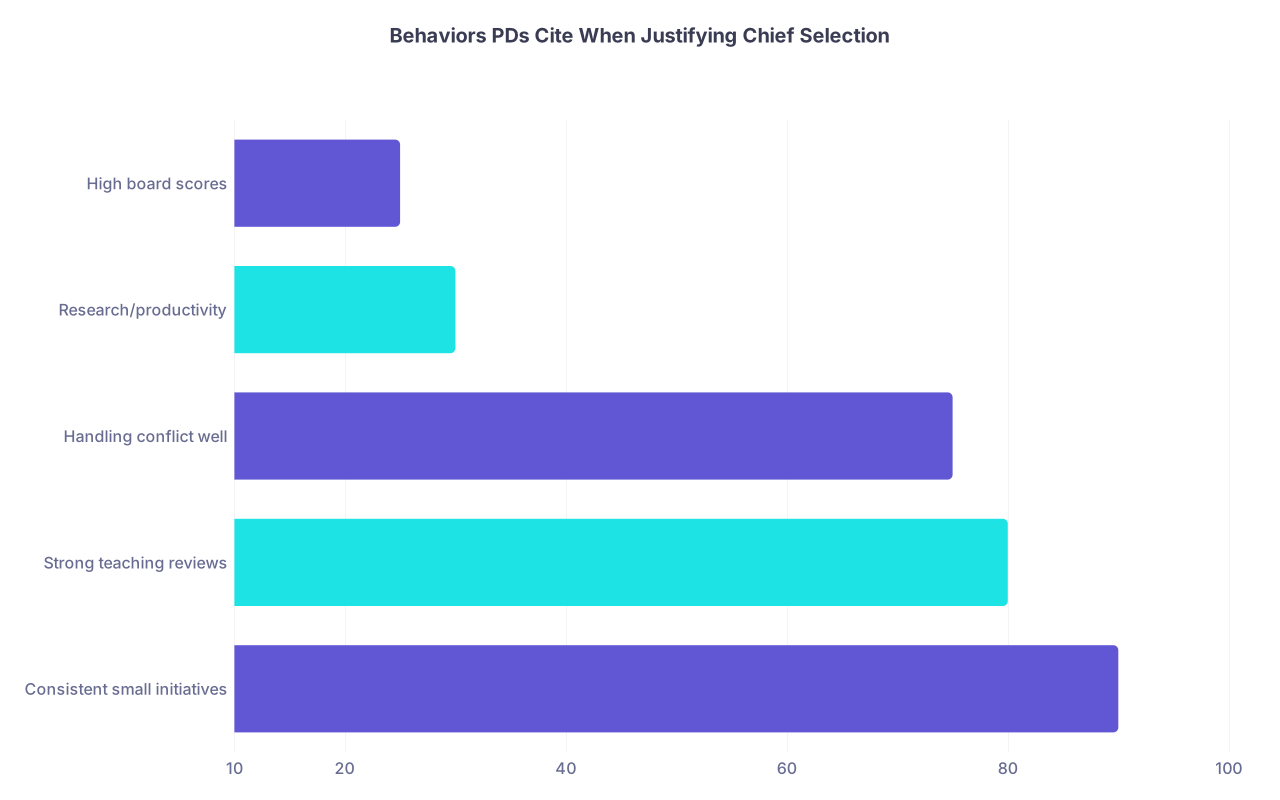
| Category | Value |
|---|---|
| Consistent small initiatives | 90 |
| Strong teaching reviews | 80 |
| Handling conflict well | 75 |
| Research/productivity | 30 |
| High board scores | 25 |
Quiet initiative looks like this: you see something broken, you fix it at your level, and you loop leadership in just enough to keep them aware and comfortable.
PDs hate residents who only bring problems. They respect residents who bring problems with plausible solutions and who already tested step one of that solution on a small scale.
By the time chief selection happens, they’ll say, “She already acts like a chief; she just doesn’t have the title yet.” Those people get picked.
How PDs Actually Weigh Step Scores at Chief Time
Let me be blunt. Step scores barely matter once you’re in residency, assuming you’re clinically competent.
Do they come up? Occasionally.
Usually like this:
- If someone has borderline clinical performance, low test scores may be used as circumstantial evidence that they’ll struggle with in-service or boards.
- If two candidates are otherwise truly neck-and-neck (rare), someone may mention academic metrics as a tie-breaker.
- For very academically heavy programs, leadership might like a chief who can also represent them at national meetings, which sometimes biases them toward those with strong academic profiles.
But I’ve seen chiefs with very average board scores and stellar leadership traits. I’ve also seen 260+ people never even on the short list because they were unreliable, reactive, or toxic for culture.
If you’re worried your Step scores aren’t “chief-level,” stop. They’re not the currency anymore. Your daily behavior is.
How to Position Yourself (Starting Tomorrow)
You do not need to become a different person. You do need to sharpen specific behaviors that PDs and faculty actually watch.
Here’s the distilled checklist I’ve seen separate chosen chiefs from surprised bystanders:
- Be clinically solid and prepared. Not perfect. Solid. Know your patients cold. When you don’t know, say so and look it up.
- Become ruthlessly reliable with small tasks. Logs, evaluations, replies. Treat them like patient safety issues, not optional homework.
- Regulate before you react. Especially in email. Especially late at night.
- Protect your peers in front of others. You can address their mistakes privately.
- Teach on purpose. Narrate your thinking. Ask your juniors what they think before you jump in.
- Take small, actionable ownership of problems. Try something. Share what worked.
- Guard confidential information like it’s your board score report.
- And never forget: chiefs are picked a long time before the email asking for “interest statements” goes out.
| Hidden Trait | What PDs Actually See On The Wards |
|---|---|
| Reliability | On-time notes, completed evals, quick responses, no loose ends |
| Emotional regulation | Calm during codes, measured emails, not fueling drama |
| Peer trust | Interns seeking you out, residents confiding in you |
| Teaching ability | Clear explanations, patient involvement, positive learner feedback |
| Discretion | No leaks, no gossip trail, professional online presence |


