

You’re a PGY-2 halfway through a brutal wards month. It’s 9:30 p.m., you’re catching up on notes, and you overhear your PD and an associate program director chatting in the hallway after a meeting.
You catch just enough to spike your heart rate:
“…she’s the obvious choice for chief… always handles the chaos… residents trust her…”
They’re talking about your co-resident. Not you.
On paper you’re strong. Good evaluations, solid Step scores, no professionalism issues. You thought that was enough to be “in the conversation” for chief. It is not. And nobody has ever actually explained to you how this decision really gets made.
Let me fix that.
What I’m going to walk you through is not the sanitized version from the resident handbook. This is what program directors, APDs, and core faculty actually do and say behind closed doors when they quietly decide who gets that chief resident email…and who never even gets mentioned.
The Myth vs. The Reality of Chief Selection
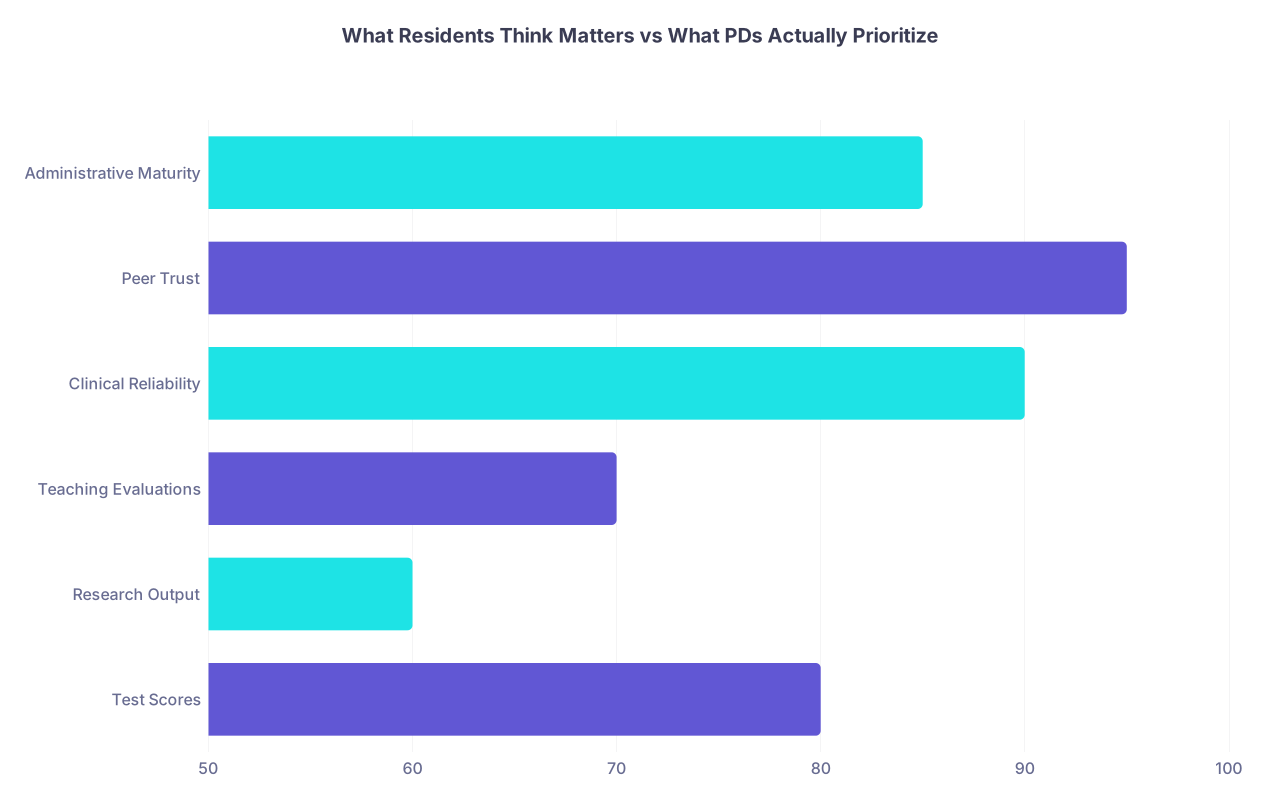
| Category | Value |
|---|---|
| Test Scores | 80 |
| Research Output | 60 |
| Teaching Evaluations | 70 |
| Clinical Reliability | 90 |
| Peer Trust | 95 |
| Administrative Maturity | 85 |
Let me start by killing the most common fairy tale.
Residents think chief selection is meritocratic in a straightforward way: the “best” residents rise to the top. Highest evaluations, best test scores, most research, good teacher — done.
That’s not how it plays out.
Program directors care about something much more specific and much less visible: risk.
A chief resident is not primarily a reward. It is a risk-bearing leadership role sitting between the PD and the chaos of 30–80 residents. The question in the room when chiefs are chosen isn’t “Who deserves this?” It’s:
“Who can I trust to hold this place together when something goes wrong at 2 a.m. and I’m not here?”
That’s the quiet filter everything gets passed through.
The other big myth: that there’s a formal, objective process with a scoring rubric deciding this. There might be a form. There might be a survey. There might even be a resident vote. But the actual decision? It’s usually a short list curated by faculty narrative and then decided by a very small group of people, often the PD and one or two APDs.
And it usually happens earlier than you think.
When the Decision Really Starts (It’s Not PGY-3)
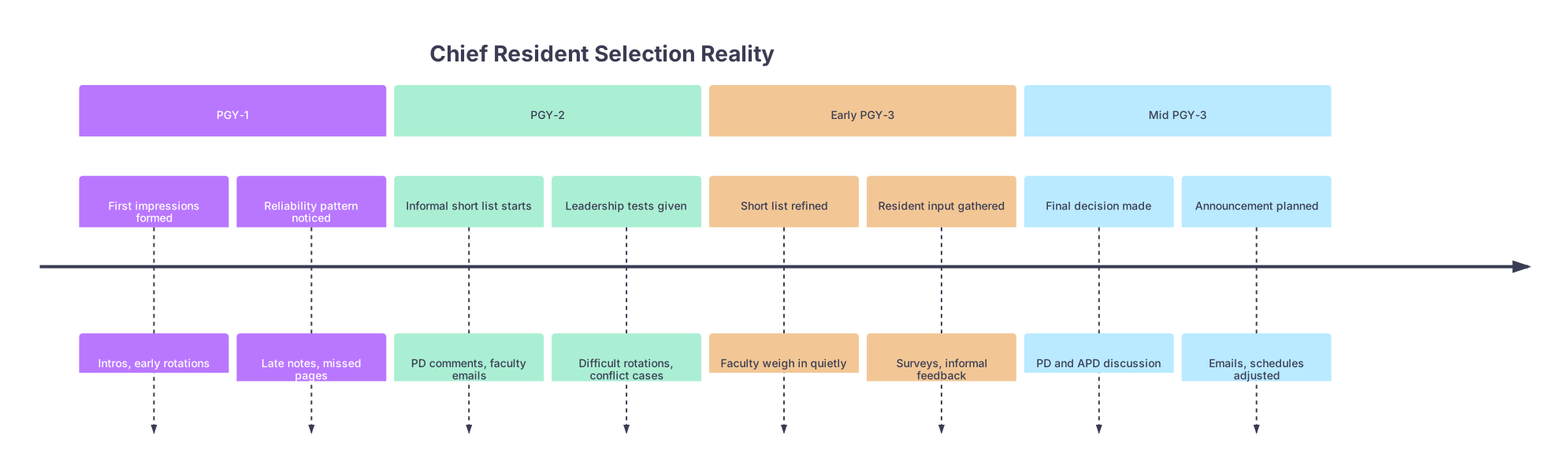
| Period | Event |
|---|---|
| PGY-1 - First impressions formed | Intros, early rotations |
| PGY-1 - Reliability pattern noticed | Late notes, missed pages |
| PGY-2 - Informal short list starts | PD comments, faculty emails |
| PGY-2 - Leadership tests given | Difficult rotations, conflict cases |
| Early PGY-3 - Short list refined | Faculty weigh in quietly |
| Early PGY-3 - Resident input gathered | Surveys, informal feedback |
| Mid PGY-3 - Final decision made | PD and APD discussion |
| Mid PGY-3 - Announcement planned | Emails, schedules adjusted |
You think chief selection is a PGY-3 thing. The file gets opened, they look at your evaluations, maybe there’s a vote, and then they decide.
That’s not actually when it starts.
The first stage is PGY-1. I have sat in faculty meetings where someone says, “That intern — the one who kept calm with four admissions in two hours — we should keep an eye on her for future leadership.” That’s 18–24 months before any “official” chief talk.
By mid-PGY-2, in most programs, there’s an informal short list. No one calls it that. But the mental bucket exists:
- People we’d be happy to have as chief
- People who are good residents but not chief material
- People we’d never consider, regardless of performance from here on out
You will almost never hear this list out loud. But PDs and APDs absolutely say things like:
- “He’s great clinically, but I’d never make him chief.”
- “She’s not our strongest test-taker, but she’s a natural leader — keep her on your radar.”
By late PGY-2 / very early PGY-3, they’re already testing the potential chiefs. You’ll see it if you know where to look: they quietly give certain residents more autonomy, more chances to run the team, more exposure to scheduling issues or conflict resolution. They watch what happens.
The formal “application” or “expression of interest” process — if your program even has one — is mostly a formality layered on top of decisions that are 70% baked.
What PDs Actually Look For (That You’re Not Evaluated On)
Let me walk through the core traits that matter, the real ones, not the brochure language. Then I’ll show you how they’re assessed without you realizing.
1. Reliability Under Stress, Not Brilliance on Easy Days
Program directors obsess about your behavior on your worst days, not your best.
Every program has that one resident with phenomenal knowledge and flashy presentations who absolutely disappears when things get messy. Late notes. Delayed follow-up on critical labs. Emotional meltdown when the census hits 18.
That person is almost never chief, no matter what their MedHub comments say.
What PDs care about:
- Do you show up when it’s ugly?
- Do you quietly stay late when the team is drowning, without whining or documenting every extra minute as “above and beyond”?
- Do nurses and night float trust that if they page you, you will actually respond and execute, not just “acknowledge the page”?
How they know:
Nurses talk. Night float attendings talk. The chief of the ED absolutely talks. I’ve watched a PD stop considering a top candidate because the night ED attending said, “He’s solid from 8 a.m. to 4 p.m., but you can’t find him after sign-out.”
That comment carries more weight than ten glowing evaluation forms.
2. Peer Trust — The Shadow Vote That Really Matters
Residents know who should be chief long before faculty make it official. The PD knows that too.
So they listen for patterns:
- Who do residents call when they’re stuck with a complex family meeting?
- Who gets texts like, “Can I run a case by you real quick?”
- When there’s schedule drama, who do people seek out for advice, not just gossip?
PDs do not care if you’re universally loved. They care if you’re widely trusted. Those are not the same thing.
Residents will tolerate a chief who’s firm and occasionally unpopular if they trust that person to be fair and to fight for them when it matters. They cannot stand a chief who’s conflict-avoidant, two-faced, or obviously angling for fellowship favor.
How PDs find this out:
They ask targeted questions in one-on-ones: “If you had to pick chief today, who would you pick and why?” They watch for the same 2–3 names showing up repeatedly. The exact words change, but the PD is mapping your informal social capital.
The Ugly Truth: Political Capital and Risk Management
Here’s what no one tells you as a resident: your chief selection is partly about you and partly about protecting the program.

A chief resident can:
- Blow up a conflict into a formal HR problem
- Mishandle a patient safety issue
- Alienate an entire intern class
- Make the program look dysfunctional to the GME office
So PDs ask themselves:
“If this person mishandles a big problem, how bad will it be for the program and for me personally?”
You might be an exceptional clinician. But if you’ve ever:
- Sent a snarky email up the chain
- Publicly challenged an attending in a way that embarrassed them
- Posted something borderline on social media
- Been involved in a resident–resident conflict that reached the PD’s desk
…you’ve just created doubt. PDs do not forget that kind of doubt. They may forgive. They rarely promote into chief.
Harsh? Yes. But remember: chief is not about “fair.” It’s about perceived safety and stability.
The Hidden Evaluations: Where The Real Data Comes From
Your evaluation forms are the tip of the iceberg. The stuff that actually moves you into or out of chief contention comes from unstructured, off-the-record feedback.
| Input Type | Officially Mentioned | Real Impact Level |
|---|---|---|
| Numerical evaluations | Yes | Moderate |
| Narrative comments | Yes | High |
| Nurse/ED feedback | Rarely | Very High |
| Peer trust / reputation | No | Very High |
| PD personal experience | No | Extremely High |
I have sat in those selection discussions. They sound like this:
- “She’s not the highest scorer, but the nurses love her. They say she actually listens and doesn’t snap at them at 3 a.m.”
- “He’s great with patients but struggles with time management — he’s always the last one finishing notes. I don’t want that as chief.”
- “Remember that incident with the miscommunication about the code status? I’m still not comfortable with how he handled that.”
Notice what’s missing: Step scores, publications counts, board pass rates. Those matter for fellowship. Not nearly as much for chief.
The most powerful input is the PD’s own frontline impression. If you’ve ever covered a clinic with them, been on their team, or worked closely on a quality project, that’s your unofficial interview.
And yes, PDs play favorites. Not in a cartoonish way. But human nature is real. The resident who keeps showing up prepared, solves small problems quietly, and doesn’t drain their emotional energy gets remembered differently than the resident who is technically good but emotionally exhausting.
The “Leadership Tests” You Don’t Realize You’re Taking
There are moments during residency that are almost scripted leadership tests. You’re not told they’re tests. But faculty watch your response very carefully.
Here are a few of them.
1. The Scheduling Firestorm
At some point, your program will have a schedule meltdown. Holiday coverage, maternity leave, someone quits, someone is on medical leave. It’s chaos.
You’ll see two types of residents:
- The ones who email angry paragraphs about “unfairness” and “violation of duty hour spirit” and CC half the leadership team.
- The ones who notice the problem, talk to affected co-residents, come with 2–3 concrete alternatives, and ask for a quick 10-minute meeting to propose solutions.
Guess which type gets mentally tagged as “potential chief.”
PDs don’t expect you to roll over and accept bad schedules. They watch how you push back. Do you escalate everything? Or can you advocate forcefully and constructively?
2. The Intern Disaster
There will be an intern who implodes on your team. Struggling clinically, crying in stairwells, making mistakes. You as senior can either:
- Talk about them behind their back, roll your eyes, dump work on them and then complain
- Or quietly redistribute work, protect patients, coach them as best you can, and then give your attending a calm, honest, non-punitive summary
Attendings absolutely notice the difference. And they tell the PD:
“On the hardest month of the year, she held the team together with a really weak intern. Didn’t complain. Didn’t throw him under the bus. I’d trust her with anything.”
That kind of comment pushes you way up the chief list.
3. The Angry Attending or Consultant
Everyone eventually runs into the toxic attending or consultant who yells, blames, or humiliates in front of others.
Here’s what gets you quietly downgraded:
- Firing back in an equally unprofessional way.
- Running straight to the PD with a dramatic, emotional story without any attempt to de-escalate or document objectively.
What keeps you in chief territory:
- Staying calm, setting a boundary if needed: “I’m happy to discuss the case, but I don’t think yelling at me in front of the team is productive.”
- Then documenting the interaction factually, and bringing it to your chief or PD with a solutions-focused tone: “This pattern is affecting the team and patient care. I’d like your advice on how to handle it.”
You’re being evaluated on emotional regulation under fire. Constantly.
Academic vs Community Programs: Different Flavors, Same Game
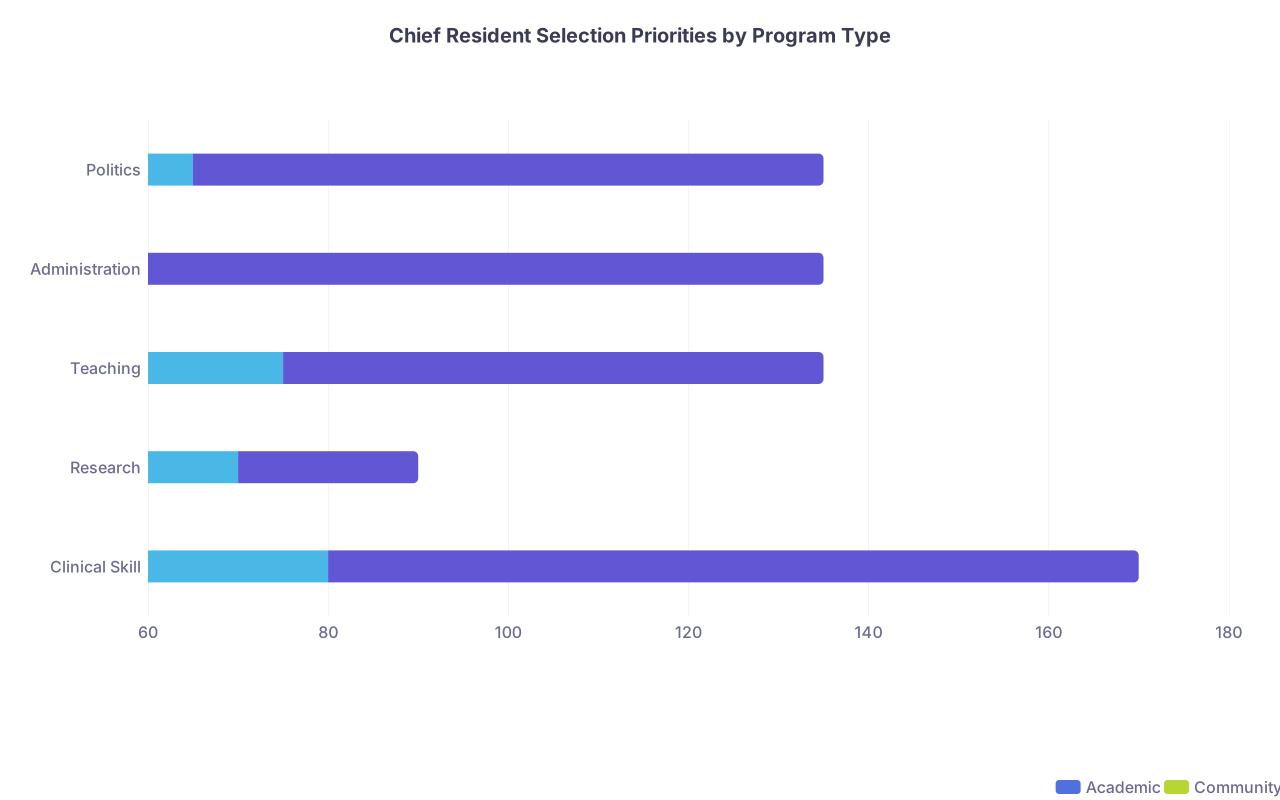
| Category | Academic | Community |
|---|---|---|
| Clinical Skill | 80 | 90 |
| Research | 70 | 20 |
| Teaching | 75 | 60 |
| Administration | 60 | 75 |
| Politics | 65 | 70 |
A quick word on program type, because people get this twisted.
In big academic programs, they’ll talk a lot about “commitment to teaching,” “scholarly activities,” and “future leaders in academic medicine.” That’s real — to a point. But the non-negotiables are the same:
- Can you run a service safely?
- Can you protect interns from burning out while still getting the work done?
- Will you embarrass the program or the PD?
Community programs may care less about publications and more about service coverage, operational efficiency, and being able to interface well with hospital administration. But again, the underlying question is identical: can we trust you with this?
Do some academic chiefs get picked partly because a big-name division chief likes them and wants to polish them for fellowship? Absolutely. Politics never goes away. But even then, if they’re seen as clinically or professionally risky, they usually don’t get the spot.
How to Actually Position Yourself for Chief (Without Being Obnoxious)

If you’re reading this, you’re probably not interested in the title just for prestige. You want the leadership experience, the networking, the teaching opportunities — and yes, it helps for fellowship.
So how do you quietly signal “I’m chief material” in a way that PDs notice and your co-residents don’t resent?
Focus on these:
Run clean, calm teams. Notes done, orders tight, sign-out crisp. Residents and attendings will both remember: “It always felt controlled when she was senior.”
Take ownership of system problems at your level. Not with performative outrage, but with specific suggestions: “I noticed [X workflow] keeps leading to [Y delay]. Could we try [Z small change]?”
Be selectively visible. Volunteer for a couple of high-yield things — orientation planning, a QI project that actually matters, resident wellness initiatives that aren’t fluffy — and then execute well. Do not try to be on every committee. That screams insecurity.
Treat chiefs like future peers, not like hall monitors. Ask them occasionally, “What’s harder about your job than it looks?” PDs find out who’s engaging on that level.
Protect your reputation with nurses. If nurses think you’re arrogant, dismissive, or unreliable, you’re done for chief. They give brutally honest back-channel feedback when asked.
Avoid drama. People underestimate how toxic it is to be known as someone always at the center of interpersonal conflicts. Even if you’re “right.” PDs do not want to deal with a chief who comes with baggage.
How Program Directors Actually Make the Final Call

| Step | Description |
|---|---|
| Step 1 | Informal short list |
| Step 2 | Faculty discussion |
| Step 3 | Resident reputation check |
| Step 4 | Remove from list |
| Step 5 | PD gut choice |
| Step 6 | APD sanity check |
| Step 7 | Offer position |
| Step 8 | Any red flags? |
By the time they’re “deciding,” the choice is usually between 2–4 names. The conversation in that room looks something like this:
- “If we pick her, interns will feel very supported. She’s amazing with them. But she struggles to say no — will she burn out?”
- “He’d be great with admin and the schedule. But residents don’t naturally go to him for help — he’s a bit distant.”
- “She’s not the most brilliant resident, but she’s the most stable. I sleep better with her running nights. That matters.”
Then comes the unspoken part: “Who do I want representing this program to the chair, to other departments, to GME?”
And then, honestly, it often comes down to PD gut plus one APD’s strong opinion. There might be a resident vote, but I’ve seen PDs go against the vote when they believe the popular choice is too risky.
Remember: they’re the ones whose name is on the line with GME and the ACGME. They pick the person they can live with if everything goes sideways.
The Most Common Reasons Strong Residents Don’t Become Chief
Let me be blunt. Here are the patterns I’ve seen sink otherwise strong candidates:
- Chronic lateness with notes, even if “just by a bit.” PDs translate that as poor executive function.
- Subtle entitlement: acting like chief is owed to them because of scores, research, or connections.
- Being too negative in public spaces. Constant cynicism in the workroom or group chats gets back to leadership.
- Perceived lack of loyalty to the program: nonstop complaining about wanting to be somewhere else, trashing the hospital, comparing everything unfavorably to their med school.
- One major professionalism incident that needed formal intervention, even if “resolved.” That stain lingers.
Flip side: I’ve watched residents with very average test scores and modest CVs get chief because everyone knew: “When she’s around, things feel safe and organized.”
That’s the game.
FAQ: The Quiet Rules of Chief Resident Selection
Does being chief actually help for fellowship applications?
Yes, but not in the way people think. The title alone is mildly helpful. The real value is in the letters you get from PDs and department chairs who’ve seen you lead, manage crises, and handle conflict. A generic “they were a great chief” letter does little. A detailed letter about specific leadership behaviors — that moves the needle.Is there any point in ‘expressing interest’ if I’m not on the PD’s radar yet?
It can help, but only if your performance and reputation are already strong. An email saying, “I’d be interested in being considered for chief and would appreciate any feedback on how to grow toward that role” can prompt the PD to think of you differently. But it won’t override consistent concerns about reliability, professionalism, or peer trust.Can one bad rotation kill my chances at chief?
One tough rotation with mixed reviews usually doesn’t. A pattern does. What PDs look for after a bad month is your trajectory — did you own it, improve, seek feedback, and show growth? Or did you blame everyone else? Residents who grow after failure sometimes end up more attractive as chiefs because they’ve shown resilience.Do resident votes or surveys actually matter?
They matter as signal, not as binding democracy. If the resident body overwhelmingly supports a particular person and leadership has no major concerns, that can push them up the list. If residents are split, PDs fall back on their own judgment. And if residents love someone that PDs consider high-risk, the PD almost always overrides the vote.What if I know I’m not chief material — should I still ‘play the game’?
You should still behave like someone who could be chief, because the underlying traits—reliability, emotional regulation, peer trust, ability to manage up and down—are exactly what make you a good attending and a sane human. You can absolutely opt out of the chief track. But you do not want to opt out of becoming the kind of resident who’d be strongly considered.
You’re somewhere in the middle of your residency arc right now, consciously or not building the story your PD will tell about you. Maybe you’ll be chief. Maybe you won’t. Either way, the behaviors that decide that question are the same ones that will define your reputation for the next decade.
Understand how the game is really played, act in alignment with the physician you want to be five years from now, and you’ll set yourself up for more than a title. You’ll set yourself up to lead for real — with or without “chief resident” on your badge.
The interview season for fellowships, the first attending job, the jump from micro-leadership on the wards to macro-leadership in a department — those are coming next. And the habits you build now are exactly what you’ll be judged on when those doors start to open. But that’s a story for another day.


