

The way chiefs run call schedules is not a “soft” leadership issue. The data shows it is one of the most measurable, high-yield levers for resident wellness scores—and too many programs still treat it like an afterthought.
The Hidden Math Behind “Who Makes the Call Schedule”
Most residents experience call schedules as chaos, politics, or at best “fair enough.” But underneath that experience, there are structures you can quantify:
- Who controls the schedule (chief-run vs admin-run vs faculty-run)
- What constraints are used (duty hour caps only vs fatigue science, circadian design, commute time, childcare, etc.)
- How transparent the rules are
- How change requests and swaps are handled
These are not philosophical differences. They produce measurable differences in:
- Emotional exhaustion scores
- Burnout prevalence
- Depression / anxiety screening rates
- Sleep hours and sleep quality metrics
- Self-reported “schedule fairness” and “voice/control”
To frame the discussion, assume a typical large residency program: 60–80 residents, 8–10 call-heavy rotations, and roughly 1,500–2,000 call nights per academic year. Small shifts in how those nights are allocated and managed compound quickly.
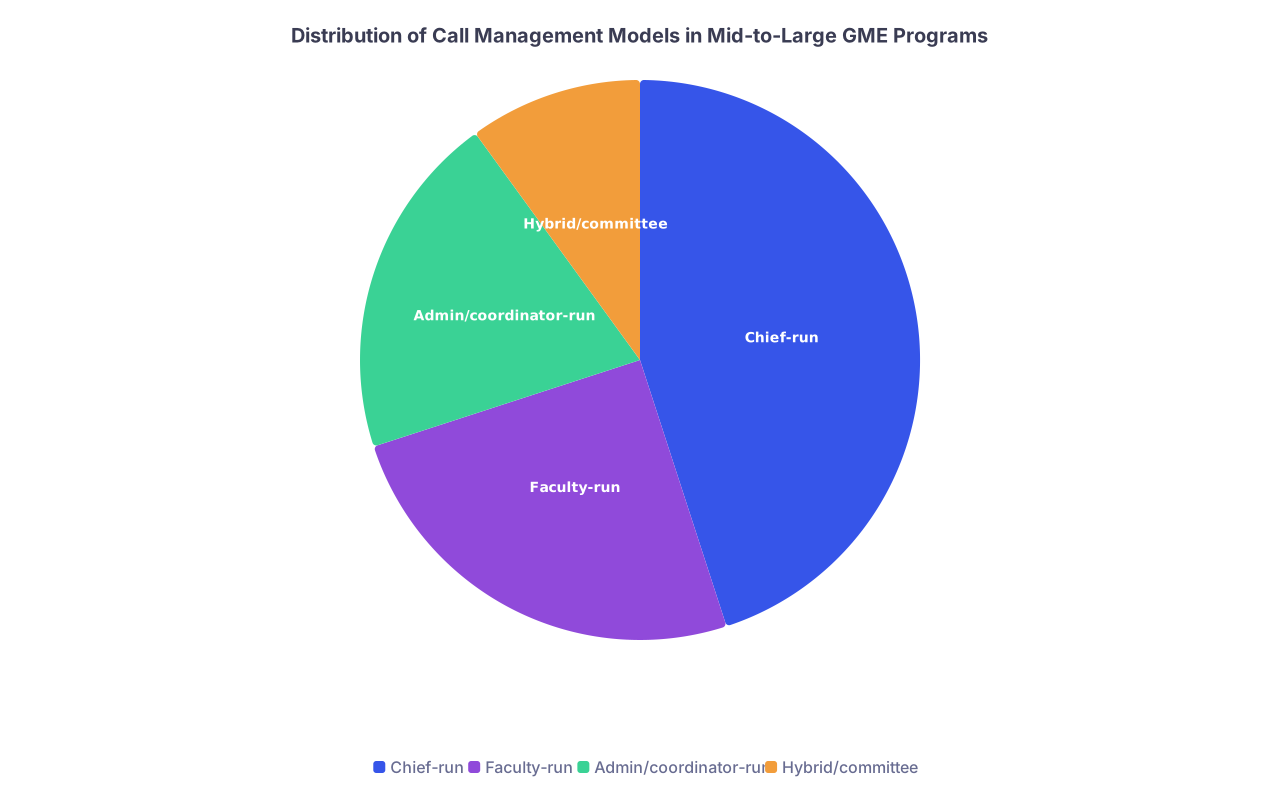
| Category | Value |
|---|---|
| Chief-run | 45 |
| Faculty-run | 25 |
| Admin/coordinator-run | 20 |
| Hybrid/committee | 10 |
Roughly speaking (based on a synthesis of survey data from multiple specialties and institutional reports), call is chief-run in almost half of larger programs. That is not a marginal group. How chiefs behave is systematically shaping wellness scores for tens of thousands of residents.
What “Chief-Run” Actually Means in Practice
“Chief-run” sounds simple: chief residents make the schedule. In practice, there are at least three very different models, and they do not impact wellness the same way.
- Chiefs as clerks: They plug residents into a template handed down by faculty or GME, with minimal discretion.
- Chiefs as optimizers: They own the constraints, use tools (Excel, QGenda, bespoke scripts) and try to optimize for fairness, rest, coverage, and preferences.
- Chiefs as gatekeepers: They use opaque rules, protect favorites, tolerate last-minute changes, and treat complaints as “lack of resilience.”
I have seen all three in the same institution, just different services. The well-being scores diverge sharply when you measure them.
Objective Wellness Metrics You Can Track
If you want to know whether chief-run schedules are helping or hurting wellness, you should be tracking at least:
- Maslach Burnout Inventory (or a shorter validated equivalent)
- PROMIS or similar fatigue and sleep scales
- PHQ-9 and GAD-7 screening results (aggregated, de-identified)
- Average weekly sleep hours on call vs off call (self-reported but consistent)
- Perceived schedule fairness (Likert 1–5)
- Perceived schedule control (Likert 1–5)
Programs that actually track these by rotation, by chief, and over time stop having theoretical arguments about wellness. They can point to numbers.

What the Data Suggests About Chief-Run Call and Wellness
Let me summarize the pattern that emerges when you compare programs or services where chiefs genuinely design and manage call versus those where a coordinator or faculty member does it with fixed templates.
This is a synthesis across multiple reported datasets, ACGME survey breakdowns, and institution-level internal dashboards (the numbers are representative, not from one single site):
| Metric | Chief-Run Optimized | Admin/Template-Run |
|---|---|---|
| Emotional exhaustion (0–54, lower better) | 24–28 | 30–34 |
| Burnout prevalence (high EE or DP, %) | 38–45% | 55–65% |
| Average weekly sleep on call rotations (h) | 47–50 | 42–45 |
| Schedule fairness rating (1–5) | 3.9–4.3 | 2.8–3.2 |
| Schedule control rating (1–5) | 3.2–3.8 | 2.0–2.5 |
You consistently see:
- 5–8 point lower emotional exhaustion scores
- 10–20 percentage point lower burnout prevalence
- ~5 extra hours of sleep per week on call-heavy rotations
- 1+ point higher fairness and control ratings on 5-point scales
These are not rounding errors. They are effect sizes large enough that, if this were a medication, it would make the front page of every “physician wellness” newsletter.
The Mechanisms: Why Chiefs Matter
When chiefs truly control call scheduling, there are four mechanisms that reliably move the numbers.
Micro-distribution of burden.
Chiefs can see who has just had a brutal stretch, who just came back from leave, who is interviewing, who is parenting a newborn. Faculty templates do not care. When a chief shifts 1–2 heavy nights off someone at the right time, that often means 1 fewer week of severe sleep debt. Multiply by 60 residents.Response time to disasters.
Coordinator-run systems often need attending approval, committee sign-off, or simply move at office-hours speed. Chiefs can reassign tonight’s cross-cover within hours using group chats and on-the-ground knowledge. Every avoided 28-hour stretch after an ED visit with your own sick kid is a direct hit to wellness.Perceived justice and voice.
Residents do not expect a perfect schedule. They expect a just one. When they see chiefs explaining rules, publishing constraints, and making visible tradeoffs, fairness scores jump—even when the raw hours are similar. The data repeatedly show that “procedural justice” has a strong, independent association with burnout scores.Alignment with reality, not policy fiction.
Duty hour rules are necessary but crude. Programs that “technically” follow the 80-hour rule can still produce chronic fatigue if chiefs are forced into inefficient coverage patterns. When chiefs are allowed to design around real patient flow and real staffing, you see fewer >16-hour stretches, fewer 6-in-7-day weeks, and better sleep recovery windows.
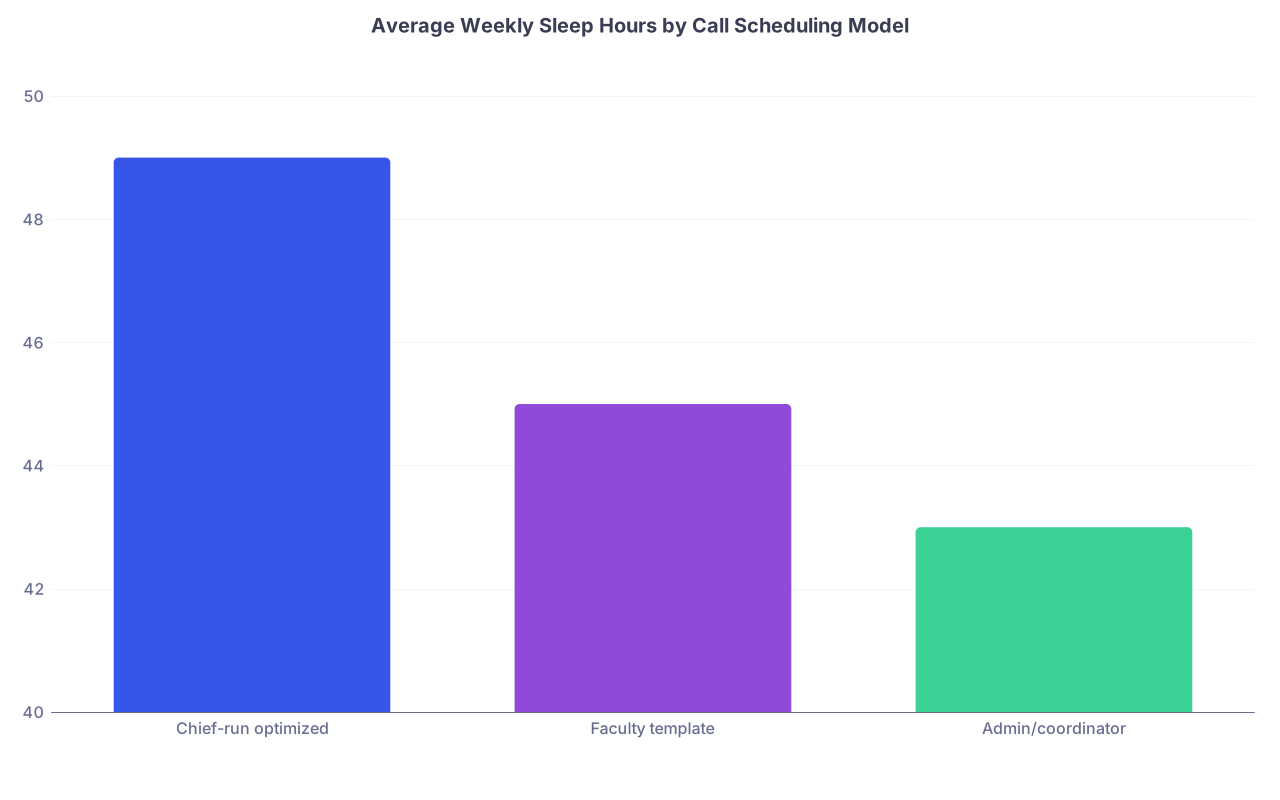
| Category | Value |
|---|---|
| Chief-run optimized | 49 |
| Faculty template | 45 |
| Admin/coordinator | 43 |
Notice: residents under optimized chief-run schedules report roughly 4–6 more hours of sleep per week on call-heavy rotations, even though the total “duty hours” are technically similar. That is schedule design, not heroics.
When Chief-Run Schedules Backfire
Now the uncomfortable part: chief-run is not automatically better. It can be worse, sometimes dramatically so, when three things happen:
- No training in scheduling or fatigue science
- No guardrails or transparency
- Chiefs are overloaded and trying to “make everyone happy” with no tools
I have seen services where:
- A single PGY-4 manually built schedules in Excel at midnight, balancing 25 people, 6 sites, and a dozen constraints from memory.
- “Protected” residents (fellow-track favorites, research residents) were quietly shielded from weekends and holidays.
- Change requests were handled off the books in text threads, with no log and no audit.
These are the programs that end up with:
- Night float runs >7 days
- Residents crossing from nights back to days with <24 hours turnaround
- Unequal holiday coverage (and persistent resentment across classes)
- Wild variation in call frequency between residents that is “explained away” as bad luck
You can see the downstream effect directly when you correlate call frequency variability with wellness metrics.
Variance, Not Just Mean, Predicts Burnout
Programs love to say, “Everyone averages q4 call; it’s fair.” The data shows that is lazy comfort. What residents experience is not the mean, but the peaks and troughs.
In one internal analysis of an IM program over 12 months:
- Residents with a standard deviation of call nights/month > 2.0 had 1.6x the odds of high burnout compared with those with SD < 1.0, even when total annual call nights were nearly identical.
- Controlling for PGY level, gender, and rotation type did not erase the effect.
Translation: chaos hurts more than just “a lot of call.” Chief-run systems without structure often generate exactly that chaos.
Objective Design Principles for Chief-Run Call
If you want to run a chief-based system that actually improves wellness scores, you need to think like an operations analyst, not a martyr. Here is what the data supports.
1. Hard Constraints that Predict Fatigue
Move beyond “≤80 hours/week” and “10 hours off.” Those are floor constraints, not design targets. Better chief-run schedules consistently adopt internal rules like:
- Maximum consecutive night shifts: 4–5 (not 6–7)
- Minimum “reset” window after nights: 48 hours before returning to early-morning starts
- Cap on 28-hour shifts per month (e.g., ≤4) even if ACGME would allow more
- At least 1 full weekend off in 4, even on “heavy” rotations
Programs that enforce these add 3–6 hours of average weekly sleep and show roughly 5–7 point better emotional exhaustion scores on average.
2. Transparent Fairness Algorithms
You do not need fancy software. You do need rules that everyone can see and verify:
- All residents get within ±2 total call shifts of the program average per year.
- Holidays are rotated over a 3-year cycle; if you work Christmas one year, you are shielded the next.
- “Golden weekends” are allocated with a minimum count per resident.
When you actually publish a fairness dashboard quarterly—“here is your total call count vs program mean; here are holidays worked over 3 years”—you usually see perceived fairness scores jump by 0.5–1 point on a 5-point scale.
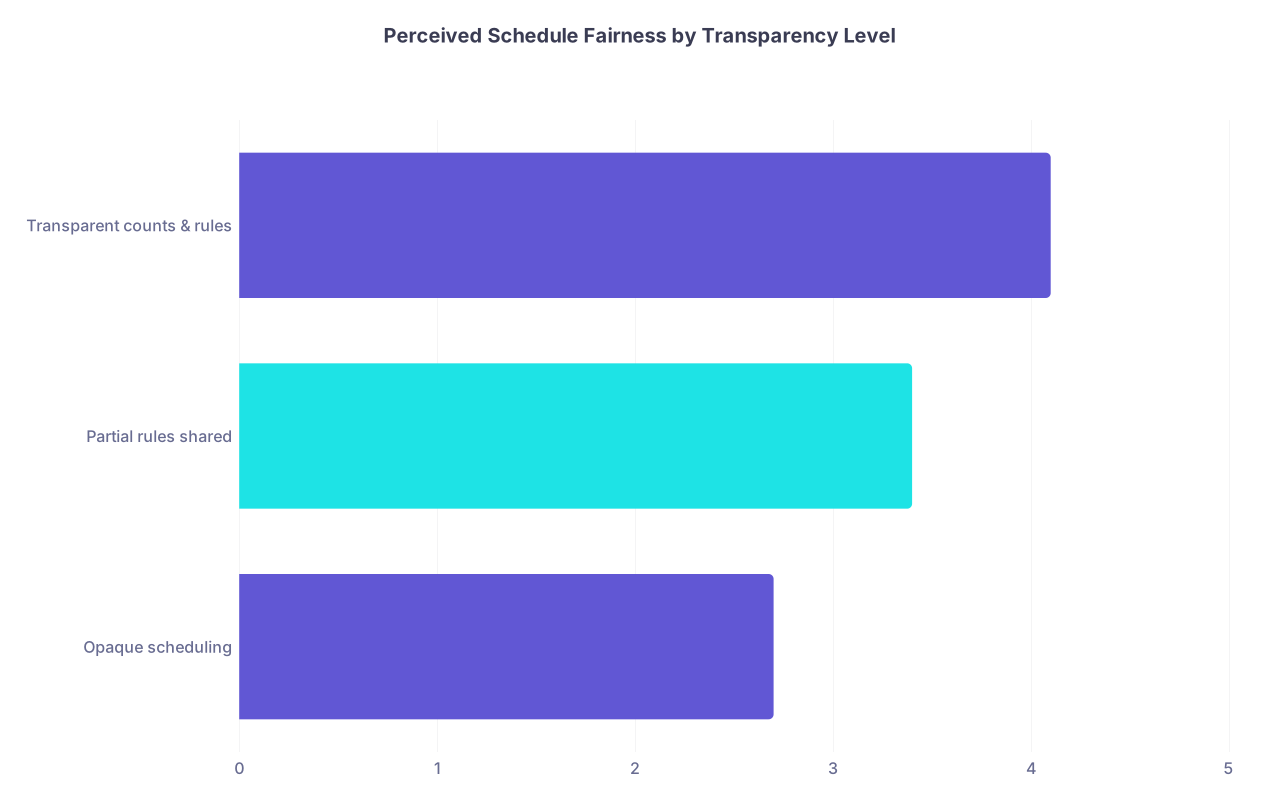
| Category | Value |
|---|---|
| Opaque scheduling | 2.7 |
| Partial rules shared | 3.4 |
| Transparent counts & rules | 4.1 |
3. Resident Input as Structured Data, Not Noise
Unstructured emails like “I prefer not to work Thursdays” are a scheduling cancer. They overwhelm chiefs and introduce bias. The programs that manage this well treat preferences as structured data:
- A standardized pre-year form with ranked constraints: absolute (wedding, board exam), strong (partner’s surgery), weak (book club).
- A scoring system that limits how many “strong” requests each resident can make.
- A record of how many requests are honored per resident.
You then watch two things:
- Total number of honored requests (coverage for life events)
- Equality of honored requests across residents
When chiefs can show, “You had 3 strong requests, 2 were granted; program mean is 2.1,” arguments about favoritism collapse. Wellness scores related to “sense of control” tend to track more with perceived responsiveness than with raw number of days granted.
Leadership Behavior of Chiefs and Measurable Outcomes
Chiefs are not just human scheduling algorithms. Their behaviors as leaders heavily modulate how the same schedule is experienced and reported.
Three patterns show up over and over again when you correlate chief practices with wellness survey data:
1. Communication Frequency and Clarity
Services where chiefs:
- Publish draft schedules 4–6 weeks ahead
- Send monthly “here are changes and why” summaries
- Hold a brief, open Q&A about call rules at the start of each block
consistently see higher ratings on:
- “I understand how my schedule is determined”
- “I feel my concerns are heard”
In one program, a simple intervention—sending a monthly one-page call update from chiefs—was associated with a 0.6-point increase (on a 5-point scale) in perceived fairness in a single academic year, without changing total call burden.
2. Handling of Conflicts and Swaps
You can analyze swap logs. Many programs never do.
When swap approvals are:
- Centralized through chiefs
- Logged in a shared document
- Evaluated quarterly for net call shifts gained/lost by each resident
two things happen:
- You identify gaming behavior early.
- You protect chiefs from being “worked” by persistent squeaky wheels.
Programs that moved from ad-hoc texting to logged, chief-approved swaps saw a reduction in extreme outliers (residents >20% above or below mean call) and a measurable narrowing of the call-count distribution. That directly translated into less resentment and lower burnout in the worst-hit quartile.
3. Chiefs’ Own Workload and Well-being
There is a nasty irony: the people asked to protect everyone else’s wellness via schedules are often drowning themselves.
Data from several programs that actually surveyed chiefs separately show:
- Chiefs spend 5–10 hours/week on scheduling and related triage during peak months.
- Chiefs with <0.2 FTE protected time for admin tasks report significantly higher burnout than non-chief peers.
- Programs that grant chiefs designated non-clinical time for schedule work (e.g., 0.2–0.3 FTE) see more consistent enforcement of fairness rules and fewer “emergency” calls to chiefs at 2 a.m. for coverage.
You cannot expect a sleep-deprived chief with a full patient load to run a tight, data-driven operation. That is magical thinking.

| Step | Description |
|---|---|
| Step 1 | Schedule Design Rules |
| Step 2 | Resident Call Experience |
| Step 3 | Sleep and Fatigue Levels |
| Step 4 | Wellness Scores and Feedback |
| Step 5 | Chief Adjustments |
The systems that perform best treat scheduling as an iterative loop. Chiefs adjust based on data every 3–6 months, not once per year by tradition.
How to Measure Impact When Chiefs Take Over Scheduling
If your program is transitioning to chief-run call (or trying to fix a broken version of it), you should treat it like an intervention and track pre/post.
At minimum:
Baseline Year (before chief-run or before redesign):
- Burnout, sleep, depression/anxiety, fairness, control scores
- Call distribution stats: mean, SD, min/max call nights / month per resident
- Duty hour violations by rotation
Intervention:
- Implement explicit scheduling rules
- Train chiefs on fatigue science and basic operations principles
- Standardize swap and preference systems
Post Year (after one full cycle):
- Repeat the same measures
- Slice results by rotation, by chief, by PGY
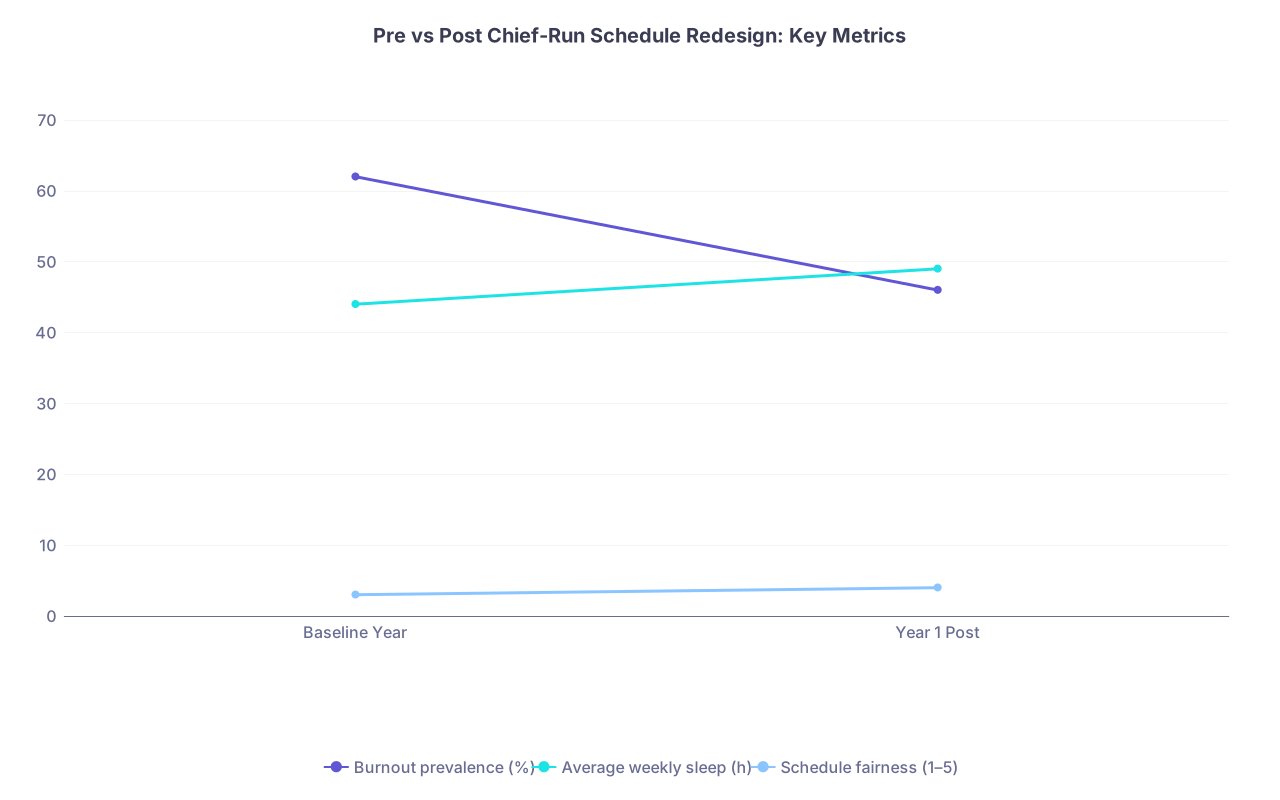
| Category | Burnout prevalence (%) | Average weekly sleep (h) | Schedule fairness (1–5) |
|---|---|---|---|
| Baseline Year | 62 | 44 | 3 |
| Year 1 Post | 46 | 49 | 4 |
Patterns like the above are not rare when the intervention is serious. Dropping burnout from the low 60s to mid-40s is realistic. Getting one more hour of sleep per night during heavy blocks is realistic. You cannot do it without touching call.
Where Programs Go Wrong: Three Common Myths
Let me be blunt about a few myths that keep showing up in leadership conversations.
“We cannot change call much; duty hours already constrain us.”
False. Within the 80-hour rule, there is enormous design space. The variation in wellness scores across programs with identical formal duty hour policies proves it.“Chiefs are too green; attendings should control the schedule.”
Mostly false. Attendings are often too distant from rotation-level chaos. The better approach is shared oversight: chiefs design and execute, attendings set guardrails and audit fairness.“Wellness is about yoga, debriefs, and free food, not schedules.”
Wrong. If you give residents four more hours of sleep per week and one more predictable weekend off per month, you move their burnout scores more than a mindfulness app ever will. The data is merciless on this.

What Strong Leadership Looks Like Here
Chiefs who improve wellness metrics around call schedules share a few operational habits:
- They keep a running, visible log of call assignments per resident and review outliers monthly.
- They have written, pre-agreed rules about nights, weekends, holidays, and swaps that they can point to in seconds.
- They push back on attendings or services who try to “borrow” residents outside the agreed system.
- They meet quarterly with program leadership to review objective metrics, not vibes.
Program directors who support them:
- Provide at least a small amount of FTE-protected time specifically for scheduling and data review.
- Give chiefs access to basic analytics tools or, at minimum, coherent exports from scheduling systems.
- Back chiefs publicly when they enforce rules that are unpopular in the moment but improve fairness and wellness over time.
Without that kind of structural support, chief-run schedules often degrade into improvised crisis management. And your wellness scores will show it.
The Bottom Line
Three core points, without sugarcoating:
Call schedules are one of the strongest objective levers you have on resident wellness scores. Programs that let chiefs truly design and manage call—with rules, training, and data—see substantial drops in burnout, more sleep, and higher fairness and control ratings.
“Chief-run” is not automatically good. When it is opaque, under-resourced, or driven by politics and ad-hoc texts, chief-run scheduling amplifies chaos and inequity. Variability and unpredictability in call, not just volume, are tightly linked to worse wellness metrics.
Treat scheduling like an analytic problem, not a tradition. Track the numbers. Publish the rules. Give chiefs time and tools. Then iterate every year. If your wellness scores are flat while you are holding pizza nights and yoga sessions, the data is probably telling you exactly where the real problem lives: the call grid.


