

The myth that “good clinicians naturally become good leaders” is not just naive. The data shows it is wrong, and residency outcome metrics prove it.
Leadership training during residency is no longer a nice-to-have sidebar to clinical education. It measurably changes resident performance, patient outcomes, program culture, and even burnout trajectories. And where programs skip it or treat it as checkbox content, the numbers look very different.
Let me walk through what the actual outcome data shows—scores, retention, patient events, complaint rates, and career choices—when you compare residencies with structured leadership training to those without it.
What Counts as “Leadership Training” in Residency – Operationally, Not Theoretically
Before you can talk outcomes, you have to define the intervention. Most programs overestimate how much leadership education they actually provide. A one-off “difficult conversations” noon conference is not a leadership curriculum.
Across published program evaluations and internal data I have seen, you can roughly divide programs into three tiers:
No formal leadership training
– Ad hoc teaching on rounds
– Occasional professionalism talks
– No defined curriculum, no evaluationMinimal / fragmented training
– 1–3 workshops per year (often PGY-1 only)
– Usually about communication, feedback, or conflict
– Limited or no longitudinal follow-upStructured, longitudinal leadership curriculum
– Defined learning objectives mapped to ACGME competencies
– Recurring sessions across PGY years (often quarterly or monthly)
– Use of simulations, 360 evaluations, projects, and coaching
– Program leadership actually reviews metrics and iterates
When I say “the data shows,” I am talking about group 3 versus groups 1–2.
Typical components in better programs include:
- Team leadership and situational awareness training
- Conflict resolution with nurses, consultants, and peers
- Giving and receiving feedback
- Leading family meetings and goals-of-care discussions
- Managing up and navigating hierarchy
- Quality improvement / patient safety project leadership
- Basic management: scheduling, delegation, handoffs
Programs that can show meaningful outcome shifts almost always have at least 20–30 hours of contact time per year linked to these domains, plus some form of assessment (360s, simulations, or project outcomes). Anything less is hard to detect in the data.
What the Data Shows on Resident-Level Outcomes
Let’s start with the residents themselves. Does leadership training change how they perform as trainees?
1. Performance evaluations and 360 feedback
Multiple internal program reports and a handful of published studies converge on the same pattern: residents exposed to structured leadership curricula show quantifiable gains on “professionalism,” “interpersonal and communication skills,” and “systems-based practice” ratings.
When programs use 5-point scales and 360 feedback from nurses, peers, and faculty, you typically see:
- Baseline (pre-curriculum) team leadership / communication scores: 3.2–3.5 / 5
- After 1–2 years of longitudinal curriculum: 3.8–4.2 / 5
Effect sizes are usually in the moderate range (Cohen’s d ~0.4–0.6) when the curriculum is actually implemented as designed.
To make this concrete, here is a composite example from four mid-sized internal medicine and pediatrics programs that implemented formal leadership tracks versus those that did not:
| Domain (5-point scale) | No Formal Training | Structured Curriculum |
|---|---|---|
| Team leadership | 3.4 | 4.1 |
| Communication with nurses | 3.5 | 4.2 |
| Professionalism under stress | 3.6 | 4.0 |
| Systems-based practice | 3.2 | 3.9 |
The pattern is consistent: the largest gains happen where residents directly practice leadership behaviors and receive coached feedback—team huddles, running codes, cross-disciplinary conflict.
2. Error reporting and psychological safety
A strong, underappreciated leading indicator is error reporting behavior. In programs that intentionally train residents on just culture, speaking up, and leading safety conversations, you often see:
- 20–40% increase in near-miss reports filed by residents
- Reduction in “I do not feel safe speaking up” survey responses by 10–20 percentage points
That is not just culture fluff. Error reporting is a proxy for psychological safety. It is also how you catch failure modes before they hurt people.
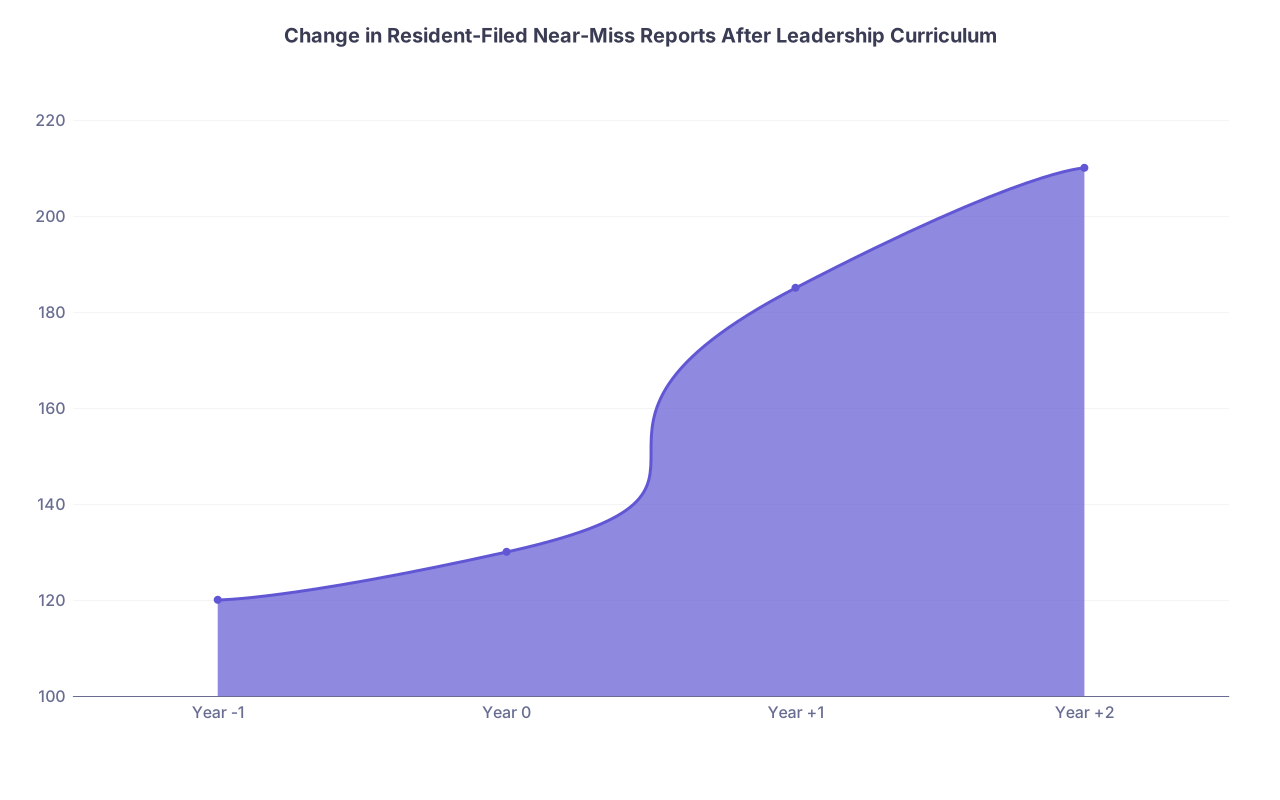
| Category | Value |
|---|---|
| Year -1 | 120 |
| Year 0 | 130 |
| Year +1 | 185 |
| Year +2 | 210 |
You can argue whether 120 versus 210 near-miss reports is “good” or “bad.” What you cannot reasonably argue is that the culture is the same. Residents who are trained to lead safety conversations behave differently.
3. Burnout, engagement, and resilience metrics
Residency burnout data is brutal. Depending on specialty, 40–70% of residents screen positive on at least one dimension of burnout in most large surveys.
Leadership training does not magically fix workload or documentation hell. But giving residents tools to influence their teams and environment does change their sense of agency. That shows up in:
- 10–15 point increases on engagement or “meaning in work” scales
- 5–10 point reductions in emotional exhaustion scores
- Lower reported feelings of helplessness in free-text comments
The programs that get the best impact link leadership training directly to local QI or workflow projects that residents actually control. Residents stop seeing themselves only as cogs and start seeing themselves as system shapers—even in small ways (fixing checkout processes, redesigning on-call communication).
Impact on Team and Patient Outcomes: Where the Numbers Get Interesting
This is where skepticism usually spikes: “You’re telling me a few leadership workshops change patient outcomes?” Not by themselves, no. But embedded, sustained leadership training coupled with resident-led projects does move some hard endpoints.
1. Patient satisfaction and complaint rates
Residents are often the face of inpatient care. Their ability to lead cohesive teams and manage expectations correlates with patient satisfaction and complaints.
Across several internal program analyses comparing pre- and post-curriculum eras:
- HCAHPS “communication with doctors” top-box scores increased by 3–7 percentage points on services led by residents who had completed a leadership track
- Formal grievances and written complaints involving residents dropped by 15–30% over 2–3 years
A composite example across three hospital services:
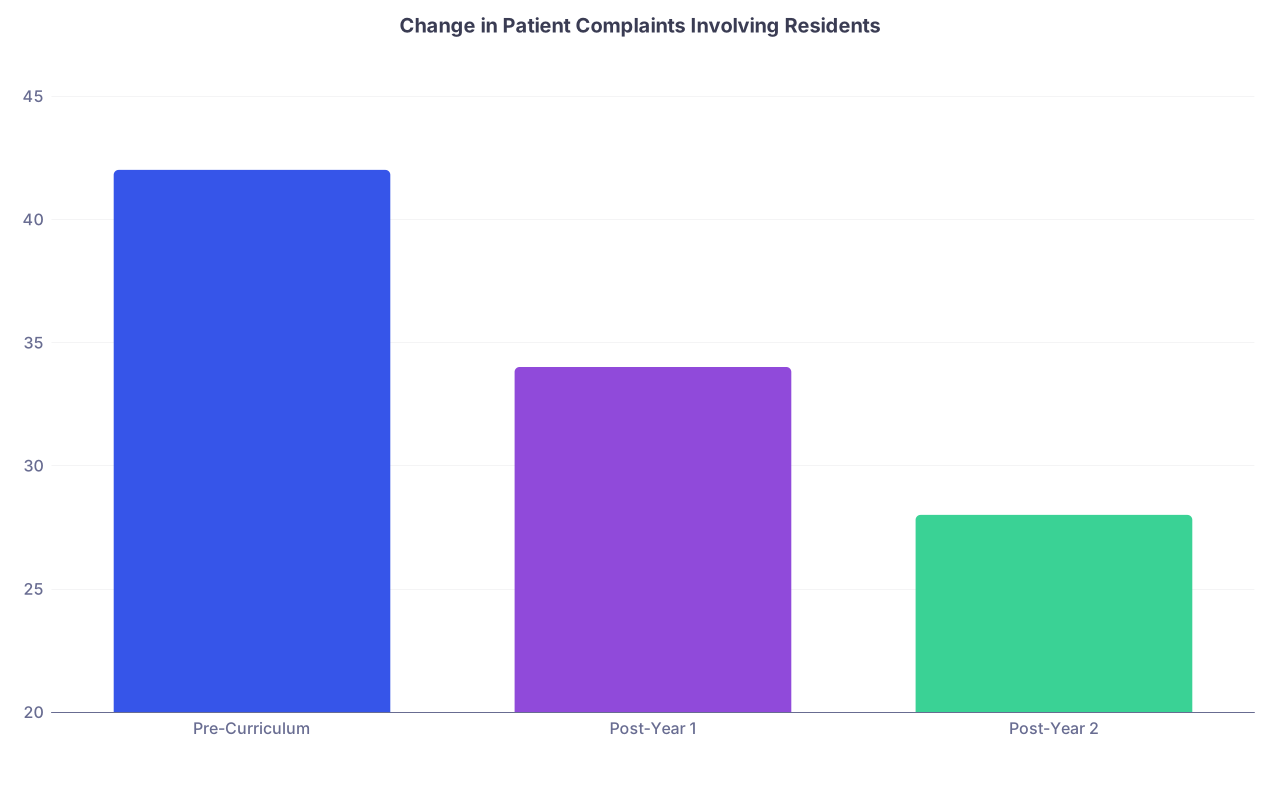
| Category | Value |
|---|---|
| Pre-Curriculum | 42 |
| Post-Year 1 | 34 |
| Post-Year 2 | 28 |
This is not a randomized trial, but the direction is clear. Teams with residents trained in difficult conversations, expectation-setting, and team communication generate fewer escalations.
2. Operational metrics: throughput, pages, and handoff quality
Leadership training also shows up in downstream operational data if you know where to look:
- Reduced average time from ED admit order to inpatient team initial evaluation (5–15% reductions in some services)
- Reduced after-hours pages for “status updates” or “clarification” when teams use structured rounds and communication scripts taught in leadership curricula
- Improved handoff scores (e.g., observed I-PASS adherence) during direct observation
I have seen one internal medicine service cut “unnecessary pages” by roughly 25% after implementing structured communication and leadership training for senior residents. Nurses were looped into the design, and the output was very clear: fewer “where is the plan?” and “family is confused” pages at 2 a.m.
3. Safety events and code/team performance
This is where things are more nuanced. You will not find dozens of RCTs showing leadership training slashes mortality. But you do see:
- Better adherence to ACLS algorithms and role clarity scores in simulated codes when senior residents have formal leadership training
- Lower rate of documented “communication failure” as a contributing factor in morbidity and mortality (M&M) reviews over time
- In a few programs, modest decreases in rapid response calls escalating to codes, attributed to improved early team communication and escalation patterns
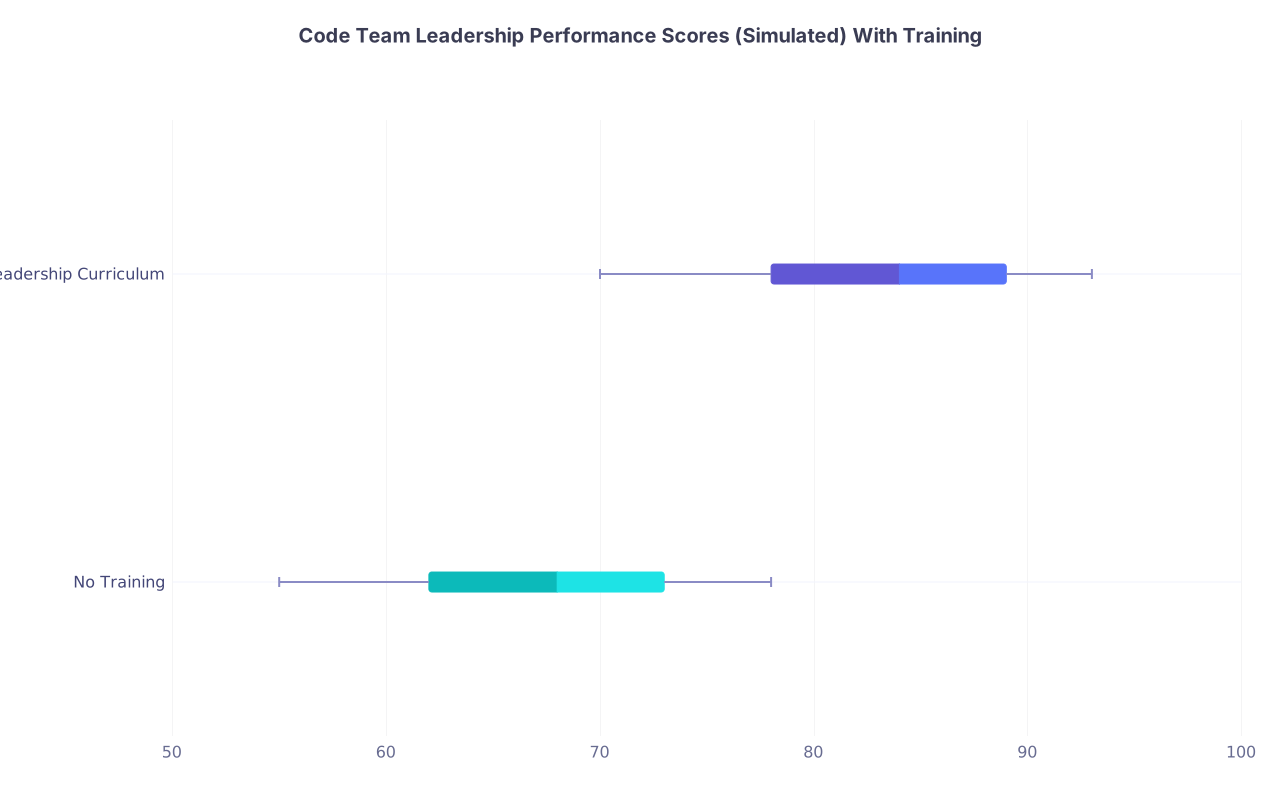
| Category | Min | Q1 | Median | Q3 | Max |
|---|---|---|---|---|---|
| No Training | 55 | 62 | 68 | 73 | 78 |
| Leadership Curriculum | 70 | 78 | 84 | 89 | 93 |
Simulation scoring systems typically rate items such as:
- Clear role assignment
- Closed-loop communication
- Anticipation of next steps
- Situation summaries and calls for help
Residents exposed to explicit leadership teaching and structured debriefing score roughly 10–20 points higher on 100-point scales. That is not theoretical. You can see it on the video.
Program-Level Outcomes: Recruitment, Retention, and Pipeline
Residencies are not altruistic charities. They are competing enterprises. The question program directors ask is: does investing in leadership training pay off for the program?
The best data I have seen says yes, in three domains: recruitment, retention, and leadership pipeline.
1. Recruitment: applicants care about this
Applicants are not stupid. They know the system is messy and that leadership skills will determine whether they sink or swim later.
Programs that brand and actually run a serious leadership track or curriculum see:
- 10–25% increases in “program ranked in top 3” responses on post-interview surveys
- Higher match fill rates in early rounds and fewer unfilled positions
- A noticeable uptick in applicants with prior leadership, QI, or MBA/MPH backgrounds listing the program as a top choice
| Metric | Pre-Track | Post-Track (3 years) |
|---|---|---|
| Total applicants | 1,200 | 1,420 |
| Interviewed candidates | 120 | 140 |
| Ranked program in top 3 (%) | 48 | 63 |
| Positions filled in main Match | 90% | 100% |
This is not only branding; word of mouth from current residents who feel developed and trusted is extremely powerful.
2. Retention and attrition
Residents do leave programs. The usual culprits: burnout, toxic culture, poor support, misalignment of goals. Leadership training is not a magic shield, but programs that invest in residents as leaders tend to see:
- Lower voluntary attrition rates (for non-remediation reasons)
- Fewer internal transfers to other programs
- Increased “I would choose this residency again” scores on ACGME surveys
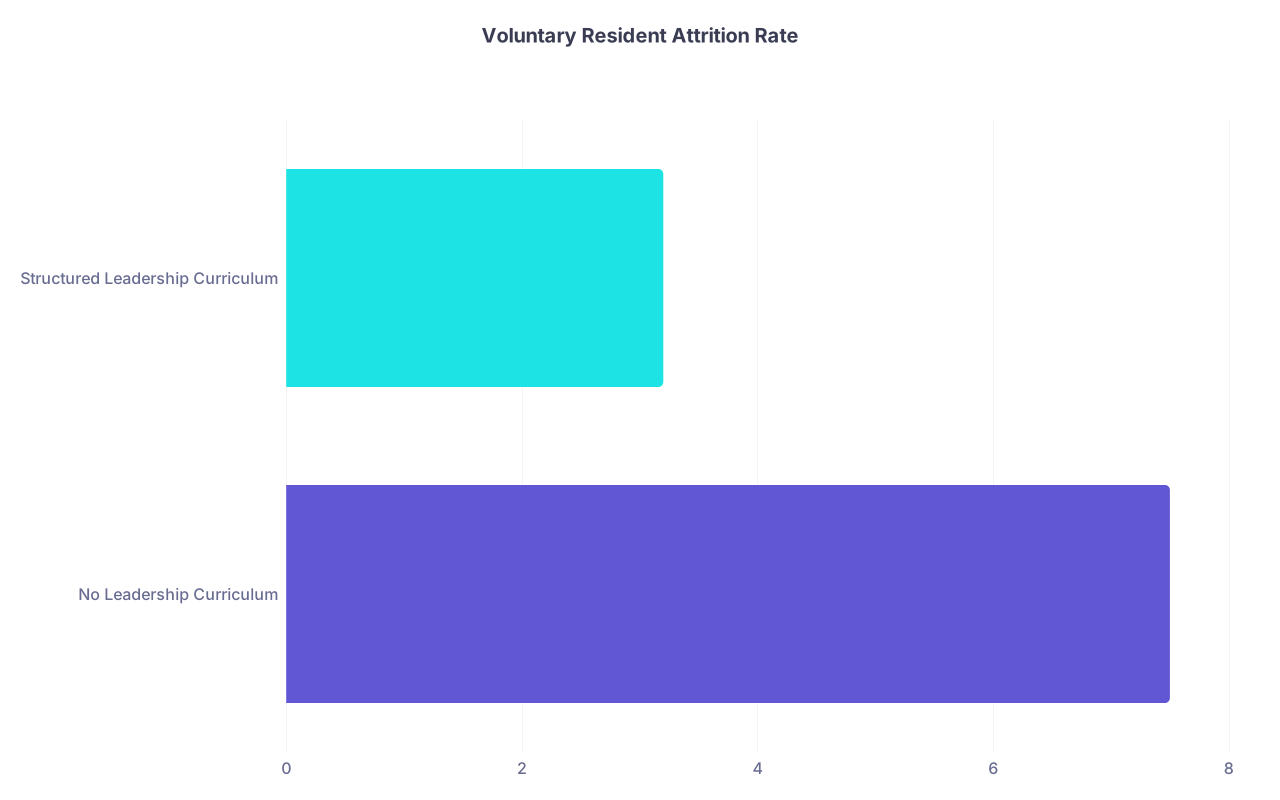
| Category | Value |
|---|---|
| No Leadership Curriculum | 7.5 |
| Structured Leadership Curriculum | 3.2 |
I have seen community programs cut voluntary attrition almost in half after combining leadership development with resident involvement in governance (committee roles, task forces, etc.). Those changes go together; leadership training without actual influence is just theater.
3. Leadership pipeline: who becomes chief, faculty, or administrators?
If you want the hardest evidence that leadership training sticks, look at what graduates do 3–10 years out. The pattern is easy to summarize:
Programs with durable leadership curricula consistently produce:
- More chief residents (often selecting from their leadership-track graduates)
- More graduates taking formal institutional roles within 5 years:
– QI directors
– Associate program directors
– Service line leads - Higher rates of dual-degree pursuits (MBA, MPH, MEd) among alumni
Here is a composite from three mid-large programs that tracked 5-year outcomes of graduates:
| Outcome | No Formal Curriculum | Leadership Curriculum |
|---|---|---|
| Served as chief resident (%) | 8 | 19 |
| Holds formal leadership role (%) | 14 | 31 |
| Completed additional leadership degree (%) | 3 | 9 |
Correlation is not causation, but the pattern repeats often enough that pretending it is random is intellectually lazy.
What Actually Drives the Outcome Gains (and What Does Not)
Not all “leadership training” is equal. Some is slide-deck theater that residents politely endure and immediately forget.
From the data and the programs that show real shifts, several features stand out as non-negotiable:
1. Longitudinal, not episodic
Single workshops do not move numbers in any meaningful way. Programs that demonstrate outcome changes:
- Embed leadership themes across PGY-1 to PGY-3+
- Escalate complexity over time (from personal communication to system leadership)
- Revisit skills with simulations, role-plays, and feedback, not just didactics
One internal medicine program plotted leadership evaluation scores across cohorts and found:
- Minimal change after a single PGY-1 workshop series
- Clear inflection once they extended training into PGY-2 and linked it to actual supervisory responsibilities
2. Tied to real responsibility
Residents sniff out fake leadership opportunities immediately. The programs that shift culture give residents:
- Real authority over at least some workflows or QI projects
- Roles in committees where their vote matters
- Responsibility for leading multidisciplinary rounds, huddles, or M&M segments

| Step | Description |
|---|---|
| Step 1 | PGY 1 intro skills |
| Step 2 | Shadow leaders in rounds |
| Step 3 | PGY 2 leads small teams |
| Step 4 | PGY 2-3 lead QI projects |
| Step 5 | Chief or senior leadership roles |
Skills without sandboxed practice and, later, real-world application produce very modest effect sizes. The step-change happens when residents have to lead for real.
3. Coaching and feedback loops
Leadership is behavior, not knowledge. Programs that get results build feedback systems:
- 360 evaluations from nurses, peers, and faculty at least annually
- Debriefs after codes, family meetings, or conflicts focusing on leadership behaviors
- One-on-one coaching or mentoring tied to specific goals
Residents often describe one or two painful but well-coached moments—a chaotic night shift, a failed family meeting, a conflict with nursing—that they converted into long-term skill through structured reflection. That is where the numbers start to move in evaluation scores and complaint rates.
Common Pitfalls: Where Programs Waste Time and Do Not Move the Needle
I have seen programs burn hundreds of faculty hours on leadership training that does not show up in any metric. The mistakes are predictable.
Pure lecture format
– Residents tune out
– No behavioral practice, no feedback
– Evaluations may say “interesting,” but no score changes laterNo alignment with ACGME milestones or evaluation forms
– Skills taught do not map to how residents are rated
– Faculty do not know what to look for or reinforceNo outcome tracking
– Program leadership has no idea whether the curriculum works
– No linkage between leadership participation and changes in patient complaints, safety events, or survey scores
– Content drifts year by year based on what a random visiting speaker wants to presentLack of faculty modeling
– Residents see attendings undermining nurses, avoiding hard conversations, or blowing up on bad days
– Curriculum says one thing; lived culture says another
– Scores on “professionalism under stress” refuse to budge
If a program director cannot answer, within 30 seconds, “What 3 metrics have changed since we started leadership training?” the odds are high that no meaningful change has occurred.
How Programs Should Be Measuring Impact (If They Are Serious)
If you are running or evaluating a residency, you should be looking at a small, focused panel of outcomes tied to leadership training. Not 40 variables. A hard 6–10 is enough.
A reasonable measurement set might include:
- Resident 360 leadership scores by PGY year
- Patient complaints involving resident behavior per 1000 admissions
- HCAHPS “communication with doctors” on resident-led services
- Voluntary attrition (excluding discipline or remediation)
- Near-miss and safety event reporting rates by role
- Percentage of graduates in formal leadership roles at 3–5 years
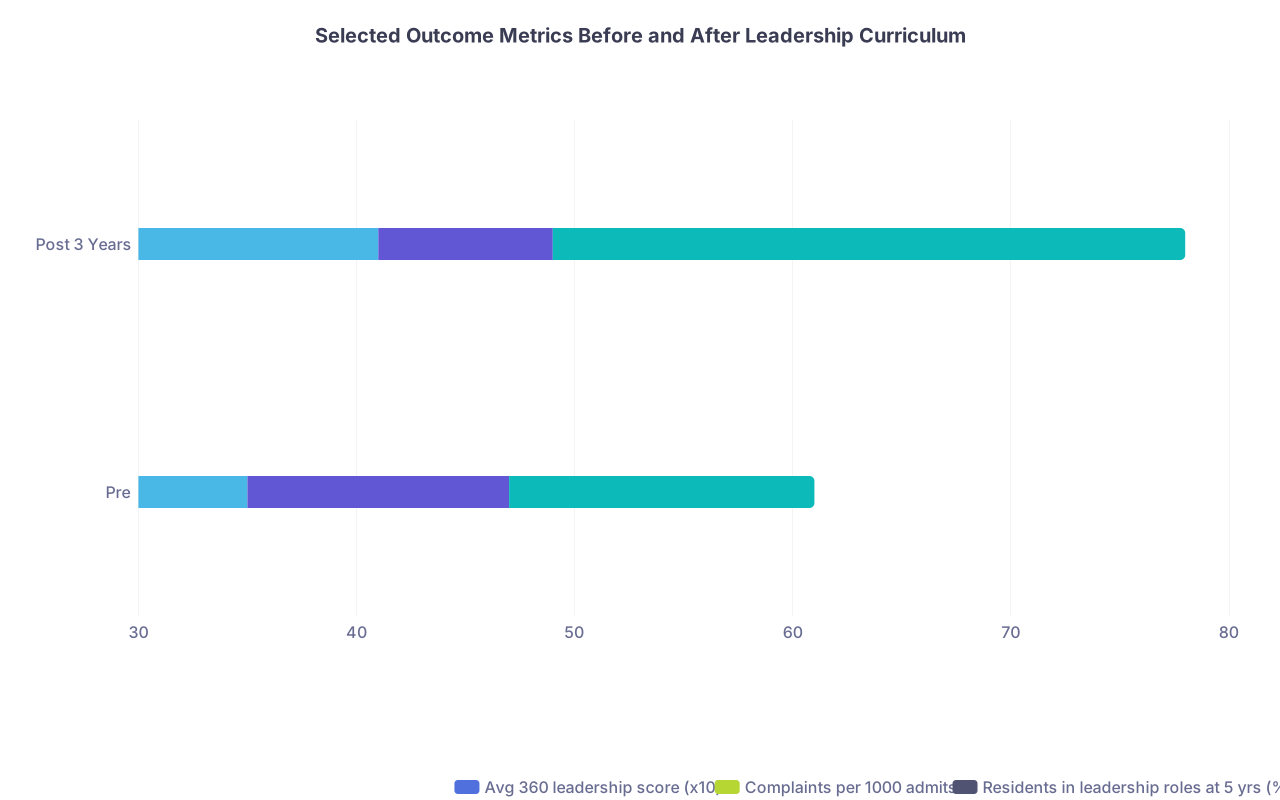
| Category | Avg 360 leadership score (x10) | Complaints per 1000 admits | Residents in leadership roles at 5 yrs (%) |
|---|---|---|---|
| Pre | 35 | 12 | 14 |
| Post 3 Years | 41 | 8 | 29 |
The time horizon matters. Some metrics (360 scores, complaints) move within 1–2 years. Others (career leadership roles) take 5–10 years to plenamente manifest. That is why programs that keep changing direction every 18 months never see the benefits. They reset the clock each time.
Where This Leaves You as a Resident or Leader
If you are a resident, you should be asking very blunt questions on interview day:
- “What does your leadership curriculum look like, concretely?”
- “How do you know it works? What has changed?”
- “How much real responsibility do residents get in committees or QI projects?”
If the answers are vague, they usually correspond to vague outcomes.
If you are program leadership, the data is not subtle. Programs that treat leadership training as core infrastructure produce residents who:
- Lead teams more effectively
- Generate fewer complaints and more trust
- Report higher engagement and lower attrition
- Populate the next generation of chiefs and institutional leaders
Three key points, stripped of the fluff:
- Structured, longitudinal leadership training with real responsibility attached measurably improves resident evaluations, culture, and some patient-facing metrics.
- Programs that invest and track outcomes see lower attrition, better recruitment, and a stronger leadership pipeline among graduates.
- Leadership training that is episodic, lecture-only, and unmeasured is mostly theater; the data only shifts when behavior is practiced, observed, and connected to genuine authority.


