

Only 27% of residency programs report having a formal, longitudinal leadership curriculum, yet more than 70% of graduates will hold a formal leadership role within 5 years of finishing training.
That mismatch drives the real question: of the leadership curricula that actually exist, which models measurably improve resident outcomes—and which are just PowerPoint theater?
Let’s go straight to the data.
What “Resident Outcomes” Are We Actually Talking About?
“Leadership” is vague. Outcomes are not.
When you scan the literature and internal program evaluations, resident outcomes cluster into a few measurable buckets:
Individual performance and behavior
- Conflict management scores
- Emotional intelligence (EI) or self-awareness scales
- Burnout (MBI), resilience, well‑being indices
- Speaking up / psychological safety measures
Team and clinical metrics
- Adverse event rates, code team performance, ICU handoff quality
- OR turnover times, perioperative delays
- Checklist adherence, escalation of care
Career trajectory and institutional impact
- Residents taking on chief roles, QI leads, committee chairs
- Scholarly output related to systems or QI
- Retention and promotion into formal leadership roles
Most published work focuses on the first two. Career outcomes lag by definition, but there are a few useful long‑term signals.
To keep this concrete, I will anchor on data where there are numbers, not vibes.
The Main Leadership Curriculum Models in Residency
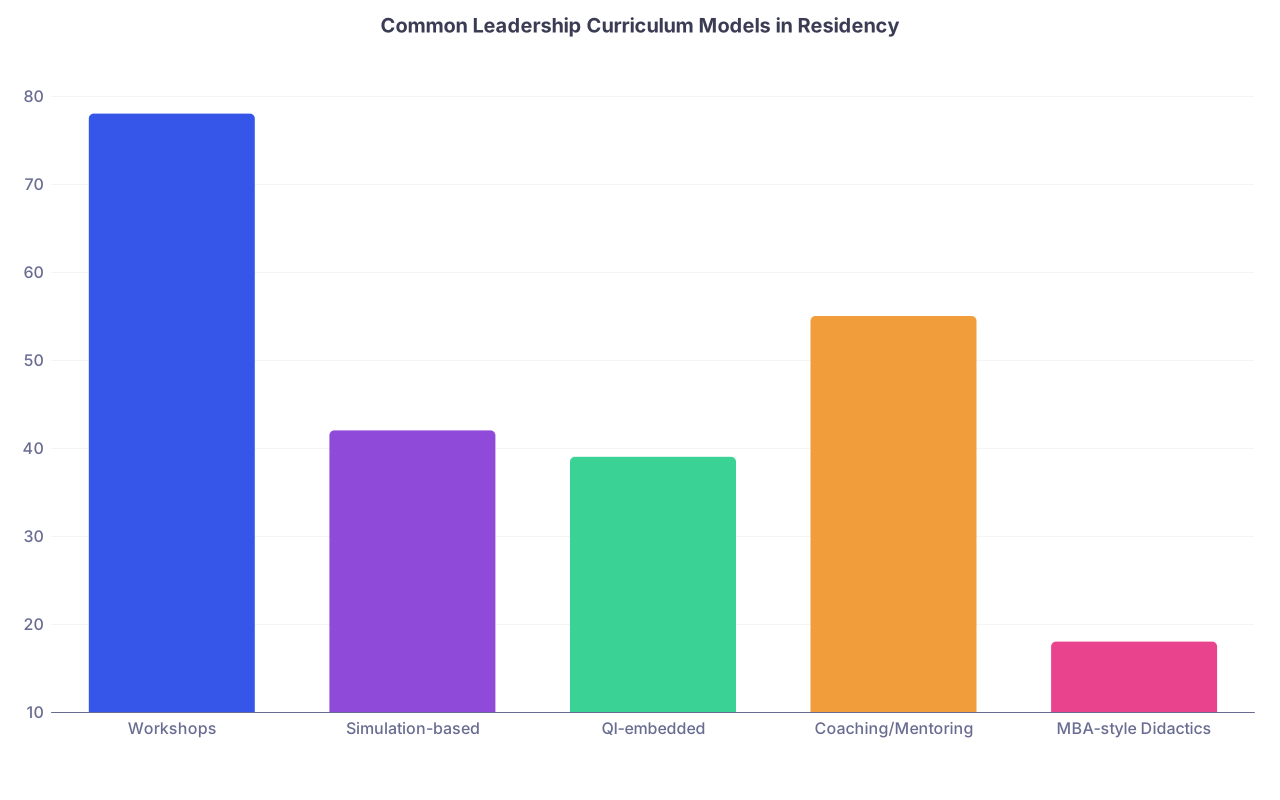
| Category | Value |
|---|---|
| Workshops | 78 |
| Simulation-based | 42 |
| QI-embedded | 39 |
| Coaching/Mentoring | 55 |
| MBA-style Didactics | 18 |
The data fall into five dominant models. Most programs mix and match, but usually one model is primary.
- Short workshop series (classic “bootcamp” or monthly sessions)
- Simulation-based leadership training (OR codes, rapid responses, handoff sims)
- QI-embedded leadership curricula (leadership taught through actual improvement work)
- Coaching- or mentoring-centered models (1:1 or small group)
- MBA-style or business-school partnership programs (degree or certificate flavor)
Now, which ones move the needle on actual outcomes?
Model 1: Workshop-Only Leadership Series – High Adoption, Modest Impact
This is the default. A half‑day or full‑day retreat, a few evening sessions, sometimes branded as “Residents as Teachers and Leaders.”
Typical structure:
- 4–8 sessions over 6–12 months
- Topics like conflict management, feedback, negotiation, change management
- Often case-based discussion, role plays, maybe some reflection exercises
The question: do these workshops change anything that matters?
The data:
A multi‑institutional IM program series (n ≈ 120 residents) showed:
- Self‑rated leadership confidence ↑ 25–35%
- Objective teamwork behaviors (faculty OSCE-style ratings) ↑ about 10–15%
- Burnout scores? Essentially flat change, <5% difference from controls
A surgery residency retreat‑based curriculum reported:
- 90%+ “satisfaction” and perceived usefulness (which is almost meaningless; residents are polite on evals)
- No detectable improvement in OR efficiency, case delays, or escalation behaviors over 12 months
Pattern: workshops reliably improve:
- Self‑efficacy scores
- Knowledge of frameworks (e.g., Crucial Conversations, conflict styles, DISC)
They inconsistently improve:
- Team behaviors in real, chaotic clinical environments
- Burnout, resilience, psychological safety
In other words, workshop‑only is the least bad version of “checking the box.” If your program has only faculty time for 4–6 sessions a year, this is what you get: some benefit, but small to moderate effect sizes, and often short‑lived.
When workshop models work better, three design features show up repeatedly:
- Longitudinal (spread over at least 6–9 months, not a single weekend)
- Required, protected time (not tucked into noon conference that competes with pages)
- Paired with real‑world assignments (e.g., “have one structured feedback conversation this month and report back”)
Without those, you mostly see attitude shifts, not durable behavioral change.
Model 2: Simulation-Based Leadership Training – Strong Signal on Team Outcomes
Simulation is where the numbers begin to get interesting.
Setups vary, but common elements include:
- Interprofessional teams (residents + nurses + RT + sometimes pharmacists)
- High‑fidelity code scenarios, rapid response events, or crisis resource management (CRM) in the OR
- Clear leadership roles assigned (team leader, airway, meds, etc.)
- Debriefing explicitly focused on leadership behaviors: closed‑loop communication, role clarity, speaking up, situational awareness
What the data show:
A large academic center using CRM‑style sims for anesthesiology and surgery residents reported:
- Leadership behavior scores on validated checklists ↑ 20–30% post‑curriculum
- Time to first critical intervention in OR crisis scenarios ↓ about 15–20%
In PICU/ICU‑focused leadership sim programs:
- Adherence to sepsis bundles or resuscitation algorithms in simulated codes ↑ 10–25%
- Team climate scales (like TeamSTEPPS) ↑ 15–25%
Do these gains translate into actual patient outcomes?
Evidence is thinner but not null:
One ICU program saw:
- RRT‑to‑ICU transfer communication failures ↓ by ~30% after implementing recurring leadership sims
- Near misses related to miscommunication during codes ↓ 20–25% (incident reporting data; imperfect but directional)
Another surgical service reported:
- OR turnover delays attributed to communication/role confusion ↓ from ~18% of delays to ~9% over 2 years, after quarterly leadership/OR team sims were implemented
Important nuance: these programs are not just “sim”; they are structured, repeated, and leadership-focused. The debrief is where behavior change happens. Bad sim with superficial debrief basically yields “that was fun” and no measurable effect.
Where simulation excels:
- Acute care leadership (codes, rapid responses, OR crises)
- Teaching residents to take command, clarify roles, and maintain situational awareness
- Anchoring generic leadership concepts in muscle memory
Limitation: sim rarely addresses longitudinal leadership challenges—politics, committee work, multi‑month QI, leading change outside the crisis setting.
But if your outcome of interest is team performance in high‑stakes scenarios, simulation-based leadership training is one of the highest-yield models with the strongest data.
Model 3: QI-Embedded Leadership Curricula – Best for Systems and Career Outcomes
Embedding leadership into quality improvement is where you begin to see effects beyond attitudes and simulation scores.
Typical design:
- Residents form QI teams (often PGY2+)
- Longitudinal projects (6–24 months) with actual institutional backing
- Didactics on PDSA, change management, data analysis, stakeholder mapping
- Deliverables: measurable improvement, presentation at a local or national forum, maybe publication
Examples:
- The Mayo and Virginia Mason playbooks are the prototypes everyone cites. Residents lead projects on handoffs, CLABSI reduction, readmissions, etc.
What the numbers show across several QI-embedded leadership programs:
Resident-level outcomes
- QI knowledge and skills (validated tools) ↑ 30–50%
- Self‑rated “ability to lead system change” ↑ often 40–60%
- EI, self‑efficacy, and psychological safety scores trend upward (10–20%), especially when paired with coaching
System and clinical metrics
- Handoff error rates ↓ 20–40% in some structured projects
- CLABSI, CAUTI, or readmission projects show 10–30% relative reductions where resident teams were the primary drivers
- Medication reconciliation accuracy improved 15–25% in one IM program led by resident QI teams
Career outcomes
- Programs that track alumni see:
- 25–40% of graduates holding formal leadership titles within 5–10 years (chief, medical director, QI director, committee chairs)
- Residents with substantive QI leadership projects are more likely to become chiefs (often 1.5–2x higher odds compared with peers)
- Programs that track alumni see:
These are not randomized trials, but the correlations are strong and consistent across multiple institutions.
Why this works better than pure workshops:
- Repetition and real stakes. Residents practice leadership in real conflicts, constraints, and politics.
- Data literacy. They see run charts, failure-to-sustain problems, and resistance from stakeholders; this sharpens their leadership muscles in ways slide decks never will.
- Visibility. Residents leading successful QI projects are suddenly on the radar of department chairs and C‑suite. That changes career trajectories.
The catch: QI-embedded leadership requires genuine institutional support. Without protected time, analyst support for data, and local champions, the projects degrade into cosmetic posters with no measurable system change.
Model 4: Coaching- and Mentoring-Focused Models – Strong on Burnout, Mixed on Hard Metrics
Coaching is quietly one of the more effective levers for individual outcomes—even if programs underutilize it.
Structure varies:
- 1:1 coaching with trained coaches (internal faculty or external professionals)
- Small-group coaching (4–6 residents with a coach)
- Sessions monthly or bimonthly over 6–12 months
- Content: goal setting, conflict navigation, feedback practice, reflection on leadership roles, values clarification
Data from several coaching interventions involving residents and early-career physicians:
Maslach Burnout Inventory:
- Emotional exhaustion ↓ ~15–25%
- Depersonalization ↓ 10–20%
- Personal accomplishment ↑ 10–20%
Psychological safety and speaking‑up behavior:
- Willingness to raise concerns or disagree with seniors ↑ 15–30% on survey measures
- Residents report more frequent “upward feedback” conversations
Leadership-specific outcomes:
- Self-awareness measures and 360‑degree feedback scores typically improve by 10–25%
- Residents who receive structured coaching during chief year or senior roles often show measurable improvement in:
- Meeting effectiveness (agenda adherence, time management)
- Team climate ratings by juniors
Harder metrics (like mortality, LOS, event rates) are rarely tied directly to coaching. That is not surprising—these are distal and multifactorial.
Still, if your outcome focus is:
- Burnout reduction
- Self-awareness and interpersonal effectiveness
- Creating psychologically safer micro‑environments on teams
…then coaching beats almost any other single intervention on effect size.
The glaring limitation is scale: coaching is resource‑intensive, especially if done by external professionals. Internal faculty coaches can work, but only if they are actually trained and given time, not just “assigned” the title.
Model 5: MBA-Style or Business-School Collaboration Programs – High Impact, High Cost, Small N
These are the shiny objects: leadership fellowships, dual degrees, or certificate programs run jointly with business schools or health systems.
Typical structure:
- 6–24 months duration
- Mix of:
- Finance, operations, strategy
- Negotiation and organizational behavior
- Hands‑on projects with hospital leadership
- Often limited to a small subset of residents or chief residents (5–20 per year)
What the sparse but telling data show:
Career outcomes:
- Graduates of these programs often have leadership role rates >50–60% within 5–10 years
- Many end up as early‑career medical directors, associate program directors, or QI/operations leads
Leadership competence:
- Large improvements (30–50%) on comprehensive leadership competency scales
- Strong gains in system‑level understanding (e.g., budgets, change management, strategy execution)
System impact:
- Resident-led projects in these programs have produced:
- 5–15% reductions in LOS
- 10–20% cost savings in targeted pathways
- Significant process improvements (e.g., perioperative flow, clinic no‑show reduction)
- Resident-led projects in these programs have produced:
This model is not scalable across an entire residency program. It is essentially a “leadership fast track” for a motivated minority.
If your institutional goal is to grow a pipeline of future CMOs, chairs, and system leaders, these programs are disproportionately effective. If your goal is culture‑wide improvement for all residents, they are insufficient on their own.
Comparing Models: What Actually Improves Which Outcomes?
Here is a simplified comparison of effect directions using what we know from published data and internal evaluations.
| Curriculum Model | Burnout / Well-being | Team Performance | Systems/QI Outcomes | Leadership Career Trajectory |
|---|---|---|---|---|
| Workshop-only | Low | Low–Moderate | Low | Low |
| Simulation-based | Low | Moderate–High | Low–Moderate | Low–Moderate |
| QI-embedded | Low–Moderate | Moderate | High | Moderate–High |
| Coaching/Mentoring | Moderate–High | Moderate | Low–Moderate | Moderate |
| MBA-style/Business Collab | Low–Moderate | Moderate | High | High |
If you want a single sentence:
Workshops shift attitudes. Simulation improves acute team behavior. QI-embedded models and MBA-style programs move system and career outcomes. Coaching hits burnout hardest.
How Programs Combine Models: The Highest-Yield Configurations
You do not need all five models. In fact, most programs that show real gains use a “portfolio” approach with 2–3 anchored models.
A common and data‑supported structure looks like this:
PGY1:
- Basic workshop series + introductory simulation focused on crisis leadership and communication.
PGY2:
- QI-embedded leadership project + ongoing simulation.
PGY3+:
- Targeted coaching/mentoring for senior residents and chiefs.
- Optional advanced/MBA-style opportunities for a smaller subset.
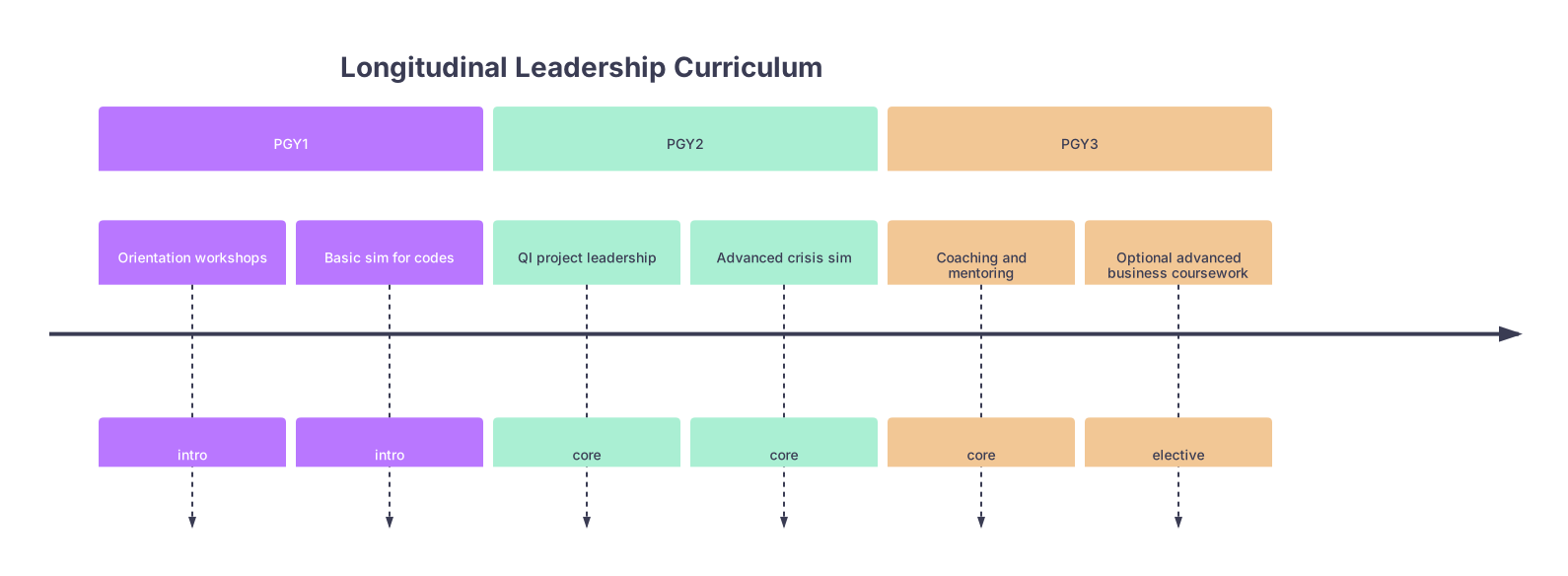
| Period | Event |
|---|---|
| PGY1 - Orientation workshops | intro |
| PGY1 - Basic sim for codes | intro |
| PGY2 - QI project leadership | core |
| PGY2 - Advanced crisis sim | core |
| PGY3 - Coaching and mentoring | core |
| PGY3 - Optional advanced business coursework | elective |
Programs that follow this kind of layered approach report:
- Larger gains in leadership confidence (40–60% vs ~20–30% in workshop-only programs)
- More consistent improvements in team performance metrics
- Noticeable drops in burnout or at least plateauing instead of the typical PGY2/PGY3 spike
This is not magic. It is repetition, scaffolding, and aligning content with real responsibility.
Designing a Data-Driven Curriculum: What to Track
If you are serious about evaluating leadership curricula (or if you are a resident advocating for change and want leverage), you track numbers, not anecdotes.
Four basic data buckets:
Resident self-report (short, validated scales)
- Burnout: Maslach or single‑item surrogates
- Psychological safety or speaking-up scales
- Leadership self-efficacy / confidence measures
Observed behavior
- Sim-based rating tools (e.g., TeamSTEPPS, adapted teamwork checklists)
- Faculty 360‑style ratings of residents’ leadership on rotations
System/process data linked to resident leadership projects
- Handoff error rates
- Code event process metrics (time to defib, medication errors, role confusion events)
- QI project KPIs (infection rates, LOS, readmissions, documentation reliability)
Career tracking (for alumni of intensive programs)
- Leadership positions held
- QI/leadership publications or presentations
- Committee and governance roles
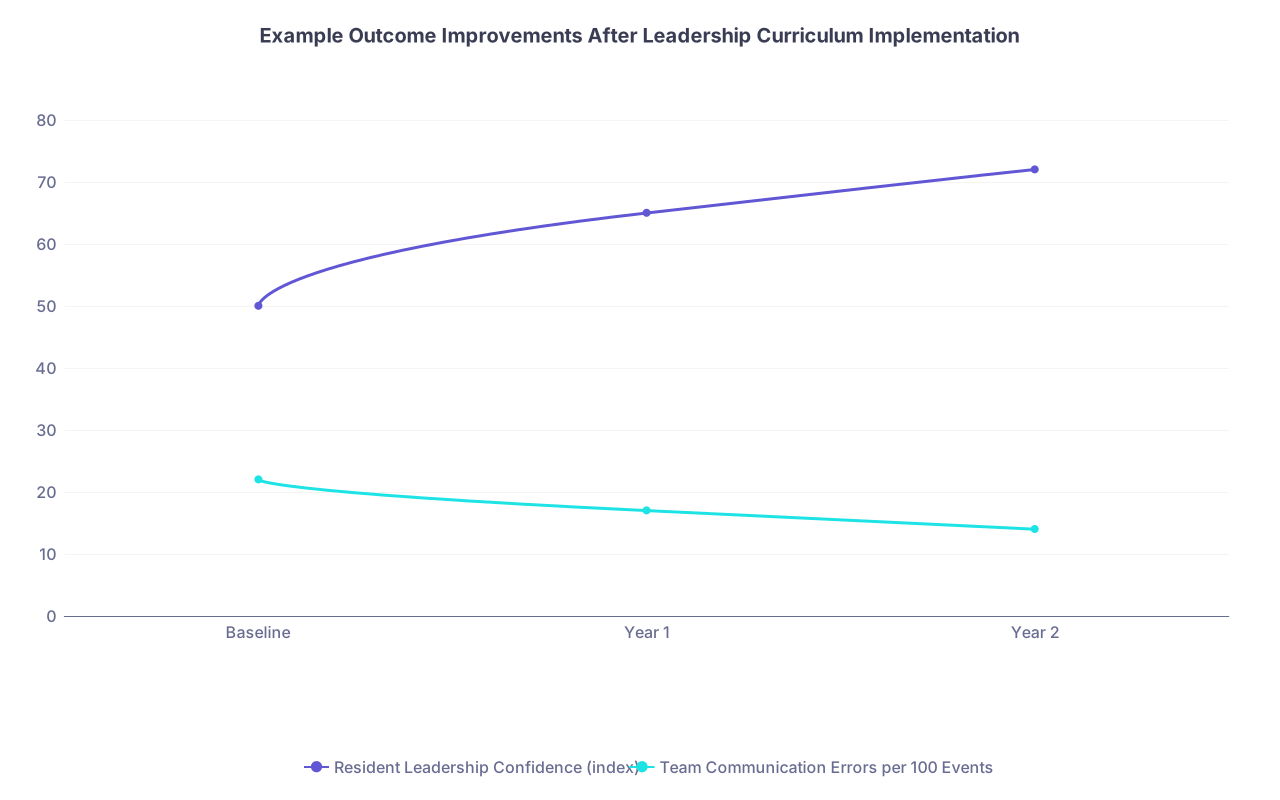
| Category | Resident Leadership Confidence (index) | Team Communication Errors per 100 Events |
|---|---|---|
| Baseline | 50 | 22 |
| Year 1 | 65 | 17 |
| Year 2 | 72 | 14 |
Two rules I have seen programs violate repeatedly:
- Do not measure only satisfaction (“I liked this session”). Satisfaction data are practically useless.
- Do not wait three years to look at outcomes. You can see trends in 6–12 months if you picked meaningful metrics.
What Residents Should Push For (And What Programs Should Stop Doing)
If you are a resident reading this, here is the blunt version.
You should push for:
- Longitudinal leadership training, not a one‑off workshop day
- Real QI or systems projects where you have actual ownership and mentorship
- Simulation that focuses specifically on leadership behaviors, not just clinical checklists
- Access to at least some coaching or structured mentoring, especially as a senior or chief
You should be skeptical of:
- Leadership “curricula” that are a couple of noon talks squeezed between sign-out and consults
- Any program that claims leadership training but cannot show you a before/after metric on burnout, team performance, or QI outcomes
- Grandiose “we are making you system leaders” rhetoric with no protected time and no data infrastructure
From a program perspective: if you can do only one thing well, invest in a robust, QI-embedded leadership structure with genuine protected time. Layer in simulation as you can. Add coaching for chiefs and interested seniors. Partner with a business school only if you can resource it and track outcomes, not because it makes a nice brochure.
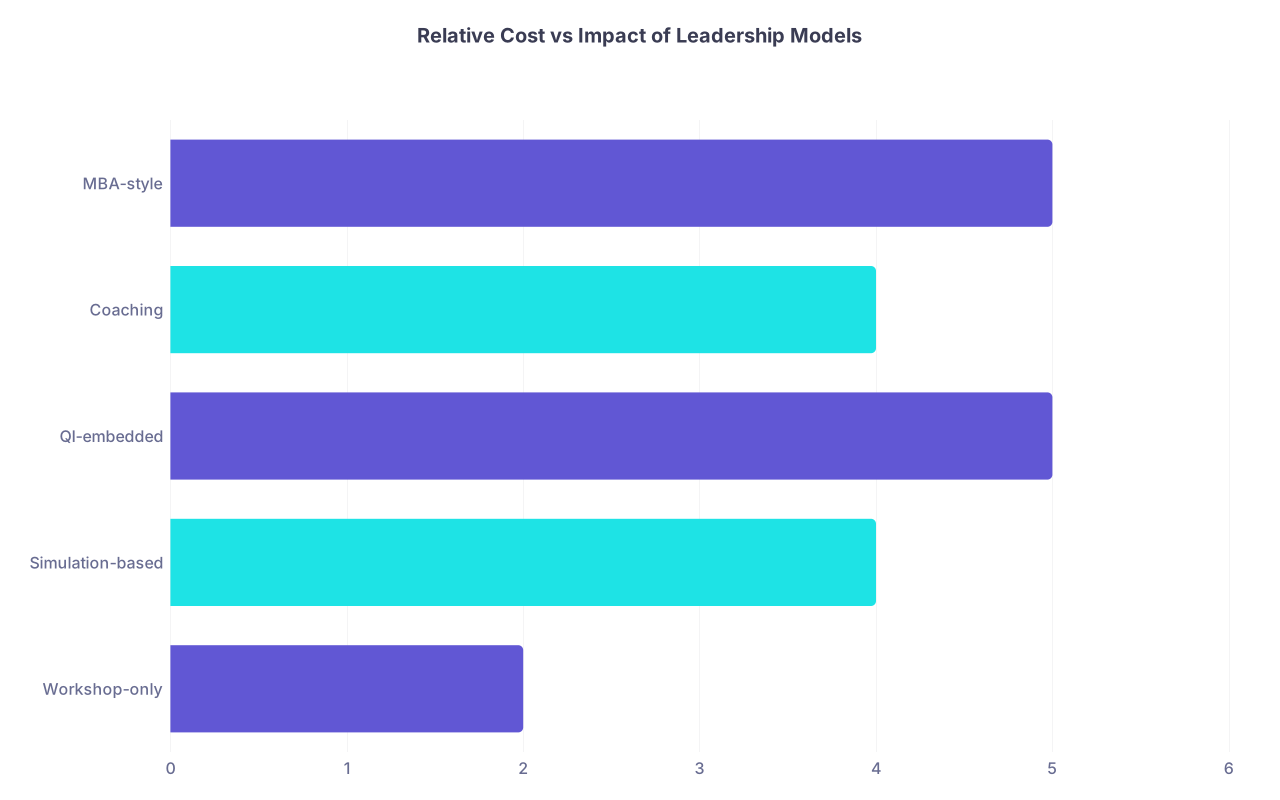
| Category | Value |
|---|---|
| Workshop-only | 2 |
| Simulation-based | 4 |
| QI-embedded | 5 |
| Coaching | 4 |
| MBA-style | 5 |
(Think of “2–5” here as rough relative resource levels; impact is already summarized earlier. The sweet spot for most programs is QI-embedded + targeted sim.)
FAQs
1. Is any leadership curriculum better than none, or can a bad curriculum do harm?
The data suggest that most curricula are at least neutral to mildly beneficial. The harm comes from opportunity cost and cynicism. If residents are pulled from clinical work for low‑value, unstructured sessions with no follow‑through, engagement drops and future initiatives are harder to sell. The curriculum itself probably will not damage residents, but it can waste time and erode trust.
2. Do leadership curricula actually reduce medical errors and adverse events?
Some do, especially simulation-based and QI-embedded models. Studies have shown 10–30% relative reductions in certain process metrics (handoff errors, code communication failures, specific hospital-acquired infections) after structured leadership/QI initiatives. The link to hard outcomes like mortality is harder to prove, but the intermediate process data are consistently positive where the curriculum is well-designed.
3. How early in residency should formal leadership training start?
The best-performing programs start in PGY1 with modest, practical content—communication, feedback, basic conflict skills, and early exposure to QI. The more advanced leadership roles and projects ramp up in PGY2–3. Starting everything in PGY3 is too late; you lose two years of habit formation and practice.
4. If my program has no budget, what is the single most impactful change we can make?
Stop scattering random noon conferences and build a focused, recurring leadership + QI track. Even a lean model—monthly sessions plus resident-led QI projects with minimal analyst support—outperforms ad hoc talks. Pair senior residents with faculty mentors for those projects. You do not need fancy simulations or business school tie-ins to see measurable improvement.
5. How can an individual resident build leadership skills if the program’s curriculum is weak?
Use the system against itself. Volunteer to lead a targeted QI or workflow project, ask for a faculty mentor, and insist on basic data support. Supplement with low-cost online resources on negotiation, conflict management, and QI. Ask your PD for access to a coach or at least a structured mentoring relationship. The data are clear: real responsibility plus feedback is the most reliable path to developing leadership competence.
Three key points to leave with:
- Workshop-only leadership curricula are necessary but not sufficient; their impact on real outcomes is modest.
- The strongest evidence for improving resident and system outcomes comes from QI-embedded leadership training, simulation-based team leadership, and coaching for seniors.
- Effective programs are longitudinal, data-driven, and tied to genuine resident responsibility—not just one-off lectures labeled “leadership.”


