

It’s 6:42 a.m. on a Tuesday. You’re on wards, already behind, skimming an email from the chief about new discharge documentation rules. Your intern just texted that a patient is hypotensive. The attending wants the list in five minutes. And your WhatsApp team chat is blowing up with “who’s covering admissions?”
This is where program directors actually decide what kind of leader you are.
Not during your morning report presentation. Not on your CV. Right here—how you handle email, meetings, and small daily crises when no one thinks they’re watching.
Let me tell you a secret: they’re always watching.
What PDs Really Mean by “Leadership Potential”
Most residents think leadership is being chiefs, giving lectures, spearheading a QI project. That’s the brochure version. Program directors care about something much more boring, and much more brutal: how you behave on Tuesday at 6:42 a.m. when everything is a mess.
The unspoken rubric PDs and attendings use is simple:
- How you handle information (email, messages, pages).
- How you run (or poison) meetings and small group encounters.
- How you behave when something goes sideways.
You’re not going to see this in any “Milestones” document spelled out. But behind closed doors, this is exactly how they rank residents’ leadership.
Let’s dissect it.
Email: The Quiet File on Your Leadership
No one tells you this in orientation, but your email trail is a permanent record of how you think, prioritize, and respond. I’ve watched PDs pull up resident emails on screen during CCC meetings. They don’t announce that publicly. But it happens.
They’re asking a few questions every time your name comes up:
- Do you make other people’s jobs easier or harder?
- Do you create drama or resolve it quietly?
- Do you sound like a physician… or a frazzled student?
The 4 Email Behaviors That Scream “Leader”
You respond like a colleague, not a student.
Short, clear, decisive. Not an essay. Not groveling.Bad:
“Dear Dr. Smith, I am so so sorry, I completely forgot that we were supposed to submit these evaluations and I will try my absolute best to get them in by tonight!! Thank you so much for the reminder!!”Strong:
“Thanks for the reminder, I’ll submit my evaluations by tonight.
– [Your Name]”Faculty talk about this. The second version reads like someone who can be trusted to staff a unit at 3 a.m.
You don’t make your chaos the program’s problem.
Residents who constantly email with “urgent” issues that are actually poor planning get tagged. Not officially. But mentally.The PD memory is long:
“He’s the one who always has ‘emergency’ schedule problems.”
“She sends five follow-ups about every minor thing.”The resident who quietly fixes things and sends one clean, solution-focused email when needed? That’s the one they see as chief material.
You protect your professional tone under stress.
I’ve seen a resident’s leadership trajectory die because of one unhinged reply-all during COVID surge scheduling. People remember. Screenshots circulate.PDs look for:
- No sarcasm in writing.
- No passive-aggressive digs.
- No emotional dumping in professional channels.
You want to sound like this:
“I’m concerned this schedule change may compromise coverage on nights. Here’s an alternative that maintains coverage and accommodates the constraint.”Not this:
“This seems really unfair and unsustainable. Not sure how this is supposed to work.”You close loops without making noise.
You follow instructions the first time. You don’t need three reminders. And when something changes, you let the right people know promptly, once, clearly.That resident who emails,
“Covering for [Name] on nights 1/12–1/14, we’ve both updated Amion accordingly.”
That’s logged mentally as: systems thinker, reliable, low-drama.
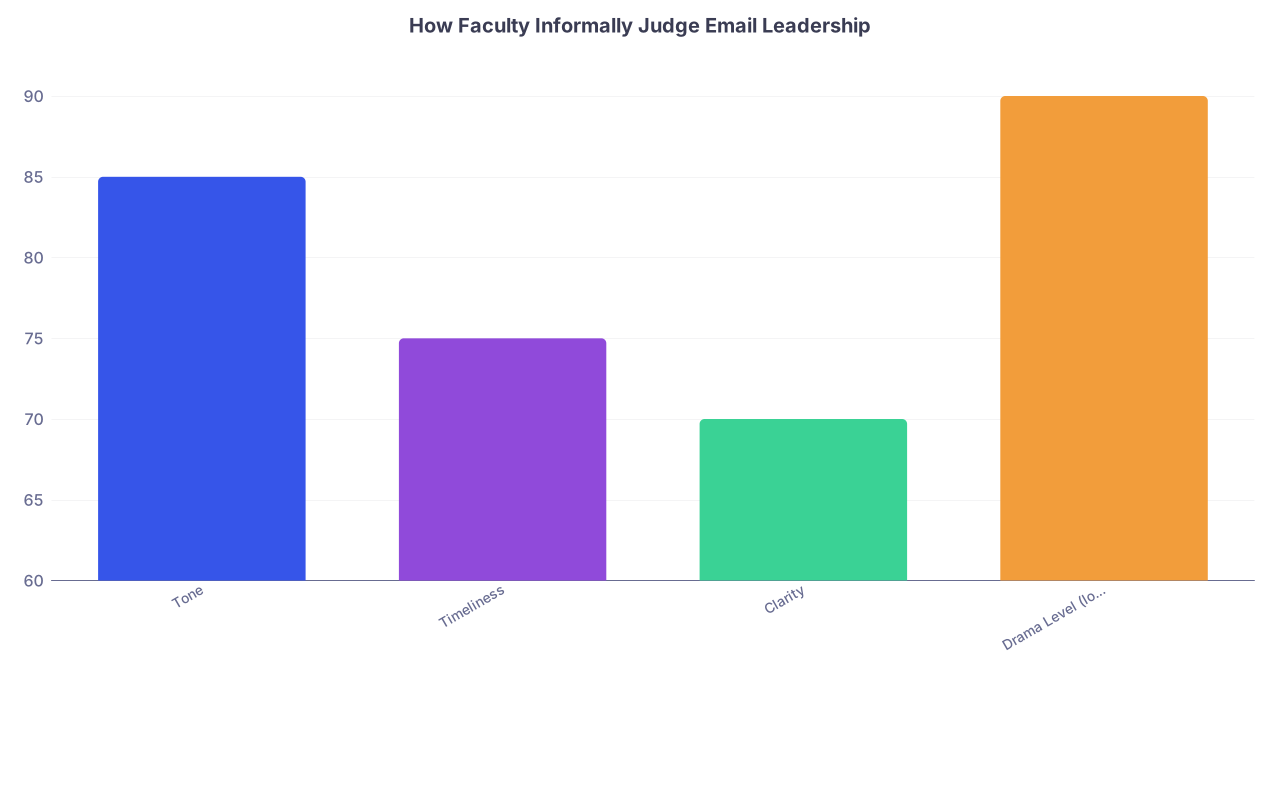
| Category | Value |
|---|---|
| Tone | 85 |
| Timeliness | 75 |
| Clarity | 70 |
| Drama Level (low = good) | 90 |
Meetings: Where PDs Separate Chiefs From “Nice But Forgettable”
This part nobody explains to you. Every recurring gathering—pre-round huddles, family meetings, QI projects, morbidity and mortality, curriculum committees—functions as a live leadership audition.
Program directors pay attention to two very specific behaviors:
- What do you do when you’re not in charge?
- What do you do when you are?
When You’re Not Running the Meeting
This is where subtle leadership lives. The PD is watching your micro-moves.
Residents who rise in the system:
Pre-organize before the meeting.
That senior who shows up to multidisciplinary rounds with a one-line status summary for each patient and starts with, “Let me quickly run the list so we’re efficient”—that gets noticed.Translate chaos into structure.
Example: The attending is all over the place. Nurses are jumping in. Pharmacy is waiting. The strong resident says:
“Why don’t we quickly go room by room so we’re sure we touch everyone and respect time?”
That line will be repeated in your PD’s office later: “She has a knack for bringing order to discussions.”Control their face.
This seems small. It’s not. Eye rolls on Zoom. Smirking when admin talks. Whispering to other residents during a hospitalist meeting. Faculty see all of it. Then in evaluation meetings, when your name comes up, the phrase is always the same: “a little unprofessional at times.”That phrase kills chief chances.
When You Are Running Something
Maybe you’re resident lead on a QI project, moderating journal club, or presenting at M&M. Behind closed doors, faculty critique you like this:
- Did you start on time?
- Did you frame why people are in the room?
- Did you keep it from turning into a vent session?
- Did you land with clear next steps, owners, and deadlines?
Residents who look like future leaders do three specific things:
They make it about the work, not themselves.
They don’t flex how much they read. They don’t over-explain the methods of their QI project. They relentlessly direct attention to what the group needs to decide.“We have 20 minutes. We need consensus on whether we’re changing the admission order set for CHF. Here are three options.”
They cut monologues without being a jerk.
PDs love this. Because they hate meetings that go nowhere.Strong move:
“That’s helpful context. To keep us on time, can we park that piece and focus on the immediate decision about X?”You’ve just demonstrated three things at once: time management, emotional intelligence, and backbone.
They leave with a clean close.
If you end a session with “Any questions?” and people drift out, you’ve wasted everyone’s time. If you end with:
“So to recap: starting next Monday, we’ll… [one sentence]. I’ll send a one-paragraph summary to the team tonight.”
You’ve just sent a very loud leadership signal.
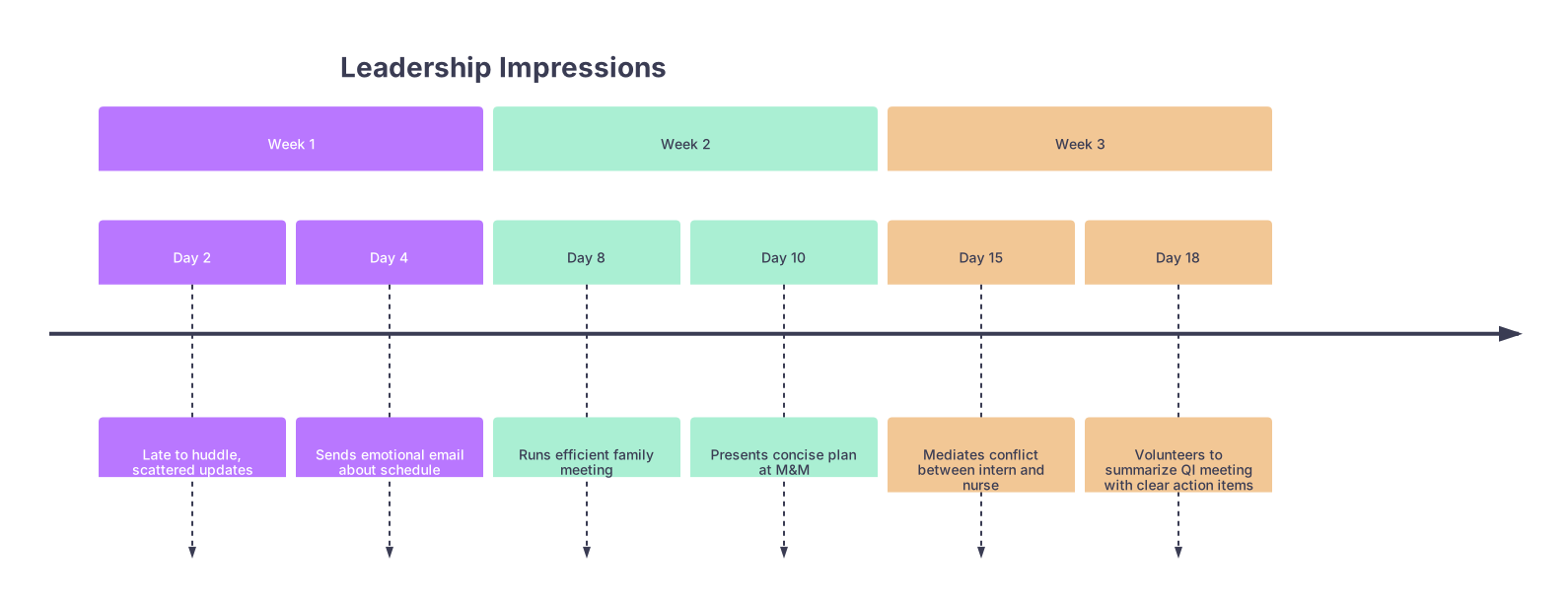
| Period | Event |
|---|---|
| Week 1 - Day 2 | Late to huddle, scattered updates |
| Week 1 - Day 4 | Sends emotional email about schedule |
| Week 2 - Day 8 | Runs efficient family meeting |
| Week 2 - Day 10 | Presents concise plan at M&M |
| Week 3 - Day 15 | Mediates conflict between intern and nurse |
| Week 3 - Day 18 | Volunteers to summarize QI meeting with clear action items |
Crises: The Moments That Permanently Define You
Forget your “leadership workshop” certificate. The way you behave in three real codes will define your reputation more than three leadership courses.
When PDs talk about residents as future attendings, they almost always bring up a crisis story:
- “He was on when the patient in 15A coded twice. Stayed calm. Took ownership.”
- “She was the senior when the computer system went down. Kept the team focused, coordinated with nursing. No drama, just action.”
Here’s what they’re quietly grading.
1. Do You Actually Step Up?
Many residents intellectually think they’re “leaders.” Then the first time three things go wrong at once, they disappear into the EMR.
I’ve seen seniors at 2 a.m. physically position themselves at the foot of the bed in a code and say, loud and clear:
“I’m running this. You’re on compressions. You’re on meds. You’re documenting. Call the ICU attending now.”
Those residents are branded as leaders permanently. Word spreads. ICU and ED attendings mention them in meetings.
The opposite is also true. The resident who stands in the doorway, adds random orders, and lets the room run itself? People remember.
2. Can You Separate Emotion From Action?
A “crisis” is not just a code. It’s:
- A family furious about perceived errors.
- A nurse reporting unsafe behavior from a co-resident.
- A massive discharge backlog at 4 p.m. with admissions piling up.
- An intern in tears in the stairwell.
Program directors are watching how you respond. They’re looking for one thing above all: signal vs. noise.
Here’s what leadership looks like in these moments:
You don’t escalate your own emotion into the situation.
No raised voice. No theatrics. You speak slightly more slowly, slightly more quietly.You name the problem in concrete terms.
Not, “This is chaos.”
But, “We have five admits, three discharges pending, and only two residents free. Let’s assign one person solely to discharges for the next hour.”You protect the intern while still serving the system.
“You go take five minutes. I’ll handle the next page and loop in [other resident] for coverage. We can debrief later.”
I’ve heard PDs say this almost verbatim:
“He’s not the slickest presenter, but when things get hectic, everyone looks to him,”
or
“She’s the person nurses trust to call when they’re worried. That’s leadership.”
3. Do You Communicate Up Without Dumping?
This one separates kids from adults.
When something serious happens—a near-miss, a bad outcome, a team conflict—PDs watch how you bring it up.
There’s a massive difference between:
“Staff are being unreasonable and I can’t work like this.”
vs.
“We had an issue on nights. Here’s exactly what happened, what we did in the moment, and what I think we need help with now.”
The resident who brings structured information plus a first-pass solution? That’s the person attendings start imagining as a future colleague.

How PDs Actually Talk About Leadership Behind Closed Doors
You think there’s a scoring sheet somewhere that says “leadership: 3/5”? No. It’s more primitive than that. CCC and recruitment meetings sound like this when your name comes up:
- “If the unit is on fire, do I want them there?”
- “Would I trust them with my sickest patients and my most fragile intern?”
- “Do nurses call them first when something’s wrong, or last?”
And they base these answers on tiny, boring, day-to-day things:
- The time you ran an unexpectedly sharp, efficient family meeting.
- The way you de-escalated a disagreement with a consultant, instead of turning it into a turf war.
- The email you sent after a messy night, summarizing what happened and suggesting process fixes.
I’ve watched PDs fast-track residents to chief interviews over moments like this:
A PGY-2 CC’ed the PD on a calm, factual email summarizing repeated unprofessional behavior by an external consultant, with specific examples and an ask: “I’d appreciate your guidance on how best to address this structurally.”
The email was surgical: no drama, no speculation, just data and a request. PD’s comment afterward? “This is what a future division chief sounds like.”A resident led an M&M where the case involved their own team. They owned the system problems, didn’t throw anyone under the bus, and explicitly pointed out where they, personally, could have done better.
Faculty talked about it for weeks.
Here’s the quiet hierarchy PDs use for leadership impressions:
| Resident Type | How PDs Talk About Them |
|---|---|
| “Unit on fire – put them in charge” | Chief and fellowship letters, top support |
| “Solid, low drama, dependable” | Strongly supportive, good jobs, fellowships |
| “Nice but invisible” | Neutral comments, generic letters |
| “Smart but chaotic” | Hesitation, guarded letters, no chief |
| “Emotionally volatile / high drama” | Risk flagged, strong doors quietly close |
Your goal is to be in the first two rows. That’s it.
Practical Moves: How to Look Like a Leader This Month
Let’s translate this into things you can do on your next block. Not next year. Now.
1. Upgrade Your Email in 24 Hours
Starting tomorrow:
- Every professional email you send:
3–6 sentences max. One clear ask or decision. Close the loop. - Strip out apologies unless something truly went wrong. Replace with:
“Thanks for flagging.”
“I’ll handle this and update you by [time].” - No emotional language in writing when you’re angry. Draft it. Never send it. Wait 30 minutes. Rewrite.
2. Start Treating Every Huddle Like a Rehearsal
Before pre-round huddle or sign-out:
- Write a one-line summary on each patient that even a sleepy cross-cover could understand.
- At the start, give a 15-second frame:
“We have X admissions pending, Y sick patients, and Z discharges today. We’ll focus on sick first, then dispo.”
Do this three days in a row. Attendings will start handing you more responsibility. That’s not random.
3. Pick One Crisis and Be the Adult in the Room
On your next rotation, you will have a mini-crisis. Something will go sideways. When it does:
- Consciously lower your voice.
- Say one orienting sentence out loud:
“Let’s pause 10 seconds and decide who’s doing what.”
or
“I’ll handle the family conversation. Can someone stabilize orders and update the attending?” - After it’s over, send one short, clean summary to the relevant people: what happened, what was done, what might need follow-up.
That summary email? That’s the kind of thing that shows up in “strengths” comments for your semiannual review.

Long Game: How These Moves Pay Off
Here’s the part no one tells you when they’re peddling generic “leadership” talks.
These tiny behaviors—how you write that email, how you run that 8-minute huddle, how you handle one angry family—drive real outcomes:
- Who gets picked for chief.
- Who gets the strongest fellowship letters.
- Who faculty text when they hear about a good job opening.
- Who PDs recommend by name on phone calls you’ll never hear about.
I’ve been in those rooms. I’ve heard this exact line from a PD on a reference call:
“She’s not just clinically strong. When things get messy, people turn to her. You want her on your team.”
No one says that about the resident with perfect slides and chaotic days.
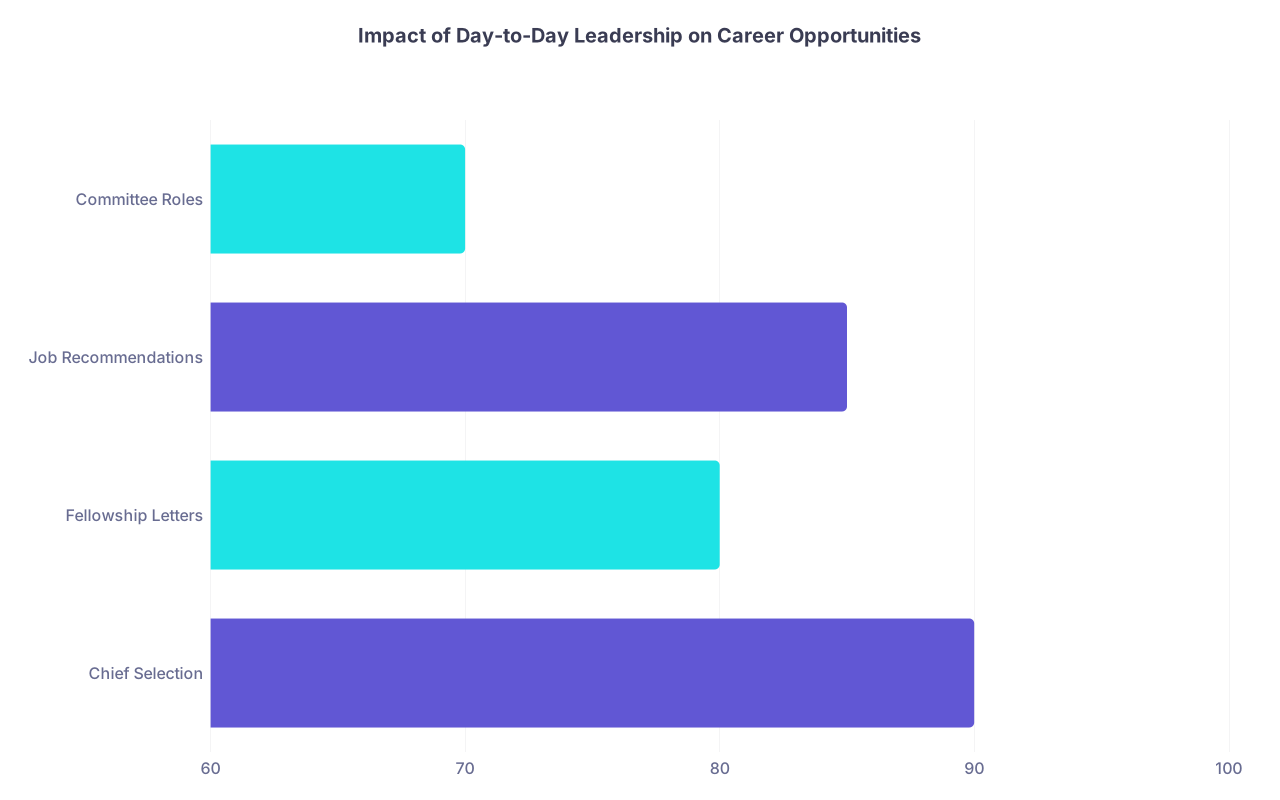
| Category | Value |
|---|---|
| Chief Selection | 90 |
| Fellowship Letters | 80 |
| Job Recommendations | 85 |
| Committee Roles | 70 |
FAQ: What Residents Secretly Ask About Leadership (And What PDs Really Think)
1. “If I’m not chief, does that mean PDs don’t see me as a leader?”
No. Chief is one narrow, political role with limited slots. PDs absolutely see multiple residents per class as “leaders” in different lanes—quiet stabilizers, research drivers, QI architects, culture-builders. But they still expect leadership behavior from everyone, chief or not. Your emails, meetings, and crisis behavior matter whether or not you ever get a title.
2. “I’m introverted. Am I screwed for leadership?”
No. Some of the strongest resident leaders barely say ten words on rounds—but when the unit is under pressure, they calmly assign tasks, communicate clearly, and never melt down. PDs love them. You don’t need to be loud; you need to be reliable under stress and clear when you do speak.
3. “I lost my cool once in a meeting. Am I labeled forever?”
You get a few mistakes. What PDs look for is pattern, not a single bad day. If you had an emotional moment, own it with whoever witnessed it, be visibly more measured in the weeks after, and show that under stress you trend toward structure, not drama. They notice the recovery as much as the lapse.
4. “How much do nurses’ opinions actually matter for leadership?”
More than you think. PDs absolutely listen when senior nurses or charge nurses say, “We love working with her, she’s steady,” or “He panics when something goes wrong.” That feedback shows up in vague phrases on your evaluations: “excellent team collaborator” vs “needs to work on communication under stress.” Those phrases shape how PDs think of your leadership long term.
5. “What’s one thing I can change this week that PDs will actually feel?”
Stop sending messy, emotional, or ambiguous communication. This week, every email, every group text to chiefs or PDs, every page response: make it clear, brief, and solution-oriented. That alone will instantly move you from “resident who makes more work” to “resident who reduces friction.” And PDs back the second group every time.
Remember:
- You’re being judged less on speeches and more on how you handle email, meetings, and crises.
- PDs quietly rank residents by one question: “When things get messy, do I want them in charge?”
- Every day on the wards is an audition. Make your small moves match the future job you actually want.


