

The fastest way to sabotage your credibility as a resident leader is not on rounds. It is on your phone.
You can be excellent clinically, respected by attendings, trusted by interns—and lose large chunks of that capital with a single poorly thought‑out post, story, or comment. I have watched it happen in real time. A sarcastic meme about an attending. A blurry photo of a trauma patient “with identifiers removed” (they were not). A late‑night rant about “stupid consults.” The fallout is always the same: trust erodes, leadership opportunities disappear, and your name starts coming up in the wrong conversations.
This is avoidable. But only if you take social media seriously as part of your leadership role, not as a separate private universe where the rules of professionalism suddenly vanish.
Let me walk you through the biggest social media mistakes that quietly (and sometimes loudly) undermine your role as a resident leader—and how to stop making them.
1. Believing You Have a “Private” Online Life
If you still think “this is my personal account, separate from work,” you are already in trouble.
You are a doctor. You do not get to turn that off because you typed a username and a password. Residents learn this the hard way when:
- Chiefs screenshot their “private” rant and send it to the PD.
- A co‑resident shares their “close friends” story with the group chat.
- A patient’s family member finds their TikTok through one mutual follower.
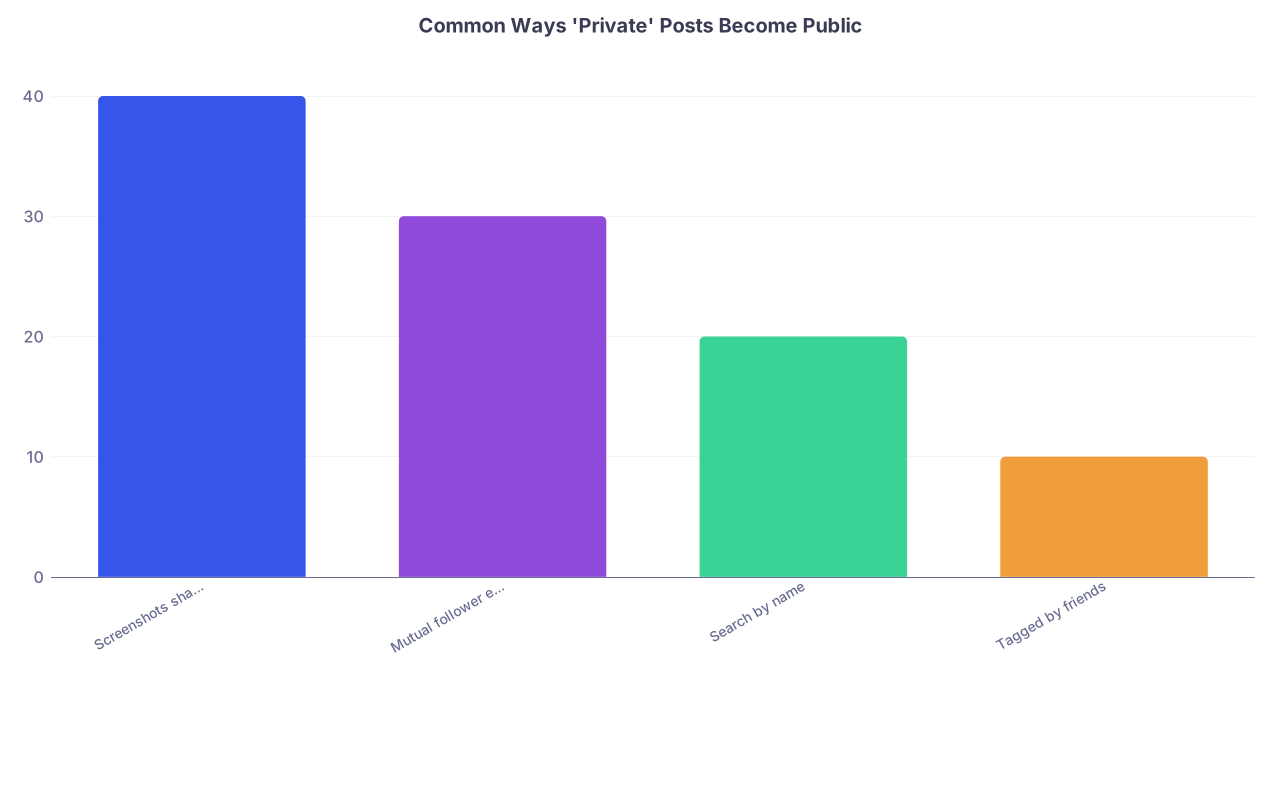
| Category | Value |
|---|---|
| Screenshots shared | 40 |
| Mutual follower exposure | 30 |
| Search by name | 20 |
| Tagged by friends | 10 |
If even one other person can see what you post, it is not private. It is shared. Shared things can travel.
Common mistake: Using “close friends,” “private accounts,” or pseudonyms as a permission slip to post unprofessional content.
You think:
“No one from the program follows this account.”
“I only add people I trust.”
“This is just for co‑residents; we all get it.”
Reality check: Platforms change privacy defaults. Friends change loyalties. Screenshots ignore settings.
How to avoid this trap:
- Assume that every post, DM, story, or comment can be screen‑captured and forwarded to your PD and department chair. If you would not be comfortable defending it in a professionalism meeting, do not post it.
- Stop counting on anonymity. If you mention being in medicine, in a specific specialty, in a particular city, people can triangulate you.
- Understand that “second accounts” (“finstas,” anonymous Twitter, alt TikTok) do not stay disconnected forever. Someone always links them.
Resident leaders lose their positions not because of one huge scandal, but because of a steady drip of minor “private” lapses that together show poor judgment. Your judgment is what people evaluate you on as a leader.
2. Patient Content: Thinking “De‑Identified” Means “Safe”
This is where residents get burned the worst.
That “cool x‑ray,” “wild EKG,” or “once‑in‑a‑career case” you just have to post? You are underestimating how identifiable a “de‑identified” case can be.
Typical damage pattern I have seen:
- Resident posts a “no name or face” story about a rare trauma case.
- The local newspaper runs a piece on “rare traumatic injury at [Hospital Name].”
- A family member sees your post and recognizes details.
- Complaint filed. Compliance involved. PD notified. Suddenly you are on the radar as “a risk.”

High‑risk behaviors that feel harmless to residents:
- Posting rare cases, unique injuries, or unusual presentations—even without name, age, or room number.
- Describing time, location, and circumstances clearly enough that family or staff could recognize the patient.
- Sharing “funny” patient quotes in a way that mocks or belittles them.
- Posting photos or videos from the ED, trauma bay, hallways, or ICU with any background that might reveal a patient, family member, monitor, or bed number.
Stop telling yourself: “Everyone does this” or “I see attendings posting similar things.” Attendings with established reputations sometimes get more leeway. You do not. As a resident, you are still being evaluated for judgment.
How to avoid violating patient trust and policy:
- Do not post about active patients. At all. Not even vaguely.
- Be extremely cautious even with “old” cases. Time does not always protect you; in rare diseases or high‑profile events, families remember for years.
- If something could make a specific patient or family think, “That is probably us,” it is not de‑identified.
- Avoid posting photos in clinical spaces unless you are absolutely sure there is no patient, no monitor, no chart, no schedule, no whiteboard, no reflection in glass.
If you are truly passionate about teaching cases online, route it the right way: get proper institutional approval, use official channels, and remove any detail that could even theoretically identify an individual. Anything less is a bad gamble.
3. Public Complaints About Colleagues, Nurses, or “Stupid Consults”
Nothing kills your leadership credibility faster than trashing your team online.
The classic pattern:
- Tweet: “Another dumb admit from [specialty], do they even read guidelines?”
- IG story: “Shoutout to the nurse who ignored my pages for an hour 🙃.”
- TikTok skit mocking psychiatry consults for “not being real emergencies.”
You think you are being funny, relatable, or “telling it like it is.” What your colleagues see is someone who:
- Breaks team trust.
- Disrespects other disciplines.
- Does not understand that leadership means protecting your people, not performing for strangers.
| Example Post Type | Impact on Leadership Credibility |
|---|---|
| Mocking another specialty's consult | Seen as arrogant and uncollaborative |
| Complaining about “lazy night nurses” | Labeled as unsafe and disrespectful |
| Ranting about specific consultants | Considered unprofessional and petty |
| Vaguebooking about attending decisions | Seen as immature and disloyal |
Once your co‑residents, nurses, and consultants suspect you might drag them (even vaguely) online, you will never fully regain their trust. They will be guarded around you. They will share less. They will not look to you as someone who has their back.
How to avoid signaling you are unsafe to work with:
- No subtweeting. If you have a real patient safety concern, escalate it through existing systems, not to your followers.
- Never use “nurses,” “psych,” “surgery,” “ED,” “OB,” etc. as punchlines. Jokes that depend on making an entire group look incompetent are lazy and corrosive.
- If you must vent, do it verbally to trusted people, off‑line. Not to an audience that screenshots.
If you want leadership roles—chief resident, committee work, QI projects—your PD and program will look for people who build bridges. Not people who publicly complain about the very colleagues they need to lead.
4. Posting While Exhausted, Angry, or Post‑Call
Your tired, irritable brain writes terrible posts.
Most regretted content I have seen from residents is timestamped between 11:00 p.m. and 3:00 a.m., or within an hour of leaving a brutal shift. Angry threads. Snarky jokes. Overly personal disclosures. Things you would never say in morning conference.
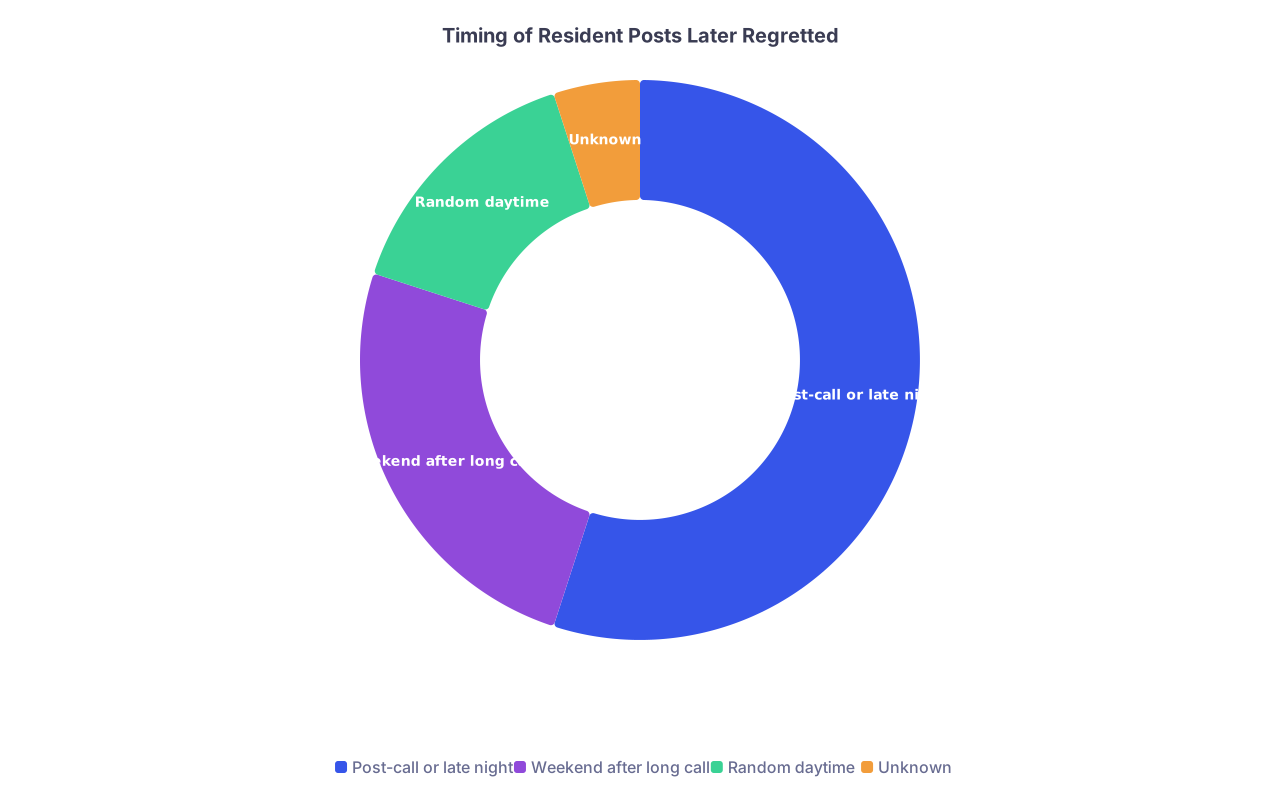
| Category | Value |
|---|---|
| Post-call or late night | 55 |
| Weekend after long call | 25 |
| Random daytime | 15 |
| Unknown | 5 |
Your executive function is fried. Your impulse control is low. You are lonely, frustrated, or wired. That is not the version of you that should be speaking in a permanent digital format.
Warning signs you should not be posting:
- You just thought, “I probably shouldn’t say this, but…”
- You are framing a post around how wrong or stupid someone else was.
- You are using phrases like “I hate when patients…” or “I cannot stand when nurses…”
- You are about to hit send on something you would never print and hand to your PD.
Simple rule that will save you repeatedly:
If you feel anything more intense than mild annoyance or mild amusement, type it in your notes app and read it again the next day. Do not hit publish.
Nine times out of ten, you will be grateful you did not send it.
5. Mixing Alcohol, Parties, and Your White Coat Persona
No, you do not need to be a monk online. But you also cannot pretend that your role as a physician is invisible when you post.
The problem is not that you have a drink. The problem is when your online persona is dominated by:
- Shots, funnels, or blackout jokes.
- Drunk stories clearly filmed on nights before call.
- Posts bragging about how hungover you were on rounds.
As a resident leader, other people are deciding whether to trust you with:
- Mentoring medical students.
- Representing the program externally.
- Sitting on committees with hospital leadership.
They will look you up online. Not “maybe.” They will.

Where people cross the line:
- Captioning a party photo: “Somehow still made it to my 6 a.m. shift lol.”
- Posting videos of colleagues drunk enough that consent is questionable.
- Making a running brand out of “hot mess resident who still functions.”
You are signaling poor judgment and impaired reliability. Two things leadership absolutely depends on.
How to stay human without tanking your reputation:
- Occasional normal social content is fine: dinners, weddings, travel, hobbies.
- Avoid anything that implies impaired patient care or irresponsible behavior around shifts.
- Protect your colleagues. Do not post unflattering or compromising images of them—even if they say “I do not care.” They might care in three years.
6. Blurry Boundaries: Patients, Learners, and Follow Requests
One of the fastest ways to step on a landmine is accepting or sending follow requests in the wrong directions.
Common risky moves:
- Accepting a current patient’s request on Instagram or Facebook.
- Following med students you directly evaluate, then commenting on their personal content.
- DM‑ing a patient or student clinically relevant information through a personal account.
Once you are in someone’s personal feed, the power imbalance becomes very visible. It also creates unrealistic access and expectations.

| Step | Description |
|---|---|
| Step 1 | Receive follow request |
| Step 2 | Decline and maintain boundary |
| Step 3 | Decline until rotation ends |
| Step 4 | Use judgment |
| Step 5 | Consider professionalism risk |
| Step 6 | From whom |
Rules that keep you out of trouble:
- Do not friend or follow current patients on personal accounts. If they insist, explain you keep personal and professional lives separate for their privacy and your ethics.
- Be very cautious with trainees you supervise. If you do follow them, you now have access to information that could unconsciously bias your evaluations (or be argued as such).
- Never use DMs for clinical advice. You will blur documentation, liability, and boundaries in one move.
As a resident leader, learners and even some patients will look up to you and try to follow you online. The responsible move is to protect the boundary, not to flatter your ego.
7. Turning Your Account into a Complaint Department
There is a difference between honest advocacy and chronic public complaining.
If your feed is mostly:
- “Medicine is broken and here is ten reasons why”
- “Another shift, another way the system screws us”
- “I hate this place, I hate this work, I hate these patients”
…then do not be surprised when people stop seeing you as a leader and start seeing you as a problem.
Yes, the system is broken in many ways. Burnout is real. Exploitation is real. Talking about it matters. But when your brand becomes constant negativity, several things happen:
- Administration sees you as a liability, not a partner in improvement.
- Junior learners absorb your bitterness and burn out faster.
- Co‑residents stop bringing issues to you because they know you will only inflame, not solve.
You want to be the person who names problems and then does something about them. Not the person who just collects rage in threads.
How to avoid being written off as “the chronic complainer online”:
- Before posting a systems critique, ask: “Am I offering any solution, resource, or constructive angle?”
- Avoid tagging your institution when you are venting. You are escalating conflict without giving local channels a chance.
- Mix your content. If all people see is darkness, you are not leading; you are draining.
8. Over‑Sharing Your Personal Life and Mental Health Struggles Without a Plan
This one is delicate.
I am not going to tell you never to speak about your mental health, trauma, or struggles. That would be dishonest; some of the most powerful advocacy comes from physicians sharing their own stories.
But I have also seen residents impulsively disclose highly personal material—self‑harm, substance use, active suicidal thoughts, intense marital conflicts—in ways that later left them exposed, misunderstood, or even jeopardized professionally.
The problem is not honesty; it is timing and intention.
When you are in the middle of a crisis, posting publicly can:
- Bring the wrong type of attention.
- Trigger mandatory reporting or institutional intervention in ways you did not anticipate.
- Attach a “fragile” label to you in the minds of people who later decide on leadership roles.
If you want to be both a leader and an advocate, think strategy, not catharsis.
Questions to ask yourself before sharing deeply personal struggles:
- Am I sharing from a scar or from an open wound?
- Have I discussed this with a trusted mentor or therapist first?
- Do I understand how this might land with those who evaluate me?
- Am I ready for colleagues, attendings, and even future employers to know this?
If the answer to any of those is no, it might be better to process offline first. Then, later, decide if and how to share with intention and boundaries.
9. Underestimating How Programs and Employers Actually Monitor Social Media
Programs are watching more than you think. Not in an NSA‑level conspiracy way. In a “we search your name and see what appears” way.
But that alone can be enough to make or break:
- Chief resident selection
- Fellowship recommendations
- Promotion to leadership roles
- Committee or national organization opportunities
I have personally witnessed:
- A near‑certain chief candidate quietly sidelined because their Twitter feed was “too aggressive and unprofessional toward colleagues.”
- A fellowship program pulling back enthusiasm after finding a pattern of mocking patient complaints online.
- A resident losing a speaking invitation because their public Instagram story showed them bragging about working impaired after partying.
Residency is not “just training.” You are already building the professional record people will google for the next 20 years.
FAQ (Exactly 3 Questions)
1. Can I have any social media presence at all as a resident leader, or is it safer to delete everything?
You do not need to disappear. Thoughtful, low‑risk presence is possible. Focus on content that reflects well on you and your field: teaching pearls without patient details, general career reflections, hobbies, advocacy framed professionally, and normal life moments. If you are unsure about older posts, do a serious scrub: delete or archive anything you would hesitate to show your PD or future employer.
2. What if I already posted something questionable—should I delete it or leave it up and hope no one noticed?
If it clearly violates professionalism or patient privacy, remove it immediately. Deleting does not erase all risk (screenshots exist), but it does show belated judgment. For borderline content, ask a trusted senior or faculty member for input before overreacting. If there is a realistic chance it harmed a patient or colleague, consider proactively discussing it with a mentor or chief rather than waiting for it to surface in a complaint.
3. How can I use social media positively as a resident leader?
Use it to amplify accurate medical information, support trainees, and highlight team successes (with consent and without patient identifiers). Share resources, honest but measured reflections on training, and advocacy that targets systems rather than individuals. If you want to go further, consider using institutional or professional society channels instead of personal accounts—these often come with clearer guidance and guardrails.
Key points: Your online life is part of your professional record, whether you admit it or not. Patient content, colleague‑bashing, and late‑night venting are the three quickest ways to destroy your leadership credibility. Build a simple personal rule: if you would not be proud to see it on a slide at grand rounds under your name, you do not post it.


