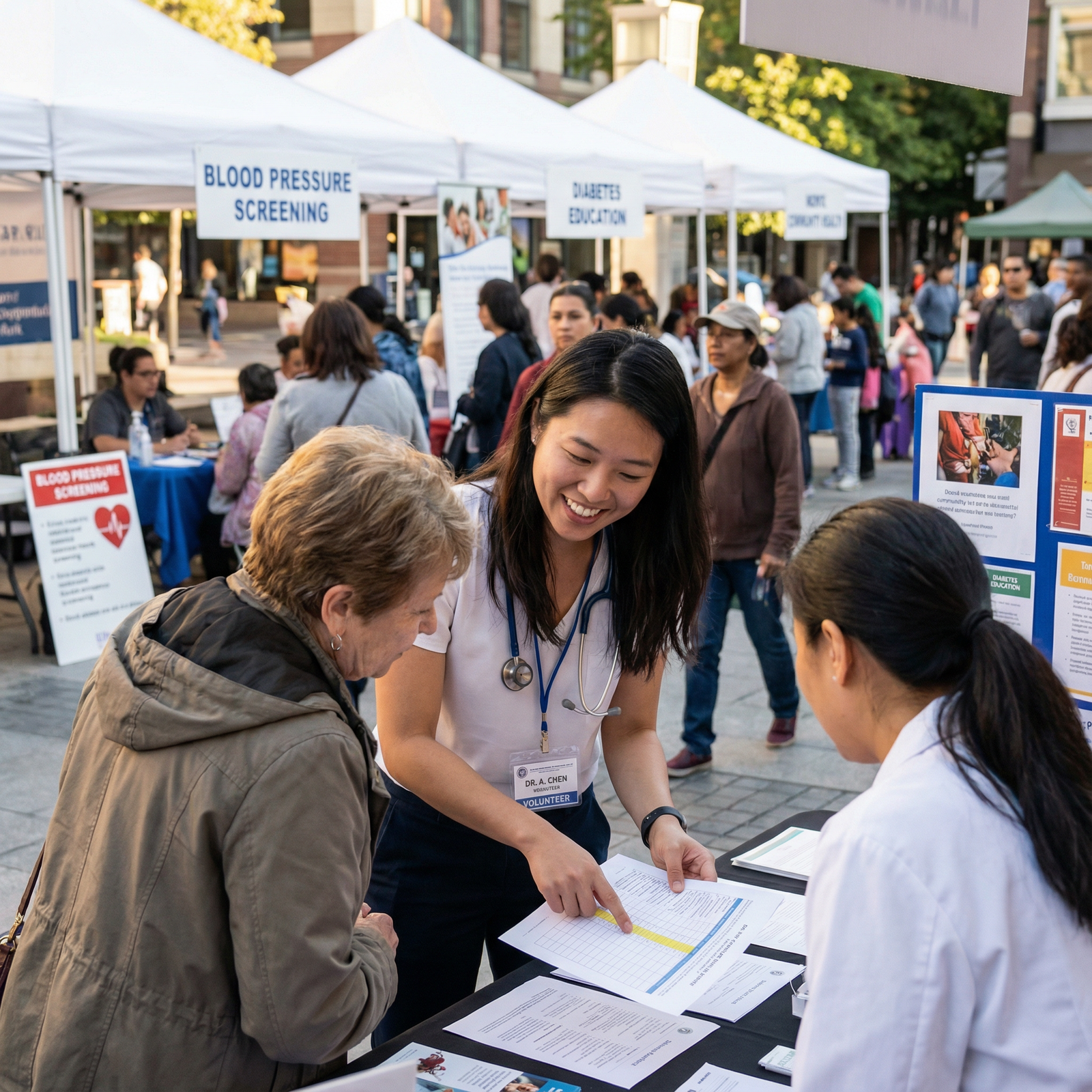
Understanding a Failed Match in the Appalachian Context
Not matching into residency is emotionally heavy and logistically disruptive—especially if you were targeting smaller or more geographically specific programs in Appalachia. Whether you were focused on an Appalachian residency in internal medicine, family medicine, psychiatry, or another field, a failed match does not mean the end of your training path. It does mean you need a clear, strategic recovery plan.
In Appalachia—especially across West Virginia, eastern Kentucky, eastern Tennessee, southwest Virginia, and neighboring areas—programs are often smaller, more community-focused, and deeply invested in serving rural and underserved populations. That creates both challenges and opportunities for the unmatched applicant:
Challenges
- Fewer total residency positions than major urban centers
- Tighter-knit GME communities where reputation and relationships matter
- Limited specialty options in some areas
Opportunities
- Programs that value commitment to region and mission as much as board scores
- Strong interest in candidates with rural ties or long-term plans to stay
- Willingness to consider non-traditional paths and reapplicants who demonstrate growth
If you didn’t match and were especially targeting a West Virginia Kentucky residency or other Appalachian programs, your recovery strategy should be tailored to this regional reality. The goal of this guide is to walk you step-by-step through a structured recovery plan that maximizes your chances in the next cycle—while keeping Appalachia firmly in focus.
Step 1: Immediate Aftermath – Stabilize, Decompress, and Take Inventory
The days right after you learn you didn’t match (or failed to secure a position in SOAP) are emotional. Before you start making big decisions, you need a brief reset and a clear-headed assessment.
Manage the Emotional Hit
You may feel embarrassed, angry, or anxious about the future. Those are normal reactions.
- Give yourself 48–72 hours of “no big decisions” time if possible.
- Talk to a trusted mentor, advisor, or mental health professional.
- Avoid social comparisons—social media match posts do not reflect your worth or potential.
This emotional reset is not a luxury; it’s essential. Your next cycle strategy needs a calm, analytical mindset.
Clarify Your Actual Match Outcome
The phrase “didnt match” covers several scenarios, each with different next steps:
- Did not match and did not secure a SOAP position
- Partially matched (e.g., advanced position but no prelim, or vice versa)
- Withdrew or didn’t fully apply (e.g., applied late, limited programs)
Identify which is true for you, because it informs how aggressive your changes must be.
Conduct a Structured Post-Match Debrief
Do a written debrief with these categories:
Scores and Exams
- USMLE/COMLEX attempts, passes/fails, timing of exams
- Any failures, multiple attempts, or late Step 2/Level 2 scores
Application Strategy
- Number and mix of programs applied to
- Geographic distribution (how many in Appalachia vs elsewhere)
- Degree of competitiveness of the specialties you chose
Academic Record
- Clerkship grades, red flags, leaves of absence, professionalism issues
- Class rank, AOA/Gold Humanism, honors
Portfolio Strength
- Research, quality improvement, leadership, volunteerism
- Specific experiences related to rural health or Appalachia
Application Quality
- Personal statement clarity and consistency with career goals
- ERAS activities descriptions (impact-focused vs generic)
- Strength and relevance of letters of recommendation
Interview Phase
- Number of interviews received and attended
- How you felt your interviews went: structure, answers, professionalism
- Fit with Appalachian residency programs’ stated missions
This debrief becomes your “diagnostic workup” for the failed match. It gives you a problem list to address.
Step 2: Identify Why You Didn’t Match – Common Patterns in Appalachia
Not matching is almost never about a single factor. It’s usually a combination of application strength, strategy, and context.
Common Contributing Factors
Overly Restrictive Geographic Focus
If you applied almost exclusively to West Virginia Kentucky residency programs and a few nearby Appalachian sites, you may simply have limited your odds. Appalachian programs can be quite selective, even in primary care, due to deep applicant pools from those with regional ties.Mismatch Between Specialty Competitiveness and Profile
Applying to highly competitive specialties with borderline or below-average metrics—without a solid backup—raises your risk. This is true everywhere, but particularly in regions with fewer positions per specialty.Insufficient Demonstrated Commitment to Appalachia or Rural Care
Many Appalachian residency programs emphasize mission: serving underserved, rural communities. If your personal statement, CV, and interviews didn’t clearly highlight:- Rural upbringing or experience
- Community engagement
- Long-term intent to practice in similar communities
you may have been perceived as a “flight risk.”
Weak or Generic Application Materials
- Generic personal statements not tailored to primary care or rural priorities
- Activity descriptions that list tasks instead of impact
- Letters from faculty who don’t know you well or are not in your target specialty
Red Flags
- Exam failures or repeated attempts
- Unexplained gaps, professionalism issues
- Poor interview performance or limited preparation
Getting External Feedback
You need outside perspectives—ideally from people who understand both GME and Appalachian health systems:
- Dean’s Office or Student Affairs at your medical school
- Residency program directors or associate PDs (especially in Appalachia if possible)
- Mentors with experience in West Virginia Kentucky residency programs or other Appalachian sites
Ask for specific feedback, not general impressions:
- “If you were on the selection committee, what concerns would you have about my application?”
- “Where do you see misalignment between my goals and my application story?”
- “What single change would most improve my chances next year?”
This honest appraisal is uncomfortable but essential.

Step 3: Designing a One-Year Recovery Plan with an Appalachian Focus
Once you understand the “why” behind your failed match, you need a structured, intentional gap year (or more) plan. This is where you turn a failed match into a professional growth year that specifically appeals to Appalachian residency programs.
Core Principles for Your Recovery Year
Stay Clinically Active or Clinically Adjacent
Time away from patient care can worry program directors. Aim to maintain or deepen clinical engagement.Align Your Activities with Appalachian Priorities
Programs want applicants committed to:- Rural and underserved care
- Substance use disorders and mental health
- Chronic disease in low-resource settings
- Community-based primary care
Create Narratively Coherent Progress
Your year should tell a story: “I identified my gaps, acted intentionally to address them, and am now a stronger, more focused candidate.”
Strong Gap-Year Options for Unmatched Applicants in Appalachia
1. Transitional or Preliminary Year (If Available)
If you partially matched or later secure a prelim/transitional spot:
Pros
- Keeps you in active residency training
- Builds strong new letters from US-based supervisors
- Demonstrates ability to function in a US hospital system
Cons
- May not be available immediately in your desired region
- Can be demanding while you’re also reapplying
If you secure such a position in or near Appalachia, lean into building local connections with GME leadership.
2. Clinical Research or Quality Improvement in an Appalachian Health System
Many teaching hospitals or academic centers in Appalachia (e.g., in Morgantown, Charleston, Lexington, Pikeville, Johnson City, Roanoke) have:
- Rural health research centers
- Substance use and overdose prevention initiatives
- Telehealth expansion projects
- Quality improvement projects in community hospitals
Look for roles like:
- Research assistant or coordinator in family medicine, internal medicine, psychiatry, or pediatrics
- QI coordinator focusing on chronic disease management or rural population health
These positions are powerful because they:
- Keep you in a clinical-adjacent environment
- Plug you into local faculty who can write strong, region-aware letters
- Demonstrate commitment to Appalachian health issues
3. Dedicated Clinical Experience (Hands-On Roles)
Options vary depending on your credentials and visa/citizenship status, but may include:
- Clinical fellow or non-ACGME clinical position in some systems
- Supervised clinical roles such as medical assistant or scribe in rural clinics
- Observerships and externships in Appalachian programs if direct patient care isn’t possible
The key is to:
- Regularly interact with residency faculty and residents
- Demonstrate reliability, professionalism, and teachability
- Build depth in continuity care in underserved populations
4. Service-Year or Community Health Roles
Many Appalachian communities welcome health professionals (even pre-residency) into:
- Community health centers and FQHCs
- Public health departments
- Opioid response teams, harm reduction programs, or mobile clinics
Even if your role is non-clinical, you gain:
- Authentic, on-the-ground understanding of Appalachian health needs
- Powerful stories and experiences that resonate with mission-driven programs
- Potential for unique letters from community leaders and physicians
Action Planning: 12-Month Structure
Consider a month-by-month rough outline:
- Months 1–2: Recovery, debrief, applications for gap-year positions, step exam planning
- Months 3–8: Stable role (research, clinical support, QI, or community health) in or near Appalachia
- Months 5–7: Application rebuild (ERAS documents, targeted outreach, LORs)
- Months 8–10: Application submission and interviews
- Months 11–12: Continued performance in your role, final interviews, contingency planning
Your activities should be consistent enough that supervisors can observe you for at least 3–6 months before writing substantive letters.
Step 4: Rebuilding Your Application for Appalachian Programs
With your gap-year plan underway, shift to systematically upgrading your application elements for the next cycle.
Reassessing Specialty and Geographic Strategy
Ask yourself honestly:
- Is my chosen specialty realistic given my metrics and background?
- Am I willing to pivot to a less competitive specialty (e.g., from radiology to internal medicine or family medicine) to secure training—especially if I feel called to serve in Appalachia?
- Was my prior Appalachian focus too narrow (too few programs) or not well aligned with my application story?
For many unmatched applicants:
- Broadening to include primary care specialties significantly improves chances.
- Remaining open to both Appalachian and non-Appalachian programs may be necessary, even if your long-term plan is to return to the region.
Strengthening Your Personal Statement with Regional Alignment
For Appalachian residency programs, your personal statement should explicitly address:
Why Appalachia or similar communities?
- Personal or family ties
- Prior experiences in rural or resource-limited settings
- Long-term vision to practice in such areas
How your gap year changed you
- New skills, maturity, insight into health inequities
- Specific examples of working with Appalachian or rural populations
Why this specialty in this region
- Explain why, for example, family medicine or internal medicine in Appalachia aligns with your career goals, rather than sounding like a generic choice.
Use concrete experiences:
“During my year working with a federally qualified health center in eastern Kentucky, I cared for patients who drove over an hour for routine visits, balancing chronic disease with economic hardship. These experiences confirmed my commitment to family medicine in rural Appalachia.”
Upgrading Your Letters of Recommendation
Aim for 3–4 strong, recent letters, including:
- At least two specialty-specific letters (e.g., internal medicine, family medicine)
- At least one from your gap-year supervisor, especially if that role is in Appalachia or in a health system that serves rural populations
Coaching your letter writers (appropriately) can help:
- Share your CV and personal statement draft
- Explain your failed match and what you’re doing to grow
- Highlight specific qualities Appalachian programs value: resilience, service, adaptability, cultural humility, dedication to underserved patients
Addressing Red Flags Transparently
If you have exam failures, prolonged timelines, or previous failed match cycles:
- A short explanatory paragraph in your personal statement or a dedicated “additional info” section can be useful.
- Be honest, concise, and focused on what changed:
- Improved study strategies
- Mental health support
- Time management or life circumstances now stabilized
Programs in rural and underserved areas often deeply appreciate candid self-reflection and demonstrated resilience.
Step 5: Strategic Reapplication – Targeting Appalachian and Beyond
With your application rebuilt, it’s time for a data-driven, relationship-based reapplication.
Build an Appalachian-Focused, but Not Appalachian-Only, List
For most unmatched applicants with an Appalachian focus, a balanced strategy works best:
Core Appalachian target programs
- West Virginia, eastern Kentucky, eastern Tennessee, western North Carolina, southwest Virginia, parts of Ohio and Pennsylvania considered Appalachian
- Prioritize programs with strong primary care and rural health missions
Broader geographic safety net
- Community-based programs outside Appalachia that value underserved care
- Programs in smaller cities or less popular regions where your mission-driven profile stands out
Be realistic:
- Apply broadly enough (often 60–100+ programs in primary care specialties for many unmatched applicants).
- Use NRMP and specialty-specific data to calibrate your list.
Proactive Outreach to Programs
Thoughtful, professional outreach can make a difference, especially in regions where programs are smaller and relationships matter:
- Email program coordinators or directors briefly when:
- You have a strong, specific connection to their setting or mission
- Your gap year is directly relevant (e.g., working in their health system or region)
Keep messages concise:
- Who you are and your current role
- Why you are particularly interested in their Appalachian residency program
- One or two concrete ways you align with their mission (e.g., rural roots, current work with opioid use disorder, research in rural health)
Avoid mass, generic emails. Quality over quantity.
Interview Preparation with Regional Awareness
Once interviews arrive, you must be ready to:
- Articulate why you didn’t match previously without sounding defensive
- Show insight into what you changed and how you grew
- Speak knowledgeably about:
- Rural health challenges in Appalachia
- Social determinants of health (transportation, employment, education, broadband)
- Substance use, mental health, and chronic disease in the region
Practice answers to:
- “Tell me about your failed match and how you responded.”
- “Why do you want to train in Appalachia?”
- “What does serving an underserved community mean to you?”
Use specific stories from your gap year and prior experiences.
Long-Term Perspective: Career Success After a Failed Match
Many physicians across Appalachia—from rural family practitioners to academic internists—experienced a failed match or SOAP struggle at some point. Their careers are evidence that:
- A failed match is a detour, not a dead end.
- What matters most is how you respond, grow, and align your path with a clear mission.
Embracing the Appalachian Mission
If you’re drawn to the region:
- Explore long-term roles beyond residency:
- Rural primary care physician
- Community mental health psychiatrist
- Hospitalist in a critical access hospital
- Public health physician or academic leader in Appalachian health
Use your unmatched year to work alongside the people and communities you wish to serve. By the time you reapply, you’ll no longer be someone who just “wants to be in Appalachia”—you’ll be someone already contributing to Appalachian health.
FAQs: Failed Match Recovery for Residency Programs in Appalachia
1. I didn’t match and I really want a West Virginia Kentucky residency. Should I only reapply to programs in that area?
No. While it’s reasonable to prioritize West Virginia Kentucky residency programs if you have genuine ties, applying exclusively to that region significantly limits your chances. For most unmatched applicants, a better strategy is:
- Prioritize West Virginia and Kentucky where appropriate
- Include other Appalachian states and similar rural-focused programs
- Add a broader set of programs nationwide aligned with your specialty and mission
You can still ultimately return to Appalachia after training if you match elsewhere.
2. I’m an unmatched applicant with an exam failure. Can I still match into an Appalachian residency?
Yes, but you’ll need to:
- Show a clear pattern of academic recovery (e.g., strong later scores, strong clinical performance)
- Use your gap year to demonstrate consistency, reliability, and maturity
- Address the failure briefly and honestly, focusing on what changed
- Target programs more open to holistic review, often including mission-driven and rural-focused residencies
Appalachian programs, especially those committed to underserved populations, may be more open to candidates with non-linear paths who show resilience and strong service orientation.
3. Is it helpful to move to Appalachia during my gap year?
If feasible, yes—it can be very helpful. Living and working in the region during your recovery year can:
- Provide authentic exposure to Appalachian communities and health systems
- Allow you to work directly with local clinics, hospitals, and faculty
- Strengthen your case that you are committed to staying in or returning to the region
Just ensure your role is meaningful (research, clinical support, community health) and can lead to strong local letters.
4. What if I still don’t match after reapplying?
If you experience a repeat failed match:
- Reassess your specialty choice—a pivot to a less competitive specialty may be necessary
- Consider expanding geographic openness further
- Seek a detailed review from:
- A dean or advisor familiar with GME
- A program director willing to review your file confidentially
At some point, you may also consider alternate careers in healthcare (public health, research, advanced practice, administration), but many applicants do successfully match on a second or even third attempt with the right strategic changes.
A failed match is painful, but it also creates an opportunity for deep reflection and recalibration. For residency programs in Appalachia—where mission and community are central—you can use this year to prove not just that you are ready for residency, but that you are specifically ready to serve the unique needs of Appalachian patients and communities.