
A failed match in ophthalmology can feel devastating—especially in such a competitive, close‑knit specialty. But not matching does not mean the end of your career in ophthalmology, nor does it define your potential as a future eye surgeon. Many successful ophthalmologists matched on their second (or even third) try and went on to distinguished careers.
This guide will walk you step‑by‑step through what to do immediately after a failed match, how to analyze what went wrong, realistic paths for staying competitive, and how to strategically plan for a successful ophtho match on your next attempt—or how to pivot wisely if you change course.
Understanding a Failed Ophthalmology Match
Before planning recovery, it helps to understand the broader context of the ophthalmology residency match.
Why ophthalmology is uniquely competitive
Ophthalmology is competitive for several reasons:
- Small number of residency positions compared with applicants
- Attractive lifestyle (controllable hours, limited overnight call)
- High procedural and surgical volume
- Mix of clinic and OR, with strong subspecialty opportunities
- Growing demand for vision care with an aging population
In recent years, roughly 15–25% of applicants did not match into ophthalmology in a given cycle. That means many capable, qualified applicants become unmatched applicants each year; you are not alone, and it is not a personal failure.
Common reasons applicants don’t match
Every application is different, but typical patterns include:
Overly competitive rank list
- Ranking only highly competitive programs
- Too few programs ranked
- Geographic over‑restriction (e.g., only one region or city)
Application portfolio gaps
- Limited or late ophthalmology research
- Few or weak letters from ophthalmologists
- No home program or limited ophtho mentorship
- Sparse or average Step scores in a highly competitive pool
Performance in interviews or rotations
- Inconsistent enthusiasm or fit signal
- Poor communication or professionalism concerns
- Lack of clear, genuine story for “Why ophthalmology?”
Systemic barriers
- IMGs or DOs facing additional bias
- Applicants from schools without an ophthalmology department
- Visa requirements limiting interview offers
None of these are insurmountable. They do, however, help inform your recovery strategy.
Emotional impact: normalizing your reaction
When you see “Did not match” on your screen, a few reactions are extremely common:
- Shock, disbelief, or numbness
- Shame, embarrassment, or fear of judgment
- Anxiety about the future and finances
- Anger at the system, advisors, or yourself
All of these are normal. But decisions made in the first 24–72 hours can shape the rest of your year and your next application cycle. Your goal is to recognize the emotional response without allowing it to drive impulsive choices.
Actionable tip (first 48 hours):
- Tell 1–2 trusted people immediately (mentor, close friend, partner). Keeping it secret often magnifies shame.
- Give yourself 24 hours away from major decisions. Walk, exercise, sleep, hydrate.
- Avoid social media comparison; unfollow or mute match‑day content temporarily.
Immediate Steps After a Failed Ophthalmology Match
Once the first emotional wave passes, you move into damage control and information‑gathering.
Step 1: Clarify your status (SF Match + NRMP)
Remember that most ophthalmology residency positions are filled via SF Match, usually earlier in the cycle than the NRMP Match used by most other specialties.
Common scenarios:
Didn’t match ophthalmology, but still in NRMP for prelim/transitional year
- You may still match into a prelim medicine, prelim surgery, or transitional year via NRMP.
- You can still pursue ophthalmology in a future cycle after completing that year.
Didn’t match ophthalmology and also did not match NRMP
- You are completely unmatched and must consider SOAP‑like options, research, or gap‑year positions.
Matched prelim year but not ophtho
- You’ll complete your prelim year while reapplying to ophthalmology or pivoting.
Clarifying this helps define your time, income, and visa status for the upcoming year.
Step 2: Immediately contact key mentors
Within 3–5 days, schedule brief discussions with:
- Your ophthalmology research mentor
- Your department chair or program director (if your school has ophtho)
- A student affairs dean or residency advisor
In those conversations:
- Share your results honestly: “I didn’t match ophthalmology and my NRMP status is X.”
- Ask for:
- Honest assessment of your application
- Ideas for short‑term options (research positions, prelim year, fellowships, etc.)
- Potential networking contacts or advocacy for next cycle
Important: You need candid feedback, not reassurance. Encourage honesty by saying:
“I’m trying to come back as a stronger applicant next year. I’d really appreciate if you could be very direct about where my application fell short.”
Step 3: Decide whether to pursue SOAP or scramble options
If you are also unmatched in NRMP, you’ll be thinking about SOAP (Supplemental Offer and Acceptance Program) style options or post‑SOAP scrambling.
SOAP‑like opportunities might include:
- Categorical positions in less competitive specialties (e.g., prelim medicine spots, categorical internal medicine, family medicine, pediatrics)
- Preliminary or transitional year spots that give you clinical credibility and income
- Rare categorical ophthalmology positions that open late (less common, but worth watching communications from SF Match and program directors)
Your decision here will depend on:
- How strongly you want to pursue ophthalmology at all costs
- Your financial and visa constraints
- Willingness to do one or more “bridge” years before starting ophtho
If your sole long‑term goal is ophthalmology, a prelim medicine or transitional year is often preferable to permanently switching into another specialty during SOAP—unless your mentors strongly feel your re‑match odds are low.
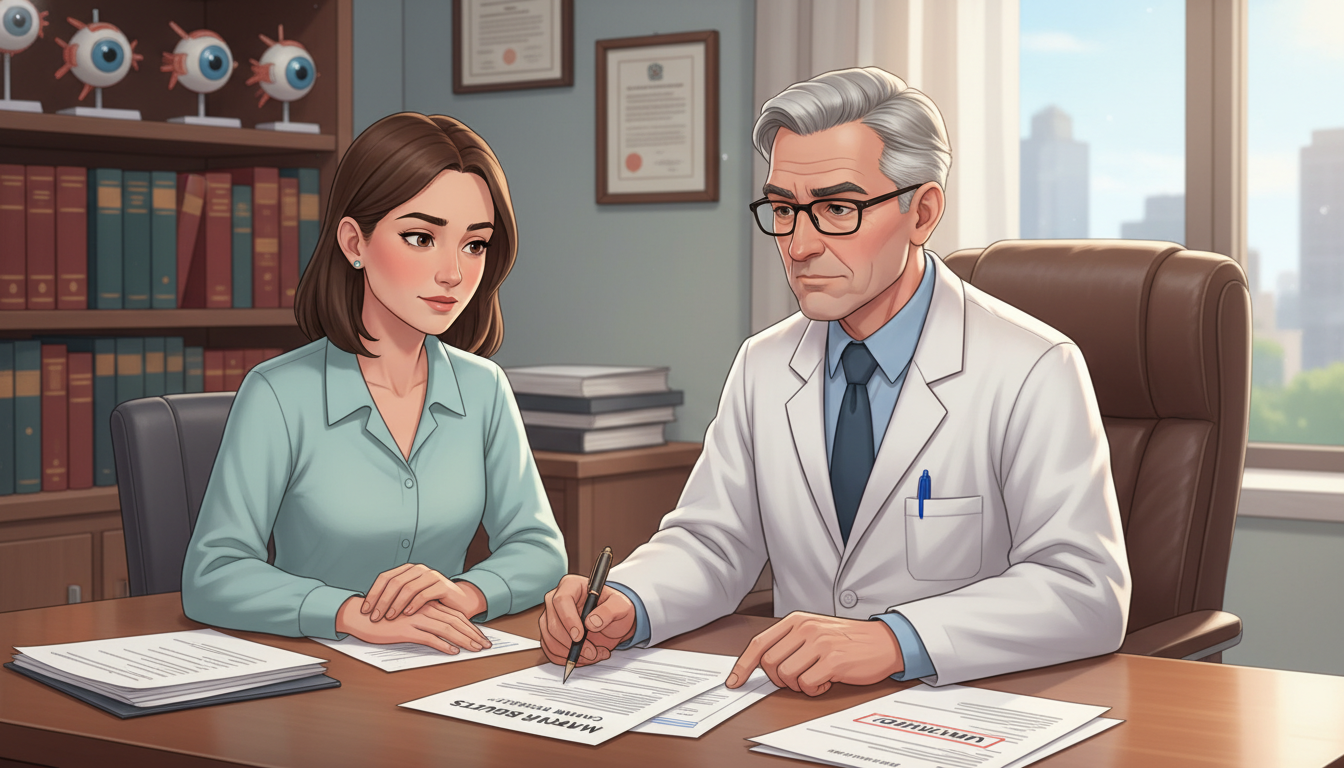
Forensic Review: Why You Didn’t Match and What to Fix
The core of failed match recovery in ophthalmology is a forensic review of your application. This is not about blame; it’s about building a specific, actionable plan.
1. Application metrics: where did you stand?
Review objectively:
- USMLE/COMLEX scores
- Medical school performance and class rank
- AOA or honors status (or lack thereof)
- Number and type of ophthalmology away rotations
- Research output (abstracts, posters, publications) in ophtho
- Number and perceived strength of letters from ophthalmologists
Create a table with:
- Strengths (e.g., Step 2 250+, 2 publications)
- Weaknesses (e.g., no AOA, late interest in ophtho, no away rotations)
- Neutral factors (average ratings, general letters)
Ask your mentors:
- “Did my metrics fall below the typical thresholds for our matched applicants?”
- “Where did programs likely screen out my application?”
2. Letters of recommendation and institutional support
Letters from influential ophthalmologists are critical in the ophtho match:
- Did you have at least 2–3 letters from ophthalmologists who know you well?
- Did any letter potentially raise concerns (e.g., professionalism, communication)?
- Did your home program or mentors actively advocate for you with phone calls or emails?
You may not see your letters directly, but mentors can sometimes tell you:
- Whether your letters were “good” vs “exceptional”
- If any concern existed about your clinical performance or behavior
3. Research, scholarly activity, and timing
In a small field like ophthalmology:
- Research signals interest and commitment
- Strong research mentors can vouch for you personally
- Productivity can distinguish you in a competitive pool
Ask:
- Did you start ophtho research early enough (ideally by MS2–MS3)?
- Did you produce tangible outputs (posters, presentations, papers)?
- Were your projects ongoing at the time of application, limiting visible productivity?
If your research was limited or late, a dedicated ophthalmology research gap year can be one of the most powerful ways to repair your application.
4. Interview performance and perceived fit
Not matching after many interviews often suggests:
- Interview skills or communication issues
- Concerns about professionalism
- Mismatch between your stated goals and program strengths
- Inconsistent demonstration of genuine interest in ophthalmology
Try to get feedback:
- Ask: “Based on any back‑channel feedback or impressions, do you think my interviews were a limiting factor?”
- Reflect on your interview experiences:
- Were you consistently articulate about your story and goals?
- Did you struggle with unexpected or behavioral questions?
- Were there any awkward moments or miscommunications?
If interviews were a problem, plan for:
- Focused interview coaching (student affairs, mentors, or professional services)
- Mock interviews with ophthalmology faculty
- Practicing concise, compelling narratives about your journey and resilience after a failed match
Building a Strong Recovery Year: Strategic Options
Once you understand why you didn’t match, you can choose one or more paths to maximize your chances in the next ophtho match.
Option 1: Dedicated ophthalmology research year
This is one of the most common and effective strategies for the unmatched applicant who still wants ophthalmology.
Ideal if:
- Limited prior ophtho research
- No or minimal publications
- No home ophtho program or weak institutional presence
- You can secure a position at a strong academic eye center
What a good ophtho research year looks like:
- Full‑time role in an ophthalmology department (clinical research, lab research, or both)
- Close mentorship under recognized faculty in your area of interest
- Opportunities to:
- Co‑author manuscripts and abstracts
- Present at regional/national meetings (e.g., ARVO, AAO)
- Attend grand rounds and academic conferences
- Shadow in clinic and OR (when allowed)
How it strengthens your application:
- Enhances your CV with tangible outputs
- Demonstrates persistence and commitment after a failed match
- Creates new, strong letters of recommendation
- Raises your visibility with program leaders who may later advocate for you
Practical steps:
- Email program coordinators and research‑heavy faculty at ophtho departments (especially those where you’d like to match).
- Attach CV + brief cover email: emphasize your interest in ophthalmology, acknowledge you’re taking a dedicated research year, and explain your goals.
- Time your start date to allow at least 9–12 months of research before reapplying, so some outputs are visible in your new application.

Option 2: Prelim or transitional year with strategic ophtho engagement
If you matched a prelim or transitional year (or obtain one after SOAP), you can use it strategically.
Advantages:
- Steady income and clinical experience
- Maintains your clinical skills and builds strong intern evaluations
- Demonstrates maturity and team‑based professionalism
Maximizing this year for ophtho:
- Choose rotations that allow for electives in ophthalmology if possible
- Maintain contact with ophtho mentors and research projects
- Ask for letters from internal medicine or surgery attendings who can speak to your work ethic, reliability, and clinical growth
- If your hospital has an eye service, volunteer to help manage eye consults or outpatient clinics
Programs sometimes see:
“This applicant handled a busy intern year extremely well while staying engaged in ophtho”
as a strong positive signal.
Option 3: Non‑ophtho clinical position with a plan to reapply
Sometimes applicants, especially international graduates, find:
- Non‑categorical internal medicine or preliminary surgery spots
- Hospitalist or research‑associate roles post‑graduation (depending on country and regulations)
If you take such a position:
- Be explicit with yourself and mentors: “I am doing this to grow clinically while I reapply to ophthalmology.”
- Keep an ophtho thread alive: research, shadowing, scholarly work.
- Guard against “drifting” with no reapplication plan or timeline.
Option 4: Formal research fellowship or master’s degree
Some pursue:
- An ophthalmology clinical research fellowship
- An MS, MPH, or PhD with an ophthalmology or vision science focus
Best when:
- You’re genuinely interested in an academic career
- You can secure funding or support
- You’re prepared for 1–2 years of scholarly work
These pathways build a powerful academic profile, but they are more time‑intensive.
Reapplying to Ophthalmology: Strategy for the Second (or Third) Attempt
When you’re reentering the ophtho match after a failed cycle, your application must show clear improvement and insight, not just passage of time.
1. Crafting the narrative: owning the failed match
Your personal statement and interviews should:
- Acknowledge, briefly but openly, that you didn’t match previously
- Frame the year since as a period of:
- Growth
- Skill acquisition
- Deepened commitment to ophthalmology
- Avoid bitterness or blame
Example framing line:
“After not matching into ophthalmology on my first attempt, I made a deliberate choice to dedicate the following year to ophthalmology research and clinical growth, confirming that this is unequivocally the field in which I want to build my career.”
Programs are often impressed when applicants demonstrate resilience, humility, and insight.
2. Expanding and balancing your program list
A common reason people didn’t match is being too restrictive.
For a reapplicant:
- Apply broadly to virtually all ophthalmology programs unless there is a clear reason not to.
- Avoid overconcentration in only top‑tier academic centers.
- Include community‑based or hybrid programs, smaller programs, and different geographic regions.
Ask your mentors:
- “Given my updated profile, what range of programs should I realistically target?”
- “Could you help me identify programs more open to reapplicants or IMGs if applicable?”
3. Strengthening letters of recommendation
For reapplicants, your letters should:
- Include at least one or two new, strong letters reflecting your growth since your last application
- Ideally feature:
- A research mentor who can speak to your scholarly work and reliability
- An ophthalmology clinician who has seen you in clinic/OR
- A supervisor from your intern year or clinical role (if you did one)
Ask letter writers explicitly:
“Would you feel comfortable writing a strong, supportive letter for my ophthalmology reapplication?”
This gives them an opportunity to decline if they have reservations—protecting you from weak letters.
4. Updating your CV and ERAS/SF Match profile
Highlight:
- New research outputs (with clear roles and contributions)
- Presentations, posters, and conference attendance
- New leadership or teaching roles (e.g., supervising students in clinic, teaching sessions)
- Awards or recognitions during your research or clinical year
Ensure your timeline has no unexplained gaps. If you had months between graduation and your next role, briefly explain (e.g., visa, family, relocation, exam prep).
5. Interview execution: targeted practice
This time, you can anticipate questions about your previous failed match:
- “You applied to ophthalmology last year. What have you done since?”
- “What did you learn from not matching?”
- “How do you know ophthalmology is still the right field for you?”
Prepare concise, honest responses that:
- Take responsibility
- Show growth
- Emphasize renewed commitment
Do multiple mock interviews with:
- Ophthalmology faculty
- Residents who recently matched
- Career advisors
Record yourself if possible; watch for filler words, long tangents, or defensiveness.
When Continuing Ophthalmology May Not Be the Best Path
It’s also important to acknowledge that, for some, the best outcome after a failed match in ophthalmology may be a conscious pivot to another specialty.
When to consider pivoting
Factors suggesting a pivot might be wise:
- Extremely limited interview offers even after a strengthened application
- Multiple failed cycles despite significant improvement
- Mentors you trust advising that probability of future ophtho match is very low
- Realization that aspects you love (e.g., continuity clinic, surgery, procedures) exist in other fields you enjoy
- Financial, visa, or personal constraints that make multi‑year reapplications unsustainable
This decision is deeply personal. Pivoting is not failure; it is strategic adaptation.
Choosing an alternative specialty
Fields that some former ophtho applicants find fulfilling include:
- Internal Medicine (with subspecialties like rheumatology, oncology, etc.)
- Neurology (neuro‑ophthalmology adjacent interests)
- Radiology (image‑heavy, diagnostic focus)
- Anesthesiology (procedural, OR‑based)
- Family Medicine or Pediatrics (if motivated by continuity and primary care)
- Pathology (for those drawn to histology, ocular pathology collaborations)
If you pivot:
- Apply the same level of reflection: “Why this field? How does it align with my strengths and interests?”
- Leverage your ophtho experience as a unique asset, not a liability.
- Reframe your story: you learned a lot from pursuing ophthalmology, and now you’re channeling that knowledge into a field that fits your evolving goals.
Practical Tips to Protect Your Well‑Being and Professionalism
Regardless of the path you choose, preserving your mental health and reputation is crucial.
Coping with comparison and stigma
- Avoid spending excessive time on forums that amplify anxiety.
- Share your story with a small circle of supportive peers rather than the entire class if that feels safer.
- Remember that by the time you are an attending, no one will care whether you matched on the first try.
Maintaining professionalism
- Do not publicly criticize specific programs or the match system.
- Be cautious about what you post online, especially in the weeks after failing to match.
- Continue to show up fully for patients and colleagues in any clinical role you hold.
Using this experience to grow
Many physicians later look back at an early failure to match as:
- A catalyst for improved work ethic
- Increased empathy for patients and colleagues facing setbacks
- Motivation to mentor students going through similar challenges
Document your growth, not just for applications, but for your own reflection.
FAQs: Failed Match Recovery in Ophthalmology
1. I didn’t match ophthalmology but matched into a categorical non‑ophtho specialty. Can I still switch later?
Switching from one categorical residency to ophthalmology is possible but difficult, especially after PGY‑1. Programs rarely have unexpected open PGY‑2 ophtho spots. If you are very serious about ophthalmology, it is better to:
- Complete a prelim or transitional year and reapply to ophtho,
rather than locking yourself into a categorical specialty you aren’t committed to, unless you’re ready to pivot.
Discuss with both specialties’ program directors before making any decision.
2. Does being an unmatched applicant make programs automatically reject me in the next cycle?
No. Many programs regularly interview and rank reapplicants, and a significant fraction of residents in ophthalmology matched on a second attempt. What matters most is:
- Evidence of clear improvement (research, letters, clinical work)
- A mature, reflective explanation of your previous outcome
- Strong advocacy from respected mentors
Reapplicants who submit essentially the same application as last year are at much higher risk of another failed match.
3. Is a dedicated research year better than doing a non‑ophtho clinical year?
Both can work, but a dedicated ophthalmology research year often has a more direct impact on your ophtho application, especially if you:
- Lack ophtho publications
- Don’t have strong letters from ophthalmologists
- Come from a school without a home ophtho program
A clinical year (prelim or transitional) is particularly valuable if:
- You want or need an income
- You need to strengthen your clinical performance narrative
- You already have decent research and just need more time and maturity
Many applicants successfully combine both over two years: research first, then intern year while reapplying.
4. I’m an IMG who didn’t match ophthalmology. Are my chances realistically too low to keep trying?
Not necessarily, but the bar can be higher. To remain competitive, IMGs typically need:
- Strong US clinical experience (ideally in ophthalmology)
- High USMLE scores and no major red flags
- Robust ophtho research with publications and U.S. mentors
- Visa status that programs commonly sponsor
Discuss your specific situation with mentors who regularly work with IMGs in ophthalmology. They can provide a more realistic assessment and help you decide whether one strong reapplication year is warranted—or whether an alternative specialty where IMGs match more frequently may be a better long‑term plan.
A failed match in ophthalmology is painful, but it is not a permanent label. With a clear‑eyed analysis, purposeful use of your recovery year, honest mentorship, and a thoughtful narrative, you can either rebuild a compelling application for the next ophtho match or confidently pivot to a path that fits you better.
Either way, your value as a future physician is far greater than one match result screen.