Understanding a Failed Match in Global Health Context
Not matching into residency is emotionally brutal, especially when you have a clear vision of a global health–focused career. But a failed match does not mean the end of your path in international medicine or global health residency track programs. It means your path will be less linear, more strategic, and—if you handle this well—often more resilient.
In global health, resilience, adaptability, and systems thinking are core professional competencies. How you respond to being an unmatched applicant may ultimately strengthen your candidacy and your effectiveness as a future global health physician.
This guide will walk you through:
- What a failed match means in the context of global health careers
- Immediate steps to take in the weeks after results
- Strategic options for the next 12–24 months
- How to build a compelling global health profile
- Reapplying: tailoring your strategy for global health–oriented programs
- Alternatives outside the traditional residency pathway if you decide not to reapply
Throughout, you’ll see practical examples, sample timelines, and specific, actionable strategies for applicants interested in global health, international medicine, and related fields.
Step 1: Immediate Response – Stabilize, Debrief, and Reframe
1.1 Allow yourself to process the emotional impact
Learning you didn’t match is a profound loss: of expectations, of plans, and often of identity. Before you start planning a recovery, you need a brief period to process:
- Give yourself a few days of space from decision-making if possible.
- Talk to trusted peers, family, or mentors.
- Avoid making irreversible decisions (e.g., abandoning medicine entirely) in the first 48–72 hours.
Global health often demands emotional stamina in crisis settings. Use this experience as practice in emotional regulation and reflective practice—skills that will matter later.
1.2 Quickly clarify your formal options
Within the first week, gather key information:
SOAP (if applicable):
- If you’re in the US system and eligible, the Supplemental Offer and Acceptance Program (SOAP) may offer positions, including in programs with global health exposure.
- Be realistic: global health residency track positions are rarely available through SOAP, but categorical or prelim positions in Internal Medicine, Family Medicine, Pediatrics, or Psychiatry—fields that strongly support global health careers—might be.
Visa/immigration status (for IMGs or international graduates):
- How long can you remain in your current country without a training position?
- What are the timelines and limits for new visas (e.g., J-1, H-1B)?
- Are there practical options in your home country or region?
Licensing timelines:
- Confirm expiration dates for USMLE/COMLEX scores or local licensing exam validity.
- Know your deadlines for ECFMG certification, state licensure milestones, etc.
Write these down. Viewing your situation as a structured problem with constraints helps you shift from grief to strategy.
1.3 Conduct a rapid “why I didn’t match” assessment
Before you can recover, you need an honest diagnosis. This should be more than “The Match is competitive.”
Consider the following dimensions:
Academic metrics
- Exam scores (USMLE/COMLEX or local equivalent; first attempts vs multiple attempts)
- Class rank, honors, fail/remediation history
- Recency of graduation (e.g., “YOG” more than 5+ years is a known barrier in many systems)
Application strategy
- Number and range of programs applied to
- Overly narrow specialty selection (e.g., only one very competitive field with no backup)
- Lack of geographic flexibility
- Application timing and completeness
Global health “fit” narrative
- Did your personal statement clearly articulate why you want global health and what you’ve done so far?
- Did your experiences match your stated goals, or did they feel aspirational but unanchored?
- Did you come across as interested mostly in travel rather than systems, equity, and long-term engagement?
Letters of recommendation and reputation
- Were your letters strong, specialty-specific, and recent?
- Did you have at least one letter from someone who could credibly comment on your global health engagement (or your potential to develop in this area)?
Interview performance
- Did you get interviews but not match? That suggests interview or ranking strategy issues.
- Did you struggle to connect your global health interests to concrete residency goals?
- Did you inadvertently signal you were more interested in leaving for international work than in being a reliable resident at home?
If possible, schedule brief debriefs with:
- A program director (PD) or associate program director where you interviewed
- A dean, advisor, or IMG mentor familiar with your context
- A global health faculty member who understands both the clinical and global aspects
Their feedback will shape your recovery plan.

Step 2: Design a 12–24 Month Recovery Plan Focused on Global Health
The period after a failed match can become the most formative part of your global health career if approached strategically. Instead of “killing time,” you are building a portfolio that demonstrates commitment, growth, and relevance.
2.1 Clarify your ultimate goal in global health
Not all global health careers require the same training path. Ask yourself:
- Do I want to be a clinician-educator running training programs abroad?
- Do I want to work in policy, implementation science, or health systems strengthening?
- Am I drawn more to clinical work with underserved populations (domestic or international)?
- Am I particularly interested in fields like HIV, TB, maternal-child health, refugee health, or disaster response?
Answers to these questions will help you choose:
- Specialty (e.g., Internal Medicine, Family Medicine, Pediatrics, OB/Gyn, Psychiatry, EM, Surgery)
- Programs with an established global health residency track or strong international medicine partnerships
- Ancillary degrees or fellowships you might eventually seek (e.g., MPH, MSc Global Health)
Write down a one-sentence career statement, such as:
“I want to become a family medicine physician with a focus on community-based primary care and health systems in low-resource settings, splitting my time between clinical care, training local providers, and implementation research.”
Your entire recovery plan should flow from that sentence.
2.2 Decide: Reapply broadly, refocus, or pivot specialty
Using your self-assessment, choose among three broad strategic directions:
Reapply to the same specialty with a strengthened application
- Best if: Your profile is near-competitive and your weakness is primarily lack of differentiation or weak global health narrative/experiences.
- Example: An unmatched applicant in Internal Medicine with good scores and some global health electives but limited research or continuity of involvement.
Refocus within the same specialty toward global health–friendly programs
- Best if: You applied mostly to academic or prestige programs and under-applied to community or mid-tier programs with strong global health tracks.
- Example: You initially targeted only big-name academic IM programs with global health tracks; next cycle you include community-based programs with robust immigrant/refugee health clinics, even if they don’t brand as “global health.”
Pivot to a different, more accessible specialty that still supports global health
- Best if: Your original specialty is extremely competitive given your profile (e.g., derm, ortho, plastics), or your exam metrics are significantly below average.
- Example: An applicant who didn’t match into EM or Surgery but is genuinely open to Family Medicine, which offers broad global health opportunities and more match openings.
Being unmatched sometimes frees you to align your training more closely with the kinds of global health roles that need you most.
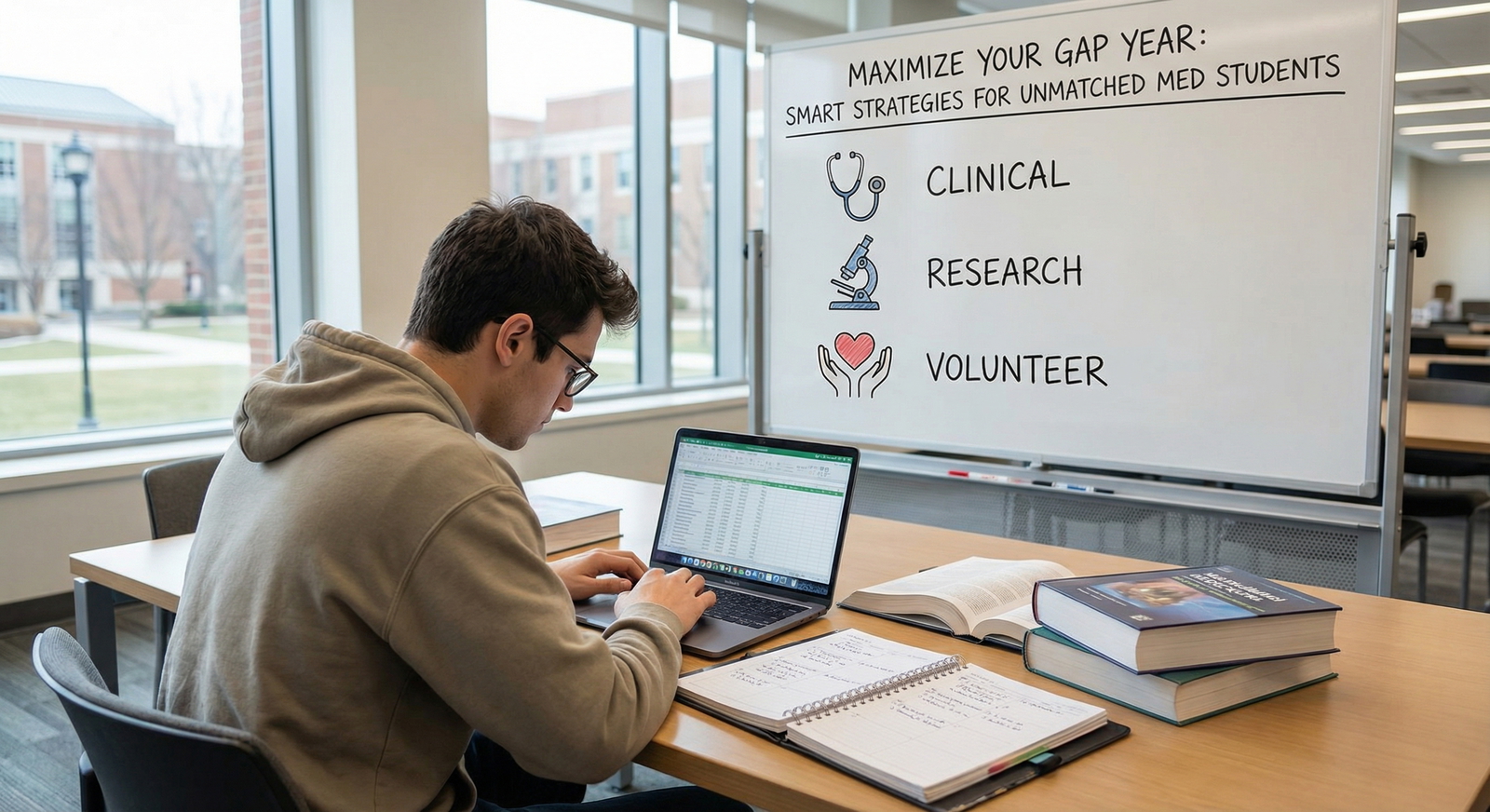
2.3 Build a structured gap-year (or two-year) plan
Aim for a plan that includes at least three components:
Clinical or quasi-clinical engagement
- US/Canada: clinical research coordinator, hospitalist scribe, clinic assistant, patient navigator, free clinic volunteer
- Other systems: junior doctor posts, locum shifts, NGO clinical roles (within your scope and license)
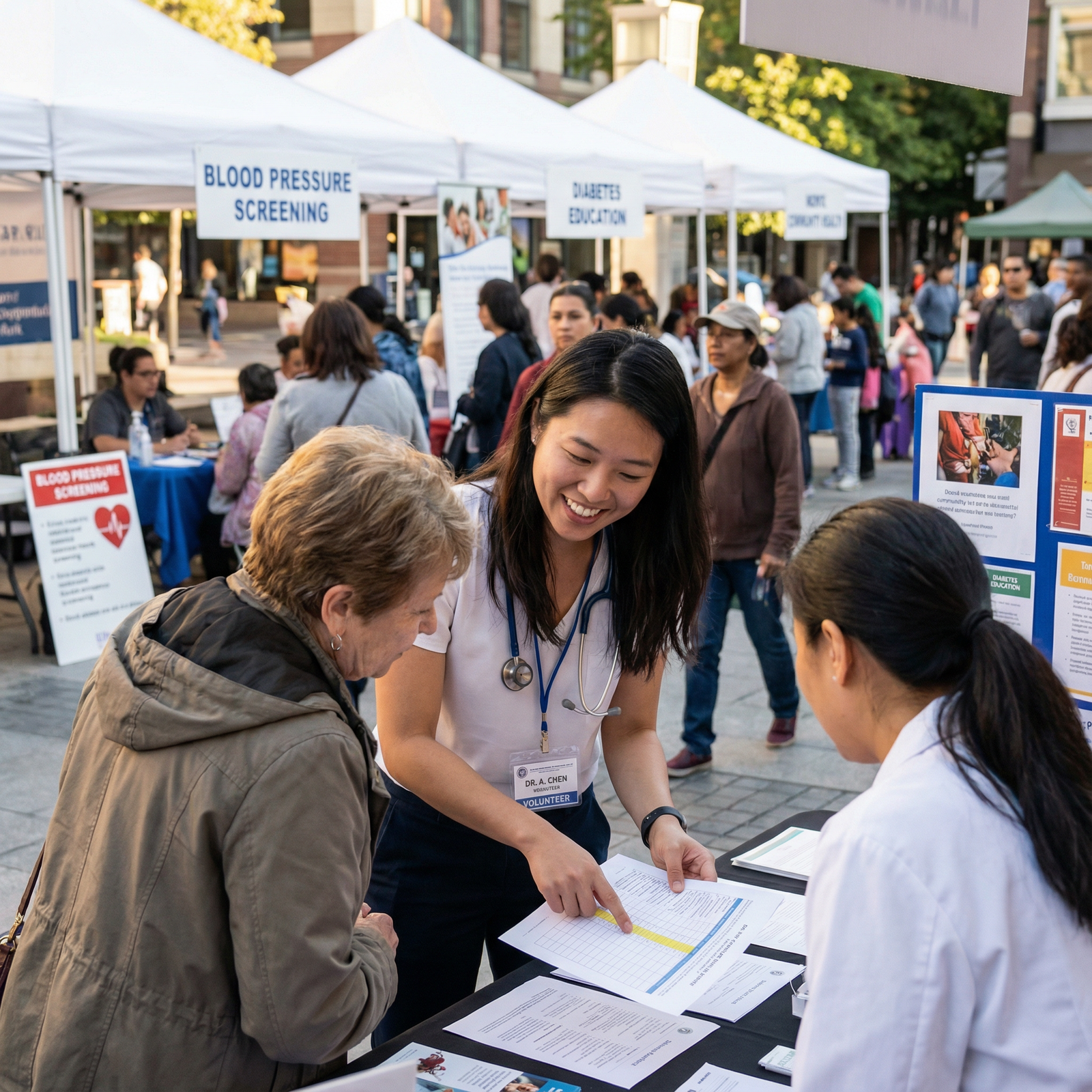
- Focus on settings that serve underserved, immigrant, refugee, or low-resource populations—this is “domestic global health.”
Global health–relevant experiences
Examples:- Work with an NGO focused on infectious diseases, maternal-child health, or primary care
- Join implementation or operational research on vaccination, health systems, or community health worker programs
- Collaborate with local community organizations for migrants, refugees, or indigenous populations
- Telehealth projects for remote or low-resource clinics
Be careful: Short, superficial “voluntourism” is looked upon skeptically. Seek roles with:
- Clear supervision
- Ethical standards
- Sustainability and continuity
- Defined responsibilities and goals
Scholarly / academic work
- Global health–focused quality improvement projects
- Data analysis for epidemiology studies
- Manuscripts, abstracts, posters, or presentations
- Policy briefs or white papers with established teams
Set SMART goals (Specific, Measurable, Achievable, Relevant, Time-bound), such as:
- “Within 12 months, present at one global health conference and submit at least one manuscript related to refugee health.”
- “By the next match cycle, complete one certificate course in global health or implementation science.”
Step 3: Strengthening Your Global Health Portfolio
3.1 Formal training and certificates in global health
While an MPH or MSc in Global Health can be valuable, it’s not always necessary—and it can be expensive. Consider:
Shorter options:
- University-based global health certificates (6–12 months, often online)
- Courses in:
- Implementation science
- Epidemiology and biostatistics
- Health systems strengthening
- Monitoring and evaluation
- WHO / online platforms (e.g., open WHO, Coursera, edX) on:
- Outbreak response
- Humanitarian health
- Non-communicable disease management in low-resource settings
When you list these, explicitly link them to your residency and global health goals in your personal statement and interviews.
3.2 Build continuity, not just “one-off” experiences
Program directors in global health–oriented residencies look for:
- Evidence that you stick with communities, not just short “medical trips”
- Deep, long-term relationships with organizations or populations
- Roles where your responsibility and skill set evolved over time
Example trajectories:
Domestic trajectory:
Year 1: Volunteer at a free clinic serving uninsured immigrants →
Year 2: Become clinic coordinator, lead a QI project on hypertension control →
Year 3 (residency): Use this experience to design a residency QI or community project.International trajectory:
Year 1: Join a university-affiliated global health research project in East Africa →
Year 2: Take on data management responsibilities and help develop training materials for local staff.
In your applications, highlight longitudinal involvement more than the total number of countries visited.
3.3 Research and publications in global health
You don’t need a first-author NEJM paper to be competitive. What matters most is:
- Relevance to global or underserved populations
- Your role (data collection, analysis, manuscript drafting)
- Evidence of perseverance and follow-through
Actionable ways to get involved:
- Reach out to global health centers at academic institutions (even if you are not enrolled) with a succinct email:
- Brief background
- Skills (e.g., statistics, languages, field experience)
- Interest in unpaid remote assistance on ongoing projects
- Connect with faculty who have ongoing projects in:
- HIV/TB infection control
- Maternal mortality reduction
- Non-communicable disease (NCD) management in low-resource settings
- Refugee or migrant health
You can also consider:
- Case reports from unique clinical experiences in low-resource or refugee settings
- Implementation or quality improvement projects in community clinics
3.4 Language and cultural competence
Language skills and cultural competence are core assets in global health and international medicine:
- Strengthen or start a language widely used in global health (e.g., French, Spanish, Portuguese, Swahili, Arabic) or one common in your local immigrant communities.
- Participate in cultural competence or trauma-informed care training.
- Use your language abilities in clinical or community volunteer settings; document this in your CV.
This not only helps you in future international placements but also makes you valuable in residencies that serve diverse populations.

Step 4: Rebuilding Your Application as an Unmatched Applicant
After a failed match, programs will naturally ask: “What changed?”
Your job is to make the answer clear, impressive, and honest.
4.1 Addressing the “didn’t match” status
Your status as an unmatched applicant should be:
- Acknowledged briefly
- Put into context
- Followed immediately by evidence of growth
In your personal statement or ERAS “experiences” section, you might say:
“After not matching in the 2025 cycle, I used the subsequent year to deepen my clinical and global health engagement. I worked as a clinical research coordinator in a primary care clinic serving largely uninsured immigrant populations, led a quality improvement project on diabetes management, and completed a certificate in global health implementation strategies. This year confirmed my commitment to Family Medicine and to a career focused on health equity and sustainable systems of care.”
Avoid sounding defensive or bitter. Frame this as a period of deliberate growth.
4.2 Refining your personal statement for global health
Your personal statement should:
- Lead with a specific, grounded global health story
- Example: A patient in a refugee clinic whose care was constrained by language, legal status, and system barriers.
- Show understanding of global health as more than travel
- Discuss health systems, equity, social determinants, or policy.
- Connect your experiences to your chosen specialty
- Why is Family Medicine/IM/Peds/etc. the best platform for your global health vision?
- Describe your growth since the failed match
- Be explicit about new skills, roles, and insights.
- Align with the program type you’re applying to
- For a program with a global health residency track: emphasize long-term interest in structured global health training.
- For a community program without a formal track: emphasize your commitment to underserved, diverse populations where you train.
4.3 Optimizing letters of recommendation
Strong letters can partly offset previous weaknesses:
Seek at least one letter from someone who supervised you in global health–relevant work (clinic, NGO, research) and can:
- Comment on your professionalism and reliability
- Describe how you work in resource-limited settings
- Highlight your adaptability and cultural humility
Ensure you still have:
- Two or more letters from clinical supervisors in your chosen specialty
- Letters that are recent (ideally within 1 year) and directly address your readiness for residency
When you request letters, provide:
- A brief summary of your unmatched status and what you’ve done since
- Your CV and draft personal statement
- A bulleted list of 3–5 points you hope they can mention (e.g., global health engagement, leadership, resilience)
4.4 Application strategy: where and how to apply
If global health is important to you, but you’re recovering from a failed match, balance realism and aspiration:
Use a tiered list approach
- Tier 1: Programs with established global health residency tracks or strong international medicine experiences. Apply to a reasonable number, understanding they remain competitive.
- Tier 2: Community and smaller academic programs that serve diverse, underserved populations and have faculty with global/underserved interests, even if not formally branded.
- Tier 3: Safety programs where your metrics are solidly above their typical thresholds, even if they have limited explicit global health focus.
Targeted communication
- For programs with a global health residency track, consider a polite, concise email to the program director or global health track director:
- Introduce yourself and your background
- Highlight key global health and underserved experiences
- Briefly acknowledge that you previously didn’t match, and explain one key improvement
- Express specific interest in their program’s structure, partnerships, or track
- For programs with a global health residency track, consider a polite, concise email to the program director or global health track director:
Geographic flexibility
- Be open to training in areas that may not seem glamorous but have:
- Large immigrant or refugee populations
- Rural health disparities
- Opportunities to do meaningful domestic global health work
- Be open to training in areas that may not seem glamorous but have:
4.5 Preparing for interviews after a failed match
Expect questions like:
- “Can you tell us about your last application cycle?”
- “What did you learn from being an unmatched applicant?”
- “How did you spend your time since the failed match?”
Effective responses:
- Be concise, non-defensive, and honest.
- Emphasize growth, reflection, and concrete actions.
- Avoid blaming external systems or people; acknowledge competitiveness and any past errors in judgment or strategy.
- Link your growth to qualities that matter for residency:
- Resilience
- Professionalism
- Autonomy and initiative
- Commitment to underserved populations
Example answer:
“I applied primarily to highly competitive academic Internal Medicine programs with global health tracks and did not include a sufficient number of community or mid-tier programs. In retrospect, I see that my application strategy did not reflect a realistic understanding of my overall competitiveness. Over the last year, I worked full-time in a community health clinic serving migrant and refugee patients, coordinated a quality improvement project on hypertension control, and completed a global health implementation course. This experience has not only strengthened my application but also deepened my conviction that my primary goal is to become an excellent internist for underserved populations, whether or not I am in a formally branded global health track.”
Step 5: Alternative and Long-Term Paths in Global Health
Some applicants, after one or more failed matches, decide to:
- Limit their attempts, or
- Pivot partially or completely away from traditional residency
You still have meaningful options in global health and international medicine–adjacent careers.
5.1 Non-residency professional roles
Possible directions:
- Global health program management (NGOs, international organizations, local health departments)
- Epidemiology / public health roles (with additional training or an MPH)
- Implementation science or health systems research as a coordinator or analyst
- Monitoring and evaluation specialist for global health projects
- Health policy / advocacy for global health and equity organizations
While many of these paths are stronger with clinical training, they are not exclusively restricted to fully trained physicians, especially if you bring field experience and strong analytical or language skills.
5.2 Additional degrees and training
Consider advanced degrees that complement your medical background:
- Master of Public Health (MPH) with global health, epidemiology, or health policy concentration
- MSc in Global Health, Health Systems, or Epidemiology
- Diplomas in Tropical Medicine, Refugee Health, or Humanitarian Medicine (in some regions)
If you pursue a degree:
- Be intentional: choose programs with strong field placements, NGO partnerships, or research networks, not just academic credentials.
- Recognize this may improve your profile for global health jobs and, in some cases, indirectly help with future residency applications if you decide to try again.
5.3 International alternatives
Depending on your citizenship, qualifications, and language skills, you might explore:
- Training opportunities in other countries that recognize your degree and exams (e.g., some European, Latin American, or Asian systems)
- Positions in international NGOs or global health consortia as a clinician or medical officer (where your degree is recognized)
These paths often have their own complex regulatory and immigration requirements; careful research and consultation with advisors are crucial.
Frequently Asked Questions (FAQ)
1. I didn’t match and want a global health career. Should I still prioritize programs with a global health residency track?
If this is your first failed match and your metrics are reasonably competitive, you can still include a substantial number of programs with a global health residency track. However:
- Do not limit yourself only to those programs.
- Many excellent global health careers come from residencies without a formal track but with strong underserved community work.
- Emphasize training quality and patient population over branding. Solid clinical skills and a commitment to equity matter more in the long term than the program’s label.
2. I’m an IMG/unmatched applicant with exam attempts. Can I realistically work in international medicine?
Yes, but your path may be more complex:
- Many global health careers value field experience, language skills, and public health training as much as exam scores.
- If you can complete residency somewhere (even outside the US/Canada), you may still build a robust global health clinical career.
- If residency ultimately proves unattainable in your current system, you can still work in global health research, program management, or public health, where your medical training is an asset even without full licensure.
3. Is doing an MPH the best way to recover from a failed match for someone interested in global health?
An MPH can help, but it’s not a universal solution:
- It’s most useful if you genuinely want to integrate public health, research, or policy into your long-term career.
- For residency competitiveness, PDs often value recent clinical experience and strong references more than another degree.
- If you pursue an MPH, make sure you also stay clinically engaged (e.g., volunteering, research with clinical components), and pick a program with real global health opportunities, not just coursework.
4. How many times should I reapply after a failed match before considering alternative paths?
There’s no single correct number, but consider:
- One reapplication with a strategic plan is very reasonable for most unmatched applicants.
- A second reapplication can be justified if you made clear gains in your profile (more clinical experience, stronger global health portfolio, improved exam attempts if applicable).
- After two unsuccessful cycles, it’s wise to have a serious conversation with trusted mentors about:
- Changing specialties
- Training in another country
- Pivoting to non-residency roles in global health, public health, or research
The key is to make conscious decisions rather than passively repeating application cycles.
A failed match is painful, but it does not erase your capacity to contribute meaningfully to global health. With honest self-assessment, a deliberate recovery plan, and strategic alignment of your experiences, you can emerge as a stronger, more focused candidate—whether you end up in a formal global health residency track, a community-based program serving marginalized populations, or a related career in international medicine and health equity.