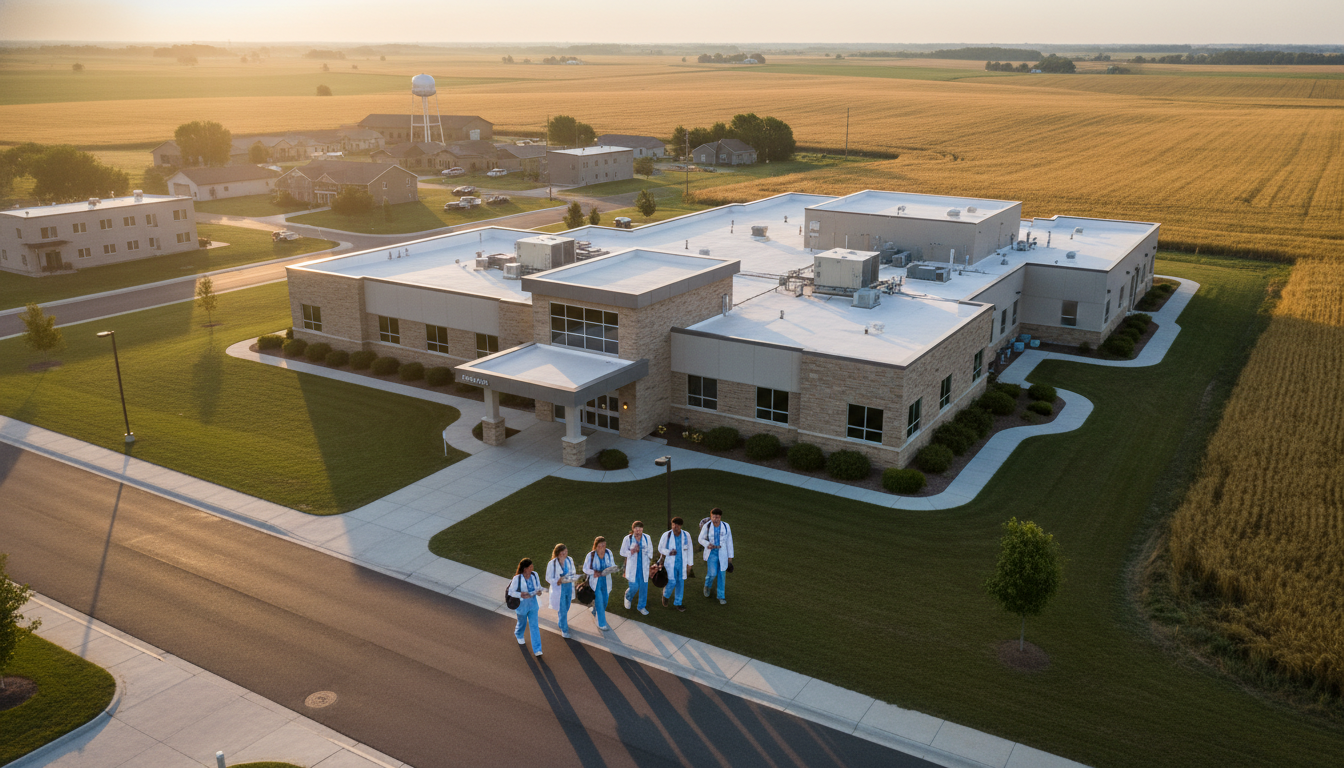
Residency Match Day is high‑stakes anywhere—but for rural Midwest programs, a failed Match carries unique urgency. When a rural Midwestern residency program doesn’t fill, it not only disrupts education and staffing, it can ripple across the local healthcare system, community trust, and hospital finances.
This article focuses on failed Match recovery for residency programs in the rural Midwest, including areas like Iowa, Nebraska, the Dakotas, Kansas, Missouri, and surrounding regions. It is written for program directors, coordinators, DIOs, and GME leaders who need a structured, realistic approach to recovering from a didn’t match outcome—this year and in the long term.
Understanding a Failed Match in the Rural Midwest Context
A “failed Match” or “didn’t fill” outcome can mean different things, and understanding your specific situation is the foundation of recovery.
Types of failed Match scenarios
Fully unmatched program
- No positions are filled through the main NRMP Match.
- Often seen in new programs, rapidly expanding programs, or those in less familiar rural locations.
Partially matched program
- Some, but not all, positions fill.
- Common in primary care programs where applicants may rank urban programs higher and still have backup options.
Chronically under-filled program
- Pattern over multiple cycles of failing to fill all positions.
- Often reflects deeper structural or branding issues rather than just a “bad year.”
In the rural Midwest, even a single unfilled position can significantly affect:
- Inpatient coverage and night float
- Continuity clinics in small communities
- Specialty services in critical access hospitals
- Resident morale and faculty workload
Why rural Midwest programs are uniquely vulnerable
Several factors make rural Midwest residency programs more susceptible to Match challenges:
- Geographic bias: Many applicants, especially international graduates, are unfamiliar with rural Iowa, Nebraska, or the broader Midwest and may rank coastal or urban options higher.
- Perceived isolation: Concerns about distance from family, airports, cultural amenities, or larger medical centers.
- Limited brand recognition: Smaller hospitals and newer residency programs lack national name recognition and longstanding alumni networks.
- Resource misperceptions: Applicants may assume rural programs have weaker academic resources, fewer fellowships, or less robust teaching—even when that’s not true.
- Competition from urban programs within the same state or region: Applicants may prefer Des Moines or Omaha over a small town 60–90 minutes away.
Acknowledging these realities isn’t defeatist—it’s the first step to designing a region-aware failed Match recovery plan.
Immediate Recovery: What to Do in the First 72 Hours After Not Matching
Once you know your rural Midwest residency program is unmatched or under-filled, time is your most valuable asset. The days around SOAP (Supplemental Offer and Acceptance Program) and the initial post-Match period are decisive.
Step 1: Rapid internal debrief and data review
Before jumping into SOAP, gather your core leadership team:
- Program Director
- Associate/Assistant PDs
- Program Coordinator
- DIO/GME leadership
- Key faculty champions (especially those involved in recruitment)
Within 24 hours, review:
- NRMP data
- Number of applicants
- Number of interview offers sent
- Number of interviews attended
- Rank list length and strategy
- How many applicants ranked you, and at what levels (if available)
- Applicant feedback (if collected)
- Exit surveys from interviewees
- Informal comments from candidates
- Historical trends
- Did the program also fail to fill last year?
- Did you expand positions recently?
- Did you change your selection criteria dramatically?
This is not yet the time for deep, structural reform—it’s a quick situational scan to guide an effective recovery through SOAP and the immediate post-Match period.
Step 2: Maximize SOAP effectiveness
Participating fully and strategically in SOAP is the most immediate path to stabilizing your class.
Key tactical points:
Clarify your must-haves vs. nice-to-haves
- In a failed Match situation, you may need to broaden your pool, especially for:
- US-IMG and non-US IMG candidates
- Applicants with non-traditional pathways
- Define absolute minimums (e.g., USMLE/COMLEX cutoffs, graduation year limits only if genuinely necessary) and reconsider rigid rules that may no longer serve you.
- In a failed Match situation, you may need to broaden your pool, especially for:
Align quickly with GME and hospital administration
- Confirm:
- Number of positions you will continue to fill
- Any changes to visa sponsorship capability
- Willingness to convert categorical to preliminary or transitional (if allowed and strategically sound)
- Ensure legal and policy compliance with institutional and NRMP rules.
- Confirm:
Run a structured but nimble interview process
- Use short, focused video interviews (20–30 minutes) with:
- PD or APDs
- At least one core faculty member
- If possible, a current resident who understands and supports the program’s mission
- Create a standardized evaluation form that emphasizes:
- Commitment to rural or underserved practice
- Adaptability and resilience
- Clinical readiness
- Communication skills
- Use short, focused video interviews (20–30 minutes) with:
Communicate your rural strengths honestly
- Even in SOAP, highlight:
- Hands-on experience, procedural volume, early autonomy
- Strong faculty-to-resident ratio
- Community impact and continuity of care
- Address typical concerns for Iowa Nebraska residency and similar states:
- Weather and lifestyle
- Distance from metropolitan areas
- Opportunities for moonlighting (if allowed), fellowships, or employment after residency
- Even in SOAP, highlight:
Step 3: Consolidate class after SOAP
Once SOAP closes:
- Confirm all offers and ensure:
- Visa processes are underway for IMGs where applicable
- Residents understand housing, start dates, and onboarding logistics
- Communicate quickly with:
- Department chairs and service line leaders
- Hospital leadership
- Current residents (to reduce anxiety and speculation)
If positions remain unfilled after SOAP, determine whether:
- You will attempt off-cycle recruitment (if institutionally allowed)
- You will operate with fewer residents this year and adjust schedules accordingly
- You should temporarily reduce approved positions (in collaboration with ACGME and GME office)

Strategic Program Changes: Turning a Failed Match into a Pivot Point
After stabilizing the immediate crisis, use the next 3–6 months to address deeper issues revealed by the failed Match. For many rural Midwest residency programs, this becomes the turning point for long-term strength.
1. Reassessing your program’s value proposition
Applicants ask—often silently—“Why should I spend three or more critical years of my life here?” Your answer must be clear and compelling.
For a rural Midwest residency (e.g., Iowa, Nebraska, Kansas, the Dakotas), emphasize:
- High clinical exposure and autonomy
- Breadth of pathology despite smaller population base (because you may be the regional referral center)
- Early responsibility in ED, inpatient wards, OB, or ICU
- Procedural opportunities
- Rural family medicine or internal medicine programs may offer:
- Point-of-care ultrasound
- Endoscopies
- OB procedures
- Emergency skills unusual for urban counterparts
- Rural family medicine or internal medicine programs may offer:
- Close mentorship
- Strong faculty-resident relationships
- Opportunities for meaningful QI or research projects with direct senior mentorship
- Lifestyle factors
- Low cost of living
- Short commutes
- Tight-knit community
- Safe environment, often appealing for residents with families
Convert these strengths into a clear narrative on your website, in your interviews, and in all outreach materials.
2. Strengthening your digital and geographic branding
For many applicants, “Iowa Nebraska residency” or “rural Midwest” conjures vague images at best. You must make your location tangible and attractive.
Practical steps:
Upgrade your website
- Ensure content is current, with:
- Detailed curriculum
- Day-in-the-life examples
- Graduates’ stories, particularly those who matched into fellowships or took leadership roles
- Highlight your service area and community demographics—show that this is meaningful, mission-driven work.
- Ensure content is current, with:
Leverage visuals
- Use high-quality photos of:
- Clinical environments
- Residents and faculty
- Local town life in all four seasons
- Include short resident testimonial videos discussing:
- Why they chose a rural Midwest residency
- How their concerns about living in a smaller town were addressed
- Use high-quality photos of:
Address common objections upfront
- Weather (“How bad are the winters?”)
- Distance from major airports
- Schools and childcare options
- Spousal employment opportunities
3. Revisiting selection criteria and applicant targeting
Failed Match years often reveal misalignment between selection rules and the actual applicant pool available to rural programs.
Consider:
- Graduation year flexibility
- Many unmatched applicants are not fresh graduates but have meaningful clinical, research, or overseas practice experience.
- Standardized score cutoffs
- Extremely rigid USMLE/COMLEX cutoffs may unnecessarily limit your applicant pool.
- Focus on the total candidate:
- Rural or underserved focus in personal statement
- Longitudinal community service
- Rotations or experience in community hospitals or FQHCs
- IMG strategy
- Many highly qualified IMGs are deeply committed to primary care and underserved communities.
- Ensure clarity on your:
- Visa sponsorship policies
- Requirements for US clinical experience
- Build relationships with IMG-heavy medical schools and observership or externship programs.
4. Aligning program capacity with realistic recruitment
If you’ve expanded positions recently without a parallel investment in branding and recruitment infrastructure, it may be time to:
- Temporarily reduce positions to match realistic applicant interest.
- Phase growth more gradually.
- Work with the DIO to ensure that expansion plans reflect:
- Regional workforce needs
- Available faculty and teaching capacity
- Historical Match performance
Building a Resilient Pipeline: From “Unmatched Applicant” to Ideal Resident
One powerful recovery strategy is to intentionally recruit and support those who didn’t match but have strong potential. Many unmatched applicants are hungry for opportunity, resilient, and grateful for a program that believes in them.
1. Creating structured pathways for unmatched applicants
Consider establishing:
Transitional/Preliminary Year Pathways
- Offer preliminary internal medicine or surgery positions linked to:
- Clear mentorship
- Support for reapplication
- Conditional opportunities for categorical positions if performance is strong and ACGME/institutional policies permit.
- Offer preliminary internal medicine or surgery positions linked to:
Research or clinical scholar positions
- For unmatched applicants interested in your region, create:
- Paid research assistant roles
- Clinical assistant positions (within scope of licensure and state law)
- Provide:
- Faculty mentorship
- Protected time for exam preparation
- Participation in academic meetings or QI projects
- For unmatched applicants interested in your region, create:
Rural visiting rotations (for current students)
- Partner with medical schools to offer:
- 4-week rural rotations in family medicine, internal medicine, pediatrics, or psychiatry
- Target students early—MS3 or early MS4—to build interest before they form rigid geographic preferences.
- Partner with medical schools to offer:
2. Working with medical schools and regional partners
Build formal relationships with:
- Regional medical schools (DO and MD), especially:
- Colleges in the Midwest that already send graduates to rural and primary care paths.
- International schools with strong US placement records.
- Federally Qualified Health Centers (FQHCs) and critical access hospitals in your network.
Offer:
- Regular information sessions about your Iowa Nebraska residency or broader rural Midwest program.
- Virtual open houses focusing on:
- Rural training advantages
- Life in your town
- Pathways to future practice or fellowship.
3. Mentoring unmatched and non-traditional applicants
When considering unmatched applicants in SOAP or for off-cycle positions:
- Evaluate resilience and insight:
- Can they articulate what went wrong in their prior cycle?
- Do they have a realistic plan for improvement?
- Provide structured support once they join:
- Early performance check-ins
- Exam preparation resources
- Tailored remediation if needed (e.g., documentation, communication, or efficiency skills)
Done well, you can transform failed match recovery into a competitive advantage: a program known for giving talented, determined applicants a second chance and turning them into highly capable rural physicians.
Culture, Communication, and Long-Term Reputation Repair
After a failed Match, internal and external trust can be shaken. Programs in the rural Midwest must manage both optics and reality carefully.
1. Supporting current residents and faculty
Transparency is critical:
Hold a resident town hall
- Explain what happened factually (without breaching applicant confidentiality).
- Share your recovery plan.
- Invite resident input on:
- Recruitment strategies
- Program strengths and weaknesses
Address anxiety directly
- Residents may worry that:
- Failing to fill signals poor program quality
- Their fellowship or job prospects will suffer
- Provide data about:
- Recent graduates’ outcomes
- Strength of your clinical training and evaluations
- Offer individualized mentorship for career planning.
- Residents may worry that:
Support faculty morale
- Failed Match can feel personal to core faculty and PDs.
- Recognize their effort.
- Engage them as partners in improvement rather than assigning blame.
2. Controlling the narrative externally
Be proactive in maintaining your reputation:
With hospital leadership
- Frame the failed Match as:
- A serious signal
- A catalyst for targeted improvements
- Present a written, time-bound action plan:
- Immediate, 6-month, and 12–24-month steps
- Metrics for success (e.g., number of applications, interview yield, Match fill rate).
- Frame the failed Match as:
With potential applicants
- Avoid defensive language; instead:
- Highlight changes and innovations (new rotations, new faculty, research opportunities).
- Share success stories from your graduates.
- Update online profiles (FREIDA, ERAS, program website) so they reflect your current reality, not last decade’s perception.
- Avoid defensive language; instead:
3. Tracking progress and adapting iteratively
Failed Match recovery is not a one-year project; it’s an ongoing quality-improvement process.
Develop a recruitment dashboard that tracks:
- Number of applications per cycle
- Interview yield rate (from invite to attendance)
- Match rate and fill rate
- IMG vs. US grad mix
- Resident retention and graduation rates
- Graduate placement (fellowships vs. rural practice vs. urban practice)
Use this data to:
- Adjust your marketing emphasis (e.g., more on procedures, more on family-friendly lifestyle).
- Rebalance selection criteria to better reflect who thrives in your rural setting.
- Demonstrate success to leadership and accrediting bodies.
Case-Style Example: A Rural Midwest Program’s Recovery Path
To illustrate these principles, consider this composite example (details modified for anonymity):
Background
- A 6-6-6 community-based internal medicine program in a rural Midwest town of ~30,000, about 1.5 hours from a major city.
- Historically filled all positions but noticed:
- Decline in applications over 3 years
- Increasing proportion of last-minute SOAP acceptances
The failed Match year
- Matched only 7 of 18 positions.
- 11 positions entered SOAP; filled 6 in SOAP, 5 remained vacant.
- Hospital leadership alarmed; residents worried about coverage and reputation.
Immediate actions
- Conducted a 48-hour rapid review:
- Found that strict USMLE cutoffs and limited IMG engagement had reduced their applicant pool.
- Website had not been updated in 4+ years.
- During SOAP:
- Broadened candidate pool to include more IMGs and non-traditional applicants.
- Standardized quick Zoom interviews with focused questions on rural interest and resilience.
Strategic changes over 12 months
Branding and outreach
- Hired a part-time communications specialist to update the website and create resident profile videos.
- Implemented virtual open house sessions specifically labeled as “Rural Midwest Internal Medicine: High Autonomy, High Impact.”
Selection criteria
- Reduced severity of score cutoffs, emphasizing:
- History of service in underserved areas
- Strong letters showing clinical maturity
- Developed a scoring rubric that gave bonus points for:
- Rural upbringing
- Experience in community hospitals
- Reduced severity of score cutoffs, emphasizing:
Pipeline development
- Established a 4th-year elective rotation for nearby medical schools.
- Created a one-year “Clinical Scholar” role for unmatched applicants, combining clinical support (within licensure limits) and research/QI participation.
Results
- In the following cycle:
- Applications increased by 35%.
- 80% of interviewed applicants had attended an open house or information session.
- Program filled 17/18 positions in the main Match and filled the last one early in SOAP.
- Within three years:
- Achieved consecutive 100% fill rates.
- Developed a reputation among applicants as a strong training site for those seeking broad-based internal medicine with tangible autonomy and community engagement.
Frequently Asked Questions (FAQ)
1. We are a small rural Midwest program that didn’t match this year. Should we drastically loosen our applicant standards to fill?
No. You should recalibrate, not abandon, your standards. Distinguish between:
- Arbitrary screeners (e.g., too-high score cutoffs, overly restrictive graduation year limits) that can be relaxed, and
- True red flags (unprofessional behavior, inability to pass exams, major integrity issues) that must remain non-negotiable.
Use a structured rubric that values commitment to rural/underserved care, resilience, and clinical readiness—qualities especially predictive of success in rural settings.
2. How can we make our Iowa or Nebraska residency program more attractive to applicants who are hesitant about rural life?
Focus on tangibles and narratives:
- Show day-to-day life: photos, videos, and resident stories about small-town living, real housing costs, commuting times, and community involvement.
- Emphasize training advantages: more procedural opportunities, closer faculty relationships, and leadership chances.
- Offer virtual Q&A sessions for spouses/partners about jobs, schools, childcare, and community support. By demystifying the rural Midwest and highlighting quality of life, you turn a vague concern into an informed choice.
3. Can unmatched applicants be a reliable foundation for rebuilding our residency program?
Yes—if selected thoughtfully and supported properly. Many unmatched applicants:
- Were victims of overcompetitive specialties or poor advising, not poor ability.
- Are highly motivated, grateful for opportunity, and deeply committed to making the most of their training. To harness this:
- Vet their insight into why they went unmatched and what they’ve done since.
- Provide mentorship, exam support, and early feedback. Programs that do this well often find these physicians become some of their strongest graduates and rural practice leaders.
4. Our administration is questioning the viability of our rural residency after a failed Match. How do we argue for continued support?
Present a data-based, time-bound recovery plan:
- Show national trends (many community and rural programs are struggling with Match volatility).
- Clarify the local workforce impact if the program closes (loss of future physicians for the hospital and region).
- Outline concrete steps:
- Recruitment and branding improvements
- Pipeline partnerships with medical schools
- Measurable goals over 1–3 years (application numbers, fill rates, graduate retention in the region). Emphasize that a well-supported rural Midwest residency is a strategic asset—not just for education, but for hospital viability, regional health, and community trust.
By approaching failed Match recovery systematically—stabilizing through SOAP, strategically revising your program’s value proposition, building a robust pipeline, and managing culture and communication—you can transform a painful year into the turning point for a stronger, more resilient residency program in the rural Midwest.