Understanding Failed Match Recovery in the Sun Belt
Not matching into residency is emotionally painful, logistically stressful, and often deeply confusing—especially when you were targeting highly desirable regions like the Sun Belt. Whether you aimed for sun belt residency programs in Texas, Florida, California, Arizona, or the Carolinas, a failed match doesn’t mean your career is over. It means you need a structured, honest, and strategic recovery plan.
This article focuses on failed match recovery for residency programs in the Sun Belt—what to do if you didn’t match, how to leverage the Supplemental Offer and Acceptance Program (SOAP), and how to rebuild your application for the next cycle targeting southern residency programs. We will also address options for those who remain an unmatched applicant and feel stuck.
Key goals of this guide:
- Help you process what happened and stabilize quickly
- Provide a step‑by‑step recovery plan specific to the Sun Belt region
- Detail immediate, short‑term, and long‑term actions you can take
- Offer practical examples, templates, and realistic timelines
- Share common pitfalls and how to avoid them next time
Step 1: Stabilize and Understand What “Failed Match” Really Means
Emotional and Professional Impact
When you see the words “You did not match to any position,” your brain often jumps straight to catastrophe: “I’ll never be a doctor,” “I wasted years,” or “Everyone else is moving on without me.” It’s critical to recognize:
- You’re not alone. Thousands of applicants go unmatched every year, including strong candidates.
- Many successful physicians didn’t match on their first try and are now board‑certified and thriving.
- A failed match is a system outcome, not a moral or permanent judgment of your potential.
Give yourself 24–48 hours to feel the disappointment, then shift into “project manager” mode. Your career is still very much salvageable, but timing and decisions over the next weeks and months matter.
Immediate Questions to Ask Yourself
Before you take any action, answer these honestly (ideally with a mentor or advisor):
- Was this your first time applying?
- First‑time unmatched applicants usually have more flexibility and less red flag concern.
- What was your specialty strategy?
- Very competitive (Derm, Ortho, Plastics, ENT) vs. moderately competitive (EM, Anes) vs. primary care (IM, FM, Peds).
- How constrained were you geographically?
- Did you heavily restrict yourself to sun belt residency programs only?
- Were there obvious application “gaps”?
- Low scores, limited US clinical experience (USCE), gaps in training, professionalism concerns, or weak letters.
These answers will guide your recovery plan, including whether you reapply broadly or remodel your strategy around more attainable programs, including southern residency programs that are IMG‑friendly or community‑focused.
Step 2: Optimize Your SOAP Strategy (If Applicable)
If you are reading this during Match Week and you didn’t match, the next immediate step is usually the Supplemental Offer and Acceptance Program (SOAP), provided you are SOAP‑eligible.
Understanding SOAP in the Sun Belt Context
SOAP is a structured process where unmatched applicants apply to unfilled residency positions. For the Sun Belt, these are often:
- Community Internal Medicine and Family Medicine programs
- Transitional Year and Preliminary programs
- Occasionally Psychiatry, Pediatrics, or Surgery prelim spots
- Programs in smaller cities or less “name‑brand” regions
The number of available positions in Sun Belt states varies yearly, but historically there are unfilled spots in:
- Texas (non‑big city programs, community‑based)
- Florida, Georgia, Alabama, Mississippi rural/underserved areas
- Parts of Arizona, Louisiana, New Mexico
- Some community programs in the Carolinas and inland California
Your goal during SOAP is not to be picky. It is to secure an ACGME‑accredited position that moves you closer to long‑term board eligibility.
SOAP Action Checklist
During SOAP, time is compressed and decisions matter. From Monday to Thursday of Match Week:
Meet Immediately with an Advisor
- Dean, program director, career advisor, or someone experienced with SOAP.
- Get a brutally honest review of your competitiveness.
Clarify Your Acceptable Range of Specialties and Locations
- Decide: Would you accept any categorical IM or FM program in the Sun Belt?
- Are you open to prelim or transitional year positions outside your ideal specialty?
Prepare a SOAP‑Optimized Personal Statement
- Brief, focused, and tailored to the new specialty target.
- Example: If moving from EM to IM, emphasize continuity of care, deep diagnostic work, and interest in outpatient and inpatient medicine.
Prioritize Programs Strategically
- Identify Sun Belt programs with a track record of accepting SOAP applicants or unmatched applicants.
- Prioritize: categorical > prelim > transitional, unless you are absolutely sure you can pivot later from a prelim spot.
Professional Communication with Programs
- If allowed, send brief, professional interest emails emphasizing:
- Your sincere interest in their region and patient population
- Any ties to the area (family, prior rotations, language skills relevant to local populations)
- Willingness to commit and contribute immediately
- If allowed, send brief, professional interest emails emphasizing:
Be Ready to Interview on Very Short Notice
- Clear your schedule.
- Rehearse a short, honest answer to: “Why do you think you didn’t match, and why are you applying to us now?”
When SOAP Doesn’t Work
If SOAP ends and you remain an unmatched applicant, your strategy shifts from “emergency” to “mid‑term rebuilding.” That’s where most of this guide will focus.

Step 3: Diagnose Why You Didn’t Match (Root Cause Analysis)
Successful failed match recovery depends on accurately understanding why you didn’t match. Many applicants jump to solutions (research gap year, extra rotations, etc.) without clear diagnosis. That leads to wasted time, money, and another failed cycle.
Core Domains to Review
You and a trusted advisor should systematically evaluate:
Academic Metrics
- Step 1 (P/F) and Step 2 CK scores
- COMLEX scores if DO
- Any failed exams or multiple attempts
Clinical Experience
- Number and quality of US clinical experiences (USCE)
- Sub‑internships, audition rotations, away rotations—especially in Sun Belt institutions
- Feedback from preceptors (formal or informal)
Specialty & Program List Competitiveness
- Did you apply to an overly competitive specialty for your profile?
- Did you apply to too few programs or too few backup specialties?
- How many community vs university programs? How many outside your ideal cities?
Geographic Constraints
- Only major metro areas in the Sun Belt (Miami, Houston, Dallas, Austin, San Diego, Phoenix, Atlanta)?
- Did you avoid smaller cities and rural programs that might have been more attainable?
Application Quality
- Personal statement generic or poorly written?
- Weak or redundant letters of recommendation?
- Poorly structured experiences section?
Interview Performance
- Did you receive interviews but rank list was too short?
- Did you sense concern about communication skills, professionalism, or fit?
Common Patterns Among Unmatched Applicants Targeting the Sun Belt
From work with many applicants focusing on southern residency programs, these patterns appear frequently:
- Strong preference for lifestyle specialties and high‑demand cities (e.g., EM in Miami, Anesthesia in Austin).
- Not enough willingness to apply to primary care or smaller community programs in the Sun Belt.
- Over‑reliance on one or two states (e.g., “Only Texas” or “Only Florida”).
- Limited USCE in the region, while claiming strong regional interest.
Document your findings in a simple table:
| Domain | Problem Identified | Evidence/Notes |
|---|---|---|
| Specialty choice | Aimed for EM with average scores | Few backup programs in IM/FM |
| Geography | Only large Sun Belt cities | Ignored smaller/rural southern programs |
| USCE | 1 IM rotation, none in Sun Belt | Claimed strong interest in Florida programs |
| Exams | Step 2 CK below regional average | No remediation plan documented |
This table becomes the blueprint for your recovery plan.
Step 4: Build a 12–18 Month Recovery Plan Focused on the Sun Belt
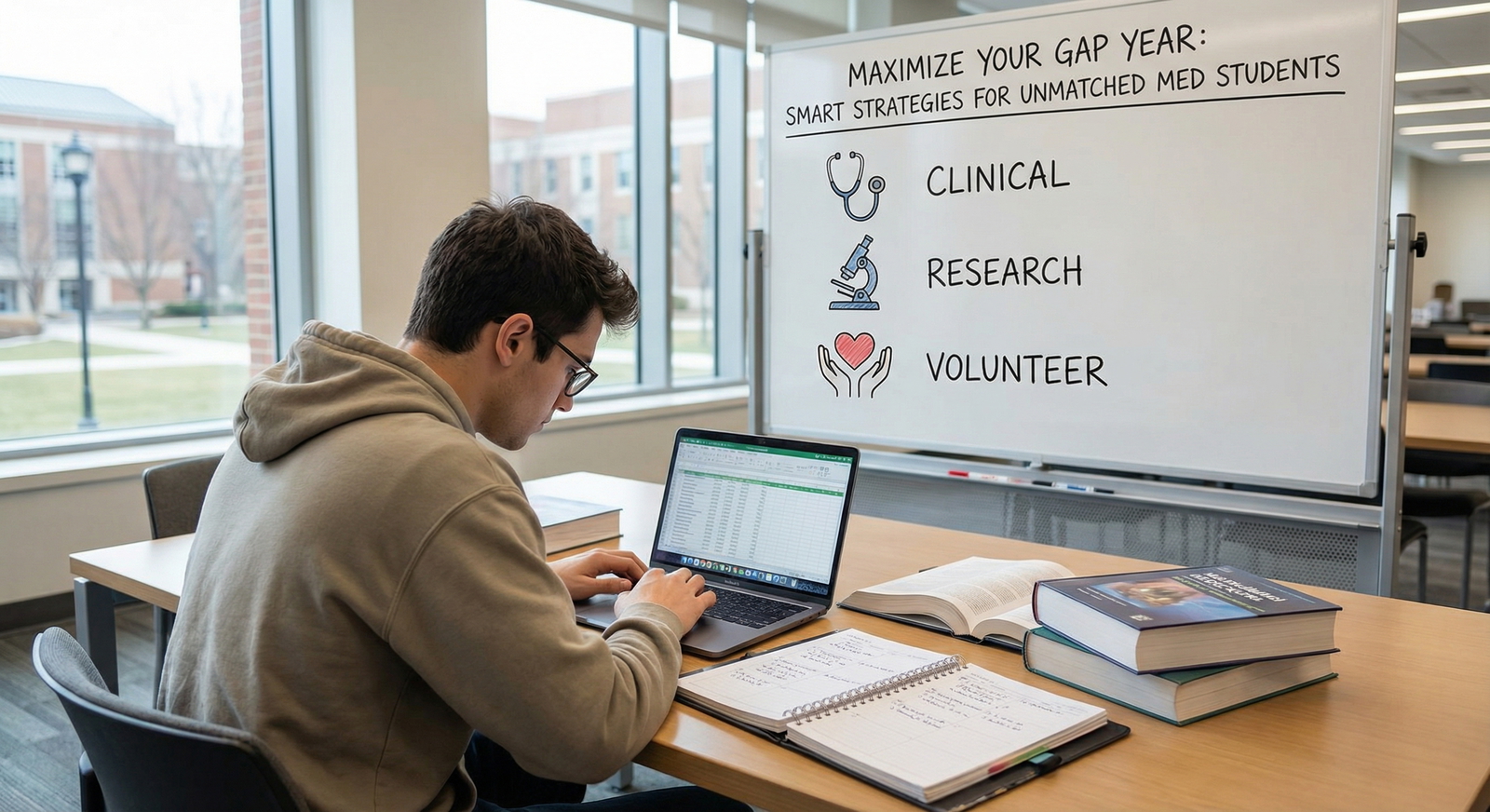
Once you know the “why,” you can design a targeted failed match recovery strategy. Think in three timeframes: Immediate (0–3 months), Mid‑term (3–9 months), and Long‑term (9–18 months).
A. Immediate (0–3 Months): Stabilize Your Professional Identity
Secure Structured Clinical Involvement
- Aim for paid or structured roles tied to patient care:
- Clinical research coordinator positions at Sun Belt academic centers
- Medical scribe roles in hospitals or large clinics
- Quality improvement or care coordination roles
- If possible, prioritize positions within your target region (e.g., Texas Medical Center, Florida academic hospitals, Arizona or Carolinas health systems).
- Aim for paid or structured roles tied to patient care:
Start or Continue USCE in the Sun Belt
- Seek observerships, externships, or hands‑on electives (where permitted):
- Community hospitals in Georgia, Alabama, Mississippi, Louisiana often have opportunities.
- Smaller cities in Texas and Florida may be more open to international or unmatched graduates.
- Seek observerships, externships, or hands‑on electives (where permitted):
Address Any Academic or Licensing Gaps
- If Step 3 or COMLEX Level 3 is appropriate for your timeline, start planning now.
- If you have an exam failure, meet with a learning specialist and plan a structured remediation.
Document Everything
- Keep a detailed log of clinical work, projects, research, and teaching. This will make your next ERAS build easier and more persuasive.
B. Mid‑Term (3–9 Months): Strengthen Your Application Core
By mid‑year, your focus should shift to building concrete, documentable improvements in your profile that residency programs can easily recognize.
Targeted Letters of Recommendation (LORs)
Aim for at least 2–3 strong, specialty‑specific letters from:- US‑based physicians in your target specialty
- Ideally within your target Sun Belt region, especially if you’re emphasizing regional interest
- Attending physicians who can speak to reliability, clinical reasoning, and cultural fit
Provide your letter writers with:
- Your updated CV
- A short “brag sheet” with key examples of your work
- Your specialty goals and regional focus (e.g., “I’m focusing on Family Medicine programs in the Sun Belt, especially Texas and Georgia.”)
Demonstrate Regional Commitment
Sun Belt programs, especially in smaller cities or rural areas, want candidates who will stay and serve their community. You can show this by:
- Working or rotating in underserved clinics in southern states
- Volunteering in local free clinics, FQHCs, or mobile health units
- Learning or leveraging relevant language skills (e.g., Spanish in Texas/Florida, Vietnamese in parts of Texas, etc.)
Example:
- You volunteer weekly at a free clinic in rural Georgia, caring for uninsured patients. This becomes a highlight of your personal statement when applying to southern residency programs.
Engage in Focused Research or Quality Projects
Research doesn’t have to be big‑name NIH grants. Instead:
- Join a faculty member on a quality improvement project (e.g., diabetes management in a southern community clinic).
- Aim for posters or abstracts at regional conferences—Texas, Gulf Coast, or Southeast regional meetings.
- Seek a small publication, even a case report, particularly if it ties to population needs in Sun Belt states.
C. Long‑Term (9–18 Months): Rebuild and Reapply Strategically
As the next ERAS cycle approaches:
Redesign Your Program List with Realism and Breadth
Consider a wider range of sun belt residency locations and hospital types:
- Large academic centers (fewer, more competitive slots)
- Community programs in secondary cities (often more attainable)
- Rural or underserved tracks and programs with mission‑based care
If you’re a previous failed match and an unmatched applicant, avoid over‑concentration:
- Example: Don’t apply only to 40 programs in Florida; apply to 40 in Florida plus 40–60 in Texas, Georgia, the Carolinas, Alabama, Arkansas, etc.
Refine Your Personal Statement and Application Narrative
Address your failed match briefly and professionally if it comes up in interviews, but your written materials should focus more on:
- Growth since the last cycle
- Concrete new experiences in the Sun Belt
- Clear alignment with primary care or your new specialty’s missions
Your narrative should make it obvious that:
- You’ve learned from the failed match.
- You’ve taken deliberate, mature steps to improve.
- You are already embedded in or committed to the region you’re applying to.
Prepare Intentionally for Interviews
Practice responses for key questions:
- “Why do you think you didn’t match previously?”
- “What have you done in the last year?”
- “Why are you interested specifically in southern residency programs?”
Use a structured answer pattern:
- Briefly describe what happened
- Own your part without self‑destruction
- Emphasize growth, improvement, and concrete changes
- Pivot to why you are now a stronger fit for their program

Step 5: Strategic Specialty and Region Reassessment
For some applicants, successfully recovering from a failed match involves either changing specialties or significantly broadening geographic scope—while still prioritizing the Sun Belt if that’s important to you.
When to Consider a Specialty Change
Consider changing specialties if:
- You aimed for a highly competitive specialty with average metrics.
- You had very few interviews despite strong geographic flexibility.
- Multiple mentors have told you quietly, “You might want to think about IM/FM/Peds/Psych.”
Options that often have more opportunity within Sun Belt regions:
- Family Medicine – strong demand in rural and underserved southern communities.
- Internal Medicine – broad opportunities across academic, community, and hospitalist tracks.
- Pediatrics – growing needs in rapidly expanding Sun Belt metros and rural areas.
- Psychiatry – many Sun Belt states face shortages, though competitiveness is rising.
When to Expand or Re‑Think Geography
You can still prioritize the Sun Belt while being more realistic:
- Instead of only applying to California and Florida, include:
- Texas (beyond the major metros)
- Georgia, Alabama, Mississippi, Arkansas, Louisiana
- Interior cities in the Carolinas and inland California (e.g., Central Valley)
- New Mexico and Arizona for those drawn to Southwest culture and climates
Think about your hierarchy:
- Primary target: Sun Belt states (broadened to include smaller cities and rural areas).
- Secondary target: Non‑Sun Belt but IMG‑friendly or community‑oriented programs if your risk tolerance allows.
Step 6: Contingency Planning if You Remain Unmatched
Even with strong recovery efforts, some applicants may face a second failed match. Planning for this possibility doesn’t mean you’re expecting failure; it means you’re acting like a responsible professional.
Parallel Tracks to Consider
Clinical or Research Career Pathways
- Long‑term research coordinators or associates in major Sun Belt academic centers
- Master’s or MPH programs focused on public health, health policy, or clinical research
- Potential transition to non‑physician roles (e.g., clinical data, health informatics) if residency becomes unattainable
International or Alternative Clinical Roles
- Some candidates pursue clinical roles in their home country while keeping a door open for later US return.
- Others explore non‑residency clinical roles where permitted by law (varies widely and must be verified locally).
Reframing Professional Identity
- Even if you eventually step away from residency pursuit, your medical training is not “wasted.”
- Many unmatched MDs/DOs build meaningful careers in research, medical education, industry, or administration.
Practical Example: Recovery Plan for an Unmatched Applicant in the Sun Belt
Profile:
- US MD, Step 2 CK: 225, first attempt
- Applied EM almost exclusively in Texas, Florida, and California
- Limited to big cities (Houston, Dallas, Miami, LA, San Diego)
- 8 EM interviews, no match; SOAP failed; now an unmatched applicant
Diagnosis:
- Overspecialized in a competitive field in attractive markets
- No backup specialty (IM/FM)
- Strong urban preference; ignored community and rural southern residency programs
Recovery Plan (12 Months):
0–3 Months:
- Start full‑time position as an ED scribe in a mid‑size Texas city hospital (not a big metro).
- Begin weekly volunteer shifts at a local free clinic.
- Meet with advisor; decide to switch to IM or FM.
3–9 Months:
- Arrange 1–2 USCE rotations in Family Medicine and Internal Medicine in smaller Sun Belt programs (e.g., community hospitals in Alabama and Georgia).
- Secure 2 new FM/IM letters from US attendings.
- Co‑author a QI poster on ED throughput or chronic disease management for a regional conference.
9–18 Months (Next Cycle):
- Apply broadly to sun belt residency programs in FM and IM:
- Academic and community programs in Texas, Florida, Georgia, Alabama, and New Mexico.
- Open to rural and underserved tracks.
- Craft a personal statement emphasizing:
- Lessons from not matching EM
- Deepened interest in continuity and primary care
- Concrete service to Sun Belt populations
- Prepare clear, confident answers about the previous failed match and current specialty choice.
- Apply broadly to sun belt residency programs in FM and IM:
Outcome (very realistic): increased interviews at community FM/IM programs across the Sun Belt, with a strong chance of matching.
FAQs: Failed Match Recovery in Sun Belt Residency Programs
1. I didn’t match and I really want a sun belt residency. Is it realistic to try again in the same region?
Yes, but you must broaden your region and setting. Instead of limiting yourself to major metros like Miami, Dallas, San Diego, and Phoenix, look at:
- Community and rural programs in Texas, Florida, Georgia, Alabama, Mississippi, New Mexico, and the Carolinas.
- Programs with a mission to serve underserved or rural populations, not just large city hospitals.
Demonstrate concrete ties: clinical work, volunteer experience, or family connections in the region.
2. I was an unmatched applicant last year. Should I disclose my failed match in my personal statement?
You don’t need to describe your failed match in detail in your personal statement. Focus on:
- What you’ve done since the last cycle (clinical work, USCE, research, service).
- How you’ve solidified your commitment to your chosen specialty and region.
Be ready to discuss the prior failed match honestly during interviews, but your written statement should be forward‑looking and growth‑focused.
3. Are southern residency programs more IMG‑friendly or easier to match into?
It varies widely. Some Sun Belt states (like Texas and Florida) have many competitive academic centers, but also numerous community programs and rural tracks that may be more open to IMGs or non‑traditional applicants. Research:
- Individual program match lists and IMG percentages
- Program websites and resident bios
- Word of mouth from current residents and alumni networks
Do not assume all southern residency programs are easy; some are extremely competitive. The key is fit and breadth, not simplistic regional assumptions.
4. If I failed to match twice, should I keep trying or change paths?
A second failed match should trigger a serious, honest conversation with multiple advisors:
- Are there unfixable red flags (e.g., repeated exam failures, major professionalism issues)?
- Have you already optimized your application realistically (specialty, geography, program type)?
- Are you emotionally and financially able to continue for another 1–2 cycles?
Some candidates successfully match after a second attempt with a re‑framed strategy (often shifting to IM/FM and broadening to more community Sun Belt programs). Others decide to shift toward research, public health, education, or non‑clinical careers. There is no single right answer—only what is sustainable and meaningful for you.
A failed match, especially when you set your heart on the Sun Belt, is a major setback—but not a final verdict. With honest self‑assessment, a well‑designed 12–18 month recovery plan, and a broader, more realistic approach to sun belt residency and southern residency programs, many unmatched applicants successfully pivot, reapply, and ultimately train where they can build the lives and careers they envisioned.