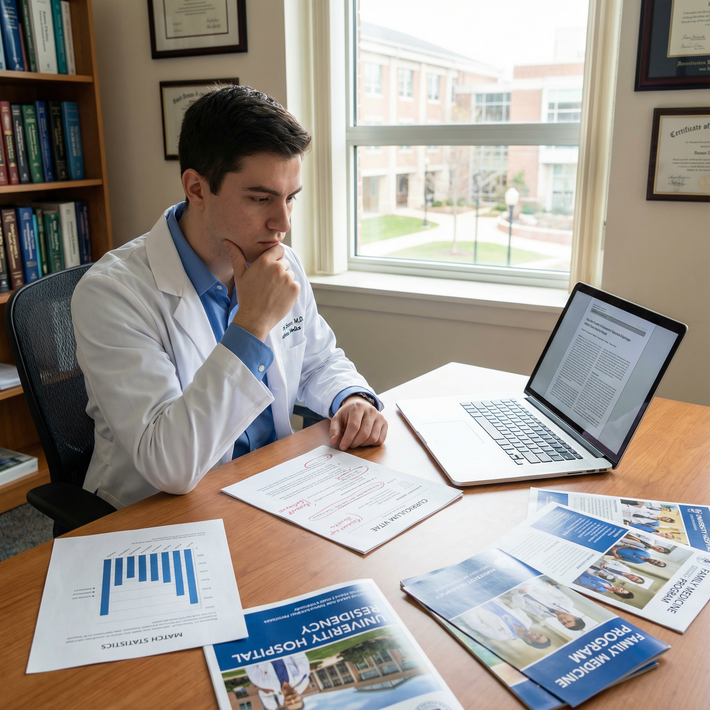
When you’ve poured years of work into becoming a physician, seeing “didn’t match” on the screen can feel devastating—especially if you aimed for an Ivy League residency or other top medical school residency program. Yet every year, outstanding applicants—many from elite schools with strong scores and impressive CVs—go unmatched or under-match.
This isn’t the end of your career in medicine; it’s a serious setback, but one you can recover from strategically. In Ivy League and top-tier environments, how you respond to a failed match can matter just as much as your original application.
Below is a comprehensive, step‑by‑step guide to failed match recovery tailored specifically for those targeting Ivy League and other top‑tier residency programs.
Understanding Why Strong Applicants Fail to Match
Before you can build a recovery plan, you need to understand what actually went wrong. For top-tier programs, the reasons are often more nuanced than “not competitive enough.”
Common Reasons High‑Achieving Applicants Go Unmatched
Overly aggressive rank list
- Ranking only Ivy League or similarly competitive programs
- Not ranking a sufficient number of “safety” programs
- Failing to apply broadly to mid-tier or community programs
- Example: A US MD with strong Step scores and honors in core clerkships ranks only 8 programs, all in Boston, New York, or Philadelphia, and ends up unmatched because of sheer competition and low rank list length.
Application strategy misalignment
- Inadequate program research; applying where your profile doesn’t match program priorities
- Personal statement or experiences not aligned with the specialty’s culture or mission
- Underdeveloped “fit” for academic vs. community vs. research-heavy programs
Letters of recommendation (LoRs) that aren’t as strong as you think
- Generic or lukewarm letters from big names rather than detailed, enthusiastic letters from people who know you well
- Missing specialty-specific letters (e.g., applying to dermatology with no dermatology letters)
- Implicit “damning with faint praise” tone that programs read between the lines
Red flags that loom larger at top-tier programs
- Professionalism concerns, remediation, leaves of absence
- Significant exam failures or large Step/COMLEX score gaps
- Unexplained grade trends or failed clerkships
- For Ivy League residency programs, any unexplained issue can carry extra weight because programs have abundant options.
Interview performance issues
- Inconsistent or rigid answers; difficulty articulating your story
- Poor communication skills, or perceived arrogance/inflexibility
- Inability to clearly discuss research, QI projects, or clinical experiences in detail
- Misalignment between what you say and what’s in your application
Applying in a hyper‑competitive specialty without a realistic backup
- Dermatology, plastic surgery, orthopedics, neurosurgery, ENT, urology, radiation oncology, interventional radiology, etc.
- No dual-application strategy (e.g., applying only to neurosurgery without considering neurology or preliminary surgery)
Late or disorganized application
- Submitting ERAS late in the season
- Missing or delayed LoRs
- Poorly edited personal statements or incomplete sections
Why a Precise Diagnosis Matters
Top medical school residency programs expect growth and insight. “I guess I was unlucky” won’t convince them to take a second chance on you. You need a clear, data‑supported narrative:
- What were your original goals?
- What exactly led to your failed match?
- What have you done to remediate the issues?
- Why will the outcome be different this time?
This self‑awareness becomes the backbone of your reapplication strategy and future interview answers.
Immediate Steps in the Weeks After a Failed Match
The first days post‑match are emotionally charged, but they’re also crucial. Your actions now can either close doors or quietly open new ones.
1. Manage the Emotional Aftermath
- Give yourself 24–72 hours to process the disappointment.
- Limit social media if seeing others’ celebration is painful.
- Avoid impulsive decisions—don’t fire off angry emails or announce dramatic career changes.
- Consider speaking with:
- A trusted mentor or faculty advisor
- A mental health professional if you feel depressed, hopeless, or ashamed
Residency programs, including Ivy League institutions, understand that failure happens; what they scrutinize is how you respond.
2. De‑brief with Institutional Advisors
Schedule structured debriefs with:
- Your medical school’s Dean of Students or Dean of Student Affairs
- Your specialty advisor
- Program directors or clerkship directors in your target specialty
Ask them explicitly:
- “What do you think were the major weaknesses in my application?”
- “Would you feel comfortable calling a PD on my behalf next cycle?”
- “What would you prioritize if you were in my shoes for the next 6–12 months?”
Take notes. Some comments may sting, but these insights are critical.
3. Request Honest Feedback from Programs (Strategically)
Most Ivy League and top-tier programs receive too many applicants to give detailed feedback to everyone. However, some will provide limited feedback if you:
- Write a concise, respectful email:
- Acknowledge their time constraints
- Express gratitude for the opportunity to interview if you did
- Ask for 1–2 major areas they feel you should strengthen
- Don’t argue with what they say. Use it as data.
Programs rarely say, “Your interview was weak,” but they may hint about needing more research, stronger letters, or clearer commitment to the specialty.

Building a 12–24 Month Recovery Plan
Recovery from a failed match is not just “try again next year.” For those aiming at highly competitive programs, you need a deliberate, multi‑phase plan.
Phase 1: Clarify Your Target and Level of Flexibility
Ask yourself hard questions:
- Do you still want the same specialty?
- Is your priority the specialty itself or the prestige of an Ivy League or top‑tier institution?
- Are you open to:
- Same specialty, broader tier range (including strong community programs)?
- A different specialty at an Ivy League or other top academic program?
- A preliminary year now and a reapplication later?
- A research fellowship year to boost your CV?
Top-tier programs respect clarity and realistic planning. Many unmatched applicants successfully pivot—to a slightly different specialty or to a broader set of institutions.
Phase 2: Strengthen the Core Pillars of Your Application
1. Academic and Exam Remediation
If you have any exam failures (Step/COMLEX or shelf exams):
- Demonstrate clear improvement with subsequent exams or in‑training exams
- Consider an exam prep course if your test‑taking approach is the problem
- Document any completed remediation; some schools provide official letters
If you already passed but scores are average:
- Focus on building value in other domains (research, teaching, leadership, clinical excellence)
- Top programs do accept applicants without stellar scores if other aspects are outstanding
2. Letters of Recommendation: Quality Over Prestige
For Ivy League residency programs, a detailed letter from someone who supervised you closely often beats a generic letter from a Nobel laureate.
Strategies:
- Re‑work your clinical exposure in the specialty:
- Arrange sub‑internships, observerships, or extended electives at academic centers
- Aim for direct interaction with faculty who write strong, specific letters
- Before asking for a letter:
- Ask if the faculty member can write a “strong, detailed letter of recommendation”
- Provide an updated CV and summary of your work with them
- Aim for:
- At least 2–3 new letters, with at least one from a recognizable academic faculty member in your specialty
3. Targeted Research and Scholarly Productivity
Ivy League and top medical school residency programs pay close attention to academic trajectory—especially in competitive specialties.
Options:
1-year research fellowship at a major academic center:
- Often ideal if you’re targeting academic or research‑heavy programs
- Seek positions with:
- Clearly defined projects
- Access to mentors known in your specialty
- Opportunities for publications, abstracts, and conference presentations
Smaller‑scale research or QI projects:
- Within your home institution or affiliated hospitals
- Focus on:
- Projects you can complete in 6–12 months
- Topics aligned with your intended specialty (e.g., outcomes in ICU patients for internal medicine, imaging efficiency for radiology)
Your goal: show productivity, follow‑through, and intellectual curiosity—not just a long list of uncompleted projects.
4. Clinical Experience and Demonstrated Commitment
If a gap year is part of your plan, programs will ask: “What did you do clinically?”
Options include:
- Non‑ACGME clinical fellowships or junior physician roles (where allowed):
- Hospitalist assistant, clinical associate roles under supervision, depending on region regulations
- Research assistant roles with clinical shadowing:
- Combine hands‑on patient interaction with data collection
- Acting internships / sub‑internships:
- Especially at target institutions (if possible)
- Aim for outstanding evaluations to counter a “didnt match” history
The more you can continue to function like a clinician, the better your narrative.
Phase 3: Repairing Your Narrative
In your personal statement and interviews, you will need to address being an unmatched applicant without sounding defensive or desperate.
Key principles:
- Own the result without self‑destruction:
- “I was disappointed not to match last cycle, and in reviewing my application with mentors, I recognized several areas I needed to strengthen…”
- Explain, don’t excuse:
- “I applied too narrowly to only top‑tier academic programs and failed to build a sufficiently broad rank list.”
- “I realized afterward that my letters didn’t reflect my clinical strengths as clearly as they could have.”
- Demonstrate corrective action:
- “Over the past year, I have completed a clinical research fellowship in cardiology, taken additional responsibility for inpatient care under supervision, and improved my communication skills through teaching and patient‑education projects.”
Programs admire applicants who show resilience and meaningful growth.
Strategic Re‑Application to Ivy League & Top‑Tier Programs
When you’re ready to reapply, your approach must be far more strategic than the first time.
1. Program List: Balance Aspirations and Realism
Aim for a tiered list:
Tier 1: Ivy League and highly ranked academic centers
- Apply to those where:
- You have a clear academic or research link
- You’ve done rotations, research, or have faculty advocates
- Your updated CV is truly competitive
- Apply to those where:
Tier 2: Strong academic or university‑affiliated programs
- Many are not formally “Ivy League” but have outstanding training
- Some are more holistic and open to reapplicants with growth
Tier 3: High‑quality community or hybrid programs
- Essential to ensure a match
- You can still pursue academic or fellowship paths from many of these
Do not repeat the mistake of ranking only name‑brand institutions. A strong community program may ultimately serve your career and personal goals extremely well.
2. Crafting a Reapplicant Personal Statement
Your personal statement must walk a fine line—honest, but forward‑looking.
Consider this structure:
- Brief reintroduction of your path and specialty interest
- Acknowledgment of the failed match
- Focused explanation of what changed
- Specific improvements (research, clinical roles, teaching, exam remediation)
- What you learned about yourself and your career goals
- Clear alignment with the type of program you’re applying to
- Emphasize educational mission, patient population, mentorship style, research focus, etc.
Avoid:
- Blaming programs, the system, or specific people
- Over‑explaining every detail of your “failed match” or personal hardship
- Vague language (“I grew a lot”) without concrete examples
3. Optimizing Your ERAS Application
Key updates:
- New experiences section entries:
- Clearly label gap‑year activities, research positions, and clinical roles
- Use action verbs and quantifiable outcomes
- Publications and presentations:
- List what is accepted, published, or submitted (accurately)
- MSPE / Dean’s letter addendum:
- Some schools add an update letter summarizing your post‑graduation work. Advocate for this if it’s not standard.
Be explicit about continuity: show there was no “lost year,” only a rebuilding year.
4. Handling Interviews as an Unmatched Applicant
You will almost certainly be asked about being unmatched.
Effective approach:
Prepare a concise narrative (60–90 seconds):
- “Last cycle, I applied primarily to Ivy League and top-tier programs with a narrow geographic preference. Although my academic performance was strong, my application strategy lacked balance, and I did not match. Over the past year, I have… [brief list of actions and growth]. This experience clarified my commitment to [specialty] and motivated me to strengthen my clinical and academic skills.”
Anticipate follow‑up questions:
- “What did you learn from that experience?”
- “How are you different as a candidate now?”
- “Why should we feel confident you’ll thrive in residency despite that setback?”
Focus on insight, maturity, and resilience, not self‑pity.

Special Cases: SOAP, Preliminary Years, and Specialty Pivoting
Failed match recovery doesn’t always mean “wait one year and reapply.” Depending on timing and circumstances, you may have additional options.
1. Using SOAP Strategically
If you find yourself unmatched during Match Week:
- Work closely with:
- Your Dean’s Office
- Specialty advisors
- Career services
- Consider:
- Preliminary or transitional year positions
- Categorical positions in a less competitive specialty you are truly willing to pursue
If you secure a prelim year:
- Excel clinically—strong PD and attending evaluations are valuable currency.
- Stay transparent with your PD about your long‑term goals (if you plan to reapply to a different specialty).
- Maintain professional integrity; don’t treat the prelim year as simply transactional.
2. Doing a Preliminary Year at a Top‑Tier or Ivy‑Affiliated Site
A strong preliminary year at a competitive institution can:
- Provide high‑quality LoRs
- Create networking opportunities
- Demonstrate your ability to thrive in a demanding environment
However:
- It does not guarantee a PGY‑2 or categorical spot at that same institution.
- You still need a strong reapplication strategy, particularly if switching specialties.
3. Pivoting Specialty While Aiming to Stay in the Top‑Tier Ecosystem
Scenario examples:
- An unmatched neurosurgery applicant pivoting to neurology or general surgery
- A dermatology reapplicant applying to internal medicine or medicine‑dermatology paths
- A radiation oncology aspirant pivoting to internal medicine with a plan for heme‑onc fellowship
To make this work:
- Show a thoughtful and coherent narrative:
- Not “I just want any spot,” but “I discovered that my strengths and interests align better with X specialty because…”
- Highlight continuity:
- Neurosurgery research that still relates to neurology or ICU care
- Dermatology research reframed as chronic disease management experience
- Build specialty‑specific letters and experiences as quickly as possible.
Long‑Term Perspective: Prestige vs. Fit and Outcome
For many unmatched applicants from Ivy League or top medical schools, there is a painful sense of identity loss: “I was always on the top track—how did I end up here?”
Crucial truths:
Your career is not defined solely by your residency’s brand name.
- Many leaders in academia, private practice, and public health trained at non‑Ivy programs.
- Fellowship placement, mentorship quality, and your performance as a resident often matter more down the line.
Excellent training happens in many settings.
- Mid‑sized academic centers
- Community‑based programs with high clinical volume
- Hybrid programs with robust fellowships and research ties
Recovery from a failed match can become a core professional strength.
- You will care more deeply about supporting struggling learners.
- You’ll develop resilience, humility, and strategic thinking.
If you ultimately land your dream Ivy League or top-tier residency after a failed match, your journey will be a powerful story. If you match elsewhere and thrive, your success will be no less meaningful.
FAQs: Failed Match Recovery for Ivy League & Top‑Tier Programs
1. If I didn’t match once, am I “blacklisted” from Ivy League residency programs?
No. Programs do not maintain a “blacklist” of unmatched applicants. However, they do expect:
- A significantly stronger application on reapply
- A clear explanation of what changed
- Evidence that you used the intervening time productively
Many residents at top‑tier programs are successful reapplicants who took a year or more for research, prelim training, or other growth experiences.
2. Should I still apply to Ivy League and top-tier programs after a failed match, or just focus on mid‑tier programs?
You should apply broadly and strategically:
- Include Ivy League/top‑tier programs where:
- You have a realistic profile and updated strengths (research, letters, clinical work)
- You have some connection or faculty advocate
- Make sure the majority of your list is composed of realistic targets and some safety options.
A balanced list prevents repeat non‑matching more than any other single factor.
3. How do I talk about my failed match in interviews without sounding negative?
Use a concise, 3‑part structure:
- Acknowledge: “I didn’t match last cycle.”
- Analyze (briefly): “In reflection, I realized my application was too narrow and my letters didn’t fully capture my strengths.”
- Act: “Since then, I’ve completed a research fellowship, taken on more clinical responsibility, and worked closely with mentors to improve my communication and teamwork.”
Keep the focus on growth and what you bring to the program now.
4. Is it better to do a research year or take a preliminary clinical spot if I want a top academic program later?
It depends on:
- Your specialty
- Your current weaknesses
- Available opportunities
Research year is often better if:
- You’re targeting highly academic specialties or Ivy League programs that value publications strongly.
- Your main deficit is scholarly productivity or academic connections.
Prelim year is often better if:
- You need strong, recent clinical evaluations and LoRs.
- You’re less interested in a heavily research‑oriented career and more focused on being an outstanding clinician.
In some cases, a combo path (clinical prelim year followed by research, or vice versa) can be ideal. Discuss this with mentors who understand your specialty and long‑term goals.
A failed match—especially when you aimed at Ivy League or other top-tier residencies—hurts. But with deliberate analysis, structured growth, and a strategic reapplication, it can become a turning point rather than a dead end. Your next steps, not this single outcome, will define your trajectory in medicine.