When the NRMP results arrive and you see “No Match,” it can feel like the floor drops out from under you. If you were specifically targeting Chicago residency programs or Illinois residency spots, the disappointment may feel even sharper—especially if you had a strong geographic preference or family in the area.
Yet being an unmatched applicant is not the end of your medical career. It is a major setback, but not a permanent label. Many excellent residents and attending physicians once sat exactly where you are now: staring at a “didn’t match” screen and wondering what to do next.
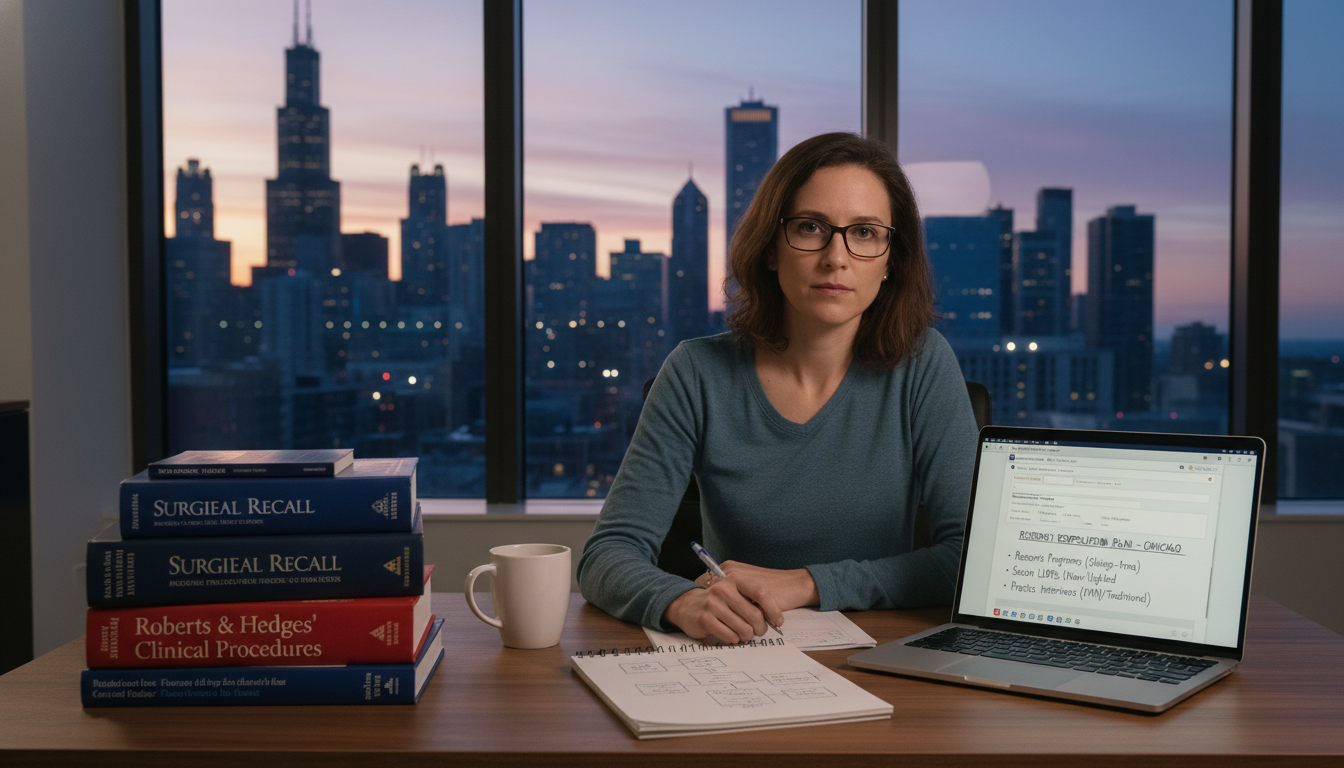
This guide focuses on failed match recovery with a special focus on Chicago and Illinois residency pathways. You’ll learn how to stabilize emotionally and practically, evaluate candidly what went wrong, and build a powerful recovery plan that maximizes your chances of matching in the next cycle—ideally in or near Chicago, if that remains your goal.
1. First 72 Hours: Stabilize, Assess, and Use Immediate Options
1.1 Emotional triage: managing the first shock
Seeing that you didn’t match often brings intense emotions: shame, panic, anger, or numbness. Before any strategic planning, you need basic emotional stabilization:
- Limit catastrophic thinking: Not matching is common—each year thousands of U.S. and international graduates experience a failed match or partial match.
- Tell a few trusted people: A mentor, close friend, or family member. It reduces isolation and helps you process.
- Avoid impulsive decisions: Don’t fire off angry emails to programs or post on social media. Your professional reputation matters, especially in a close-knit medical community like Chicago.
- Focus on what you can control in the short term: SOAP, communication with your school, and securing near-term clinical or academic activity.
1.2 Immediate step: Meet with your school’s advising office
If you’re a current U.S. medical student or a recent graduate with access to advising, contact:
- Dean of Students or Student Affairs
- Career advising or residency advising office
- Specialty-specific advisors (e.g., IM, FM, Surgery)
Ask for:
- A rapid review of:
- USMLE/COMLEX scores
- Transcript and MSPE
- Research and clinical experiences
- Specialty choice and program list
- Honest feedback about:
- Competitiveness for your chosen specialty
- Feasibility of reapplying to the same specialty vs switching
- Chances in Chicago residency programs vs needing a broader geographic strategy
If you are an IMG or independent graduate, contact:
- Your home country program director (if applicable)
- Mentors in U.S. hospitals, especially in Illinois or Chicago
- Alumni networks or IMG mentoring groups
1.3 SOAP and post-Match scramble considerations
If you are reading this during Match Week, the Supplemental Offer and Acceptance Program (SOAP) may still be an option. Key actions:
- Clarify eligibility immediately with your dean’s office or NRMP resources.
- Update your ERAS application quickly:
- Rewrite your personal statement if you’re changing specialties.
- Request letters from broader specialties (e.g., Internal Medicine, Family Medicine) if you previously applied to a competitive field.
- Prioritize strategy:
- You may need to broaden beyond Chicago and even beyond Illinois residency opportunities.
- Aim for specialties that have more SOAP positions (e.g., IM, FM, Pediatrics, Psychiatry, Transitional Year, Preliminary Medicine).
Even if Chicago residency programs are your long-term goal, it may be necessary to train elsewhere first and later return for fellowship or as an attending.
If SOAP isn’t successful or you’re past Match Week, shift your mindset from emergency triage to year-long strategic recovery, which is what most of this guide covers.

2. Honest Diagnosis: Why You Didn’t Match
A failed match often has multiple causes, not a single fatal flaw. Understanding your unique situation is essential to crafting your recovery plan.
2.1 Common factors in a failed match
- Overly narrow geographic focus
- Only ranking Chicago residency programs or a small number of Illinois residency options.
- Ranking too few programs overall.
- Specialty competitiveness
- Applying to very competitive specialties (e.g., Dermatology, Ortho, ENT, Plastics) without a realistic backup plan.
- Academic metrics
- One or more failed USMLE/COMLEX attempts.
- Marginal scores for your specialty.
- Multiple course or clerkship failures or repeats.
- Clinical performance and professionalism
- Concerning comments in MSPE.
- Interpersonal or professionalism issues flagged by faculty.
- Insufficient U.S. clinical experience (especially for IMGs)
- Lack of recent hands-on clinical exposure in U.S. hospitals.
- Application quality
- Weak personal statement lacking clarity and motivation.
- Generic or poorly structured CV.
- Inadequate or lukewarm letters of recommendation.
- Interview performance
- Trouble articulating your story, red flags, or connection to Chicago/Illinois.
- Poor communication skills, unprofessional virtual interview behavior, or inconsistent responses.
2.2 Performing a structured post-match analysis
Use a simple framework:
A. Numbers and credentials
- USMLE/COMLEX scores and attempts
- Clerkship grades, honors, and any failures
- Class rank or quartile
B. Application strategy
- Number of programs applied to overall
- Number of interviews received vs declined
- Number of programs ranked (total and in Chicago/Illinois)
- Specialty choice vs competitiveness
C. Application quality
- Strength and specialty-relevance of letters
- Strength and focus of personal statement
- Evidence of consistent interest in your chosen specialty
- Presence (or absence) of geographic connection to Chicago/Illinois
D. Interview performance
- Feedback from mentors or mock interviews
- Any interviews where you felt you did poorly and why
Bring this analysis to an advisor or mentor and ask them to be candid, not kind. You need honest feedback to improve.
2.3 Chicago-specific strategic missteps
If your target was specifically Chicago residency programs, consider whether:
- You relied only on big academic centers (e.g., UChicago, Northwestern, Rush, University of Illinois) and ignored strong community or hybrid programs in the region.
- You didn’t sufficiently explain:
- Why Chicago? (family, long-term commitment, familiarity with patient population)
- Why this program’s mission and patient population? (e.g., safety-net hospitals, underserved communities, research focus)
- You treated Chicago as a generic big city in your personal statements and interviews, rather than demonstrating real understanding of:
- The city’s diverse neighborhoods
- Healthcare disparities across the South Side, West Side, and suburbs
- Specific institutions’ strengths (e.g., trauma care, academic research, community medicine)
3. Designing a 12–18 Month Recovery Plan
A robust failed match recovery plan must be multi-dimensional. The core pillars:
- Clinical engagement
- Academic and research enhancement
- Personal and professional development
- Geographic and specialty strategy
3.1 Staying clinically active
Gaps in clinical activity are a major concern for program directors, especially in primary care specialties. Consider:
A. Research fellowships or scholar roles in Chicago
Look for paid or volunteer positions at:
- Major academic centers:
- Northwestern, UChicago, UI Health, Rush, Loyola
- VA or county hospitals:
- Jesse Brown VA, John H. Stroger Jr. Hospital of Cook County
- Outcomes research, quality improvement, or clinical trials units
Benefits:
- Chicago-based experience reinforces your geographic commitment.
- Exposure to faculty who can write strong, recent letters.
- Opportunity to present posters, publish papers, and attend regional conferences.
B. Clinical fellowships or sub-internships
While formal “pre-residency fellowships” are limited, some departments offer:
- Prelim or transitional year spots starting off-cycle (rare, but worth exploring).
- Research-track positions with some clinical shadowing.
- Unaccredited clinical fellow roles (more common in some surgical or subspecialty departments).
C. U.S. clinical experience (especially for IMGs)
If your Illinois or Chicago-based options are limited, expand to:
- Other Midwest states (Indiana, Wisconsin, Michigan, Ohio, Missouri)
- Community hospitals with strong teaching programs
- Telehealth clinics or remote chart review roles (if supervised and legitimate)
Aim to maintain clinically relevant activities at least 15–20 hours/week if possible.
3.2 Strengthening your academic profile
Depending on your needs:
- Step exams:
- If you have poor scores, focus on Step 3 (where applicable) during your recovery year to demonstrate improved test-taking performance.
- Research output:
- Target at least one or two tangible products: an abstract, poster, or manuscript submission.
- Focus on fields aligned with your planned specialty.
- Quality Improvement (QI) or education projects:
- Join or lead projects in patient safety, outcomes, or curriculum development.
- Many Chicago hospitals have robust QI infrastructure you can plug into.
3.3 Professional development and soft skills
Program directors consistently emphasize:
- Communication skills
- Teamwork and professionalism
- Resilience and teachability
During your recovery year:
- Participate in mock interviews arranged by your school or mentor network.
- Practice behavioral interview answers (e.g., conflict resolution, errors you’ve made, handling feedback).
- Address red flags head-on:
- Prepare a concise, reflective explanation for exam failures, leaves of absence, or professionalism concerns.
- Focus on what you learned and specific changes you’ve made.
3.4 Revisiting your specialty and geographic targets
You may need to recalibrate expectations:
- If your first-choice specialty was highly competitive and you were far below the usual metrics, consider a:
- Less competitive specialty, or
- Dual-application strategy (e.g., apply to both Internal Medicine and Family Medicine).
- For Chicago-specific goals:
- Maintain Chicago as a priority region, but not your only region.
- Apply broadly across Illinois residency programs and neighboring states.
- Prioritize gaining at least one strong Chicago-based letter if you can.
4. Rebuilding and Rebranding Your Application
Failed match recovery isn’t only about doing more; it’s about telling a new, coherent story.
4.1 Updating your personal statement
Your new personal statement should:
- Acknowledge your path without dwelling on failure:
- You don’t need to write “I failed the Match,” but you can say you “faced a setback in the prior application cycle” and briefly summarize growth.
- Emphasize what you’ve done during your recovery year:
- New clinical experiences, research, QI, community work.
- Reinforce your specialty commitment:
- Reflective clinical experiences that showed you why, for example, Internal Medicine or Psychiatry is the right fit.
- Highlight thoughtful, non-generic ties to Chicago or Illinois (if relevant):
- Longstanding family ties, understanding of local health disparities, prior rotations or community work in the area.
Example angle (for someone targeting Chicago FM/IM programs):
“Over the past year working with a safety-net clinic on Chicago’s West Side, I have gained a deeper understanding of how structural inequities and chronic disease intersect. This experience reaffirmed my commitment not only to Internal Medicine, but also to training in a city where health disparities are stark yet addressable through committed primary care and community partnerships.”
4.2 Securing stronger letters of recommendation
Aim for three to four new or refreshed letters, with at least:
- One from a core specialty mentor in your chosen field.
- One from a recent Chicago or Illinois-based clinician or researcher, if possible.
- One from someone who can speak to your growth after the failed match.
When you request letters:
- Be transparent (but professional) about your prior failed match.
- Provide them with:
- Updated CV
- New personal statement
- A short summary of “areas of growth” you’d like them to highlight (e.g., reliability, teamwork, clinical reasoning).
4.3 Reframing red flags
If you have significant concerns (exam failures, disciplinary issues, gaps):
- Prepare a three-part explanation for interviews and any supplemental questions:
- Context: What happened, in neutral, non-defensive language.
- Insight: What you learned about yourself and your limitations.
- Change: Specific steps you took and evidence they worked (e.g., improvement in later exams, strong clinical performance, completed counseling, time-management courses).
Do not blame others, the system, or “bad luck,” even if those were factors. Program directors want to see ownership and maturity.
4.4 Adjusting your program list and ERAS strategy
To avoid another failed match:
- Apply more broadly:
- Both academically and community-oriented programs.
- A mix of urban and suburban hospitals in and beyond Chicago.
- Use data:
- Review NRMP Charting Outcomes and individual program websites.
- Understand where your metrics are realistically competitive.
- Include a sufficient number of programs:
- Many unmatched applicants previously applied to too few programs (e.g., <25–30 in competitive fields).
- For less competitive specialties, aim for a robust list (often 60–100+ for IMGs, depending on competitiveness).
Remember: It is better to match outside Chicago and later return than to hold out for a perfect geographic fit and remain unmatched multiple cycles.
5. Maximizing Chicago-Specific Opportunities
If Chicago remains your clear top choice, align your actions with that goal—but keep an eye on realistic outcomes.
5.1 Building authentic Chicago ties
Programs are more likely to rank you if they believe you’ll stay and thrive there long term. Build and demonstrate:
- Clinical experiences:
- Rotations, observerships, or research at Chicago institutions.
- Mentorship:
- Faculty mentors based in Chicago who know you and will advocate for you.
- Community engagement:
- Involvement with local free clinics, community health organizations, or public health initiatives.
- Life context:
- Family in Chicago, partner’s job, or long-term plans to practice in Illinois.
Mention these factors in your ERAS geographic preferences, personal statements, and interview answers.
5.2 Understanding the Chicago residency landscape
Chicago offers:
- Cutting-edge academic programs in nearly every specialty.
- High-acuity county and VA hospitals with diverse pathology.
- Community-focused programs deeply embedded in neighborhoods.
For an unmatched applicant, realistic Chicago pathways may include:
- Community IM, FM, or Pediatrics programs with a strong record of training IMGs or non-traditional applicants.
- Psychiatry, Transitional Year, or Preliminary Medicine spots where programs are open to candidates with prior setbacks who demonstrate growth and commitment.
5.3 Networking and visibility
Chicago’s medical community is large but interconnected. To increase visibility:
- Attend:
- Local grand rounds and CME events (many are open to visitors).
- Regional specialty society meetings in Illinois.
- Reach out via:
- Email to program coordinators to ask about observerships or pre-application advising.
- Introductions through alumni networks or faculty at your current institution.
- Be professional:
- Every interaction is part of your reputation.
- Respect coordinators’ time; don’t spam or push for special favors.
6. Resilience, Mindset, and Long-Term Perspective
A failed match often causes deep questions:
- “Am I cut out for medicine?”
- “Will anyone ever give me a chance?”
- “Did I ruin my life by not matching this year?”
These questions are understandable, but they are not destiny.
6.1 Reframing “failure” as delayed progression
Many outstanding doctors:
- Matched on their second or third attempt.
- Switched specialties entirely after re-evaluating their goals.
- Trained outside their dream city and later returned as fellows or attendings.
What matters most:
- Your trajectory, not a single data point.
- Your ability to reflect, learn, and adapt.
- Your commitment to patient care, professionalism, and lifelong learning.
6.2 Protecting your mental health
During your recovery year:
- Monitor for depression, anxiety, or burnout.
- Seek professional help if you notice:
- Persistent hopelessness.
- Inability to focus on necessary tasks.
- Thoughts of self-harm or worthlessness.
You are not your match outcome. You are a person who has already accomplished a great deal and still has many realistic paths forward in medicine.
6.3 Knowing when to pivot
In some situations, multiple unsuccessful cycles or immutable constraints (e.g., repeated exam failures) may make U.S. residency increasingly unlikely. A thoughtful backup plan might include:
- Clinical work in another country.
- Non-residency clinical roles (depending on training and licensure).
- Medical education, research, public health, or health technology careers.
However, do not rush to abandon your goal after a single failed match, especially if you are willing to:
- Broaden specialty choices.
- Expand beyond Chicago and Illinois residency programs.
- Invest fully in a structured recovery year.
FAQs about Failed Match Recovery in Chicago
1. I didn’t match but only applied to Chicago residency programs. Should I reapply only to Chicago next year?
In most cases, no. Limiting yourself solely to Chicago programs is a major risk factor for a repeated failed match. Instead:
- Keep Chicago as a priority region, but:
- Apply to other Illinois residency programs across the state.
- Include neighboring Midwest states and other regions where your application may be more competitive.
- Strengthen your Chicago ties (clinical work, mentors, research) this year so that Chicago programs are more likely to rank you highly—but do not rely on them exclusively.
2. I’m an IMG who didn’t match. How can I become more competitive for Chicago programs?
Key steps:
- Obtain recent, hands-on U.S. clinical experience, ideally in internal medicine, family medicine, or your chosen field.
- Seek observerships or research positions in Chicago institutions if possible.
- Improve your Step scores profile if you still have Step 3 ahead of you.
- Secure strong, recent letters from U.S. faculty who can attest to your clinical skills, professionalism, and communication.
- Apply broadly, including community-based programs that are historically IMG-friendly and not just top academic centers.
3. How should I explain my failed match to Chicago program directors during interviews?
Use a concise, honest, and growth-focused approach:
- Briefly state what happened (e.g., “I applied narrowly to a very competitive specialty and did not match last cycle.”).
- Acknowledge any contributing factors you can own (strategy, exam performance, etc.).
- Emphasize what you did during your recovery year:
- Clinical work, research, QI projects.
- Steps you took to improve study habits, time management, or communication.
- Clearly articulate why you are better prepared now and how this experience has made you more resilient and committed.
Avoid blaming programs, the system, or bad luck.
4. If I complete a transitional or preliminary year outside Chicago, can I later transfer into a Chicago residency?
It’s possible but not guaranteed:
- Some Chicago programs may consider PGY-2 transfers, especially in Internal Medicine or certain subspecialties, when positions open.
- To maximize your chances:
- Excel in your first-year program (clinical performance, evaluations, professionalism).
- Maintain contact with Chicago mentors and programs.
- Monitor open PGY-2 spots through program websites and professional networks.
Still, you should approach a prelim or transitional year assuming you may need to complete full training at that institution or reapply broadly, not as a guaranteed stepping stone into Chicago.
A failed match is painful, but it is survivable—and often transformable—when you respond with reflection, strategy, and persistence. Chicago residency programs and Illinois residency pathways remain within reach for many unmatched applicants who are willing to do the hard work of recovery. Your next steps, not your last result, will define your path.