Understanding a Failed Match in the Cleveland Context
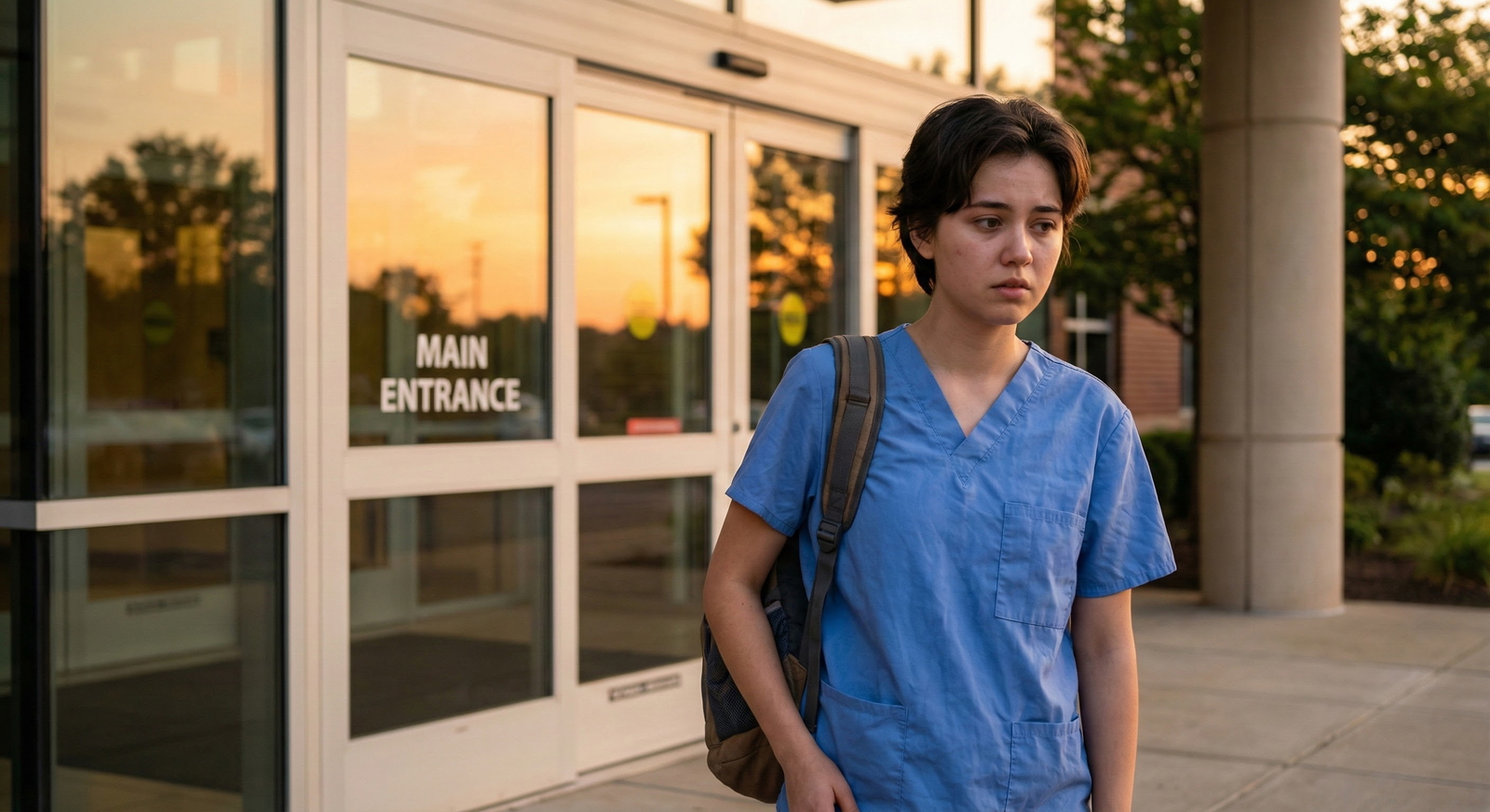
Not matching into residency is one of the most emotionally difficult experiences a medical graduate can face. When you see the words “We are sorry, you did not match to any position” on NRMP results day, it can feel like the end of your medical career—especially if you had your heart set on programs in a city like Cleveland, with major academic centers and competitive specialties.
It isn’t the end.
Thousands of physicians currently in practice were once an “unmatched applicant.” Many later matched into strong programs, some even at leading institutions like Cleveland Clinic, University Hospitals Cleveland Medical Center, and MetroHealth. The key difference between those who eventually succeed and those who drift away from clinical medicine is a strategic, honest, and proactive recovery plan.
In this article, we’ll walk through a structured approach to failed match recovery, specifically tailored to the Cleveland region and its residency landscape. We’ll cover:
- What a failed match means and what it does not mean
- Immediate post-Match steps (including SOAP and beyond)
- How to analyze what went wrong in your application
- Options to stay clinically active in or near Cleveland
- How to re-apply smarter to Cleveland residency programs
- Emotional resilience and creating a realistic multi‑year plan
Throughout, you’ll see practical strategies, Cleveland-specific considerations, and examples of how applicants rebounded from “didn’t match” to successfully entering residency.
Step 1: Stabilize, Decompress, and Reframe “Didn’t Match”
Give yourself space to process
A failed Match is both a professional setback and an emotional shock. Before you try to “fix” anything, give yourself 24–72 hours to:
- Step away from social media and comparison
- Lean on one or two trusted supporters (mentor, family, friend)
- Get enough sleep and exercise
- Avoid impulsive decisions (e.g., applying wildly to any job that appears online, lashing out at advisors, or declaring you’re leaving medicine forever)
You are not alone. Every year, thousands of US MD, DO, and international graduates don’t match. The Cleveland residency programs you may be targeting (e.g., internal medicine, family medicine, pediatrics at Cleveland Clinic or University Hospitals) see unmatched applicants return the following cycle with stronger applications.
Reframe this as:
“I have more work to do and I need a better strategy, not that I’m incapable of becoming a physician.”
Understand what “failed match” actually means
Not matching says nothing definitive about your potential to be a good resident or physician. It means that:
- Your application did not line up with a program’s needs and risk tolerance this cycle
- Other applicants were a perceived better fit on paper or in interviews
- You may have misaligned expectations (specialty competitiveness, geography limits, or program tier)
- There were application weaknesses (scores, experiences, letters, red flags, timing, or strategy)
Residency selection is a constrained, imperfect process influenced by:
- Program size and funding
- Visa considerations
- Institutional priorities (e.g., growing primary care vs. subspecialty pipelines)
- Subjective impressions about “fit” during interviews
The fact that you didn’t match this year says more about the intersection of these factors with your application than it does about your ceiling as a clinician.
Step 2: Immediate Tactical Moves—SOAP and Short-Term Options
Participate in SOAP (if still current cycle)
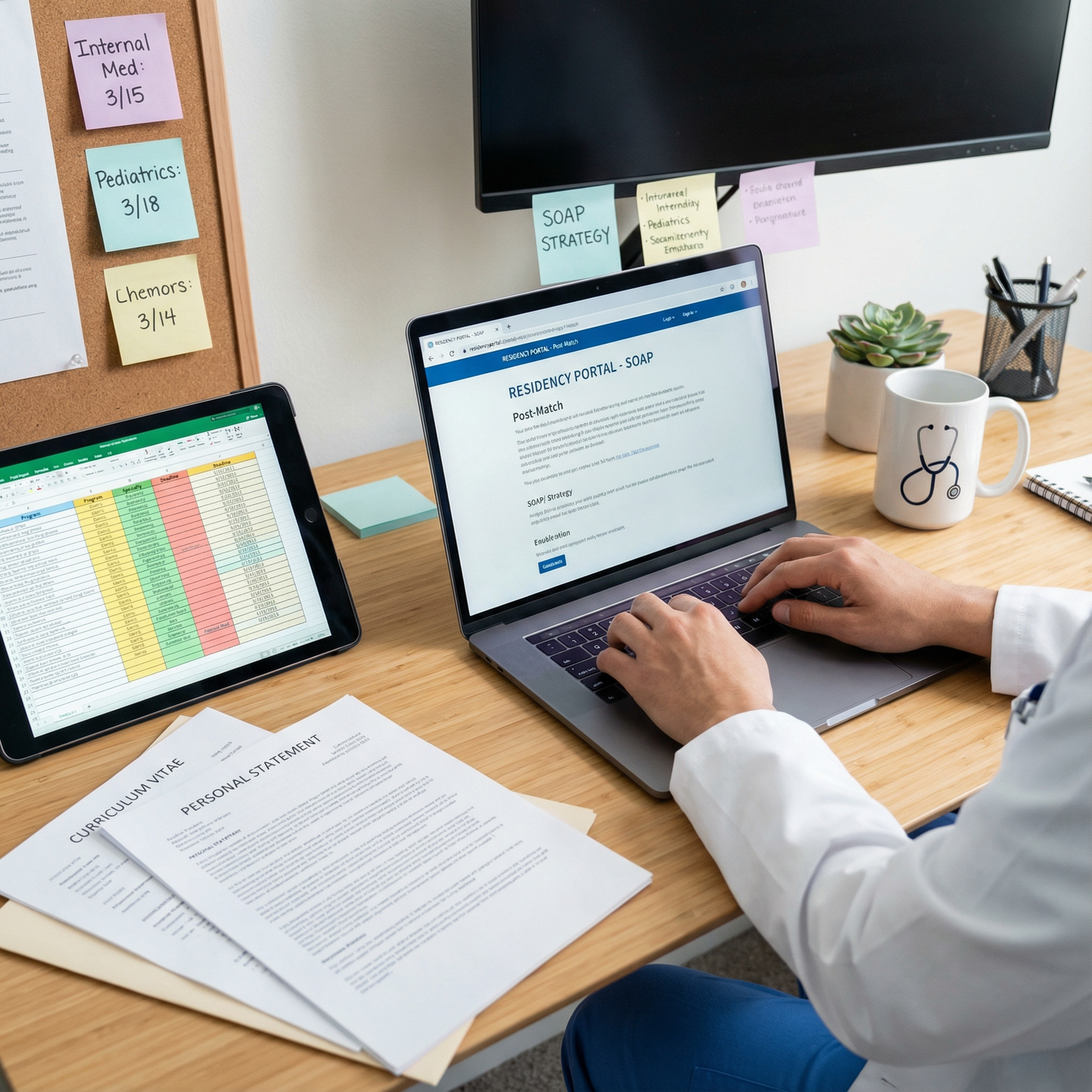
If you’re reading this during Match Week and you didn’t match, your first priority is the Supplemental Offer and Acceptance Program (SOAP).
Key moves:
Meet with your dean’s office or academic advisor immediately.
- Ask for a prioritized plan for SOAP participation.
- Get help targeting specialties and programs that are realistic.
Update and tailor your application materials quickly.
- Write targeted personal statements for more available specialties (e.g., internal medicine, family medicine, preliminary year).
- Ensure your CV and ERAS activities are accurate and concise.
- Prepare a short, clear explanation if you are switching specialties for SOAP (e.g., from radiology to internal medicine).
Be flexible on geography and setting.
- Limiting yourself only to Cleveland residency programs during SOAP is rarely wise.
- However, you can still prioritize Ohio and surrounding states (PA, MI, IN, WV) if that fits your personal life.
Prepare for rapid-fire interviews.
- Practice 3–5 core questions with a mentor:
- “Tell me about yourself.”
- “Why this specialty?” (even if not your original specialty)
- “Why our program?”
- “Tell me about a challenge you faced in medical school.”
- “What will you bring to our residency?”
- Have talking points on why you didn’t match and how you’ve responded constructively.
- Practice 3–5 core questions with a mentor:
If SOAP does not result in a position, do not disappear. Program directors in Cleveland and elsewhere understand that SOAP is competitive. Your focus now shifts to a 12–18-month recovery strategy.
Consider transitional / preliminary year opportunities outside SOAP
In some years, positions become available after SOAP due to:
- Funding changes
- Residents resigning or transferring
- Newly created slots
Cleveland hospitals and nearby institutions sometimes post such positions on:
- Institution career pages (e.g., Cleveland Clinic Careers, UH Careers, MetroHealth Careers)
- ACGME or AMA residency vacancy lists
- Specialty organization job boards
Stay in touch with:
- Your dean’s office / Graduate Medical Education (GME) office
- Specialty advisors and mentors
- Program coordinators you already know from interviews
Politely check in every 1–2 months, expressing continued interest and updating them on new clinical or research activities.

Step 3: Root-Cause Analysis—Why You Didn’t Match
To recover effectively, you need a brutally honest assessment of the factors that contributed to your outcome. This is not about self-blame; it’s about clarity.
Key domains to review
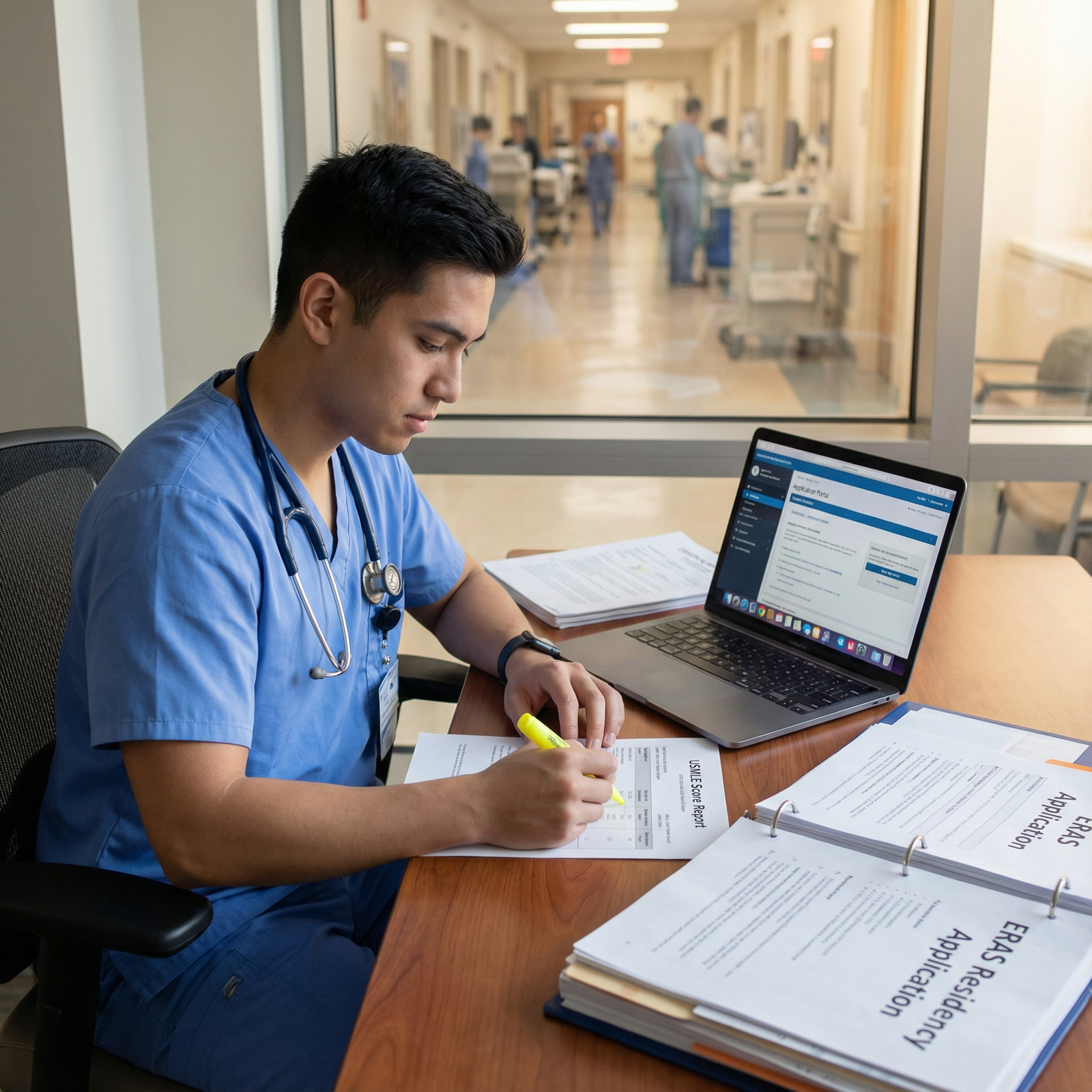
Exam performance (USMLE/COMLEX)
- Were there failures, low scores, or large score gaps?
- Did you have Step 3 completed (helpful for unmatched IMG applicants)?
Clinical performance and letters of recommendation (LORs)
- Any marginal clinical evaluations or professionalism concerns?
- Were your LORs strong, personalized, and from influential faculty—especially at well-known centers or in your chosen specialty?
Specialty choice and competitiveness
- Did you apply mainly to ultra-competitive specialties (e.g., dermatology, plastic surgery, orthopedics, radiology, ophthalmology) without a parallel plan?
- Did you apply to an adequate number of programs, including community and smaller academic centers?
Geographic and program tier constraints
- Did you restrict yourself mostly to major academic centers like Cleveland Clinic or other top-tier programs?
- Did you limit applications to a small number of cities or states?
Red flags
- Gaps in training, leave of absence, unaddressed professionalism issues
- Disciplinary actions, legal issues, or multiple exam failures
- Poor interview performance or communication skills
Application strategy and timing
- Late ERAS submission, missing LORs, incomplete applications
- Generic, unfocused personal statement
- Weak CV organization or poorly described experiences
How to conduct the analysis
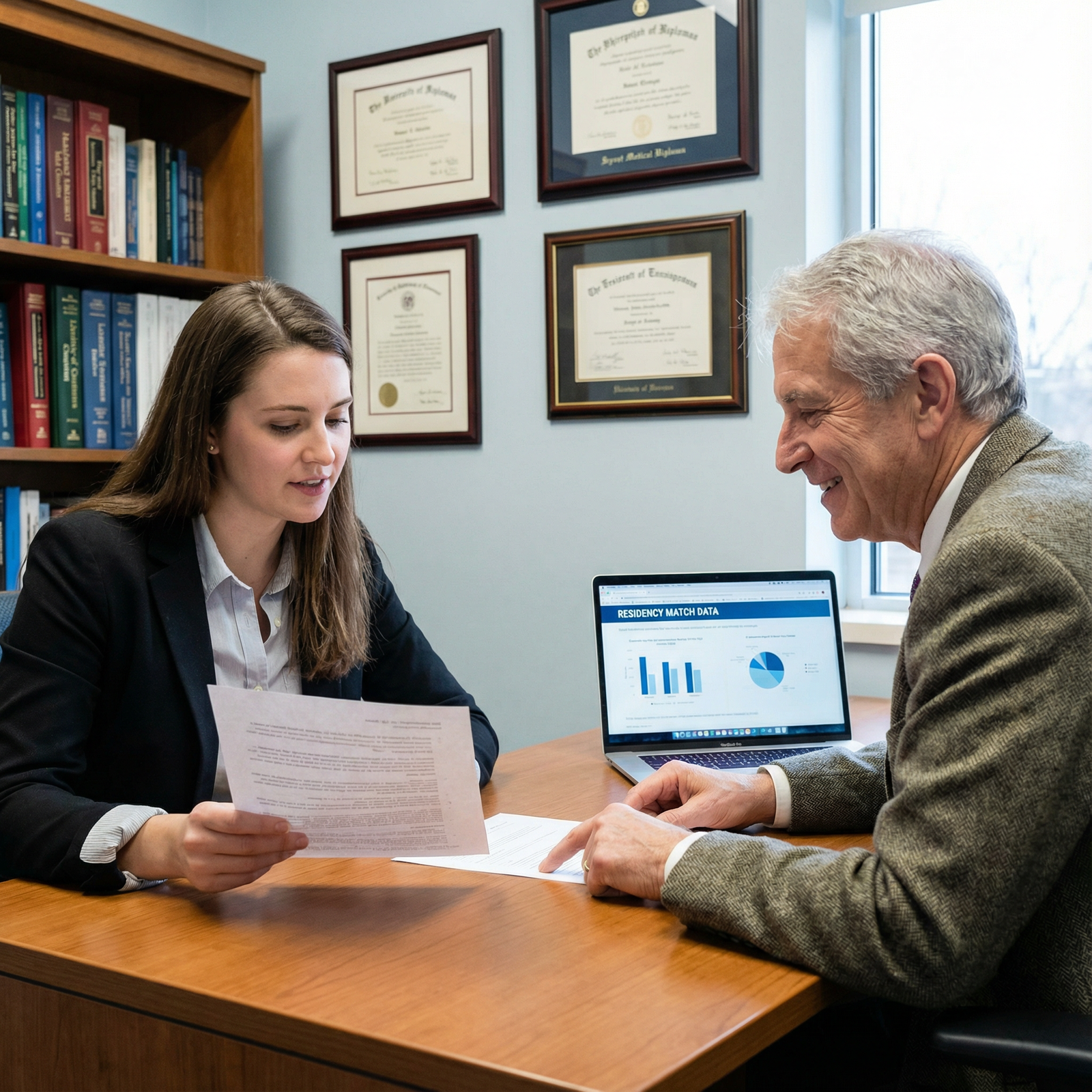
Meet with at least two advisors:
- One from your home institution (e.g., dean for student affairs or program faculty).
- One external mentor if possible (e.g., faculty from an away rotation in Cleveland, or a physician in your desired specialty).
Ask specific questions:
- “If you were a PD, what would worry you about my file?”
- “What would you change first if I were reapplying?”
- “Is my target specialty realistic given my record, or should I consider alternatives?”
Compare yourself to recent matched cohorts:
- Use NRMP Charting Outcomes data.
- Look at your Step scores, number of programs applied to, research output, and US vs. non-US status compared to those who matched.
Summarize your findings in a one-page document:
- 3–5 strengths
- 3–5 major weaknesses
- Top 3 priorities to address in the next 12 months
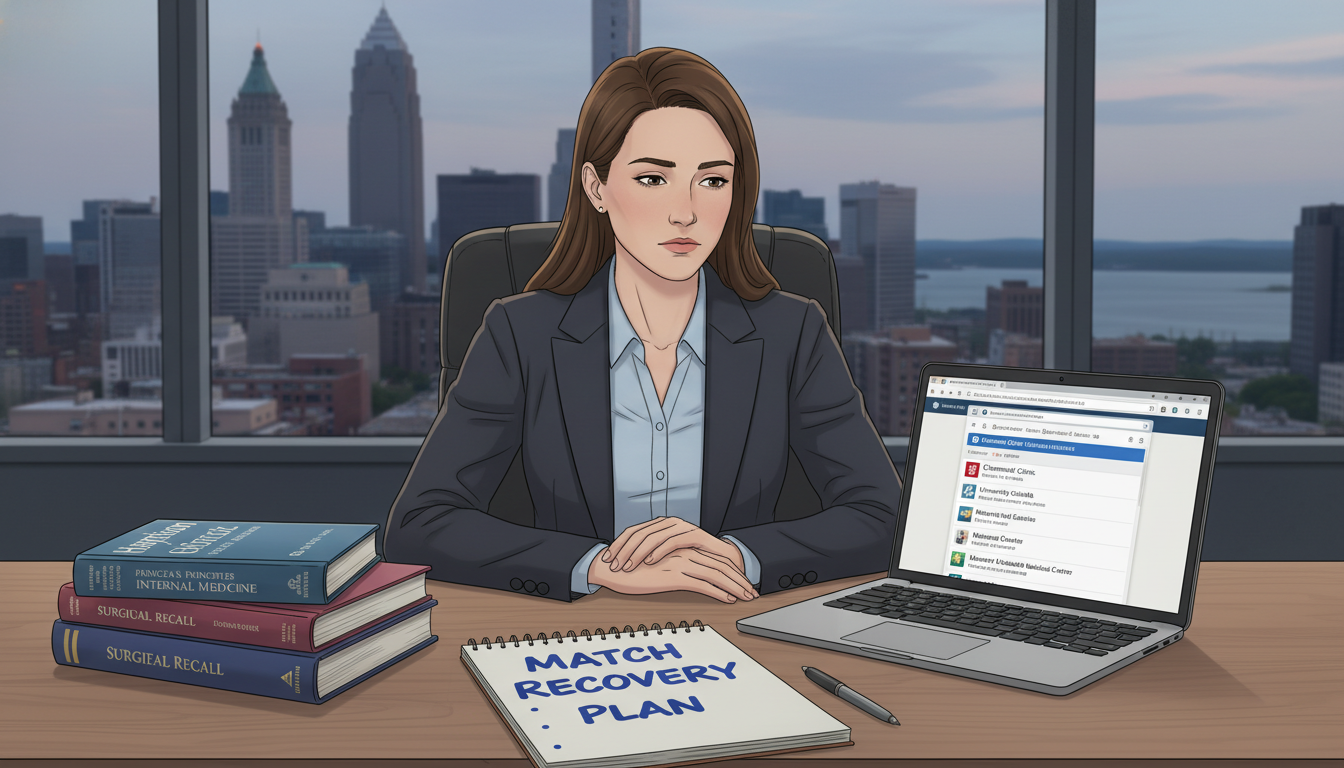
This document becomes the backbone of your Failed Match Recovery Plan.
Step 4: Building a Strong Recovery Year in or Near Cleveland
Once you know why you didn’t match, you can design a year that directly addresses these issues—ideally in a way that keeps you connected to clinical medicine and visible to Cleveland residency programs.
Option 1: Research positions at Cleveland academic centers
Cleveland is home to large, research-intensive institutions:
- Cleveland Clinic
- University Hospitals Cleveland Medical Center
- MetroHealth System
- Affiliated medical schools (e.g., Case Western Reserve University)
Look for:
- Clinical research coordinator jobs
- Postdoctoral research fellowships (more common for IMGs and MD/PhD-track applicants)
- Outcomes research or quality improvement projects in departments aligned with your specialty (e.g., cardiology, gastroenterology, internal medicine, surgery, pediatrics)
Advantages:
- Direct access to faculty who write strong letters
- Opportunities to present at conferences and publish abstracts/papers
- Familiarity with the institutional culture (valuable if you aim for a Cleveland Clinic residency or UH program later)
- Shows commitment to academic medicine and patient outcomes
Example:
An unmatched internal medicine applicant spends a year as a research coordinator in cardiovascular medicine at Cleveland Clinic, gains co-authorship on two abstracts and one paper, and receives a detailed LOR from the PI. The following cycle, they reapply more broadly to Cleveland residency programs in internal medicine and primary care and secure several interviews at both academic and community sites.
Option 2: Clinical or observer roles to stay patient-focused
Staying close to patient care is vital, especially if you’re more than one year out from graduation.
Potential roles:
- Clinical observer or extern at Cleveland area hospitals or clinics
- Medical assistant or scribe in internal medicine, family medicine, EM, or subspecialty clinics
- Volunteer physician assistant-like roles in low-resource settings (depending on your legal scope and visa status; be careful about practicing without proper licensure)
For IMGs, structured observerships or externships in Cleveland can be particularly important to:
- Gain US clinical experience (USCE)
- Generate recent, US-based LORs
- Demonstrate familiarity with electronic medical records and US healthcare systems
Option 3: Master’s or certificate programs
Some unmatched applicants pursue degrees that strengthen their profile, such as:
- Master of Public Health (MPH)
- Master in Clinical Research
- Master of Science in Medical Physiology or Applied Anatomy
In Cleveland, look at programs affiliated with:
- Case Western Reserve University
- Cleveland State University
These can be useful if:
- Your academic record needs bolstering
- You want to pivot towards academic medicine, population health, or research-intensive fields
However, beware of excessive debt. A degree is helpful only if it clearly supports your long-term strategy and doesn’t delay your reapplication unnecessarily.
Option 4: Improve exam portfolio
If your application weaknesses are exam-based:
Complete USMLE Step 3 (for MD/IMG) or COMLEX Level 3 when strategically appropriate:
- Often viewed favorably by internal medicine, family medicine, and psychiatry programs.
- Reduces PD concern about test-taking ability.
Consider targeted test-prep courses or tutoring to ensure a meaningful improvement rather than just retaking exams.

Step 5: Re-Strategizing Your Application to Cleveland Residency Programs
Once you’ve spent several months on recovery activities, you need a deliberate reapplication strategy.
Clarify or recalibrate your specialty choice
Ask three questions:
Is my first-choice specialty still realistic?
- If you were close to matching (many interviews, several programs where you felt strong), you might reapply with improvements.
- If you had very few interviews or major academic red flags, consider broadening.
What are my acceptable alternatives?
- Examples of less competitive but still fulfilling options:
- Family medicine
- Internal medicine (categorical or preliminary)
- Psychiatry
- Pediatrics (in some regions)
- Transitional year plus later specialty application
- Examples of less competitive but still fulfilling options:
How do these options align with Cleveland programs?
- Cleveland has robust primary care–oriented programs at academic and community hospitals.
- You might target, for example, family medicine or internal medicine residencies across Northeast Ohio, not just at the largest flagships.
Broaden and tier your program list
When reapplying:
Apply to a mix of program types:
- Major academic centers (e.g., Cleveland Clinic residency tracks, UH, MetroHealth)
- Community-based programs in Cleveland suburbs and across Ohio
- Programs in surrounding states with similar patient populations and training opportunities
Create tiers:
- Tier 1: Dream programs (e.g., large academic centers, highly ranked institutions)
- Tier 2: Solid academic-community hybrid programs
- Tier 3: Community programs in smaller cities or more rural regions
Unmatched applicants often succeed when they increase the number of programs applied to, especially in Tier 2 and 3.
Optimize your personal statement and narrative
Your personal statement should now:
- Briefly and honestly address why you reapplying (if asked or if central to your story), emphasizing growth and insight rather than excuses.
- Highlight what you did with your gap year: research, clinical experience, teaching, leadership, or community engagement.
- Demonstrate clear reasons for your chosen specialty and how your recent work in Cleveland (if applicable) reinforced this.
- Signal geographic commitment if Cleveland or Northeast Ohio is truly a priority: mention family ties, prior rotations, or long-term plans to serve the region.
Avoid overly dramatic language about failure. Instead, write from a stance of resilience and maturity:
“After not matching in 2024, I sought feedback, identified gaps in my application, and spent a year as a clinical research coordinator in cardiology at a major Cleveland hospital. This experience deepened my understanding of complex chronic disease management and reinforced my commitment to internal medicine.”
Upgrade letters of recommendation
Programs especially in competitive centers like Cleveland Clinic rely heavily on trusted LORs.
For your reapplication:
Aim for at least one new letter from your recovery year activity:
- Research PI at Cleveland Clinic or UH
- Attending supervising your observership or clinical work
- Course director from a relevant master’s program
Ensure letters:
- Are detailed and specific (not generic).
- Describe your work ethic, clinical reasoning, reliability, and growth since the failed match.
- Come from people who know you well, not just big names.
Practice and refine interview skills
If you had interviews but didn’t match, poor interview performance may have been a factor.
To improve:
Conduct mock interviews with:
- Career services at your school
- Faculty mentors
- Residents you know in Cleveland or your specialty
Focus on:
- Clear, structured answers
- Managing anxiety
- Professional body language (including on virtual platforms)
- Owning, not avoiding, questions about being an unmatched applicant
Programs often ask:
“Can you tell us about your journey since your last application?”
Prepare a concise, confident answer showing:
- Insight into why you didn’t match
- Concrete steps you took to improve
- Evidence of ongoing commitment to patient care and learning
Step 6: Emotional Resilience and Multi-Year Planning
Normalize the timeline
It’s common to feel that you’re “falling behind” while classmates start residency. In reality:
- Many physicians took nonlinear paths (research years, second careers, military service, PhD training, or reapplications).
- Within a few years, most colleagues focus more on your competence and professionalism than on whether you matched on your first attempt.
Think in multi-year arcs:
- Year 1 post-failed match: Recovery, skill-building, reconsideration of specialty and geography
- Year 2: Reapplication and, ideally, starting residency
- If needed, Year 3: Second reapplication with additional strengthening, or structured transition to an alternative career path in healthcare if a match remains out of reach
Build a support system
Especially if you’re far from family or newly relocated to Cleveland for a research role, isolation can worsen anxiety and depression.
- Seek:
- Peer support groups (local or online for unmatched applicants)
- Mentorship programs through hospitals or professional societies
- Counseling services (student health, employee assistance programs, or community providers)
Burnout and hopelessness are serious risks in unmatched applicants. Treat your mental health with the same seriousness you would give any patient.
Keep multiple doors open
While your primary goal may be a Cleveland residency program, also:
- Maintain relationships in other regions where you’ve worked or done observerships.
- Develop transferable skills (data analysis, QI, teaching) that could support roles in healthcare even if residency remains elusive.
It is absolutely possible to bounce back from a failed match and train in a reputable program in Cleveland or elsewhere. But it requires:
- Honest assessment
- Strategic planning
- Sustained effort over 12–24 months
- Willingness to broaden your concept of success
FAQs: Failed Match Recovery for Residency Programs in Cleveland
1. Can I realistically match into a Cleveland Clinic residency or other top Cleveland programs after not matching?
Yes, it’s possible but not guaranteed. Programs like Cleveland Clinic and UH are competitive, yet they do interview and sometimes match reapplicants, especially those who:
- Spent a year in productive research or clinical work at their institution or a similar academic center
- Improved exam portfolio (e.g., passed Step 3 with a strong score)
- Demonstrated clear growth, maturity, and resilience
You may maximize your chances by:
- Taking a role (research, observership, or teaching) at or affiliated with Cleveland institutions
- Securing strong, local letters of recommendation
- Applying broadly, not only to the top-tier Cleveland residency programs
2. I didn’t match and feel I “wasted” a year. Should I give up on residency?
Not necessarily. One unmatched year doesn’t predict your eventual outcome. From a program director’s perspective, what matters is what you do with the time:
- If you remain inactive or disconnected from medicine, your chances decline.
- If you spend the year gaining structured research, US clinical experience, advanced degrees, or passing exams, your file can become more competitive than before.
However, if after 2–3 cycles with substantial, targeted improvement you still cannot secure interviews or offers, it’s reasonable to start planning robust alternative careers within healthcare (research, public health, administration, informatics, etc.).
3. As an IMG who didn’t match, how important is Cleveland-based US clinical experience?
For IMGs targeting Cleveland residency programs, Cleveland-based or at least US-based clinical experience is extremely valuable. It:
- Demonstrates familiarity with US healthcare systems
- Allows you to obtain recent, US letters of recommendation
- Shows commitment to the region if you’re specifically aiming for Ohio
If you can’t obtain observerships in Cleveland itself, work to secure them anywhere in the US, and then connect your experience to your interest in training in a city like Cleveland (e.g., urban underserved populations, Midwestern patient demographics).
4. Should I delay my reapplication to strengthen my profile more thoroughly?
It depends on your starting point:
- If your deficiencies are moderate (e.g., not enough applications, weak personal statement, no backup specialty), a single focused year might be enough, and you should reapply next cycle.
- If your gaps are substantial (multiple exam failures, serious professionalism issues, very limited US experience for an IMG), you may need 2+ years of systematic rebuilding.
Before deciding, discuss with:
- Your dean’s office or academic advisors
- Mentors familiar with Cleveland and national residency competitiveness
- Program faculty who can give honest feedback on whether one year is likely to be sufficient
A failed match, even when it feels devastating, can ultimately sharpen your sense of purpose and lead you to a residency path—sometimes in Cleveland, sometimes elsewhere—that fits your skills and values even better than your original plan. The essential task now is to respond deliberately, not reactively: assess, rebuild, and then reapply with a stronger, more grounded version of yourself.