Understanding a Failed Match in Clinical Informatics
Not matching into a clinical informatics fellowship can feel deeply discouraging—especially if you carefully researched programs, secured strong letters, and genuinely believed this was the next step in your career. Clinical informatics is still a relatively small, tight-knit field, and positions are limited. Many excellent candidates go unmatched at least once.
This guide focuses on failed match recovery specifically for clinical informatics: what it really means when you didn’t match, how to assess what happened, and how to build a stronger application and career path moving forward. Whether you’re a resident, a recent graduate, or a practicing physician exploring health IT training, the goal is to help you turn “failed match” into “strategic reset.”
Instead of framing yourself as a failed or unmatched applicant, think of yourself as a “not-yet-matched” candidate in a competitive, evolving niche. Recovery is absolutely possible—many informaticians in leadership roles did not match on their first (or even second) try.
Step 1: Normalize and Reframe Your Failed Match
When you see the words “didn’t match” or “failed match” in your email or portal, a few immediate reactions are common:
- “I’m not competitive enough.”
- “This must mean I’ll never get into clinical informatics.”
- “I wasted time and burned bridges.”
These thoughts are understandable but rarely accurate.
Why applicants go unmatched in clinical informatics
Unlike larger specialties, clinical informatics fellowships have:
- Small program sizes: Often 1–3 fellows per year.
- Growing but still limited positions: Demand for informatics-trained physicians exceeds current fellowship capacity.
- Highly variable selection criteria: Each program has its own culture, needs, and “ideal” profile (e.g., more technical vs. more leadership-focused).
Some common reasons strong candidates don’t match:
Program-demand mismatch
- You applied only to highly competitive “name brand” programs.
- Your interests (e.g., data science, startups, operations) didn’t clearly align with the specific priorities of the programs where you interviewed.
Insufficient targeting
- Your personal statement and CV were generic and not tailored to clinical informatics or to individual programs.
- Letters of recommendation didn’t speak directly to informatics skills or potential.
Limited demonstrated informatics experience
- Interest was clear, but concrete projects, outcomes, or leadership roles were limited or poorly described.
- Your portfolio focused mostly on clinical achievements rather than informatics impact.
Interview or fit issues
- Difficulty clearly articulating your “story”: Why clinical informatics? Why now? What next?
- Weak answers about prior projects, your role on teams, or your understanding of the specialty.
- Perceived misalignment with the culture or goals of the program.
Timing or life circumstances
- Visa constraints, geographic restrictions, or limited program list reduced options.
- You applied early in residency without enough time to build a strong informatics track record.
None of these mean you’re unsuited for the field. They mean your application, narrative, or timing didn’t match this specific cycle. Recovery is about closing those gaps.
Step 2: Conduct a Structured Post-Match Autopsy
To recover effectively, you need a clear-eyed assessment of what happened. Treat this as a QI project on your own application—clinical informatics professionals excel at measurement and iteration, and this is an early test of those skills.
1. Gather data: What feedback can you obtain?
Actively seek specific, actionable feedback:
- Email program directors (PDs)
- Thank them again for the opportunity to interview or review your application.
- Briefly state that you didn’t match and are committed to reapplying or developing a career in clinical informatics.
- Ask if they’d be willing to share any general feedback or suggestions for strengthening your application—emphasize that you appreciate candid input.
Example email snippet:
“I remain very interested in a career in clinical informatics and am planning next steps. If you’re able to share any general feedback about how I might strengthen my application or experience for future cycles, I would be grateful for your insights.”
Not everyone will respond, but even one or two thoughtful replies can be crucial.
Ask mentors directly
- Clinical informatics faculty at your home institution.
- CMIO/CHIO, EHR medical director, or other IT-physician leaders.
- Research mentors who know your work and can speak honestly.
Self-review your documents and performance
- Read your personal statement with fresh eyes:
- Did you clearly state why you want clinical informatics fellowship specifically, not just “I like technology”?
- Did you describe concrete, measurable contributions?
- Review your CV:
- Are informatics-relevant experiences clearly labeled and described?
- Do you highlight leadership, problem-solving, and change management?
- Reflect on interviews:
- Which questions made you stumble?
- Did you articulate your long-term goals beyond “I want to be an informatician”?
- Read your personal statement with fresh eyes:
2. Analyze your informatics portfolio
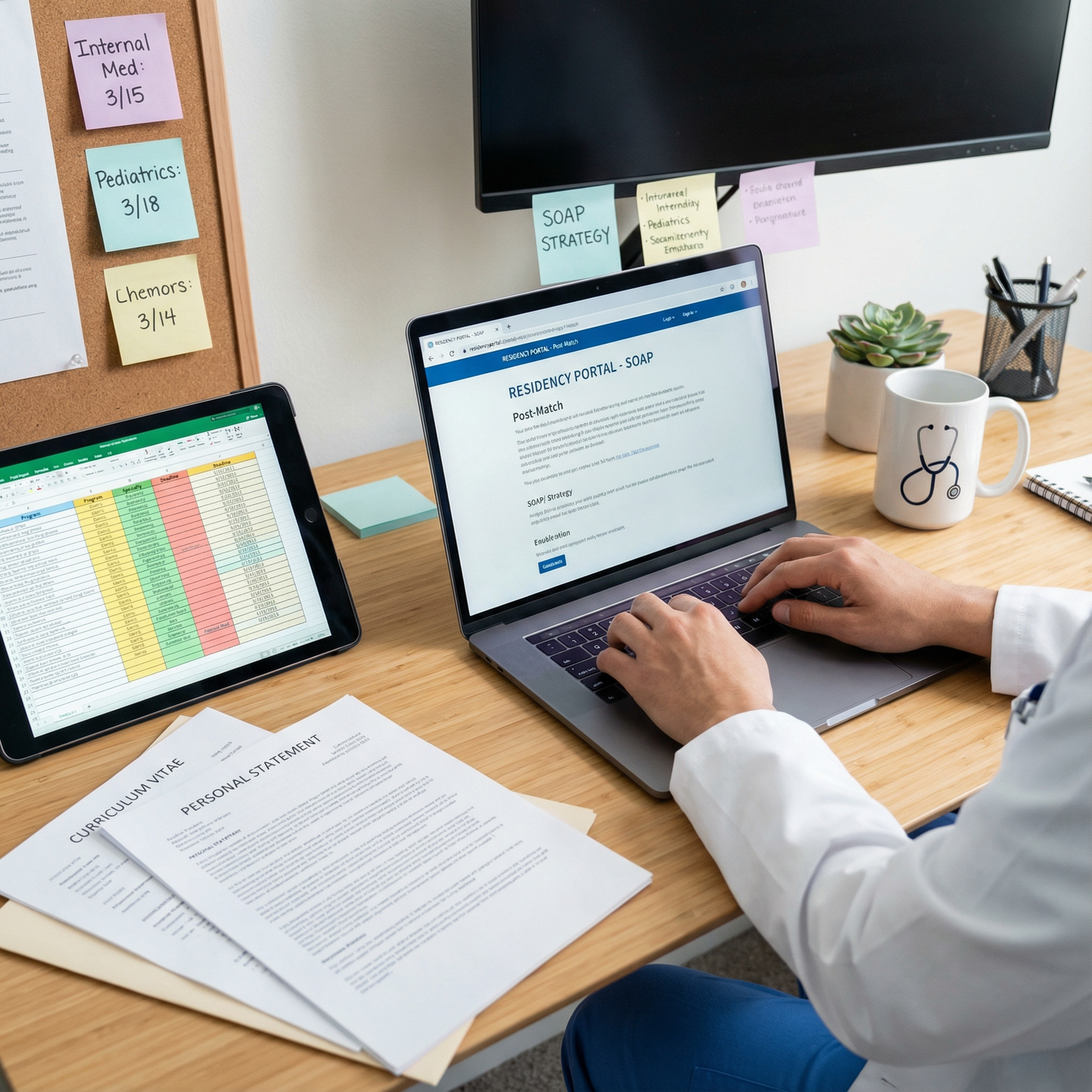
Make a table (even a simple spreadsheet) of your experiences:
- EHR optimization, order set development, quality improvement
- Data analytics projects, dashboards, registry work
- Clinical decision support design or evaluation
- Clinical documentation initiatives
- Participation in IT governance committees
- Courses, certificates, or degrees in informatics, data science, or related areas
- Publications, posters, talks, or workshops in informatics/health IT
Ask:
- Is the list thin or heavily weighted toward short-term, minor tasks?
- Does it show a trajectory—increasing responsibility, complexity, or leadership?
- Are the outcomes clear (not just “participated,” but “led X that resulted in Y”)?
3. Identify your top 3–5 modifiable gaps
After you’ve collected feedback and reviewed your materials, define your main gaps. For example:
- “Limited track record of completed projects with measurable outcomes.”
- “Minimal direct collaboration with IT or data analytics teams.”
- “Vague career goals and unclear link between my background and informatics.”
- “Weak technical literacy (no exposure to SQL, Python, or data tools).”
- “Letters didn’t directly speak to my informatics potential.”
These will guide your recovery plan over the next 6–18 months.

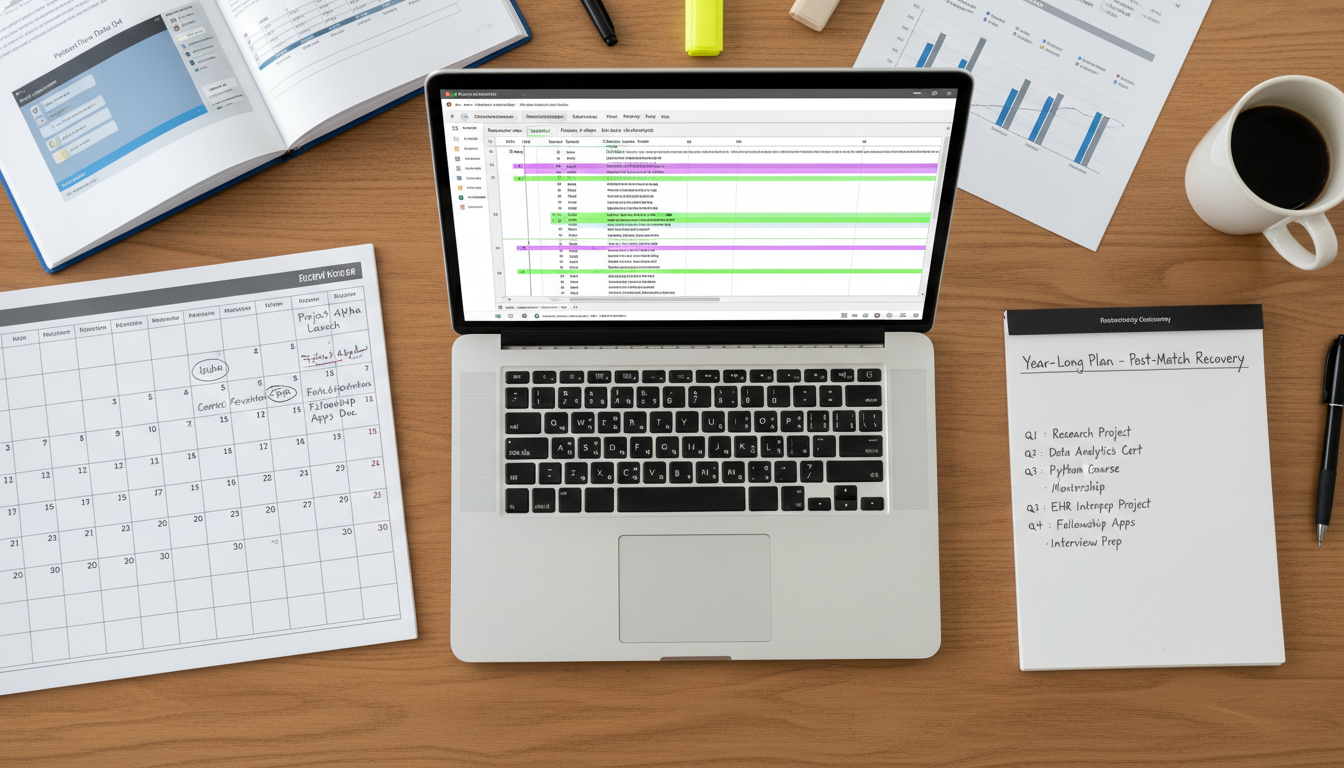
Step 3: Build a Targeted Recovery Plan (6–18 Months)
Failed match recovery is most effective when you approach it like a structured fellowship-prep year, even if you stay in full-time clinical work. The goal is to demonstrate sustained commitment, increasing responsibility, and focused growth in informatics.
Below are major components to consider, with practical steps.
A. Strengthen your hands-on informatics experience
1. Join or lead EHR and quality projects at your institution
- Contact:
- CMIO, associate CMIO, or other informatics leaders.
- EHR medical director, Epic/Cerner physician builder teams.
- Quality improvement office or clinical transformation teams.
- Volunteer to:
- Co-lead a small but meaningful project (e.g., optimizing a workflow, redesigning a progress note template).
- Work on a clinical decision support alert: from problem definition through design, implementation, and evaluation.
- Develop or refine an order set aligned with guidelines and quality metrics.
Focus on projects that complete within a year and generate measurable outcomes: decreased clicks, reduced errors, improved turnaround time, increased adherence to guidelines.
2. Get closer to data
Clinical informatics is not strictly a programming field, but familiarity with data tools and concepts is increasingly expected:
- Learn the basics of:
- SQL for querying clinical databases.
- A scripting language (e.g., Python or R) for data manipulation and simple analyses.
- Partner with:
- Data analysts or biostatisticians on a QI project that uses EHR data extraction.
- Your institution’s data warehouse or analytics team to understand how data flows, how dashboards are built, etc.
Even if you don’t become a coder, being able to speak the language and interpret the outputs is highly valued.
3. Consider a structured informatics or health IT role
If feasible, explore:
- A part-time role as a physician builder, clinical champion, or provider informatics liaison.
- Protected time for informatics projects as a chief resident, junior faculty member, or hospitalist.
- Short-term opportunities such as:
- Participation in major EHR go-live or upgrade projects.
- Being a super-user or trainer for new tools (e.g., scribes, ambient documentation, AI solutions).
Document your contributions carefully—before-and-after metrics, user feedback, and your specific responsibilities.
B. Add formal education or health IT training
You don’t necessarily need another degree to enter a clinical informatics fellowship, but targeted training can both strengthen your candidacy and improve your performance once you’re there.
Options include:
- Online certificates in:
- Clinical informatics
- Healthcare data analytics
- Health information systems
- Health data science
- Short courses or bootcamps in:
- SQL, Python, R
- Data visualization (Tableau, Power BI)
- Health IT project management
- Graduate degrees (if they align with your timeline and goals):
- MS in Biomedical or Health Informatics
- MPH with a focus on health services research or data analytics
- MS in Data Science with healthcare projects
If you pursue formal education, integrate it with practical projects at your institution so you can showcase real-world impact rather than only coursework.
C. Rebuild your narrative and professional identity
Many unmatched applicants focus exclusively on “fixing” their CV. Equally important is refining how you tell your story.
Ask yourself:
- What clinical problems have consistently frustrated me and drawn me toward systems-level solutions?
- How have I already tried to improve workflows, documentation, patient safety, or data use?
- Where do I see myself in 5–10 years in terms of role: CMIO, EHR lead, quality and safety leader, academic informatician, startup CMO, etc.?
Translate that reflection into a coherent narrative:
Origin story:
- A few concrete experiences that initially sparked your interest.
- “I saw X problem repeatedly. I tried Y. I realized Z about the role informatics can play.”
Progression:
- Specific projects and responsibilities that show growing engagement and leadership.
- How your clinical specialty informs your informatics perspective.
Future direction:
- What kind of informatics problems you want to work on.
- Why fellowship is the right next step compared to staying in a purely clinical or ad hoc IT role.
This story should permeate your personal statement, interviews, and networking conversations.
D. Strengthen mentorship and networking
In a relatively small field like clinical informatics, relationships matter profoundly.
Identify at least 2–3 mentors:
- A clinical informatician who can give specialty-specific advice.
- A local IT or analytics leader who can connect you to institutional projects.
- Possibly a non-physician informatics or data expert for technical perspective.
Engage with the community:
- Join AMIA (American Medical Informatics Association) or your regional informatics society.
- Attend informatics/health IT conferences, webinars, and virtual career panels.
- Present posters or short talks—even small QI projects are valuable contributions.
Informational interviews:
- Reach out (politely) to fellows, recent graduates, and program faculty.
- Ask about:
- Their path into informatics.
- What their program values most in applicants.
- What they wish they had done differently before applying.
Mentors and connections often help:
- Refine your application strategy.
- Provide stronger, more targeted letters.
- Alert you to unposted opportunities, fellowships, or job openings in health IT.
Step 4: Rethinking Your Next Cycle Strategy
If you plan to reapply for clinical informatics fellowship, you should approach the next cycle with a more deliberate and diversified strategy.
1. Broaden and prioritize your program list
- Cast a wider net:
- Include a mix of:
- Established academic programs
- Community-based or health-system–based programs
- Programs with less name recognition but strong project opportunities
- Include a mix of:
- Research each program deeply:
- Read their websites and recent publications.
- Look up current and former fellows’ interests and careers.
- Identify key themes: AI/ML, quality and safety, population health, digital health, operations, analytics.
Match your interests with programs where you can show genuine alignment, rather than relying solely on brand or geography.
2. Customize your application materials
Tailor your personal statement:
- Consider modest customization for groups of similar programs (e.g., heavy analytics focus vs. clinical operations focus).
- Explicitly mention:
- Why this type of program structure fits you.
- How you hope to contribute to their active projects or strategic goals.
Refresh your CV:
- Highlight informatics and health IT experiences at the top (e.g., “Informatics and Quality Improvement Experience” section).
- Use outcome-oriented bullets:
- “Led redesign of X workflow, reducing turnaround time from A to B.”
- “Co-developed CDS alert that decreased inappropriate Y orders by Z%.”
Upgrade your letters of recommendation:
- Seek at least one letter from:
- A clinical informatician, CMIO, or equivalent.
- Someone who has directly supervised you on an informatics or EHR project.
- Provide letter writers with:
- Your CV and personal statement.
- A one-page summary of key informatics projects and impact.
- Specific fellowship programs and their focus areas.
- Seek at least one letter from:
3. Sharpen your interview performance
You should be ready to discuss:
- Why clinical informatics? with depth and examples.
- Your most meaningful projects:
- Problem definition.
- Stakeholders involved.
- Your role and contributions.
- Measurable results and lessons learned.
- How you work on multidisciplinary teams:
- Clinicians, IT, analysts, nursing, administrators.
- Conflict resolution and change management experiences.
Practice answering:
- “Tell me about a time a project went sideways. What did you do?”
- “How do you see the role of a clinical informatician evolving over the next 5–10 years?”
- “What’s one thing you would improve in our EHR if you joined us?”
Mock interviews with informatics faculty or trusted mentors can be invaluable in translating your growth year into compelling, confident conversations.
Step 5: Parallel Paths – Alternatives if You Stay Unmatched
Even with a stronger application, a second failed match can happen, simply because supply is limited. Recovery planning should therefore include parallel paths that keep you moving toward your informatics career, with or without fellowship.
Option A: Clinical role with formal informatics responsibilities
Look for clinical positions that explicitly include:
- Protected time (e.g., 0.1–0.3 FTE) for:
- EHR optimization
- Clinical decision support
- Data analytics and reporting
- Digital health initiatives
- Titles such as:
- Associate Medical Director of Informatics
- Physician Champion for EHR Optimization
- Clinical Informatics Liaison
- Provider Champion, Digital Health
These roles can provide experiences equivalent to fellowship training in many respects. Over time, they can lead to leadership positions (CMIO, VP of Clinical Systems) and demonstrate to future fellowship programs that you are already functioning as an informatician.
Option B: Non-fellowship health IT training and roles
Other structured pathways include:
- Health IT vendor or consulting roles (while maintaining some clinical practice if desired):
- Clinical solutions consultant
- Physician advisor for EHR implementation
- Clinical content developer for decision support
- Hospital or system-level IT roles:
- Project or product manager with strong clinical interface
- Clinical innovation or digital transformation team member
In these roles, you may:
- Learn industry-standard project management frameworks.
- Gain deeper exposure to system architecture, interoperability, and large-scale deployments.
- Build a portfolio of projects that can rival or substitute for formal fellowship training.
Option C: Academic or research-focused informatics path
If you have a strong interest in research:
- Join an informatics or data-driven research team:
- Work on observational studies using EHR data.
- Participate in pragmatic trials, registry creation, or CDS evaluation.
- Pursue a graduate degree (MS, MPH, PhD) tied to:
- Clinical informatics
- Health services research
- Implementation science
- Biomedical data science
These can lead to:
- Faculty positions focused on informatics and data science.
- Grants and career awards centered on informatics interventions.
Option D: Digital health and entrepreneurship
For some physicians, the best fit is outside traditional institutions:
- Join or advise digital health startups or health tech companies.
- Focus on:
- Clinical workflow integration of apps or remote monitoring tools.
- User experience and clinician burden.
- Evidence generation and regulatory strategy.
Your clinical expertise + informatics mindset can be valuable even without formal fellowship training. If you later reapply, this experience can demonstrate innovation, adaptability, and leadership in real-world health IT environments.
Frequently Asked Questions (FAQ)
1. Does a failed match in clinical informatics mean I should give up on the field?
No. Many successful clinical informatics leaders either didn’t match on their first attempt or entered the field through non-fellowship routes. A failed match typically reflects the competitive nature and limited supply of positions, not a permanent judgment about your potential. The key is to address concrete gaps, build a stronger portfolio, and stay engaged in informatics work regardless of formal training.
2. Is clinical informatics fellowship absolutely necessary for a career in health IT?
Clinical informatics fellowship is a highly valuable, structured pathway—especially if you plan to sit for the ABPM Clinical Informatics subspecialty exam via the fellowship pathway. However, it is not the only path to a meaningful career in health IT. Many physicians build careers in:
- Hospital or system informatics roles,
- Vendor or consulting positions,
- Digital health startups,
- Data-driven research and academic roles
without formal fellowship. The trade-off is that you must be more proactive in curating equivalent experience, mentorship, and education.
3. How long should I wait before reapplying after a failed match?
Most applicants need at least 12–18 months to make meaningful improvements—especially if your gaps involve limited informatics experience, unclear narrative, or lack of targeted letters. Reapplying the very next cycle with only superficial changes rarely leads to different results. Instead, plan a deliberate “rebuild” period, complete at least one or two substantial projects, and then reapply with clear evidence of growth.
4. How can I talk about being an unmatched applicant during interviews without sounding negative?
You can address it briefly, professionally, and with a growth-oriented framing:
- Acknowledge it:
- “I applied previously and was not selected.”
- Reflect:
- “I sought feedback from mentors and programs, which highlighted that I needed more robust, outcome-driven project experience.”
- Show your response:
- “Over the past year, I led X and Y initiatives, partnered with our data analytics team, and completed a certificate in Z.”
- Reaffirm commitment:
- “This experience clarified my commitment to clinical informatics and sharpened my sense of how I want to contribute to the field.”
This conveys maturity, resilience, and the ability to learn from setbacks—all qualities that programs value.
A failed match in clinical informatics is not the end of your informatics journey; it is an inflection point. With thoughtful analysis, deliberate experience-building, and strategic reapplication—or by pursuing parallel health IT roles—you can still build a rich, impactful career at the intersection of clinical care and technology.