Understanding a Failed Match in the DMV Region
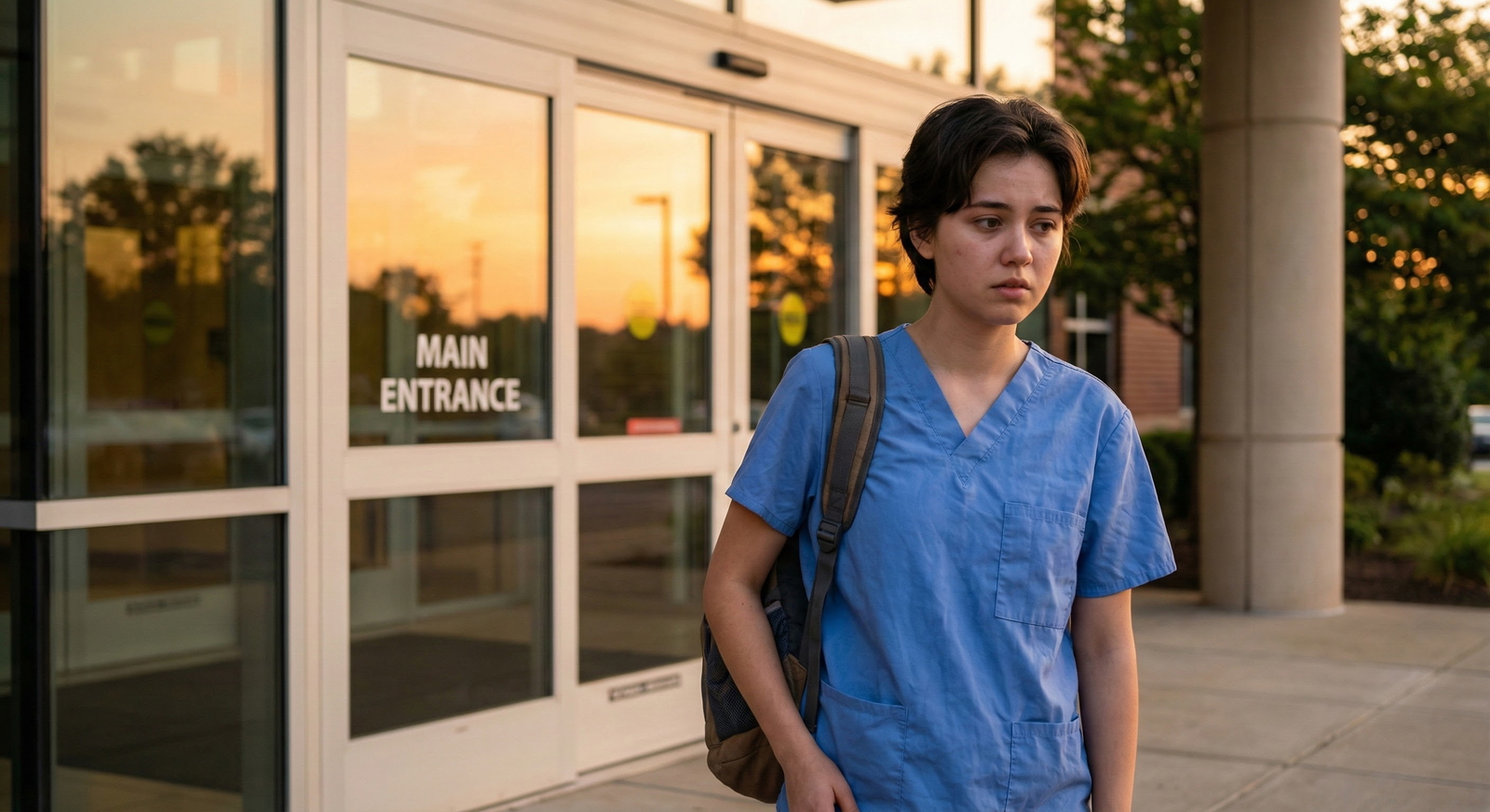
Not matching into residency is emotionally jarring and logistically challenging, especially in a competitive area like the DMV (Washington DC, Maryland, Virginia). Whether you “didnt match” completely, partially matched, or withdrew late, you are not alone—and your medical career is not over.
The DC residency programs and Maryland Virginia residency landscape offer both challenges and unique opportunities for recovery. The key is to move quickly, think strategically, and approach this as a temporary detour rather than a dead end.
In this guide, you’ll learn:
- What a failed match really means (and doesn’t mean)
- Immediate steps to take in the weeks after you learn you’re an unmatched applicant
- DMV-specific strategies and options (DC/MD/VA programs, institutions, and roles)
- How to strengthen your application over 6–12 months
- How to explain a failed match professionally in future cycles
This article is written with both US MD/DO and international medical graduates (IMGs, including FMGs) in mind, with a specific focus on the DMV region.
Step 1: Stabilize, Assess, and Get Organized
Acknowledge the Emotional Impact
Learning that you failed to match can trigger shame, anxiety, disappointment, or anger. Those reactions are normal. Before you make big decisions, take a few days to:
- Tell a trusted support person (mentor, friend, family member).
- Avoid impulsive emails to program directors or social media posts.
- Give yourself at least 24–48 hours to process the news.
This short pause will help you move from a reactive mindset (“My career is over”) to a strategic mindset (“I need a plan”).
Clarify Your Actual Match Status
“Didn’t match” can mean different things:
- Completely unmatched: No position through the Main Residency Match.
- Partially matched: Matched to an advanced position but not a prelim (or vice versa).
- Didn’t submit a rank list / withdrew: Application interrupted.
- SOAP-unmatched: Went through SOAP but did not secure a position.
Your exact status will shape your next steps. For example, a partially matched applicant might only need a preliminary year in the DMV region, while a completely unmatched applicant may need a broader, year-long recovery plan.
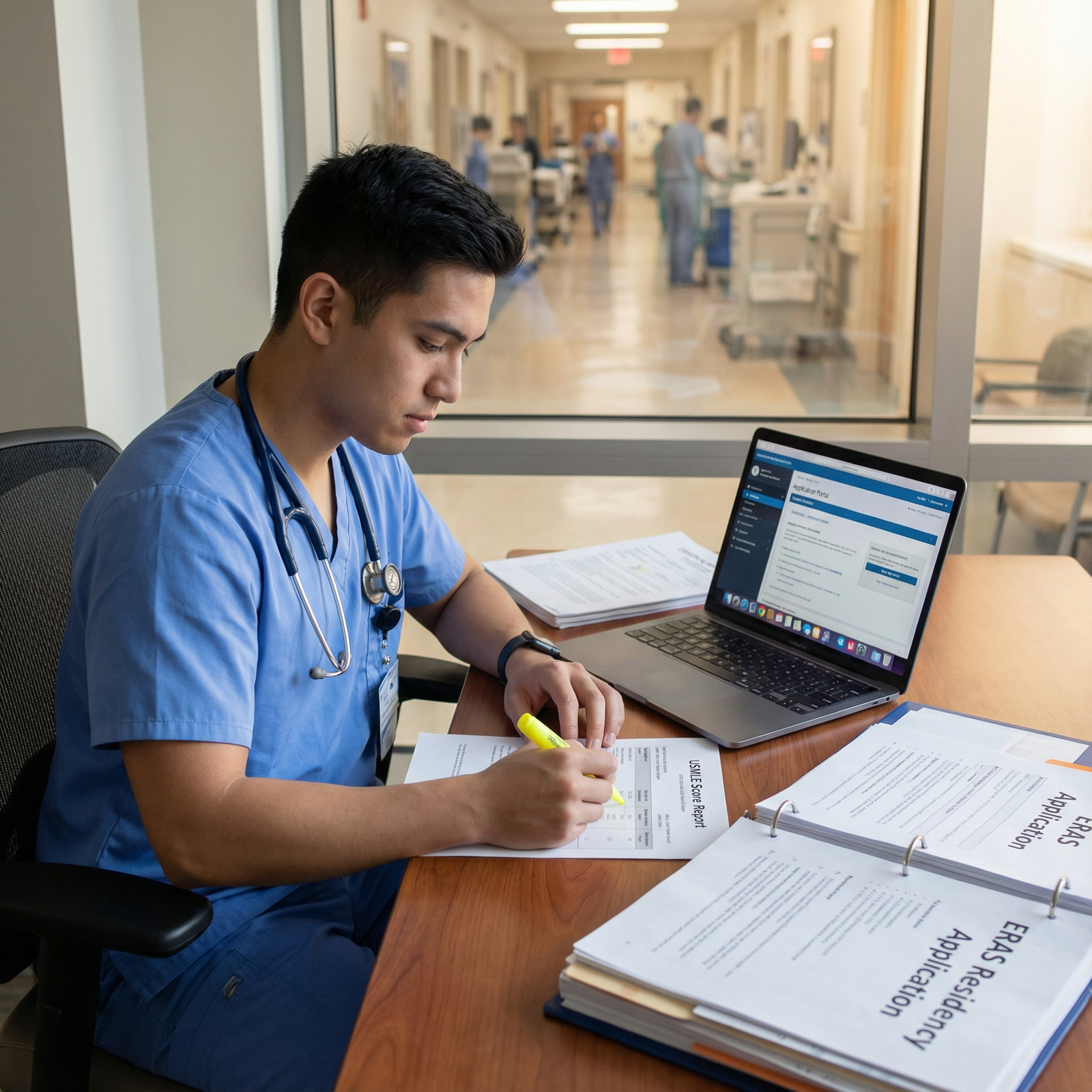
Analyze Your Application Objectively
Before focusing on DC residency programs or Maryland Virginia residency opportunities, you need a clear picture of why you were an unmatched applicant. Treat this like a root-cause analysis:
1. Academic metrics
- USMLE/COMLEX scores (overall and first attempt vs. multiple attempts)
- Any exam failures or significant score gaps
- Medical school performance, clerkship grades, class rank
2. Specialty choice and competitiveness
- Applying to a very competitive specialty (e.g., dermatology, ortho, plastic surgery) with borderline metrics
- Limited backup applications to less competitive specialties
- Geographic constraints that overly narrowed your list (e.g., only applying to DMV programs)
3. Application strategy and behavior
- Number and range of programs (too few? too competitive?)
- Timing of application submission (late ERAS submission hurts)
- Personal statement quality, red flags, or inconsistent narrative
- Letters of recommendation: type, strength, and relevance
4. Interview performance
- Lack of interview invites (application issue)
- Multiple interviews with no rank (may reflect interview or professionalism concerns)
- Feedback (formal or informal) from faculty or mentors
Where possible, ask for concrete feedback:
- Your Dean’s office or academic advisor
- A trusted faculty mentor who has seen many applications
- If possible, one or two program directors or coordinators who know you (even if not in the DMV)
Action item: Create a 1–2 page “Match Debrief” document that summarizes:
- Strengths
- Weaknesses
- Likely reasons for not matching
- Immediate goals (3–6 months)
- Long-term goals (12–18 months)
You’ll use this document to guide your recovery plan and to seek targeted advice.
Step 2: Immediate Recovery Strategies in the Weeks After Match
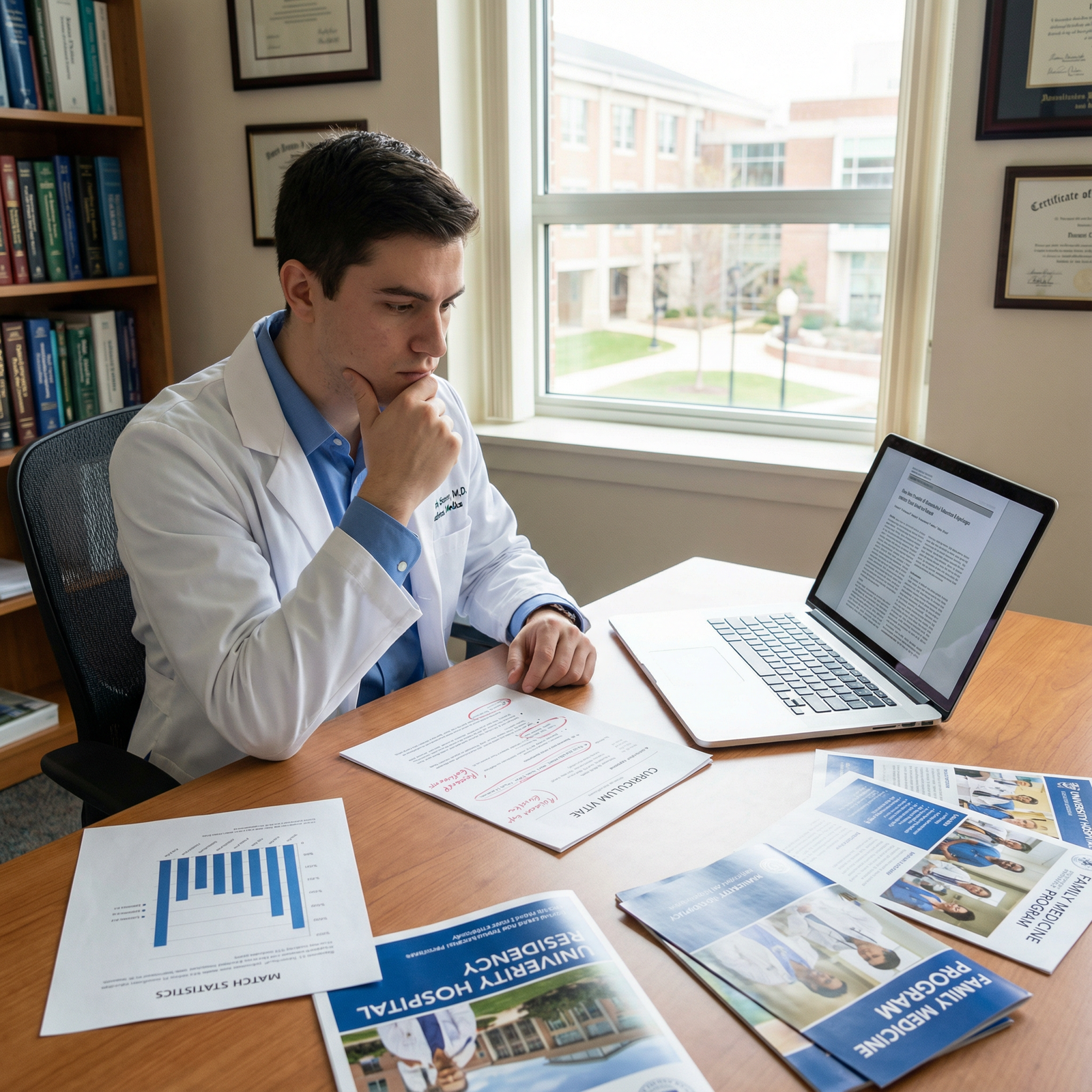
Explore Short-Term Options in the DMV
Even if you didn’t secure a residency slot, you can still build your profile through clinical, research, and academic roles in DC/MD/VA. The DMV region is rich with:
- Academic medical centers (e.g., Georgetown, GW, Howard, University of Maryland, VCU, INOVA-associated programs, Johns Hopkins-affiliated sites)
- Federal institutions (NIH in Bethesda, Walter Reed, VA hospitals)
- Public health agencies (CDC liaison offices, state health departments, local health departments in DC, MD, VA)
You should start outreach in the first 2–4 weeks after Match (and SOAP) ends.
1. Look for Off-Cycle or Unfilled Positions
While most positions are filled via NRMP, occasionally:
- Programs have unexpected vacancies due to resident transfers, performance issues, or leave.
- Some programs post non-NRMP or off-cycle PGY-1/PGY-2 positions.
Where to look:
- Program websites for DC, Maryland, and Virginia residency programs (internal medicine, family medicine, psychiatry, pediatrics, etc.)
- Institutional GME pages (e.g., MedStar, INOVA, University of Maryland, VCU, Sentara, Carilion, etc.)
- APDIM, AAFP, and specialty societies that list open positions
- ResidentSwap, FindAResident (if available), specialty listservs
Strategy:
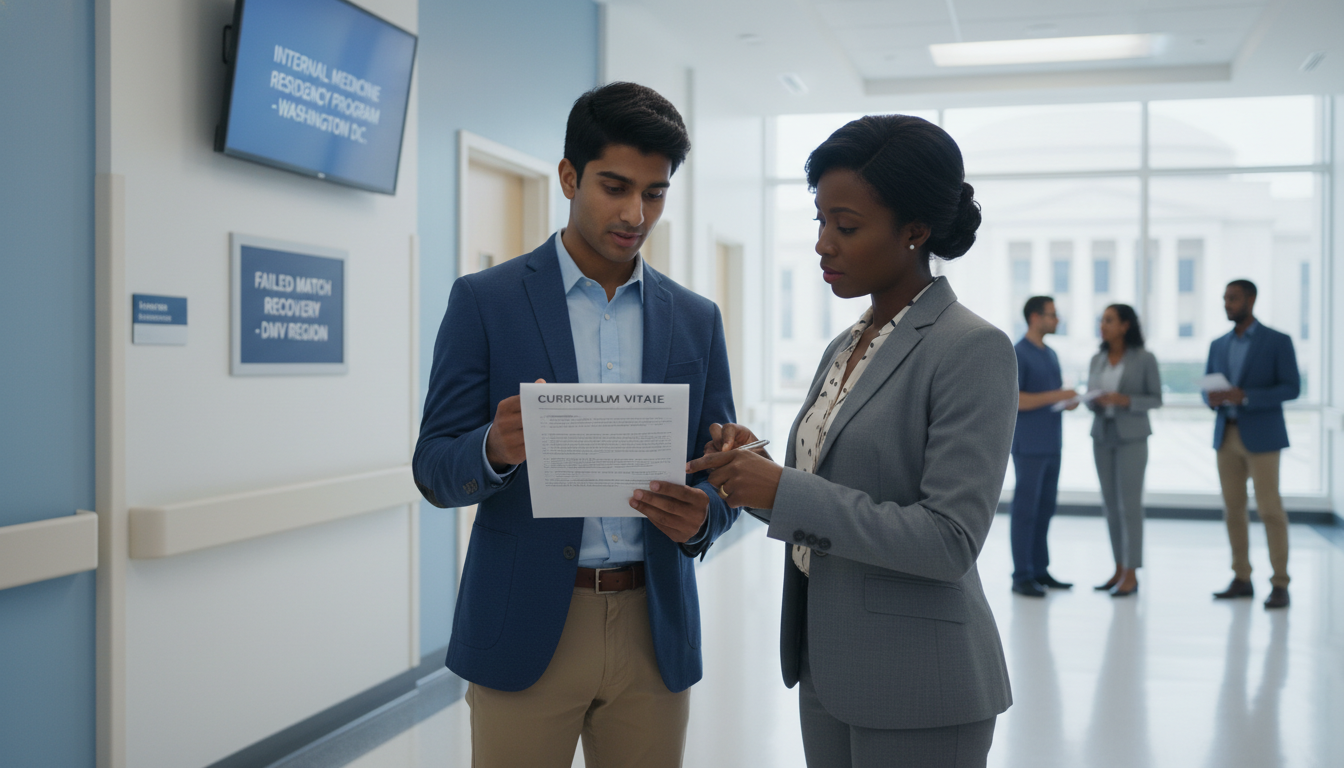
- Prepare a concise email + CV + personal statement adapted to specific programs.
- Emphasize:
- You are a recent unmatched applicant.
- You are available to start on short notice.
- Your particular interest in their geographic region and program features.
Even if no positions are open, you are now on their radar for research or observership opportunities.
2. Consider Transitional or Preliminary Year Roles
If you can secure a preliminary or transitional year in the DMV (or nearby), this can:
- Keep your clinical skills current
- Strengthen your record with US clinical experience
- Allow you to re-enter the Match more competitively
Key points:
- Prelim surgery years are intense; prelim medicine or transitional years may offer more flexibility and research time.
- A strong performance in a PGY-1 year within the DMV can help you transfer or reapply with new letters.
3. Protect Your Visa/Legal Status (For IMGs)
If you are an international graduate:
- Clarify your current visa status (F-1, J-1, H-1B, etc.).
- Speak with an immigration attorney if needed.
- Look for:
- Research positions at NIH, universities, or DC-area academic centers.
- Observerships or volunteer roles that won’t violate visa terms.
- Make sure any role you accept is compatible with:
- Licensing rules in DC/MD/VA
- Visa and federal regulations
Step 3: Building a 6–12 Month DMV-Focused Recovery Plan
You now shift from crisis management to strategic rebuilding. Your recovery plan should address the specific issues that led you to be an unmatched applicant while leveraging the rich opportunities in the DC/MD/VA region.
1. Shore Up Academics and Testing
If your weak point was exam scores or failures:
- Retake step-level exams only when beneficial and allowed (e.g., COMLEX Level 2, occasional specialty in-training exams if in a prelim year).
- Complete USMLE Step 3 (if eligible) during your recovery year, especially if:
- You’re an IMG.
- You plan to apply to internal medicine, family medicine, or psychiatry in the DMV.
- Use DMV-based resources:
- Study groups with other unmatched or pre-residency grads.
- Faculty-led board review courses from local institutions.
Document improved performance clearly in your next application (e.g., high Step 3 score, no new failures).
2. Strengthen Clinical Experience in DC/MD/VA
Clinical experience in the region you’re targeting is powerful. For the DMV:
Observerships and externships
- Look for structured programs at DC hospitals, Maryland academic centers, and Virginia community programs.
- Prioritize experiences that allow:
- Direct contact with attending physicians who write LORs
- Participation in teaching conferences and case discussions
Research assistant or clinical research coordinator positions
- NIH (Bethesda, MD)
- Georgetown, GW, Howard, University of Maryland, Johns Hopkins-affiliated sites
- INOVA, VCU Health, Sentara, and other Virginia systems
- Focus on specialties you plan to apply in (IM, FM, psych, peds, etc.).
Hospital-based volunteer roles
- DC and Maryland hospitals often have robust volunteer programs.
- Use these roles to:
- Demonstrate commitment
- Network with residents and attendings
- Learn program culture and expectations
Be sure to track:
- Hours worked
- Clinical responsibilities
- Cases or projects
- Mentors for potential letters
3. Generate Strong, DMV-Based Letters of Recommendation
Your next application must not repeat minimal or generic LORs. In the DMV context:
- Aim for 2–3 letters from DC/MD/VA supervisors who:
- Have seen you work clinically or in meaningful research.
- Are familiar with the US residency system.
- Can comment on your reliability, work ethic, communication, and professionalism.
Tips:
- Ask early: “What would you need to see from me over the next 2–3 months to feel comfortable writing a strong letter?”
- Provide:
- Your CV
- Match Debrief summary
- Draft personal statement
- Specific specialty and programs you’re targeting
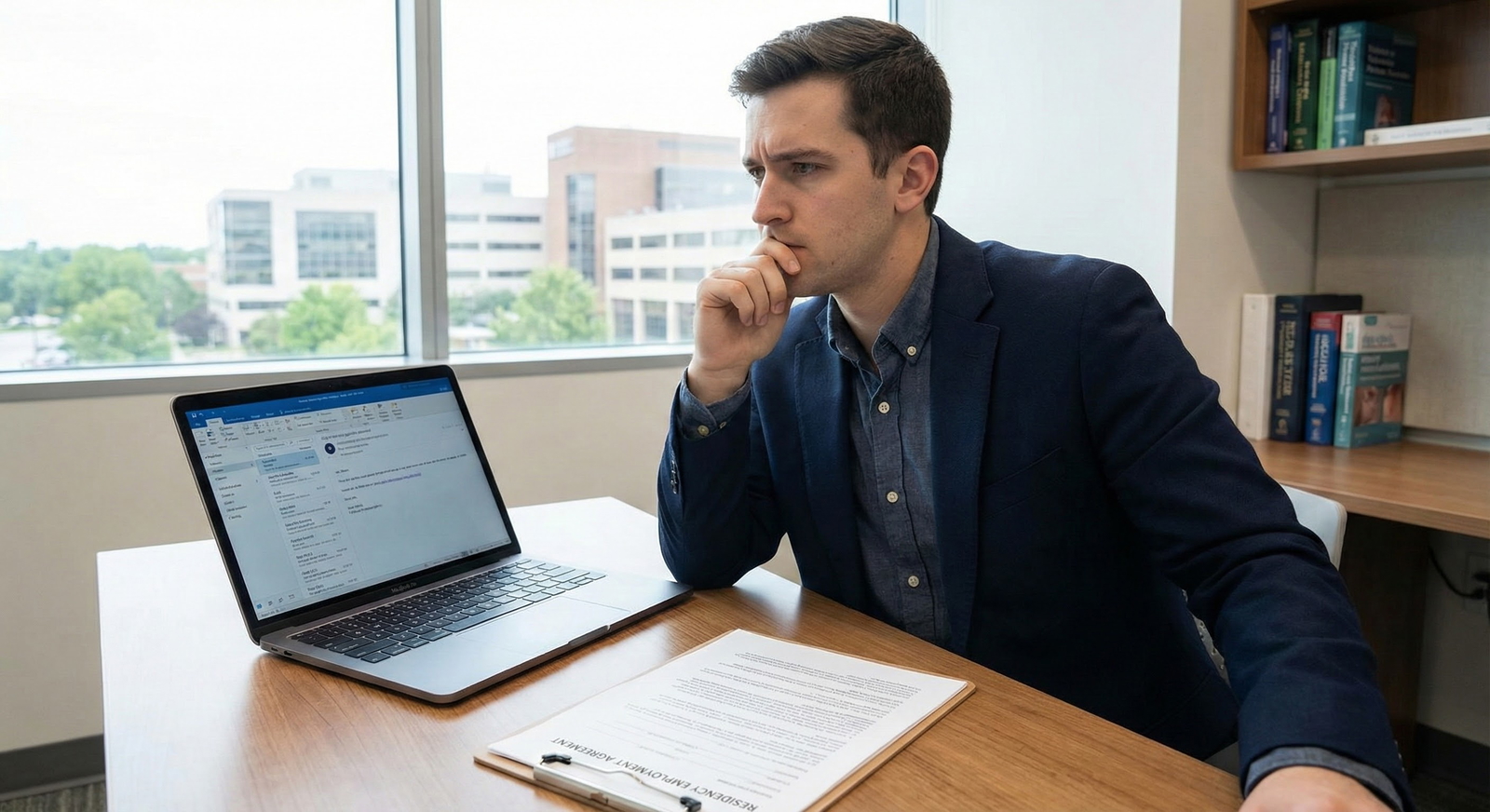
Step 4: Reframing Your Narrative for the Next Application Cycle
You can’t change the fact that you didn’t match, but you can control how you present it. A clear, confident narrative is essential for DC residency programs and Maryland Virginia residency program directors reviewing your file.
Addressing Being Unmatched in Your Personal Statement
Program directors know that many excellent physicians failed to match at least once. Your task:
- Be honest, concise, and solution-focused.
- Avoid self-pity or vague explanations.
An example framework:
Brief acknowledgment
- “I applied to residency in 2025 but did not match.”
Concise reason (if known and appropriate)
- “In retrospect, I limited my applications too narrowly to a small number of highly competitive programs in the DMV region and applied late in the cycle.”
Constructive response
- “In the year since the Match, I have worked as a research assistant in internal medicine at [DMV institution], completed additional US clinical experience at [hospital], and passed USMLE Step 3. This period has deepened my interest in caring for underserved urban populations in the DC area…”
Forward-looking focus
- “These experiences have made me more prepared and committed to contributing as a resident in your program and to the DC/MD/VA community.”
How to Talk About a Failed Match in Interviews
You will almost certainly be asked about it. Prepare a 60–90 second, structured answer:
- State the fact: “I was an unmatched applicant in the 2025 cycle.”
- Clarify what you learned:
- Misjudged competitiveness
- Needed stronger clinical letters
- Needed improved interviewing skills
- Describe concrete changes:
- Secured DMV-based clinical experience
- Improved exam performance
- Completed research or quality improvement
- End with a positive, professional perspective:
- Emphasize resilience, insight, and renewed commitment.
Example:
“In my first application, I focused almost exclusively on a narrow range of DC residency programs and underestimated how competitive they were. I also applied later in the cycle, which limited my interviews. After not matching, I met with advisors, worked as a research assistant in internal medicine at a Maryland academic center, completed an observership at a Virginia community hospital, and obtained new letters that reflect my current abilities. I learned to plan earlier and more strategically, and I now feel significantly more prepared to contribute from day one.”
Step 5: DMV-Specific Strategies and Networking
The DMV region is dense with medical, academic, federal, and public health institutions, which you can leverage for recovery.
Map Out Key Institutions and Programs
Develop a structured list of:
- Washington DC
- Georgetown University Hospital
- George Washington University Hospital
- Howard University Hospital
- VA Medical Center (DC)
- Children’s National Hospital
- Maryland
- University of Maryland Medical Center
- Johns Hopkins-affiliated hospitals
- NIH (Bethesda)
- MedStar facilities
- Virginia
- INOVA Fairfax, INOVA Alexandria, and affiliated programs
- Virginia Commonwealth University (VCU)
- Sentara hospitals
- Carilion Clinic and associated residencies
For each program that aligns with your specialty:
- Identify the program coordinator, APD, and PD
- Note if they historically accept:
- IMGs
- Reapplicants
- Non-traditional candidates
- Track any alumni connections from your medical school
Build Real Relationships, Not Just Email Blasts
Networking in the DMV can be powerful if you approach it professionally:
- Attend local grand rounds and CME events open to visitors.
- Join specialty societies with DC/MD/VA chapters (e.g., ACP, AAFP, APA).
- Volunteer for local health fairs, free clinics, and community health projects.
When reaching out via email:
- Keep it short and personalized:
- Who you are
- Why you’re reaching out
- How you’re currently involved in the DMV region
- A specific, modest ask (e.g., 15-minute call, advice on strengthening your application, observership inquiry)
Example:
“I am a 2024 graduate who applied to internal medicine and did not match. I am currently working as a research assistant in [institution] and seeking to gain more clinical exposure in the DMV area. I greatly admire your program’s commitment to [specific feature]. Would it be possible to schedule a brief call or meeting to learn more about any potential observerships or ways to get involved?”
Over time, a few genuine connections can translate into:
- Strong advocacy during the next Match
- Insider knowledge about program priorities and culture
- Early awareness of off-cycle openings

Step 6: Contingency Planning and Long-Term Career Flexibility
Even with an excellent recovery plan, there is no guarantee of matching the very next cycle, especially if your profile has multiple risk factors (low scores, multiple attempts, major gaps, or changing specialties). It’s wise to have tiered plans:
Plan A: Match in Desired Specialty in DMV (High Aim)
- Target DC residency programs and Maryland Virginia residency programs that:
- Fit your metrics and experience
- Have some history of accepting reapplicants/IMGs
- Apply broadly beyond DMV to maximize your chances.
- Start ERAS on day one; submit early and complete all requirements promptly.
Plan B: Broaden Specialty or Geography
If your specialty is very competitive or your metrics are below average:
- Consider:
- Family medicine, internal medicine, psychiatry, pediatrics, neurology as alternatives.
- Community-based programs in less saturated regions outside the DMV.
- Think long-term: You can still return to practice in the DC/MD/VA region after training elsewhere.
Plan C: Alternate Clinical or Health-Related Careers
If repeated cycles as an unmatched applicant lead you to re-evaluate residency:
- Explore careers where your medical background is valued:
- Clinical research (particularly abundant in the DMV, especially NIH and academic centers)
- Public health (DC and state health departments in MD and VA)
- Health policy and advocacy (think tanks, NGOs, federal agencies)
- Medical education roles (simulation centers, curriculum development)
- Medical writing, pharma, or biotech (Regulatory, safety, or scientific roles)
This doesn’t have to be an “either-or” choice; some physicians transition back into training after time in research or public health.
Practical Timeline: First 12 Months After a Failed Match (DMV-Focused)
Months 0–1
- Emotional processing and stabilization
- Match Debrief and cause analysis
- Begin outreach for DMV observerships, research, or open positions
Months 1–3
- Secure at least one structured role in the DMV (research, observership, volunteer, or prelim/transitional position)
- Start networking with faculty and residents at target institutions
- Begin or continue studying for Step 3 (if applicable)
Months 3–6
- Solidify 1–2 strong local LORs
- Complete Step 3 (if reasonable and beneficial)
- Draft new personal statement and updated CV
- Attend local meetings, grand rounds, and society events
Months 6–9
- Finalize specialty decision and target program list
- Strengthen portfolio with any research abstracts, posters, or quality-improvement projects
- Conduct mock interviews and practice explaining your unmatched status
Months 9–12
- Prepare ERAS early, with polished documents and updated experiences
- Submit ERAS promptly when it opens
- Maintain ongoing clinical or research involvement through the interview season
- Stay in close contact with mentors for guidance and advocacy
FAQs: Failed Match Recovery in the DMV Region
1. Are DC residency programs and Maryland Virginia residency programs more competitive than average?
Many DMV programs are attached to major academic centers or located in highly desirable urban/suburban areas, which can increase competitiveness. However, there is also a spectrum:
- Highly competitive: Big-name academic centers, NIH-affiliated programs, and certain specialties.
- Moderately competitive: Well-regarded community-academic hybrids.
- More accessible: Smaller community programs, especially outside central DC.
Unmatched applicants should typically apply broadly—not only in DC/MD/VA—to maximize match chances, while still leveraging DMV connections for letters and experience.
2. Can an unmatched applicant realistically match into the DMV region on a second attempt?
Yes, it is possible, especially if:
- You address the specific weaknesses that led to your initial failed match.
- You build local clinical or research experience in DC/MD/VA.
- You secure strong letters from DMV-based faculty.
- You apply earlier, more broadly, and more strategically.
However, be realistic: depending on your metrics and specialty, you may need to consider training outside the DMV and returning later to practice or fellowship.
3. How should I decide whether to switch specialties after not matching?
Consider switching if:
- Your previous specialty is extremely competitive relative to your metrics.
- Multiple mentors and program directors have suggested a change.
- Your true interests align reasonably with another specialty, such as internal medicine, family medicine, pediatrics, psychiatry, or neurology.
Before switching:
- Obtain observership or research experience in the new specialty (ideally in the DMV).
- Talk with residents and faculty in that field.
- Ensure your personal statement and letters clearly support the new path.
4. Is taking a non-clinical job in the DMV (e.g., research or public health) risky for future residency chances?
Non-clinical roles can be beneficial if they are:
- Clearly tied to medicine or healthcare (research, public health, health policy).
- Accompanied by at least some ongoing clinical exposure (volunteering, observerships, or part-time clinical roles if you’re licensed).
- Used strategically to generate strong letters, publications, or evidence of leadership and professionalism.
For many applicants—especially in a region like the DMV with NIH and large public health infrastructure—non-clinical work is a legitimate and often respected part of a recovery pathway, as long as you maintain some clinical connection and present a coherent narrative.
A failed match is a serious setback, not a permanent verdict. The DMV region, with its dense network of academic, clinical, research, and public health institutions, offers unmatched applicants a rich environment for recovery. With honest self-assessment, a structured plan, and consistent engagement in DC/MD/VA opportunities, you can rebuild your candidacy and move forward toward a successful medical career.