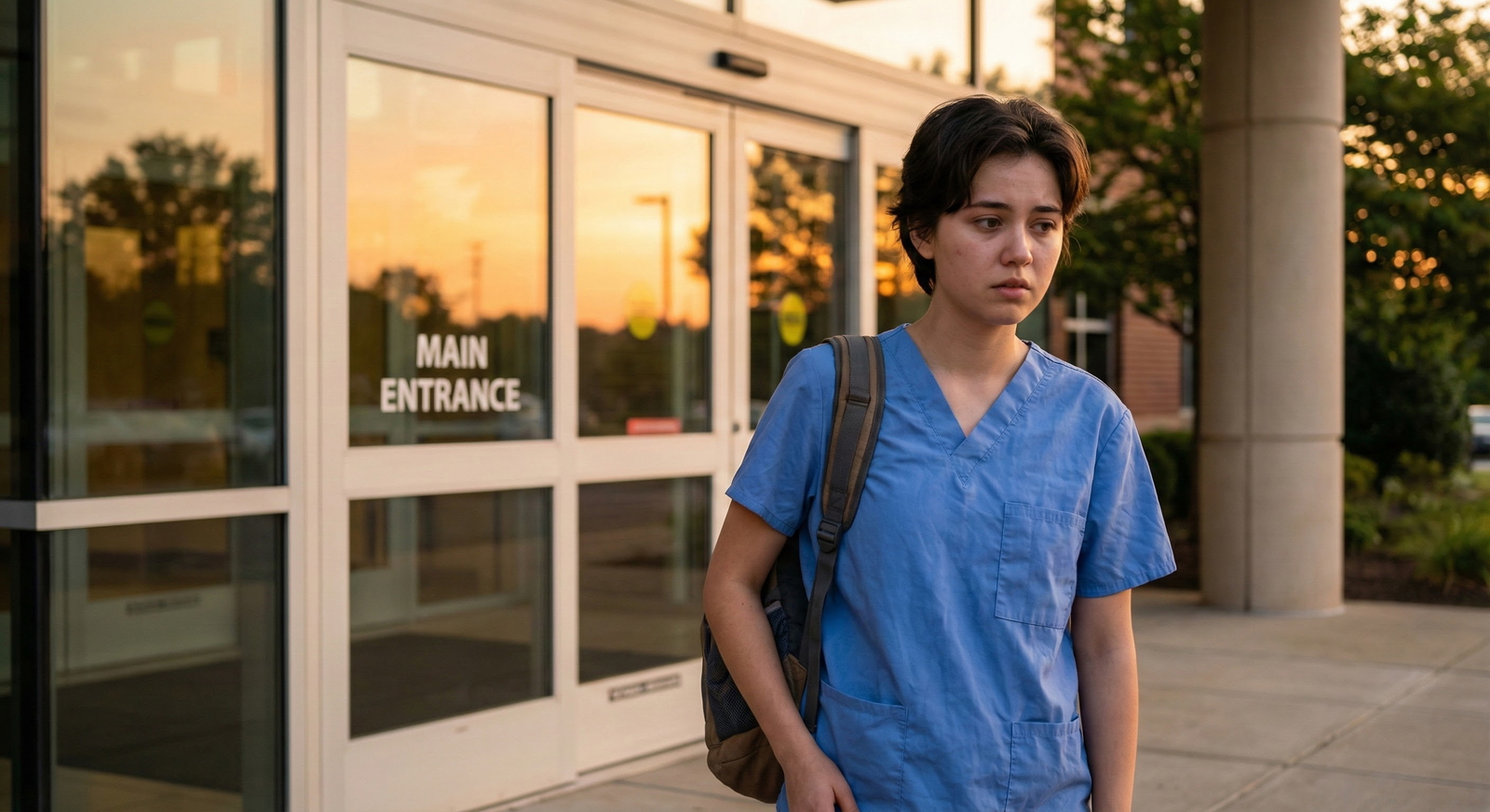
Understanding a Failed Match in Emergency Medicine
Not seeing your name on Match Day—especially when you were aiming for an emergency medicine residency—can feel devastating. You might be thinking: “I failed the EM match… What now?” or even “Does this mean I’ll never be an emergency physician?”
A failed match (or going unmatched) is far more common than most applicants realize, and it is not the end of your path in medicine or in emergency medicine. Many practicing emergency physicians did not match on their first attempt. What shaped their careers was not the initial outcome, but how they responded over the following days, months, and year.
This guide is written specifically for unmatched applicants interested in emergency medicine. It will help you:
- Understand why you may not have matched
- Develop a structured recovery plan for the year ahead
- Decide whether to reapply to emergency medicine or pivot strategically
- Build a stronger profile as a competitive EM candidate
- Protect your mental health and financial stability during a challenging year
Whether you just learned you didn’t match or you are planning a reapplication cycle after a previous unsuccessful attempt, you can use this as a roadmap.
Step 1: Stabilize, Decompress, and Reframe
Acknowledge the Loss
Not matching or “failing the EM match” is a real loss—of an expected identity, timeline, and cohort. Give yourself explicit permission to feel whatever comes up: grief, anger, embarrassment, shame, or numbness. Trying to “power through” without acknowledging this will make it harder to think clearly in the weeks ahead.
Practical tips (first 72 hours):
- Control disclosure: Tell only the people you trust initially (e.g., close family, partners, one or two trusted peers). You can widen that circle later once you’ve processed more.
- Avoid impulsive decisions: Don’t fire off angry emails or withdraw completely. You don’t yet have the data you need.
- Prioritize sleep and food: Basic needs matter. Even small routines (short walk, meal with family, regular bedtime) can ground you.
Separate Self-Worth from Outcome
The EM match is a logistically constrained process, not an absolute measure of your worth or potential. Every year, many strong candidates—US MDs, DOs, and IMGs—go unmatched in emergency medicine for reasons that are often structural:
- Changing program priorities
- Limited number of positions
- Geographic clustering or over-application to a small number of “popular” programs
- Evolving concerns in the specialty (e.g., job market narratives, shifts in competitiveness)
Your job now is to treat this like a complex clinical case: gather data, form hypotheses, build a plan, and execute.
Step 2: Conduct a Honest, Data-Driven Application Autopsy
Collect All Relevant Information
Before you decide whether to reapply or pivot, you need an accurate understanding of why your emergency medicine residency application didn’t succeed. Gather:
- ERAS application & personal statement (final versions)
- MSPE (Dean’s Letter) and transcript
- USMLE/COMLEX scores and attempts
- Letters of recommendation (especially EM SLOEs)
- Interview list (who invited you, who didn’t, how many)
- Rank list (how long it was, how competitive programs were)
- Any feedback you’ve already received (advisors, mentors, PDs)
Then, schedule structured feedback sessions.
Who to Ask for Feedback
Aim for 3–5 independent reviewers, including:
- Your home EM advisor or clerkship director (if available)
- A program director or associate PD (EM if possible, but generalist perspectives can also help)
- A faculty mentor who knows you well (even if not in EM)
- A recently matched EM resident who can provide peer-level, current-cycle insights
Send them your materials in advance and ask specific questions:
- “If I were on your selection committee, how would you categorize my application (top tier / mid / lower, and why)?”
- “What do you see as my three biggest strengths and three main concerns?”
- “If I improved only two things over the next 12 months for EM reapplication, what should they be?”
Take detailed notes and look for patterns. Do not fixate on any single piece of feedback in isolation.
Common EM Match Failure Patterns
Some recurrent reasons emergency medicine applicants didn’t match or failed the EM match include:
Insufficient or weak EM SLOEs
- Only 1 SLOE or none from a core academic EM site
- Generic or lukewarm narrative comments
- Relative ranking below peers without strong offsetting strengths
Score- or academic-related concerns
- Low Step 1/COMLEX Level 1 (even if now pass/fail, older scores may matter)
- Step 2 CK or COMLEX Level 2 performance below program cutoffs
- Exam failures or repeats without clear remediation narrative
Limited or unbalanced program list
- Applied only to highly competitive or geographically constrained programs
- Did not apply broadly across program types (community, university, hybrid, different regions)
- Very short rank list (e.g., fewer than 8–10 programs ranked)
Low interview yield or performance issues
- Few EM interview invitations despite broad application
- Reported red flags on interviews (professionalism, fit, motivation for EM)
Significant red flags
- Failing grades, professionalism concerns, gaps without explanation
- Prior unsuccessful match attempt without clear progress since
Your next steps depend on which of these patterns (or others) applied to you.
Step 3: Decide on Your Strategic Direction for the Next Year
Clarify Your Core Question
You need to answer:
“Do I still want to pursue emergency medicine as my primary career goal, knowing it may take more time and delayed income, or am I open to—or even prefer—another realistic path?”
There is no universally “right” answer. There is only the answer that aligns with your values, finances, and tolerance for risk and delay.
Broadly, unmatched EM applicants have four main pathways:
- Reapply to emergency medicine with a strengthened application
- Pursue a transitional or preliminary year (medicine or surgery) and reassess
- Pivot to another specialty (during SOAP or in the next cycle)
- Engage in a dedicated non-residency year (research, graduate degree, clinical positions like scribe or hospitalist extender, etc.) while planning a future application
Each has pros and cons.
Pathway 1: Reapplying to Emergency Medicine
Reapplying to emergency medicine residency after an EM match failure is common and often successful—if you show clear, measurable growth.
When Reapplication Is Reasonable
You are a good candidate to reapply if:
- Your feedback suggests you are close to competitive with specific gaps (e.g., need more SLOEs, broaden program list, improve interview skills).
- You genuinely love emergency medicine, even after this setback.
- You can support yourself financially for another year (through work, loans, or family support).
- You’re willing to work hard and accept geographic flexibility.
Build a Structured “Glide Year” Plan
Treat the upcoming 12–18 months as an intentional bridge year, not “time in limbo.” Define 3–5 measurable goals, such as:
- Obtain 1–2 new, strong EM SLOEs
- Demonstrate academic improvement (e.g., new board scores, coursework, or research productivity)
- Deepen EM-specific experiences (clinically or academically)
- Address any professionalism, communication, or interview deficiencies
- Expand your professional network in EM
How to achieve these:
1. Secure EM Clinical Time and SLOEs
If you did not match and you did not enter a different PGY‑1:
- Seek visiting rotations:
- Post-graduate EM sub-internships, observation rotations, or fellow-type roles where you can still obtain a SLOE-like letter.
- Many EM departments have visiting “fellow,” “sub‑I,” or “post‑grad” positions specifically to support reapplicants.
- Consider international or rural EM experiences with explicit teaching and supervision, though these may yield standard letters rather than SLOEs.
If you are in a preliminary or transitional year (see Pathway 2), coordinate EM electives early with:
- Your prelim/TY program director
- The target EM programs for away rotations
Be explicit that you are reapplying to EM and seeking evaluation.
2. Improve Academic Markers
Depending on your profile:
- Retake or newly take Step/COMLEX exams (if permitted) to demonstrate upward trajectory.
- Complete online or in-person EM or acute care–related coursework (e.g., ultrasound courses, critical care, toxicology) with certificates.
- Join or start an EM research project:
- Work with EM faculty on QI, retrospective chart reviews, educational projects, or simulation.
- Aim for at least one abstract, poster, or manuscript submission.
3. Strengthen Your EM Narrative
Be ready to articulate:
- Why emergency medicine is still the right choice, even after an unsuccessful EM match.
- What you learned from not matching and how you’ve responded.
- How your glide-year activities make you more prepared to be an EM resident.
This should be reflected in:
- A revised personal statement centered on growth, reflection, and commitment
- Updated CV showing longitudinal engagement in EM or acute care
4. Broaden and Refine Your Application Strategy
For the next EM match:
- Apply more broadly:
- Include a mix of academic, community, and hybrid programs.
- Apply to a wider geographic range than before.
- Include programs with a track record of taking reapplicants or DOs/IMGs if relevant.
- Adjust program targeting:
- If your scores or SLOEs are mid-range, limiting yourself to top-tier urban academic EM residencies is risky.
- Consider “safety” programs more seriously—even if location is less ideal.
5. Nail the Interview Phase
If you got enough interviews but didn’t match:
- Record and review mock interviews with EM faculty and peers.
- Focus on EM-specific questions:
- “Why EM?”
- “Tell me about a difficult patient interaction.”
- “What did you learn from going unmatched?”
- “If you don’t match again, what is your plan?”
- Practice discussing your failed match honestly, without defensiveness:
- Briefly acknowledge what happened
- Own mistakes or miscalculations
- Emphasize what you did to improve and what is different now

Pathway 2: Using a Transitional or Preliminary Year Wisely
Many unmatched applicants enter a transitional year (TY) or preliminary internal medicine or surgery year through SOAP or a later offer, then decide what’s next.
Advantages
- Continuous clinical training and salary
- Maintains clinical currency and references
- Opportunity to show you can function at the intern level
- Possible access to EM electives and letter writers
Risks and Challenges
- Demanding schedule may leave limited time for EM‑specific extras.
- Program may not be fully supportive of your plan to leave after a year.
- If not managed intentionally, you can complete a TY/prelim year without improving your EM application meaningfully.
How to Make a TY/Prelim Year Help an EM Match
- Meet early with your program director:
- Be honest (but professional) about your interest in reapplying to emergency medicine.
- Ask for support with EM rotations, letters, schedule flexibility for interviews.
- Schedule EM electives or off-service rotations that are respected in EM (ICU, cardiology, trauma, anesthesia, ultrasound).
- Seek formal evaluations and a strong letter describing your performance as an intern—this can be powerful.
- Continue EM‑aligned scholarship (QI, case reports, teaching medical students in ED, etc.).
Pathway 3: Pivoting to Another Specialty
For some unmatched EM applicants, the best long-term decision is to pivot—either during SOAP or in a subsequent cycle.
This might be the right move if:
- Feedback about your EM competitiveness is strongly negative (e.g., repeatedly poor EM SLOEs, serious unresolved red flags).
- Your interest in other specialties (internal medicine, family medicine, anesthesia, psychiatry, etc.) is genuine and sustained.
- Lifestyle, job market, or personal values make another specialty more appealing.
How to Pivot Thoughtfully
- Reflect honestly on your motivations:
- Are you choosing this because you truly see yourself thriving there, or purely from fear of another failed match?
- Get exposure if time allows:
- Short observerships or electives in the new field
- Conversations with residents and attendings in that specialty
- Rebuild your narrative:
- Adjust your personal statement and letters to reflect authentic interest and alignment with the new specialty’s values.
- Avoid sounding like you “settled” for the new field; emphasize fit and forward-looking commitment.
- Leverage transferable strengths from EM:
- Comfort with acute care
- Teamwork under pressure
- Communication skills with diverse patients
A well-executed pivot can be deeply satisfying. Many physicians who originally aimed for emergency medicine ultimately find long-term career fulfillment in other specialties.
Pathway 4: A Non-Residency “Bridge Year” Outside of GME
Some unmatched applicants don’t enter any residency right away. Instead, they take a dedicated year to regroup, work, and strengthen their candidacy—either for EM or another specialty.
Common Bridge-Year Roles
- Research fellow or coordinator in an EM or critical care department
- Clinical scribe in emergency departments
- Simulation or medical education fellow
- Public health, policy, or global health positions related to acute care
- Pursuit of additional degrees (MPH, MBA, MS in Clinical Research) or advanced certificates
Making This Year Count for an EM Reapplication
- Stay clinically adjacent: ED scribes, research assistants in the ED, and simulation roles keep you in the environment.
- Produce tangible outcomes:
- Abstracts, posters, publications, QI projects, curriculum development
- Leadership roles in projects or teams
- Maintain consistent mentorship:
- Regular check-ins with EM faculty who can write updated letters.
Be prepared to explain why you chose this path and how it concretely improved your readiness for EM residency.

Emotional, Financial, and Professional Resilience
Protect Your Mental Health
Not matching can trigger or worsen anxiety, depression, and imposter syndrome. Signs you should seek professional support:
- Persistent low mood, hopelessness, or loss of interest
- Difficulty functioning day-to-day
- Thoughts of self-harm or feeling that your life is over
Actions to consider:
- Connect with your institution’s counseling services or an external therapist.
- Join peer support groups (online or local) for unmatched applicants.
- Maintain at least one non-medical activity (exercise, hobbies, social connections) deliberately every week.
Your value as a person is not contingent on an emergency medicine residency, an EM match, or any singular professional milestone.
Address Financial Reality
A failed match can mean a year without resident salary, relocation changes, or loan concerns.
- Contact your loan servicer early:
- Ask about forbearance, income-based repayments, or other options.
- Make a 12-month budget:
- Include realistic income from any job and necessary expenses.
- Consider short-term work:
- Tutoring, MCAT/USMLE prep, research assistant positions, scribing.
- Avoid high-interest debt whenever possible.
Being proactive with finances prevents urgent money stress from dictating rushed career decisions.
Rebuild Professional Identity and Confidence
- Keep a running list of wins—small and large—throughout your recovery year (compliments from supervisors, project milestones, exam scores).
- Ask mentors to help you articulate your strengths in concrete terms.
- Consider low-stakes opportunities to teach or present (student lectures, small-group facilitation, poster sessions) to reinforce your sense of capability.
Remember: your professional story is still being written. Many outstanding emergency physicians, hospital leaders, and academic faculty have chapters that include “didn’t match” or “failed match” experiences.
Putting It All Together: A 12-Month Sample Timeline for an Unmatched EM Applicant
This is an example for an unmatched applicant who decides to reapply to emergency medicine without entering a TY/prelim year.
Months 1–2 (Immediately after failed match)
- Emotional reset; disclose selectively; basic self-care.
- Gather all application materials and schedule feedback meetings.
- Decide on high-level path: reapply EM vs pivot vs TY/prelim vs bridge year.
Months 3–4
- Secure EM-aligned position (scribe, research, fellowship, etc.).
- Identify at least one EM site where you can rotate or be evaluated and eventually obtain a SLOE.
- Start or join research/QI projects with clear endpoints.
Months 5–7
- Complete EM clinical experience or mini-rotation; request strong, updated letters.
- Take or retake exams (Step 2/COMLEX 2) if needed, aiming for improved performance.
- Begin revising personal statement and ERAS content with concrete evidence of growth.
Months 8–9
- Finalize ERAS application; apply broadly to emergency medicine residency programs.
- Prepare extensively for interviews, with special attention to the “unmatched” conversation.
Months 10–12
- Complete interviews; maintain contact with mentors and letter writers.
- Keep working in EM‑related roles; don’t disengage early.
- Submit rank list with attention to breadth and realism.
This kind of intentional, well-planned year significantly improves the odds of success in the next EM match.
FAQs: Failed Match Recovery in Emergency Medicine
1. I didn’t match into emergency medicine. Does that mean I should give up on EM?
Not necessarily. Many unmatched applicants reapply successfully after one or even two cycles, especially if they:
- Obtain stronger EM SLOEs
- Apply more broadly and strategically
- Demonstrate academic or professional growth
You should only abandon EM if:
- You genuinely discover a better-fitting specialty, or
- Multiple informed advisors believe that your EM-specific red flags make success extremely unlikely even with major effort.
2. Is it better to take a transitional/preliminary year or do a research/scribe year?
Both can work; the best choice depends on your situation:
- TY/Prelim year is better if you want continuous clinical training, salary, and intern-level evaluations that can support many specialties (including EM).
- Non-residency bridge year is better if you need flexibility to focus heavily on EM rotations, research, or exam improvement and cannot commit to the demands of full-time residency.
Ask EM advisors which path will most directly address the weaknesses identified in your application.
3. How should I explain my failed match during EM interviews next year?
Use a concise, three-part structure:
What happened (brief, factual):
“I applied to EM last year and didn’t match.”Why you think it happened (based on feedback, not blame):
“In retrospect, I applied too narrowly and lacked strong EM SLOEs from academic sites.”What you did about it (growth and readiness):
“Over the past year, I completed an ED research fellowship, rotated at two academic EM departments and obtained new SLOEs, and improved my exam performance. This time, I feel significantly more prepared to contribute as an intern.”
End by reaffirming your commitment and what you bring to their program.
4. What if I don’t match again after reapplying to emergency medicine?
A second unsuccessful attempt is painful, but it is still not the end of your medical career. At that point, most advisors will recommend:
- Serious consideration of a pivot to another specialty with more available positions
- Exploration of long-term non-residency roles (research, industry, public health, education) if clinical training no longer feels feasible or desirable
Even then, your skills and training have value. Your task becomes finding the domain—inside or outside the EM match—where you can apply them meaningfully.
A failed match in emergency medicine can feel like a door slamming shut, but for many applicants, it becomes a turning point rather than an endpoint. With honest self-assessment, strategic planning, mentorship, and perseverance, you can either return as a stronger EM candidate—or chart an alternative path that leads to a fulfilling career in medicine.