Understanding a Failed Match in the Great Lakes Region
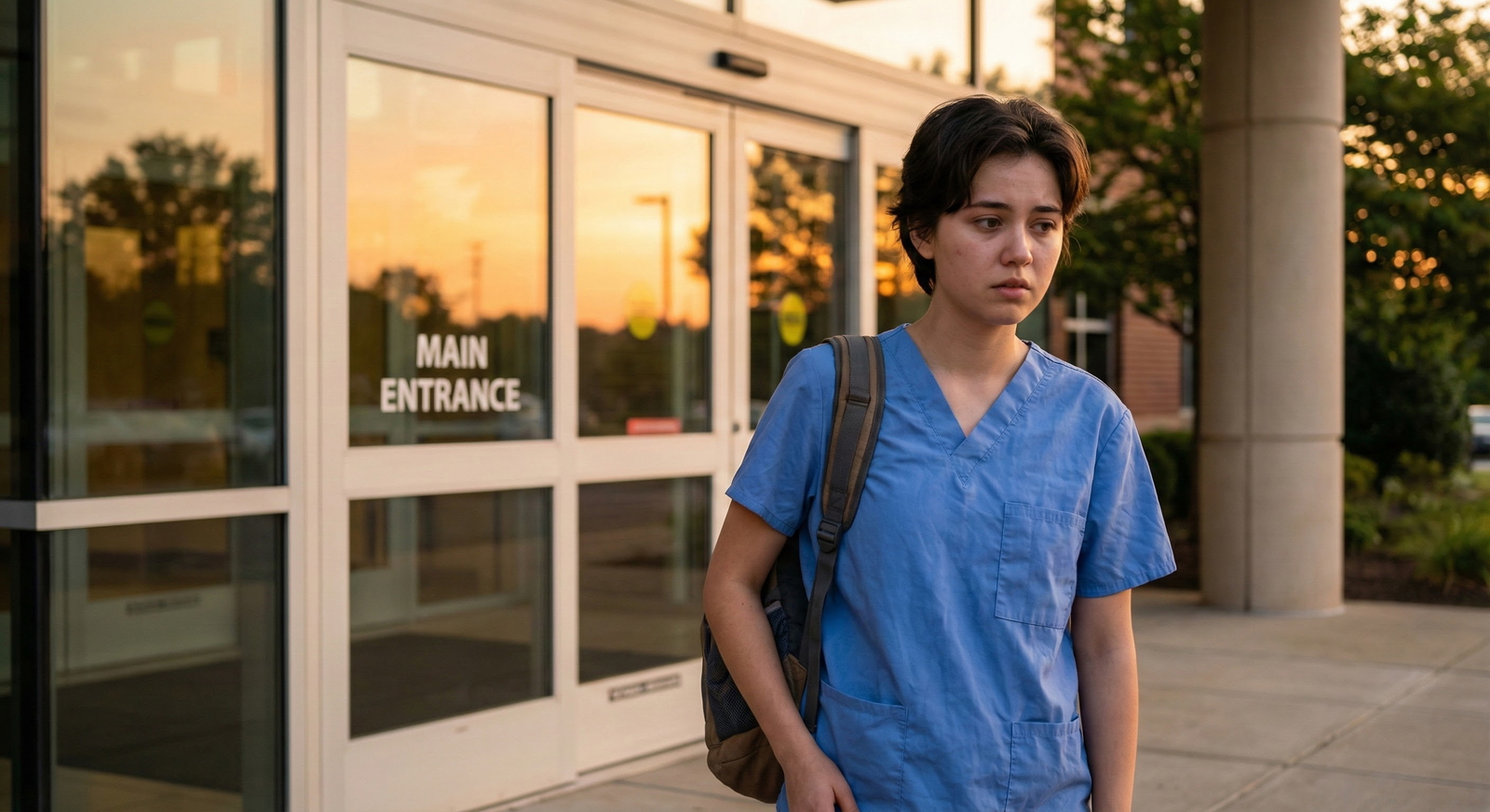
Not matching into residency is emotionally bruising and logistically disruptive, but it is not the end of your medical career. Each year, a significant number of capable, motivated applicants in the Great Lakes Region (Illinois, Indiana, Michigan, Minnesota, Ohio, Wisconsin, and neighboring areas) find themselves unmatched or partially matched. Many go on to secure strong positions in subsequent cycles or through alternative routes.
A “failed match” or “didn’t match” outcome can mean:
- You received no offers on Match Day.
- You partially matched (e.g., advanced position without a prelim or vice versa).
- You withdrew late or made major changes that left you without a spot.
- You matched into a program or specialty that isn’t workable (rare, but can lead to needing a recovery plan).
In the context of midwest residency programs and specifically Great Lakes residency options, the recovery process has some regional nuances: strong academic centers, a dense network of community hospitals, and comparatively robust opportunities for research, externships, and preliminary years.
This article walks through a structured recovery plan tailored to the Great Lakes region, with a focus on practical steps, realistic timelines, and regional resources you can leverage as an unmatched applicant.
Step 1: Immediate Response After a Failed Match
Once you realize you didn’t match, your first moves matter. Think in terms of the next 72 hours and the next 4–6 weeks.
A. Emotional Triage and Mindset Reset
A failed match can feel like a verdict on your worth; it isn’t. Programs’ decisions are influenced by:
- Limited spots (especially in popular Great Lakes specialties like internal medicine, EM, ortho)
- Program-specific priorities (in‑state preference, home school bias, visa limitations)
- Timing and luck (interview availability, committee dynamics)
Give yourself 24–48 hours to process:
- Talk with trusted mentors, peers, or mental health professionals.
- Avoid reflexive decisions (e.g., applying to a new specialty overnight without reflection).
- Remind yourself: your current goal is diagnosis and planning, not self-criticism.
B. Analyze Your Application Objectively
Before making any new moves, you need a clear diagnosis of why things went wrong. Break down your application into components:
Academic Profile
- USMLE/COMLEX scores, attempts, gaps
- Clerkship grades, class rank, AOA/Gold Humanism status
- Any professionalism concerns
Experience & Fit
- Clinical experiences (U.S. vs. international, specialty-specific)
- Research, quality improvement, teaching
- Continuity in interest for your target specialty
Application Craft
- Personal statement clarity, focus, and authenticity
- Program list: number, competitiveness, geographic distribution (were you overly narrow, e.g., only academic midwest residency programs in major cities?)
- Letters of recommendation (LORs): strength, recency, specialty alignment
Interview Performance
- Number of interviews obtained vs. applied programs
- Canceled interviews or no‑shows
- Communication skills, red-flag questions, perceived fit
Sit down with:
- Your Dean’s office or academic advisor
- A trusted faculty mentor in your target specialty (ideally in the Great Lakes region)
- If possible, a program director (PD) willing to review your file confidentially
Ask for direct, unfiltered feedback: “If I reapply next year, what must change for my application to be competitive in this region and specialty?”
C. Explore SOAP (If Still Ongoing)
If you find out you’re unmatched during Match Week, the Supplemental Offer and Acceptance Program (SOAP) is your immediate pathway to a position starting this July.
For the Great Lakes region:
- Focus on unfilled programs in Illinois, Michigan, Ohio, Indiana, Minnesota, and Wisconsin, but be open geographically if you’re in crisis mode.
- Target preliminary medicine or surgery spots if categorical positions in your specialty are unavailable.
- Consider “related” specialties or transitional year programs that keep doors open.
Action tips for SOAP:
- Prepare short, targeted personal statements you can customize quickly by specialty.
- Have PDFs of transcripts, MSPE, LORs, and score reports ready.
- Work closely with your school’s SOAP support team; they often have relationships with local PDs in Great Lakes residency programs and can advocate for you.
If SOAP does not result in a position, shift from crisis mode to strategic recovery mode for the next application cycle.
Step 2: Build a Targeted Recovery Plan for the Next Match
If you remain unmatched after SOAP, your goal becomes: be clearly stronger, more focused, and better aligned by the next ERAS cycle.
A. Clarify Your Specialty Strategy
Ask yourself:
Do I reapply to the same specialty?
- Appropriate when: you had some interviews, your application was borderline, and mentors believe you can reach competitiveness with strategic improvement.
- Common scenario: internal medicine, family medicine, psych, pediatrics in Great Lakes academic and community programs.
Do I pivot to an alternate specialty?
- Consider if: you had very few or no interviews, you were targeting a highly competitive field (e.g., dermatology, ortho, ENT, radiology) without a strong competitive profile.
- Great Lakes alternatives to consider:
- From surgery → categorical general surgery at smaller community hospitals, prelim surgery, or surgical subspecialties that accept categorical later.
- From highly competitive specialties → internal medicine, pediatrics, family medicine, psychiatry, or pathology, depending on your strengths.
Do I embrace a staged approach?
- Example: pursue a prelim internal medicine year in the Great Lakes region, then apply to anesthesiology, neurology, or radiology after demonstrating strong U.S. clinical performance.
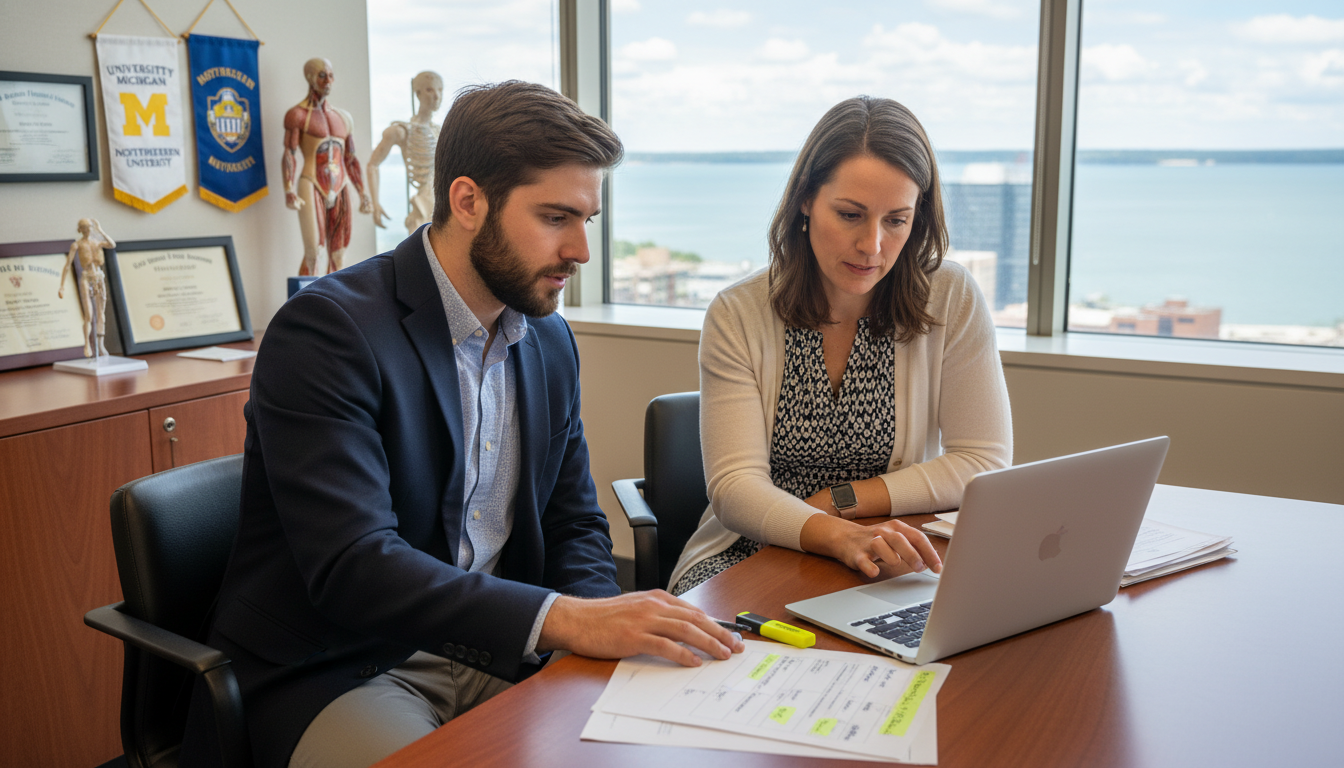
Mentor input is crucial here. Seek advice from two to three independent faculty members—not just one.
B. Strengthen Core Application Domains
Your specific action plan depends on your diagnostic findings, but common recovery strategies include:
1. Addressing Academic Weaknesses
Board exams:
- If scores are borderline but passing, focus on strengthening other areas—retests are often not possible.
- If you still need to complete Step 3, consider taking it after focused preparation—especially relevant for unmatched international medical graduates (IMGs) targeting Great Lakes residency programs.
Coursework or professionalism:
- Ensure any prior issues are clearly remediated and documented.
- Secure a strong LOR from a supervisor who can speak directly to your improved professionalism, reliability, and clinical performance.
2. Boosting U.S. Clinical and Regional Experience
Programs in the Great Lakes region often value:
- Continuity in the region – previous rotations, medical school there, or a clear reason for your regional interest.
- U.S.-based clinical experiences – especially for IMGs.
Actionable options:
Paid clinical positions:
- Hospitalist scribe, clinical research coordinator, or clinical assistant roles in Great Lakes academic centers (e.g., in Chicago, Cleveland, Detroit, Minneapolis, Milwaukee, Columbus).
- Aim for positions with close interaction with residents and attendings.
Observerships or externships:
- Seek structured programs at Great Lakes teaching hospitals or large community systems.
- Prioritize rotations where you can earn strong, recent LORs and demonstrate:
- Clinical reasoning
- Communication skills
- Professionalism and teamwork
Short-term locum or clinical roles for graduates with independent licensure (rare but applicable for some DOs or those with state licensure flexibility).
3. Enhancing Research and Scholarly Output
Research doesn’t fix everything, but it can:
- Show academic engagement and perseverance.
- Help if you aim for academic-leaning programs or more competitive specialties.
Region-specific strategies:
- Join clinical or outcomes research groups at Great Lakes institutions; many have ongoing projects needing data abstractors or coordinators.
- Target quality improvement (QI) projects embedded in residency departments (e.g., IM QI initiatives in Chicago or Detroit teaching hospitals).
- Aim for abstracts, posters, and manuscripts, even if in progress by ERAS submission.
4. Improving Letters of Recommendation
For the next cycle, you want:
- At least one new, strong letter dated in the current year.
- Ideally from:
- A program director, clerkship director, or division chief in your chosen specialty.
- A faculty member in a Great Lakes residency program who can comment on your performance in their system.
Make it easy for letter writers:
- Provide your updated CV, personal statement draft, and a short bullet list of cases or interactions that reflect your strengths.
- Clarify your goals: “I’m reapplying to internal medicine, targeting midwest residency programs including the Great Lakes region, with a strong interest in X.”
Step 3: Strategic Use of Time Between Matches (Gap Year Planning)
Time between match cycles can scare applicants; used well, it becomes a major asset.
A. Choose a Primary Role for Your Gap Year
Common, high-yield roles in the Great Lakes region include:
Full-time Research Position
- Often at academic centers (e.g., University of Michigan, University of Chicago, Case Western, University of Minnesota, Ohio State, Medical College of Wisconsin).
- Pros:
- Strong mentorship.
- Networking with faculty and residents.
- CV growth and publications/posters.
- Cons:
- Less direct patient care unless integrated into clinical research.
Clinical Research + Part-Time Clinical Exposure
- Split between data work and shadowing/observerships or working in a clinical-facing role (scribe, MA, etc.).
- Ideal for: unmatched applicants who need both research and fresh clinical letters.
Full-Time Clinical Support Roles
- Scribe, medical assistant, care coordinator, nurse extender roles in Great Lakes hospital systems.
- Pros:
- Close observation of U.S. healthcare workflows.
- Relationship-building with faculty and residents.
- Cons:
- Limited formal academic output unless you seek QI or research add-ons.
Additional Degree or Certificate (Selective Use)
- MPH, MS in Clinical Research, or medical education certificate can make sense only if:
- It’s tightly aligned with your career goals.
- It doesn’t delay your reapplication unnecessarily.
- You leverage the program to gain mentorship, research, and clinical connections.
- MPH, MS in Clinical Research, or medical education certificate can make sense only if:
B. Maintain Clinical Relevance and Narrative Coherence
When you reapply, PDs will ask: “What did you do after you failed to match?”
Your answer should be:
- Clinically relevant – you stayed close to patient care, healthcare systems, or QI.
- Skill-building – you gained new, clearly described competencies.
- Reflective – you can articulate what you learned and how it makes you a better resident candidate.
Examples:
“After I didn’t match, I took a clinical research coordinator position in cardiology at a Great Lakes academic center. I managed patient enrollment, coordinated with inpatient teams, and co-authored two abstracts. This experience deepened my understanding of evidence-based medicine and multidisciplinary care, and I obtained a strong new letter from the site PI.”
“As an unmatched applicant, I worked as a scribe in an inner-city emergency department in the Great Lakes region. I gained real-time experience in high-acuity care, documentation efficiency, and interprofessional communication. I also collaborated on a QI project to reduce ED revisit rates for heart failure patients.”
Step 4: Rebuilding Your Application for Great Lakes and Midwest Programs
When the next application season approaches, your recovery work needs to translate into a materially stronger application.
A. Program List: Targeted and Realistic
Common pitfalls that lead to a failed match:
- Overly narrow lists (e.g., only urban academic programs).
- Underapplying in primary care specialties.
- Ignoring community-based or smaller regional hospitals.
For Great Lakes residency and midwest residency programs:
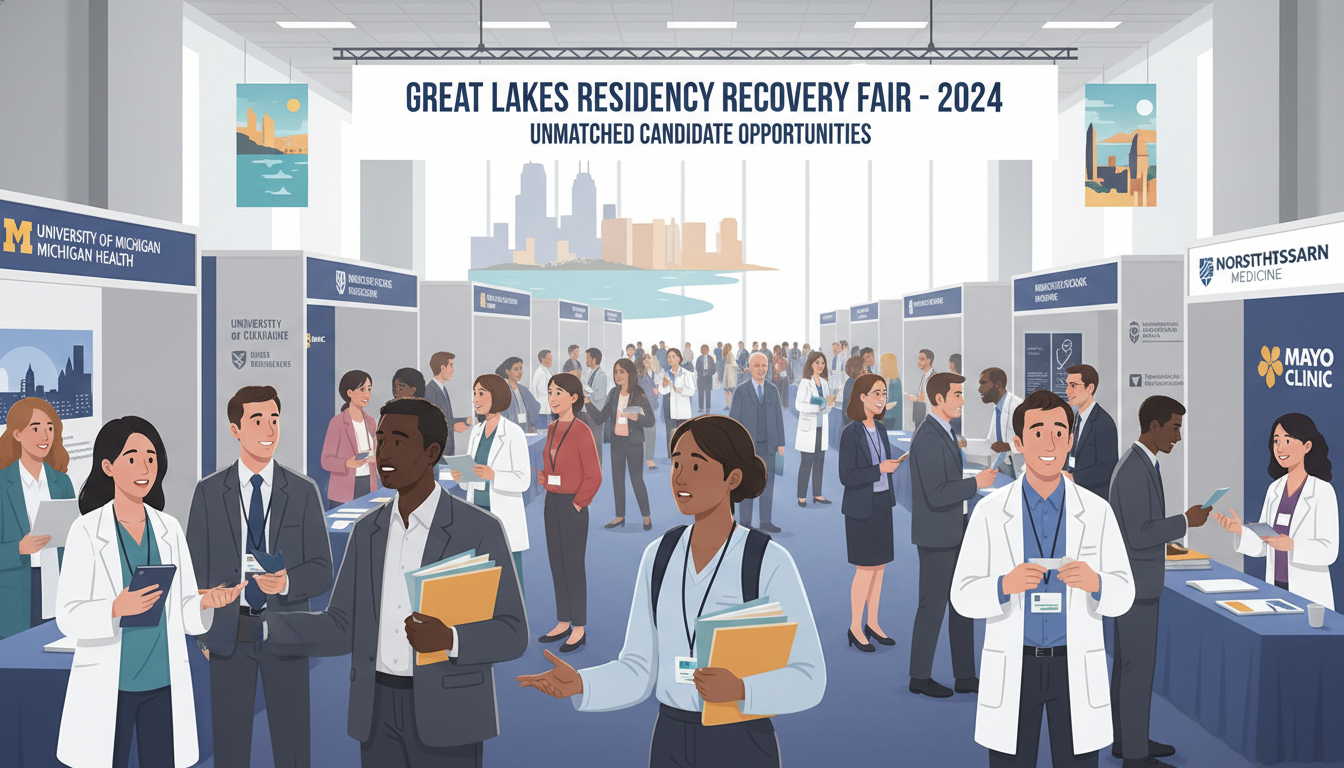
Build a tiered list:
- Reach programs – top academic centers where your new experiences give you a shot.
- Target programs – mid-sized academic or strong community programs where your profile closely matches current residents.
- Safety programs – community and rural programs with a history of interviewing applicants with similar metrics.
Be flexible geographically:
- Include non-Great Lakes midwest states (e.g., Iowa, Missouri, Kansas, Nebraska) if your goal is maximizing match probability.
- Retain a core group of Great Lakes residency targets but be willing to spread out.
B. Revise Your Personal Statement and CV
Your personal statement must:
- Acknowledge your journey without centering failure:
- You are not “the unmatched applicant”; you are a motivated physician who learned and grew after a setback.
- Briefly—but clearly—address what changed:
- “After my initial application, I recognized that I needed more direct U.S. clinical experience and stronger familiarity with the Great Lakes healthcare environment. Over the past year, I have worked as…”
- Emphasize new strengths:
- Clinical maturity, research productivity, QI involvement, patient advocacy, cultural competence.
Your CV should:
- Highlight all new roles, with:
- Clear descriptions of responsibilities.
- Quantifiable achievements where possible (e.g., “coauthored 2 abstracts, enrolled 80+ patients in clinical studies”).
C. Secure and Showcase Strong New LORs
For a reapplicant, letters often tip the scale. Aim for:
- At least one new letter from your gap-year mentor (research PI, clinical supervisor, or department chair).
- Uprank letters from Great Lakes region faculty, as regional familiarity may help.
- Balance:
- Specialty-specific letters (e.g., IM for IM applications).
- One “global” letter (e.g., from a PD or chair) addressing professionalism and readiness for residency.
D. Prepare Differently for Interviews
If you received interviews but didn’t match, interview performance may have contributed. Refine:
- Your narrative of the failed match:
- Be honest but concise and forward-looking.
- Example:
- “I did not match on my first attempt. In retrospect, my application had limited U.S. clinical experience and my program list was too geographically restricted to the Great Lakes’ largest academic centers. Over the past year, I have been working as [role], which has provided [skills]. I’m grateful for the growth I’ve experienced and feel much more prepared to contribute as a resident now.”
- Behavioral questions:
- Reflect on times you showed resilience, handled feedback, navigated conflict, or confronted your own limitations.
- Region-specific interest:
- Articulate why the Great Lakes region and midwest residency programs align with your personal and professional goals (family ties, prior training, research interests, or commitment to regional health issues like rural care, opioid epidemics, or urban health disparities).
Mock interviews with faculty, advisors, or even professional services can be invaluable.
Step 5: Alternative and Contingency Pathways if You Remain Unmatched
You must plan as if you will match, but also understand what to do if you still don’t secure a spot.
A. Consider Multi-Year Planning
Sometimes, especially after multiple failed attempts, matching may require a multi-year strategy:
- Year 1:
- Secure a robust role (research, clinical support) in the Great Lakes or broader midwest region.
- Build partnerships with a department that has residency programs.
- Year 2:
- If still unmatched, consider:
- Re-upping your role with expanded responsibilities.
- Pivoting specialties (e.g., from IM to psych or FM).
- Exploring smaller or newer programs in less saturated geographic areas outside the Great Lakes.
- If still unmatched, consider:
B. Explore Less Competitive but Fulfilling Specialties
Depending on your strengths, consider:
- Family medicine, internal medicine, psychiatry, pediatrics, pathology, neurology – many have multiple Great Lakes residency tracks and can offer robust careers.
- Community-based programs that may be more flexible with board scores or gaps, if you demonstrate strong clinical performance and professionalism.
C. Understand When to Reassess the Physician Path
A very small subset of graduates, after repeated failed match cycles and extensive remediation, may choose to transition to:
- Research careers (PhD, clinical research leadership).
- Health policy or public health (MPH, MHA).
- Medical education, informatics, or industry roles (pharma, medtech, health consulting).
This decision is deeply personal and deserves thoughtful counseling with mentors, career advisors, and sometimes mental health professionals. It is a valid path, but it should be made strategically, not reflexively, and only after giving a structured recovery plan a real chance.
FAQs: Failed Match Recovery in the Great Lakes Region
1. I didn’t match this year. Should I stay in the Great Lakes region or be open to other areas?
Stay open. While Great Lakes residency programs are numerous and diverse, restricting yourself geographically can lower your overall match probability, especially after a failed match. A strong strategy is:
- Prioritize Great Lakes and broader midwest residency programs if you have ties to the region.
- Still apply nationally, particularly to community and smaller academic programs that align with your profile.
- Use Great Lakes-based roles (research, clinical work) to build your credentials even if you later train elsewhere.
2. How do Great Lakes programs view reapplicants and unmatched applicants?
Most programs in the region do consider reapplicants and unmatched applicants seriously if:
- There is clear improvement (new experiences, better letters, gap year productivity).
- You demonstrate insight into why you previously failed to match.
- Your specialty choice is realistic and well-aligned with your background.
Faculty tend to respect persistence when it’s paired with maturity, reflection, and tangible growth.
3. I failed the match and also have a low board score. Can I still match in the Great Lakes region?
Yes, it’s still possible but will require:
- Strategic specialty selection (often favoring less competitive specialties).
- Strong, sustained U.S. clinical experience in the region.
- Excellent, recent LORs.
- A broad and realistic application list, including community-based programs.
- A compelling narrative about what you’ve learned and how you’ve grown since the failed match.
Low scores are one data point; your goal is to surround that data point with compelling evidence of clinical ability, professionalism, and resilience.
4. What should I say in my personal statement about my failed match?
Address it briefly, honestly, and in a forward-looking way:
- Acknowledge that you didn’t match (no need for dramatic detail).
- Identify 1–2 key areas you’ve worked on since (e.g., U.S. clinical exposure, communication skills, research engagement).
- Emphasize how your experiences in the interim have made you more prepared and motivated to succeed as a resident.
Avoid blaming programs or the system. Focus on your growth, resilience, and readiness.
A failed match is a painful but navigable setback. With structured analysis, targeted improvement, and strategic use of the Great Lakes region’s rich ecosystem of hospitals, universities, and research centers, many unmatched applicants successfully pivot into strong residency positions. Your next steps—not the match result itself—will define your trajectory.