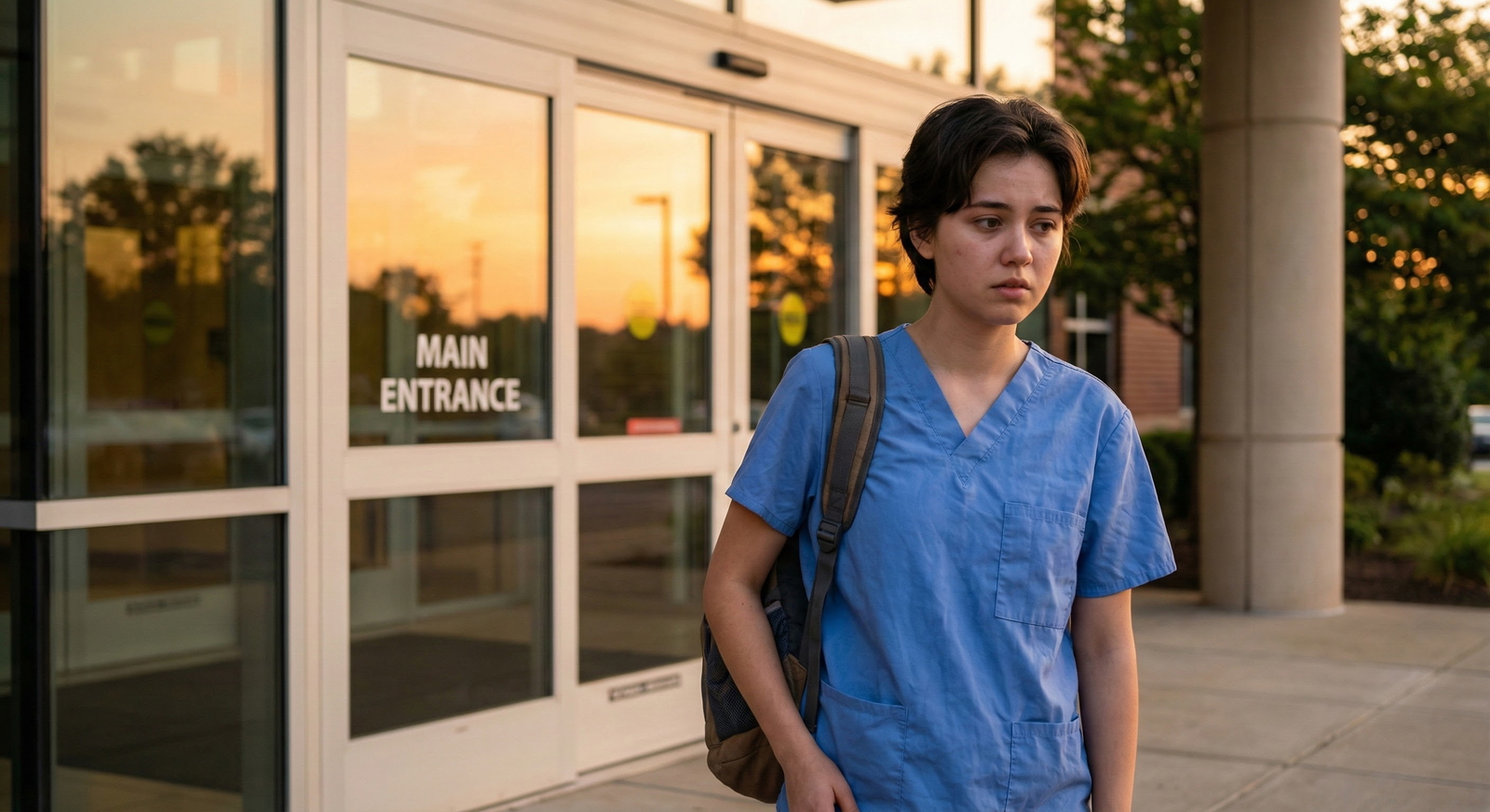
Understanding a Failed Match in Medicine-Pediatrics
Not matching into a Med-Peds residency can feel devastating—especially after years of planning, exams, and applications. But a failed medicine pediatrics match is not the end of your path to becoming a Med-Peds physician. Many excellent residents and attendings matched on their second or even third attempt. The key is to respond strategically, not react emotionally.
This guide focuses specifically on failed match recovery for Medicine-Pediatrics applicants. It will help you:
- Understand what happened and why
- Respond constructively in the days and weeks after you learn you didn’t match
- Identify realistic short- and long-term options as an unmatched applicant
- Strengthen your profile for a reapplication to med peds residency
- Protect your mental health and professional reputation in the process
Whether you just found out you didn’t match, scrambled in SOAP without success, or are planning a future reapplication after a gap year, you can build a clear, realistic path forward.
First 72 Hours: Immediate Response After You Don’t Match
The first few days after learning you didn’t match (or fully failed SOAP) are emotionally intense and logistically critical. Balancing both is your first challenge.
Step 1: Regain Your Emotional Footing
You will likely feel shock, embarrassment, anger, or shame. All of these are normal. Failing to match does not mean:
- You’re not good enough to be a physician
- You “ruined” your future
- You are alone in this experience
Data from NRMP shows that every year, many qualified US and international graduates do not match on the first attempt. In a competitive combined specialty like Med-Peds, small application weaknesses can be magnified.
Actions for the first 24–48 hours:
- Limit impulsive emails or calls. Avoid writing to PDs or posting on social media while emotions are raw.
- Talk to trusted people. This might be a mentor, dean, close friend, or family member. Say out loud, “I didn’t match,” and allow yourself to process it.
- Protect your self-identity. You failed an outcome, not as a person or as a future physician.
Step 2: Understand Your Official Status
Clarify exactly what happened:
- Did you not match at all in the main Medicine-Pediatrics match?
- Did you match prelim or transitional but not a Med-Peds categorical position?
- Did you enter SOAP and still end up unmatched?
- Did you withdraw, rank very few programs, or only apply Med-Peds?
Your strategy will differ depending on your starting point.
Step 3: Notify Key Institutional Contacts
Within a few days:
- Email your school’s dean’s office or student affairs. They have seen this many times and can connect you to resources and advisors.
- Reach out to your Med-Peds advisor or closest mentor. If you don’t have a Med-Peds-specific mentor, start with a general IM or Pediatrics mentor.
- Request a structured debrief. Set up a meeting to review your application and understand likely reasons you didn’t match.
Diagnosing What Went Wrong in Your Med-Peds Application
Effective failed match recovery starts with a clear, honest diagnosis. This is not about blame; it’s about precision.

1. Academic Metrics: USMLE/COMLEX, Grades, and Fails
Examine:
- USMLE Step 1 and 2 (or COMLEX Level 1 and 2) scores and number of attempts
- Any failed attempts or score significantly below national Med-Peds averages
- Clerkship grades in Internal Medicine, Pediatrics, and sub-internships
Common academic red flags for Med-Peds:
- Repeated exam failures (e.g., multiple Step attempts)
- Failing or marginal performance in IM or Peds rotations
- Gaps in medical school without strong explanations
If this applies to you, failed match recovery may require:
- Documented remediation
- Strong letters from recent faculty attesting to growth and reliability
- Additional clinical work to show sustained improvement
2. Application Strategy: Did You Apply Broadly and Realistically?
Consider:
- Number of programs applied to: For Med-Peds, many applicants should apply broadly (often 30–60+ programs, depending on competitiveness).
- Program tiers: Did you only apply to very competitive academic centers without community programs?
- Geographic limitations: Restricting to one or two cities/regions can be risky.
- Backup planning: Did you apply only to med peds residency, or did you also apply in categorical IM, categorical Peds, or another specialty?
Common strategic issues in the medicine pediatrics match:
- Overly narrow geographic preferences
- Overestimating competitiveness based on school rank or one strong score
- No true backup specialty (e.g., IM or Peds)
Write out your application list and interview count; patterns often become clear.
3. Interview Performance and Communication
If you received a reasonable number of interviews but still didn’t match, focus on:
- How comfortable and authentic you felt in interviews
- Whether you could clearly articulate “Why Med-Peds?” and “Why this program?”
- Any awkward or concerning interactions (late arrival, dress issues, miscommunications)
- How you handled questions about red flags, gaps, or exam failures
Ask for feedback:
- Some PDs and faculty will provide honest feedback after the match cycle—especially if you had a strong connection or home affiliation.
- Your advisors can role-play interviews and identify style or content issues.
4. Letters, Personal Statement, and Overall Story
Med-Peds PDs care deeply about:
- Consistency of your narrative: Do your experiences clearly support a commitment to BOTH Medicine and Pediatrics?
- Quality of letters: Are your letters specific, detailed, and clearly supportive? Did you have at least one strong IM letter and one strong Peds letter?
- Personal statement: Does it read generic, or does it convincingly explain your path to Med-Peds?
Warning signs:
- Vague or generic Med-Peds interest (“I like adults and kids”)
- Letters from faculty who barely knew you
- No concrete examples of continuity of care, combined-care thinking, or Med-Peds role models
5. Red Flags and Professional Concerns
Be honest about any of the following:
- Professionalism incidents, disciplinary actions, or leaves of absence
- Recurrent lapses in punctuality, communication, or reliability
- Unexplained gaps in training, changed schools, or extended timelines
These do not automatically disqualify you—but they must be addressed head-on with clear explanations, remediation, and strong advocacy from faculty.
Immediate Pathways for the Unmatched Applicant (This Year)
If you didn’t match—especially if you didn’t secure a position through SOAP—you still have concrete options for the coming year. Each option has trade-offs.
Option 1: SOAP or Late Open Positions in IM or Pediatrics
If you are still in the current match cycle:
- Use SOAP strategically. Applying broadly to unfilled IM or Peds programs can keep you clinically active.
- If SOAP is over, periodically check for off-cycle or unexpected PGY-1 IM or Peds positions posted on:
- Program websites
- Institutional HR job boards
- Specialty forums (with caution and verification)
Pros:
- Maintains clinical momentum
- Builds relevant experience directly aligned with Med-Peds
- Generates fresh letters from current supervising attendings
Cons:
- You may need to commit to another specialty track, at least temporarily
- Transferring to Med-Peds is possible but limited and not guaranteed
Option 2: Categorical IM or Pediatrics as Intentional “Plan B”
Many Med-Peds–oriented applicants end up thriving in categorical Internal Medicine or Pediatrics. If a med peds residency spot isn’t immediately available:
- Consider deliberately pursuing IM or Peds with the mindset:
- “I am training in a closely related specialty that still aligns with my interest in complex, longitudinal care.”
- Later, you may:
- Develop a dual-practice niche (adult congenital heart disease, transition-of-care clinics, etc.), or
- Explore Med-Peds fellowship–like roles depending on institution and needs.
Programs often appreciate honesty if you say: “I love the Med-Peds model, but I’m also very committed to your categorical specialty.”
Option 3: A Gap Year With Clinical, Research, or Educational Focus
If you are fully unmatched and no PGY-1 position is available, a structured “bridge year” can significantly strengthen your reapplication.
Potential roles:
Full-time clinical work (ideal):
- Clinical research coordinator in IM or Peds
- Hospital or clinic-based assistant roles (e.g., scribe, patient navigator)
- Post-graduate year internships or preliminary rotations (if available)
Research-focused year:
- Work on projects related to transitions of care, chronic disease across the lifespan, or health services research
- Seek Med-Peds–oriented mentors at academic centers (general medicine, general pediatrics, adolescent medicine, etc.)
Education and leadership roles:
- Teaching assistantships in anatomy, standardized patient programs, or preclinical courses
- Quality improvement projects, especially those spanning pediatric and adult services
Key principle: your year should be structured and explainable. Interviewers should hear a story of growth, not drift.
Option 4: Non-Clinical Roles (When Clinical Options Are Limited)
For some unmatched applicants—particularly IMGs or those with visa constraints—clinical roles may be limited.
In that case, consider:
- Public health or MPH programs (if you can clearly link them to your goals)
- Health policy or community health positions
- Healthcare consulting or quality/safety roles within hospitals
These paths can be useful if:
- You remain connected to patient care environments
- You continue to build relationships with physicians who can write strong letters
- You maintain clinical knowledge through reading, simulation, or observerships
However, for a Medicine-Pediatrics reapplication, clinical contact is strongly preferred if at all possible.
Strategy for Reapplying to the Medicine Pediatrics Match
If your long-term goal remains Med-Peds, you’ll need a deliberate, data-informed reapplication plan.

1. Decide: Reapply Med-Peds Only vs. Dual-Apply (IM/Peds + Med-Peds)
With your mentor, choose between:
- Med-Peds only reapplication
- Med-Peds + categorical IM
- Med-Peds + categorical Pediatrics
- In rare cases, all three: Med-Peds, IM, and Peds
Factors influencing this decision:
- Your Step/COMLEX scores and academic record
- Whether your previous application was “close” (e.g., many interviews but no match)
- Geographic flexibility
- Your true comfort with a categorical IM or Peds career if Med-Peds doesn’t work out
In many failed match recovery situations, dual-application (Med-Peds + IM or Med-Peds + Peds) is the most practical strategy.
2. Show Clear Growth, Not Just Repetition
Your second application must look different from your first. Programs will expect:
New, recent letters of recommendation, ideally from:
- Med-Peds faculty (if accessible)
- Internal Medicine attending
- Pediatrics attending
Concrete updates since the last cycle:
- New clinical responsibilities
- Research progress or publications
- Leadership or QI outcomes
An updated personal statement:
- Explicitly acknowledges your prior unsuccessful match attempt (briefly and professionally)
- Describes what you learned and how you grew
- Reaffirms your commitment to Med-Peds with new experiences as evidence
Example language:
“After not matching last cycle, I took a position as a clinical research coordinator in an adult cystic fibrosis clinic, collaborating closely with both internal medicine and pediatric pulmonology teams. This experience deepened my understanding of longitudinal, transition-focused care and reaffirmed my desire to practice within the Med-Peds framework.”
3. Strengthen Med-Peds–Specific Exposure
Programs want to see that you truly understand the combined specialty. Strategies:
Electives and sub-internships:
- Seek Med-Peds rotations at institutions that have a Med-Peds residency if your home program does not.
- Aim for at least one strong sub-I with a letter from a Med-Peds faculty member.
Mentorship:
- Ask a Med-Peds physician to serve as your primary advisor for the next cycle.
- Request honest feedback on your CV, PS, and interview style.
Professional involvement:
- Join the National Med-Peds Residents’ Association (NMPRA) as a student affiliate.
- Attend Med-Peds–focused webinars, conferences, or regional meetings (even virtually).
4. Apply Broadly and Thoughtfully
For the next medicine pediatrics match cycle:
Apply early. Submit ERAS on the first available day with completed application materials.
Broaden your list. Include a mix of:
- Academic Med-Peds programs
- Community-based or smaller Med-Peds programs
- Programs in regions you previously overlooked
Customize communications. Where reasonable:
- Send brief, sincere emails to a subset of programs highlighting your reasons for interest.
- Follow program social media and websites to connect your interests to their mission.
5. Prepare Intensively for Interviews
If you are fortunate to receive interviews as a repeat applicant, interview performance becomes even more critical.
Key elements:
Address the previous failed match confidently.
- Keep it brief, factual, and focused on growth:
- “I did not match last year. After careful reflection and mentorship, I identified areas to strengthen, including X and Y. Over the past year, I have done Z to address them.”
- Keep it brief, factual, and focused on growth:
Practice “Why Med-Peds?” until it’s compelling and specific.
- Show you understand:
- Combined training structure
- Career paths (primary care, hospitalist work, subspecialty fellowships, transitional care clinics)
- Unique Med-Peds identity (complex, chronic illness across the lifespan, systems of care, etc.)
- Show you understand:
Be ready for questions about backup plans.
- Programs know many Med-Peds applicants also like IM or Peds. You can be honest while emphasizing your primary commitment to Med-Peds.
Protecting Your Well-Being and Professional Identity
A failed medicine pediatrics match can trigger a crisis of confidence. Protecting your mental health and professional reputation is as important as any tactical step.
Emotional Health and Burnout Prevention
- Normalize your experience. Many current residents—Med-Peds and otherwise—had an initial failed match or a year out of training.
- Consider counseling. Your medical school, residency wellness programs, or national physician wellness resources can help.
- Set boundaries around comparison. Limit social media on Match Day and early in the next cycle if seeing peers match is painful.
Financial and Practical Planning
- Review your loan status and deferment options with your financial aid office.
- Plan for health insurance coverage during gap periods.
- Budget for ERAS fees, travel (if in-person interviews return), and exam costs for future cycles.
Professionalism and Reputation
- Communicate professionally with faculty and programs, even when you are hurt or disappointed.
- Avoid public venting about specific programs or match processes; this can follow you.
- Stay engaged with clinical or academic work to avoid large unexplained gaps in your CV.
Long-Term Perspective: Redefining Success After a Failed Match
Your identity as a future physician is not defined by whether you matched on the first try, or even whether you ultimately work in a formal med peds residency pathway.
Many students who didn’t match or felt they “failed match” at first:
- Matched the following year in Med-Peds after a carefully planned bridge year
- Matched into categorical IM or Peds and built careers that mirror Med-Peds principles
- Found fulfilling roles in hospital medicine, primary care, academic medicine, public health, or subspecialties
Questions to reflect on:
- What aspects of Med-Peds drew you in the most (complex chronic disease, transitions of care, continuity, advocacy)?
- In what other specialties or job structures could you still achieve those goals?
- Where do your strengths shine the brightest—and how can you align your path with them?
If you remain committed to Med-Peds, a thoughtful, honest, and well-planned reapplication can absolutely succeed. If your path moves toward IM, Peds, or another field, you can still live out the core values that attracted you to Med-Peds in the first place.
FAQs: Failed Match Recovery in Medicine-Pediatrics
1. I didn’t match into Med-Peds or any specialty. Is it realistic to try again?
Yes, many unmatched applicants successfully match on a subsequent attempt, including into Med-Peds. Your chances improve when:
- You accurately identify why you didn’t match (academics, strategy, interviews, or red flags)
- You take a structured year to address those weaknesses (clinical work, research, or targeted remediation)
- You apply more broadly and strategically (often dual-applying: Med-Peds + IM or Med-Peds + Peds)
A second attempt with no significant changes looks risky; a second attempt with clear growth is much more credible.
2. Should I still mention Med-Peds if I’m reapplying in IM or Pediatrics only?
Yes—but carefully. If, after a failed medicine pediatrics match, you decide to apply only to IM or Peds:
- Be honest that you explored Med-Peds because you value longitudinal care and complex patients.
- Emphasize that you have reflected and now see yourself fully committed to Internal Medicine or Pediatrics.
- Show how that specialty still allows you to pursue your core interests (e.g., chronic disease management, transition clinics, adolescent medicine).
Avoid sounding like IM or Peds is a reluctant consolation prize.
3. How do I explain being an unmatched applicant in interviews without sounding defensive?
Keep your explanation:
- Brief: 2–3 sentences
- Factual: Avoid blaming programs or the system
- Growth-oriented: Highlight what you changed
Example:
“I applied only to Med-Peds last year with a relatively narrow geographic focus and did not match. After that, I worked as a clinical research coordinator in a combined adult-peds clinic and sought honest feedback from mentors. This process helped me recognize how strongly I’m drawn to [Med-Peds/IM/Peds] and guided me to apply more broadly and strategically this year.”
Then pivot to your strengths and current experiences.
4. I have exam failures and didn’t match. Can I still become a Med-Peds physician?
It’s more challenging, but not impossible. Programs will want to see:
- Completion of all exams with passes on the most recent attempts
- Evidence that you can handle high cognitive load (recent strong clinical performance, letters citing reliability and improvement)
- Maturity and insight when discussing those failures
You may need:
- A gap year that demonstrates consistent, successful clinical work
- Strong advocacy from faculty who directly supervised you
- Broader application strategy, possibly including IM and Peds
If Med-Peds ultimately remains out of reach, remember that categorical IM or Pediatrics can still allow you to practice in ways very similar to Med-Peds and care for complex, vulnerable populations.
A failed match in Medicine-Pediatrics is painful, but it is not final. With accurate self-assessment, honest mentorship, a structured bridging plan, and a more strategic approach to the next medicine pediatrics match, you can recover—and build a career that still reflects the core values that drew you to Med-Peds in the first place.