Understanding a Failed Match in the Mountain West
Not matching into residency—especially when you were targeting a specific region like the Mountain West—can feel devastating. Whether you were aiming for a competitive Colorado residency, a rural-focused Wyoming program, or a university hospital in Utah, a failed match is deeply personal. But it is also navigable. Many excellent physicians started their careers as an unmatched applicant.
This article focuses on failed match recovery strategies specifically tailored to the Mountain West (Colorado, Utah, Wyoming, Montana, Idaho, Nevada, New Mexico, and surrounding areas). You’ll learn how to:
- Analyze what went wrong
- Leverage regional opportunities (including Colorado residency options and other Mountain West residency programs)
- Strengthen your application strategically
- Optimize your chances for SOAP, off-cycle spots, and the next match
The goal is not just “try again,” but “rebuild smarter.”
Step 1: Stabilize, Debrief, and Understand Why You Didn’t Match
Before you can move forward, you need a clear-eyed understanding of what happened and why you didn’t match. This is especially true for applicants who concentrated their rank lists on a few select Mountain West residency programs, which tend to be geographically competitive.
Acknowledge the Emotional Impact
Unmatched applicants commonly experience shock, embarrassment, grief, or even shame. These reactions are normal—but if you stay stuck in them, it will cloud your planning.
Practical suggestions:
- Take 24–48 hours to decompress after learning you failed to match.
- Avoid making big decisions in the first emotional rush.
- Reach out early to a trusted mentor, advisor, or mental health professional.
You’re planning a high-stakes second attempt; your mental bandwidth matters.
Identify Your Specific Risk Factors
A failed match is rarely due to a single reason. Use a structured self-audit:
Academic metrics
- USMLE/COMLEX scores (any failures or low attempts?)
- Course failures or remediation?
- Graduation date (are you an older or non-traditional graduate?)
Specialty competitiveness
- Did you apply to primarily competitive specialties (e.g., dermatology, orthopedic surgery, radiation oncology) without a parallel plan?
- Did you restrict yourself to only Mountain West residency positions, limiting your geographic spread?
Application strategy
- Number of programs applied to in your specialty and geographic region
- Diversity of program types (community vs academic, rural vs urban)
- Did you apply broadly outside Colorado residency programs, or over-concentrate in one state or city?
Application quality
- Personal statement clarity and structure
- Strength and relevance of letters of recommendation
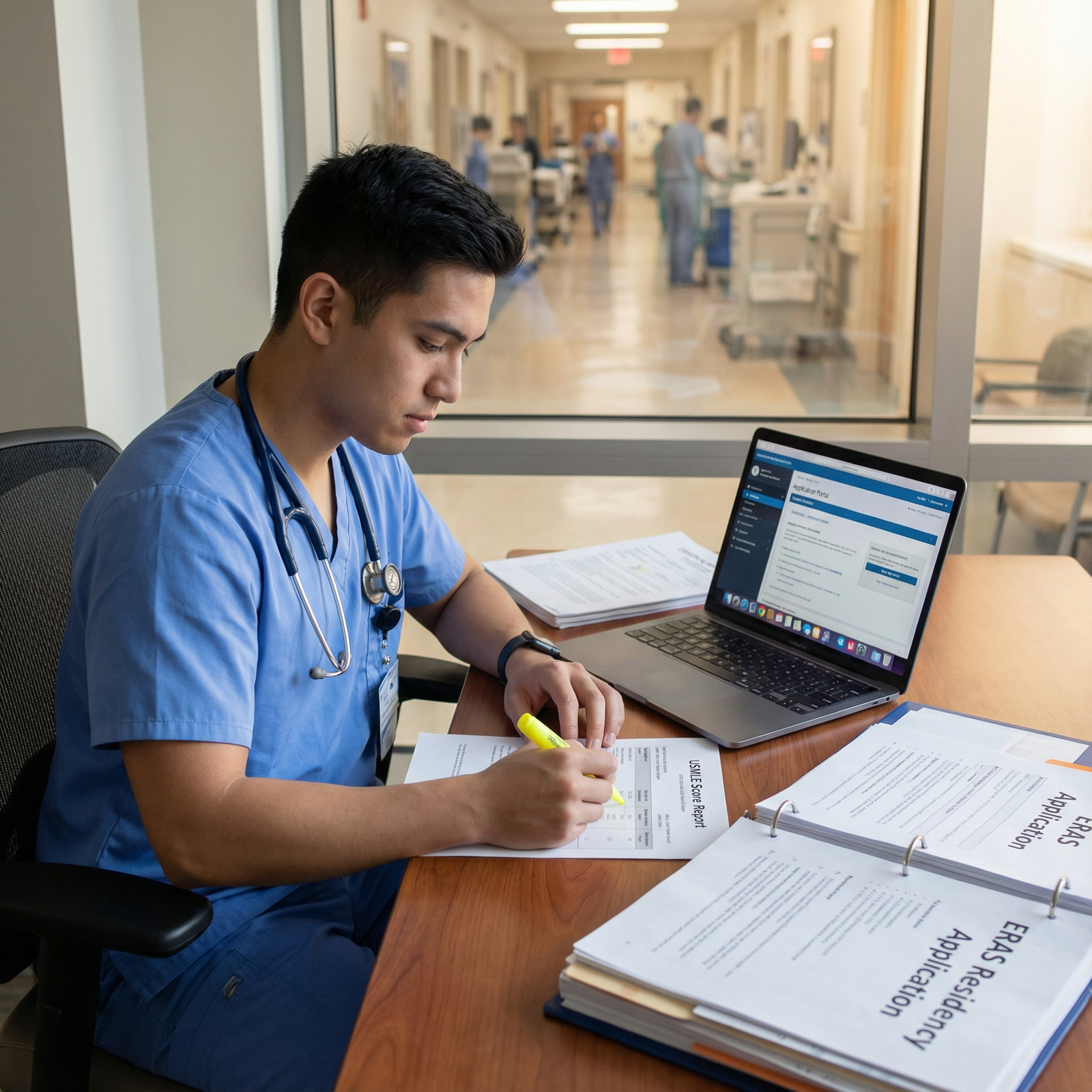
- Completeness and accuracy of ERAS/CV
Interview performance
- Did you get enough interviews and fail to convert them to ranks?
- Any obvious red flags in communication, professionalism, or answers?
Red flags or special circumstances
- Gaps in training or unexplained breaks
- Visa issues
- Serious professionalism concerns or disciplinary actions
Get External Feedback
Your own impressions may be biased. Seek objective input, especially from people who know the Mountain West training landscape:
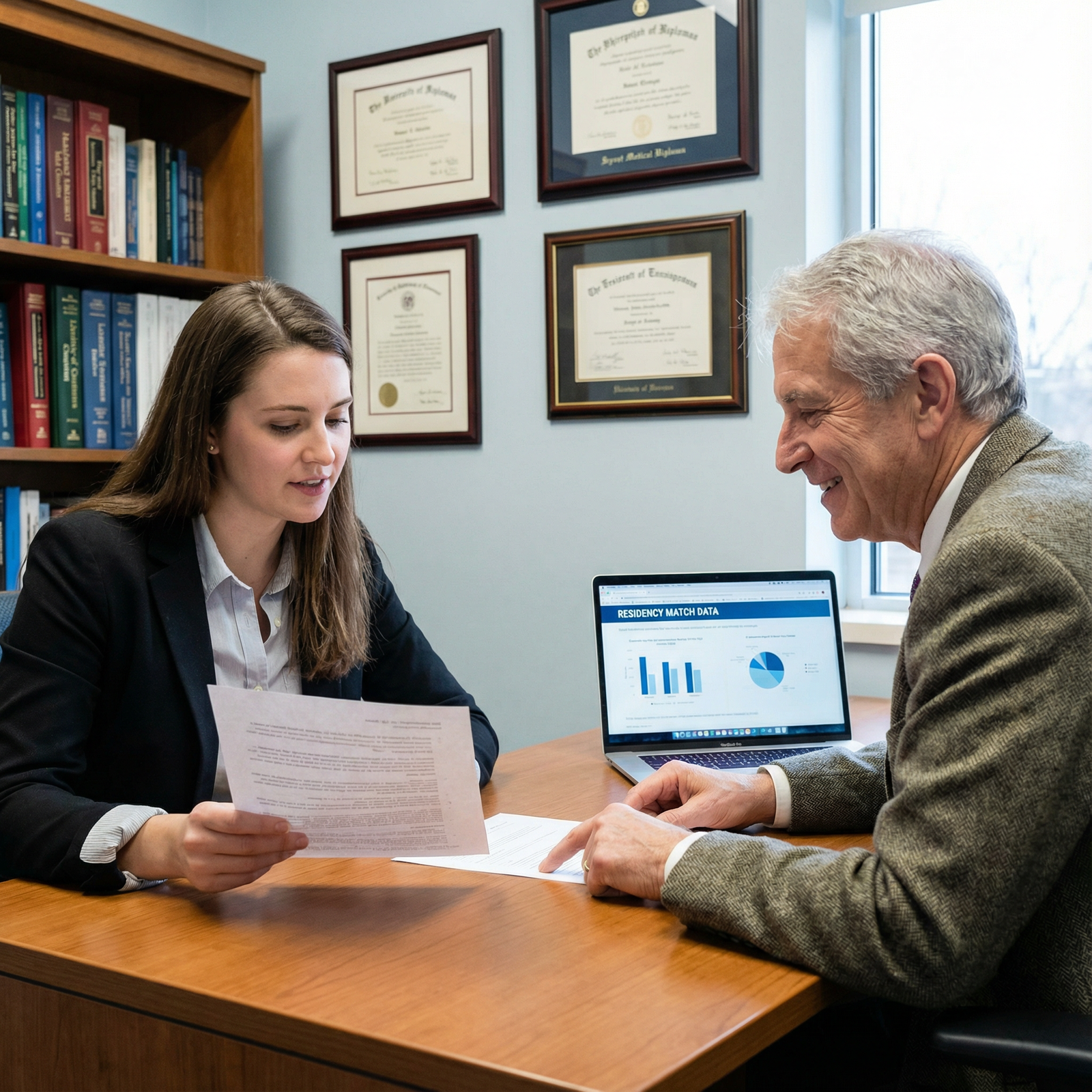
- Dean’s office / Student affairs – Most schools have unmatched applicant support.
- Residency program directors (PDs) – Especially in your target region; some will review your file if asked professionally.
- Specialty advisors – Can benchmark you against successful applicants.
When you approach them, send:
- Your ERAS application (or CV), personal statement, and score report
- Your target specialty list and programs applied to
- Match results (interview numbers, rank list strategy)
Ask pointed questions:
- “If I reapply, what specifically would you advise me to change?”
- “Am I competitive for my current specialty, or should I consider an alternative?”
- “What do Mountain West residency programs in this specialty particularly value that I might be missing?”
Step 2: Understand the Mountain West Residency Landscape
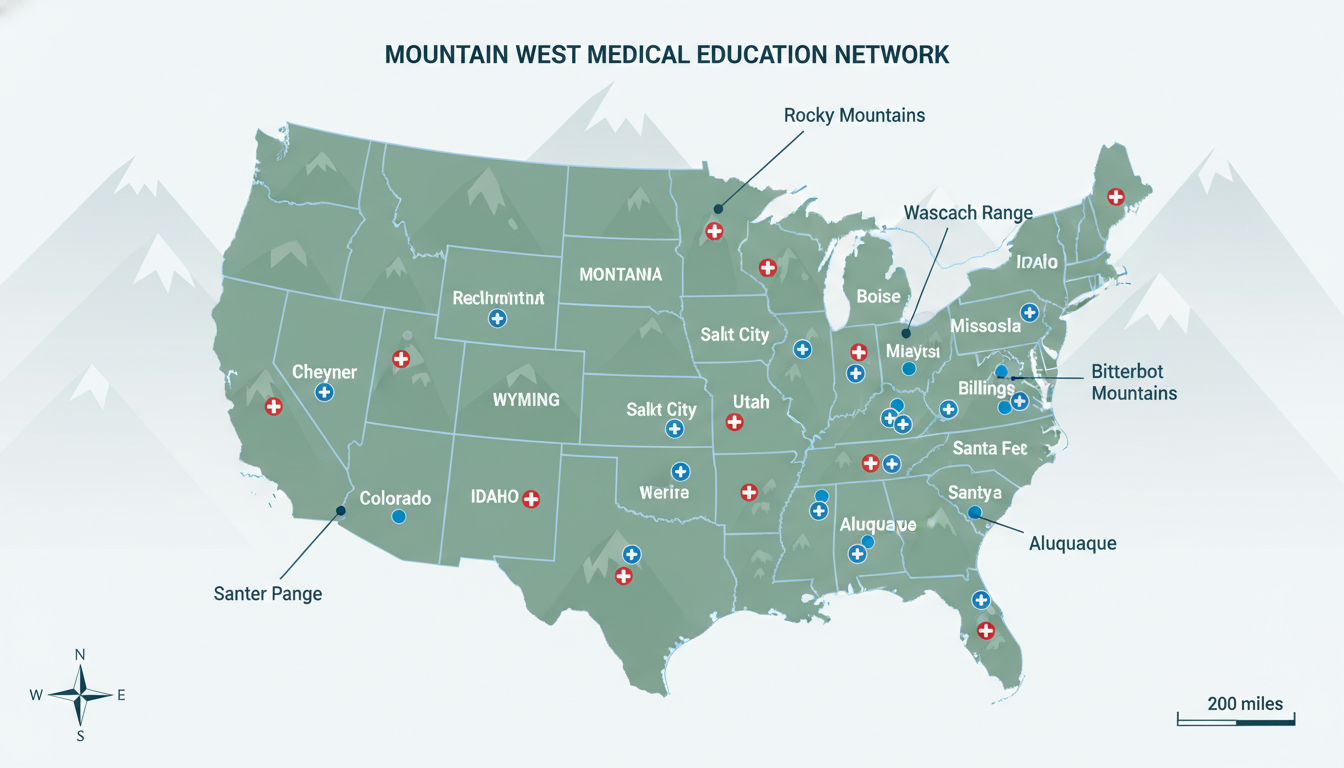
The Mountain West is appealing for lifestyle, training environment, and a strong culture of outdoor and rural medicine. That appeal, however, sometimes makes popular locations (like Colorado residency programs in Denver or Boulder) more competitive than applicants realize.
Regional Realities That Affect Matching
High Geographic Desirability
- Colorado residency programs, especially in the Front Range (Denver, Aurora, Boulder, Colorado Springs), often attract coast-to-coast applicants.
- Many applicants rank these programs highly for lifestyle, skiing/hiking access, and work-life balance.
Limited Program Density
- Unlike larger regions (e.g., Northeast), the Mountain West has fewer programs per state.
- Fewer total positions means less margin for error if you apply narrowly.
Rural and Frontier Opportunities
- Some states (e.g., Wyoming, Montana, Idaho, New Mexico) emphasize primary care, family medicine, and rural track programs.
- These can be more accessible to applicants who didn’t match into highly competitive urban specialties.
Mission-Driven Recruitment
- Many Mountain West residency programs prioritize:
- Commitment to rural or underserved care
- Long-term intent to stay in the region
- Cultural competency with Native American, Hispanic, and frontier communities
- Many Mountain West residency programs prioritize:
If your application didn’t clearly show alignment with these regional missions, you may have been at a disadvantage.
Strategic Implications for the Unmatched Applicant
- Be geographically flexible in your recovery year. If you focused exclusively on Colorado residency positions, consider expanding to Utah, Idaho, Montana, Nevada, and New Mexico.
- Emphasize mission fit. Highlight any rural rotations, community involvement, or long-term interest in practicing in the Mountain West.
- Look at community-based and rural programs. These can provide excellent training and sometimes more flexibility with applicants who previously didn’t match.
Step 3: Immediate Post-Match Options (SOAP and Beyond)
If you’re reading this during Match Week and you didn’t match, your first priority is the Supplemental Offer and Acceptance Program (SOAP). Even if your long-term goal is a specific Mountain West residency, SOAP can be a crucial bridge.
Using SOAP Strategically
SOAP can move fast and feel chaotic, but a disciplined approach increases your chance of success.
Clarify your priorities quickly
- Are you open to:
- Different specialty (e.g., shifting from categorical IM to preliminary medicine or transitional year)?
- Different state or region (e.g., leaving Colorado for another Mountain West state)?
- Rank-order your willingness to compromise (location vs specialty vs program type).
- Are you open to:
Target realistically
- If you’re an unmatched applicant with strong metrics but a competitive specialty choice, consider SOAP into:
- Preliminary medicine or surgery
- Transitional year programs
- Less competitive specialties (where available)
- If you’re an unmatched applicant with strong metrics but a competitive specialty choice, consider SOAP into:
Craft tailored communications
- Update your personal statement to reflect openness to SOAP specialties or locations.
- Send concise, respectful emails to PDs:
- Introduce yourself briefly
- Mention your interest in their region/mission
- Attach ERAS application and updated CV
Be prepared for rapid interviews
- Practice a SOAP-specific pitch:
- Why you’re interested in their program
- What you learned from not matching
- How you’ll be an asset from day one
- Practice a SOAP-specific pitch:
If SOAP Doesn’t Work
If you remain unmatched after SOAP, you still have options:
Off-Cycle and Unexpected Openings
- Programs occasionally lose residents mid-year (personal reasons, illness, military deployments, etc.).
- Monitor:
- Program websites
- Specialty organization job boards
- Listservs and match-related forums
- Email PDs in the Mountain West expressing interest in any off-cycle or PGY-2-in-advance spots.
Short-Term Clinical or Academic Roles
- Research assistant or fellow, ideally in your specialty of interest
- Clinical observer/fellow roles (where allowed)
- Quality improvement or population health positions at health systems
These can be leveraged both locally (e.g., at a Colorado academic center) or elsewhere in the Mountain West.
Step 4: Design a Strong “Recovery Year” Plan
If you’re completely unmatched and beyond SOAP, your gap year (or recovery year) is your most powerful tool. The key is to turn “time off” into “evidence of growth and commitment.”
A strong recovery plan should address the reasons you didn’t match:
1. Academic and Exam Repair
If your academic record was a major issue:
- Retake failed exams (if possible) with a clear improvement strategy:
- Dedicated study plan, question banks, NBME practice exams
- Tutoring or structured prep courses
- Complete additional coursework or certifications:
- Master’s in public health, clinical research, or related fields (only if truly aligned with your career goals; avoid degrees just for “decorating” your CV)
- Certificates in rural health, quality improvement, or health leadership
Important: Focus on demonstrable improvement, not just activities.
2. Clinical Experience and Recent Hands-On Work
Most PDs prefer applicants with recent clinical activity, typically within the last 1–3 years.
Consider:
- US-based clinical experience (USCE) if you’re an IMG or have been out of school:
- Observerships, externships, or visiting scholar roles
- Clinical research positions with patient interaction (where permitted)
- Mountain West–specific clinical experiences:
- Rural health clinics in Colorado, Idaho, or New Mexico
- Rotations at federally qualified health centers (FQHCs) serving frontier or Native American communities
- Volunteer clinic work that emphasizes regional healthcare disparities
Emphasize:
- Teamwork with residents and attendings
- Exposure to patient populations your target programs serve
- Concrete stories that demonstrate your fit and readiness
3. Research, Quality Improvement, and Scholarship
Research is not mandatory for all specialties, but can strengthen your profile, especially for internal medicine, pediatrics, psychiatry, and EM.
Ideal projects:
- Regionally relevant work, such as:
- Rural mental health access in the Mountain West
- Trauma or wilderness medicine outcomes in Colorado or Utah
- Substance use disorders in frontier communities
- Quality improvement (QI) projects that show system-level thinking:
- Reducing readmissions in rural hospitals
- Improving vaccination uptake in underserved counties
Aim for:
- Posters or oral presentations (local, regional, or national)
- Manuscripts (even case reports) if possible
- Clear inclusion of your role and outcomes on your CV
4. Strengthening Letters of Recommendation
Well-targeted letters can transform how PDs perceive an unmatched applicant.
Aim to secure:
- At least one letter from a US-based supervising physician who has seen you in a recent clinical role.
- Ideally, a letter from someone working within the Mountain West or in a program with strong regional ties.
Help your letter writers by:
- Sharing your updated CV, personal statement draft, and match history.
- Explaining your target specialties and geographic preferences.
- Politely asking them to comment on:
- Your clinical ability and professionalism
- Growth since your prior attempts
- Your fit for residency and potential contributions

Step 5: Rebuilding Your Application for the Next Match
After a year of structured growth, you must translate your work into a sharply improved application. Simply reapplying with the same materials is one of the most common mistakes unmatched applicants make.
Rewrite Your Personal Statement with a Recovery Narrative
Your new personal statement should:
- Acknowledge the failed match briefly but professionally (if relevant to your story)
- Emphasize:
- Reflection: what you learned about your goals and limitations
- Response: what specific actions you took (research, clinical work, exam improvement)
- Readiness: how you are now better prepared for residency
Avoid self-pity or blame. Instead, frame your story as resilience and growth, which many PDs value highly.
If you’re applying to a Mountain West residency:
- Refer concretely to your experiences in the region.
- Describe how the environment, patient population, and training focus align with your long-term goals.
- Show that you are prepared to live and potentially practice long-term in the region.
Adjust Your Specialty Strategy (If Needed)
If you previously applied only to very competitive specialties and didn’t match, you may need a more realistic pathway.
Options include:
- Primary care-focused specialties with Mountain West needs:
- Family medicine (including rural tracks)
- Internal medicine (especially community-based programs)
- Psychiatry or pediatrics in underserved areas
- Parallel planning:
- Apply to your dream specialty and a more attainable backup in the same or nearby region.
Have honest conversations with advisors about:
- Your probability of success if you reapply to the same specialty
- Whether a shift could better align with both your competitiveness and regional healthcare needs
Optimize Your Program List and Geographic Strategy
Apply broadly, then focus regionally in your rank list.
- Use a nationwide application strategy to secure enough interviews.
- Give preference in your rank list to Mountain West residency programs if geographic fit is a top priority.
Include a mix of program types:
- Academic university centers (e.g., in Colorado, Utah, New Mexico)
- Community and hybrid programs
- Rural and critical access–affiliated residencies
Avoid over-concentrating.
- Don’t apply only to Colorado residency programs or one city; widen to multiple states and settings in the Mountain West.
Step 6: Mastering the Interview and Addressing the “Didn’t Match” Question
If you’ve previously failed to match, you will almost certainly be asked about it. Preparation here is critical.
Build a Clear, Honest, and Positive Narrative
Structure your answer around three pillars:
Insight
- “Looking back, I applied too narrowly geographically and to very competitive programs in Colorado. I also realized my application didn’t fully demonstrate my commitment to rural and underserved care.”
Action
- “Over the last year, I worked as a clinical research assistant in a rural health project in New Mexico, completed hands-on US clinical experience in internal medicine, and improved my Step performance through structured study. I also obtained two new letters from Mountain West attendings who have directly supervised my work.”
Outcome
- “These experiences have made me a more grounded and prepared resident candidate. I now better understand the day-to-day realities of caring for patients in this region and have developed practical skills in teamwork, communication, and resilience.”
Keep it concise, focused, and free of bitterness.
Demonstrate Fit for Mountain West Programs
During interviews with Mountain West residency programs:
- Highlight:
- Any Mountain West upbringing, training, or family connections.
- Long-term goals to practice in the region (e.g., rural Wyoming, underserved New Mexico, or Colorado’s Western Slope).
- Comfort with outdoor/rural lifestyles and diverse weather.
- Ask informed questions:
- Rural rotation structures
- Community partnerships
- Opportunities to work with Native American or frontier populations
- Show respect for the region’s culture and healthcare challenges.
Professionalism and Resilience
PDs know that life and careers are rarely linear. Many will view your unmatched year as a stress test of professionalism:
- Did you respond constructively?
- Did you blame others or take ownership?
- Did you use the time to serve patients, grow clinically, and mature personally?
Shape your narrative to clearly signal that you did.
Frequently Asked Questions (FAQ)
1. I didn’t match and really want a Colorado residency. Should I only reapply there?
No. While it’s reasonable to prioritize Colorado residency programs, applying only in one state—especially a highly desirable one—is risky, particularly for an unmatched applicant. Consider:
- Applying broadly across the Mountain West and nationally
- Including community and rural programs, not just large academic centers
- Emphasizing your willingness to train anywhere in the region where you can serve effectively
You can still rank Colorado programs highly if they’re your top choice.
2. As an unmatched applicant, is it better to take any residency spot (even outside my desired specialty) or wait a year?
It depends on your goals and competitiveness:
- If your dream specialty is extremely competitive and your profile is marginal, taking a categorical position in a related field (e.g., IM instead of derm) can be a good path to a fulfilling career.
- If your metrics are strong and the mismatch was due more to geography or strategy, a structured recovery year with targeted improvement may position you better for your desired specialty next cycle.
Discuss this in detail with advisors who know your file.
3. How can I explain my failed match without sounding defensive?
Use a three-part structure:
- Briefly acknowledge what happened and contributing factors.
- Emphasize what you did in response—concrete actions, not just reflections.
- Connect those actions to how you’re now better prepared for residency.
Stay away from blaming, excessive detail on negative events, or emotional language. Focus on growth and readiness.
4. I’m an international medical graduate (IMG) who didn’t match. Are Mountain West residency programs realistic for me?
Yes, but you must be strategic:
- Some Mountain West programs are IMG-friendly; others are not. Research historical match data and program websites.
- Secure recent US clinical experience, ideally in the region.
- Make sure your application clearly explains your interest in living and practicing in the Mountain West long term.
- Address visa issues early and be transparent about your requirements.
Many IMGs have successfully matched into Mountain West residencies, especially in primary care fields, psychiatry, and internal medicine, when they demonstrate clear regional commitment and strong recent clinical engagement.
A failed match—whether you were aiming for a Colorado residency or a broader Mountain West residency spot—is not the end of your path to becoming a physician. With honest self-assessment, strategic use of your recovery year, and a refined application tailored to the region and its needs, you can turn an unmatched year into a powerful story of resilience and growth.