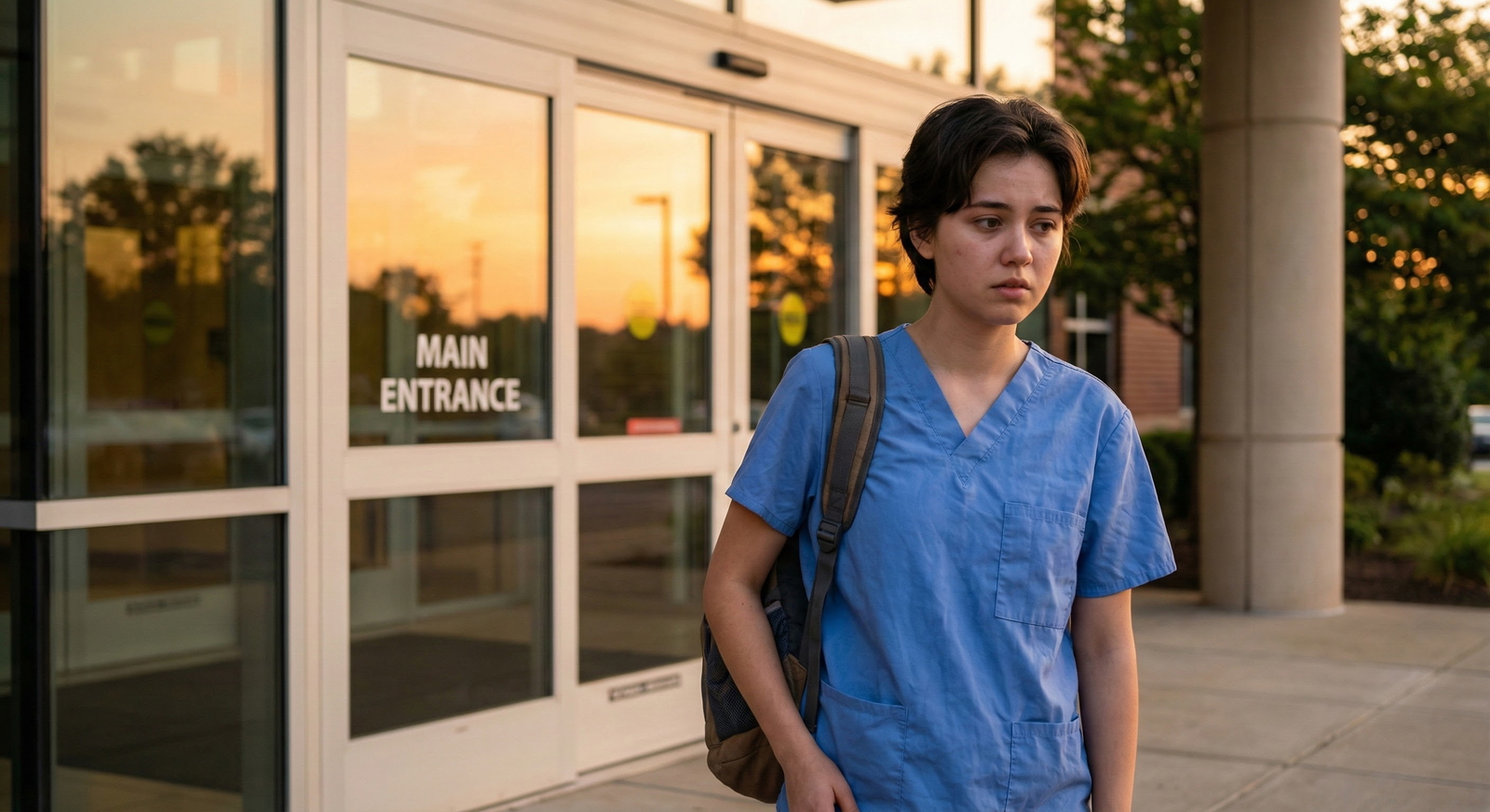
Understanding a Failed Match in New York City
For many medical students and graduates, matching into one of the competitive NYC residency programs is a dream—until Match Day reveals the opposite outcome. If you didn’t match—or “failed match” in common shorthand—you are far from alone, especially in a high‑demand location like New York City.
In the New York region, residency positions are limited relative to the number of applicants, and programs receive thousands of applications for a few dozen spots. That means strong candidates sometimes become unmatched applicants, including in primary care fields.
This article focuses on failed match recovery specifically for New York City residency pathways. It will walk you through:
- What a failed match really means (and what it does not mean)
- Immediate steps in the days and weeks after you learn you’re unmatched
- Strategic reapplication planning, tailored to NYC residency programs
- Alternative timelines, gap‑year planning, and local opportunities
- Emotional and professional recovery strategies
- Common questions from unmatched applicants who still want to train in NYC
Throughout, the goal is not just “damage control,” but helping you build a stronger, more intentional application for the next cycle—especially in one of the most competitive training environments in the country.
Step 1: Interpreting a Failed Match in the NYC Context
When you see the “didn’t match” result, it may feel like a verdict on your entire future. It is not. It’s a data point about how your current application compared to others in this specific cycle and specialty, within a fiercely competitive ecosystem.
Why NYC residency programs are uniquely competitive
New York City residency positions are shaped by several realities:
- Location desirability: Many applicants, U.S. and international, rank New York City highly for its culture, diversity, and clinical exposure.
- High application volume: Top NYC academic centers may receive 5,000–8,000+ applications per program for fewer than 50 positions.
- Strong local pipelines: NYC medical schools (Columbia, NYU, Weill Cornell, Mount Sinai, Einstein, SUNY Downstate, etc.) feed directly into local programs.
- IMG density: Many New York City programs are IMG‑friendly, which increases competition further—especially in internal medicine and family medicine.
Because of this, it’s possible to be a good candidate overall but still be an unmatched applicant in New York City specifically.
What a failed match does not mean
It does not mean:
- You can never match in the future
- You must abandon your specialty interests
- You can’t eventually train in New York City
- You have nothing to add to patient care
It does mean:
- Your application strategy, execution, or both need adjustment
- You must be very intentional about how you spend the next 6–18 months
- You may need to broaden your target list, geographic range, or even specialty
Think of failed match recovery as a quality‑improvement project: define the problem, identify contributing factors, and design interventions for the next cycle.
Step 2: Immediate Recovery Actions (First 2–4 Weeks)
The first month after a failed match determines how quickly you can pivot and rebuild. Focus on three domains: logistics, feedback, and stabilization.
1. Clarify your official status
Depending on your situation:
- If you are a U.S. MD/DO senior
Talk immediately with:- Your Dean’s Office / Student Affairs
- Your career advisor or specialty advisor
- Any trusted faculty mentors
Ask:
“Was I eligible for SOAP? Did I fully engage it?”
“Where did you think I was competitive, and where not?”
“What data do you see from our school for NYC residency matches in my specialty?”
If you are an IMG (US or non‑US)
Clarify:- Your ECFMG certification status
- Any visa constraints (e.g., needing J‑1 vs. H‑1B)
- Whether you fully participated in SOAP or did not meet eligibility criteria
2. Request program‑level feedback (selectively)
Not all programs respond, but for NYC residency programs where you had:
- A full interview, or
- A second look, or
- Strong mentorship connections
You can email politely, 2–3 weeks after Match, with something like:
“I deeply appreciated the opportunity to interview at [Program Name]. I unfortunately did not match this cycle and am working to strengthen my application for re‑application. If there is any broad feedback you can share about how I might improve my candidacy—whether in academic metrics, clinical experience, or program fit—I would be very grateful.”
Do not send mass emails to 30+ programs; focus on 3–10 where you had the strongest interaction. Many will give general rather than specific feedback, but even high‑level impressions (“scores below our usual range,” “limited recent U.S. experience,” “interview performance was quiet/unclear”) are helpful.
3. Secure or extend clinical engagement
Wherever you are currently:
- If still in med school:
Ask about sub‑internships, acting internships, or additional electives in your target field, ideally in or near New York City. - If graduated:
Look for:- Research assistant roles at NYC academic centers
- Clinical observer / extern roles (especially important for IMGs)
- Temporary positions such as medical scribe, clinical assistant, or quality improvement coordinator
Avoid long gaps with no clinical exposure; that’s particularly damaging when applying to New York residency programs where recency of experience is heavily scrutinized.
4. Stabilize your emotional and logistical foundation
In the first weeks, prioritizing your mental health is part of being a safe future physician.
Talk with:
- A counselor or therapist (many schools offer free services)
- Peers who matched and those who didn’t—both groups offer insight
- Family or partners to set realistic expectations about timelines and finances
Logistically:
- Reassess your living situation: Can you afford to stay in NYC this year, or do you need a lower‑cost area and commute for interviews?
- Start a dedicated budget that accounts for:
- ERAS fees
- Travel or virtual interview costs
- Licensing exam retakes (if needed)
- Application‑related subscriptions (e.g., NRMP, MyERAS, question banks)
The goal of month one is not to have all the answers but to prevent paralysis, preserve momentum, and avoid extended inactivity.

Step 3: Diagnosing Why You Didn’t Match
Effective failed match recovery starts with an honest, data‑driven analysis of your previous cycle. This is especially critical if your dream is a New York City residency, where “marginal” weaknesses are magnified by competition.
Analyze your core application components
Break things down into categories:
Academic metrics
- USMLE/COMLEX Step 1 (P/F) and Step 2 CK scores
- Any exam failures or multiple attempts
- Class rank, honors, AOA/Gold Humanism
- For IMGs: year of graduation and gaps
Clinical experience
- Number and recency of U.S. clinical experiences
- Type: inpatient vs. outpatient, academic vs. community, NYC vs. elsewhere
- Sub‑internships or AIs in your chosen specialty
- Any red flags (disciplinary issues, professionalism concerns)
Letters of recommendation
- Were they from:
- Faculty in the specialty?
- U.S. academic physicians?
- NYC institutions or well‑known health systems?
- Did you have at least one strong, personalized letter from someone who knows you well?
- Were they from:
Personal statement and narrative
- Did it clearly answer: “Why this specialty?” and “Why you?”
- Did it subtly or explicitly signal an interest in New York City residency training (without overdoing it)?
- Was it free of grammar and structure errors?
Program selection & geography
- Did you apply to:
- An appropriate number of programs for your competitiveness?
- A mix of academic and community programs?
- Programs outside NYC or mostly just in New York City?
- Were your target programs in line with your metrics (for example, applying mainly to ultra‑competitive Manhattan academic centers with below‑average Step 2 scores)?
- Did you apply to:
Interview performance
- Number of interviews received versus applications submitted
- Comfort with behavioral questions, red‑flag questions, and “Tell me about yourself”
- Feedback from mock interviews
Common mismatches for NYC‑focused applicants
Some frequent patterns among unmatched applicants seeking New York City residency include:
- Overly narrow geographic focus: Ranking only NYC residency programs or only a single borough, with no backups elsewhere.
- Overconcentration on prestige: Targeting just big‑name Manhattan academic centers, with limited or no applications to community or outer‑borough programs.
- Insufficient U.S. clinical experience (especially IMGs): No recent U.S. hands‑on experience, or only observerships with weak letters.
- Metrics not aligned with program thresholds: Applying heavily to programs whose residents have significantly higher average scores than yours.
- Weak or generic letters: Particularly when letters come from physicians who barely know you or from outside your target specialty.
Write out your analysis in a document. Treat it like a case presentation on yourself, including “assessment” and “plan.” This will guide your reapplication strategy.
Step 4: Strategic Reapplication Planning for NYC Residency Programs
Once you understand why you didn’t match, you can design a targeted strategy. If your goal remains a New York City residency, you must decide how flexible you can be in three areas: specialty, geography, and timeline.
A. Clarify your priorities
Ask yourself:
Is your top priority:
- Practicing a specific specialty, regardless of location?
- Or training specifically in New York City, even if it means a different specialty or delayed start?
What are you willing to adjust?
- Applying more broadly across the U.S.?
- Considering both academic and community NYC programs?
- Considering preliminary or transitional year positions?
Your answers will shape your strategy.
B. Strengthening your application components
Depending on your earlier analysis, target improvements where they matter most.
Academic and exam strategy
- If your Step 2 CK is low:
- Consider a dedicated study plan and, if eligible, discuss whether a retake (if allowed) or stronger future performance in other exams (e.g., in‑training exams, Step 3) could help.
- If you have an exam failure:
- Prepare a concise, honest explanation and emphasize the pattern of consistent success since then.
- If your Step 2 CK is low:
Clinical and research experiences in NYC
For a New York City residency, local engagement is powerful. Look for opportunities at:
- Major centers (e.g., NYU, Columbia, Cornell, Sinai, Montefiore, NYU–Brooklyn, SUNY Downstate, Maimonides, NYC Health + Hospitals sites)
- Community hospitals affiliated with NYC systems (e.g., Staten Island University Hospital, Brookdale, Wyckoff Heights, Flushing, BronxCare, etc.)
Options include:
- Research positions in your specialty of interest
- Clinical research coordinators on hospital‑based trials
- Observerships or externships:
- Especially valuable for IMGs seeking internal medicine, pediatrics, psychiatry, or family medicine
- Quality improvement projects, which many programs value for their direct impact on patient care
Actionable tip:
When contacting potential supervisors, lead with how you can contribute, not just what you want:
“I’m a recent graduate seeking to strengthen my candidacy for internal medicine residency. I’m very interested in quality improvement and would appreciate the opportunity to assist with data collection and project coordination in your clinic or research group.”
- Letters of recommendation
Aim for at least three strong, updated letters, ideally:
- 2–3 from your target specialty
- 1–2 from U.S. academic institutions
- At least 1 from someone who supervised you in NYC or a nearby region, if possible
Give your letter‑writers:
- Your updated CV
- A summary of your previous cycle and how you’ve improved
- Specific points you hope they might highlight (professionalism, clinical skills, teamwork)
- Personal statement and storytelling
For NYC residency programs, your story should communicate:
- Clear commitment to the specialty
- Evidence that you understand urban, diverse, high‑acuity patient populations
- Realistic respect for the demands of training in New York City
Avoid cliches like “I always dreamed of living in NYC”; instead, show alignment with:
- The patient populations served by NYC hospitals
- Your interest in caring for underserved or immigrant communities
- The complex pathology and social determinants of health common in urban centers
C. Program selection: Broadening without losing focus
To reduce the risk of another failed match:
Expand geographically
- Include programs across multiple states and regions, not just New York.
- Use FREIDA and program websites to find places historically welcoming to candidates with similar backgrounds and metrics.
Include a range of program types
- Academic medical centers
- Community teaching hospitals
- Safety‑net and county hospitals
- Programs in outer boroughs and surrounding areas (Queens, Brooklyn, Bronx, Staten Island, Long Island, Westchester, northern New Jersey)
Consider different tracks
- Categorical
- Preliminary internal medicine or surgery
- Transitional year (if aligned with long‑term goals)
Using this strategy, you may match outside New York first, then consider fellowships or later career moves that bring you to NYC.

Step 5: Using a Gap Year (or Two) Strategically in New York City
If you didn’t match and are planning to reapply, 6–24 months of “gap time” can either weaken or significantly enhance your application. The difference lies in structure, relevance, and documentation.
High‑value activities for unmatched applicants in NYC
Full‑time research positions
- Especially in internal medicine, cardiology, oncology, neurology, emergency medicine, psychiatry, or surgery
- Look for roles that allow:
- Patient contact (when permitted)
- Co‑authorship on papers or abstracts
- Presentation at conferences
Clinical research coordinator or study nurse assistant roles
- Common at large NYC hospitals
- Provide rich exposure to multidisciplinary care, informed consent, and data management
Observerships and externships
- Particularly critical for IMGs and those with older graduation years
- Aim for:
- Structured experiences (clear start/end, defined duties)
- Direct supervision by attendings who can write detailed letters
- Rotate through multiple sites if feasible (e.g., one month at a Bronx hospital, another in Brooklyn, etc.)
Public health and community work
- NYC is a hub for:
- Community health organizations
- HIV clinics
- Harm reduction programs
- Immigrant health services
- These experiences show commitment to vulnerable populations and resonate with many New York residency program missions.
- NYC is a hub for:
Teaching and tutoring
- Teaching medical students, MCAT/USMLE prep, or serving as a simulation instructor
- Demonstrates communication skills and commitment to education.
Structuring your gap period
To present your gap year effectively to NYC residency programs:
- Create a timeline (month by month) of major responsibilities and accomplishments.
- Track:
- Papers, posters, and presentations
- Quality improvement and outcomes
- Patient populations served
- Any leadership roles you assume
During interviews, you’ll need to articulate:
- Why you didn’t match initially
- Why you chose these particular activities
- How they specifically prepared you to be a better resident—especially in a high‑volume, urban environment like New York City
Financing your recovery year
New York City is expensive. Many unmatched applicants face financial stress. Consider:
- Working full‑time in a paid research or coordinator role while doing part‑time observerships.
- Sharing housing with roommates or living just outside the city (New Jersey, Westchester, Long Island) and commuting by public transit.
- Seeking grants or stipends available through certain research projects, particularly at large academic centers.
If living in NYC is not feasible, similar strategies can be implemented in other U.S. cities with strong academic centers, but you should then be prepared to show how those experiences still translate well to a future New York City residency.
Step 6: Interview Season, SOAP, and Managing a Second Attempt
When you re‑enter the application cycle after a failed match, treat it as a fresh campaign, not a repeat.
Preparing for interviews
Focus on the most common high‑yield areas:
Explaining your failed match and gap period
Use a clear, concise, non‑defensive narrative:
- Acknowledge what happened
- Own your part in it (e.g., over‑concentrated on NYC, limited U.S. experience)
- Emphasize growth, insight, and concrete improvements
Example structure:
“I applied heavily to New York City programs last cycle with limited U.S. clinical experience and a narrow geographic focus. I did not match. Over the past year, I’ve completed [X] months of hands‑on work at [Institution], strengthened my letters with U.S. attendings, and broadened my application strategically. This experience has made me more resilient and clearer about the kind of resident I want to be.”
Demonstrating fit for urban, diverse patient care
- Highlight:
- Experiences with limited‑English‑proficiency patients
- Work with uninsured or underinsured populations
- Comfort with complex social determinants of health
- Highlight:
Behavioral questions
- Prepare examples using the STAR format (Situation, Task, Action, Result)
- Emphasize teamwork, conflict resolution, and adaptive learning.
Understanding each NYC program’s identity
- Some are heavy on research; others prioritize community health.
- Study their websites, rotation sites, safety‑net missions, and fellowships.
SOAP as a structured backup plan
If you go into another Match cycle:
- Register for NRMP and be fully SOAP‑eligible.
- Before Rank Order List certification, decide:
- Would you be willing to accept a non‑NYC residency program via SOAP, if you go unmatched again?
- Are preliminary or transitional year positions acceptable paths to your final goals?
If you do become a twice‑unmatched applicant, your strategy may shift more towards:
- A broader range of specialties or locations
- Combined research + clinical pathways leading eventually back to NYC (e.g., via fellowship)
FAQs: Failed Match Recovery and New York City Residency
1. I didn’t match but only want to train in NYC. Is that realistic?
It depends on your profile. Some applicants do successfully reapply and enter NYC residency programs after a failed match, especially if they significantly strengthen their U.S. clinical experience and letters.
However, insisting on NYC only, with no geographic flexibility, increases your risk of remaining an unmatched applicant even after multiple cycles. Many candidates choose to:
- Train outside NYC initially, then
- Return for fellowship or as attendings
This pathway is common and very acceptable.
2. I’m an IMG who failed to match. Do I still have a chance at New York City programs?
Yes, many New York City residency programs are IMG‑friendly. To improve your chances:
- Obtain recent, strong U.S. clinical experience, ideally in or near NYC.
- Secure U.S. academic letters of recommendation in your specialty.
- Address any exam failures head‑on in your application and interviews.
- Apply broadly—NYC plus other IMG‑friendly regions—so your odds don’t depend solely on one city.
3. How do NYC programs view a gap year after a failed match?
A gap year is viewed positively when it is:
- Clearly structured
- Clinically or academically relevant
- Documented with specific outputs (publications, projects, strong LORs)
A gap year is viewed negatively if:
- There is little or no clinical exposure
- Activities are vaguely described or unrelated to medicine
- The applicant cannot clearly explain how the year improved readiness for residency
4. If I failed the match once, should I change specialties to match in New York City?
Not automatically. First, determine why you didn’t match. If:
- Your metrics and experiences are fundamentally misaligned with the competitiveness of your chosen specialty in NYC, or
- You remain deeply location‑locked to New York City
Then considering a less competitive specialty may be reasonable. But changing specialties should be based on genuine interest, not just desperation for a NYC position. Program directors can usually distinguish authentic passion from a purely strategic pivot.
Recovering from a failed match, especially with a goal as ambitious as training in New York City, requires honesty, structure, and persistence. You are not defined by one Match outcome. With deliberate planning, targeted improvement, and broadened strategy, many applicants transform a failed match into a stronger, more sustainable path—whether that path runs through NYC from the start or brings you there later in your career.