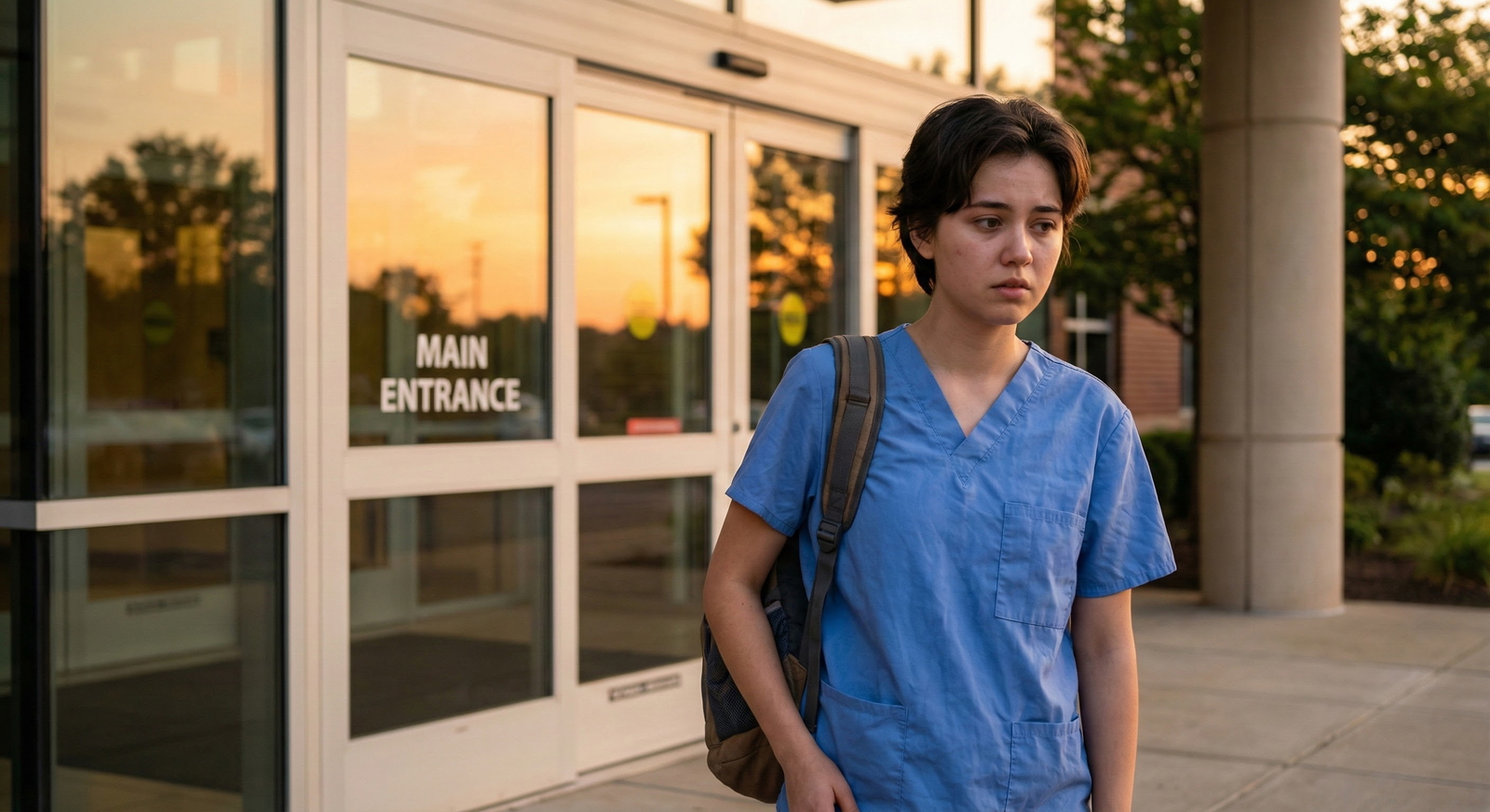
Understanding a Failed Match in Philadelphia: What It Really Means
Not matching into a residency—especially in a city as competitive as Philadelphia—can feel devastating. Whether your goal was a Penn residency program, another large academic center, or a community program in the region, a failed match does not mean you are unqualified to be a physician. It means that, this cycle, the numbers, timing, and strategy didn’t align.
Philadelphia is a dense academic hub with:
- Multiple large academic health systems (e.g., University of Pennsylvania, Jefferson, Temple, Drexel-affiliated hospitals)
- Highly regarded community hospitals and safety-net institutions
- Intense competition, especially for certain specialties (e.g., dermatology, orthopedics, ENT, radiology, anesthesia, EM in some cycles)
In such an environment, even strong applicants can go unmatched.
Some common reasons an otherwise good applicant in the Philadelphia region might not match:
- Overly competitive specialty choices with few positions locally
- Geographic over-restriction (e.g., applying almost exclusively to Philadelphia residency programs)
- Application imbalance (too few programs, or not enough “safety” options)
- USMLE/COMLEX performance issues, especially Step 1/Level 1 failures or low Step 2/Level 2 scores
- Weak or generic letters of recommendation
- Limited clinical experience in the U.S. (especially for IMGs)
- Red flags (gaps, professionalism concerns, academic probation, prior failed match)
- Suboptimal interviewing skills or poor virtual interview setup
The key now is not blame—but strategic recovery. Philadelphia offers rich opportunities to rebuild your application if you know where to look and how to position yourself.
Immediate Steps After You Didn’t Match
If you’ve just discovered you didn’t match (or only partially matched), your next week is critical. The goal is to keep options open while also stabilizing emotionally and professionally.
1. Pause, Breathe, and Reframe
You will likely feel shock, shame, or panic. That’s normal. But rushed decisions—like firing off emotional emails to program directors—rarely help.
- Take 24–48 hours to process before making big career decisions.
- Reach out to trusted support: classmates, family, mentors, therapist or counselor.
- Remind yourself: you’re not alone. Every year, thousands of qualified applicants are in the same position, including many in the Philadelphia region.
2. Debrief with Your Medical School (or Home Institution)
Contact:
- Dean of Students or Student Affairs
- Career/Residency Advisor
- Your specialty advisor(s)
- IMG office contacts, if applicable
Ask for:
- A frank assessment of your file (scores, grades, letters, personal statement, interview feedback if any).
- Data: How many from your school went unmatched? In which specialties? What pathways have prior unmatched applicants successfully used?
- Help with:
- Updating your CV
- Drafting or revising your personal statement
- Reaching out to local programs in the Philadelphia area
If you trained outside the U.S. and don’t have a “home” school here, identify:
- An advisor from a U.S. clinical rotation
- A faculty sponsor at a Philadelphia hospital where you did observerships or electives
3. Understand Your Options: SOAP, Off-Cycle, and Gap-Year Plans
If this is immediately after Match Day:
- Participate in SOAP (Supplemental Offer and Acceptance Program) if eligible.
- Target realistic specialties and programs—including community programs in and around Philadelphia, not just big-name academic centers.
- Be open-minded about:
- Preliminary vs. categorical spots
- Internal medicine, family medicine, pediatrics, psychiatry, transitional year
- Nearby regions (New Jersey, Delaware, suburban Pennsylvania)
If SOAP ends and you still don’t have a position, you transition to failed match recovery and gap-year planning. The remainder of this article focuses on that phase.

Strategic Assessment: Why You Went Unmatched
Before you can fix your application, you need to diagnose what went wrong. Treat this as a root-cause analysis, not a personal judgment.
1. Analyze the Core Components of Your Application
Work with a mentor to review:
a. Exam Performance
- USMLE Step 1/2 or COMLEX Level 1/2 scores:
- Any failures or significant score drops?
- Scores below typical cutoffs for Penn residency programs or nearby academic centers?
- Were your scores released late, or did you apply without Step 2?
b. Academic Record
- Any course or clerkship failures, repeats, or leaves of absence?
- Shelf exam performance, especially in core rotations relevant to your specialty.
- Honors vs. Pass distributions compared to classmates.
c. Clinical Experience
- Strength and recency of U.S. clinical experience, especially in your target specialty.
- For IMGs: Did you have enough hands-on (not just observership) experience?
- Rotations at target programs in Philadelphia or the mid-Atlantic region?
d. Letters of Recommendation
- At least one or two strong specialty-specific letters?
- Any from well-known faculty in the Philadelphia residency ecosystem (Penn, Jefferson, Temple, Drexel, Main Line, Einstein, etc.)?
- Were letters generic or possibly lukewarm?
e. Personal Statement and Application Narrative
- Clear, specific reasoning for specialty choice?
- Did you overly emphasize one city or one institution (e.g., “Penn or bust”)?
- Were there unexplained gaps, red flags, or inconsistencies?
f. Program List Strategy
- How many programs did you apply to?
- How many were in Philadelphia vs. nationally?
- Did you include a reasonable number of community and less competitive programs?
- Did you dual-apply (e.g., applying to both a competitive specialty and a more attainable one)?
g. Interview Performance
- Did you receive enough interviews and rank enough programs?
- Any patterns of difficult interviews, awkward interactions, or technical issues (for virtual interviews)?
- Did you express overly narrow geographic preferences (e.g., “Philadelphia only”)?
Document this analysis. The patterns you uncover will shape your recovery plan.
2. Clarify: Specialty, Geography, or Both?
Ask yourself:
- Is your specialty itself ultra-competitive (e.g., derm, ortho, ENT, plastics, neurosurgery)?
- Or was the main limitation that you constrained yourself to Philadelphia residency positions?
You have three main pathways:
- Same specialty, wider geography
- Different (less competitive) specialty, same geography focus (e.g., staying in Philadelphia region)
- Adjust both: slightly less competitive specialty and more flexible geography
Be honest about your non-negotiables (family, visa issues, financial constraints) versus preferences.
Building a Powerful Gap Year in the Philadelphia Region
A failed match can become a transformative growth year if it’s structured correctly. Philadelphia is actually an excellent place for unmatched applicants because of the concentration of academic centers, research groups, public health agencies, and community clinics.
Your goals for the gap year:
- Demonstrate clinical readiness and reliability
- Strengthen objective metrics (scores, publications, structured work)
- Fill any experience or narrative gaps
- Build local relationships with program leadership and faculty
1. Clinical Opportunities in and Around Philadelphia
Depending on your status (US MD/DO, AMG/IMG, visa needs), your options will differ, but consider:
a. Research Assistant or Clinical Research Fellow Roles
Many Penn residency programs and other Philadelphia institutions have:
- Research coordinators
- Postgraduate research fellows
- Clinical trials coordinators
Look for positions at:
- University of Pennsylvania Health System
- Thomas Jefferson University Hospitals
- Temple University Hospital
- Drexel-affiliated programs
- Einstein, Main Line Health, Cooper (Camden), ChristianaCare (Newark, DE, often considered in the wider Philly region)
Impact on your application:
- Publications, abstracts, and posters
- Close work with attending physicians who can write strong letters
- Demonstrated persistence and scholarly productivity
b. U.S. Clinical Experience (USCE)
For IMGs and some DO/MD graduates who took a non-clinical path, fresh clinical exposure is critical.
Consider:
- Sub-internships or acting internships (if your school allows after graduation)
- Externships sponsored by hospitals, where you have some hands-on responsibility
- Supervised clinical assistant roles in outpatient clinics or hospitalist groups
Avoid purely shadowing roles unless:
- You have no other option and
- They’re at a high-yield site that might feed into a Philadelphia residency or provide strong letters.
c. Transitional Clinical Employment
Some unmatched applicants successfully find:
- Scribe positions (ED, hospitalist groups)
- Clinical assistant/medical assistant positions
- Telemedicine support roles (documentation, triage under physician supervision)
These won’t fully replace a residency role but show ongoing patient engagement and professional maturity.
2. Academic and Exam-Based Improvements
If your test scores or academic history contributed to your failed match, your gap year plan must directly address them.
a. Step 3 / COMLEX Level 3
For many specialties, especially internal medicine, family medicine, and psychiatry, a passed Step 3 or Level 3 can:
- Reduce perceived risk for PDs
- Strengthen your appeal for community and smaller academic programs
- Particularly help an unmatched applicant trying again in the Philadelphia region
Plan a dedicated study period, ideally early in your gap year, so your result is available by ERAS opening.
b. Additional Coursework or Certifications
Consider:
- Graduate certificate or MPH coursework at local institutions (e.g., Penn, Drexel, Temple) if it directly supports your specialty interest (e.g., public health, bioethics, translational research)
- Quality improvement or Patient Safety certifications
- Advanced life support courses (ACLS, PALS, ATLS depending on field)
Choose options that you can genuinely discuss in interviews and that clearly relate to your renewed residency goals.
3. Addressing Red Flags Proactively
If your failed match is connected to a clear red flag, plan a structured response.
Common red flags & potential mitigation strategies:
- Failed exam: Retake with significant score improvement; document your new study methods and discipline.
- Clerkship failure or professionalism issue: Secure recent, high-quality clinical evaluations that show reliability and professionalism.
- Gap in training: Use your gap year to demonstrate consistent clinical or scholarly activity, with clear explanation in your personal statement.
- Prior unmatched cycle: Frame this year as a deliberate, productive response, not a passive waiting period.
In interviews, you’ll need a short, honest, and composed explanation, followed by specific evidence of growth.

Targeting Philadelphia Residency Programs After a Failed Match
If your priority is to train in the Philadelphia region—whether at Penn residency programs or other local institutions—you need both strategy and realism.
1. Mapping the Philadelphia Residency Landscape
Major categories of programs in and around Philadelphia:
- Large academic centers
- University of Pennsylvania
- Thomas Jefferson
- Temple
- Drexel-affiliated hospitals
- Hybrid academic–community programs
- Einstein
- Main Line Health (Lankenau, Bryn Mawr, Paoli)
- Cooper (Camden)
- ChristianaCare (DE)
- Community programs
- Smaller hospitals within the city and surrounding suburbs
- Often less well-known nationally, but excellent training environments
For an unmatched applicant, the most realistic entry points are often:
- Community and hybrid programs
- Larger academic centers for research or preliminary/transitional placements, with the understanding that you may need to reapply for categorical positions later.
2. Networking Tactically and Professionally
In Philadelphia’s tight medical community, networking matters—but it must be respectful and thoughtful, not desperate.
a. Use Existing Connectors
- Faculty from rotations at:
- Penn, Jefferson, Temple, Drexel, Einstein, Main Line, etc.
- Alumni from your medical school now in Philadelphia residencies
- Attending physicians in your research or clinical roles
Ask them to:
- Review your CV and application strategy
- Introduce you via email to program leaders or faculty
- Allow you to join ongoing projects that might lead to letters or presentations
b. Attend Local and Regional Meetings
- Departmental grand rounds (often open to students/grads)
- Specialty-specific regional meetings hosted in Philadelphia
- Hospital-based M&M conferences or QI sessions, if permitted
Your goal: be a familiar, professional face engaged in learning and patient care—not someone whose first sentence is, “I didn’t match; can you get me a spot?”
3. Crafting a Stronger, Region-Specific Application Narrative
When you reapply, your materials must:
- Explicitly address your failed match year with clarity and growth
- Demonstrate sustained commitment to patient care and learning
- Show thoughtful alignment with Philadelphia residency training environments
Elements to emphasize:
- Any projects, QI work, or research tied to local health issues (e.g., urban health, opioid crisis, gun violence, underserved communities)
- Community involvement: free clinics, outreach, public health initiatives in the city
- Professional relationships and mentorships developed in the region
- What you’ve learned from working in Philadelphia’s diverse patient populations
For Penn residency programs in particular, and similarly competitive institutions, you will need:
- Strong academic metrics or clearly improved test performance
- Evidence of scholarly work (papers, posters, QI work)
- At least one or two letters from locally respected faculty who know you well
Application Strategy for the Next Cycle
To maximize your chances of matching on your next try, particularly after a failed match in a competitive region like Philadelphia, you need a data-driven, humble, and flexible strategy.
1. Recalibrate Specialty Choices
Ask yourself:
- Am I willing to change specialties if it significantly improves my chances?
- Would I be more satisfied being a physician in a less competitive specialty than potentially never matching in my original choice?
Examples of strategic shifts:
- From a highly competitive surgical specialty to:
- General surgery (if metrics allow) or
- A medicine-based field that still offers procedures (e.g., internal medicine leading to GI, pulm/crit; anesthesia; EM in some markets)
- From a competitive ROAD specialty (radiology, ophtho, anesthesia, derm) to internal medicine, family medicine, or psychiatry
- Remaining in your original specialty but:
- Broadening geography
- Targeting more community-focused programs
2. Broaden Geographic Scope While Highlighting Philadelphia
If your first cycle was heavily Philadelphia-centric:
- Expand to multiple regions:
- Mid-Atlantic
- Northeast
- Midwest or South if you have any ties
- Maintain a core focus on Philadelphia programs you’ve engaged with during the gap year, but don’t rely solely on them.
Highlight in your application:
- Clear ties to Philadelphia (family, training, research) for local programs
- Equivalent ties to other regions when applicable (rotations, relatives, prior education)
3. Apply Early, Completely, and Broadly
- Submit your ERAS application as soon as the system opens, with:
- Finalized personal statement(s)
- Updated CV
- All available letters of recommendation (you can add more later)
- Request more letters than you’ll upload, so you can choose the strongest.
- Consider writing slightly different personal statements for:
- Academic vs. community programs
- Different specialties if you dual-apply
4. Prepare Intensively for Interviews
Your previous cycle might have been limited not only by invitations but by performance.
Action steps:
- Practice behavioral questions with a focus on resilience, dealing with failure, coping with stress, and teamwork.
- Prepare your “failed match” narrative:
- Honest, concise explanation (no blaming or bitterness)
- Focus on what you learned and how you grew
- Specific examples from your gap-year activities
- Set up a professional virtual interview environment:
- Stable internet, good lighting, neutral background, quality audio
Philadelphia programs, like others, will be looking to see:
- Whether you own and learn from setbacks
- How you collaborate in diverse teams
- Your commitment to serving their patient population
Frequently Asked Questions (FAQ)
1. I didn’t match and I’m focused on Philadelphia. Is it realistic to aim for Penn residency programs next cycle?
It depends on why you didn’t match and your overall profile. If you were already close—strong scores, solid clinical performance—and your main issues were strategy or interview skills, then a highly productive gap year (especially one involving research or clinical work at Penn or another major academic center) can keep Penn on the table. However, you should also apply broadly to other Philadelphia residency programs and beyond. Even outstanding unmatched applicants typically need to expand geographic and program-type flexibility.
2. I’m an unmatched applicant with low Step scores. Can I still match in the Philadelphia area?
Yes, but you’ll need a very strategic approach:
- Consider less competitive specialties (FM, IM, psych, peds) and community-based programs.
- Pass Step 3 or Level 3 if feasible to demonstrate improvement.
- Gain strong, recent clinical experience with excellent evaluations and letters from U.S. faculty.
- Leverage any local ties to the Philadelphia region.
Many community programs in and around Philadelphia value reliability, work ethic, and patient-centered care at least as much as raw scores.
3. I’m an IMG who went unmatched. Is Philadelphia still a good region to target?
Philadelphia can be an excellent region for IMGs, but it is competitive. To remain viable:
- Secure substantial, recent U.S. clinical experience (ideally in the region).
- Engage in research or QI with local hospitals if possible.
- Network respectfully with faculty and program leadership.
- Apply broadly, including smaller community programs in the suburbs and neighboring states.
Do not focus only on big-name Penn residency programs or other top-tier institutions; balance aspirational choices with realistic options.
4. How should I talk about my failed match in interviews?
Use a three-part framework:
- Briefly state the facts without defensiveness:
“In my first application cycle, I did not match in [specialty]. After reviewing my application with mentors, we identified [key factors, e.g., over-restricting geography and not applying broadly enough].” - Describe your response and growth:
“In the year since, I have worked as a [research fellow/clinical assistant], completed [Step 3, QI projects], and gained new clinical experience at [institution]. This has strengthened my skills in [specific ways].” - Connect to the program’s needs:
“This experience has made me more resilient, reflective, and intentional about my career. I’m confident I can contribute meaningfully to your residency team and patient population.”
Keep it concise, honest, and forward-looking.
A failed match, especially in a competitive environment like Philadelphia, is painful—but it is not the end of your path to residency. With a clear-eyed assessment, a structured recovery year, and a thoughtful, flexible application strategy, many unmatched applicants successfully secure positions in Philadelphia residency programs or comparable training environments. Your next steps—planned deliberately and executed consistently—can transform this setback into the foundation of a stronger, more resilient career.