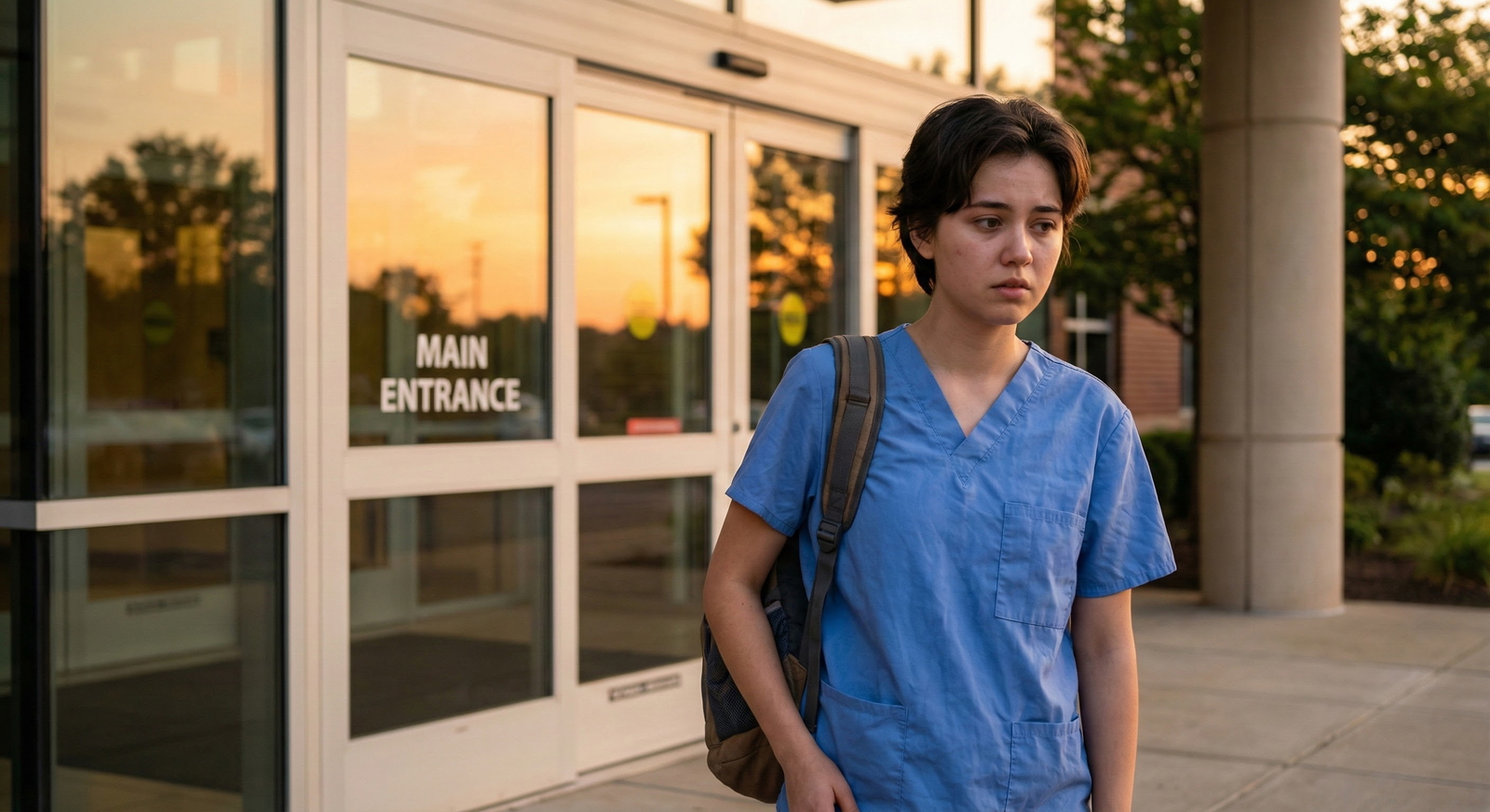
Understanding a Failed Match in Preliminary Medicine
Not matching into a preliminary medicine year (prelim IM) can feel devastating—especially if it was part of a carefully planned pathway toward advanced training in fields like anesthesiology, neurology, radiation oncology, or dermatology. Many unmatched applicants interpret a failed match as a final verdict on their careers.
It isn’t.
Every year, large numbers of capable, motivated graduates don’t match or only partially match (e.g., advanced position but no prelim year, or prelim IM but no advanced spot). Many successfully re-enter the Match the following cycle, often with stronger applications and a clearer sense of direction.
This guide is focused specifically on failed match recovery for those targeting preliminary medicine positions. Whether you:
- Didn’t match at all
- Matched an advanced position but not a preliminary year
- Only matched a prelim IM spot and are worried about what comes next
—this article will walk you step-by-step through understanding what happened, stabilizing your current situation, and building a strategic plan for the next cycle.
We’ll use these terms throughout:
- “Failed match” / “didn’t match” / “unmatched applicant” – broadly includes not matching at all or not matching the component you need (e.g., prelim year).
- Preliminary medicine year / prelim IM – a one-year internal medicine internship, often required before entering certain advanced specialties.
Step 1: Reframe and Analyze What Happened
Before you can fix the problem, you need to understand it clearly and objectively.
1.1 Emotional triage: stabilizing first
Immediately after results, you may feel shock, embarrassment, or even shame. Those reactions are normal—but they’re terrible conditions for decision-making.
In the first 48–72 hours:
- Limit impulsive communication (especially emotional emails to programs).
- Talk to 1–2 trusted mentors or advisors, not everyone at once.
- Write down your questions and concerns so you can address them systematically.
- Allow yourself to be disappointed, but put a time box around intense rumination.
Your goal is not to “feel great.” Your goal is to get calm enough to think clearly.
1.2 Identify which scenario applies to you
The recovery strategy depends on your exact situation:
You didn’t match anywhere (no prelim IM, no categorical, no advanced).
You’ll need to decide between SOAP, reapplying next cycle, and interim options (research, MPH, etc.).You matched an advanced position but didn’t match a preliminary medicine year.
This is common in fields like anesthesiology, radiology, and neurology. Your immediate priority is securing an acceptable PGY-1 spot (via SOAP or off-cycle), then planning next cycle contingencies if that fails.You matched a preliminary medicine year but didn’t match an advanced spot.
You are not “failed” for this year, but you need a clear plan for how to leverage your prelim IM year to secure an advanced or categorical position later.You partially matched into a non-medicine prelim (e.g., preliminary surgery) but need medicine.
Your path might involve pursuing that year, switching pathways, or delaying entirely, depending on your long-term goals.
Clarifying your scenario helps you avoid generic advice and focus on your specific recovery pathway.
1.3 Honest diagnostic review of your application
Next, perform a structured “post-mortem” of your application. This step is critical for any unmatched applicant.
Use the following framework:
A. Academic metrics
- USMLE/COMLEX scores (including attempts or failures)
- Number of attempts per Step/Level
- Any gaps in medical school or leaves of absence
- Class rank, honors, AOA/Gold Humanism (or absence thereof)
B. Clinical profile
- Number and quality of U.S. clinical rotations (especially inpatient internal medicine)
- Strength of internal medicine evaluations
- Subspecialty exposure vs. core IM exposure
C. Application strategy
- Number of programs applied to in preliminary medicine
- Distribution of program competitiveness (community vs university, geographic spread)
- Whether you applied late or used incomplete documents
- Signals (if applicable) and how you used them
D. Narrative and professionalism
- Personal statement content and clarity
- Consistency of your story: why preliminary medicine, what next?
- Any professionalism issues (disciplinary actions, concerning narrative in MSPE)
E. External constraints
- Visa needs (IMGs)
- Geographic limitations (e.g., family obligations, dual-career couples)
- Late specialty switch limiting targeted experiences
Ask yourself:
- Where would an average program director have hesitated?
- Did I apply broadly enough for my profile?
- Did I present a clear and realistic plan after the prelim year?
Whenever possible, do this review with a knowledgeable advisor: a program director, clerkship director, or experienced mentor in internal medicine or your target advanced field. They can often see patterns you can’t.

Step 2: Navigating SOAP and Immediate Options
If you realize you didn’t match or didn’t secure a preliminary medicine year, the Supplemental Offer and Acceptance Program (SOAP) becomes immediately relevant.
2.1 Know whether SOAP applies to you
You may be eligible for SOAP if:
- You registered for the Match and submitted a rank list, and
- You are fully or partially unmatched at the time of the main Match results.
You are not SOAP-eligible if:
- You withdrew from the Match before rank lists were due.
- You didn’t certify any rank list.
- You matched all positions you ranked (even if they aren’t what you wanted).
2.2 Strategy during SOAP for preliminary medicine
During SOAP, prelim IM spots are competitive and fill quickly. Many are targeted by applicants who matched advanced positions but need a PGY-1 year.
Key SOAP strategy points:
Broaden your filters dramatically.
- Consider community programs, smaller cities, and less sought-after regions.
- Be cautious but flexible about programs with heavy service burdens.
Tailor quickly but smartly.
- Have a short, prelim-focused personal statement ready.
- Emphasize dependability, work ethic, and ability to handle inpatient acuity.
Use your mentors’ networks.
- Ask IM faculty or your home PD to directly email programs where you applied in SOAP.
- A quick note saying “We know this applicant well and they will work hard” can carry real weight.
Be realistic about fit.
- Even if your dream is dermatology, during SOAP it is better to secure any solid preliminary medicine year than to remain unmatched and gamble purely on the next cycle.
Respond immediately to interview requests.
- SOAP moves fast. Have your phone on, email refresh on, and your Zoom setup ready.
2.3 If SOAP doesn’t work: short-term recovery paths
If SOAP ends and you still don’t have a prelim IM position, you’re now in off-cycle and next-cycle planning mode.
Common immediate steps include:
Contact programs about unfilled or late-opening prelim spots.
Some positions open due to resident resignations, visa issues, or funding changes.Explore non-match PGY-1 options at smaller or less centralized institutions that occasionally hire off-cycle prelim residents.
Clarify your timeline.
- Will you take one full gap year?
- Are you open to more than one year if it means a stronger application?
Your mindset should shift from “emergency scrambling” to “deliberate rebuilding.”
Step 3: Choosing Your Bridge Year (If You Didn’t Start a Prelim)
If you didn’t match into a preliminary medicine year and won’t be starting one this July, your bridge year is critical for failed match recovery.
3.1 Main categories of bridge-year options
1. Research positions (clinical or translational)
- Ideally in internal medicine or your eventual advanced specialty.
- Build publications, abstracts, and strong letters of recommendation.
- Can be paid (research assistant, postdoc) or unpaid.
2. Additional clinical exposure
- Observerships, externships, or non-standard clinical roles (depending on regulations).
- Particularly important for IMGs who need U.S. clinical experience (USCE).
- Focus on inpatient internal medicine when possible.
3. Advanced degrees (MPH, MSc, MBA, MEd)
- Useful if aligned with clear career goals (e.g., health systems, clinical research).
- Programs like MPH can provide both a visa bridge and academic credibility.
4. Teaching or educational roles
- Anatomy tutor, simulation instructor, Step prep instructor.
- Demonstrates communication skills and commitment to medical education.
5. Non-traditional work (scribing, hospitalist extender roles, etc.)
- Keeps you close to clinical medicine.
- May not carry as much academic weight but shows practical engagement.
3.2 Choosing strategically for preliminary medicine
Because you’re ultimately aiming for preliminary medicine (or need it as a stepping stone), prioritize bridge-year options that:
- Keep you clinically adjacent, especially in adult internal medicine.
- Provide direct supervision by U.S. internists or subspecialists who can write letters.
- Allow for measurable output: publications, QI projects, teaching evaluations, or leadership roles.
For example:
- A clinical research position in hospital medicine is more directly helpful than basic bench research unrelated to patient care.
- A scribe role on a medicine ward team (if available) is stronger than a non-medical job that simply pays the bills.
3.3 How to describe a gap or bridge year positively
Program directors will ask: “What did you do after you didn’t match?”
Your future narrative should:
- Acknowledge the gap straightforwardly, without dramatizing it.
- Emphasize growth and skills gained (clinical reasoning, evidence-based practice, teamwork).
- Show continuity with your long-term goals.
Example framing:
“After I did not match into a preliminary medicine position, I accepted a full-time role as a clinical research coordinator in the general internal medicine division at X Hospital. This year has strengthened my ability to interpret the literature, manage complex patients in a research setting, and collaborate closely with hospitalist teams. It has reinforced that internal medicine is the environment where I do my best work, and I am eager to contribute in a more direct clinical capacity as a prelim intern.”

Step 4: If You Have or Get a Preliminary Medicine Year
If you already matched into a preliminary IM year or you later secure one, that year becomes your most powerful recovery tool.
4.1 Performance during your prelim IM year
Program directors in advanced specialties and future IM programs will pay close attention to:
- Your inpatient evaluations (reliability, clinical reasoning, teamwork).
- Professionalism: punctuality, documentation, responsiveness, and collegiality.
- How well you handle the workload and stress of a busy intern year.
If you’re entering your prelim year as an unmatched or partially matched applicant, you must treat every month as an audition.
Key habits:
- Show up early, stay engaged, and anticipate team needs.
- Volunteer for admissions, procedures (where appropriate), and QI projects.
- Ask for concrete feedback and act on it promptly.
- Maintain a growth mindset even when exhausted.
4.2 Letters of recommendation from your prelim IM year
One of the biggest advantages of completing a preliminary medicine year is the strength and credibility of letters you can obtain.
Aim for:
- 1–2 letters from core faculty (hospitalists, ward attendings).
- 1 letter from your prelim program director or associate PD.
- An optional letter from a subspecialist if aligned with your advanced goals (e.g., a GI or endocrinology attending).
Ask your letter writers to address:
- Your reliability and work ethic.
- How quickly you learned to manage common inpatient problems.
- How you handle high-pressure situations and interprofessional teamwork.
- Fit for both preliminary medicine and the advanced specialty, if relevant.
4.3 Using a prelim year if you didn’t match an advanced position
If you started a prelim medicine year without an advanced position lined up, dedicate time early in the year to planning your next application cycle:
By August–September of your prelim year:
- Update your ERAS application with prelim experience.
- Draft a new personal statement (or statements if applying to multiple specialties).
- Meet with your prelim program leadership about your goals and ask for candid advice.
- Decide if you will:
- Reapply to your original advanced specialty
- Pivot to categorical internal medicine
- Apply to both pathways strategically
Every path has trade-offs. Categorical internal medicine is often a pragmatic and satisfying option if the advanced field is extremely competitive and your profile has significant barriers (e.g., low Step 1/2, multiple attempts, limited research).
Step 5: Rebuilding and Strengthening Your Next Application
Failed match recovery hinges on turning a weaker application into a stronger, more coherent one. This is true for any unmatched applicant, but especially for those seeking preliminary medicine.
5.1 Adjust your application strategy
For unmatched applicants reapplying to prelim IM:
- Increase the number of programs substantially compared with your prior cycle (within financial and logistical reason).
- Diversify program types:
- Academic and community
- Urban and smaller cities
- Different U.S. regions, including those with historically fewer applicants
- Use signaling wisely (where available), focusing on realistic targets rather than only top-tier names.
Do not rely on a single region (e.g., only the coasts) unless forced by compelling personal reasons.
5.2 Strengthen key components
A. USMLE/COMLEX
- If you have not taken Step 3 and are eligible, consider taking it during your bridge year or early prelim year. A pass on Step 3 can reassure program directors, especially if Step 1 or 2 were marginal.
- Address any failed attempts clearly and factually in your application and, if appropriate, in your personal statement.
B. Clinical experience and USCE
- For IMGs or applicants with limited U.S. exposure, aim to add:
- At least 2–3 months of U.S. inpatient internal medicine experience.
- Direct evaluation by attendings who understand U.S. residency expectations.
- Seek opportunities to present at case conferences or journal clubs, even as an observer or research assistant.
C. Research and scholarly work
- Focus on quality rather than quantity, but a few tangible outputs help:
- PubMed-indexed papers
- Case reports or series
- Posters and oral presentations at local or national meetings
- Frame your research in terms of how it improved your critical thinking and evidence-based approach to internal medicine.
D. Personal statement and narrative
For prelim IM, your personal statement should:
- Clearly state why medicine is the right foundation for your long-term plans.
- Explain any prior failed match without blaming others or appearing defensive.
- Emphasize resilience, self-reflection, and specific steps you’ve taken to improve.
- If you’re ultimately targeting an advanced specialty, acknowledge that transparently without sounding like you see the prelim year as a mere checkbox.
Example language:
“My long-term goal remains to train in anesthesiology; however, my experiences on internal medicine wards and in my current hospitalist research position have shown me the value of a robust medicine foundation. I am seeking a preliminary medicine year where I can refine my clinical reasoning, manage complex inpatients, and contribute meaningfully to the team.”
5.3 Show growth, not just time passing
Program directors want to see a trajectory. Between your failed match and your next application, you should be able to say:
- “I learned X about myself and the system.”
- “I did Y to address specific weaknesses.”
- “I achieved Z concrete outcomes.”
Examples:
- From “no U.S. clinical experience” to “four months of inpatient medicine with strong letters.”
- From “marginal Step 2 score” to “successful Step 3 and improved clinical evaluations.”
- From “generic research background” to “first-author case report in an internal medicine journal.”
Your ERAS should tell a clear before-and-after story.
Step 6: Long-Term Career Planning and Mindset
Even with a strong recovery plan, uncertainty remains. A failed match, especially in the context of a preliminary medicine year, raises big questions:
- Should you keep pursuing your original advanced specialty?
- Should you pivot to categorical internal medicine?
- How many cycles should you realistically attempt?
6.1 Reassessing your specialty choice
Ask yourself—and your advisors:
- Are the barriers to my original specialty primarily modifiable (e.g., application strategy, letters, research) or largely fixed (e.g., multiple board failures, major professionalism issues)?
- Would I be satisfied and fulfilled in categorical internal medicine or a related field (hospitalist medicine, primary care, subspecialty fellowship)?
- Am I pursuing the original specialty based on deep interest, or mainly prestige and external expectations?
If your core love is inpatient medicine—diagnosing, stabilizing, and managing complex patients—then categorical IM may be far more than a “backup.” It may be your best long-term fit.
6.2 When to consider pivoting to categorical internal medicine
Indicators that categorical IM might be a wise pivot:
- Multiple unsuccessful cycles applying primarily to an ultra-competitive advanced specialty.
- Strong clinical performance in medicine but limited traction with that advanced field.
- Advisors and mentors consistently recommending IM as a good match for your skills and temperament.
- Personal values aligning more with longitudinal patient care, broad knowledge, and team-based hospital work.
A preliminary medicine year can be an excellent audition for categorical IM at the same institution or elsewhere. Many residents transition this way successfully.
6.3 Protecting your mental health and professional identity
Repeatedly confronting a failed match or partial match is psychologically taxing. To sustain yourself:
- Separate your self-worth from match outcomes. The Match is a complex, imperfect allocation system—not a pure measure of your abilities.
- Maintain non-medical sources of identity: hobbies, relationships, community involvement.
- Consider speaking with a counselor or therapist familiar with medical training stressors.
- Stay connected to peers who have navigated similar detours. You are not alone—even if others don’t broadcast their match struggles.
Your professionalism includes how you handle adversity. Respected physicians often have backstories that include detours, rejections, and reinventions. This phase can become part of your credibility and empathy later.
FAQs: Failed Match Recovery in Preliminary Medicine
1. I didn’t match into a preliminary medicine year but did match an advanced position. What should I do first?
Immediately:
- Confirm your SOAP eligibility and participate fully, focusing on prelim IM spots.
- Alert your advanced program—they often have experience helping their incoming residents find prelim positions and may advocate for you.
- If SOAP fails, discuss with your advanced PD whether:
- You can delay your advanced start date by a year, and
- What bridge options (research, observerships, late-opening prelims) are realistic.
Maintain transparent communication with your advanced program; surprises later are far more damaging than early honesty.
2. How much does a failed match hurt my chances in the next cycle?
A failed match is a negative data point, but its impact depends heavily on:
- Why you didn’t match (strategy vs fundamental application weaknesses).
- What you do with the time afterwards (growth, experience, stronger letters).
- How you explain it (responsibility and reflection vs blame and excuses).
Many unmatched applicants secure strong preliminary medicine or categorical positions the following year, especially when they:
- Fix specific weaknesses (e.g., more USCE, better letters, Step 3).
- Apply more broadly and strategically.
- Obtain convincing endorsements from U.S. internists or their prelim PD.
3. Is it better to take any available preliminary spot or wait and reapply?
It depends on:
- The quality and stability of the program:
- Chronic duty-hour violations, high attrition, or poor supervision can be red flags.
- Your long-term goals:
- If you must complete a prelim year to start an advanced position, you may tolerate a broader range of programs.
- If you’re still uncertain about your path, a particularly toxic environment might do more harm than a well-planned bridge year.
In borderline cases, talk candidly with residents at the program and with your mentors. A demanding but functional prelim year can still be very valuable; a truly dysfunctional program can jeopardize your well-being and future evaluations.
4. I’m an IMG who didn’t match prelim IM. What are the most important things to focus on this year?
For IMG unmatched applicants targeting a preliminary medicine year:
- Maximize U.S. clinical experience, especially inpatient internal medicine.
- Secure strong U.S. letters of recommendation from IM attendings and, if possible, a PD.
- Consider passing USMLE Step 3 if eligible; it can offset concerns about earlier scores or attempts.
- Show continuity in clinical involvement—long gaps without medical engagement are concerning.
- Work with advisors who understand visa issues and IMG-specific challenges in the Match.
Your goal is to demonstrate that you can function effectively in a U.S. internal medicine environment and will be a safe, reliable intern.
Recovering from a failed match in preliminary medicine is not about pretending it never happened. It’s about understanding it clearly, addressing its causes, and using the interval and/or your prelim IM year as a launchpad toward a sustainable, satisfying career.
You still have many viable paths. The key is to choose them deliberately, not reactively—and to let each step you take from here strengthen the story you’ll tell the next time you apply.