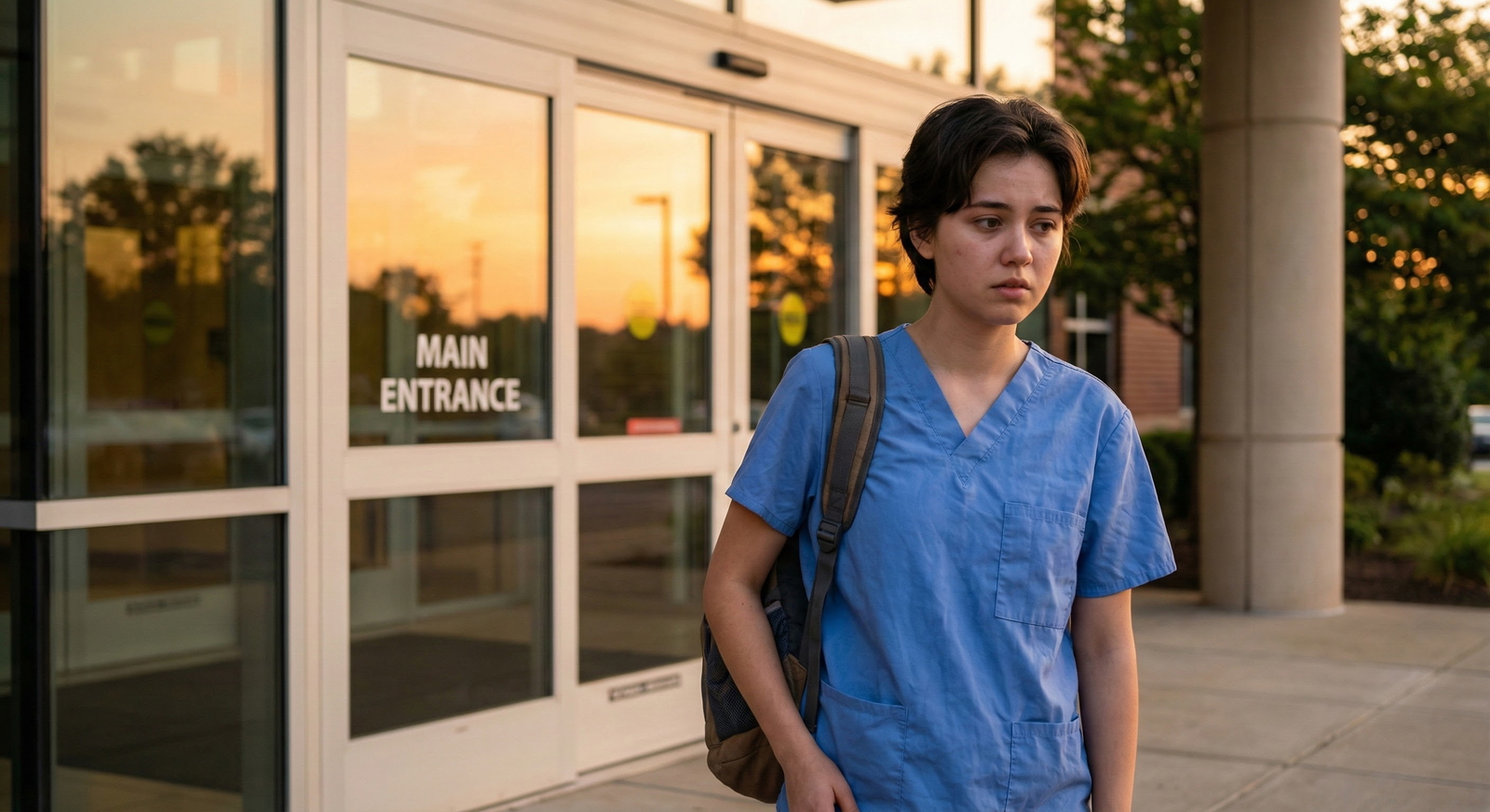
Entering the SOAP or post-Match period and realizing you didn’t secure a categorical position can feel devastating—especially if you were aiming for a surgical career. Yet for many who didn’t match or failed to secure their ideal position, a preliminary surgery year can be a powerful way to recover, regroup, and relaunch. This guide will walk you through how to use a prelim surgery residency strategically after a failed Match, and how to improve your chances next cycle.
Understanding a Failed Match and the Role of Preliminary Surgery
A “failed match” can mean several slightly different scenarios:
- You didn’t match to any program at all (unmatched applicant).
- You matched to a preliminary position but not a categorical one.
- You matched to a different specialty but not your first choice (e.g., prelim surgery instead of categorical general surgery, or prelim surgery instead of another desired field).
What Is a Preliminary Surgery Year?
A preliminary surgery year is typically a 1-year, non-categorical PGY-1 position in general surgery. Key characteristics:
- Length: 12 months (occasionally extended to 2 years, but usually 1).
- Purpose for programs: Provides additional manpower for clinical services, covers needs for residents in other specialties (e.g., radiology, anesthesia, urology, neurosurgery) who require a surgical internship, and offers a safety net for unmatched applicants.
- Outcome: No guaranteed continuation to a PGY-2 categorical surgery position at that institution.
Prelim surgery spots are often:
- Heavier on service work (night float, floor coverage, consults).
- Less structured around a single resident’s longitudinal development.
- Highly variable in quality: some are outstanding, others under-resourced.
Who Typically Takes a Prelim Surgery Spot?
Common profiles:
- Unmatched general surgery applicants using prelim surgery to prove themselves clinically and reapply.
- Applicants targeting specialties like urology, neurosurgery, radiology, anesthesia, or ENT who need a heavy surgical intern experience.
- Those who failed to match in competitive fields (e.g., orthopedic surgery, plastic surgery) and are planning a reapplication pathway.
- International medical graduates (IMGs) or DOs aiming to demonstrate readiness in a US hospital system.
Used intelligently, a prelim surgery residency can be an excellent “Match recovery” strategy—especially if you approach it with clear goals and structure.
Step 1: Honest Post-Match Autopsy – Why You Didn’t Match
Before you commit to any pathway, you must understand why you didn’t match in the first place. Without this, repeating the same cycle—just with “more experience”—often leads to another failed Match.
Core Areas to Review
Academic Metrics
- USMLE/COMLEX attempts, failures, or low scores.
- Preclinical and clinical grades (especially surgery and medicine).
- Class rank, AOA, or other distinctions (or lack thereof).
Clinical Performance and Letters
- Strength and specificity of letters of recommendation.
- Performance on surgery rotations and sub-internships (acting internships).
- Any professionalism concerns or marginal evaluations.
Application Strategy
- Number and range of programs applied to.
- Geographic limitations or overly narrow targeting.
- Incomplete or late ERAS application.
- Overly competitive list relative to your profile.
Interview Performance
- Number of interviews received vs. total applications.
- How you handled common questions (red flags, failures, gaps).
- Ability to express a coherent career story and specialty fit.
Red Flags
- Failed Step attempt, remediation, leaves of absence.
- Unexplained gaps in training.
- Visa issues for IMGs.
- Disciplinary actions or professionalism lapses.
Practical Actions
- Solicit candid feedback from:
- Your dean’s office or student affairs.
- A trusted faculty mentor in surgery or your target specialty.
- A residency program director or APD (if you have access).
- Ask for specific answers to:
- “Would you rank me if I applied again with the same application?”
- “What would make the biggest difference if I take a preliminary surgery year?”
- “Are there other specialties where my profile might be more realistic?”
Document the issues you identify and rank them by:
- Category: Academic, clinical, application strategy, professionalism, etc.
- Modifiability: What can be changed or strengthened in 6–12 months?
This “autopsy” is emotionally hard but absolutely essential to meaningful failed Match recovery.
Step 2: Should You Take a Preliminary Surgery Year?
Not every unmatched applicant should jump into a prelim surgery position. For some, it’s a great opportunity; for others, it may be a detour that doesn’t address core deficits.
Potential Benefits of a Prelim Surgery Residency
Strong Clinical References
- Daily interaction with attending surgeons and senior residents.
- Opportunity to earn new, powerful letters of recommendation.
- Supervisors can speak to your work ethic, resilience, and team contributions.
Demonstrating Reliability in a US Hospital System
- Particularly valuable for IMGs and DOs.
- Shows you can handle a heavy inpatient load and surgical acuity.
- Builds confidence in your ability to function as an intern.
Expanded Network
- You now have:
- Multiple attendings who know you well.
- Program directors who can advocate directly.
- Peer residents who can share insight about programs and openings.
- You now have:
Opportunities for Categorical Transfer
- Sometimes (not guaranteed), a categorical spot opens due to:
- Resignations, dismissals, or resident transfers.
- Funding changes or program expansions.
- A strong prelim can be first in line for such rare openings.
- Sometimes (not guaranteed), a categorical spot opens due to:
Improved Application Narrative
- Your story becomes:
- “I faced a setback, responded constructively, and excelled.”
- This is often more compelling than an applicant who avoided clinical work after a failed Match.
- Your story becomes:
Risks and Downsides
No Guarantee of Categorical Position
- Many prelims complete their year without securing a categorical surgery spot.
- You may need to pivot to different specialties or backup plans.
Intense Workload
- Long hours, heavy call, limited dedicated study or research time.
- Burnout may affect your capacity to improve test scores (if needed).
Insufficient Time to Repair Key Deficits
- If the main issue is multiple failed Step attempts, a prelim year does not “erase” that.
- If your application strategy was poor, you still need to fix that intentionally.
Opportunity Cost
- During this year, you may have limited time for:
- Focused research.
- Dedicated board prep.
- Pursuit of alternative careers or degrees.
- During this year, you may have limited time for:
Who Benefits Most from a Prelim Surgery Year?
A prelim year is often a good fit if:
- You have borderline or slightly below-average metrics, but:
- Good clinical evaluations.
- Strong work ethic.
- Reasonable communication skills.
- You want:
- Surgery or a surgical subspecialty.
- Or a specialty that values a surgical internship (e.g., anesthesia, radiology in some contexts).
- Your biggest deficit is:
- Lack of strong letters.
- Limited US clinical experience (for IMGs).
- Needing a more compelling narrative of resilience and clinical maturity.
A prelim year may be less ideal if:
- You have multiple board exam failures and no clear plan to address knowledge gaps.
- There are significant professionalism or behavioral red flags.
- You are already leaning strongly toward a non-surgical specialty (e.g., psych, FM, peds) where other, more targeted experiences might be better.
When in doubt, discuss options with mentors and, if available, your dean’s office before committing.
Step 3: Maximizing Your Prelim Year for Match Recovery
If you choose a preliminary surgery year as your primary recovery strategy, you must approach it with deliberate design, not simply survival.

A. Establish Clear Goals Before Day 1
Define 3–5 explicit goals tied to your Match recovery:
Examples:
- Earn two outstanding letters from general surgery attendings by January.
- Demonstrate no professionalism or reliability concerns (always on time, complete notes, good handoffs).
- Complete one to two quality research or QI projects with tangible output (poster, abstract, manuscript).
- Connect with at least three program directors or APDs who will know me by name and performance.
- Improve board readiness (if needed) by consistent study 3–4 days/week.
Write these down, keep them visible (e.g., in a note on your phone or wall), and review monthly.
B. Build Strong Clinical Relationships Intentionally
Your performance is not just “how hard you work,” but how well your work is seen and interpreted by evaluators.
Strategies:
- Early in each rotation, ask your attending:
- “Dr. X, I’m working hard to grow as a surgical intern and hoping to reapply to [specialty]. Could you let me know key areas to focus on this month so I can get there?”
- Mid-rotation:
- “Could I get some mid-rotation feedback? I want to ensure I’m improving in the areas that matter most.”
- End of rotation:
- “I’ve really appreciated working with you. If you feel you know my work well enough and believe I’m competitive, I’d be honored to have a letter from you for my upcoming application.”
Be:
- Reliable: Early to rounds, thorough notes, responsive to pages.
- Teachable: Accept feedback without defensiveness.
- Team-oriented: Help co-interns and nurses; avoid complaints and gossip.
C. Document Your Excellence
Don’t assume people will remember everything you did. Keep a running log:
- Cases scrubbed and your role in each.
- Nights you handled significant cross-cover challenges or emergencies.
- Teaching you provided to students.
- QI or systems issues you helped solve.
This will later inform:
- Your personal statement.
- ERAS experiences section.
- LOR writers (you can send them bullets summarizing your work).
D. Integrate Research or Scholarly Work
Even in a busy prelim surgery residency, there are ways to build your scholarly profile:
- Ask a research-minded attending:
- “Do you have any ongoing projects where I could help with data collection or chart review?”
- Target feasible projects:
- Case reports or series of notable surgical patients.
- Small QI projects on post-op infections, discharge delays, or communication.
- Retrospective chart reviews that your department is already planning.
Set realistic expectations:
- Even 1–2 posters or abstracts can meaningfully strengthen your reapplication.
- Aim for projects where timelines align with application deadlines (e.g., first authorship is ideal but not essential).
E. Protect Time for the Next Application Cycle
If you plan to reapply during your prelim year, you must anticipate:
- ERAS opening (late spring/summer).
- Letters due dates.
- Personal statement drafting.
- Interview season (fall/winter).
Practical tips:
- Inform your chiefs and program director early:
- “I intend to reapply to [specialty] this year. Could we plan ahead for letters and some degree of support for interviews if possible?”
- Use off-service rotations (e.g., ICU, ED, elective) to:
- Draft your personal statement.
- Update your CV.
- Schedule meetings with potential letter writers.
- When scheduling interviews:
- Coordinate with your chief resident for coverage.
- Be transparent but professional about your plans.
Step 4: Reapplying After a Prelim Surgery Year
Your reapplication must clearly show growth, insight, and improved fit, not just “I worked somewhere new.”

A. Revise Your Specialty Strategy
After a prelim year, decide whether to:
- Reapply to categorical general surgery.
- Apply to a different surgical specialty (e.g., anesthesia, radiology, EM, OB/GYN) plus surgery as backup.
- Pivot to less competitive fields where your surgical experience is still valued (e.g., internal medicine, family medicine, psychiatry) if surgery no longer seems realistic.
Key considerations:
- Your updated competitiveness with new letters and experience.
- Feedback from attendings and your prelim program director:
- “Do you see me as a realistic candidate for categorical general surgery?”
- Your long-term career satisfaction and lifestyle preferences.
B. Strengthen the Application Components
Personal Statement
- Explicitly but briefly acknowledge:
- Your previous didn’t match / failed match outcome (without dwelling).
- What you learned from it.
- Emphasize:
- Growth, resilience, mature reflection.
- Concrete skills gained during your prelim year (clinical judgment, teamwork, communication).
- Present a clear, forward-looking vision:
- “Here is what I hope to contribute as a categorical resident and future surgeon/physician.”
- Explicitly but briefly acknowledge:
Letters of Recommendation
- Prioritize:
- 1–2 letters from surgical attendings who directly supervised you.
- Your prelim program director or chair, if supportive.
- Ask letter writers to address:
- Your clinical skills and reliability as a PGY-1.
- Improvement from early in the year to later.
- Their view on your suitability for a categorical role.
- Prioritize:
ERAS Experiences
- Include:
- Specific duties as a prelim intern.
- QI or leadership roles (e.g., intern rep, teaching sessions for students).
- Any research outcomes (accepted abstracts, in-progress manuscripts).
- Include:
Addressing Red Flags
- Prepare a clear, concise explanation for interviews:
- What led to your unmatched status.
- What you did to address the underlying issues.
- How your performance in the prelim year supports your readiness now.
- Prepare a clear, concise explanation for interviews:
C. Applying Broadly and Strategically
To reduce the risk of another failed Match:
- Apply broadly geographically, unless major life constraints exist.
- Include a mix of:
- Academic, community, and hybrid programs.
- A reasonable range of competitiveness.
- For each program type:
- Highlight relevant strengths (research for academic, clinical work ethic for community).
Example approach (for someone reapplying to surgery):
- 70–100+ surgery programs (depending on profile).
- If pivoting to another specialty:
- 40–60+ in that new specialty, plus 40–60 surgery as a strong parallel plan.
Discuss final numbers with mentors; context matters.
Step 5: If You Still Don’t Match After a Prelim Year
Despite hard work, some applicants remain unmatched even after a prelim year. This is deeply discouraging but not necessarily the end of your clinical career.
A. Immediate Steps after a Second Failed Match
Participate in SOAP if eligible
- Consider:
- Other specialties (IM, FM, psych) that can use your strong clinical base.
- Additional preliminary positions (if your goal is still to enter a categorical role later, but be cautious about indefinite “prelim limbo”).
- Consider:
Seek Rapid Feedback
- Ask your prelim PD:
- “Given my performance this year, what are my realistic options?”
- “Would you support my applications to [other specialties/programs]?”
- Ask your prelim PD:
Protect Your Mental Health
- Failing to match twice is emotionally taxing:
- Seek support from peers, mentors, counselors, or therapists.
- Avoid isolating yourself or catastrophizing your future.
- Failing to match twice is emotionally taxing:
B. Consider Alternative Pathways
Non-Surgical Categorical Specialties
- Internal medicine, family medicine, psychiatry, or pediatrics can:
- Value your heavy clinical exposure.
- Offer viable, fulfilling long-term careers.
- Many former prelim surgery interns become excellent hospitalists, intensivists, or proceduralists.
- Internal medicine, family medicine, psychiatry, or pediatrics can:
Non-Categorical PGY-2 or Transfer Positions
- Occasionally, PGY-2 spots open in:
- Surgery, anesthesia, EM, IM, etc.
- Use your network:
- Ask your PD to inform you if such openings arise.
- Watch specialty and program director list-servs (often posted publicly or through professional societies).
- Occasionally, PGY-2 spots open in:
Non-Residency Options
- Clinical research or industry roles.
- Public health, quality improvement, or hospital administration.
- Additional degrees (MPH, MBA, MS) if aligned with your goals.
C. Know When to Pivot
At some point, continually repeating unsuccessful Match cycles becomes harmful. Signals that a pivot is appropriate:
- Multiple cycles with no interviews in your target specialty.
- Repeated feedback that your metrics or red flags are insurmountable for that field.
- Increasing financial, emotional, and personal strain.
Pivots are not failures; they are adaptations. Many physicians and professionals build very successful, satisfying careers after changing direction from their original plan.
Frequently Asked Questions (FAQ)
1. Is a preliminary surgery year worth it if I ultimately want a different specialty (e.g., anesthesia or radiology)?
It can be, especially for fields that appreciate a strong clinical foundation and procedural comfort. Many anesthesia and radiology residency programs view a surgical prelim as solid preparation. However, if your end goal is clearly non-surgical (e.g., psychiatry, pediatrics), a tailored transitional year or medicine prelim might be more aligned and less grueling. Discuss with advisors in your target specialty before deciding.
2. Can a prelim surgery residency erase poor Step scores or failed attempts?
No. Poor or failed board exam attempts remain part of your permanent record. However, an excellent prelim surgery year can:
- Show you function well clinically despite prior test struggles.
- Generate strong letters that reassure programs about your real-world performance.
- Support a compelling narrative of growth and resilience.
You may still need to demonstrate knowledge improvement via strong Step 3 performance (when appropriate) and consistent clinical excellence.
3. How often do prelim surgery residents get promoted into categorical spots?
Rates vary widely by program and year. Some programs routinely convert a small number of prelims when openings arise; others rarely or never do so. You should:
- Ask programs during interviews about their historical track record:
- “How many prelims in the last 3–5 years have transitioned to categorical positions here or elsewhere?”
- Avoid choosing a prelim solely on implied promises of “maybe converting” if there is no documented pattern. Consider the overall training environment, support, and educational value.
4. What if I didn’t match and don’t get a prelim surgery offer—what should I do?
If you’re an unmatched applicant without a prelim position:
- Participate in SOAP aggressively, targeting:
- Any positions aligned with your long-term interests (prelim or categorical).
- If no position is secured:
- Seek research, observerships, or other clinically adjacent roles that:
- Keep you engaged in medicine.
- Provide mentors and potential letters.
- Use the year to:
- Strengthen your CV (research, volunteerism, additional degrees).
- Improve application strategy and interview skills.
- Reassess specialty fit and competitiveness.
- Seek research, observerships, or other clinically adjacent roles that:
A failed Match feels deeply personal, but it is ultimately one (very important) moment in a long professional journey. A preliminary surgery year can be a powerful tool for recovery if you understand your weaknesses, choose the path intentionally, and approach the year with focus and discipline. With honest reflection, strategic planning, and sustained effort, many applicants transform an unmatched status into a successful, meaningful residency and career.