Understanding a Failed Match in Vascular Surgery
Not matching into a vascular surgery residency can feel devastating, especially after years of planning for a surgical career. Vascular surgery is one of the most competitive surgical specialties, and many strong applicants experience a failed match or go unmatched at least once. A setback in the Match is not the final verdict on your future as a surgeon, nor does it define your potential as a physician.
This guide focuses on failed match recovery specifically for those targeting vascular surgery residency, especially the integrated vascular program (0+5). You will learn how to:
- Understand what went wrong in your application
- Consider realistic short-term and long-term options
- Strengthen your candidacy as an unmatched applicant
- Strategically plan for reapplication or alternative pathways
- Maintain your mental health and professional identity through this period
The goal is to move you from “I didn’t match, now what?” to a structured recovery plan that maximizes your chances the next cycle—whether in vascular surgery or a related path that can still lead you to a vascular career.
Step 1: Decompress, Then Assess What Happened
Managing the Immediate Aftermath
When you see “didn’t match” on Match Day (or during SOAP), the emotional impact can be intense—shock, embarrassment, anger, or fear. Before making big decisions:
- Give yourself 24–72 hours to decompress
- Limit who you share details with until you’re ready
- Avoid impulsive emails or social media posts about programs or the Match
- Remind yourself: many vascular surgeons and other specialists have once been an unmatched applicant
During this period, focus on basic routines: sleep, nutrition, exercise, and connection with supportive people.
Get a Clear Picture of Your Application
After the initial shock, you need a precise diagnosis of why the match failed. Treat this like a root-cause analysis on a complex case.
Collect the following:
- ERAS application and personal statement
- CV as submitted
- Letters of recommendation (you might not see full content, but list who wrote them and when)
- USMLE/COMLEX scores, attempts, and timing
- List of programs you applied to (type, geographic spread, reputation)
- Interview invitations and outcomes
- Any feedback you previously received (e.g., from advisors, away rotations)
Then, schedule frank meetings with:
- Your home institution’s vascular surgery faculty or PD (if available)
- A general surgery program director or advisor
- Your medical school’s Dean of Student Affairs or Career Advisor
- A trusted mentor (surgical or otherwise)
Ask them specifically:
- “If you saw this application without knowing me, what would you identify as red flags?”
- “How would you rank my competitiveness for vascular surgery compared to recent matched applicants?”
- “If you were in my position after a failed match, what would you do over the next 12–18 months?”
Document every piece of feedback, even if it’s hard to hear.
Common Weaknesses in Vascular Surgery Applications
Vascular surgery is small, academic, and research-driven. Frequent causes of a failed match include:
Limited or no vascular-specific exposure
- No dedicated vascular surgery rotation or away rotation
- No clear explanation of why you want vascular specifically
Insufficient letters of recommendation
- No letter from a vascular surgeon or a well-known general surgeon
- Generic letters not speaking to your technical or operating room performance
Board score or academic concerns
- Step 1 pass/low; Step 2 CK below competitive cutoffs
- Exam failures, course failures, or leaves of absence not well-addressed
Narrow or unrealistic program list
- Applying to too few programs
- Only targeting highly competitive academic centers without a balanced mix
Weak or inconsistent personal narrative
- Personal statement that reads generic or lacks a coherent vascular story
- Research or experiences not tied to vascular surgery or complex surgical care
Professionalism or communication red flags
- Poor feedback from clinical rotations (especially surgery)
- Late applications, missed communications, or unprofessional emails
The key is not to guess but to identify your 2–3 main limiting factors; everything else in your recovery plan will be built around those.

Step 2: Know Your Immediate Options After a Failed Match
Your options depend on where you are in the timeline (Match Week vs. after SOAP) and your long-term commitment to vascular surgery.
A. During Match Week: SOAP Strategy (If Still Applicable)
If you learn you didn’t match before SOAP (Supplemental Offer and Acceptance Program):
Clarify Your Primary Goal for This Year
- Is any categorical surgical training acceptable (e.g., general surgery) as a step toward vascular?
- Or would you rather preserve full flexibility to reapply to integrated vascular next cycle?
SOAP Priorities for Future Vascular Aspirants
- Categorical general surgery positions at institutions with strong vascular divisions
- Preliminary general surgery at programs where vascular exposure and mentorship are robust
- Transitional year (TY) only if no surgical prelim available and you need clinical continuity
Remember:
- From a vascular surgery standpoint, a categorical general surgery PGY-1 or PGY-2 can be an excellent pathway to a traditional 5+2 vascular fellowship later.
- A prelim year is better than no clinical experience, but it carries risk if there is no clear path to a categorical spot.
B. After SOAP: If You Remain Unmatched
If SOAP ends and you are fully unmatched, your strategies shift to gap year planning and long-term positioning.
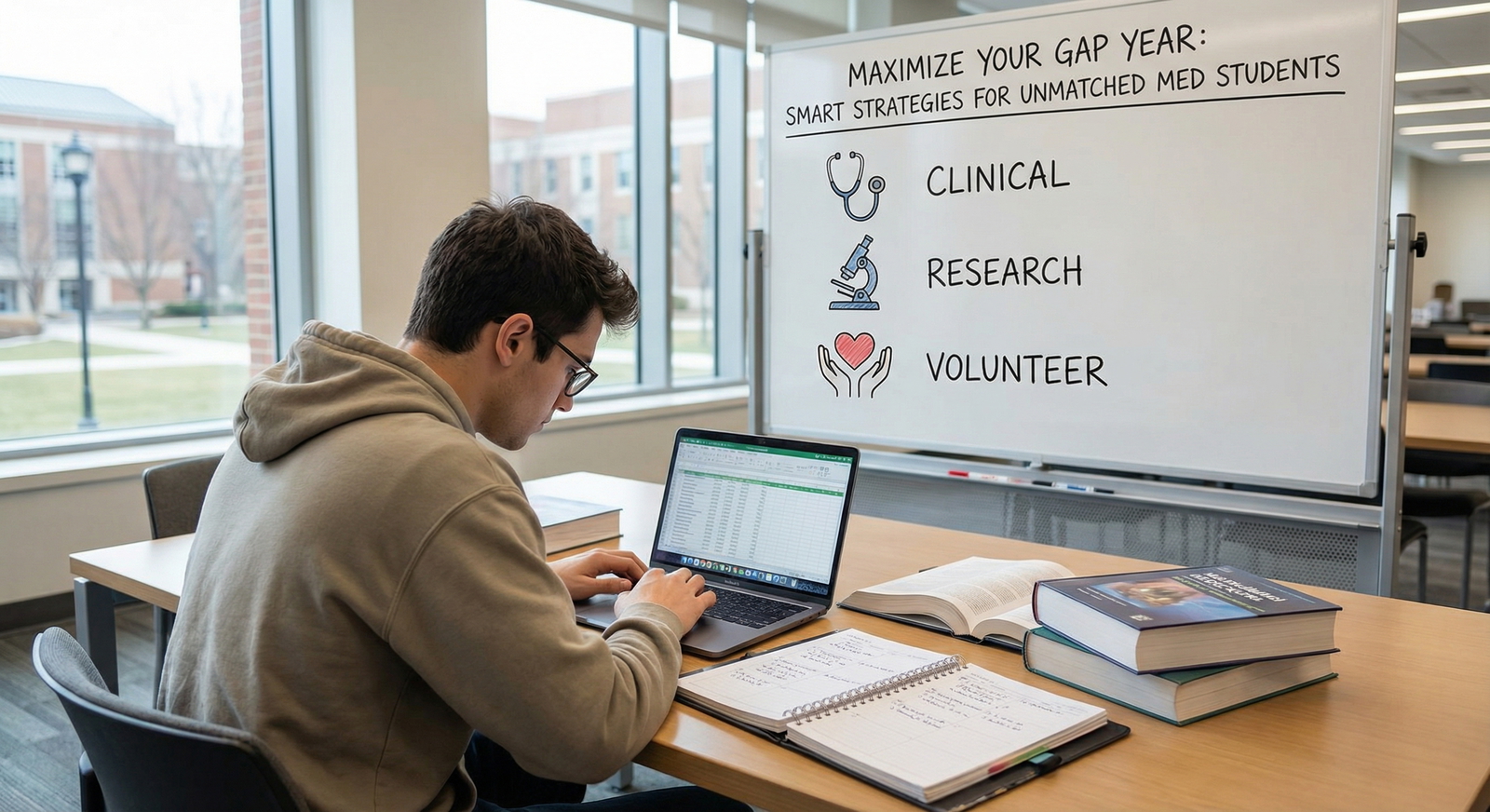
Common gap-year paths include:
Research Fellow or Postdoctoral Position in Vascular or Surgical Outcomes
- High-yield if your main deficits are research productivity or vascular-specific engagement
- Look for positions in vascular surgery divisions, interventional radiology, or cardiothoracic/vascular biology labs
Non-ACGME Clinical Research Roles
- Clinical trial coordinators, outcomes researchers, device trials in endovascular therapy
- These roles keep you close to clinical vascular practice and faculty
Additional Clinical Experience (Non-Residency)
- For international medical graduates (IMGs), sometimes observerships or extended externships in vascular or surgery
- For US grads, structured hospital-based roles (e.g., surgical APP scribe-type positions, though less formal) can help maintain clinical acuity but are rarely enough on their own without research.
Public Health, Quality Improvement, or Health Systems
- MPH or MHA programs with research on vascular disease epidemiology, outcomes, or disparities
- Useful if combined with strong mentorship and publications
The best option is the one that addresses your primary weaknesses and connects you to faculty who can advocate for you in the next cycle.
Step 3: Building a Stronger Candidacy for the Next Cycle
Once you understand why you didn’t match, design a 12–24 month recovery plan targeting the specific deficits in your prior application.
Strengthening Academic Credentials
If your academic profile contributed to your failed match:
Step 2 CK (if not yet taken or low)
- Work with a structured study plan, especially if prior scores were marginal
- Aim for a score that clearly demonstrates improvement and readiness for rigorous surgical training
Addressing Failures or Gaps
- Prepare a concise, honest explanation for any exam or course failures
- Emphasize what you changed (study strategies, mental health support, time management)
Additional Coursework or Degrees
- Some unmatched applicants pursue an MPH, MS in Clinical Research, or similar degree
- This is most effective if coupled with vascular or surgical projects and mentorship that yield tangible output (publications, presentations)
Increasing Vascular Surgery Exposure and Commitment
Programs want to see evidence that you understand the realities of vascular surgery and are committed for the right reasons.
High-yield actions:
Vascular Surgery Research
- Join ongoing projects in limb salvage, aortic aneurysm outcomes, peripheral arterial disease, dialysis access, or carotid disease
- Contribute to manuscripts, abstracts, and conference presentations
- Aim for at least 1–3 vascular-related publications or national poster presentations over your gap year
Clinical Shadowing and Longitudinal Experience
- Regularly observe vascular ORs, clinics, and call with your mentor’s permission
- Learn the language of the field: Rutherford classification, TASC, ABI, CLI, EVAR, TEVAR
Society Involvement
- Engage with the Society for Vascular Surgery (SVS), regional vascular societies, or student/resident sections
- Submit abstracts to national or regional vascular meetings
Away Rotations (Future Cycle)
- Plan at least one, ideally two, sub-internships in vascular surgery at programs where you realistically could match
- Perform at your absolute best: be early, prepared, dependable, and humble
- Explicitly request feedback mid-rotation so you can course-correct
Optimizing Letters of Recommendation
For an integrated vascular program, letters can make or break your application.
Aim for:
- At least one letter from a vascular surgeon (preferably a division chief or program director)
- One or two letters from general surgeons who have directly supervised you in the OR and wards
- A letter from a research mentor if you’ve done substantial vascular or outcomes work
Ask for letters early, and provide:
- Updated CV
- Personal statement draft
- Summary of your work with them
- Specific qualities you hope they can comment on (work ethic, technical aptitude, team function)
Refining Your Personal Narrative
A failed match can actually strengthen your narrative if you frame it well.
Your personal statement and interviews should:
- Acknowledge the setback without self-pity or blame
- Demonstrate reflection: “Here is what I learned about myself and about the process”
- Show growth: “Here are the concrete ways I improved my readiness for vascular training”
- Reaffirm commitment: “Despite the failed match, my exposure to vascular disease and patient stories has deepened my resolve”
Example framing:
“After not matching into an integrated vascular program, I took a step back to honestly evaluate my application and my preparation. Through a dedicated year of vascular outcomes research and longitudinal clinic experience, I have gained a more mature understanding of the specialty’s demands—from emergent ruptured aneurysms at 2 a.m. to the long-term follow-up of limb salvage patients. This time confirmed that I am not simply drawn to vascular surgery’s technical complexity, but to the continuity and responsibility it requires.”

Step 4: Strategic Pathways Back to Vascular Surgery
Your long-term goal may be “vascular surgeon,” but there are multiple paths to that destination. After a failed match into an integrated vascular program, you must decide which pathway best fits your circumstances and competitiveness.
Pathway 1: Reapplying to Integrated Vascular (0+5)
Best for:
- Applicants with improving or strong academic credentials
- Those who can secure excellent vascular letters and substantial vascular-related productivity
- Applicants still early in their post-graduation timeline (e.g., within 1–3 years of graduation)
Key strategies:
- Broaden your program list geographically and by competitiveness
- Apply to both integrated vascular and categorical general surgery programs to increase chances of entering surgical training
- Highlight growth since last cycle: “If you compare my application this year to last year, here is what has changed”
Consider supplementing with:
- A parallel plan: if you don’t match integrated again, you still have a clear Plan B (e.g., general surgery categorical or a specific research/clinical role)
Pathway 2: General Surgery Categorical → 5+2 Vascular Fellowship
This is the traditional route and remains the backbone of the vascular surgery workforce.
Best for:
- Applicants who secure a categorical general surgery spot during SOAP or in subsequent cycles
- Those who may be slightly less competitive for integrated programs but can be strong general surgery residents
Advantages:
- 5 years of broad surgical training, strong operative fundamentals
- More time to build a vascular-specific portfolio during residency
- Many vascular fellowships value mature, well-trained general surgeons
How to optimize this path:
- Choose a general surgery residency with a strong vascular presence
- Early in PGY-1/2, connect with vascular faculty, join research projects
- Attend vascular conferences; seek early mentorship and potential fellowship sponsors
Pathway 3: Preliminary Surgery + Targeted Transition
Sometimes, an unmatched applicant obtains a prelim general surgery position, either through SOAP or post-Match vacancies.
Benefits:
- Maintains clinical skills and shows you can function in a surgical residency environment
- Can sometimes transition to a categorical general surgery position, either at the same institution or elsewhere
Risks:
- No guarantee of a categorical spot
- High workload can limit time for research or reapplication preparation
To maximize this path:
- Clarify from day one how realistic conversion to categorical status is at that program
- Excel clinically: be the resident everyone wants on their team
- Continue limited but meaningful vascular involvement (research, attending vascular M&M, etc.)
- Maintain open lines of communication with your PD about long-term plans
Pathway 4: Alternative but Related Specialties
In rare situations, applicants may decide after a failed match that the integrated vascular program is no longer the right goal, whether due to competitiveness or evolving interests.
Potential alternatives:
- Interventional Radiology (IR) – significant overlap in endovascular procedures
- Cardiology with interventional training – focus on coronary and peripheral interventions
- General Surgery with other fellowships (e.g., trauma/critical care, surgical oncology)
This is a major decision; if you do consider it:
- Spend time shadowing IR or interventional cardiology
- Discuss realistically with mentors about quality of life, procedural focus, and training paths
- Reflect on what aspects of vascular surgery you are most drawn to (open operations vs. endovascular vs. longitudinal limb salvage care)
Step 5: Professionalism, Mindset, and Long-Term Sustainability
Owning Your Story Without Shame
You will likely be asked about your failed match during interviews. Programs want to see resilience, insight, and maturity, not defensiveness.
When asked, you might say:
“I did not match into vascular surgery on my first attempt. That experience was difficult, but it forced me to reassess my preparation and to seek honest feedback. Over the past year, I have focused on strengthening my application by doing vascular outcomes research, building closer mentorship relationships, and gaining more sustained exposure to vascular patients. I am grateful for the opportunity to grow through that setback, and I feel more ready now for surgical training than I did previously.”
Avoid:
- Blaming programs, the Match system, or your school
- Over-explaining or revisiting the same details repeatedly
- Presenting yourself as a victim of the process
Maintaining Mental Health and Support Systems
A failed match can trigger or worsen anxiety, depression, or impostor syndrome. Protect your mental health as deliberately as you protect your CV.
Consider:
- Talking with a mental health professional (many schools offer free or low-cost services to alumni)
- Joining peer support groups (online or local) for unmatched or reapplying residents
- Regular exercise and schedule structure, especially during research or non-clinical years
- Setting realistic goals each month (e.g., “Submit one abstract,” “Finish one manuscript draft,” “Meet with my mentor twice”)
Financial and Practical Considerations
During a gap year:
- Budget realistically; research positions may pay modest stipends
- Clarify health insurance, loan deferment or repayment plans, and living costs
- If needed, discuss income supplementation (e.g., tutoring, part-time work) that does not compromise your primary goal
Remember that this is a finite period in a long career. One extra year invested strategically can pay off over decades as an attending vascular surgeon or surgeon in a related field.
Frequently Asked Questions (FAQ)
1. I didn’t match into an integrated vascular program. Does that mean I should give up on vascular surgery?
Not necessarily. Many practicing vascular surgeons did not come through integrated programs; they trained in general surgery and then completed a 5+2 vascular fellowship. A failed match indicates your application was not competitive enough this year, not that you are incapable of becoming a vascular surgeon. The key is to:
- Honestly diagnose the reasons for your failed match
- Choose a realistic pathway (reapply integrated vs. pursue general surgery → fellowship)
- Show concrete improvement by the time you apply again
2. Is it better to take a research year or to accept a preliminary surgery spot after going unmatched?
It depends on your situation:
- If you have significant academic deficits (no research, lack of vascular involvement, weak letters), a dedicated vascular or surgical research year can be very high-yield, especially with strong mentorship and clear output (publications, abstracts).
- If your main issue is not being in clinical training, and you receive a prelim surgery offer at a strong program with possible categorical transition, that may be better for maintaining operative skills and demonstrating you function well as a resident.
Ideally, discuss specific offers with mentors. Ask: “Which option gives me the best letter of recommendation and the clearest pathway to either categorical surgery or integrated vascular?”
3. How many times can I reapply to vascular surgery residency before it becomes unrealistic?
There is no formal limit. However:
- After one failed match, a thoughtful, improved reapplication is common and often successful if weaknesses are addressed.
- After two unsuccessful attempts at integrated vascular, many advisors recommend strongly considering the general surgery → vascular fellowship pathway or other related fields.
Programs want to see a trajectory of improvement; repeated reapplications with minimal change raise concerns. If considering a second or third application, seek very candid feedback from vascular faculty or program directors who know your full story.
4. As an unmatched applicant with older graduation year, do I still have a chance?
Older year of graduation is a relative disadvantage, especially for competitive specialties like vascular surgery. That said, you can remain viable if:
- You maintain continuous clinical or research activity (no unexplained gaps)
- You can demonstrate increasing responsibility, productivity, and skills over time
- You secure strong recent letters from vascular or surgical mentors
- You remain open to the general surgery → fellowship pathway, which may be more accessible than integrated vascular programs
Your situation is more complex, but not automatically hopeless. It requires targeted planning, transparent communication about gaps, and realistic expectations.
Recovering from a failed match in vascular surgery is challenging but entirely possible. With a clear-eyed assessment, structured plan, and strong mentorship, many previously unmatched applicants have gone on to successful careers as vascular surgeons. Your next steps—taken deliberately and informed by honest feedback—can transform this setback into a cornerstone of your professional growth.