Turning an Unsuccessful Match into a Stronger Application: How to Fill the Gaps in Your Residency Resume
Not matching into residency can feel devastating, especially after years of intense medical education and preparation. Yet many excellent physicians have experienced an initial Residency Match setback—and gone on to secure competitive positions and rewarding careers.
What you do in the months after an unsuccessful Match is often more important than what was in your original application. With a strategic approach, you can transform this gap year into a powerful story of resilience, growth, and focused career development.
This guide walks you through how to analyze your previous application, strengthen weak areas, and rebuild your residency resume so that it truly shines in the next Match cycle.
Understanding Why Applicants Don’t Match—and Why It’s Not the End
Before you decide how to improve your application, you need a clear understanding of what might have gone wrong.
How the Residency Match Really Works
The National Resident Matching Program (NRMP) algorithm is blind to emotions—but not to patterns. Programs rank applicants based on multiple factors, including:
- USMLE/COMLEX scores and exam history
- Medical school performance (MSPE, transcripts, class rank)
- Clinical experiences and clerkship evaluations
- Letters of recommendation (LORs), especially specialty-specific
- Personal statement and overall narrative
- Interview performance and perceived “fit”
- Red flags (failures, professionalism concerns, unexplained gaps)
You, in turn, rank programs. The algorithm tries to place you into the most preferred program that also ranks you highly enough. When you don’t match, it usually reflects one or more of the following:
- Applying too narrowly or only to highly competitive specialties
- Insufficient number or breadth of programs
- Application components that didn’t stand out (weak LORs, generic personal statement)
- Lower exam scores or academic concerns compared to peers
- Limited clinical exposure in your chosen specialty
- Interview skills that didn’t fully convey your strengths or fit
None of these are permanent barriers. All of them are modifiable with targeted effort.
First Step: Get Objective Feedback
Before you start reworking your residency resume, seek objective input:
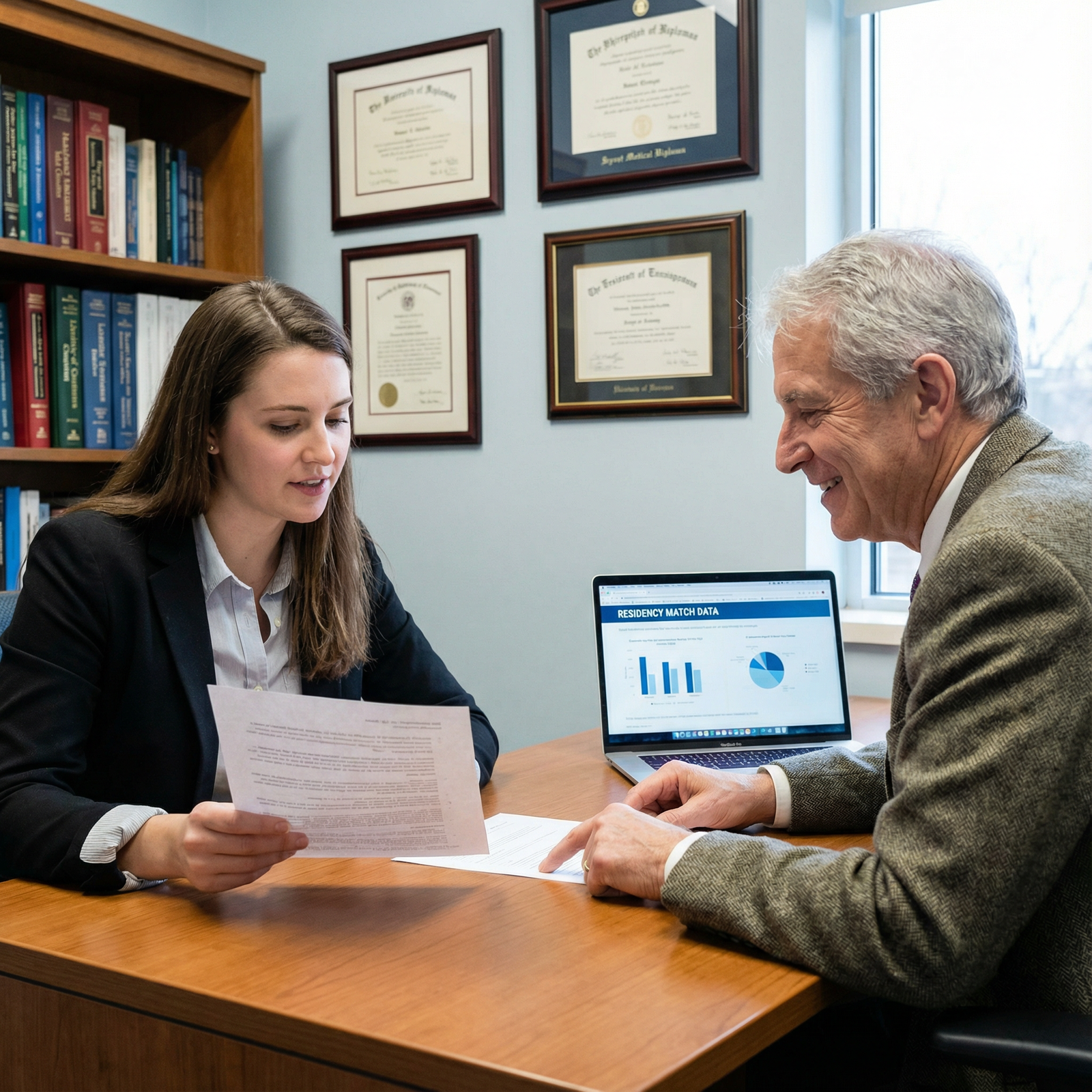
- Meet with your dean’s office or academic advisor. Ask for a candid review of your ERAS application, specialty choice, and program list.
- Talk to faculty in your target specialty. Show them your full application and ask, “If you were on a selection committee, where would you see concerns?”
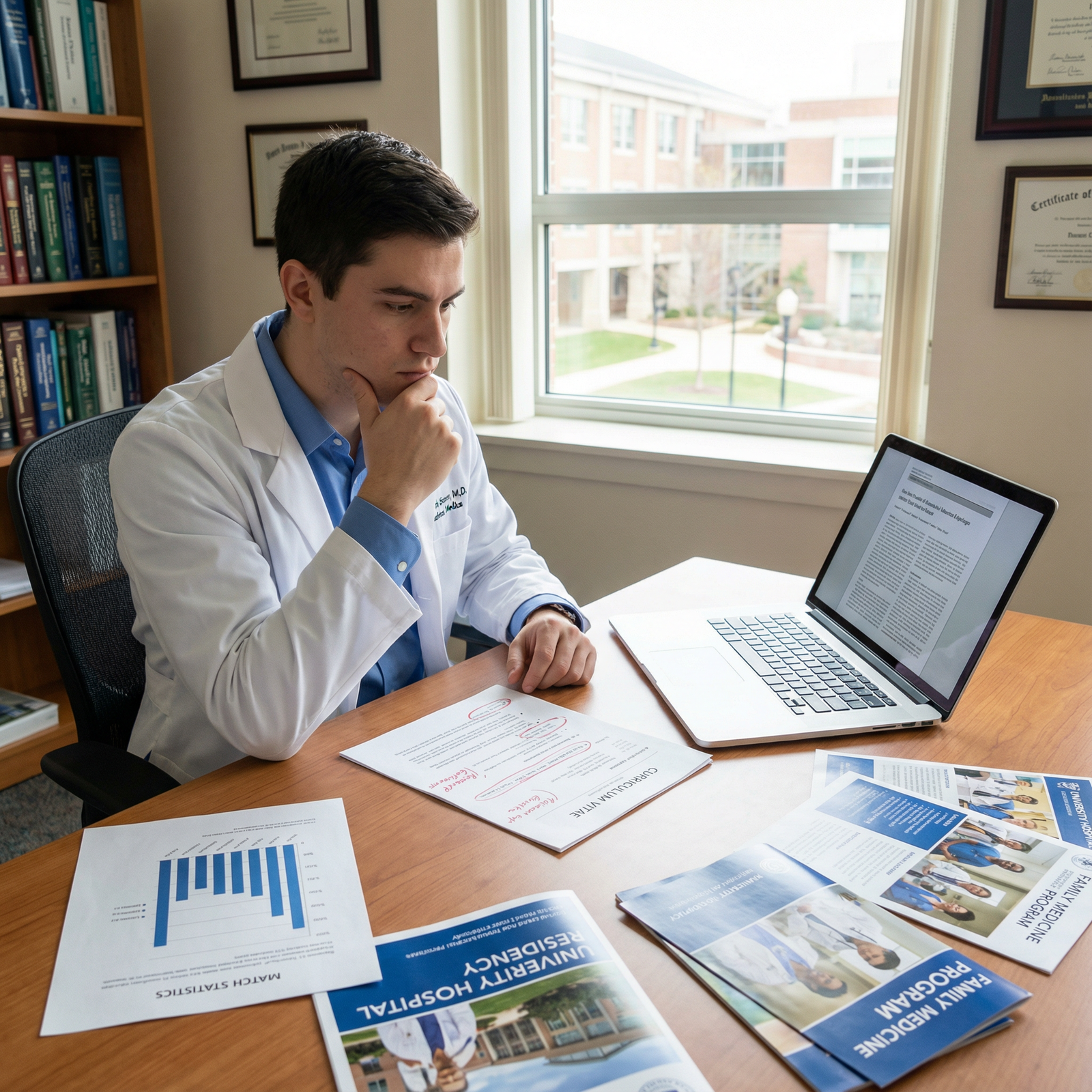
- Review NRMP data for your specialty. Compare your scores, experiences, and publications to matched applicants in recent years.
Your goal is to identify specific gaps, not to speculate. Once you know the “why,” you can design a clear plan to address it.
Step 1: Honest Self-Assessment of Your Previous Application
Intentional self-reflection is the foundation of an effective re-application strategy.
Key Areas to Critically Review
Go through your last ERAS application and assess:
USMLE/COMLEX Scores and Attempts
- Were your scores near or below the average for matched applicants in your specialty?
- Were there any failures, multiple attempts, or large score discrepancies?
Clinical Experiences
- Did you have U.S. clinical experience if applying in the U.S.?
- Did you complete audition electives or sub-internships in your chosen specialty?
- Did your evaluations highlight responsibility, reliability, and readiness for residency?
Letters of Recommendation (LORs)
- Were they specialty-specific (e.g., Internal Medicine letters for IM positions)?
- Were letters from faculty who truly knew your work?
- Did any faculty quietly advise you not to use their letter?
Personal Statement and Overall Narrative
- Did it clearly explain why this specialty and why you?
- Was it generic or interchangeable between specialties?
- Did it address any academic or timeline irregularities appropriately?
Program List and Application Strategy
- Did you apply to a sufficient number of programs?
- Did you include a balanced mix of academic and community programs, and a range of competitiveness?
- Did you consider geographic flexibility?
Interview Skills and Performance
- How many interviews did you receive relative to the number of applications?
- Did you feel confident telling your story and answering behavioral questions?
- Did you ask insightful questions and seem genuinely interested in each program?
Write down your findings. This becomes your roadmap for the upcoming year.

Step 2: Build High-Impact Clinical and Professional Experience
Residency programs want to know: have you remained clinically active, and are your skills current? Strong, recent clinical experience is one of the most valuable ways to strengthen your re-application.
Pursue Relevant Clinical Roles
Depending on your training status and region, consider:
Transitional Year or Preliminary Positions
- If you matched into a prelim year or categorical spot in another specialty, maximize that year.
- Seek rotations aligned with your desired specialty (e.g., ICU, cardiology for IM; pediatrics ED for EM).
- Request end-of-rotation letters or narratives that speak to your readiness for your target field.
U.S. Clinical Experience (for IMGs)
- Aim for hands-on roles (observerships, externships, clinical research fellowships with patient contact) in your specialty of interest.
- Target institutions and faculty with a track record of supporting IMGs in the Residency Match.
Sub-internships and Acting Internships
- Repeating or adding sub-Is in your chosen specialty can show commitment and growth.
- Prioritize programs where you might want to apply; your performance can influence both LORs and your rank list.
Clinical Volunteering in Meaningful Roles
- Free clinics, mobile health units, telehealth triage, or community health initiatives can demonstrate ongoing patient care involvement.
- Document quantifiable impact: number of clinics, leadership roles, new initiatives you helped develop.
Shadowing with Intent
Shadowing alone is not enough to transform a residency resume, but it can:
- Deepen your understanding of day-to-day practice in the specialty
- Help clarify if you should stay in that specialty or consider alternatives
- Provide networking opportunities and potential letter writers
Approach shadowing as an active learning experience: ask questions, debrief cases, and request feedback on your clinical reasoning and professionalism.
Step 3: Strengthen Your Academic and Research Profile
If exam scores or academic performance were relative weaknesses, your goal is to demonstrate upward trajectory and academic maturity.
Address Examination Concerns Strategically
If you had low scores or failed attempts:
Remediate Thoughtfully
- If you still have an exam remaining (e.g., Step 3), approach it with a structured plan—dedicated study time, question banks, self-assessments.
- A solid Step 3 performance can partially offset earlier exam concerns and signal readiness for residency.
Document Your Improvement
- In your personal statement or interviews, frame earlier challenges as learning experiences. Describe concrete changes: study strategies, health management, time management, or resources that helped you improve.
Academic Enrichment and Postgraduate Programs
Consider options that fit your goals and resources:
Post-baccalaureate or Master’s Programs
- Special Master’s Programs (SMPs), public health (MPH), or clinical research degrees can strengthen your academic record—especially for applicants with marginal transcripts.
- Choose programs with strong advising, clinical connections, and clear outcomes for prior students.
Certificates and Focused Coursework
- Shorter programs in quality improvement, clinical education, or health care leadership can add depth to your resume and talking points for interviews.
- For example: IHI quality improvement courses, clinical teaching certificates, or data analysis/biostatistics training.
Research, Quality Improvement, and Scholarly Output
Research is particularly valued in academic and competitive specialties, but it benefits candidates in all fields.
Join Ongoing Research Projects
- Approach faculty with a specific ask: “I’m very interested in [field]. Do you have ongoing projects where I could help with data collection, chart review, or manuscript preparation?”
- Aim for projects with a realistic chance of abstract/poster presentation or publication within your application timeline.
Lead a Quality Improvement (QI) Project
- QI initiatives are highly relevant to residency programs and can often be completed within months.
- Examples: reducing ED length of stay, improving vaccination rates, enhancing discharge education.
- Document your role, methodology, results, and any presentations or posters.
Be sure to track all scholarly activities: submissions, acceptances, conferences, posters, and oral presentations. These show initiative and academic engagement.
Step 4: Transform Your Letters of Recommendation
Letters of Recommendation are one of the most powerful—and often underutilized—components of a residency application.
Build Longitudinal Relationships with Mentors
Strong letters come from people who know you well and have seen you over time. To cultivate these relationships:
- Work closely with attendings in clinical or research settings
- Ask for regular feedback and act on it
- Show reliability: be on time, follow through, and communicate clearly
- Take initiative on projects without overstepping your role
Then, when requesting letters:
- Ask directly: “Do you feel you can write a strong letter in support of my residency application?”
- Provide your updated CV, personal statement draft, and a brief summary of projects/experiences you had with them.
- Gently highlight themes you hope they can address (work ethic, clinical judgment, improvement over time, professionalism).
Reassessing and Updating Past Letters
If you suspect any of your previous letters were generic or lukewarm:
- Speak honestly with the letter writer about your growth since the last application.
- Share specific examples of new responsibilities, accomplishments, or improvements.
- Ask if they would be willing to update or rewrite the letter to better reflect your current abilities and trajectory.
Programs notice when letters are recent, enthusiastic, and detailed. Aim for at least one or two new or significantly updated letters that reflect your growth during your gap year.
Step 5: Rewrite Your Personal Statement and Unify Your Narrative
Your personal statement is not just an essay—it’s the narrative thread that links your academic record, clinical experiences, and professional goals.
Build a Clear, Authentic Story
Use your new experiences to refine your story:
Address—but don’t dwell on—the unsuccessful Match.
- A brief, professional acknowledgment is enough: what happened, what you learned, and how you’ve grown.
- Focus on the proactive steps you took rather than the disappointment itself.
Highlight New Experiences and Growth.
- Integrate your additional clinical work, research, and mentorship into a coherent story about who you are as a developing physician.
- Emphasize specific moments that shaped your commitment to your chosen specialty.
Align with Your Specialty’s Core Values.
- For Internal Medicine, stress longitudinal care and diagnostic reasoning.
- For Surgery, highlight technical interest, resilience, and team-based care.
- For Psychiatry, emphasize listening skills, empathy, and biopsychosocial understanding.
Get Targeted Feedback
Share your personal statement with:
- A trusted mentor in your chosen specialty
- A faculty advisor or dean with residency experience
- A writing center or professional editor familiar with medical applications
Ask them specifically about clarity, authenticity, and whether your essay addresses potential concerns in your application.
Step 6: Leverage Networking, Mentorship, and Professional Organizations
Networking and strong mentorship often make the difference between a good application and a great one.
Be Intentional with Networking
Attend Specialty Conferences and Local Meetings
- Even as a student or unmatched graduate, you can attend regional or national meetings.
- Introduce yourself to program directors, residents, and faculty in your field; ask thoughtful questions about training and career development.
Join Specialty Societies and Sections for Trainees
- Many professional organizations offer reduced memberships for students or early-career physicians.
- Get involved in committees, interest groups, or trainee sections—these can lead to mentorship, projects, and visibility.
Build a Mentorship Team
Instead of one “perfect” mentor, consider a small team:
- Career Mentor: Helps with specialty choice and long-term planning
- Application Mentor: Reviews your ERAS, personal statement, program list
- Research Mentor: Guides your scholarly efforts and presentations
Meet periodically (even virtually) to review your progress and refine your strategy for the next Residency Match cycle.
Step 7: Refine Your Interview Skills for the Next Match Cycle
Once your improved application earns more interviews, your preparation must ensure you convert those interviews into ranks.
Practice Deliberately
Structured Mock Interviews
- Arrange mocks with faculty, residents, or your career office.
- Practice answering common questions: “Tell me about yourself,” “Why this specialty?” “Tell me about a time you failed,” “What did you learn from not matching?”
Record Yourself
- Video or audio recording reveals pacing, tone, filler words, and body language.
- Work on eye contact (for virtual interviews, look at the camera), posture, and concise but complete responses.
Develop Clear, Honest Responses About Your Gap Year
- Programs will ask how you used your time after not matching.
- Prepare a confident answer that highlights growth, productivity, and commitment, not defensiveness or self-blame.
Master Virtual Interview Skills
As many residency interviews remain virtual:
- Ensure a professional background, good lighting, and reliable internet
- Test your audio and video setup in advance
- Practice speaking naturally to the camera rather than to your own image
Strong interview skills can significantly upgrade how programs perceive your application—especially after a re-application.
Step 8: Consider Alternative and Parallel Career Paths Thoughtfully
Sometimes, the most strategic way to a fulfilling career involves flexibility—either within medicine or in related fields.
Reassess Specialty Choice and Competitiveness
If you applied only to an ultra-competitive specialty with limited interviews, consider:
Dual-Application Strategies
- Apply to your dream specialty plus a more attainable specialty where your profile is competitive.
- Be transparent and thoughtful in your personal statement for each; do not send the same essay to both.
Exploring Related Fields
- For example, an applicant for orthopedic surgery might find a rewarding path in Physical Medicine & Rehabilitation (PM&R) or general surgery.
- A dermatology applicant may thrive in internal medicine with a focus on complex medical dermatology through collaboration.
International and Global Health Opportunities
Global health work can be meaningful and resume-enhancing if structured well:
- Participate in reputable, supervised programs with clear educational goals
- Ensure continuity of care and avoid “voluntourism”
- Document your role, impact, and what you learned about systems-based practice, resource-limited care, and cultural competence
Nontraditional but Valuable Healthcare Roles
If immediate clinical training is not possible:
- Clinical research coordinator or research fellow
- Public health positions (e.g., epidemiology, community health)
- Health policy or quality improvement roles
- Medical education positions (OSCE examiner, standardized patient program coordinator, teaching assistant)
These roles can demonstrate maturity, leadership, and a commitment to healthcare, keeping your trajectory aligned with medicine and Career Development.

Frequently Asked Questions: Navigating Re-Application After an Unsuccessful Match
1. How long should I wait before reapplying for residency?
Most applicants reapply in the very next Residency Match cycle, using the intervening year to improve their application. That said:
- If your gaps are moderate (e.g., need stronger letters, some additional clinical exposure), one year is usually sufficient.
- If your gaps are significant (multiple exam failures, serious professionalism concerns, minimal clinical experience), you may benefit from a more extended, structured plan—possibly including additional training, academic programs, or research fellowship.
Discuss your situation with advisors and specialty faculty to determine what timeline is realistic and most strategic.
2. What if my USMLE or COMLEX scores are low or I had a failure?
Low scores or exam failures are not automatic disqualifiers, but they require a careful strategy:
- Demonstrate clear improvement on later exams (e.g., strong Step 2 CK or Step 3 performance).
- Use your personal statement and interviews to address the issue briefly and professionally, emphasizing what changed in your approach.
- Strengthen other parts of your application: robust clinical performance, excellent LORs, research or QI involvement.
- Consider adjusting your specialty choice to one where your scores are more competitive and your strengths are better aligned.
Programs look for patterns of resilience and growth, not perfection.
3. Is clinical volunteering alone enough to fill the gaps in my resume?
Clinical volunteering is helpful but rarely sufficient on its own. For the strongest impact:
- Combine volunteering with structured clinical experiences (sub-internships, observerships, externships, prelim year work).
- Add research or QI projects that showcase academic engagement and initiative.
- Obtain new, strong letters of recommendation from supervisors who observed you in these settings.
Think of volunteering as one pillar in a multi-pronged strategy, not the only activity.
4. Can I change specialties after an unsuccessful Match, and how should I approach that?
Yes, many applicants successfully change specialties between application cycles. If you are considering this:
- Spend time in clinical settings within the new specialty to confirm your interest.
- Obtain at least two specialty-specific LORs in the new field.
- Rewrite your personal statement to reflect a thoughtful, informed decision rather than a last-minute pivot.
- Be prepared to explain in interviews how your initial interest and your new choice are connected by your core values, skills, and experiences.
Programs want to see that the decision is deliberate, well-informed, and sustainable.
5. How important are networking and mentorship in the re-application process?
Networking and mentorship are critically important, especially after an unsuccessful Match:
- Mentors can help you triage what matters most to improve, steer you away from unproductive paths, and connect you to clinical or research opportunities.
- Networking with residents, program directors, and faculty can lead to audition rotations, research collaborations, and strong advocacy on your behalf.
In many cases, a well-timed email introduction, conference conversation, or research collaboration can meaningfully shift how your application is perceived.
An unsuccessful Match does not define your worth or your future as a physician. What matters most now is your response: how thoughtfully you analyze your previous application, how deliberately you pursue growth, and how clearly you communicate that journey.
With targeted improvements in clinical experience, academics, research, letters, interview skills, and overall narrative, you can present yourself as a more mature, resilient, and compelling candidate in the next Residency Match—and beyond.