Leveraging Volunteer Work to Rebuild and Boost Your Medical Career After Not Matching
Not matching into residency is emotionally heavy. You’ve invested years in your medical education, and suddenly your path feels uncertain. Yet not matching is far more common than people talk about, and it does not mean the end of your medical career. For many physicians, this period becomes a pivotal turning point.
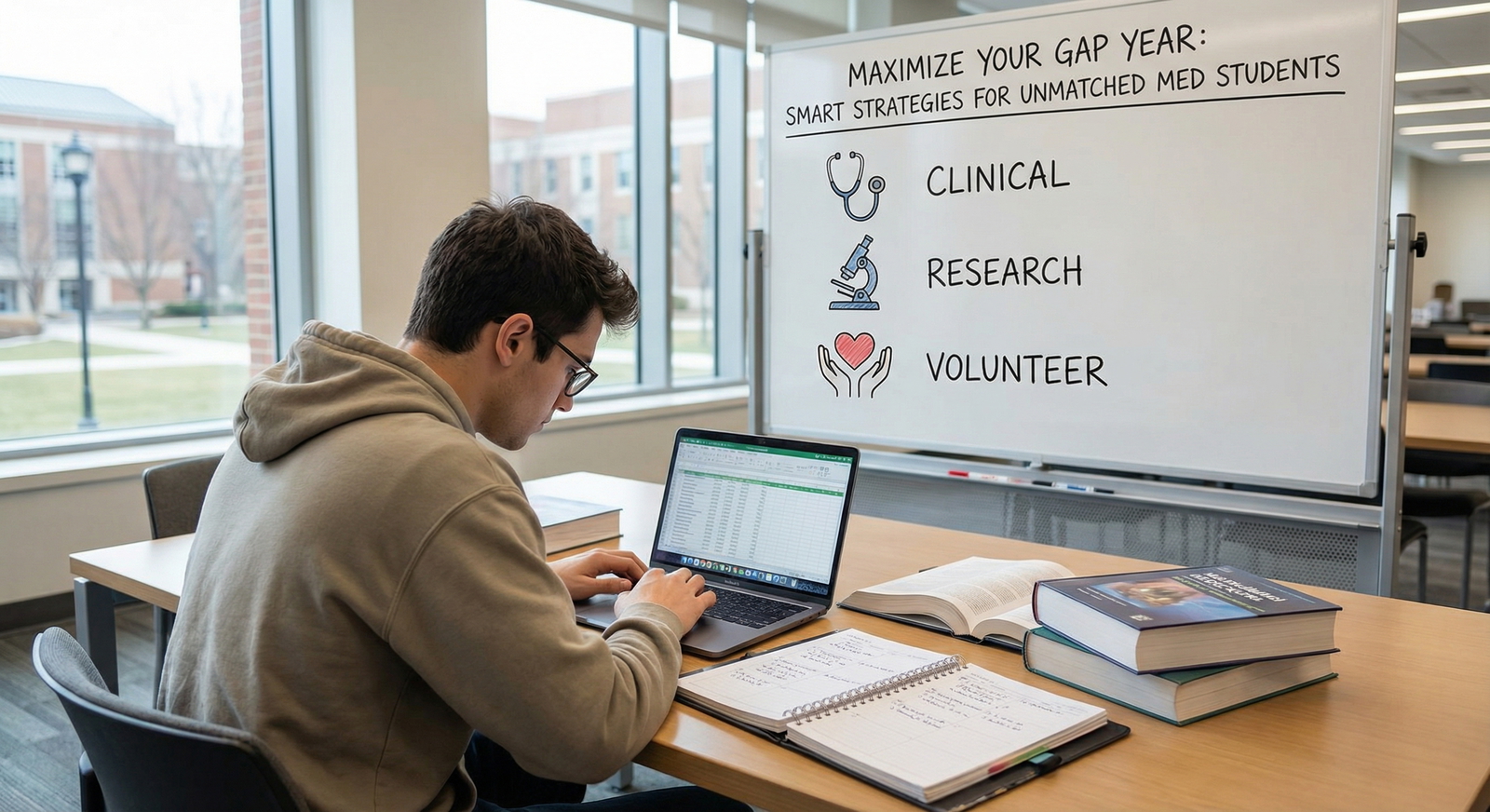
One of the most powerful ways to stay engaged in medicine, demonstrate resilience, and strengthen your next application is through strategic Volunteer Work. Done thoughtfully, volunteer experiences can directly support your Residency Match prospects by:
- Keeping you clinically and professionally active
- Expanding your Healthcare Experience
- Demonstrating commitment and maturity
- Building meaningful Networking relationships
- Clarifying or reinforcing your specialty interests
This guide breaks down how to use volunteer work as a deliberate tool—not just to “fill the gap,” but to advance your long‑term medical career.
Why Volunteer Work Matters When You Didn’t Match
Volunteer work is often dismissed as something you do “on the side.” In the post‑match context, however, it can become a central pillar of your re-application strategy—if you choose roles that align with your goals and present them effectively.
1. Demonstrating Commitment and Resilience
Residency programs want applicants who are:
- Committed to medicine and patient care
- Able to handle setbacks without disengaging
- Proactive in seeking growth opportunities
When you continue contributing through volunteer work—rather than stepping away from the field—it shows:
- Resilience: You stayed engaged instead of giving up after not matching.
- Professionalism: You used this “gap year” intentionally and productively.
- Consistency: Your actions align with your stated passion for serving patients.
Programs often ask, “What did you do after you didn’t match?” A well-chosen portfolio of volunteer activities provides a strong, credible answer.
2. Maintaining and Expanding Clinical Exposure
Even if your volunteer role doesn’t involve direct procedures, it can still:
- Keep you in clinical environments
- Sharpen your communication and bedside manner
- Expose you to workflows, team dynamics, and systems-level issues
Examples of clinically adjacent volunteer roles:
- Helping with intake and patient flow in free clinics
- Supporting health education classes for chronic disease management
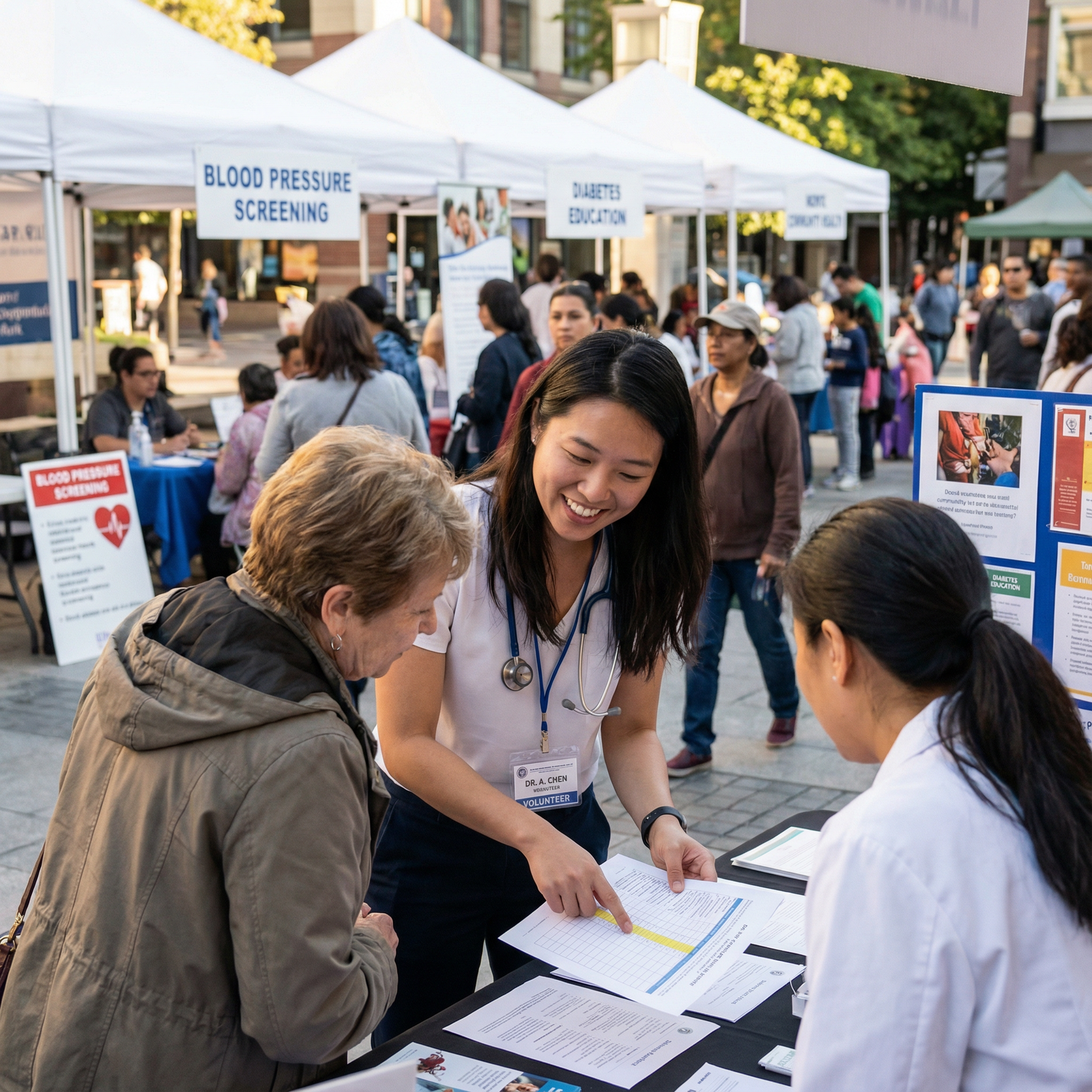
- Conducting screenings at community health fairs (blood pressure, BMI, etc., where appropriate and within local scope of practice rules)
For IMG or non‑traditional candidates, strategic volunteer experience can also:
- Provide U.S. Healthcare Experience that many programs value
- Lead to observerships, externships, or letters through strong relationships
3. Strengthening Core Professional and “Soft” Skills
Residency is about much more than medical knowledge. Programs care about how you:
- Communicate with patients and families
- Function in a team
- Handle conflict, uncertainty, and stress
- Demonstrate leadership and initiative
Volunteer roles are powerful contexts to build and prove these skills. For example:
- Coordinating volunteers at a free clinic → leadership, organization, delegation
- Facilitating a support group → communication, empathy, handling sensitive topics
- Serving on a non-profit board or committee → systems thinking, advocacy, teamwork
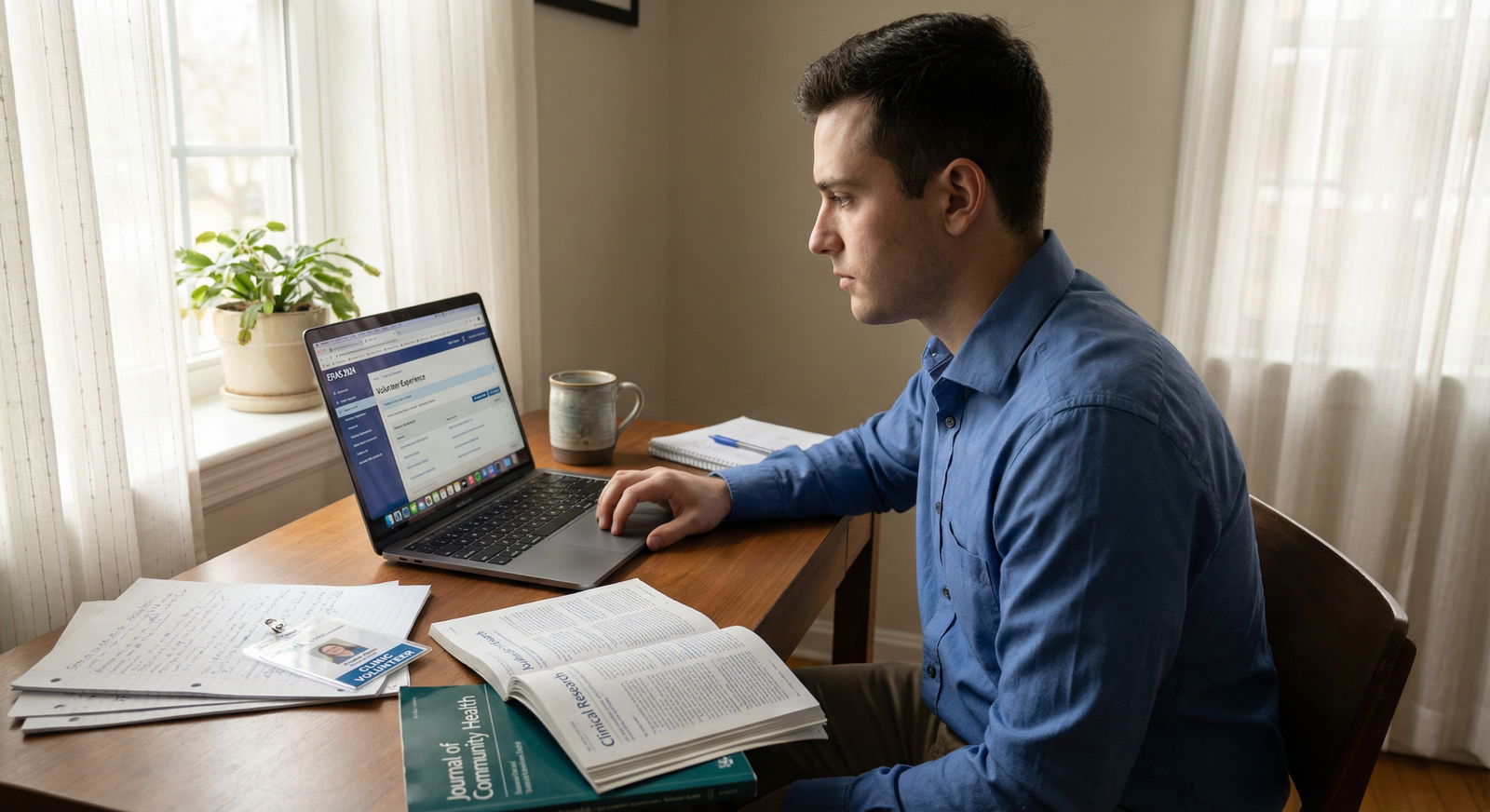
These can later be highlighted both in your ERAS application and during interviews.
4. Exploring and Confirming Specialty Interests
If you applied broadly or changed specialties late in the process, you may not have had sufficient specialty-specific exposure. Volunteer work can help you:
- Explore new specialties (e.g., addiction medicine, geriatrics, palliative care)
- Deepen commitment to your chosen field through targeted experiences
- Understand the patient populations and systems relevant to that specialty
Example:
If you’re interested in Family Medicine or Internal Medicine, long-term volunteering in a community clinic serving underserved populations aligns perfectly with many programs’ missions. For Psychiatry, crisis hotlines, mental health support organizations, or community outreach programs can be valuable.
Choosing High-Impact Volunteer Opportunities in Healthcare
Your time is valuable. The goal is not to collect random volunteer hours, but to select experiences that:
- Fit your long-term medical career goals
- Strengthen your residency application in clear, concrete ways
- Offer access to mentors, supervisors, and potential letter writers
Below are high-yield categories and how to approach each strategically.
1. Direct Patient Care and Clinical-Adjacent Volunteering
These roles keep you close to patients, care teams, and clinical workflows.
Hospitals, Clinics, and Free Clinics
Potential roles:
- Patient greeter, navigator, or escort
- Helping with intake, forms, vitals (if allowed)
- Assisting nursing staff with non-clinical tasks
- Translating or interpreting if you’re bilingual (HIPAA‑compliant and trained)
How this helps your Residency Match profile:
- Shows continued involvement in Healthcare Experience
- Potential for strong evaluation letters from physicians or clinic directors
- Lets you describe real patient interactions in your personal statement and interviews
Action steps:
- Contact volunteer services departments at hospitals and community clinics
- Emphasize your background as a medical graduate and your goal of staying clinically engaged
- Ask if there are roles where your training can be responsibly and ethically utilized
Community Health Fairs and Screening Events
You might:
- Provide education on diabetes, hypertension, vaccines, or nutrition
- Assist with screenings under supervision (when appropriate)
- Help coordinate logistics and patient follow-up
This is particularly useful if you are:
- Interested in primary care, Internal Medicine, Family Medicine, Pediatrics, or Preventive Medicine
- Applying to programs with strong community health or public health missions
2. Volunteering with Health-Focused Non-Profit Organizations
Non-profit work helps you understand the social determinants of health, advocacy, and systems-level issues.
Examples of organizations:
- Free clinics and community health centers
- NGOs serving refugees, homeless populations, or uninsured patients
- Non-profits focused on maternal health, mental health, HIV, cancer support, etc.
Roles might include:
- Case management support
- Health education workshops
- Outreach to specific communities
- Program evaluation or quality improvement assistance
How this supports your Medical Career:
- Demonstrates a commitment to underserved communities
- Aligns with many residency programs’ values and mission statements
- Gives you strong, mission-driven stories for your personal statement and interviews
3. Research Volunteer Work and Scholarly Activities
If your previous application was weaker on research or scholarly output, this is a major area to target.
Options include:
- Volunteering on a clinical or outcomes research project
- Assisting with chart reviews, data collection, or literature reviews
- Helping write abstracts, posters, or manuscripts
Benefits:
- Possible publications or presentations to add to your CV
- Letters from academic mentors
- Strengthens applications to competitive or research-focused programs (e.g., Internal Medicine, Neurology, Radiology, or academic tracks)
How to find positions:
- Reach out to faculty from your medical school or former rotations
- Search academic center websites for labs or projects aligned with your interests
- Contact principal investigators with a concise email including:
- Your background (brief)
- Your interest in their work
- Your available time and what you can contribute
4. Emergency Response and Disaster Relief Volunteering
Organizations like:
- Red Cross
- Local emergency response teams (CERT)
- Community disaster preparedness programs
You may:
- Complete first aid, CPR, or basic life support training
- Assist with disaster shelters, logistics, or health-related outreach
- Learn crisis management and inter-agency coordination
Residency relevance:
- Particularly aligned with Emergency Medicine, Surgery, Anesthesiology, and critical-care interested applicants
- Shows ability to function in high-stress, rapidly evolving situations
- Provides compelling experiences that highlight teamwork and adaptability
5. Global Health and International Volunteer Opportunities
Global health can be powerful—if approached ethically and thoughtfully.
Examples:
- Short-term supervised medical missions (ensuring proper oversight and scope)
- Remote volunteer work for international NGOs (education, telehealth support, curriculum development)
- Data analysis or research related to global disease burdens
Benefits:
- Exposure to different healthcare systems, resource limitations, and cultural contexts
- Demonstrates cultural humility and adaptability
- Very relevant for Family Medicine, Internal Medicine, Pediatrics, and Public Health–oriented careers
Caution:
- Avoid “voluntourism” or unsupervised clinical work outside your scope
- Be ready to articulate what you learned about systems and ethics—not just “I helped people in another country”
Turning Volunteer Work into a Strong Residency Narrative
Volunteering alone isn’t enough—you must be able to tell your story in a way that convinces programs you’re a stronger candidate now than before.
1. Selecting and Highlighting Your Most Impactful Experiences
Instead of listing every small task, focus on:
- Longitudinal roles (3–12+ months)
- Responsibilities that grew over time (e.g., from assistant to coordinator)
- Moments where you clearly demonstrated initiative, problem-solving, or leadership
Ask yourself:
- Which experiences best show how I’ve grown since last cycle?
- Which align most closely with my target specialty and program values?
These should become anchor points for:
- Your ERAS “Experience” entries
- Your personal statement
- Your interview answers
2. Using the STAR Method to Describe Volunteer Experiences
The STAR framework makes your descriptions clearer and more compelling:
- Situation: Briefly set the context.
- Task: What was the problem or goal?
- Action: What did you specifically do?
- Result: What changed? What did you learn?
Example (for an ERAS entry or interview):
- Situation: “At a community clinic serving uninsured patients, we noticed many missed follow-up appointments among hypertensive patients.”
- Task: “I was asked to help improve follow-up rates.”
- Action: “I created a simple reminder system using calls and text messages, coordinated with interpreters for non-English speakers, and developed a brief educational handout in two languages.”
- Result: “Within three months, follow-up rates improved by 25%. I learned how small systems changes can significantly impact chronic disease management, reinforcing my interest in primary care and quality improvement.”
This level of detail transforms “I volunteered at a clinic” into clear evidence of value and growth.
3. Integrating Volunteer Work Into Your Personal Statement
Your personal statement should not simply list activities. Instead:
- Choose 1–3 key volunteer experiences that reflect who you are as a future resident
- Show how these experiences shaped or refined your specialty choice
- Explain how they helped you grow after not matching
You might address:
- What you learned about yourself through volunteering
- How you developed new skills (communication, leadership, cultural competence)
- Why you are a better fit for residency now
Programs are looking for insight and maturity, not perfection. Thoughtful reflection on your volunteer work can communicate exactly that.
Presenting Volunteer Work Confidently During Residency Interviews
By the time you reach interviews, your volunteer activities will be a central part of your story.
1. Prepare Clear, Concise Talking Points
For each major volunteer experience, be ready to answer:
- What did you do specifically?
- Why did you choose this role after not matching?
- What challenges did you face, and how did you handle them?
- What did you learn that will make you a better resident?
Practice 1–2 minute responses that use the STAR framework and end with a brief reflection on growth.
2. Emphasize Growth, Not Just Service
Programs are interested in how you used this time:
- How did volunteering improve your clinical judgment, communication, or teamwork?
- How did it clarify your specialty interests or career goals?
- How did you handle the emotional aspects of not matching while staying engaged?
You can honestly acknowledge that not matching was difficult—but quickly pivot to what you did with that experience.
3. Connect Your Volunteer Work to Each Specific Program
Before each interview:
- Review the program’s mission, patient population, and clinical strengths
- Identify how your volunteer work aligns with those elements
Examples:
- “Your program’s strong focus on underserved urban communities resonates with my work at a free clinic where I coordinated hypertension education for uninsured patients.”
- “Your emphasis on integrated behavioral health matches my experience volunteering with a mental health non-profit and co-facilitating support groups.”
This shows that your volunteer work was not random; it reinforces why you are a good fit for that specific residency.
Using Volunteer Work to Build a Strong Professional Network
Beyond skills and CV entries, volunteer experiences are powerful Networking platforms.
1. Engage Intentionally with Physicians and Healthcare Leaders
While volunteering:
- Introduce yourself to supervising physicians, nurses, and administrators
- Share your background and your goal of reapplying to residency
- Ask for feedback on how you can be most helpful and what skills you should focus on
Over time, these relationships may lead to:
- Strong letters of recommendation that speak to your work after not matching
- Observerships, shadowing, or paid positions
- Advocacy on your behalf with program directors or coordinators
2. Seek Formal and Informal Mentorship
Look for mentors who can:
- Help you analyze why you didn’t match previously
- Review and refine your application strategy
- Offer specialty-specific advice and realistic feedback
Mentors might be:
- Volunteer supervisors
- Community physicians
- Academic researchers you assist
- Leaders of non-profit organizations
Be proactive: schedule brief check-ins, prepare thoughtful questions, and follow through on their advice.
3. Maintain and Grow Your Network
After meaningful interactions:
- Send a brief thank-you email summarizing what you learned
- Connect on professional platforms like LinkedIn where appropriate
- Update mentors on your progress (e.g., submitting ERAS, getting interviews, matching)
A sustained, respectful relationship is far more valuable than a one-time contact.
FAQs: Volunteer Work and Your Residency Re-Application
1. How can I find high-quality volunteer opportunities in healthcare?
Start with:
- Hospitals and clinics: Contact volunteer services departments or clinic managers directly.
- Free clinics and community health centers: Many rely heavily on volunteers and welcome medically trained graduates.
- Non-profits: Use platforms like VolunteerMatch, Idealist, or local public health department listings.
- Academic centers: Reach out to faculty for research or quality improvement volunteering.
When evaluating opportunities, ask:
- Will I have consistent, longitudinal involvement?
- Is there a supervising clinician or experienced staff member?
- Will I have meaningful responsibilities and potential for growth?
2. How should I list volunteer work on my CV or ERAS application?
Create a dedicated section such as “Volunteer Work,” “Community Service,” or “Healthcare Experience,” and for each entry include:
- Organization name and location
- Role title (e.g., “Clinic Volunteer,” “Research Volunteer,” “Health Educator”)
- Dates of involvement
- 2–4 bullet points describing scope, responsibilities, and impact
Use action verbs (coordinated, developed, implemented, led) and, when possible, quantify results (e.g., “Improved follow-up rates by 25% over three months”).
3. Can volunteer work alone fix a previous unsuccessful Match outcome?
Volunteer work is one important piece of the puzzle, but not the only one. A strong re-application strategy typically includes:
- Honest analysis of why you didn’t match (scores, specialty choice, geography, letters, red flags, etc.)
- Targeted improvements (additional clinical experience, stronger letters, more realistic specialty list, research, exam retakes if appropriate)
- Clear explanation of how you’ve grown since your last application
Strategic volunteer work supports this by showing you used the time constructively, but it should be combined with other necessary changes.
4. Is international or global health volunteering viewed differently from local volunteering?
Both can be valuable, but they’re interpreted differently:
- Local volunteering: Often shows sustained commitment to your own community and its healthcare systems; programs can more easily relate these experiences to their patient populations.
- Global health volunteering: Highlights cultural adaptability, awareness of global health disparities, and flexibility—if done ethically and under proper supervision.
Programs appreciate both, but they will look for:
- Evidence of reflection on ethics and scope of practice
- Clear learning outcomes, not just travel
- Connection to your long-term medical career goals
5. How do I talk about not matching and my volunteer work during interviews?
Be honest, concise, and growth-oriented:
Acknowledge the outcome without dwelling on it:
“I didn’t match last cycle, which was disappointing.”Pivot quickly to your response:
“I took time to analyze my application and realized I needed more clinical exposure and stronger letters, so I…”Highlight your volunteer work and growth:
“…committed to volunteering at a community clinic and with a research team, where I improved my patient communication skills, contributed to a quality improvement project, and built stronger relationships with mentors who know my current work.”Close with why you’re a stronger candidate now:
“These experiences confirmed my commitment to [specialty] and helped me develop the teamwork and resilience I’ll bring to your program.”
Using volunteer work intentionally after not matching is not about “filling time.” It’s about actively building the physician you are becoming—clinically, professionally, and personally. With thoughtful choices, clear reflection, and strong storytelling, your volunteer experiences can become a cornerstone of a more compelling, competitive application in the next Residency Match cycle.