Understanding the SOAP Process in the Residency Match
The road to becoming a physician is demanding, and the NRMP Residency Match is one of the most emotionally intense milestones in medical education. Despite strong preparation and hard work, a significant number of applicants each year do not initially match into a residency position.
If you learn on Monday of Match Week that you are unmatched or partially matched, you are not at the end of your journey. The Supplemental Offer and Acceptance Program (SOAP) exists specifically to help unmatched candidates and programs with unfilled positions connect in a structured, fair, and time-limited process.
This expanded guide walks you step-by-step through the SOAP process, from preparation before Match Week to accepting an offer, with detailed strategies, practical tips, and examples tailored to medical students and recent graduates.
What Is the SOAP Process and Why Does It Matter?
The Supplemental Offer and Acceptance Program (SOAP) is an organized process, run by the National Resident Matching Program (NRMP), that takes place during Match Week. It allows:
- Eligible unmatched or partially matched applicants to apply to residency programs with unfilled positions.
- Residency programs to review new applicants and extend structured offers over several rounds.
SOAP is not a second Match, but it is a critical safety net within the Residency Match system. Many capable and competitive applicants match into strong programs through SOAP every year.
Key Objectives of SOAP
SOAP is designed to:
Place unmatched candidates into unfilled positions
By creating a centralized, timed system, SOAP improves the efficiency and fairness of filling vacancies after the main Residency Match.Support residency programs with vacancies
Programs that did not fill through the main Match can quickly access a pool of interested, eligible candidates.Increase overall efficiency of the Match process
By maximizing the number of positions filled and giving unmatched candidates a structured path forward, SOAP strengthens the integrity of the NRMP system.
Who Is Eligible to Participate in SOAP?
Eligibility is determined by the NRMP and the Electronic Residency Application Service (ERAS). In general, to participate in SOAP you must:
- Be registered for the Main Residency Match with the NRMP.
- Have submitted a rank order list (or been withdrawn by the NRMP due to ineligibility).
- Be eligible to begin residency training on July 1 (per NRMP and program requirements).
- Be unmatched or partially matched (e.g., matched to a preliminary year but not to an advanced position in certain circumstances).
The NRMP explicitly designates whether you are SOAP-eligible when you receive your Match Week status.
The SOAP Timeline: What Happens During Match Week
Understanding the SOAP timeline is essential. The process is fast, emotionally intense, and highly time-sensitive. Exact dates vary each year, so always verify specifics via the NRMP and ERAS websites, but the general structure is consistent.
Key Phases of Match Week and SOAP
Monday of Match Week: Match Status Notification
- In the morning, you learn whether you:
- Matched
- Partially matched
- Did not match
- If you are eligible for SOAP, your status will indicate that.
- In the morning, you learn whether you:
Monday: Access to Unfilled Positions List
- SOAP-eligible applicants gain access to the List of Unfilled Programs through NRMP.
- The list is separated into:
- Programs participating in SOAP
- Programs not participating (these may be contacted only after SOAP ends).
Monday–Tuesday: SOAP Application Period
- Through ERAS, you can:
- Assign existing or new applications to programs with unfilled positions.
- Update documents such as your personal statement or program-specific letters, within limits.
- There is a maximum number of programs you can apply to via SOAP (historically 45, but you must confirm the current NRMP limit each year).
- Through ERAS, you can:
Tuesday–Thursday: Interview and Offer Rounds
- Programs review applications, conduct virtual interviews or phone calls, and rank applicants internally.
- The NRMP runs multiple rounds of offers at set times.
- In each round, you may:
- Receive zero, one, or multiple offers.
- Accept only one offer per round.
- Any unaccepted offer expires at the end of the round.
End of SOAP: Friday of Match Week
- The SOAP process concludes.
- The final list of unfilled positions that did not fill through SOAP becomes available to all unmatched applicants and programs.
- After this point, you may directly contact programs not bound by SOAP rules, following each program’s policies.
Critical Dates and Deadlines to Track
While exact times change yearly, you should track:
- Monday morning: Match status notification and SOAP eligibility.
- Monday afternoon–Tuesday: Application submission window opens for SOAP.
- Tuesday–Thursday: Time blocks for offer rounds (several per day).
- Friday: End of SOAP; open recruitment for remaining unfilled positions.
Mark these dates in your calendar and consider turning on alerts. The SOAP process moves quickly, and missing a deadline can mean losing a valuable opportunity.

Step-by-Step Guide to Navigating the SOAP Process
Step 1: Prepare for SOAP Before Match Week
The time to start thinking about SOAP is before you need it. Good planning reduces panic and improves your ability to respond strategically.
A. Stay Informed and Understand the Rules
- Review the NRMP Match Participation Agreement and SOAP policies.
- Read the ERAS SOAP guidelines for your specialty(ies).
- Know:
- How many programs you can apply to via SOAP.
- Which communication methods are allowed (e.g., programs may contact you; you must follow NRMP rules about contacting them).
- How offers and acceptances are processed within the NRMP system.
B. Optimize and Update Your Application Materials
Before Match Week:
Curriculum Vitae (CV):
- Ensure it is updated with your most recent rotations, research, teaching, and leadership experiences.
- Highlight any unique strengths (e.g., language skills, community engagement, procedural skills).
Personal Statements:
- Draft flexible, adaptable statements that you can quickly tailor to:
- Different specialties (e.g., Family Medicine vs. Internal Medicine).
- Different types of programs (community-based vs. academic).
- Consider having:
- One primary specialty-focused statement.
- One general medicine or “transitional/preliminary year” statement.
- Draft flexible, adaptable statements that you can quickly tailor to:
Letters of Recommendation:
- Secure strong, recent clinical letters where possible.
- Identify mentors who would be willing to write additional letters quickly if needed for a new specialty during SOAP.
C. Plan Your Specialty and Program Strategy
Even before Match Week:
- Identify alternative specialties you would realistically consider if you don’t match in your first choice (e.g., applying to Pediatrics and Family Medicine, or General Surgery and Preliminary Surgery).
- Understand key eligibility differences across specialties (e.g., some require USMLE Step 2 scores, some are friendlier to IMGs).
- Create a shortlist of regions or program types you are willing to consider:
- Geographic flexibility dramatically increases your options.
- Community hospitals may have more open positions compared to highly competitive academic programs.
D. Practice Interview Skills
SOAP interviews are often:
- Short, focused, and virtual (phone or video).
- Scheduled with little notice.
- Conducted over a compressed timeline.
Prepare by:
- Practicing concise answers to:
- “Tell me about yourself.”
- “Why this specialty, and why now?”
- “Why did you not match, and what have you learned from the process?”
- “Why our program specifically?”
- Doing at least one mock interview with a mentor, advisor, or resident.
- Ensuring your technology setup (internet, webcam, microphone) is reliable.
Step 2: Confirm SOAP Eligibility and Register
On Monday of Match Week:
Check Your NRMP Status
- Log into the NRMP system as soon as results are released.
- Confirm:
- Matched / Unmatched / Partially matched status.
- Whether you are labeled as SOAP-eligible.
Verify ERAS Setup
- Ensure your ERAS account is active, and your documents are:
- Uploaded.
- Assigned correctly.
- Be prepared to:
- Create or assign new personal statements quickly.
- Redirect existing LoRs to new specialties if needed.
- Ensure your ERAS account is active, and your documents are:
Review SOAP Participation Rules
- Revisit the NRMP SOAP guidelines:
- You may not contact programs before they contact you, except as explicitly permitted by NRMP.
- All offers and acceptances must go through the NRMP system—no side agreements.
- Revisit the NRMP SOAP guidelines:
Step 3: Analyze the List of Unfilled Residency Positions
Once you gain access to the List of Unfilled Programs, move quickly but deliberately.
A. Categorize the Available Positions
When you download or view the list, sort positions by:
- Specialty
- State/Region
- Program type (university, community, community-university affiliated)
- Preliminary vs. categorical vs. advanced
Create groups such as:
- “High interest” – aligns well with your preferences and qualifications.
- “Realistic/Moderate interest” – open to considering.
- “Backup” – acceptable if needed to continue your training path.
B. Research Programs Efficiently
For each program on your shortlist:
- Visit the program’s website:
- Review their mission, patient population, training sites, curriculum.
- Look for visa policies if you are an IMG.
- Check recent residents and alumni (if listed) to gauge the program’s academic environment and outcomes.
- Prioritize programs where:
- Your profile (scores, experiences, interests) clearly matches their typical residents.
- You can explain a convincing, authentic interest in their setting or population.
C. Be Strategic About Specialty Choices
During SOAP, applicants often broaden their specialty targets. When considering additional specialties:
- Ask yourself:
- Can I authentically commit to this specialty if I match here?
- Does this align with my long-term goals, even if not my original Plan A?
- If applying across multiple specialties:
- Ensure your personal statement and experiences are appropriate for each one.
- Avoid sending a surgery-focused statement to a psychiatry program, for example.
Step 4: Apply to Programs Through ERAS During SOAP
During the SOAP application window (often Monday–Tuesday):
A. Work Within the Application Limits
- There is a maximum number of programs you can designate via SOAP (historically 45; confirm current rules).
- Use these slots wisely:
- Avoid applying to programs where you are clearly a poor fit.
- Focus on programs where you meet minimum criteria (scores, graduation year, visa needs).
B. Tailor Applications as Much as Time Allows
Given the compressed timeline, perfection is impossible—but strategic tailoring is essential:
Personal Statement:
- Use a version appropriate to the specialty and program type.
- Briefly acknowledge your journey and emphasize your resilience, insight, and readiness.
Experiences:
- Highlight rotations and projects that align with the program’s emphasis:
- For Family Medicine: community engagement, continuity of care, outpatient.
- For Internal Medicine: inpatient experiences, scholarly activities, complex clinical care.
- Highlight rotations and projects that align with the program’s emphasis:
C. Avoid Common SOAP Application Pitfalls
- Do not:
- Apply only to the most competitive academic programs with few positions.
- Rely solely on geographic preference at the expense of realistic chances.
- Recycle a personal statement that openly states a different specialty as your “true passion.”
Instead:
- Aim for a balanced list:
- Some aspirational options.
- A strong core of realistic, attainable programs.
- A few true backups if your priority is to begin any residency this year.
Step 5: Manage Interviews and Offers During SOAP
Once programs begin reviewing applications, things move fast.
A. Handling Interview Invitations
Programs may:
- Email you.
- Call you directly.
- Message you through ERAS or other secure systems.
When contacted:
- Respond promptly and professionally.
- Confirm interview times quickly and track them in a calendar.
- Clarify the format (phone vs. video), expected length, and interviewers.
B. Preparing for SOAP Interviews
Because these are often shorter than main Match interviews:
- Focus on concise, high-yield responses:
- Who you are and what you bring.
- Why this program and this community.
- What you learned from not matching and how you’ve grown.
- Be honest if asked why you didn’t match, but avoid negativity:
- Emphasize insight:
- “I targeted extremely competitive programs in one narrow geographic region. Through this process, I’ve broadened my scope and reflected on where I can thrive and contribute most.”
- Emphasize insight:
C. Understanding Offer Rounds
During SOAP offer rounds:
- Programs submit their ranked lists of applicants to the NRMP.
- NRMP’s system generates offers based on:
- Available positions.
- Program preference lists.
- In each offer round:
- You may receive zero, one, or multiple offers.
- You can only accept one.
- Unaccepted offers expire at the end of that round.
Use each offer window wisely:
- Read the program details carefully.
- If you receive multiple offers, compare:
- Specialty fit.
- Training quality.
- Geographic and personal considerations.
- Accepting an offer ends your participation in SOAP—you will be matched to that program.
Step 6: Accepting an Offer and Next Steps
If you receive an offer that aligns with your goals:
Make a Thoughtful Decision Quickly
- Consider:
- Specialty and long-term career implications.
- Program reputation, structure, and support.
- Personal and family factors (location, cost of living, support system).
- Consult briefly with a mentor if time allows—but remember the strict deadline for each round.
- Consider:
Accept via the NRMP System
- Follow the instructions in your NRMP portal to formally accept.
- Once you accept:
- You are bound to that program.
- You are removed from further SOAP consideration.
Notify Mentors and Update Materials
- Inform your medical school or dean’s office.
- Thank mentors and letter writers who supported you.
- Begin reviewing onboarding requirements from the program (credentialing, paperwork, background checks).
If you accept a preliminary position (e.g., a one-year internship):
- Start planning long-term:
- How will you strengthen your application for your desired advanced specialty?
- What research, networking, or clinical opportunities are available at your new institution?

If You Don’t Match Through SOAP: Next Steps and Alternatives
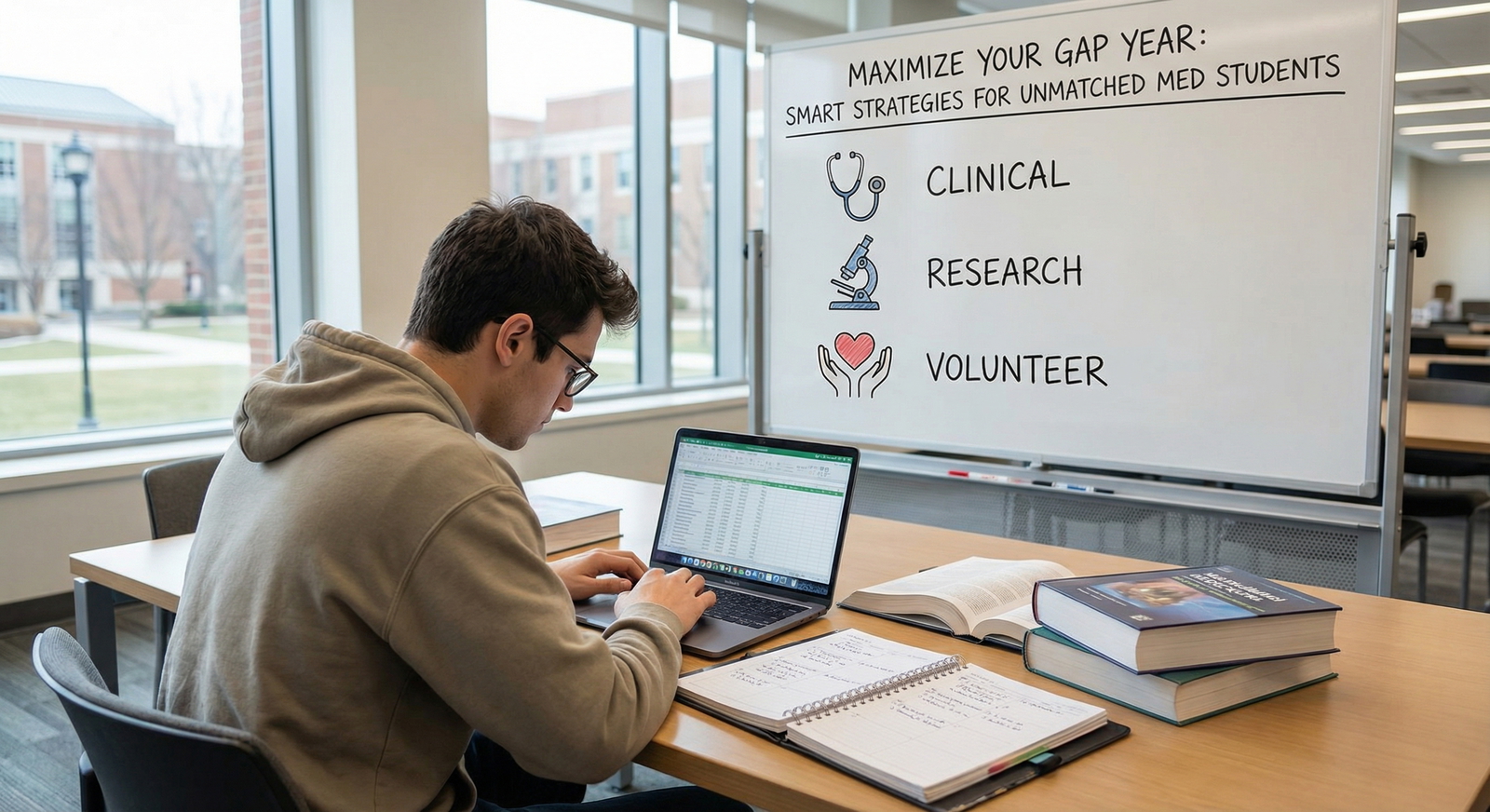
Not securing a position through SOAP is deeply disappointing, but it is not the end of your medical career.
Immediate Post-SOAP Options
After SOAP concludes:
- The updated list of unfilled positions (including non-SOAP programs) becomes publicly available.
- You may:
- Directly contact programs to inquire about open positions.
- Apply to:
- Research fellowships
- Clinical fellowships or observerships
- Post-graduate year (PGY-1) non-ACGME positions (where available)
Always verify the legitimacy and accreditation status of any opportunity.
Medium- to Long-Term Strategies
If you remain unmatched for the upcoming year:
Strengthen Your Application:
- Address specific weaknesses:
- Low scores: consider additional exams, courses, or remediation documentation.
- Limited US clinical experience: seek observerships, externships, or paid positions (e.g., research assistant, clinical coordinator).
- Weak letters: build new relationships with faculty who can observe you clinically.
- Address specific weaknesses:
Reassess Specialty and Geographic Flexibility:
- Consider specialties with higher match rates and more open positions.
- Be more open to a wider range of locations.
Work with Advisors and Mentors:
- Schedule a detailed debrief with your dean’s office or career advisor.
- Create a concrete 12-month plan focused on improving specific aspects of your profile before reapplying.
Resilience and adaptability are core professional qualities in medicine. Many physicians have taken non-linear paths and still built excellent, fulfilling careers.
Frequently Asked Questions (FAQ) About the SOAP Process
1. What is the difference between being unmatched and being partially matched, and does it affect SOAP eligibility?
- Unmatched means you did not match to any of the programs on your rank list.
- Partially matched often means:
- You matched to a preliminary position but not an advanced position, or
- You matched in one track but not another (depending on your application structure).
Your SOAP eligibility is determined by NRMP rules. Some partially matched applicants are eligible (e.g., unmatched to an advanced position), while others are not. Always check your NRMP portal on Monday of Match Week for official status.
2. Can I apply to different specialties during SOAP, even if I applied to only one specialty in the main Match?
Yes. During SOAP, you may apply to any specialty with unfilled positions for which you meet eligibility criteria. However:
- Ensure your application materials align with each specialty:
- Use an appropriate personal statement.
- Highlight relevant experiences.
- Be honest with yourself:
- Only pursue specialties you could realistically see yourself practicing long-term.
3. Are there limits on how many programs I can apply to through SOAP?
Yes. NRMP and ERAS set a maximum number of programs you can designate during SOAP (historically 45, but this can change). Within this limit:
- Prioritize programs where:
- You meet minimum requirements.
- There is a reasonable match between your background and their mission.
- Avoid spreading applications too thinly across many specialties without clear strategy.
Always verify the current year’s limit on the NRMP and ERAS websites.
4. Can I contact residency programs directly during SOAP?
During SOAP, communication rules are strict:
- Programs are allowed to contact you (e.g., to schedule interviews), but your ability to initiate contact is limited by NRMP rules.
- You must not solicit offers or pressure programs outside of the official process.
- All offers and acceptances must occur through the NRMP system.
After SOAP concludes, these restrictions lift, and you may contact programs with remaining unfilled positions according to each program’s policies.
5. What should I do if I don’t receive any offers during SOAP?
If you do not receive an offer:
- After SOAP Ends:
- Review the updated list of unfilled positions.
- Reach out directly to programs as allowed.
- Short-Term:
- Meet urgently with your dean’s office or advisor to debrief.
- Explore research, observerships, or other educational opportunities.
- Long-Term:
- Analyze your application objectively:
- Scores, clinical grades, letters, specialty choice, and geographic limitations.
- Develop a targeted improvement plan for the next application cycle.
- Consider whether broadening your specialty scope or location preferences might increase future success.
- Analyze your application objectively:
Remaining unmatched through SOAP is challenging but not career-ending. Many physicians successfully reapply with strengthened applications.
Final Thoughts: Navigating SOAP with Strategy and Resilience
The SOAP process is intense, fast-paced, and emotionally charged, but it is also a vital opportunity within the Residency Match system for unmatched candidates to secure positions. By:
- Understanding the NRMP rules and SOAP timeline
- Preparing your documents and strategy before Match Week
- Applying strategically and realistically
- Presenting yourself with honesty, insight, and professionalism during interviews
- Responding thoughtfully but promptly to offers
you can significantly improve your odds of moving forward in residency training this year.
Whether you secure a position through SOAP, obtain a post-SOAP opportunity, or regroup for the next cycle, your response to this challenge will shape your growth as a physician. Resilience, adaptability, and commitment to continuous improvement are as important to your career as any single Match outcome.