Understanding a Failed Residency Match: Factors, Recovery, and Growth
Not matching into a residency program can feel devastating. Years of rigorous medical education, exams, and clinical rotations lead to this pivotal moment in your career. When the result is “No Match,” it is normal to feel shock, disappointment, and uncertainty about the future.
Yet a failed match is not the end of your medical career—it is a critical turning point. Many successful physicians did not match on their first attempt. What separates those who ultimately succeed is not perfection, but their ability to analyze what happened, adapt, and systematically strengthen their next application.
This guide explains the major factors that can contribute to an unsuccessful Residency Match, then outlines concrete, evidence-informed strategies to help you recover, grow, and return to the Match as a stronger candidate.
1. Why Applicants Fail to Match: A Big-Picture View
Before diving into specific factors, it helps to understand the overall landscape of the Residency Match and how program directors make decisions.
The Competitive Reality of the Residency Match
The National Resident Matching Program (NRMP) publishes detailed data on match outcomes each year. While the majority of U.S. MD seniors match, the process is highly competitive, especially for certain specialties and geographic regions. Factors influencing competitiveness include:
- Number of positions vs. number of applicants
- Popularity of certain specialties (e.g., dermatology, orthopedic surgery, plastic surgery, radiology)
- Program preferences for certain applicant types (e.g., USMD vs DO vs IMG)
- Evolving requirements (e.g., USMLE Step 1 pass/fail changes)
A failed match rarely results from a single issue. Instead, it is usually the cumulative effect of several factors that, taken together, made your application less competitive or less visible.
The Most Common Contributors to a Failed Match
Typical reasons applicants do not match include:
- Gaps or errors in application quality and presentation
- Academic performance below typical program thresholds
- Insufficient or poorly targeted clinical experience
- Limited research, especially in competitive specialties
- Weak or generic letters of recommendation
- Ineffective networking and lack of mentorship
- Poor or inconsistent interview performance
- Overly ambitious specialty or program list with inadequate “safety” options
Understanding which of these applied to you is the foundation for crafting a stronger strategy for the next cycle.
2. Application Quality: The Foundation of a Successful Match
Your ERAS application, personal statement, and letters of recommendation are often the first (and sometimes only) impression programs have of you. Subtle weaknesses here can dramatically affect interview invitations.
Personal Statement: Telling a Clear, Compelling Story
A strong personal statement is not just grammatically correct—it is strategic.
Common pitfalls that hurt Residency Match outcomes:
- Vague narratives that could apply to any specialty or any applicant
- Overly generic language (“I love helping people”) instead of concrete experiences
- Lack of a coherent theme that connects your background to your chosen specialty
- Failure to address red flags (e.g., Step failures, leaves of absence) when appropriate
- Poor structure or repetitive content that loses the reader’s attention
Actionable strategies:
- Use 2–3 specific clinical or research experiences to demonstrate your fit for the specialty.
- Show, don’t just tell—describe what you did, what you learned, and how it shaped your goals.
- Have multiple people review your statement: a mentor in the specialty, a writing-savvy peer, and ideally someone with program leadership or advising experience.
- Tailor your statement if you are applying to more than one specialty (no one-size-fits-all).
Letters of Recommendation (LOR): Powerful Advocacy or Missed Opportunity
Letters are one of the most heavily weighted components of Medical Education applications.
Weak letters often:
- Come from faculty who barely know you (“generic” praise)
- Lack specific examples of your clinical skills, reliability, or professionalism
- Fail to comment on your readiness for residency or specialty-specific strengths
- Are written by non-specialists when specialty-specific letters are expected
To strengthen LORs:
- Request letters from faculty who have observed you closely over time (e.g., sub-internships, core rotations, research).
- Ask explicitly for a “strong letter of recommendation for residency in [specialty].”
- Provide your CV, personal statement draft, and summary of your work with them to help guide their writing.
- For competitive fields, prioritize at least two letters from faculty in that specialty, ideally at academic institutions.
ERAS Application Details: Small Errors, Big Impact
Program directors commonly screen hundreds of applications quickly. Poorly constructed applications can be filtered out early.
Avoid these issues:
- Spelling/grammar errors or inconsistent dates
- Incomplete descriptions of experiences
- Overinflated roles or unverifiable claims
- Failing to highlight leadership, teaching, or quality improvement projects
Improve your application by:
- Using clear, concise bullet points that emphasize impact (e.g., “Implemented a new workflow that reduced clinic wait times by 15%”).
- Prioritizing your most relevant experiences at the top.
- Having an advisor or mentor review your completed ERAS before submission.

3. Academic Performance and Exam Results: Benchmarks and Red Flags
While holistic review is increasingly emphasized in Medical Education, academic metrics still function as screening tools for many programs.
USMLE/COMLEX Scores and Trends
Even with Step 1 now pass/fail, exam performance remains crucial:
- Step 2 CK / Level 2-CE scores are often used as primary numerical filters.
- Multiple attempts or failures can lead to automatic rejection at some programs.
- A downward trajectory across exams raises concerns about knowledge retention or test-taking skills.
If scores contributed to your failed match:
- Consider engaging a test-prep tutor or structured course for any future exams.
- Request a score report review with a dean or advisor to identify patterns (e.g., weaknesses in certain content areas).
- Document improvement with strong Step 2 CK or Level 3 scores where applicable.
Clerkship Grades and Clinical Evaluations
Program directors value evidence that you perform well in clinical environments:
Red flags may include:
- Multiple low grades in core rotations (especially related to your chosen specialty)
- Narrative comments about professionalism issues, reliability, or teamwork problems
- Inconsistent performance (e.g., honors in some rotations, failures or remediation in others)
Addressing clinical performance concerns:
- Seek concrete feedback from supervising physicians on how to improve.
- Pursue additional sub-internships or electives where you can demonstrate growth and obtain fresh, strong evaluations.
- If there were extenuating circumstances (illness, family crisis), discuss with an advisor how and whether to address these in your application.
4. Clinical Experience, Research, and Specialty Fit
Programs want candidates who understand the realities of their specialty and have demonstrated commitment.
Clinical Exposure and Sub-Internships
Insufficient or poorly aligned clinical experience can hurt your Residency Match prospects.
Potential issues:
- Few rotations or electives in your chosen specialty
- No sub-internship (“acting internship”) in that specialty
- Limited exposure to diverse patient populations or care settings
- For IMGs: lack of recent U.S. clinical experience
Strengthening your clinical profile:
- Arrange additional sub-internships or audition rotations in your target specialty and geographic region.
- For IMGs or re-applicants, consider formal observerships, externships, or clinical research roles that incorporate direct patient care or team participation.
- Ensure your experiences are clearly documented and well described in your application.
Research Experience and Scholarly Activity
For many specialties—particularly dermatology, radiology, orthopedics, neurosurgery, and academic internal medicine—research is a major differentiator.
Common gaps:
- No research in medical school or research only in unrelated fields
- Minimal involvement (e.g., data entry only) with no presentations or publications
- Incomplete or unsubmitted projects listed vaguely on ERAS
Actionable steps:
- Join an ongoing project in your specialty of interest; aim for tangible outcomes (poster, oral presentation, or manuscript).
- Ask your mentor for roles that allow you to demonstrate initiative (e.g., first-author case reports, literature reviews).
- If you are unmatched and taking a year off, consider a dedicated research fellowship or year-out research position.
Specialty Choice and Application Strategy
Another frequent cause of not matching is misalignment between your profile and the competitiveness of your chosen specialty.
Risky patterns include:
- Applying only to highly competitive specialties with few backup options
- Applying to too few programs overall
- Insisting on a very narrow geographic area without a strong reason
- Not tailoring your application strategy to your metrics, experiences, and background (e.g., IMG status, Step failures)
Improving your specialty strategy:
- Use NRMP and specialty-specific data (Charting Outcomes, Program Director Surveys) to honestly compare your profile to matched applicants.
- Work with an advisor to develop a tiered list of programs (reach, target, safety).
- Consider dual-application strategies when appropriate (e.g., applying to both internal medicine and neurology), with tailored materials for each.
5. Networking, Mentorship, and Interview Skills
Even a strong paper application can fall short without effective networking and interview performance.
Networking and Professional Relationships
Networking is not about favoritism; it is about visibility, mentorship, and fit.
Common missed opportunities:
- Not staying in touch with faculty who can advocate for you
- Failing to attend departmental conferences, grand rounds, or specialty interest groups
- Limited engagement at national or regional conferences
- Not asking for introductions to program directors or faculty at other institutions
To strengthen your networking:
- Attend virtual and in-person networking events hosted by specialty societies.
- Present posters or talks; even local presentations can open doors.
- Send concise, respectful emails to faculty you have worked with, updating them on your goals and asking for advice.
- Ask your mentors if they would be comfortable reaching out to colleagues on your behalf, especially when re-applying.
Interview Skills: From Invitation to Rank List
The interview is a high-stakes component of Residency Match and Application Strategies. Even one or two poor interviews at key programs can significantly impact outcomes.
Common interview pitfalls:
- Arriving unprepared for common questions (“Tell me about yourself,” “Why this specialty?” “Why our program?”)
- Inconsistent or unclear explanations of career goals
- Difficulty addressing red flags (e.g., exam failures, gaps in training)
- Limited knowledge of the program’s strengths, mission, or patient population
- Poor virtual interview setup (lighting, sound, background, professionalism)
Strategies to improve interview performance:
- Conduct multiple mock interviews with advisors, peers, or career services—preferably with people familiar with the specialty.
- Prepare structured yet flexible responses for core questions, and practice aloud.
- Develop concise, honest explanations for any red flags, emphasizing accountability and growth.
- For virtual interviews, test technology, camera framing, and sound in advance; ensure a quiet, professional environment.
6. Learning From a Failed Match: A Stepwise Recovery Plan
A failed Residency Match is emotionally and professionally challenging. A structured response can transform this setback into a catalyst for long-term growth.
Step 1: Process and Reflect
- Allow yourself time to acknowledge disappointment, but set a timeline to transition into planning mode.
- Avoid impulsive decisions—major career changes made in the emotional aftermath may not serve your long-term goals.
Step 2: Conduct a Detailed Post-Match Analysis
Create a structured review of your application:
- Academics: Step/COMLEX scores, number of attempts, class rank, clerkship grades.
- Application: Personal statement, LORs, ERAS content, number and type of programs applied to.
- Clinical/Research: Rotations, sub-internships, research, presentations, publications.
- Networking: Mentors, advocacy, connections with programs.
- Interviews: Number of invitations, how you felt they went, common themes in feedback.
Meet with:
- A dean or residency advisor from your medical school
- A trusted faculty mentor, ideally in your specialty of interest
- If possible, program directors or associate program directors willing to provide feedback (even brief, high-level comments can be useful)
Step 3: Strengthen Your Profile Strategically
Based on your analysis, create a focused plan:
- If academics were the primary issue, emphasize remediation, exam improvement, and fresh evidence of clinical competence.
- If clinical experience was limited, prioritize sub-internships, observerships, or post-graduate clinical roles.
- If research was lacking, join or continue substantive projects with clear, near-term outcomes.
- If interviews were weak, schedule mock interviews and seek consistent feedback.
Step 4: Enhance Your Application Materials
- Rewrite your personal statement with assistance from mentors and, if available, residency advising services.
- Update your CV and ERAS content with new experiences, roles, and achievements.
- Refresh your letters of recommendation—especially if you have gained new clinical or research experiences.
Step 5: Consider Alternative or Parallel Paths
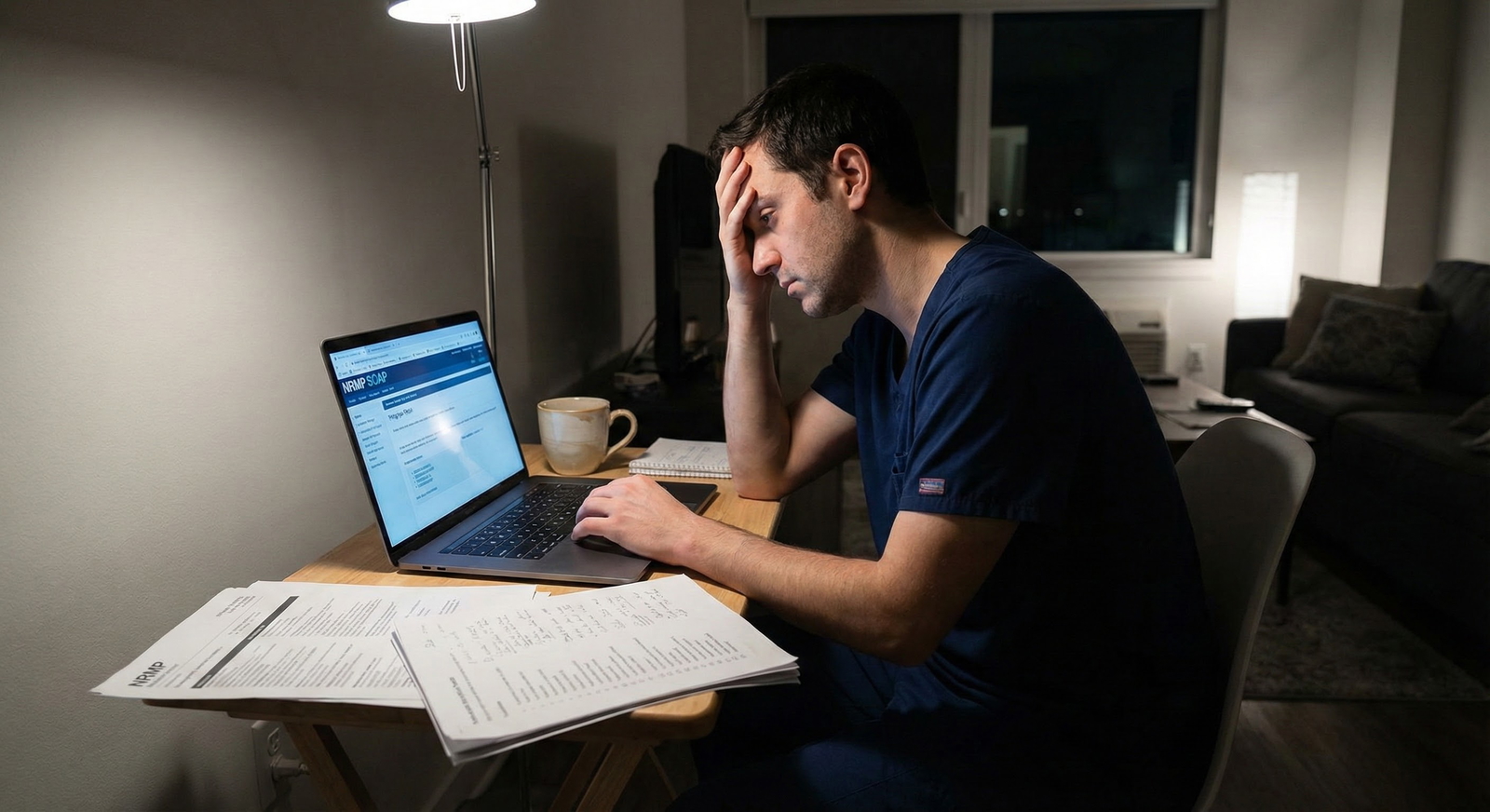
- SOAP (Supplemental Offer and Acceptance Program): If you are currently unmatched, participate fully and strategically. Apply broadly, respond quickly to communications, and be open to related specialties or preliminary positions.
- Different Specialties: For some, switching to a specialty more aligned with their profile, interests, and lifestyle preferences can be the right move.
- Transitional or Preliminary Years: These can provide additional U.S. clinical experience, LORs, and time to strengthen your next application.
- Research or MPH/MBA/Other Degrees: These can be valuable, but only if connected to a clear, realistic plan to return to the Match and supported by mentorship.

7. Maintaining Perspective and Resilience
Not matching can feel like a personal failure, but it is often a reflection of the system’s competitiveness rather than your potential as a physician.
To maintain resilience:
- Connect with peers or alumni who did not match initially but later succeeded; their stories can provide both emotional support and practical advice.
- Protect your mental health—consider speaking with a counselor, therapist, or wellness resource.
- Continue clinical or academic engagement; staying connected to medicine reinforces your identity and maintains your skills.
Over time, many unmatched applicants look back and recognize the unmatched year as a period of intense growth and clarification of their goals. With deliberate, informed action, your next application can be significantly stronger—and your ultimate residency placement more aligned with your values and strengths.
Frequently Asked Questions About a Failed Residency Match
1. What should I do immediately after learning I did not match?
In the first 48–72 hours:
- Confirm your eligibility and plan for the SOAP if you are in the U.S. Match.
- Reach out to your dean’s office or residency advising team; they often have established workflows for unmatched students.
- Gather your application materials (ERAS, personal statement, CV, list of programs applied to) for review.
- Avoid making major decisions in the first emotional shock period; focus instead on immediate logistics and support.
If SOAP is not applicable or has passed, schedule a detailed advising session to create a short- and long-term plan.
2. Can I successfully match if I did not match on my first attempt?
Yes. Many applicants match on a subsequent attempt, including those with exam failures, prior unmatched status, or career interruptions. Success usually depends on:
- A clear understanding of why you did not match the first time
- Demonstrated improvement (scores, clinical performance, research, LORs)
- A realistic and data-informed specialty and program strategy
- Stronger interview skills and more targeted Networking
Program directors generally appreciate applicants who show growth, resilience, and insight into their prior challenges.
3. Should I switch specialties after a failed match?
Not necessarily. The decision to change specialties should be based on:
- Honest assessment of your competitiveness for the original specialty
- Your genuine interest and fit for both your initial and potential new specialty
- Data on match rates and applicant profiles for each field
- Guidance from mentors in both specialties
For some, a dual-application strategy (with carefully tailored materials) is preferable to a complete switch; for others, a well-considered change is the best path forward.
4. How can I improve my interview skills for the next cycle?
To improve residency Interview Skills:
- Schedule multiple mock interviews with advisors, faculty, or career services—record them if possible and review your performance.
- Prepare and practice answers to common questions and behavioral scenarios.
- Develop a concise, authentic narrative about why you chose your specialty, why specific programs appeal to you, and how you have grown since your last application.
- Practice virtual etiquette: camera placement, eye contact, professional attire, and managing time-limited answers.
- Ask for specific feedback after mock interviews and work on 1–2 targeted improvements at a time.
5. How important is networking for someone who did not match?
Networking becomes even more critical after a failed match. It can:
- Help you understand candid program feedback and expectations
- Connect you to research, clinical, or quality improvement opportunities
- Lead to stronger, more personalized letters of recommendation
- Increase your visibility to programs that may remember you positively when reviewing applications
Seek sustained, authentic relationships with mentors and faculty rather than one-time transactional interactions. Consistent engagement in departmental activities, conferences, and academic projects builds a network that can advocate for you when it matters.
By carefully analyzing the factors behind a failed Residency Match and deliberately strengthening each component of your application—academic performance, clinical experience, research, application quality, networking, and interview skills—you can transform this setback into a powerful opportunity for growth. With strategic planning, sustained effort, and strong mentorship, you can return to the Match as a far more competitive and confident candidate.