
Unmatched After the Residency Match? How to Evaluate Your Options and Strategically Plan Your Future
Match Day is meant to be a culmination of years of effort—long nights on call, Step exams, clinical evaluations, and the constant pressure to stand out. When the NRMP results say “unmatched,” it can feel like the entire trajectory of your medical career has been derailed.
It hasn’t.
Not matching is a significant setback, but it is not the end of your path in medicine or healthcare. Many successful physicians, researchers, and healthcare leaders started with an unmatched result and went on to build meaningful, impactful Medical Careers. What matters now is how you respond, what you learn, and how strategically you move forward.
This guide will help you:
- Understand the unmatched outcome in context
- Evaluate your current situation and application honestly
- Explore realistic next steps, from reapplying to exploring Healthcare Alternatives
- Create a structured, time-bound plan for the next 12+ months
- Access resources and guidance to support your Residency Application journey
Understanding What It Means to Be Unmatched
What Does Being Unmatched Actually Mean?
Being unmatched means that after the NRMP algorithm processed all rank lists, you did not secure a position in any residency program you ranked. This can happen to:
- U.S. MD graduates
- U.S. DO graduates
- International medical graduates (IMGs)
Key points to understand:
- It is not a verdict on your worth as a future physician. It simply reflects how your current application profile aligned (or didn’t) with program preferences in this specific cycle.
- It is increasingly common. As residency positions haven’t grown at the same pace as the number of applicants, more qualified candidates go unmatched each year.
- There are structured processes for next steps, including SOAP (Supplemental Offer and Acceptance Program) and reapplication.
If you’ve already gone through SOAP and still do not have a position, you are now in the “post-match” planning phase. This phase is critical to your future Residency Match outcome and to clarifying your broader Career Guidance goals.
The Emotional Impact: Naming What You’re Feeling
The unmatched experience is not just logistical—it is deeply emotional. You may feel:
- Shock or disbelief
- Shame, embarrassment, or fear of judgment
- Anger or resentment
- Anxiety about debt, visa status, or career uncertainty
- Grief over a specialty you dreamed of for years
A few important truths:
- You are not alone. Thousands of applicants each year do not match on their first attempt, including very strong candidates.
- Your feelings are valid. Give yourself space to process before making major decisions.
- You still have options. Medicine and healthcare offer far more paths than the one moment of Match Day might suggest.
It can be helpful to:
- Talk openly with someone you trust (mentor, friend, mental health professional)
- Take a brief pause—24–72 hours—before making big choices or sending emotional emails
- Separate your sense of self-worth from one application outcome
Evaluating Your Current Situation with Honesty and Clarity
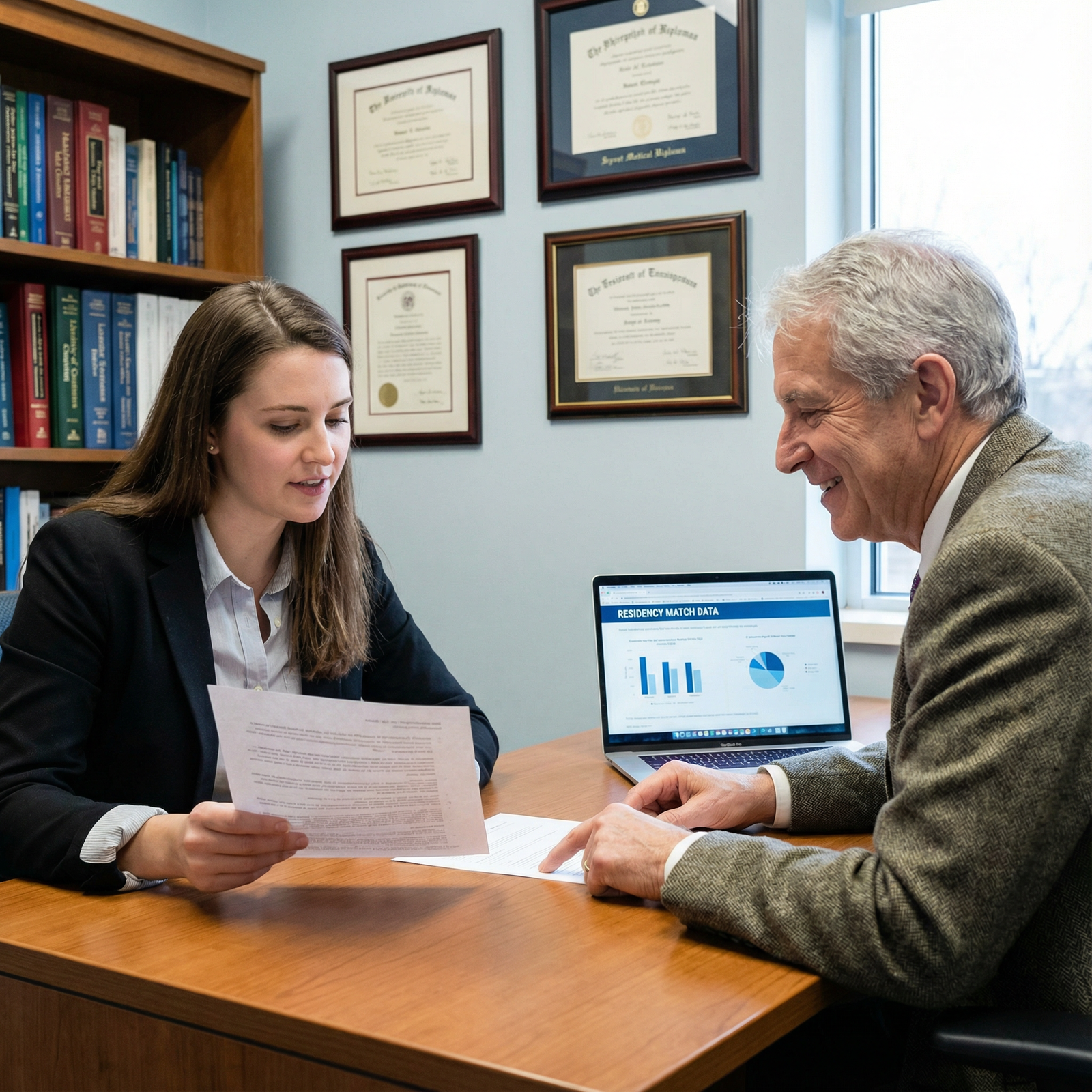
Before you can decide whether to reapply, pivot specialties, or pursue Healthcare Alternatives, you need a clear diagnosis of why you did not match.
Step 1: Structured Self-Reflection
Set aside time to reflect without judgment. Consider writing in a journal or creating a document where you honestly evaluate your Residency Application.
Key questions:
- Application strategy
- Which specialty or specialties did I apply to?
- How competitive are they nationally (fill rate, average Step scores, etc.)?
- Did I apply to a sufficient number and range of programs (safety, mid-range, reach)?
- Academic metrics
- Were my exam scores (USMLE/COMLEX), class rank, or clinical evaluations aligned with the typical ranges for my chosen specialty?
- Did I have any red flags—exam failures, professionalism concerns, leaves of absence?
- Experiences and fit
- Did my CV demonstrate continuity, commitment, and growth in my target specialty?
- Did I have strong specialty-specific clinical experiences and letters?
- Personal statement and narrative
- Did my personal statement clearly articulate why this specialty, why me, and what I bring to a program?
- Interview performance
- How many interviews did I receive?
- Did I feel prepared and authentic in interviews? Any that went poorly?
This isn’t about self-criticism; it’s about accurate data gathering to guide your next steps.
Step 2: Seek Candid, Expert Feedback
You cannot do this evaluation alone. You need external eyes.
Consider approaching:
- Your dean’s office or student affairs/residency advising team
- Specialty advisors or program directors who know you
- Faculty members who wrote your letters
- A trusted academic mentor or career coach experienced with unmatched applicants
Ask direct questions:
- “If you were on a selection committee, how would you view my application?”
- “What do you see as my top 2–3 strengths?”
- “What are the 2–3 biggest weaknesses or red flags?”
- “Do you believe I am competitive for this specialty if I improve X, Y, Z?”
Be prepared to hear difficult feedback. This is often the turning point in transforming your application or adjusting your Medical Careers strategy.
Step 3: Clarify Your Core Career Goals
Now, zoom out.
Ask yourself:
- Do I still want to practice clinical medicine, and in what capacity?
- Is my heart truly set on my original specialty, or am I open to others?
- Where do I see myself in 10 years—in direct patient care, research, education, administration, or another part of healthcare?
Examples of possible realizations:
- “I still deeply want to be a clinician; I’m open to switching from a highly competitive surgical specialty to internal medicine or family medicine.”
- “I love clinical work but am equally drawn to quality improvement and health systems. I could see a dual path with an MPH or health administration.”
- “My interests are more aligned with research and innovation than patient care. Maybe a research-focused career or industry role fits better.”
Your answers will shape whether you reapply, pivot specialties, or intentionally pursue Healthcare Alternatives.
Charting a New Path: Core Options After Going Unmatched
Once you’ve examined your situation, you can begin designing a concrete plan. Most unmatched applicants consider one or more of these pathways.
Option 1: Reapplying for Residency with a Stronger Profile
If you remain committed to a clinical Residency Match, your goal is to become a clearly stronger, more holistic candidate by the next cycle.
A. Decide Whether to Stay in the Same Specialty or Pivot
Consider changing specialties if:
- You applied to an ultra-competitive field (e.g., dermatology, plastics, neurosurgery) with metrics below average
- You received very few or no interviews
- Advisors recommend a less competitive specialty that fits your skills and values
Common pivot strategies:
- Competitive → broader specialty (e.g., orthopedic surgery → general surgery or prelim/transitional year; radiology → internal medicine)
- Primary care fields (FM/IM/Peds) if you value continuity, broad patient care, and are open geographically
- Psychiatry, PM&R, pathology, or other fields where fit and narrative can matter as much as metrics
B. Strengthen Core Components of Your Application
Clinical Experience
- Arrange additional rotations or externships—especially in your target specialty or related fields.
- For IMGs or those several years out, U.S. clinical experience can be critical.
- Aim for:
- Strong evaluations
- New mentors who can write updated, specific letters
- Evidence of reliability, teamwork, and clinical reasoning
Research and Scholarly Work
- Join ongoing projects in your target specialty or in outcomes/quality improvement.
- Seek roles where you can reasonably achieve:
- Abstracts
- Posters
- Publications
- Even one or two well-executed projects can strengthen your profile and show sustained engagement.
Letters of Recommendation (LORs)
- Prioritize recent, specialty-specific, and detailed letters.
- Ask letter writers:
- “Can you write me a strong letter for [specialty]?”
- Consider replacing generic or outdated letters with more compelling ones.
Personal Statement & Application Narrative
- Rewrite your personal statement to:
- Acknowledge growth since your last cycle (without oversharing or sounding defensive)
- Highlight concrete actions you’ve taken to address prior weaknesses
- Emphasize maturity, resilience, and clarity of purpose
- Ensure your CV and ERAS entries are polished, consistent, and focused on impact, not just tasks.
- Rewrite your personal statement to:
Interview Preparation
- Practice with:
- Faculty mentors
- Career services
- Peers or mock interview programs
- Focus on:
- Explaining your unmatched year confidently and factually
- Articulating why this specialty and why this program
- Showcasing professionalism, humility, and growth
- Practice with:
C. Refine Application Strategy and Program List
- Apply broadly: include academic, community, and smaller or more geographically diverse programs.
- Seek programs with a history of:
- Interviewing/recruiting IMGs or prior unmatched applicants
- Accepting applicants with nontraditional backgrounds
- Use data (FREIDA, program websites, match data) to calibrate expectations.
Option 2: Exploring Intentional Alternative Pathways in Healthcare
Not everyone will—or should—reapply indefinitely. Some discover that their interests and strengths align better with non-residency or non-clinical roles. These are legitimate, respected Medical Careers.
A. Research-Focused Careers
If you enjoy inquiry, critical thinking, and innovation:
- Consider positions such as:
- Clinical research coordinator
- Research fellow or postdoctoral associate
- Data analyst in clinical trials or health systems
- Benefits:
- Build a strong research portfolio that can support a future Residency Application
- Potential path toward a PhD, MPH, or MS in Clinical Research
- Roles exist in academic medical centers, industry, and government agencies
B. Medical Education and Teaching
You can leverage your content expertise even without residency:
- Roles to explore:
- Instructor for pre-med or nursing programs
- Basic sciences or clinical skills tutor
- Curriculum developer or simulation lab educator
- These can:
- Strengthen your ability to communicate and teach—highly valued in all Medical Careers
- Offer stable, fulfilling work while you reassess long-term goals
C. Non-Clinical Healthcare Roles and Industry Careers
Healthcare needs physicians and near-physicians far beyond the bedside. Consider:
- Healthcare consulting or management
- Work with hospitals, systems, or consulting firms on operations, quality, or strategy.
- Pharmaceuticals and biotech
- Roles in medical affairs, clinical operations, pharmacovigilance, or medical writing.
- Health tech and digital health
- Product development, clinical content, UX for clinicians, AI in health, telemedicine platforms.
- Public health and policy
- Work with NGOs, health departments, or advocacy organizations.
These Healthcare Alternatives can:
- Offer competitive salaries
- Use your medical knowledge daily
- Allow you to shape healthcare at systems and population levels
D. Further Education as a Strategic Step
Additional degrees can either support a clinical comeback or cement a new direction:
- MPH (Master of Public Health) – for those drawn to population health, global health, epidemiology, or policy.
- MBA (Master of Business Administration) – for those interested in leadership, administration, entrepreneurship, or health tech.
- PhD – for a research-focused career in academia or industry.
- MS in Health Informatics, Data Science, or Bioethics – for specialized niches in modern healthcare.
Before enrolling, ask:
- Will this degree strengthen my Residency Match prospects, or am I pivoting fully out of clinical practice?
- What is the true return on investment, given my existing debt and time commitments?
Option 3: Intentionally Taking a Gap Year (or More)
If you feel burned out, overwhelmed, or unsure, a purposeful pause can be invaluable—as long as you plan how to explain it later.
During a gap year, you might:
- Volunteer in healthcare or low-resource settings
- Free clinics, community health organizations, global health NGOs
- Demonstrate service, cultural competence, and resilience
- Work in a health-related job
- Scribe, medical assistant, research assistant, public health associate
- Engage in personal growth and skill development
- Improve language skills (e.g., Spanish for clinical use)
- Learn data analysis or programming relevant to health (R, Python)
- Take courses in leadership, communication, or quality improvement
The key is to:
- Leave no large, unexplained gap on your CV
- Be ready to articulate what you learned and how it makes you a better applicant and professional
Getting Expert Guidance and Building a Support Network
You do not have to navigate this alone. In fact, you shouldn’t.
Consider:
- Formal advisors: Your medical school’s career office, residency advisors, or dean’s office.
- Specialty-specific mentors: Faculty in your area of interest who understand the current market.
- Professional career coaches: Many specialize in unmatched or reapplicant strategy.
- Peer support: Classmates or alumni who also went unmatched at some point and matched later.
When you approach potential mentors:
- Be concise: share a brief CV and a one-page summary of your situation.
- Ask specific questions (e.g., “Do you recommend I reapply in X or pivot to Y?”).
- Follow through on their advice so they see you as serious and reliable.
These relationships can become powerful advocates for your next Residency Application or your transition to Healthcare Alternatives.
Creating a Realistic 12+ Month Timeline
A structured plan is one of the best ways to turn anxiety into action. Tailor these timelines to your situation, but use them as a guide.
Immediate Actions (0–3 Months)
- Emotional and mental reset
- Acknowledge your feelings; if needed, seek counseling or support.
- Gather data
- Review your ERAS application, interview list, and feedback.
- Meet with at least 2–3 advisors/mentors.
- Decide on your primary path
- Reapply (same specialty vs. new specialty)?
- Shift towards research, education, or non-clinical Medical Careers?
- Begin application upgrades
- Update CV.
- Start revising your personal statement with the new narrative.
- Identify clinical, research, or work opportunities to fill the upcoming year.
Mid-Term Actions (3–9 Months)
- Engage fully in your chosen activities
- Clinical work, research, teaching, public health, or industry roles.
- Aim for tangible outputs: letters, publications, leadership roles, measurable impact.
- Prepare for the next cycle (if reapplying)
- Draft ERAS entries early.
- Request updated letters of recommendation.
- Practice interview skills and be ready to address your unmatched year confidently.
- Continue Career Guidance exploration
- Attend specialty or career webinars, conferences, and networking events.
- Talk to people actively working in your target fields.
Long-Term Actions (9–12+ Months)
- Application and Match cycle (if reapplying)
- Submit ERAS early and completely.
- Respond promptly to program communications.
- Prepare for interviews (October–January) and rank list decisions.
- If pivoting away from residency
- Solidify your role or educational program (MPH, PhD, MBA, etc.).
- Build a long-term plan: 3–5 year goals, financial planning, and professional development.
- Reassess periodically
- Every few months, ask: “Does my current path still align with who I am and what I want?”

Frequently Asked Questions About Being Unmatched and Next Steps
Q1: Can I apply to a different specialty after going unmatched?
Yes. Many applicants successfully switch specialties after going unmatched. To do this effectively:
- Make sure you meet the core requirements for the new specialty (exam scores, clinical exposure).
- Obtain specialty-specific letters from rotations or observerships in that field.
- Explain your specialty change clearly and positively in your personal statement and interviews (focus on genuine interest and fit, not “settling”).
Switching to a less competitive specialty does not mean you’re “giving up”—it can be a mature, strategic alignment of your skills and values with the Residency Match reality.
Q2: What are the most common and realistic paths for unmatched applicants?
Common paths include:
- Reapplying for residency with a stronger application (more clinical experience, improved research profile, new letters, refined specialty choice).
- Pursuing research (clinical or basic science) with the goal of reapplying or transitioning to a research-centric career.
- Teaching and medical education roles that leverage your training and communication skills.
- Non-clinical Medical Careers such as healthcare consulting, pharmaceutical or biotech roles, medical writing, health tech, or public health.
- Further education (MPH, MBA, MS, or PhD) to pivot or enhance long-term opportunities.
Each path has trade-offs; what’s “best” depends on your long-term goals and personal definition of success.
Q3: How should I choose a mentor or advisor to help me through this?
Look for mentors who:
- Understand the Residency Match process and/or alternative Healthcare Careers.
- Have worked with unmatched or nontraditional applicants before.
- Are willing to give honest, specific, and sometimes tough feedback.
- Show a track record of supporting learners, not just high achievers.
Good starting points:
- Your school’s dean’s office or residency advising team
- Faculty in your original or potential new specialty
- Alumni who went unmatched and later matched or transitioned successfully
Before meetings, prepare:
- A concise CV
- A one-paragraph summary of your situation and goals
- Specific questions you want answered
Q4: Can I apply for residency training internationally if I’m unmatched in the U.S.?
Yes, some graduates explore international training options, such as:
- Residency or specialty training programs in Canada, the UK, Australia, or other countries (often requiring additional exams or licensing steps).
- Return-to-home-country programs for IMGs who studied abroad.
However:
- Requirements vary widely by country (e.g., PLAB for the UK, MCC exams for Canada).
- Visa, language, and long-term career impact must be carefully considered.
- If your ultimate goal is U.S. practice, international pathways may complicate future U.S. licensing and board certification.
Thorough research and guidance from international graduates who have done this is essential.
Q5: Is it realistically possible to improve my application in just one year?
Yes, it is absolutely possible—and many applicants do. Within a year, you can:
- Add meaningful clinical experiences with strong evaluations and new mentors.
- Complete research projects, submit abstracts or manuscripts, or present at conferences.
- Strengthen your narrative, personal statement, and interview skills.
- Clarify and potentially adjust your specialty choice to better match your profile.
Programs often look favorably on candidates who can clearly show:
- What they learned from their unmatched experience
- The concrete steps they took to grow
- Their resilience, professionalism, and commitment to patient care
Not matching is painful, but it does not define your potential or your future in medicine and healthcare. With honest self-assessment, targeted improvements, and openness to both clinical and non-clinical paths, you can chart a future that is both successful and personally fulfilling.
Your journey may look different than you expected—but it can still lead to a meaningful, impactful role in healthcare.