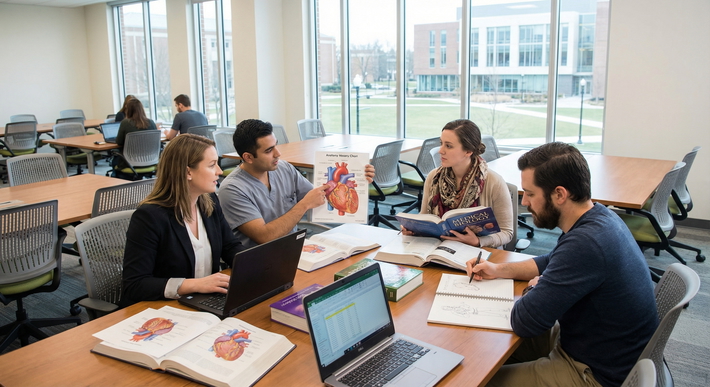
Most post-bacc premeds are doing clinical exposure completely backwards—and paying for it with their GPA, their mental health, or both.
You do not need maximum hours. You need maximum signal with minimum burnout.
This article will show you exactly how to build high-yield, sustainable clinical exposure during a post-bacc program without destroying your grades, sleep, or sanity.
Step 1: Redefine What “Enough” Clinical Exposure Actually Is
Before you cram your schedule with three volunteer roles and two jobs, you need a target.
What medical schools actually want
They are not counting hours like a punch clock. They are looking for:
- Consistent, longitudinal involvement
- Direct patient contact (not just stocking blankets)
- Evidence that you understand what physicians actually do
- Reflection and growth over time
- Reliability and professionalism (showing up, not flaking)
Reasonable target ranges for a post-bacc:
- Total clinical hours by application:
- Competitive range: 150–400 hours
- Strong with other strengths (research, leadership, outstanding GPA): 100–150 hours
- Shadowing hours:
- Baseline: 20–40 hours across 2–3 specialties
- Strong: 50–80 hours, with at least one longitudinal experience
If you already have clinical hours from before your post-bacc, you do not need to restart from zero. Your post-bacc clinical work should show continuity and maturity, not sheer volume.
Set a realistic hour cap
If you are full-time post-bacc (12–16 credits of mostly science):
- Max sustainable clinical commitment during semesters:
- 6–10 hours per week of direct clinical work
- Plus one short shadowing block every 4–6 weeks
- During lighter semesters or summer:
- 12–20 hours per week is possible without implosion
If you are working while doing post-bacc coursework, you must be stricter. In that case:
- Aim for 4–6 hours per week clinical, plus short, intense bursts of shadowing on breaks.
Write this down as a hard limit. If an opportunity requires more, treat it as a negotiation, not a foregone yes.
Step 2: Choose Clinical Roles That Do Heavy Lifting For You
Not all clinical experiences are created equal. Some give you deep patient contact, teach you how a hospital breathes, and open doors for shadowing. Others just drain time.
Your job is to pick roles with maximum yield per hour.

High-yield roles for post-bacc students
Aim for roles that give you direct patient interaction, predictable scheduling, and opportunities to observe physicians.
Hospital Volunteer – Direct Patient Care Units
- Look for:
- ED (Emergency Department)
- Inpatient medicine floors
- Surgical floor
- Oncology units
- What you actually do:
- Transport patients
- Bring supplies
- Sit and talk with patients
- Help with non-medical comfort tasks
- Why it is high-yield:
- Constant exposure to clinical workflow
- Conversations with nurses, techs, sometimes attendings or residents
- Flexible shifts (often 3–4 hours) that you can stack efficiently
- Look for:
Medical Assistant (MA) – For Career-Changers With More Time
- Best in:
- Primary care
- Urgent care
- Specialty outpatient clinics (cardiology, GI, ortho)
- Typical duties:
- Rooming patients, vitals
- Basic procedures (EKG, point-of-care tests)
- EMR documentation under supervision
- Why it is high-yield:
- Continuous direct patient contact
- Deep understanding of outpatient medicine
- Excellent letters of recommendation potential
- Caution:
- Time-intensive (often 16–30 hours/week)
- Works best if you are on a lighter academic load or in glide year
- If you are full-time in tough sciences, limit this unless you absolutely must work for income
- Best in:
Scribe – ED or Outpatient
- Settings:
- Emergency Departments
- Hospitalist services
- Outpatient clinics
- Pros:
- Sit next to physicians as they see patients
- See clinical reasoning in real time
- Learn documentation and medical language
- Cons:
- Schedule often includes nights/weekends
- Can interfere with consistent sleep and study blocks
- Best used:
- During summer
- During glide/gap year
- Or as a 1–2 shift/week commitment if you can protect sleep
- Settings:
Hospice Volunteer
- Focus:
- Long, meaningful conversations
- End-of-life care exposure
- Why it matters:
- Forces you to confront mortality, suffering, family dynamics
- Very powerful material for essays and interviews
- Scheduling:
- Usually highly flexible
- Great complement to more routine hospital work
- Focus:
Clinic Volunteer / Free Clinic Staff
- Often includes:
- Intake
- Translating (if you speak another language)
- Patient navigation
- Strengths:
- Clear service to underserved communities
- High continuity with staff and patients
- Strong mission fit for many medical schools
- Often includes:
Low-yield roles to limit or restructure
These are not useless, but they should not dominate your schedule during a rigorous post-bacc:
- Purely administrative roles with minimal patient contact
- “Front desk only” volunteering
- Projects that are 80% data-entry and 20% clinical exposure
If you must do these (e.g., it is the only role available at your local hospital), pair them with:
- Occasional shadowing
- A more patient-facing opportunity during breaks
Step 3: Design a Weekly Schedule That Protects Your Brain
Your schedule should be built with GPA and MCAT performance as non-negotiable anchors. Clinical exposure is vital, but it does not rescue a 2.9 post-bacc GPA.
Build from your non-negotiables
Start with:
- Class times
- Mandatory labs
- Commute time
- Sleep: aim for 7 hours minimum on average
Then layer in:
- Daily study blocks
- Clinical shifts
Concrete example: Full-time post-bacc, 14 credits
Let us say you have:
- Organic Chemistry + lab
- Physics + lab
- Upper-level biology
You can build a realistic week like this:
Mon/Wed/Fri
- 8:00–12:00: Class / lab
- 12:30–2:00: Lunch + light review
- 2:00–4:30: Deep study (problem sets, Anki, reading)
- 4:30–5:30: Exercise / commute / reset
- Evening: Free or light review
Tue/Thu
- 8:00–11:00: Class / lab
- 11:30–2:30: Clinical shift (hospital volunteer or MA/scribe in half day)
- 3:00–5:30: Deep study block
- Evening: Light review, admin tasks
Sat
- 9:00–12:00: Weekly review, exams prep
- Afternoon: Optional shadowing every 3–4 weeks or completely off
Sun
- Off or light review only
That schedule gives you:
- 6 hours/week clinical during semester
- 20–25 hours/week serious study time
- Protected evenings and one full or mostly full rest day
If you try to add a second 4–5 hour clinical shift during the week, watch what is sacrificed: usually sleep, study depth, or recovery time. That is where burnout starts.
The 2–1 rule for sustainable weeks
Use the 2–1 rule during hard semesters:
- For every 2 days with intense clinical or long class-lab days
- Plan 1 lighter day where:
- No clinical work
- Shorter total academic load
- Time for errands, life admin, and mental recovery
This keeps you from stringing together 5 consecutive high-intensity days, which is a reliable path to exhaustion mid-semester.
Step 4: Use “Clinical Sprints” Instead of Constant Pressure
Here is the fix when you feel you must maximize hours but your semester is already full:
Stop thinking in constant weekly quotas. Start thinking in time-bound clinical sprints.
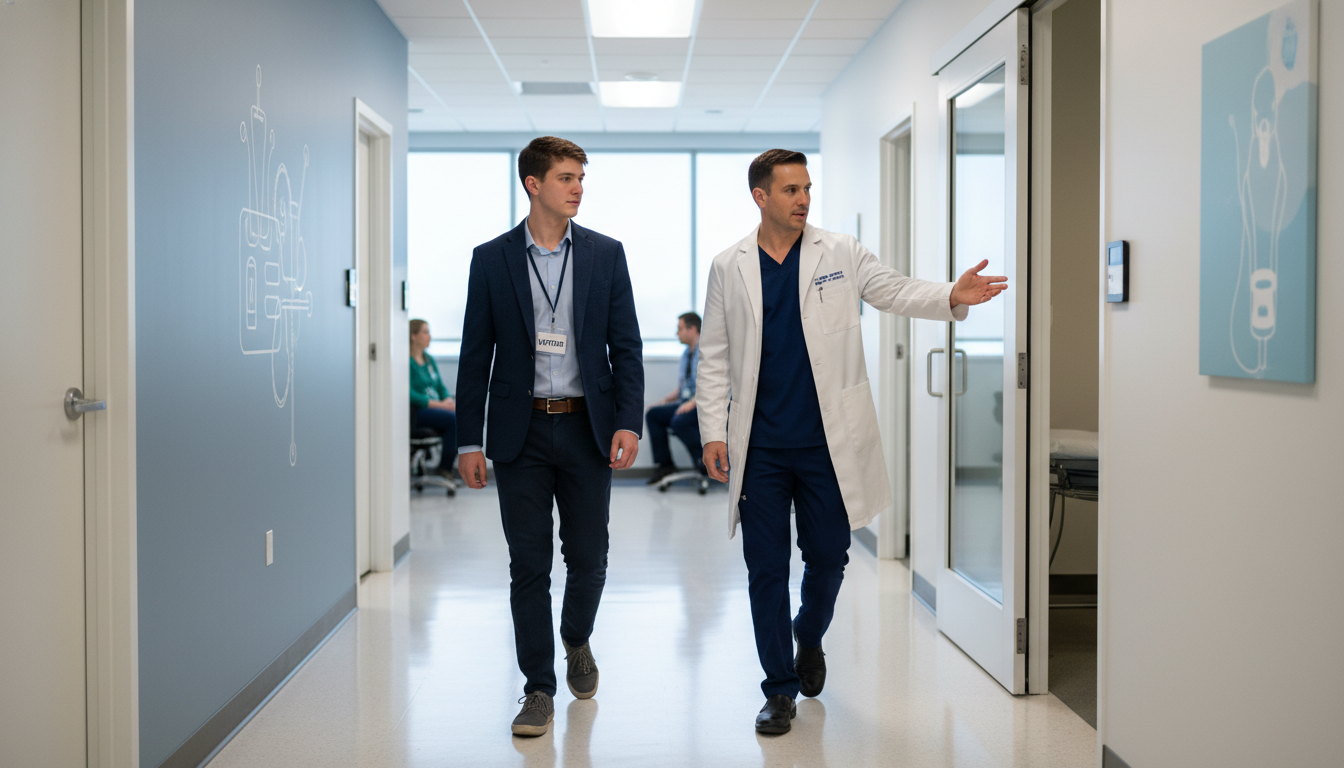
What a clinical sprint looks like
A clinical sprint is a short, deliberate period where you temporarily increase clinical exposure, buffered by lighter academic demands.
Use them:
- During winter break
- Spring break
- Early summer
- Post-exam weeks
Examples:
Winter break shadowing sprint
- 2 weeks, 3 days/week, 6 hours/day
- Total: ~36 hours shadowing
- Structure:
- M/W/F: Shadow internal medicine physician
- T/Th: Off, reflect, and briefly write up what you learned
Summer combined sprint
- 8–10 weeks, 16 hours/week as a scribe or MA
- Total: 130–160 hours
- Light or no classes
- You gain a huge clinical chunk without sacrificing GPA
Post-exam micro-sprint
- After a major exam (orgo midterm, for example)
- 1–2 days of shadowing before diving into next exam cycle
- Helps you remember why you are doing this
These sprints let you compress a large portion of your required hours into times when you are less vulnerable to burnout.
Step 5: Build Shadowing Intelligently, Not Randomly
Shadowing is uniquely valuable but often terribly structured. Following a physician silently for 8 hours where you see three consults and a lot of computer time is not high-yield.
You can fix this by planning and structuring your shadowing like a mini-course.
Diversify across three axes
Aim to cover:
Setting:
- Outpatient clinic
- Inpatient (hospitalist, ICU, or inpatient consults)
- Emergency Department or urgent care
Specialty type:
- Primary care (FM, IM, pediatrics)
- Procedural (surgery, GI, cardiology cath lab)
- Cognitive (neurology, rheumatology, psychiatry)
Practice model:
- Academic hospital vs community hospital
- Private practice vs large group
You do not need dozens of physicians. You need 3–5 physicians who let you come back enough to see patterns.
Structure your shadowing days
Instead of just showing up, ask in advance if you can:
- Sit in on rounds or team meetings
- Observe family conversations (with patient consent)
- Debrief for 10 minutes at the end of the day with 2–3 questions:
- “What part of your job do premeds most often misunderstand?”
- “What would you change about how medicine is practiced if you could?”
- “What kind of student thrives in this specialty?”
Take 10 minutes after each shadowing day to write:
- 3 specific patients or situations you observed
- 1 thing that surprised you
- 1 question you want to explore next time
This transforms shadowing from “I followed Dr. X” into material for strong personal statements and interview answers.
Step 6: Protect Yourself From Burnout With Explicit Rules
Burnout during a post-bacc is not just feeling tired. Common signs:
- You dread both class and clinical
- Your performance drops in both areas
- You feel detached from patients or cynical about medicine
- Sleep is disrupted or you rely on caffeine to function
You do not wait to “hit bottom” before adjusting. You build non-negotiable rules in advance.

Rule 1: The GPA safeguard
Decide your red-line GPA for your post-bacc (e.g., 3.6 or 3.7+ target, 3.4 absolute floor).
Protocol:
- If at midterm your projected GPA drops near your red-line:
- Immediately reduce clinical hours by 25–50% for the rest of the term
- Inform your supervisor:
- “I am in the middle of heavy science coursework and need to temporarily reduce my shifts to protect my grades. I can commit to X shift(s) weekly through the end of the semester and resume normal hours after finals.”
You protect your clinical reputation by being proactive and honest, rather than quietly missing shifts or underperforming.
Rule 2: The sleep minimum
Pick a hard floor for sleep: no averaging below 7 hours across the week.
- If you have:
- Two nights < 6 hours in a row due to exams and clinical work
- Then:
- The next clinical shift gets canceled and replaced with sleep and focused study
You cannot build a medical career on chronic sleep debt. Habits you establish now will follow you into residency.
Rule 3: The “no-three” rule
Never allow all three of these to shrink simultaneously for more than 7–10 days:
- Sleep
- Exercise/movement
- Social connection (friends, partner, family)
If you notice you have compromised all three for >1 week:
- Take 1–2 clinical shifts off in the next two weeks
- Use that time specifically for:
- Sleep
- A long walk or workout
- A non-premed social interaction
This is not indulgence. It is preventive maintenance.
Step 7: Turn Each Hour Into a Compelling Story
Raw hours alone do not impress admissions committees. Your ability to process and articulate what you experienced does.
You should be mining your clinical exposure for:
- Insight into the reality of medicine
- Personal growth, not just observation
- Concrete examples that show you understand challenges
Keep a lean clinical log
Once a week (15–20 minutes), log:
- Where you worked or shadowed
- Approximate hours
- 1–2 patients or situations (no identifying info)
- 1 thing that challenged you
- 1 thing that reinforced your desire for medicine—or made you question it
Over time, this produces:
- Raw material for:
- Work & Activities section of AMCAS/AACOMAS
- Secondaries about clinical experiences
- Interview stories
- Early warning if you notice a pattern like:
- “I feel emotionally numb every shift”
- “I am constantly frustrated with how little time doctors have with patients”
If you catch these patterns early, you can:
- Seek roles that better match your values
- Adjust how many emotionally heavy shifts (e.g., ED, oncology, hospice) you stack in a week
Step 8: Adapt Across Different Types of Post-Bacc Students
Not every post-bacc student starts from the same place. You should adjust strategy based on your background.
If you are a career-changer with NO prior clinical exposure
Priority order:
- Get into a direct patient contact role within 2–3 months of starting post-bacc:
- Hospital volunteer on patient floors
- MA if you can manage work + school
- Start shadowing after:
- You have 20–30 hours of basic clinical experience
- You understand “how a clinic or hospital day works” so shadowing makes sense
- Use breaks for:
- Concentrated shadowing sprints
- Possibly a part-time scribe or MA role in summer
Do not try to reach 500+ hours during your post-bacc. You need a convincing narrative, not a CV arms race.
If you are a reinvention student with prior healthcare experience
Example: CNA, EMT, RN, physical therapist, dental hygienist.
Your challenges are different:
- You may already have hundreds or thousands of clinical hours
- You still need:
- Some degree of shadowing of physicians
- Exposure to different settings than your original field
- You also must protect your GPA ruthlessly as your main reinvention tool
Strategy:
- Use minimal but targeted new clinical work:
- 2–4 hours/week during semesters
- Extra shadowing during breaks
- Focus on:
- Understanding physician workflow from the MD/DO lens
- Learning how your previous role connects and differs
- In your logs and later essays:
- Highlight how your prior healthcare experience matured your perspective
- Show that you understand both the pressures and rewards of being a physician
Step 9: Know When (and How) to Say No
Overcommitting is not a character flaw. It is a predictable trap in high-achieving premeds.
You need specific scripts for saying no without burning bridges.
When you should say no
- You are asked to:
- Take an extra weekly shift right before exams
- Join a new clinical program mid-semester
- Lead a new project or committee at your volunteer site
- Your current situation:
- GPA at risk
- Sleep < 7 hours regularly
- MCAT prep about to ramp up
In these cases, you should default to no, with gratitude and clarity.
Sample scripts
- Extra shift request
“Thank you for thinking of me. Right now I am at my maximum sustainable commitment while balancing a very heavy science course load. I would rather continue doing a good job with my current shift than stretch too thin and risk having to step back entirely.”
- Invited to join a new clinical project
“I am very interested in this and would like to stay informed. At the moment my priority has to be maintaining my academic performance, so I cannot take on a new standing commitment this semester. If you are looking for help during semester breaks or on a short-term basis, I would be glad to revisit then.”
These responses protect your reputation and your bandwidth.
Step 10: Align Clinical Exposure With MCAT Timing
If your post-bacc plan includes the MCAT, you must treat MCAT prep like another demanding course.
Basic rule:
- During dedicated MCAT study (8–12 weeks):
- Clinical work: 0–4 hours/week, preferably in one short shift
- Most clinical “building” should be done before or after this window
Example timeline:
- Year 1 post-bacc:
- Build to 4–8 hours/week clinical during semesters
- Add shadowing sprints in winter and summer
- Summer between Year 1 and Year 2:
- Heavy clinical + light MCAT prep, or
- Heavy MCAT prep + light clinical—not both heavy simultaneously
- Year 2 post-bacc:
- MCAT in spring
- Reduce clinical 1–2 months before exam
- After MCAT: ramp clinical back up for application season
Think of the MCAT as a temporary reallocation of effort, not a permanent stop on clinical work.
Your Next Step Today
Do not wait for burnout to ‘confirm’ that you have overcommitted.
Open your calendar for the current or upcoming semester and do three things:
- Block out all class, lab, and commute times.
- Add non-negotiable sleep (7 hours/night) and 2–3 weekly deep study blocks.
- In the remaining time, cap clinical work at 6–10 hours/week during heavy terms and decide exactly where those shifts will go.
Once that skeleton is in place, you can start looking for high-yield roles that truly fit—without gambling your GPA, your health, or your motivation to practice medicine.