
The fastest way to lose control of a pre‑match offer is to let mentors find out by accident. Or too late. Or with no clear ask from you.
You are not just “sharing an update.” You are managing information, leverage, and egos. If you loop mentors in the wrong way, one poorly timed email or phone call can box you into a commitment you are not ready to make.
Let me show you how to do this properly.
Step 1: Get Clear On What You Actually Want From Each Mentor
Before you tell anyone about a pre‑match offer, you need a plan. Not a vibe. A plan.
For each mentor, you must answer three questions:
- What is their role in my application ecosystem?
- What exactly do I want from them regarding this offer?
- What do I not want them to do?
Different mentors = different risks and benefits. Treat them differently.
The four main mentor types
| Mentor Type | Best Use |
|---|---|
| Home program champion | Political cover / internal intel |
| Specialty advisor | Strategy / leverage calibration |
| Letter writer | Consistency / advocacy tuning |
| Friendly senior resident | Real talk / threat detection |
Home program champion (e.g., PD, APD, clerkship director)
Use for:
- Understanding how this offer will be perceived locally
- Keeping from burning your home program by accident
- Quiet signals they might send on your behalf
Big risk: They start “protecting” you by nudging you to commit early.
Specialty advisor (someone senior in your field, not necessarily at that program)
Use for:
- “Is this actually a good offer?”
- “Do I have leverage to wait?”
- “How would other PDs see this?”
Big risk: They oversell their influence or overestimate your market value.
Letter writer
Use for:
- Aligning your story (what they say vs what you are doing)
- Extra advocacy when it helps
Big risk: They casually mention your offer to someone you did not want to know yet.
Friendly senior resident / recent grad
Use for:
- How pre‑match offers actually play out in your specialty
- Reality check on programs’ reputations and games
Big risk: Gossip. Stuff spreads faster at resident level than you think.
Before you talk to anyone, write this out quickly (yes, actually write):
- Mentor: Dr. Patel (home IM PD)
- I want: Political cover if I turn down a mid‑tier pre‑match to wait for better
- I do not want: Them calling the offering PD and saying “She’s very interested” unless I ask
Once you know that, you will not babble on the phone and accidentally hand away control.
Step 2: Decide When To Loop People In (Timing Rules)
There are three main timing points:
- Offer is rumored / hinted – “We really like you” but no formal language
- Soft pre‑match feeler – An email/phone: “If we offered you a position, would you accept?”
- Formal pre‑match offer – Clear, explicit: “We are offering you a position outside the Match”
You do not escalate your mentor involvement the same way at each point.
Scenario 1: Vague enthusiasm only
If all you have is “we really liked you” in an interview, do not make this a big issue for mentors. At most:
- Mention to one advisor if you are already talking:
“X program seemed very enthusiastic, but no talk of pre‑match yet. I’ll let you know if that changes.”
Nothing more. Do not burn social capital on ghosts.
Scenario 2: Soft pre‑match feeler
This is where most people screw up. The PD says some version of:
“If we were to offer you a position outside the Match, would you be willing to accept?”
You must not answer that on the call. Your job is to slow the process down and gather intel.
Your script:
“Thank you very much, I am honored by your consideration. This is an important decision, and I would like a short amount of time to think it through carefully and speak with my mentors. Could I get back to you by [48–72 hours]?”
Then—then—you loop in mentors. Selectively.
Who to tell at this stage:
- 1 home program / specialty advisor you trust with strategy
- Maybe 1 resident mentor for real‑world perspective
Who not to tell yet:
- Broad email to all letter writers
- Anyone who gossips
- Other programs, obviously
Scenario 3: Formal written or clearly verbal offer
Once you have a clear offer (preferrably in writing), you should:
- Notify key strategy mentors within 24–48 hours
- Set a firm response window with the program if they have not already given one
- Only then consider what, if anything, to share beyond that small circle
Step 3: Use Tight Scripts So You Do Not Lose Control
You cannot improvise this in the middle of a busy day. You will say too much.
You need three core scripts:
- How you tell a mentor about the offer
- How you set boundaries on what they do with the information
- How you follow up after they help
Script 1: How to loop a mentor in
Adapt this to phone or email. Here is an email version for a senior mentor:
Subject: Quick advice request re: potential pre‑match offer
Dear Dr. Nguyen,
I wanted to briefly update you and ask for your guidance. I interviewed at [Program] on [date], and yesterday the program director reached out to ask whether I would be open to a pre‑match offer if they extended one.
I have not committed to anything and told them I would like a couple of days to think and speak with my mentors.
My questions:
- How would you view [Program] in the context of my overall application and goals (academic vs community, fellowship prospects, etc.)?
- From your perspective, would accepting a pre‑match there be a strong decision, or would you recommend waiting for the Match?
- Is there anything you would not do in my position?
I would greatly appreciate a brief call if you have 10–15 minutes in the next day or two.
Best regards,
[Your name, AAMC ID or ERAS ID]
Phone version opening:
“I wanted to get your advice on a specific situation. [Program] reached out about a potential pre‑match offer. I told them I need a couple of days to think and speak with mentors. I value your perspective on whether this is something I should seriously consider, given my goals.”
Notice what you didn’t say:
- You did not say you are “very likely” to take it.
- You did not ask them to call the PD. Yet.
- You did not signal desperation.
Script 2: How to set boundaries explicitly
Here is the part almost no one does, and it costs them.
Before the mentor races off to “fix” things, you add:
“One thing I want to be clear about: I would appreciate your guidance and perspective, but I prefer that no one reach out to [Program] on my behalf at this stage. I want to make an informed decision first, then, if we both think outreach makes sense, I will ask you directly.”
or, if you do want outreach, but only in a controlled way:
“If you feel it is appropriate to touch base with [Program], I would be grateful. I just ask that we agree on the message first so it aligns with what I am communicating to them.”
You can say this to a PD. Mature applicants set boundaries like this. It actually makes you look more intentional, not less grateful.
Script 3: How to decline the “you should just take it” pressure
Many mentors default to: “Take it. A bird in the hand.” Sometimes that is right. Sometimes it is lazy thinking.
You do not have to obey. You do have to stay respectful.
“I really appreciate your advice. My instinct is to take 24–48 hours to weigh it against my longer‑term goals and the rest of this interview season. If, after that, it still looks like the best path, I will feel more confident committing.”
That is it. You have heard them, you are not fighting, but you are not handing over the steering wheel.
Step 4: Control What They Say To Programs (If They Contact Them)
The highest‑risk moment is not telling your mentor. It is what they then go say behind closed doors.
So if you do want them to reach out, you must give them a concrete, short message.
What you want mentors to say (if they call the offering program)
Something like:
“I understand [Applicant] is under consideration for a pre‑match offer. She is genuinely interested in your program and speaks very highly of you. She is also in the middle of interviews and wants to make a thoughtful decision. I told her to be transparent with you about her interest level and timeline.”
That keeps:
- Your interest clear
- Your autonomy intact
- No fake “she will absolutely sign” promises
What you do not want them saying:
- “She will definitely accept if you offer.”
- “She is shutting down all other interviews.”
- “She just needs a formal offer; she is already mentally committed.”
If a mentor tends to overpromise, you deal with it directly:
“In terms of what is shared, I want to be careful not to signal that I am definitively committed until I have had time to decide. I am very interested, but I want to keep my communication honest and consistent. Could we frame it as ‘strong interest, wants to decide thoughtfully’ rather than ‘will definitely accept’?”
They might push back. Most will respect the request.
Step 5: Use Mentors To Judge Whether The Offer Is Actually Good
You looping mentors in has one main tactical purpose: calibrating the real quality of the offer and your leverage.
Your questions should be specific and reality‑based, not “What do you think?”
Ask things like:
- “Where would you rank this program academically in our specialty?”
- “How do fellowship directors view graduates from [Program]?”
- “Does [Program] have a history of using pre‑match offers aggressively on candidates who might match higher?”
- “Based on my Step scores, letters, and interviews so far, what tier do you realistically think I could match at?”
You want to know if this is:
- A fantastic anchor program you would be happy to commit to
- A reasonable safety you might later regret locking into
- A borderline decision where waiting carries real risk
And yes, you ask for their actual opinion:
“If I were your own resident/child/sibling, would you tell me to take this or wait?”
You do not need consensus. You need a range. If three experienced people all say, “I would take it if I were you,” pay attention.
Step 6: Keep Your Story Synchronized Across Mentors
This is underrated. Different mentors, different versions of what you told them, equals trouble.
If you mention a pre‑match offer to more than one mentor, you must keep the core facts consistent:
- When the offer was made
- Whether it was a formal offer or exploratory
- What you told the program about your interest/timeline
- What your real goal is (e.g., academic cardiology vs community hospitalist)
Otherwise, a PD hears:
- From Mentor A: “She is thinking of taking a pre‑match at [mid‑tier program].”
- From Mentor B: “She is waiting for top‑tier academic places; the pre‑match is just a backup.”
You look flaky or dishonest.
Fast fix: maintain a 5–10 line “offer log” for yourself. Literally:
- 1/10 – [Program A], PD emailed, asked if I would consider pre‑match
- 1/11 – Called PD, said “very interested, need 2–3 days”
- 1/11 – Told Dr. Patel (home PD): asked for strategic advice, no outreach requested
- 1/12 – Told Dr. Nguyen (cardiology mentor): ok for them to speak informally with Program A PD, message = “strong interest, deciding thoughtfully”
Before each new mentor conversation, glance at your log. Prevents contradictions.
Step 7: Decide What To Tell Mentors If You Decline The Pre‑Match
Declining a pre‑match is not a betrayal of your mentors. But some will take it personally if they advocated for you.
You pre‑empt drama by controlling the explanation.
If you decline, your closing the loop email looks like:
Subject: Update on pre‑match discussion with [Program]
Dear Dr. [Mentor],
I wanted to update you and thank you again for your guidance regarding [Program]. After careful consideration, I decided not to accept a pre‑match offer there. My main reasons were [brief, honest rationale: e.g., strong preference for an academic environment with X fellowship, desire to keep options open given ongoing interviews at Y‑type programs].
I am grateful for your advice and feel better about the decision having thought it through with your input. I will keep you posted as Match season progresses.
Best regards,
[Your name]
If they pushed strongly for you to take it and you went the other way, you add:
“I know this is slightly different from your initial recommendation, but your perspective helped me clarify what I am prioritizing in residency.”
That is how you say “I heard you, but I am driving” without picking a fight.
Step 8: How To Use One Offer As Leverage Without Lying
Yes, sometimes a pre‑match can help you with other programs. No, you should not run around saying, “I have 5 offers” when you have one soft email.
Done properly, this is surgical.
If you are trying to speed up another program
Say you have a genuine top choice that does not pre‑match and a decent pre‑match on the table.
You can tell a trusted mentor at your top choice:
“I want to be transparent with you: I have been approached about a potential pre‑match offer at another program. I am genuinely more interested in [Your Program] given [reasons]. I am not asking for any special treatment, but if you think there is any information you can share about my standing or likelihood of matching there, it would help me make a responsible decision about the pre‑match timeline.”
You are not threatening. You are asking for enough signal to make an adult decision.
What that mentor can say internally (if they choose):
“She is competitive and strongly prefers us. She does have a pre‑match feeler elsewhere. If we are serious, we should at least make sure she is correctly ranked rather than assuming she will be available.”
That is fine. What you must avoid: asking them to “promise” a match. They will not, and if they do, you should not trust it.
Step 9: Use Residents Strategically, Not As Your Therapy Group
Residents and recent grads are valuable—if you treat them as strategic informants, not emotional dumping grounds.
Ask them targeted questions:
- “Have you seen [Program] use pre‑match offers before? How did it work out for those residents?”
- “Do people who turn down pre‑match offers usually end up regretting it in our field?”
- “What is the worst‑case scenario you have personally seen with pre‑match decisions?”
What you do not do:
- Tell five different residents at five different programs that you are “probably going to pre‑match at X.” This will leak.
- Vent for 40 minutes about being overwhelmed. That is for your non‑medical friends or a therapist.
Residents are still part of the whisper network that PDs live in. Treat them as such.
Step 10: Keep The Power Dynamic Straight In Your Head
You are not a passive object to be chosen. You are deciding who gets three to seven years of your life.
Mentors can forget that. PDs definitely do.
Here is the reality:
- Pre‑match offers are often about programs being afraid to lose you
- Mentors sometimes overstep because they see you as a reflection of their own influence
- The Match algorithm protects you more than it protects programs
So remind yourself before each conversation:
“I am asking for advice, not permission.”
Then act accordingly:
- You listen carefully
- You ask specifics
- You set boundaries
- You make the final call
If a mentor tries to bulldoze:
“I respect how much experience you have in this, and I am grateful for your guidance. At the end of the day I need to make a decision I can stand behind, because I will be the one in that program for three years. Let me sit with what we discussed and I will move forward accordingly.”
That line works. I have seen PDs back off instantly when a student says this calmly.
A Quick Visual: Your Decision Sequence

| Step | Description |
|---|---|
| Step 1 | Program hints or offers pre match |
| Step 2 | Ask for 48-72 hours |
| Step 3 | Clarify goals and leverage |
| Step 4 | Select 1-3 key mentors |
| Step 5 | Share consistent facts and ask targeted questions |
| Step 6 | Decide and respond to program directly |
| Step 7 | Give mentor specific message and boundaries |
| Step 8 | Update mentors and document decision |
| Step 9 | Formal offer? |
| Step 10 | Want mentor outreach to program? |
How To Know You Handled It Well
You will not know if you chose the perfect program until years later. But you will know if you handled the process well if:
- No mentor says, “Wait, I did not know about that,” in an accusatory tone.
- No program hears three different stories about your intentions.
- You can write down, in one paragraph, why you accepted or declined—and it makes sense.
- You do not wake up at 3 a.m. thinking, “I let other people railroad me.”
If you hit those marks, you did your job.
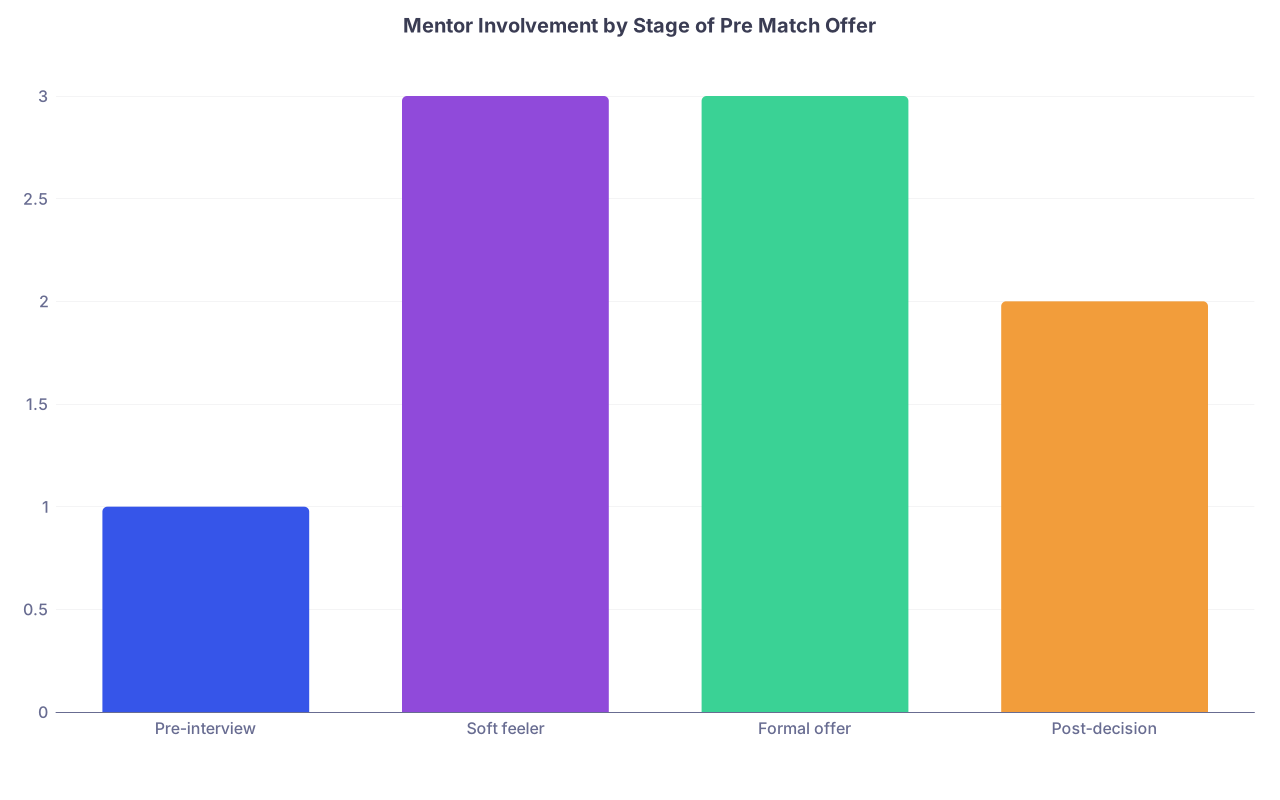
| Category | Value |
|---|---|
| Pre-interview | 1 |
| Soft feeler | 3 |
| Formal offer | 3 |
| Post-decision | 2 |
The bottom line
- Loop mentors in early enough to be useful, but with very clear boundaries about what they share and what you want.
- Use tight, prepared scripts so you do not accidentally commit, overpromise, or send mixed signals.
- Treat advice as data, not orders: mentors inform your choice; they do not make it. You are the one who signs—or does not sign—the pre‑match.