
The biggest myth about pre-match offers is that they’re “random.” They are not. Programs decide their pre-match lists on a surprisingly predictable timeline—and if you miss those windows, you’re invisible.
You’re not here to be invisible.
I’ll walk you, chronologically, through when programs typically build pre-match lists and exactly what you should be doing each month, each week, and sometimes down to the day so that when those emails and calls go out, you’re already at the top of their mental stack.
First, Understand the Pre-Match Calendar (And Where You Actually Have Leverage)
Before we go month-by-month, you need the big picture. Programs don’t wake up on January 15 and suddenly “decide” pre-match lists. The groundwork starts months earlier.
Here’s the rough pattern I’ve seen across multiple cycles (Texas/NRMP-like systems, community programs in non-competitive specialties, and a few mid-tier academic places that still dabble with pre-match):
| Phase | Typical Timeframe | What Programs Are Doing |
|---|---|---|
| Early Screening | Sep–early Oct | Sorting apps, flagging “possible pre-match” |
| First Impressions | Mid Oct–early Nov | Interviews start, initial mental lists form |
| Shortlist Building | Mid Nov–early Dec | Ranking who they’d pre-match if allowed |
| Finalizing Pre-Match Offers | Early–mid Dec | Deciding who gets offers, coordinating approvals |
| Offer Window | Mid Dec–late Jan | Sending offers, negotiating, closing spots |
Key point: by the time you hear a whisper about pre-match, most of the decision has already happened.
So your real work starts long before the offer window.
August–Early September: Application Setup Determines Your Pre-Match Ceiling
At this point you should be laying the foundation that determines whether you ever enter a program’s “pre-match consideration” pile.
Late August – 1–2 Weeks Before Application Submission
At this point you should:
- Have your ERAS application fully drafted, with:
- Clear specialty story
- Evidence you can function day one (solid clerkship comments, letters, Step scores)
- Know which programs even do pre-match (especially relevant in Texas and certain community-heavy regions).
Your checklist this week:
Build your “Pre-Match Priority” program list
- 10–20 programs max where:
- You’d be willing to sign outside the main Match.
- You have a realistic shot (not your fantasy top 5 only).
- Tag them in your own spreadsheet as:
- Tier A – “Would sign immediately if fair contract”
- Tier B – “Interested, would strongly consider”
- 10–20 programs max where:
Align your application with pre-match-friendly programs
- Community or smaller academic programs care heavily about:
- Reliability
- Ties to area
- Likelihood you’ll actually show up (not just using them as a backup)
- Make sure your personal statement and experiences signal commitment to:
- The region
- The patient population
- The specialty long term
- Community or smaller academic programs care heavily about:
If your application reads like you’re desperate to be a Harvard physician-scientist but you’re applying to a small community program in West Texas “just in case” — you’ve already told them not to pre-match you.
Mid–Late September: Submission Week and Early Screening
Once ERAS opens for programs (typically mid-September), the early screening rush begins.
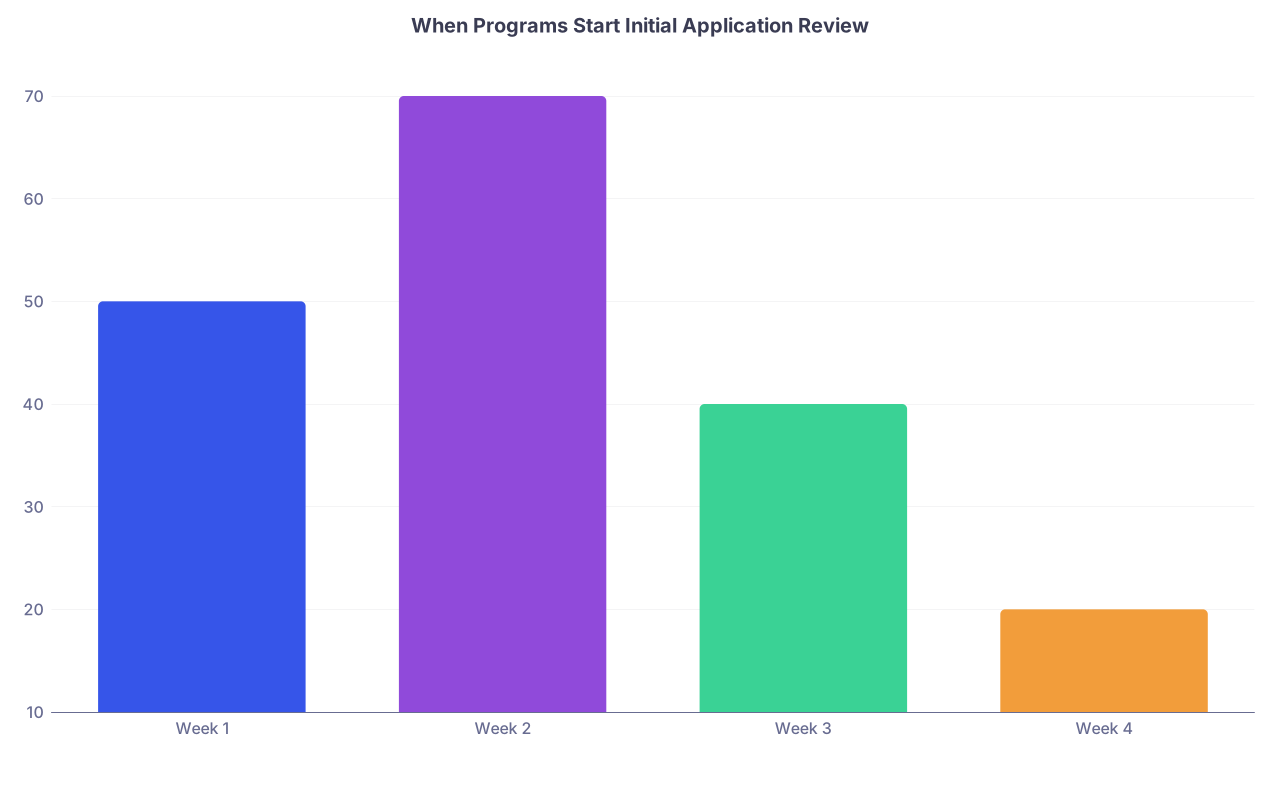
| Category | Value |
|---|---|
| Week 1 | 50 |
| Week 2 | 70 |
| Week 3 | 40 |
| Week 4 | 20 |
Most serious programs do the bulk of their first pass in the first 2 weeks.
Week 1 After Submission
At this point you should:
- Consider your file “locked” from a pre-match perspective:
- Scores
- Core letters
- Transcript
Programs are:
- Tagging applications:
- Definite interview
- Possible interview
- Unlikely
- Internally flagging:
- “If we ever pre-match, I’d look at this one again” candidates
Your move this week:
- Send targeted signal emails only if you have a genuine connection
- Subject lines like: “Applicant with strong ties to [City] – [Your Name], [AAMC ID]”
- 4–6 sentences, max:
- Who you are
- Why their program (specific, not generic fluff)
- A concrete tie (grew up there, family there, rotated there, etc.)
- One line that signals commitment: “If fortunate to interview, your program would be among my top choices.”
You’re not asking for a pre-match. You’re quietly moving from “random name” to “oh yeah, that applicant who…”
October: Interview Invitations and First Mental Pre-Match Lists
By early October, invites start popping. This is where pre-match potential really starts to crystallize.
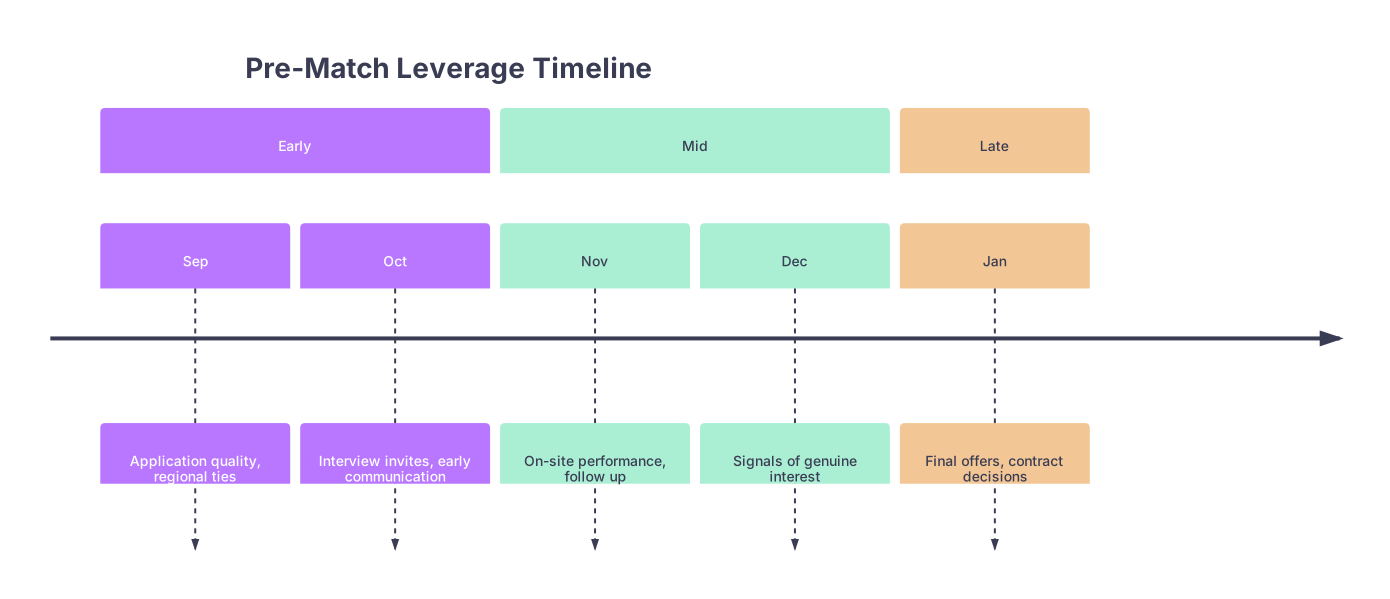
| Period | Event |
|---|---|
| Early - Sep | Application quality, regional ties |
| Early - Oct | Interview invites, early communication |
| Mid - Nov | On-site performance, follow up |
| Mid - Dec | Signals of genuine interest |
| Late - Jan | Final offers, contract decisions |
Early–Mid October: First Wave Invites
At this point you should:
- Track when programs invite you.
- Early invite from a community or mid-tier academic program = higher chance they’re interested enough to pre-match.
- Late invite doesn’t kill your chances, but it’s less likely.
On your interview days in October, programs are:
- Watching for:
- Are you easy to work with?
- Do current residents like you?
- Do you actually seem interested in this program, or just any spot?
For pre-match consideration, they’re mentally sorting:
- “We’d be happy to have”
- “We’d fight to get”
- “We’d pre-match if we could”
How to behave during October interviews if you want to be on that third list
At this point, on the actual interview day, you should:
Make clear, specific interest comments:
- “If I matched here, I’d be thrilled. This would be one of my top choices.”
- Not: “I like all my interviews so far, I’m just happy to match anywhere.”
Ask anchored questions:
- About longitudinal continuity clinic
- Resident autonomy
- Fellowship placement if appropriate
- But also about staying long-term in the area:
- Housing
- Community ties
- Schools (if you have family)
- This makes you look like someone likely to sign and stay, which is exactly the profile that gets pre-match offers.
November: Shortlists Are Being Built (This Is Where Most People Screw Up)
By November, most programs have completed at least 1–2 interview days. Some of them are already building rank lists and pre-match shortlists.
Early November (Weeks 1–2)
At this point you should:
- Assume your interview performance is still fresh.
- Send short, precise thank-you emails within 24–48 hours:
- Program director
- Key faculty interviewer
- Possibly chief resident if you had substantial interaction
Content (4–6 sentences max):
- One specific moment you appreciated (“Our discussion about serving the rural catchment area really stuck with me.”)
- A line that clearly signals interest: “After meeting everyone, I can say your program is a place I’d be very excited to train.”
- If it’s truly top tier for you: “Your program is now among my top choices.”
Programs are now:
- Holding post-interview meetings:
- “Who stood out?”
- “Who seemed like they’d actually come here?”
- Tagging:
- Potential pre-match candidates (usually 3–10 names depending on program size and policy)
If you were quiet, vague, or robotic on the interview and then vanish with no follow-up, you’ve basically written “Do not pre-match me” across your file.
Mid–Late November
This is the shortlist building period.
At this point you should:
- Identify your true top 3–5 pre-match target programs from where you’ve already interviewed.
- Send a clear but honest interest update to only those programs.
That email should:
- Go to the PD or APD.
- Be unambiguous but not binding:
- “I wanted to let you know that [Program Name] is one of my very top choices. If offered a position there, I would be strongly inclined to accept.”
- Do not say “You’re my #1” to six programs. People talk. And yes, they remember.
Programs are using this period to check:
- Who has:
- Strong file
- Good fit
- Expressed solid interest
- Not thrown any red flags in resident feedback
By the end of November, most programs that do pre-match have a draft list of who they’d offer if GME/hospital approves.
Early December: Finalizing Pre-Match Lists
Here’s where the quiet decisions happen. You won’t see it, but you can influence it.
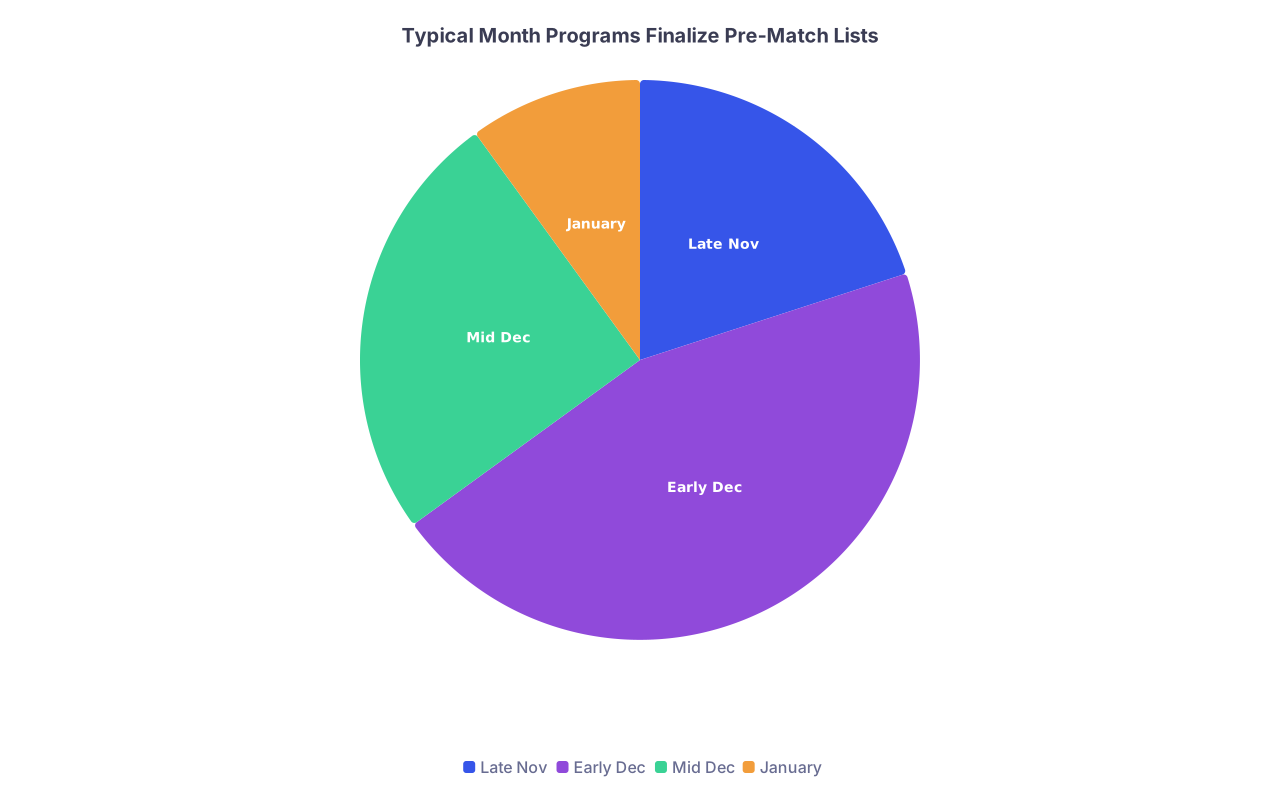
| Category | Value |
|---|---|
| Late Nov | 20 |
| Early Dec | 45 |
| Mid Dec | 25 |
| January | 10 |
First Two Weeks of December
At this point you should:
- Assume programs are meeting to:
- Build preliminary rank lists
- Decide: pre-match or not this year?
- If yes, pick specific names and order
Your smart moves now:
One concise update email to top 2–3 programs max
- Content ideas:
- New clinical responsibility (sub-I feedback, leadership role)
- New Step 2 score if strong
- Reinforcement of interest:
- “Having completed more interviews, I can confidently say your program ranks at the top of my list.”
- Content ideas:
If you have a true #1 and they’re known to pre-match
- This is when you may send a genuine, singular “Number One Choice” email:
- “I wanted to let you know that [Program Name] is my first choice for residency. If fortunate enough to receive an offer, I would be prepared to accept.”
- This is when you may send a genuine, singular “Number One Choice” email:
Do not send this lightly. And do not send it to more than one place. If you’re not ready to commit, don’t use “first choice” language; stick with “top choice” or “very strong interest.”
Behind the scenes, programs are:
- Meeting with:
- GME office
- Department chair
- Sometimes hospital administration
- Getting approval for:
- Exact number of pre-match offers allowed
- Timing window
- Contract structure
If your name isn’t firmly in their “we want them” bucket by mid-December, no email on December 28 is going to magic you into that pile.
Mid December–Late January: The Pre-Match Offer Window
Now we’re at the part everyone focuses on: when programs actually send pre-match offers.
Reality: very front-loaded.

Mid–Late December (Peak Offer Time)
At this point you should:
- Keep your phone on you. Voicemail set up. Email notifications actually working.
- Have a clear decision framework ready before any call comes:
- Case A: Dream pre-match program offers → Will you accept immediately?
- Case B: Mid-level program offers, but you still have top interviews coming → Will you ask for time? How much?
Typical pattern I’ve seen:
- First serious wave of offers: ~Dec 10–20
- Smaller second wave: After some candidates decline
- Final trickle: early January, filling the last few unfilled pre-match spots
When You Get a Call or Email
At this point—on the day of an offer—you should:
Stay professional and calm
- Thank them.
- Express genuine appreciation.
- Do not immediately launch into demands.
Clarify logistics
- Timeline for response.
- Whether offer is verbal or contingent on signing a contract.
- Whether they expect you to withdraw from the Match.
If it’s your clear top choice
- You can say:
- “Thank you so much. This is my first choice, and I’d be honored to accept. Could you please send the contract so I can review and sign?”
- You can say:
If you’re unsure
- You are allowed to ask for time, but don’t be unreasonable.
- A common, reasonable response:
- “I’m very honored by this offer and very interested. I do have other interviews scheduled and take this decision seriously. Would it be possible to have until [X date, usually 3–5 days] to give you a final answer?”
Programs may push back. They don’t like leaving offers hanging. But they also don’t want to lose someone they genuinely like.
January: Last Offers, Regrets, and Resetting for the Main Match
By early January, most pre-match deals are done. Programs have:
- A mix of:
- Pre-matched spots filled
- Remaining positions going through the main Match process
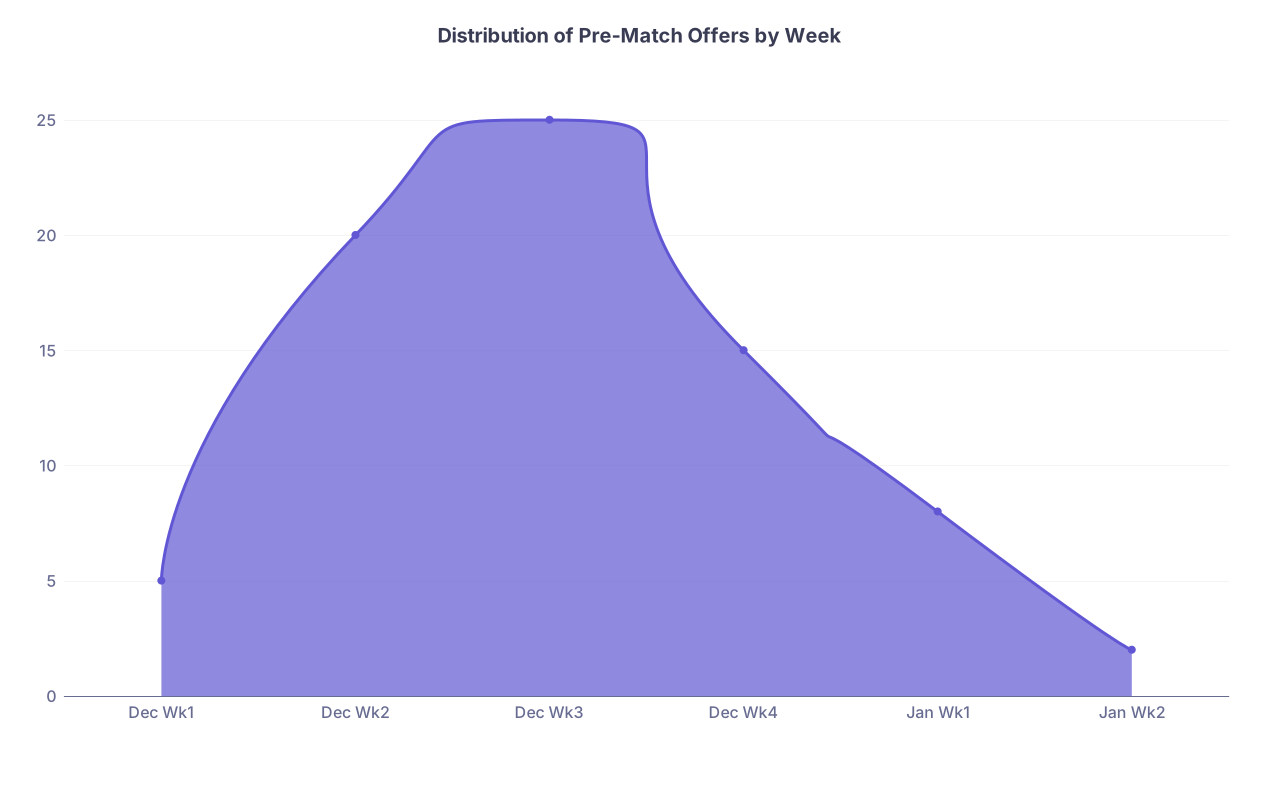
| Category | Value |
|---|---|
| Dec Wk1 | 5 |
| Dec Wk2 | 20 |
| Dec Wk3 | 25 |
| Dec Wk4 | 15 |
| Jan Wk1 | 8 |
| Jan Wk2 | 2 |
Early–Mid January
At this point you should fall into one of two categories.
1. You Accepted a Pre-Match
You should:
- Confirm:
- Contract signed and countersigned
- Program has reported your status appropriately (depending on system)
- Immediately:
- Contact other programs if required to withdraw
- Stop fishing for “backup” security. You’re committed.
Your mental shift now:
- From “where will I go?” to “how do I be ready to show up as a competent intern at that program?”
2. You Did Not Get or Accept a Pre-Match
Then this is not a failure. It just means you’re now fully in the main Match game.
At this point you should:
- Stop obsessing about pre-match. It’s over.
- Reassess your rank list strategy:
- Where did you interview?
- Where did you feel like a good fit?
- Who seemed truly interested in you?
You still use everything you learned from the pre-match phase:
- Programs that showed strong interest but did not offer pre-match may still rank you very highly.
- A pre-match offer you declined may still place you high on their rank list (depending on their policy and ego).
Weekly Micro-Timeline: How To Be “Pre-Match Ready” in Real Life
Here’s the condensed, boots-on-the-ground version. Use it as a working blueprint.
September
- Week 1–2: Finalize ERAS, identify pre-match target list.
- Week 3–4: Send limited, strategic interest emails where you have real ties.
October
- Every Interview Week:
- Day of interview: Show specific interest.
- Within 48 hours: Send short, focused thank-you emails.
- End of Month:
- Update your own “interest vs. likelihood” spreadsheet.
November
- Week 1–2:
- Reconnect with best-fit programs after interviews.
- Clarify in writing if they’re among your “top choices.”
- Week 3–4:
- Identify 3–5 programs where you’d truly consider pre-matching.
- Send one more concise, content-rich update: new achievements + interest.
December
- Week 1–2:
- If you have a genuine #1 that does pre-match, this is when you send that single “first choice” email.
- Week 2–4:
- Keep your phone and email ready.
- Prepare your own decision rules (when you will and won’t accept).
January
- Week 1–2:
- Final pre-match offers trickle out.
- Lock in your choice if offered something acceptable.
- After Week 2:
- Drop the pre-match obsession.
- Commit to building a rational, honest rank list for the main Match.
One More Thing People Don’t Like to Admit
Programs use pre-match to solve a very specific problem: fear.
Fear they won’t fill. Fear they’ll lose you to a “better” brand-name place. Fear they’ll be stuck scrambling during SOAP.
So your job—through timing, communication, and how you show up—is to quietly reduce their fear on three fronts:
- You can do the work.
- You will fit with their residents and culture.
- If they pick you, you are genuinely likely to come.
Do those three things well, and you’ll be in the pre-match conversation at any program that does it.
Today, do this: open your interview tracker and tag 5 programs where you’d be legitimately happy to sign a pre-match—then draft a one-paragraph update email you could send to each when the timing is right.